Warehouse WMS Security Checklist: A Comprehensive Guide to Protecting Your Operations
Published: 12/20/2025 Updated: 12/21/2025

Table of Contents
- Introduction: Why Warehouse WMS Security Matters
- 1. User Access & Authentication: Controlling Who Enters Your System
- 2. Data Encryption & Protection: Safeguarding Sensitive Information
- 3. System Patching & Updates: Keeping Your WMS Current and Secure
- 4. Network Security: Protecting Your Wireless and Wired Connections
- 5. Data Backup & Recovery: Preparing for the Unexpected
- 6. Physical Security: Securing Your Warehouse Infrastructure
- 7. Audit Trails & Logging: Tracking Activity and Identifying Anomalies
- 8. Vendor Security Assessment: Evaluating Third-Party Risks
- 9. Incident Response Plan: A Roadmap for Security Breaches
- 10. Compliance & Regulations: Meeting Legal and Industry Requirements
- 11. Regular Security Assessments: Proactive Risk Mitigation
- 12. Employee Training and Awareness: The Human Firewall
- Conclusion: Maintaining a Secure Warehouse WMS
- Resources & Links
TLDR: Worried about warehouse WMS security? This checklist covers everything from user access and data encryption to physical security and incident response. Use it to identify vulnerabilities, strengthen your defenses, and ensure your operations are protected from costly breaches and disruptions - it's your quick guide to a secure and resilient warehouse environment!
Introduction: Why Warehouse WMS Security Matters
Your Warehouse Management System (WMS) is the central nervous system of your warehouse operations. It manages inventory, directs workflows, and ultimately, impacts your bottom line. But with that level of control comes significant responsibility - safeguarding it from security threats is no longer optional; it's a business imperative.
A successful cyberattack on your WMS can lead to devastating consequences. Imagine inaccurate inventory counts leading to order fulfillment errors and lost sales, stolen data compromising customer information, or even complete operational shutdowns. The financial and reputational damage can be crippling.
Beyond the immediate impact, regulatory compliance (more on that later!) and the increasingly sophisticated nature of cyber threats demand a proactive approach. This isn't just about protecting data; it's about protecting your business, your customers, and your future. This checklist is designed to provide a framework for assessing and strengthening your WMS security posture, ensuring your warehouse operations remain secure and reliable.
1. User Access & Authentication: Controlling Who Enters Your System
Your Warehouse Management System (WMS) holds sensitive data - inventory levels, order details, shipping information, and more. Robust user access and authentication are the first line of defense against unauthorized access and potential data breaches. It's not enough to simply assign usernames and passwords; a layered approach is critical.
Here's what to consider:
- Role-Based Access Control (RBAC): Implement RBAC to restrict access based on job function. Not everyone needs administrator privileges. Define roles (e.g., picker, packer, supervisor, administrator) and assign specific permissions to each.
- Strong Password Policies: Enforce strong passwords-long, complex, and regularly changed. Consider multi-factor authentication (MFA) for added security. This could include a code sent to a mobile device or biometric verification.
- Least Privilege Principle: Grant users only the minimum level of access necessary to perform their duties. Regularly review and adjust permissions as roles change.
- Regular Access Reviews: Conduct periodic reviews of user accounts and access privileges to ensure they remain appropriate and necessary. Remove accounts for terminated employees immediately.
- Account Lockout Policies: Implement lockout policies to prevent brute-force password attacks. After several failed login attempts, an account should be temporarily locked.
- Centralized Identity Management: Consider using a centralized identity management system to streamline user provisioning, deprovisioning, and access control across your entire organization.
- Privileged Account Management (PAM): Strictly control and monitor accounts with elevated privileges. Implement just-in-time access for administrative tasks to minimize the window of vulnerability.
2. Data Encryption & Protection: Safeguarding Sensitive Information
In a warehouse environment, data isn't just about inventory counts. It encompasses sensitive information like customer details, financial records, shipping manifests, and potentially even proprietary product designs. Protecting this data is paramount. A breach can lead to financial loss, reputational damage, legal repercussions, and disruption of operations.
Here's what you need to do to bolster your data encryption and protection:
- Encryption at Rest: Implement robust encryption for all data stored within your WMS, including databases, backups, and file servers. This means data is unreadable without the correct decryption keys.
- Encryption in Transit: Secure data transmitted between your WMS, scanners, mobile devices, and other systems using protocols like TLS/SSL.
- Key Management: Establish a secure and documented key management process. This includes generation, storage, rotation, and destruction of encryption keys. Don't store keys alongside the data they protect!
- Data Masking & Tokenization: Consider techniques like data masking (hiding sensitive parts of data) and tokenization (replacing sensitive data with non-sensitive equivalents) for non-production environments and analytical purposes.
- Access Controls & Least Privilege: Ensure strict access controls are in place. Users should only have access to the data they absolutely need to perform their job functions (least privilege principle).
- Regular Vulnerability Scanning: Conduct regular scans for vulnerabilities in your WMS and related systems that could be exploited to compromise data.
- Data Loss Prevention (DLP) Tools: Explore DLP solutions to monitor and prevent unauthorized data movement or leakage.
- Secure Data Disposal: Implement a secure data disposal process to ensure that data is permanently erased when it is no longer needed. This is crucial for decommissioning old servers or replacing hardware.
3. System Patching & Updates: Keeping Your WMS Current and Secure
Your Warehouse Management System (WMS) isn't a set it and forget it solution. Just like any software, it's constantly facing new vulnerabilities as attackers develop sophisticated methods to exploit weaknesses. Neglecting system patching and updates is akin to leaving your warehouse doors unlocked - a risky proposition.
Why is Patching Crucial?
- Vulnerability Remediation: Patches are released to fix known bugs and security vulnerabilities. Without them, your WMS becomes an easy target for cyberattacks.
- Performance Improvements: Updates often include optimizations that can improve WMS performance and stability, leading to increased efficiency in your warehouse operations.
- Feature Enhancements: New versions often bring valuable new features that can improve your workflows and expand the system's capabilities.
- Compatibility: Updates ensure compatibility with other systems and hardware within your warehouse ecosystem.
What Needs to be Done?
- Establish a Patching Schedule: Don't wait for a breach to remind you. Create a regular schedule for reviewing and applying patches. This should involve both operating system patches and WMS-specific updates.
- Test Patches in a Staging Environment: Before deploying patches to your live WMS, always test them in a non-production environment. This helps identify potential conflicts or unexpected behavior.
- Automate Where Possible: Consider automating patch deployment using available tools. This reduces the risk of human error and speeds up the process.
- Stay Informed: Subscribe to security advisories from your WMS vendor and follow industry news to be aware of emerging threats and recommended fixes.
- Document Everything: Maintain detailed records of all patches applied, including dates, version numbers, and any issues encountered.
Failing to proactively manage system patching and updates is a significant security risk. Prioritizing this seemingly mundane task can be a crucial step in protecting your warehouse data and operations.
4. Network Security: Protecting Your Wireless and Wired Connections
Your warehouse WMS relies heavily on network connectivity - both wired and wireless. A compromised network can be a gateway to data breaches, system disruption, and operational chaos. This section outlines key steps to secure your network infrastructure.
Wireless Network Security:
- Robust Wi-Fi Encryption: Move beyond WEP - WPA2 or, ideally, WPA3 with AES encryption is essential. Ensure strong, unique passwords are used.
- Guest Network Segmentation: Isolate your warehouse WMS network from guest Wi-Fi networks to prevent unauthorized access.
- Wireless Intrusion Detection/Prevention Systems (WIDS/WIPS): Consider implementing these systems to detect and block unauthorized access points and rogue devices.
- Regular Wireless Network Audits: Regularly scan your wireless network to identify vulnerabilities and unauthorized devices.
- MAC Address Filtering (Use with Caution): While not a foolproof solution, MAC address filtering can add a layer of security. However, remember MAC addresses can be spoofed.
- Disable SSID Broadcast (Consideration): Hiding your SSID can deter casual attackers, but it's not a substitute for strong encryption.
Wired Network Security:
- Firewall Implementation: Deploy a robust firewall to control inbound and outbound network traffic, blocking unauthorized access.
- Network Segmentation: Segment your network to isolate sensitive WMS systems from less critical areas.
- VLANs (Virtual LANs): Utilize VLANs to logically separate network resources and enhance security.
- Physical Network Security: Restrict physical access to network closets and equipment rooms. Implement locks and access controls.
- Regular Vulnerability Scanning: Scan your wired network for vulnerabilities and remediate any identified issues promptly.
- Secure Remote Access: If remote access is required, implement multi-factor authentication (MFA) and use secure VPN connections.
5. Data Backup & Recovery: Preparing for the Unexpected
Warehouse disruptions happen. Whether it's a natural disaster, a cyberattack, or simple hardware failure, unexpected events can cripple your operations and put critical data at risk. A robust data backup and recovery plan is your safety net - ensuring business continuity and minimizing downtime.
Here's what your WMS data backup and recovery checklist should include:
- Regular, Automated Backups: Implement a schedule for frequent backups - ideally daily, or even more often for frequently changing data. Automation minimizes human error and ensures consistency.
- Offsite Storage: Don't keep backups solely on-site. A secondary location, cloud-based storage, or a secure data vault protects against physical damage or theft at your primary facility.
- Backup Types: Consider a combination of full, incremental, and differential backups to optimize storage and recovery time.
- Recovery Point Objective (RPO): Define your RPO - the maximum acceptable data loss in the event of a disruption. This dictates how often you need to back up your data.
- Recovery Time Objective (RTO): Define your RTO - the maximum acceptable downtime. This guides your recovery process and infrastructure needs.
- Regular Testing: Backup and recovery isn't a set it and forget it process. Regularly test your restoration procedures to ensure they work as expected and data integrity is maintained. Document your testing process and any adjustments made.
- Documentation: Clearly document your entire backup and recovery process, including procedures, contact information, and troubleshooting steps.
6. Physical Security: Securing Your Warehouse Infrastructure
A robust Warehouse Management System (WMS) is only as secure as the physical environment it operates within. Ignoring physical security creates vulnerabilities that can undermine even the strongest digital protections. This section outlines critical physical security measures for your warehouse.
Perimeter Security: Start with a comprehensive assessment of your warehouse perimeter. This includes:
- Fencing & Gates: Securely fenced perimeters with controlled access points. Consider height, material, and visibility.
- Lighting: Adequate lighting around the entire perimeter and within the warehouse, deterring unauthorized access and improving visibility for security personnel.
- Surveillance Cameras: Strategically placed CCTV cameras covering all entrances, loading docks, and critical areas. Ensure recordings are stored securely and regularly reviewed.
- Access Control Systems: Implement keycard or biometric access control for employee and visitor entry. Regularly review access privileges and revoke access for departing employees.
Internal Security Measures: Extend security beyond the perimeter:
- Loading Dock Security: Secure loading docks with controlled access and thorough inspection protocols. Implement dock door alarms and vehicle identification systems.
- Server Room Security: Dedicated, locked server rooms with restricted access, environmental controls (temperature and humidity), and fire suppression systems.
- Equipment Security: Secure sensitive equipment such as servers, networking devices, and backup systems from theft or damage.
- Visitor Management: A formal visitor registration process with escort protocols.
- Regular Security Audits: Conduct regular physical security audits to identify vulnerabilities and ensure effectiveness of measures.
Ignoring physical security creates a significant hole in your WMS security posture. Integrating these measures strengthens your overall protection.
7. Audit Trails & Logging: Tracking Activity and Identifying Anomalies
Robust audit trails and logging are the unsung heroes of warehouse WMS security. They aren't flashy, but they provide critical visibility into user activity, system processes, and potential security breaches. Think of them as your historical record - a detailed logbook of everything happening within your WMS.
Why are they so vital?
- Accountability: Logs provide a clear record of who did what, when, and where within the WMS. This is essential for investigations and identifying the source of errors or malicious activity.
- Anomaly Detection: Regular review of audit trails can reveal unusual patterns or behaviors that might indicate a compromised account or an attempted attack. For example, unexpected data modifications or logins from unfamiliar locations should immediately raise a red flag.
- Compliance: Many industry regulations (like those related to traceability and food safety) require comprehensive logging and audit capabilities.
- Troubleshooting: Audit trails are invaluable for diagnosing system errors and pinpointing the cause of operational issues.
What to look for in your audit trail implementation:
- Comprehensive Logging: Ensure the WMS logs all significant actions, including user logins, data modifications, report generation, and system configuration changes.
- Timestamping: Accurate and consistent timestamps are crucial for reconstructing events and establishing timelines.
- User Identification: Every action should be clearly linked to a specific user account.
- Secure Storage: Audit logs should be stored securely, separate from the WMS itself, and protected from unauthorized access or modification.
- Regular Review: Implement a schedule for regularly reviewing audit logs. Automated alerts for suspicious activity can significantly improve response times.
- Retention Policies: Define clear retention policies for audit logs, balancing compliance requirements with storage capacity considerations.
8. Vendor Security Assessment: Evaluating Third-Party Risks
Your Warehouse Management System (WMS) rarely operates in isolation. It likely integrates with various third-party vendors - transportation providers, inventory suppliers, accounting software, and more. These integrations introduce significant security risks, as you're essentially extending your trust to another entity's security posture. A robust vendor security assessment is crucial to mitigate these risks.
This isn't just about checking if they have antivirus software. A thorough assessment should involve:
- Contractual Obligations: Ensure contracts explicitly outline security requirements, including data protection, incident reporting, and audit rights.
- Security Questionnaires: Distribute detailed questionnaires that probe their security practices, covering areas like access controls, data encryption, vulnerability management, and employee training.
- Security Audits: Consider independent audits of vendor security controls, either conducted by your organization or a qualified third party.
- Review of Security Certifications: Look for recognized certifications like SOC 2, ISO 27001, or PCI DSS (if applicable to their services). While certifications aren't foolproof, they demonstrate a commitment to security best practices.
- Ongoing Monitoring: Security isn't a one-time event. Regularly review vendor security performance, particularly after any reported security incidents or changes in their service offerings.
- Right to Audit: Include a clause in your agreements allowing you to audit their security controls.
Neglecting vendor security can open your warehouse to vulnerabilities and data breaches, potentially impacting your operations, finances, and reputation. Prioritize a thorough and ongoing vendor security assessment program.
9. Incident Response Plan: A Roadmap for Security Breaches
Even with the most robust security measures, incidents will happen. A well-defined Incident Response Plan (IRP) isn't a sign of failure; it's a critical safety net. It outlines the steps your warehouse WMS team should take immediately and in the days/weeks following a security breach.
Your IRP should be a documented, step-by-step guide covering:
- Identification: How will you detect a security incident? (e.g., alerts, employee reports, anomaly detection). Clearly define what constitutes an incident.
- Containment: What immediate actions will be taken to limit damage? This could involve isolating affected systems, disabling accounts, or segmenting network access.
- Eradication: Removing the root cause of the incident. This might involve malware removal, system remediation, or vulnerability patching.
- Recovery: Restoring systems and data to normal operation. This involves validating backups, re-enabling services, and verifying data integrity.
- Lessons Learned: Post-incident analysis to identify weaknesses in your security posture and improve preventative measures. This should include a documented review and update of the IRP itself.
Crucially, your IRP should include:
- Designated Roles & Responsibilities: Clearly define who is responsible for each step.
- Communication Plan: Outline who needs to be notified (internal teams, stakeholders, potentially law enforcement or regulatory bodies) and how.
- Regular Testing & Drills: An IRP that hasn't been tested is just a document. Conduct tabletop exercises and simulations to ensure everyone knows their roles and the plan is effective.
Don't wait for a security breach to discover your team isn't prepared. Develop and maintain a robust Incident Response Plan today.
10. Compliance & Regulations: Meeting Legal and Industry Requirements
Warehouse WMS security isn't just about protecting your data; it's about adhering to a complex web of legal and industry regulations. Failure to do so can result in hefty fines, reputational damage, and even legal action. This section outlines key considerations.
Understanding Applicable Regulations: The specific regulations impacting your warehouse WMS will vary based on your industry, location, and the type of data you handle. Common examples include:
- GDPR (General Data Protection Regulation): If you handle data of EU citizens, GDPR compliance is mandatory, focusing on data privacy and security.
- CCPA (California Consumer Privacy Act): Similar to GDPR, CCPA provides California residents with rights over their personal data.
- HIPAA (Health Insurance Portability and Accountability Act): Critical for warehouses handling healthcare products or patient data.
- PCI DSS (Payment Card Industry Data Security Standard): Essential if you process credit card payments within your WMS.
- Industry-Specific Regulations: Depending on your product type (e.g., food, pharmaceuticals, hazardous materials), additional regulations may apply.
Implementing Compliance Controls: Beyond simply understanding the rules, you need demonstrable controls. This means:
- Regular Audits: Conduct internal and external audits to assess compliance gaps.
- Documentation: Maintain meticulous records of your security policies, procedures, and compliance efforts.
- Data Mapping: Understand where sensitive data resides and how it's processed.
- Training: Educate your employees on relevant regulations and security best practices.
- Policy Updates: Regularly review and update your security policies to reflect changing regulations and threats.
Staying Current: Regulations are constantly evolving. Subscribe to industry alerts, engage with legal counsel, and proactively monitor regulatory changes to ensure your WMS security posture remains compliant and protects your business.
11. Regular Security Assessments: Proactive Risk Mitigation
Regular security assessments are the cornerstone of a robust warehouse WMS security posture. Don't wait for a breach to expose vulnerabilities - proactively seek them out. These assessments should encompass both technical and procedural reviews and should be conducted at least annually, or more frequently if significant system changes or new integrations are implemented.
Consider a layered approach:
- Vulnerability Scanning: Automated tools should scan your systems for known vulnerabilities.
- Penetration Testing: Ethical hackers simulate real-world attacks to identify weaknesses in your defenses. This goes beyond automated scans, testing the actual effectiveness of your controls.
- Security Audits: Independent experts review your security policies, procedures, and technical controls against industry best practices and regulatory requirements.
- Tabletop Exercises: Simulate incident scenarios to test your incident response plan and identify gaps in communication and coordination.
The results of these assessments should be documented, prioritized, and remediated in a timely manner. Tracking progress and demonstrating ongoing improvement is crucial for maintaining a secure warehouse WMS environment.
12. Employee Training and Awareness: The Human Firewall
No matter how robust your Warehouse Management System (WMS) security measures are, they're only as strong as the people using them. Human error remains a significant vulnerability, making employee training and awareness absolutely crucial. A well-trained workforce acts as your human firewall, proactively mitigating risks and spotting potential threats.
This isn't just about annual security awareness courses. It's an ongoing, integrated effort. Topics should include:
- Phishing and Social Engineering: Recognizing and reporting suspicious emails, calls, and requests.
- Password Security: Creating strong, unique passwords and understanding multi-factor authentication.
- Data Handling Procedures: Knowing what data is sensitive, how to handle it appropriately, and who to contact with questions.
- Reporting Suspicious Activity: Encouraging employees to report anything that seems unusual or potentially harmful, without fear of reprisal.
- Physical Security Protocols: Understanding access control procedures, visitor management, and the importance of securing workstations.
- WMS-Specific Risks: Training on how WMS functionality might be exploited and how to avoid common mistakes.
Regular refresher courses, simulated phishing exercises, and open communication channels are vital to keep security top-of-mind and foster a culture of vigilance. Investing in employee training is an investment in your entire WMS security posture.
Conclusion: Maintaining a Secure Warehouse WMS
Securing your Warehouse Management System (WMS) isn't a one-time project; it's an ongoing commitment. This checklist provides a solid foundation, but remember that the threat landscape constantly evolves. Regularly reviewing and updating your security protocols is crucial. By proactively addressing these areas - from user access to incident response - you're not just mitigating risk; you're safeguarding your inventory, operations, and reputation. A secure WMS is a cornerstone of a resilient and efficient warehouse, allowing you to focus on growth and customer satisfaction, confident in the integrity of your data and processes. Don't wait for an incident to highlight vulnerabilities; continuous vigilance is the key to maintaining a robust and secure warehouse WMS.
Resources & Links
- National Institute of Standards and Technology (NIST): Provides cybersecurity frameworks, standards, and guidance, including the NIST Cybersecurity Framework which is highly relevant to warehouse WMS security. Offers practical advice and best practices.
- Cybersecurity and Infrastructure Security Agency (CISA): U.S. government agency providing resources and alerts regarding cybersecurity threats and vulnerabilities. Offers guidance on incident response and preparedness.
- International Organization for Standardization (ISO): Provides international standards, including ISO 27001 (Information Security Management), which are essential for establishing a robust security management system.
- SANS Institute: Offers cybersecurity training, certifications, and resources. Useful for understanding and addressing specific security risks.
- OWASP (Open Web Application Security Project): Focuses on web application security. While WMS security extends beyond web apps, understanding common vulnerabilities (like SQL injection) is still valuable.
- ISC²: Provides cybersecurity certifications and training, including CISSP, helpful for understanding security principles and best practices.
- SearchSecurity: Provides news, articles, and resources on cybersecurity topics, covering a broad range of threats and solutions.
- ComplianceForAll: Provides resources and information on various compliance regulations, including those relevant to data security and privacy.
- GDPR Official Website: For compliance and understanding of GDPR, especially for WMS handling personal data in Europe.
- NIST Cybersecurity Framework: Direct link to the NIST Cybersecurity Framework, a vital resource for structuring a warehouse WMS security program.
Frequently Asked Questions
What is a Warehouse WMS and why is its security important?
A Warehouse Management System (WMS) is software that manages and controls warehouse operations, from receiving to shipping. Its security is vital because it handles sensitive data (inventory levels, order details, employee access) and controls critical processes, making it a prime target for cyberattacks and internal threats. A breach can lead to financial losses, reputational damage, and operational disruptions.
Who should use this WMS security checklist?
This checklist is designed for warehouse managers, IT security personnel, operations directors, and anyone responsible for the security and integrity of warehouse operations using a WMS. It's useful regardless of the size of the warehouse or the complexity of the WMS implementation.
What are the most common WMS security threats?
Common threats include malware infections (ransomware, viruses), unauthorized access (both external and internal), data breaches due to vulnerabilities in the WMS software or network, social engineering attacks targeting employees, and physical security weaknesses affecting WMS hardware.
What's the difference between physical and logical WMS security?
Physical security involves protecting the physical hardware running the WMS (servers, workstations, scanners). Logical security focuses on protecting the data and software through access controls, encryption, firewalls, and software updates.
How does user access control play a role in WMS security?
Robust user access control is essential. It involves granting users only the permissions they need to perform their jobs. This principle of least privilege minimizes the impact of a compromised account and prevents unauthorized access to sensitive data and functions within the WMS.
What types of authentication methods should be implemented for WMS access?
Strong authentication methods are crucial. These include multi-factor authentication (MFA), strong password policies (complex passwords, regular changes), biometric authentication (fingerprint, facial recognition), and role-based access control.
Why are regular WMS software updates so important?
Software updates often contain security patches that address known vulnerabilities. Failing to apply these updates leaves the WMS susceptible to exploitation by attackers. Establish a regular patching schedule and test updates before deploying them to production.
How can I protect against internal WMS security threats?
Address internal threats by implementing strong background checks for employees, enforcing the principle of least privilege, regularly reviewing user access rights, conducting security awareness training, and monitoring employee activity for suspicious behavior.
What role does network security play in WMS protection?
The network connecting the WMS to other systems is a critical vulnerability. Employ firewalls, intrusion detection systems, network segmentation, and VPNs to protect the network and restrict unauthorized access to the WMS.
What is data encryption, and why is it important for WMS data?
Data encryption transforms data into an unreadable format, protecting it from unauthorized access. Encrypting WMS data both in transit (when it's being transmitted) and at rest (when it's stored) provides an extra layer of security even if other defenses are breached.
How often should I review and update my WMS security checklist?
The security landscape is constantly evolving. It's recommended to review and update your WMS security checklist at least annually, or more frequently if there are significant changes to your warehouse operations, WMS software, or threat landscape.
What is a security vulnerability assessment and penetration testing?
A vulnerability assessment identifies weaknesses in your WMS and supporting infrastructure. Penetration testing simulates a real-world cyberattack to identify exploitable vulnerabilities and assess the effectiveness of your security controls. They should be conducted regularly.
Comments
There are no comments yet. Be the first to add one!
WMS - Warehouse Management System Solution Demo
Optimize your warehouse operations & boost efficiency! ChecklistGuro's WMS streamlines inventory management, order fulfillment, and shipping. Reduce errors, improve accuracy, & maximize space utilization. Manage it all with our Work OS.
Related Articles
Seamless RFID Integration: Your WMS Checklist Template for Success
Mastering Warehouse Labeling: Your WMS Process Checklist Template
The Ultimate Supply Chain Inventory Accuracy Audit Checklist: A Step-by-Step Guide
Mastering Putaway: Your WMS Optimization Checklist

Mastering Your Yard: A Warehouse WMS Yard Management Checklist Template
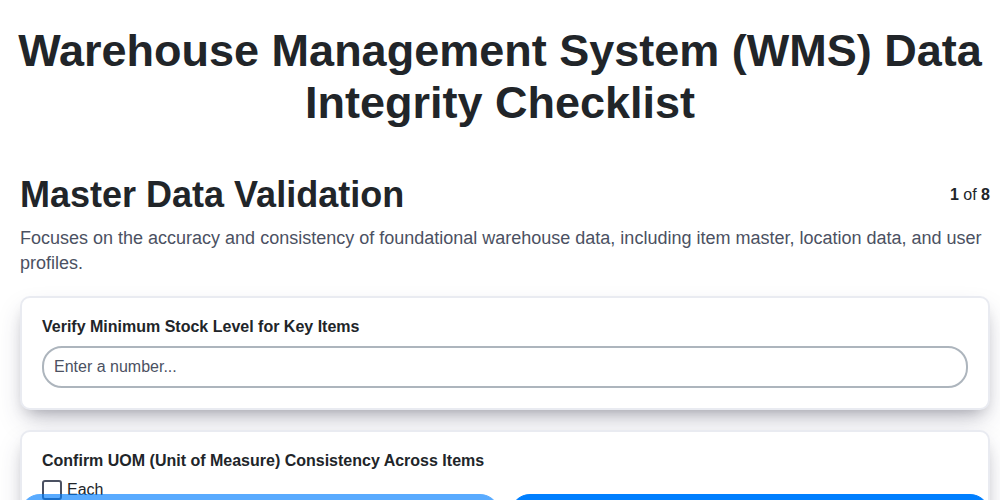
Warehouse Data Integrity: Your WMS Checklist Template
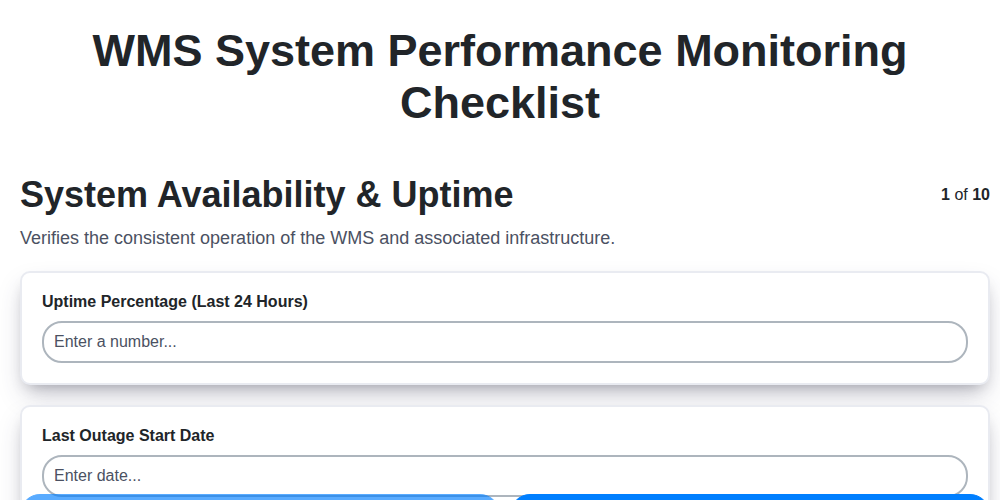
WMS System Performance Monitoring Checklist: A Comprehensive Guide
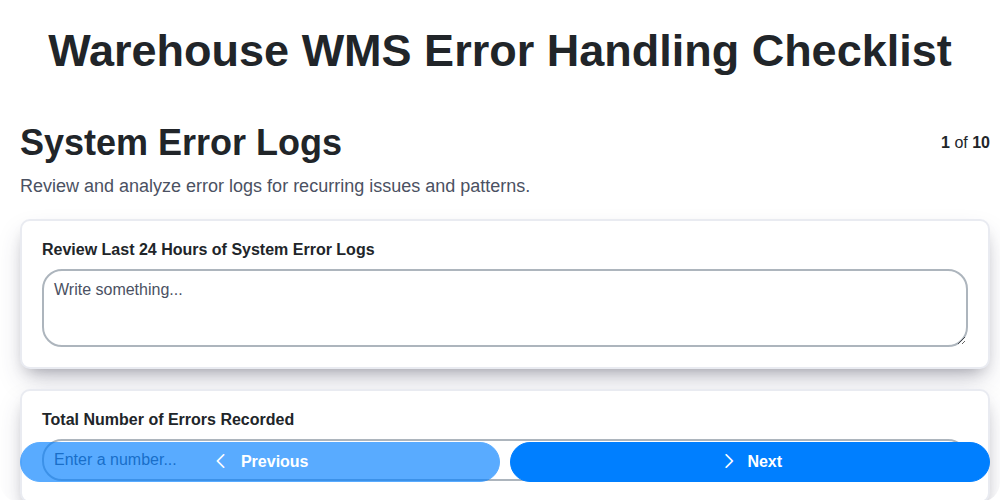
Warehouse WMS Error Handling Checklist: A Proactive Guide to Minimizing Disruptions
We can do it Together
Need help with
Warehouse Management System (WMS)?
Have a question? We're here to help. Please submit your inquiry, and we'll respond promptly.