Navigating Renewable Energy Risks: Your Comprehensive Project Assessment Checklist
Published: 12/05/2025 Updated: 07/02/2026
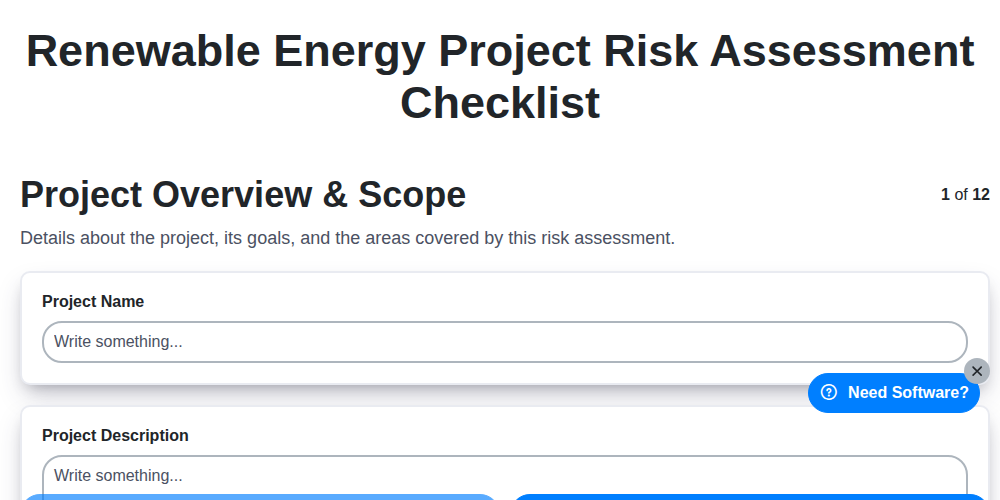
Table of Contents
- Introduction: Why Risk Assessment is Crucial for Renewable Energy Projects
- 1. Project Overview & Scope: Defining the Foundation
- 2. Environmental Risks & Permits: Protecting Ecosystems & Compliance
- 3. Site Conditions & Geotechnical Risks: Ground Truth Assessment
- 4. Technology & Equipment Risks: Evaluating Performance & Reliability
- 5. Construction & Installation Risks: Managing On-Site Challenges
- 6. Operational Risks & Maintenance: Ensuring Long-Term Efficiency
- 7. Financial & Contractual Risks: Securing Investment & Agreements
- 8. Health & Safety Risks: Prioritizing Worker Wellbeing
- 9. Security Risks: Protecting Assets & Infrastructure
- 10. Stakeholder & Community Risks: Building Positive Relationships
- 11. Regulatory & Compliance Risks: Staying Ahead of the Law
- 12. Risk Mitigation & Response: Proactive Planning for Uncertainty
- 13. Checklist Summary & Key Takeaways
- Conclusion: Building a Resilient Renewable Energy Future
- Resources & Links
TLDR: Building a renewable energy project? This checklist is your roadmap! It covers everything from environmental permits and site conditions to financial contracts and stakeholder concerns, ensuring you identify and mitigate potential risks for a smoother, more successful project. Download the template and start assessing!
Introduction: Why Risk Assessment is Crucial for Renewable Energy Projects
Renewable energy projects, while vital for a sustainable future, are inherently complex ventures. From sprawling solar farms to intricate wind turbine installations and innovative hydro-electric schemes, each project presents a unique set of potential risks. Ignoring these risks can lead to project delays, budget overruns, environmental damage, reputational harm, and even project failure.
A comprehensive risk assessment isn't just a box to tick; it's the bedrock of a successful renewable energy project. It allows project teams to proactively identify, analyze, and prioritize potential hazards before they impact operations. This proactive approach minimizes negative consequences, optimizes resource allocation, and fosters a more resilient and sustainable project lifecycle - benefiting not only the developers but also the environment and the communities involved. Failing to account for potential pitfalls can transform a promising investment into a costly and protracted ordeal.
1. Project Overview & Scope: Defining the Foundation
A renewable energy project's success hinges on a crystal-clear understanding of its scope and objectives from the very beginning. This section of the risk assessment checklist isn't just about describing the project; it's about identifying potential pitfalls arising from ambiguity or unrealistic expectations.
Here's what to consider:
- Project Definition: Clearly articulate the project's purpose, intended capacity (e.g., MW of solar, wind turbine size), and expected energy output. Vague goals lead to scope creep and mismatched resource allocation.
- Geographic Location & Boundaries: Precisely define the project's physical boundaries. This is crucial for environmental impact assessments, land acquisition, and logistical planning.
- Technology Type & Configuration: Specify the renewable energy technology being utilized (solar PV, wind, hydro, biomass, etc.) and its specific configuration. Is it a standalone system or integrated into a grid?
- Project Stages: Break down the project into distinct phases - Development, Procurement, Construction, Commissioning, and Operation - each with its own potential risks.
- Key Stakeholders: Identify all key stakeholders early on, including landowners, investors, local communities, and regulatory bodies. Their expectations and potential concerns should be documented.
- Assumptions & Constraints: Explicitly list any underlying assumptions (e.g., wind speed data, solar irradiance levels) and any constraints that might impact the project's feasibility (e.g., limited grid capacity, restricted airspace).
Thoroughly documenting these elements provides a baseline for risk identification and helps ensure everyone involved shares a common understanding of the project's goals and limitations.
2. Environmental Risks & Permits: Protecting Ecosystems & Compliance
Renewable energy projects, while beneficial for the environment in the long run, can pose significant environmental risks if not carefully assessed and managed during development and operation. This section of your risk assessment checklist focuses on identifying and mitigating those potential impacts, ensuring both ecological protection and adherence to regulatory requirements.
Key Considerations:
- Impact on Biodiversity: Assess potential disturbance to habitats, wildlife (including endangered species), and ecosystems. Consider impacts from site clearing, construction noise, and ongoing operation (e.g., bird and bat interactions with wind turbines).
- Water Resources: Evaluate potential impacts on surface water (rivers, lakes) and groundwater. This includes potential contamination from construction activities, altered water flow, and impacts on aquatic life.
- Soil Erosion & Degradation: Assess the risk of soil erosion during construction and potential long-term soil degradation due to vegetation removal or altered land use.
- Air Quality: While renewable energy generally improves air quality, construction activities (dust, emissions) and potential leakage from equipment need evaluation.
- Noise Pollution: Assess noise impacts from construction and operational equipment, particularly in sensitive areas.
- Visual Impact: Consider the visual impact of the project on surrounding landscapes and communities.
Permitting & Compliance:
- Environmental Impact Assessment (EIA): Ensure a comprehensive EIA is conducted and approved, adhering to local and national regulations.
- Permit Acquisition: Identify and secure all necessary environmental permits, including those related to water usage, waste disposal, air emissions, and noise levels.
- Protected Area Regulations: If the project is near or within a protected area (e.g., national park, wildlife refuge), ensure strict adherence to regulations and obtain necessary approvals.
- Species-Specific Permits: Secure permits related to impacts on protected or endangered species.
- Post-Construction Monitoring: Plan for ongoing environmental monitoring to ensure compliance with permit conditions and identify any unforeseen impacts.
Risk Mitigation Strategies:
- Conduct thorough baseline ecological surveys.
- Implement erosion and sediment control measures.
- Minimize vegetation clearing and replant native species.
- Employ noise reduction technologies.
- Develop a spill prevention and response plan.
- Engage with environmental experts and stakeholders.
3. Site Conditions & Geotechnical Risks: Ground Truth Assessment
Renewable energy projects, particularly wind, solar (especially ground-mounted), and hydro, are profoundly impacted by the site itself. A thorough geotechnical investigation isn't just a good practice; it's a foundational requirement for avoiding catastrophic failures and costly delays. This section of your risk assessment checklist must go beyond basic surveys and truly understand the ground truth.
Key Risks to Consider:
- Soil Stability & Bearing Capacity: Can the ground support the weight of turbines, solar panel arrays, or hydroelectric infrastructure? Insufficient bearing capacity can lead to settlement, tilting, and structural damage.
- Groundwater Levels: High groundwater can destabilize foundations, accelerate corrosion of buried components, and impact nearby ecosystems. Consider seasonal variations and potential for flooding.
- Seismic Activity: Evaluate the site's seismic hazard and design foundations accordingly. This includes assessing historical earthquake data and potential fault lines.
- Landslides & Slope Stability: Steep slopes pose a significant risk of landslides. Detailed slope stability analysis and mitigation measures are critical.
- Soil Composition & Properties: Understanding soil type (clay, sand, rock) and its properties (permeability, compressibility) is crucial for foundation design and erosion control.
- Contamination: Identify and assess any existing soil contamination from previous land use. Remediation may be required.
- Karst Topography: Areas with karst topography (limestone bedrock with sinkholes and caves) present unique challenges due to unpredictable ground conditions.
- Peat & Organic Soils: These soils are often highly compressible and require specialized foundation solutions.
Assessment Steps:
- Historical Data Review: Examine geological maps, borehole logs from previous projects, and local records.
- Geophysical Surveys: Employ techniques like ground-penetrating radar (GPR) and electrical resistivity tomography (ERT) to identify subsurface features.
- Borehole Investigations: Drill boreholes to collect soil and rock samples for laboratory testing.
- Laboratory Testing: Perform tests to determine soil properties like bearing capacity, shear strength, and permeability.
- Geotechnical Modeling: Develop 3D models to simulate ground behavior under load.
- Expert Consultation: Engage a qualified geotechnical engineer for assessment and design recommendations.
Documentation: All findings, reports, and expert opinions must be meticulously documented and integrated into the overall risk assessment.
4. Technology & Equipment Risks: Evaluating Performance & Reliability
Renewable energy projects often rely on cutting-edge technology, which inherently introduces specific risks. These risks aren't solely about equipment failure; they encompass performance issues, integration challenges, and the potential for obsolescence. A thorough assessment must consider both the specific technology being deployed (solar panels, wind turbines, batteries, etc.) and the entire system it's integrated into.
Key Considerations:
- Technology Maturity: Is the technology proven and widely deployed, or is it relatively new and unproven in a commercial setting? New technologies carry higher risk due to limited operational data and potential unforeseen issues.
- Performance Guarantees & Degradation: Closely examine performance guarantees provided by equipment manufacturers. What are the expected energy yields? What is the predicted degradation rate over the project's lifetime? Understand the conditions under which these guarantees are valid.
- Equipment Supplier Reputation & Financial Stability: Assess the supplier's track record, financial health, and ability to provide ongoing support and warranty service. A supplier going out of business can leave a project stranded.
- Integration Complexity: How well does the technology integrate with other components of the system? Compatibility issues and unexpected interactions can significantly impact performance and increase costs.
- Supply Chain Risks: Identify potential disruptions in the supply chain for critical components. Geopolitical instability, material scarcity, and reliance on single suppliers all pose risks.
- Cybersecurity Vulnerabilities: Increasingly, renewable energy equipment is connected to the internet. Evaluate cybersecurity vulnerabilities and implement appropriate protections to prevent unauthorized access and control.
- Obsolescence: Technology evolves rapidly. Consider the potential for newer, more efficient technologies to become available during the project's lifespan, potentially rendering the installed equipment less competitive.
Mitigation Strategies:
- Prioritize reputable manufacturers with proven track records.
- Secure comprehensive warranties and performance guarantees.
- Implement rigorous testing and quality control procedures.
- Diversify suppliers to reduce supply chain risk.
- Regularly review technology advancements and potential upgrades.
- Incorporate cybersecurity best practices into equipment design and operation.
5. Construction & Installation Risks: Managing On-Site Challenges
Renewable energy projects, particularly those involving large-scale infrastructure like solar farms, wind turbines, or hydropower facilities, face a unique set of construction and installation risks. These aren't simply about delays and budget overruns; they can fundamentally impact project viability. Let's delve into common issues and mitigation strategies.
Typical Risks:
- Weather Dependency: Construction schedules are highly susceptible to weather events - heavy rain, extreme heat, snow, or high winds. This can delay progress, damage materials, and increase labor costs.
- Logistics & Access: Remote locations often pose significant logistical hurdles. Difficulty transporting equipment and materials to the site can cause delays and increased expenses. Poor road conditions or limited access points complicate the process.
- Subcontractor Performance: Reliance on numerous subcontractors for specialized tasks creates dependencies. Poor performance, financial instability, or lack of expertise among subcontractors can derail timelines and impact quality.
- Equipment Delivery & Availability: Specialized renewable energy equipment (turbines, solar panels, inverters) often have long lead times. Delays in delivery can halt construction. Unexpected global supply chain issues further exacerbate this.
- Quality Control & Skilled Labor Shortages: Ensuring proper installation and adherence to specifications is critical. A shortage of skilled labor familiar with renewable energy infrastructure can compromise quality and increase error rates.
- Unexpected Site Conditions: While geotechnical surveys are crucial (see Section 2), unforeseen subsurface conditions (unstable ground, buried obstacles) can necessitate costly redesigns and delays.
Mitigation Strategies:
- Detailed Scheduling & Contingency Planning: Build buffer time into schedules to account for potential weather delays. Employ weather forecasting tools and adjust workflows accordingly.
- Robust Subcontractor Vetting & Management: Thoroughly vet subcontractors' qualifications, financial stability, and experience. Implement clear performance metrics and regular monitoring.
- Early Procurement & Logistics Planning: Secure equipment orders well in advance, accounting for potential lead times and transportation complexities. Develop detailed logistics plans, including alternative routes and storage solutions.
- Quality Assurance/Quality Control (QA/QC) Program: Implement a comprehensive QA/QC program with rigorous inspections at each stage of construction. Employ certified and experienced personnel.
- Contingency Funds: Allocate sufficient contingency funds to address unexpected issues and potential rework.
- Site Access Agreements & Road Improvement Plans: Secure access rights and develop plans to improve site access roads as needed.
6. Operational Risks & Maintenance: Ensuring Long-Term Efficiency
Renewable energy projects aren't a set it and forget it endeavor. Maintaining consistent energy production and maximizing return on investment require diligent attention to operational risks and a robust maintenance plan. This section focuses on identifying and mitigating potential issues that arise after the project is commissioned.
Potential Risks:
- Equipment Degradation: Renewable energy assets like solar panels, wind turbines, and hydro generators experience gradual degradation over time, leading to reduced efficiency and increased downtime. Factors like weather exposure, component fatigue, and material aging contribute to this.
- Unexpected Failures: Despite rigorous testing, unforeseen equipment failures can occur, halting production and incurring costly repairs. This could involve gearbox failures in wind turbines, inverter malfunctions in solar farms, or issues with hydro turbine components.
- Performance Below Projections: Actual energy production might fall short of initial estimates due to inaccurate resource assessments, equipment inefficiencies, or environmental factors not initially considered.
- Cybersecurity Threats: Operational technology (OT) systems controlling renewable energy assets are increasingly vulnerable to cyberattacks, potentially disrupting operations and compromising data.
- Natural Disaster Impact: Extreme weather events, beyond what was initially factored in, can cause significant damage to equipment and infrastructure.
- Grid Integration Challenges: Changes in grid demand or transmission infrastructure can affect the project's ability to reliably deliver power.
Mitigation Strategies:
- Comprehensive Preventative Maintenance: Implement a schedule for regular inspections, cleaning, lubrication, and component replacement based on manufacturer recommendations and performance data. Utilize condition-based monitoring (CBM) technologies to predict failures and optimize maintenance schedules.
- Remote Monitoring & Diagnostics: Employ remote monitoring systems to track key performance indicators (KPIs) in real-time, enabling proactive issue detection and faster response times.
- Spare Parts Management: Maintain an adequate stock of critical spare parts to minimize downtime in case of equipment failures.
- Cybersecurity Protocols: Implement robust cybersecurity measures, including network segmentation, intrusion detection systems, and regular vulnerability assessments.
- Performance Guarantees & Warranties: Secure performance guarantees and warranties from equipment suppliers to mitigate financial risk associated with underperformance or premature failures.
- Operator Training: Ensure trained personnel are available to operate and maintain the facility effectively, and provide ongoing training to keep skills up-to-date.
- Insurance Coverage: Maintain appropriate insurance coverage to protect against unforeseen events and financial losses.
7. Financial & Contractual Risks: Securing Investment & Agreements
Renewable energy projects, while offering long-term benefits, are notoriously capital-intensive. A thorough financial and contractual risk assessment is therefore critical to project success. This section delves into the potential pitfalls and considerations within this area.
Key Risks to Consider:
- Funding Availability & Cost: Securing adequate financing at favorable terms is paramount. Explore potential risks like interest rate fluctuations, changes in investor sentiment (particularly around renewable energy), and the possibility of delayed or reduced funding commitments. A detailed financial model, incorporating sensitivity analyses, is essential.
- Contractor Performance & Default: Renewable energy projects rely heavily on specialist contractors for various aspects - construction, equipment supply, maintenance. Assessing the financial stability, experience, and track record of these contractors is vital. Include performance bonds and robust contract clauses to mitigate potential default.
- Power Purchase Agreements (PPAs): PPAs are the cornerstone of revenue generation. Assess the creditworthiness of the off-taker (the entity purchasing the power), potential for renegotiation, and the impact of volume or pricing changes. A poorly structured PPA can cripple a project.
- Currency Exchange Rate Volatility: For projects involving international investments or equipment imports, currency fluctuations can significantly impact profitability. Consider hedging strategies to mitigate this risk.
- Escalation Clauses & Price Volatility: Price fluctuations in materials (steel, silicon, etc.) during construction can dramatically increase project costs. Carefully consider escalation clauses in contracts to account for this.
- Insolvency of Partners: Assess the financial health of joint venture partners, suppliers, and other key contractual parties.
- Contract Disputes: Ambiguous contract language and conflicting interpretations can lead to costly disputes. Ensure clarity, enforceability, and dispute resolution mechanisms.
Mitigation Strategies:
- Diversify Funding Sources: Don't rely solely on one funding source.
- Thorough Due Diligence: Perform rigorous financial due diligence on all contractors and partners.
- Robust Contract Negotiation: Engage experienced legal counsel to draft and review all contracts.
- Insurance Coverage: Secure appropriate insurance policies to cover potential losses.
- Contingency Planning: Build contingency funds into the project budget to address unforeseen financial challenges.
8. Health & Safety Risks: Prioritizing Worker Wellbeing
Renewable energy projects, while offering a pathway to a sustainable future, present significant health and safety challenges. From working at heights on wind turbines to handling heavy machinery in solar farms, the potential for accidents and injuries is real. A comprehensive risk assessment must prioritize the wellbeing of all personnel involved throughout the project lifecycle.
This section of your risk assessment checklist needs to thoroughly identify hazards and evaluate their potential impact. Consider the following:
- Working at Heights: Evaluate risks associated with turbine erection, maintenance, and general access. This includes fall protection, rescue procedures, and training.
- Heavy Lifting & Material Handling: Assess risks related to the movement of large components like solar panels, blades, and foundations. Proper equipment, training, and ergonomic considerations are crucial.
- Electrical Hazards: Renewable energy systems inherently involve high-voltage electricity. A detailed review of electrical safety protocols, lockout/tagout procedures, and qualified personnel is essential.
- Confined Space Entry: Some project activities may require entry into confined spaces (e.g., underground cabling trenches). Specific protocols and atmospheric monitoring are mandatory.
- Noise Exposure: Construction and operational phases can generate significant noise. Implement noise mitigation measures and provide appropriate hearing protection.
- Extreme Weather Conditions: Projects are often located in areas prone to extreme weather. Develop procedures for safe work practices in high winds, heat, cold, and storms.
- Emergency Response Planning: Establish clear emergency response procedures, including first aid availability, evacuation plans, and communication protocols.
Beyond hazard identification, this section should outline specific preventative measures, necessary training programs, and personal protective equipment (PPE) requirements. Regular safety audits and ongoing monitoring are vital to ensure compliance and maintain a safe working environment. Failing to prioritize health and safety not only puts workers at risk but can also significantly delay project timelines and damage reputation.
9. Security Risks: Protecting Assets & Infrastructure
Renewable energy projects, particularly large-scale installations like solar farms and wind farms, are increasingly attractive targets for theft, vandalism, and even sabotage. These risks extend beyond just physical security; cybersecurity threats are also becoming a significant concern. A comprehensive security risk assessment must address both.
Physical Security Risks & Mitigation:
- Theft of Equipment: Copper wiring, specialized solar panels, wind turbine components, and even smaller tools are valuable commodities. Robust perimeter fencing, intrusion detection systems (motion sensors, cameras), and regular patrols are essential. Consider implementing asset tracking technologies.
- Vandalism: Graffiti, damage to equipment, and intentional disruptions can cause significant delays and costs. Enhanced lighting, security cameras, and community engagement programs can help deter vandalism.
- Unauthorized Access: Limiting access points, implementing access control systems (card readers, biometric scanners), and background checks for personnel are critical.
- Sabotage: While less common, the potential for malicious intent requires a proactive security posture. This could involve heightened surveillance, collaboration with local law enforcement, and robust emergency response plans.
Cybersecurity Risks & Mitigation:
- SCADA System Vulnerabilities: Supervisory Control and Data Acquisition (SCADA) systems, crucial for controlling and monitoring renewable energy facilities, are vulnerable to cyberattacks. Strong firewalls, intrusion prevention systems, and regular security audits are vital.
- Data Breaches: Sensitive project data, including financial records and operational details, must be protected from unauthorized access. Implement robust data encryption and access controls.
- Remote Access Risks: Secure remote access protocols, multi-factor authentication, and strict user access management are essential for anyone accessing the system remotely.
- Malware & Ransomware: Regular software updates, anti-malware protection, and employee training are crucial defenses against malicious software.
Specific Considerations:
- Remote Locations: Many renewable energy projects are located in remote areas with limited law enforcement presence, necessitating increased self-reliance in security measures.
- Public Accessibility: Solar farms, in particular, often have publicly accessible areas, requiring specific security considerations to prevent trespassing and vandalism.
A layered security approach, combining physical and cyber defenses, coupled with ongoing assessment and adaptation, is essential to protect renewable energy assets and infrastructure.
10. Stakeholder & Community Risks: Building Positive Relationships
Renewable energy projects, while beneficial for the environment, often interact closely with local communities and a range of stakeholders. Failing to adequately address these relationships can lead to delays, protests, legal challenges, and ultimately, project failure. This section focuses on identifying and mitigating risks associated with stakeholder and community concerns.
Potential Risks:
- Public Opposition: Concerns regarding visual impact (e.g., wind turbines), noise pollution, perceived devaluation of property, or disruption to local wildlife can fuel public opposition.
- Misinformation & Rumors: Lack of clear communication or the spread of inaccurate information can escalate anxieties and create resistance.
- Indigenous Land Rights: Projects on or near indigenous lands require significant consultation and respect for traditional practices and ownership. Failure to do so can result in legal challenges and project halting.
- Loss of Traditional Use of Land: Activities related to the project could restrict access to land for hunting, fishing, or other culturally significant practices.
- Lack of Local Job Creation/Benefit: If the project fails to prioritize local employment and economic benefits, resentment can build.
- Community Displacement: Although rare, projects can, in some instances, lead to displacement of residents, requiring sensitive and equitable solutions.
Mitigation Strategies:
- Early and Continuous Engagement: Begin stakeholder engagement before project development and maintain ongoing communication.
- Dedicated Community Liaison: Appoint a dedicated person responsible for community relations, acting as a point of contact and addressing concerns.
- Public Forums & Workshops: Organize open forums, workshops, and site visits to provide information and gather feedback.
- Transparent Communication: Provide clear, honest, and accessible information about the project's potential impacts and benefits.
- Benefit-Sharing Agreements: Consider agreements that provide tangible benefits to the community, such as job opportunities, local business contracts, or community development funds.
- Cultural Sensitivity Training: Ensure project staff receives training on local customs, traditions, and sensitivities.
- Grievance Mechanisms: Establish a clear process for addressing and resolving complaints or concerns.
- Independent Environmental & Social Impact Assessments (ESIA): Ensure ESIA process incorporates robust community consultation and addresses concerns identified.
Addressing stakeholder and community risks proactively builds trust, fosters positive relationships, and contributes to the long-term success and sustainability of the renewable energy project.
11. Regulatory & Compliance Risks: Staying Ahead of the Law
Renewable energy projects operate within a complex web of regulations that can significantly impact their success. Failing to proactively address these risks can lead to delays, fines, legal action, and even project abandonment. This section outlines key regulatory and compliance considerations.
Understanding the Framework: Regulations governing renewable energy vary widely by location, impacting everything from project development to operation. Consider these categories:
- Environmental Regulations: These are often the most stringent, covering environmental impact assessments (EIAs), protected species habitats, water usage, and waste disposal. Changes in these regulations can necessitate project redesign or mitigation strategies.
- Planning and Zoning Laws: Local authorities dictate land use and development approvals. These can be protracted and may require extensive public consultation.
- Grid Connection Requirements: Connecting to the electrical grid involves strict technical specifications and agreements with grid operators. Changes in grid codes and transmission capacity can impact project feasibility.
- Incentive Programs & Tax Credits: Many renewable energy projects rely on government incentives. Staying abreast of eligibility criteria and potential program changes is crucial.
- Permitting Processes: Obtaining the necessary permits (construction, operating, interconnection) can be time-consuming and demanding, requiring detailed documentation and coordination with multiple agencies.
- Local Content Requirements: Some regions mandate the use of local labor, materials, or services, impacting procurement strategies.
Proactive Risk Mitigation:
- Early Engagement: Engage with regulatory agencies and local authorities early in the project lifecycle.
- Regulatory Due Diligence: Conduct a thorough review of applicable laws and regulations before project development begins.
- Permit Tracking: Implement a system to track permit applications, deadlines, and approvals.
- Compliance Monitoring: Establish ongoing compliance monitoring procedures to ensure continued adherence to regulations.
- Stay Informed: Subscribe to industry publications and participate in workshops to remain updated on regulatory changes.
- Expert Consultation: Engage legal and regulatory experts to navigate complex requirements and interpret changes.
Failing to address these regulatory and compliance risks can expose your project to significant financial and reputational damage. A robust, proactive approach is essential for long-term success.
12. Risk Mitigation & Response: Proactive Planning for Uncertainty
Identifying risks is only half the battle; effectively mitigating and responding to them is what separates successful renewable energy projects from those that falter. This section moves beyond awareness and dives into actionable strategies.
Developing a Risk Response Plan: For each identified risk, develop a tailored response plan. This isn't a generic solution - it needs to be specific to the risk's potential impact and likelihood. Common response strategies include:
- Avoidance: Can the risk be eliminated entirely by changing the project design or location? While often the most desirable, it's not always feasible.
- Transfer: Can the risk be shifted to another party, often through insurance, warranties, or contractual agreements?
- Mitigation: What steps can be taken to reduce the likelihood or impact of the risk? This is often the most practical approach.
- Acceptance: For low-impact, low-likelihood risks, accepting the potential consequence might be the most cost-effective strategy.
Contingency Planning: Develop "Plan B" scenarios for critical risks. What immediate actions will be taken if a risk materializes? This might involve securing alternative suppliers, adjusting timelines, or implementing emergency procedures.
Risk Mitigation Measures - Examples:
- Environmental Risks: Implement robust erosion control measures, invest in ecological surveys, and develop biodiversity offset plans.
- Geotechnical Risks: Conduct thorough subsurface investigations and design foundations to withstand potential soil instability.
- Technology Risks: Diversify suppliers, conduct rigorous testing and commissioning, and establish robust performance guarantees.
- Financial Risks: Secure hedging strategies, explore alternative funding sources, and build contingency budgets.
- Community Risks: Establish open communication channels, conduct community engagement programs, and address concerns proactively.
Regular Review & Adaptation: Risk is dynamic. Regularly review the risk register - at least quarterly, or more frequently during critical project phases - to assess the effectiveness of mitigation measures and identify emerging risks. Adjust the risk response plan accordingly. This should include reviewing past incidents and lessons learned.
Assigning Responsibility & Accountability: Clearly assign responsibility for monitoring and implementing risk mitigation actions. Hold individuals accountable for their assigned tasks.
Ultimately, a proactive and adaptable risk mitigation and response plan is paramount to ensuring the long-term success and resilience of your renewable energy project.
13. Checklist Summary & Key Takeaways
Navigating the complexities of renewable energy project development demands a proactive and systematic approach to risk management. This checklist, encompassing 13 critical areas, provides a robust framework for identifying, assessing, and mitigating potential pitfalls. Here's a summary of key takeaways:
- Holistic View is Essential: Don't silo your risk assessment. Interdependencies exist between environmental, financial, technical, and community aspects. A project overview that clearly defines scope and objectives is the crucial first step to understanding these connections.
- Environmental Due Diligence is Non-Negotiable: Thoroughly investigate environmental impacts and secure all necessary permits early in the process. Unexpected environmental concerns are a major cause of project delays and cost overruns.
- Site Conditions Matter: Geotechnical investigations aren't just about foundations; they're about the long-term stability and performance of your project.
- Technology Selection Requires Scrutiny: Evaluate technology performance and reliability with a critical eye. Consider local expertise for maintenance and repair.
- Construction and Operation are Intertwined: Factor in logistical challenges, skilled labor availability, and ongoing operational considerations during construction planning.
- Financial Risks are Multifaceted: From securing funding to managing currency fluctuations, a comprehensive financial risk assessment is vital.
- Community Engagement is a Priority: Proactive stakeholder engagement builds trust and reduces opposition, leading to smoother project implementation.
- Compliance is Ongoing: Regulatory landscapes evolve; establishing a system for continuous monitoring and adaptation is crucial.
- Mitigation is Key: This checklist isn't just about identifying risks; it's about developing proactive mitigation strategies and response plans.
By consistently utilizing this checklist and adapting it to the specifics of your project, you significantly increase the likelihood of successful, sustainable, and profitable renewable energy development.
Conclusion: Building a Resilient Renewable Energy Future
Ultimately, a thorough and regularly updated risk assessment checklist is not just a bureaucratic exercise; it's the bedrock of a successful and sustainable renewable energy project. By proactively identifying, analyzing, and mitigating potential pitfalls across all phases - from initial concept to long-term operation - we can significantly enhance project resilience and ensure a reliable supply of clean energy. This isn's a one-time task; ongoing monitoring, periodic reviews, and adaptation to evolving conditions are crucial. Embracing a culture of risk awareness and utilizing robust checklists like the one outlined empowers developers, investors, and communities to navigate the complexities of renewable energy development and build a truly resilient and impactful energy future for generations to come.
Resources & Links
- International Renewable Energy Agency (IRENA): IRENA provides comprehensive data, analysis, and policy advice on renewable energy, crucial for understanding market trends, technologies, and global risk factors affecting renewable projects.
- National Renewable Energy Laboratory (NREL): NREL offers research and resources on renewable energy technologies, including performance data, reliability assessments, and technical guidance for project developers. Essential for Technology & Equipment Risks assessment.
- U.S. Environmental Protection Agency (EPA): EPA provides information on environmental regulations, permitting processes, and best practices for minimizing environmental impact, vital for Environmental Risks & Permits assessment.
- United States Geological Survey (USGS): USGS provides geological data, hazard assessments, and information on ground conditions, crucial for Site Conditions & Geotechnical Risks evaluation. Particularly relevant for assessing seismic activity and soil stability.
- International Organization for Standardization (ISO): ISO develops international standards, including those related to environmental management (ISO 14001) and risk management (ISO 31000), which provide a framework for structured risk assessment and mitigation.
- Occupational Safety and Health Administration (OSHA): OSHA provides regulations and guidelines for worker safety and health, crucial for Health & Safety Risks assessment and ensuring a safe working environment.
- National Institute of Standards and Technology (NIST): NIST provides cybersecurity frameworks and best practices which are relevant to Security Risks assessment and protecting renewable energy infrastructure from cyber threats.
- The World Bank: The World Bank offers resources on project finance, risk management in developing countries, and sustainable development, useful for Financial & Contractual Risks and Stakeholder & Community Risks.
- The Resilience-Building Fund (RBF): Focuses on de-risking renewable energy projects in emerging markets. Offers insights into managing political, regulatory, and community risks, which are relevant to Stakeholder & Community Risks and Regulatory & Compliance Risks.
- U.S. Energy Information Administration (EIA): EIA provides data and analysis on energy markets, including renewable energy, which is important for understanding market risks and long-term financial projections.
- United Nations Sustainable Development Goals (SDGs): The SDGs provide a framework for sustainable development, emphasizing social, economic, and environmental considerations. Essential for understanding stakeholder expectations and minimizing negative impacts.
- Federal Mediation and Conciliation Service (FMCS): FMCS provides resources and mediation services for resolving disputes, useful for navigating Stakeholder & Community Risks and ensuring positive relationships with local communities.
- Infrastructure Consortium Steering Committee (ISC): Focuses on infrastructure resilience and risk management. Offers resources and guidance for building robust and adaptable renewable energy projects.
- Project Management Institute (PMI): PMI provides frameworks and best practices for project management, including risk management. Useful for the Risk Mitigation & Response section, to structure and implement a robust risk management plan.
Frequently Asked Questions
What is the purpose of this checklist?
This checklist is designed to help you comprehensively assess the potential risks associated with renewable energy projects, ensuring a more robust project plan and increasing the likelihood of success. It covers technical, financial, regulatory, environmental, and social factors.
Who is this checklist for?
This checklist is intended for a wide audience involved in renewable energy projects, including developers, investors, lenders, consultants, and project managers - anyone responsible for assessing and mitigating risks.
What types of renewable energy projects does this checklist cover?
The checklist is designed to be applicable to a variety of renewable energy technologies, including solar, wind, hydro, geothermal, and biomass projects, though specific technology considerations are highlighted where relevant.
How detailed is this checklist? Is it meant to be exhaustive?
The checklist provides a detailed framework for risk assessment. While not entirely exhaustive (as each project has unique circumstances), it covers the most common and significant risk areas you should consider. You're encouraged to add project-specific risks as needed.
What do I do after completing the checklist?
After completing the checklist, you should prioritize the identified risks based on their likelihood and potential impact. Develop mitigation strategies for high-priority risks and integrate them into your project plan. Regularly review and update the checklist throughout the project lifecycle.
What does 'likelihood' and 'impact' mean in the context of this checklist?
'Likelihood' refers to the probability of a risk event occurring. 'Impact' refers to the potential negative consequences if the risk event does occur (e.g., financial loss, delays, reputational damage). The checklist guides you in rating both factors to prioritize risks.
Where can I find additional resources to help me mitigate the identified risks?
The article provides links to relevant regulatory bodies, industry associations, and best practice guides. We also recommend consulting with experienced renewable energy professionals for tailored advice.
Is this checklist legally binding?
No, this checklist is a guideline. It is not a legally binding document. You are responsible for ensuring compliance with all applicable laws and regulations.
Can I modify this checklist?
Absolutely. This checklist is meant to be a starting point. You should customize it to reflect the specific details and nuances of your project. Adding or removing items is encouraged.
What is 'due diligence' and why is it mentioned in the checklist?
'Due diligence' is the process of investigating and verifying the accuracy of information about a project. It's crucial for identifying hidden risks and making informed decisions. The checklist prompts you to consider due diligence requirements in various areas.
Comments
There are no comments yet. Be the first to add one!
Energy Management Solution Demo
Managing operations, safety, and compliance in the energy sector is critical. ChecklistGuro's Work OS platform streamlines your workflow from exploration and production to distribution and maintenance. Enhance safety, improve efficiency, and ensure regulatory adherence. Discover how ChecklistGuro can transform your energy business!
Related Articles
Stay Compliant: Your Energy Metering Compliance Checklist Template
Unlock Savings: Your Complete Energy Efficiency Audit Checklist
Your Ultimate Energy Efficiency Audit Checklist Template
Power Through: Your Essential Energy Grid Outage Support Checklist
Oil & Gas Well Safety Inspection Checklist: Ensuring a Secure Operation
HVAC System Maintenance Checklist: Building Climate Control & Energy Savings
Renewable Energy Project Checklist Template
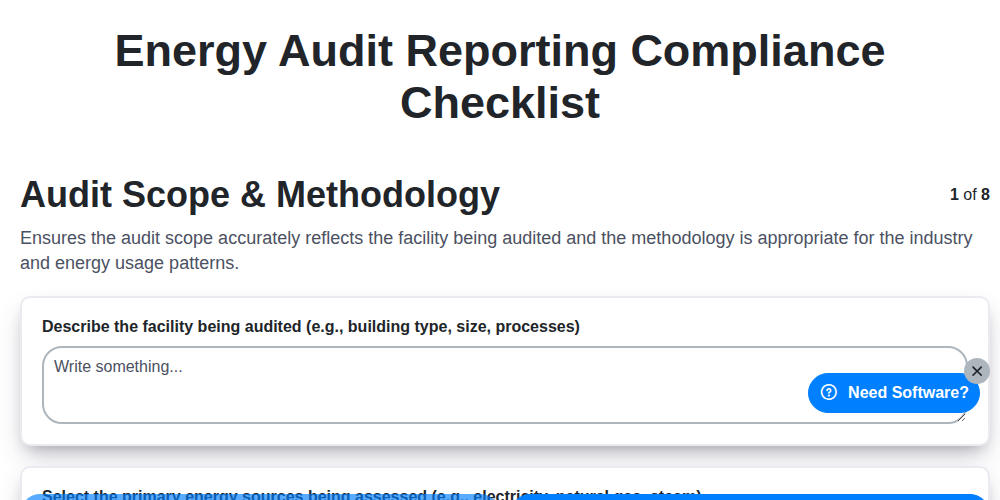
Energy Audit Reporting Compliance: Your Checklist for Success
Need help with
Energy?
Have a question? We're here to help. Please submit your inquiry, and we'll respond promptly.