Supply Chain Business Continuity Checklist: Your Essential Guide to Resilience
Published: 12/09/2025 Updated: 07/02/2026
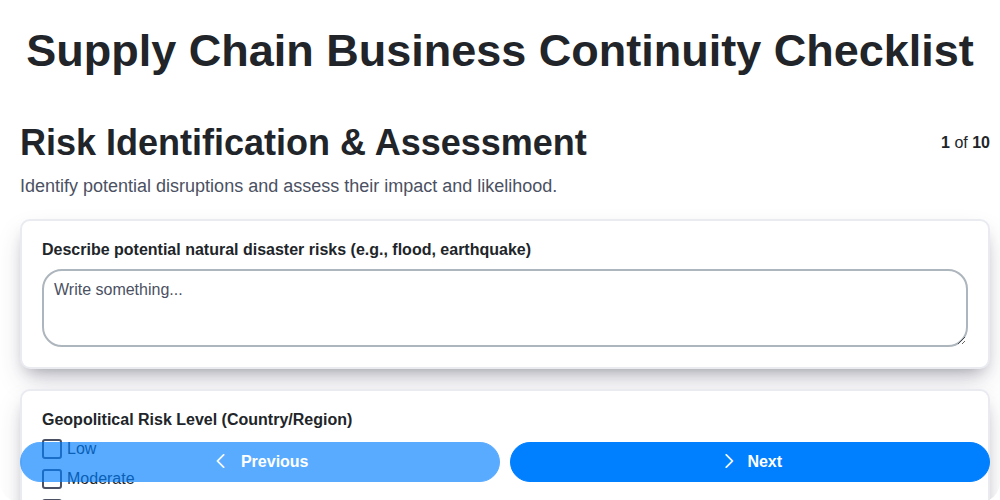
Table of Contents
- Introduction: Why Supply Chain Business Continuity Matters
- 1. Risk Identification & Assessment: Knowing Your Vulnerabilities
- 2. Critical Function Analysis: Defining Your Core Operations
- 3. Alternative Sourcing & Production: Building Redundancy
- 4. Logistics & Distribution Contingency: Keeping Goods Flowing
- 5. Communication & Coordination: Staying Connected During Disruptions
- 6. Technology & Data Backup: Protecting Your Digital Assets
- 7. Employee Safety & Wellbeing: Prioritizing Your People
- 8. Recovery Procedures: Steps to Restore Operations
- 9. Testing & Training: Ensuring Preparedness
- 10. Plan Review & Update: Maintaining Relevance
- 11. Financial Considerations for Business Continuity
- 12. Leveraging Technology for Enhanced Resilience
- 13. Regulatory Compliance and Business Continuity
- Conclusion: Building a Resilient Supply Chain for the Future
- Resources & Links
TLDR: Unexpected disruptions happen! This checklist helps you prepare your supply chain for anything - from natural disasters to supplier failures. It covers everything from identifying risks to practicing recovery, ensuring your business keeps running smoothly even when things go wrong. Download the template and build a resilient supply chain today!
Introduction: Why Supply Chain Business Continuity Matters
In today's interconnected and increasingly volatile world, supply chain disruptions are no longer a what if scenario - they're a reality. From natural disasters and geopolitical instability to cyberattacks and pandemics, unforeseen events can cripple operations, impact revenue, and damage reputation. A robust supply chain business continuity plan isn't just a nice-to-have; it's a vital lifeline for survival and sustained success.
Think about it: a single supplier failure can cascade through your entire network, halting production, delaying deliveries, and frustrating customers. A reactive approach leaves you vulnerable and at the mercy of unpredictable circumstances. A proactive, well-defined business continuity plan, however, empowers you to anticipate risks, build resilience, and minimize disruption, allowing you to navigate challenges and emerge stronger. This checklist will provide a roadmap to achieving that resilience.
1. Risk Identification & Assessment: Knowing Your Vulnerabilities
Understanding your supply chain's vulnerabilities begins with a thorough Risk Identification & Assessment. This isn't a one-time event; it's an ongoing process. Start by brainstorming potential disruptions - consider natural disasters (hurricanes, earthquakes, floods), geopolitical instability, cyberattacks, supplier failures, pandemics, and even labor disputes.
Don't limit your assessment to immediate suppliers. Map your entire supply chain, several tiers deep if possible, to uncover hidden dependencies and potential points of failure. Utilize tools like risk matrices, vulnerability scans, and SWOT analyses to prioritize risks based on their likelihood and potential impact.
Ask critical questions: What are the potential consequences of each risk? How would it affect production, delivery, and customer satisfaction? What are the secondary and tertiary effects? Document all identified risks and their associated impact scores. This foundational step forms the bedrock of your entire business continuity plan.
2. Critical Function Analysis: Defining Your Core Operations
Before you can protect anything, you need to know what needs protecting. Critical Function Analysis (CFA) is the cornerstone of any robust supply chain business continuity plan. It's more than just listing all your processes; it's about identifying the absolutely essential functions that, if disrupted, would cripple your business.
Start by identifying all key business functions - everything from procurement and manufacturing to order fulfillment and customer service. Then, prioritize them. Consider:
- Revenue Impact: What functions, if stopped, would have the most immediate and significant impact on revenue?
- Customer Impact: Which functions are most critical for maintaining customer satisfaction and loyalty?
- Legal & Regulatory Compliance: Are there functions mandated by law or regulation that must continue?
- Reputational Risk: Which functions, if disrupted, would cause the most damage to your brand's reputation?
Rank these functions as Critical, Important, or Routine. Focus your continuity planning efforts primarily on those deemed Critical. For each critical function, document:
- Dependencies: What other functions, systems, or suppliers does this function rely on?
- Minimum Acceptable Service Level: What's the absolute lowest level of service you can provide while still remaining viable? This defines your recovery objectives.
- Recovery Time Objective (RTO): How long can this function be down before causing unacceptable consequences?
- Recovery Point Objective (RPO): How much data loss is acceptable?
By thoroughly analyzing your critical functions, you establish a clear understanding of what needs to be protected and the specific goals you need to achieve during a disruption. This analysis forms the foundation upon which the rest of your business continuity plan is built.
3. Alternative Sourcing & Production: Building Redundancy
Relying on a single supplier or a single production facility is a significant vulnerability. When disruptions hit - whether it's a natural disaster, geopolitical instability, or a supplier's operational failure - having backup options can be the difference between weathering the storm and experiencing crippling delays.
This section focuses on building redundancy into your supply chain. It's not just about having alternatives; it's about having viable alternatives, and knowing how to switch to them quickly and efficiently.
Key Actions:
- Identify Critical Components & Materials: Pinpoint items with limited suppliers or those vital for production. These are your priority targets for diversification.
- Qualify Secondary Suppliers: Don't wait for a crisis! Proactively research and audit potential alternative suppliers. Evaluate their capabilities, quality standards, capacity, and geographic location. Conduct sample orders to ensure they meet your requirements.
- Dual or Multi-Sourcing: Where feasible, implement a strategy of dual or multi-sourcing for critical components. This spreads risk and ensures a continuous supply.
- Geographic Diversification: Consider suppliers located in different regions to mitigate risks associated with regional events.
- Nearshoring/Reshoring Options: Evaluate bringing production closer to your primary market (nearshoring) or back to your home country (reshoring) to reduce lead times and improve responsiveness.
- Inventory Buffer: Strategic inventory of critical materials can provide a cushion during supplier disruptions, but be mindful of obsolescence and storage costs.
- Contractual Flexibility: Ensure your contracts with suppliers allow for flexibility in sourcing and production, including options for alternative suppliers and volume adjustments.
Remember to regularly review and update your alternative sourcing and production plans, as supplier landscapes and risks evolve continuously.
4. Logistics & Distribution Contingency: Keeping Goods Flowing
Disruptions to your logistics and distribution network can cripple your supply chain, regardless of how robust your other continuity plans are. A robust contingency plan here isn't just about having a backup truck; it's about proactive adaptation and resilience.
Here's what to consider:
- Route Diversification: Identify alternative transportation routes for critical shipments. Consider inland routes, rail options, and even air freight (with associated cost implications) to bypass potential bottlenecks. Map these alternatives and understand their lead times and capacity.
- Warehouse/Distribution Center Alternatives: Secure agreements with backup warehouse facilities. This could involve pre-negotiated storage agreements or relationships with third-party logistics (3PL) providers who can offer surge capacity.
- Carrier Risk Assessment: Evaluate the financial stability and operational capabilities of your key carriers. Diversify your carrier base to reduce reliance on a single provider.
- Inventory Buffering: Strategically increase safety stock levels of key raw materials and finished goods to provide a cushion against distribution delays. Understand the carrying costs associated with this, and balance risk mitigation with financial impact.
- Last-Mile Solutions: Consider alternative last-mile delivery options, such as local courier services or partnerships with grocery delivery platforms, especially vital for direct-to-consumer businesses.
- Real-Time Visibility: Implement tracking and visibility tools that provide real-time insights into the location and status of shipments. This allows for proactive adjustments and faster responses to disruptions.
- Mode Switching Capabilities: Evaluate the ability to switch between transportation modes (e.g., from truck to rail) in response to changing conditions.
Having a well-defined plan and regularly testing its effectiveness is essential to minimizing disruption and ensuring your goods keep flowing, even in the face of unexpected challenges.
5. Communication & Coordination: Staying Connected During Disruptions
When a supply chain disruption hits, clear and consistent communication is paramount. A lack of it can quickly amplify the problem, leading to confusion, delayed responses, and increased costs. This isn't just about informing stakeholders; it's about active coordination across all involved parties.
Your communication & coordination plan should address several key areas:
- Internal Communication: Establish a clear chain of command and communication protocols within your organization. Define who is responsible for disseminating information and to whom. Utilize multiple channels - email, instant messaging, video conferencing - to ensure everyone receives updates, even if one system fails.
- External Communication - Suppliers: Maintain regular communication with your critical suppliers before a disruption occurs. Pre-defined reporting procedures during an emergency are essential. Encourage transparency and open dialogue.
- External Communication - Customers: Keeping customers informed, even with bad news, builds trust and manages expectations. Prepare templates for customer communications outlining the situation, potential impact, and steps being taken.
- Emergency Contact Lists: Keep up-to-date contact lists for all key personnel, suppliers, customers, and emergency services. Include multiple contact methods where possible.
- Designated Spokesperson: Identify a designated spokesperson to handle external communications, ensuring consistent messaging and avoiding conflicting information.
- Communication Platform: Consider a dedicated platform (like a shared online portal) for disseminating updates and facilitating collaboration during a disruption.
- Regular Updates: Establish a frequency for updates - even if there's nothing new to report. Silence breeds anxiety and speculation.
Effective communication & coordination isn't just a 'nice-to-have'; it's a vital component of a resilient supply chain.
6. Technology & Data Backup: Protecting Your Digital Assets
In today's interconnected world, your supply chain's technology infrastructure - from ERP systems to warehouse management software - is as vital as any physical asset. A disruption affecting this digital backbone can cripple operations, leading to delays, lost orders, and significant financial losses. A robust technology & data backup plan isn't just about preventing data loss; it's about ensuring business continuity.
Here's what your plan should encompass:
- Regular Data Backups: Implement automated, offsite backups of all critical data. This includes order information, supplier details, inventory records, customer data, and financial information. Consider the 3-2-1 rule: 3 copies of your data, on 2 different media, with 1 copy offsite.
- Cloud Solutions: Leverage cloud-based solutions for data storage and applications. Cloud providers often offer built-in redundancy and disaster recovery capabilities.
- System Redundancy: Identify critical systems and establish redundant infrastructure. This could involve having backup servers, alternate internet connections, or failover systems that automatically take over in case of primary system failure.
- Cybersecurity Measures: Strengthen your cybersecurity posture to protect against ransomware attacks and other cyber threats that can disrupt data access. This includes robust firewalls, intrusion detection systems, and employee training.
- Disaster Recovery Plan for IT: Create a dedicated IT disaster recovery plan detailing the steps to restore systems and data in the event of a disruption. Clearly define roles and responsibilities.
- Backup Testing: Regularly test your data backup and recovery procedures to ensure they function correctly and that data can be restored within acceptable timeframes. Don't just assume your backups are working - verify them!
- Documentation: Document all IT infrastructure, software, and recovery procedures. This knowledge is crucial during a crisis when time is of the essence.
7. Employee Safety & Wellbeing: Prioritizing Your People
Your supply chain is only as strong as its people. During a disruption, employee safety and wellbeing must be a top priority. A stressed, injured, or displaced workforce significantly hinders recovery and can have long-term consequences.
This isn't just about physical safety during an event (like a natural disaster or facility emergency). It also encompasses mental and emotional wellbeing in the face of uncertainty. Consider these key steps:
- Establish Clear Communication Channels: Keep employees informed about the situation, potential risks, and available resources. Transparency builds trust and reduces anxiety.
- Provide Essential Support: Offer assistance with evacuation, shelter, food, and medical care. Have a designated point of contact for employee inquiries and concerns.
- Address Mental Health: Recognize that disruptions can cause stress, anxiety, and trauma. Provide access to mental health resources, employee assistance programs (EAPs), and support groups.
- Remote Work Considerations: If remote work is an option, ensure employees have the equipment, training, and support needed to perform their duties effectively while maintaining a healthy work-life balance.
- Flexibility and Understanding: Be flexible with work schedules and deadlines to accommodate individual needs and circumstances. Demonstrate empathy and understanding for those impacted.
- Post-Event Support: Recognize that recovery takes time. Continue providing support and resources to employees as they navigate the aftermath of the disruption.
- Regular Welfare Checks: Implement a system for checking in on employees, especially those in potentially vulnerable situations.
Prioritizing employee safety and wellbeing isn't just the right thing to do; it's a crucial investment in your supply chain's resilience.
8. Recovery Procedures: Steps to Restore Operations
The plan is fantastic, the drills are complete - but what happens when a disruption actually occurs? This is where your recovery procedures become your lifeline. They outline the specific, step-by-step actions needed to return your supply chain to normal operations after an event.
These aren't just vague statements; they are detailed instructions, focusing on phased resumption. Consider these key elements:
- Prioritized Restoration: Clearly define which functions need to be restored first. This will likely align with your Critical Function Analysis, focusing on those essential for survival and customer fulfillment.
- Task Assignment & Responsibility: Each recovery procedure must clearly assign responsibility. Who activates the procedure? Who is responsible for specific tasks? Don't assume - document it.
- Resource Allocation: Specify the resources (personnel, equipment, materials) required for each procedure. Where are they located? How will they be accessed?
- Sequenced Steps: Break down complex recovery steps into manageable, sequential tasks. Avoid ambiguity; use checklists within your procedures to ensure completeness.
- Escalation Procedures: Outline how to escalate issues if tasks are not completed on schedule or unexpected problems arise. Who needs to be notified and when?
- Damage Assessment: Include procedures for quickly assessing the extent of damage to facilities, inventory, and equipment.
- Transition Back to Normal: Detail the steps to safely and smoothly transition back to pre-disruption operations once the immediate crisis has passed, ensuring data integrity and operational stability. This should include a verification step.
9. Testing & Training: Ensuring Preparedness
A beautifully crafted business continuity plan is only as good as its execution. That's where testing and training become absolutely crucial. Simply having a document outlining procedures isn't enough; your team needs to know those procedures, understand their roles, and be confident in their ability to implement them under pressure.
Why Testing & Training Matter:
- Identifies Gaps: Testing reveals flaws in your plan that you might not otherwise discover. Simulations can expose bottlenecks, communication breakdowns, and resource deficiencies.
- Builds Confidence: Hands-on practice reduces anxiety and fosters a sense of preparedness among your employees. They're more likely to react calmly and effectively in a real crisis.
- Refines Procedures: Feedback from testing exercises provides invaluable opportunities to refine your plan and improve its practicality.
- Ensures Compliance: Many industry regulations require regular testing and training exercises.
Types of Testing & Training:
- Tabletop Exercises: These are discussion-based simulations where teams walk through potential scenarios and discuss their responses. They are low-cost and effective for identifying communication and coordination issues.
- Walkthrough Simulations: A more detailed walkthrough of specific procedures, often involving key personnel.
- Full-Scale Exercises: These involve simulating a real-world disruption and testing the entire business continuity plan. They are the most resource-intensive but offer the most realistic assessment.
- Training Workshops: Regularly scheduled workshops focusing on specific aspects of the plan, role-specific responsibilities, and emergency procedures.
- Lunch & Learn Sessions: Short, informal training sessions focusing on specific topics.
Frequency and Documentation:
Testing should be conducted at least annually, with more frequent testing for critical functions. Thorough documentation of all testing activities, including results, lessons learned, and corrective actions, is essential for continuous improvement. Don't just test - learn and adapt!
10. Plan Review & Update: Maintaining Relevance
A supply chain business continuity plan isn't a set it and forget it document. The business landscape, supplier relationships, and even global events are constantly evolving, making periodic review and updates absolutely essential. Think of it like preventative maintenance - regularly inspecting and adjusting ensures optimal performance.
Here's why ongoing review is critical:
- Changes in Your Business: New products, markets, or organizational structures necessitate adjustments to your plan.
- Supplier Evolution: Supplier capabilities and risks shift. Regularly reassess their resilience.
- External Factors: Geopolitical instability, climate change, and economic fluctuations demand plan adaptation.
- Lessons Learned: Post-incident reviews and even drills reveal weaknesses and areas for improvement.
- Regulatory Changes: New compliance requirements may influence your continuity strategy.
How to Keep Your Plan Current:
- Scheduled Reviews: Implement a regular review cycle (e.g., annually, bi-annually).
- Trigger Events: Update the plan after any significant disruption, near miss, or change in operations.
- Cross-Functional Collaboration: Involve representatives from all relevant departments to ensure a holistic perspective.
- Documentation: Maintain a record of all updates, including rationale and responsible parties.
By prioritizing ongoing review and update, you ensure your supply chain business continuity plan remains a vital asset, ready to protect your organization from unforeseen challenges.
11. Financial Considerations for Business Continuity
Developing a robust business continuity plan isn't just about procedures; it's about financial preparedness. The costs associated with disruptions can be devastating, and a well-funded plan can be the difference between recovery and collapse. Here's a breakdown of key financial aspects to consider:
- Cost of Prevention: Implementing the actions within your business continuity plan - alternative sourcing, technology upgrades, employee training - all have a cost. These upfront investments are crucial and should be factored into your budget. Don't view them as expenses; see them as insurance.
- Potential Losses During Disruption: Quantify the potential financial losses from various disruption scenarios. This includes lost revenue, penalties for missed deadlines, damage to reputation, and potential legal costs. These calculations will justify the investment in prevention.
- Funding Sources: Explore funding options for your business continuity plan. This may include internal budgeting, securing insurance coverage (including business interruption insurance), or seeking external financing.
- Insurance Review: Ensure your insurance policies adequately cover potential losses from various disruption events. Review coverage limits and exclusions regularly.
- Working Capital Buffer: Maintain a sufficient working capital buffer to cover operational expenses during a disruption, as payment cycles might be disrupted.
- Contingency Funds: Establish dedicated contingency funds specifically for business continuity activities. This provides immediate access to resources during a crisis.
- Return on Investment (ROI) Analysis: Regularly evaluate the ROI of your business continuity plan, considering both the costs of implementation and the potential savings from avoided losses.
- Cost-Benefit Analysis of Recovery Strategies: Each recovery strategy (e.g., cloud-based backups vs. local redundancy) has a financial implication. A thorough cost-benefit analysis is essential for optimal resource allocation.
12. Leveraging Technology for Enhanced Resilience
The backbone of any robust supply chain business continuity plan is technology. It's no longer enough to have static documents - your plan needs to be dynamic, responsive, and easily accessible. Here's how technology can strengthen your resilience:
- Real-time Visibility: Implement track-and-trace systems, IoT sensors, and advanced analytics platforms to gain real-time visibility across your supply chain. Knowing where your goods are, and the status of your suppliers, allows for proactive intervention.
- Cloud-Based Collaboration: Utilize cloud-based platforms for collaboration and information sharing with suppliers, partners, and internal teams. This ensures everyone has access to the latest updates and can coordinate effectively, regardless of location.
- Data Backup & Recovery: Automated backups of critical data are non-negotiable. Implement robust cloud-based data recovery solutions to minimize downtime and data loss in the event of a disruption. Consider geographically diverse backup locations for added security.
- AI & Predictive Analytics: Leverage AI and machine learning to analyze historical data and predict potential disruptions. This allows you to implement preventative measures and proactively adjust your plans.
- Digital Twins: Explore using digital twins - virtual representations of your supply chain - to simulate scenarios and test your contingency plans in a risk-free environment.
- Automated Workflow Tools: Automate tasks like supplier communication, order adjustments, and inventory rebalancing to speed up response times and reduce manual errors.
13. Regulatory Compliance and Business Continuity
Business continuity planning isn't solely about keeping operations running; it's also inextricably linked to regulatory compliance. Depending on your industry (healthcare, finance, food & beverage, etc.), you're likely subject to regulations mandating resilience and preparedness for disruptions. Failing to adhere to these requirements can result in hefty fines, legal action, and reputational damage.
Your business continuity plan must explicitly address these regulatory obligations. This includes:
- Identifying Applicable Regulations: Thoroughly research and document all relevant federal, state, and local regulations concerning business continuity, data protection, incident response, and disaster recovery. Examples might include GDPR, HIPAA, PCI DSS, or industry-specific mandates.
- Mapping Requirements to Plan Components: Clearly demonstrate how each section of your BCP addresses the required regulations. For instance, your data backup and recovery procedures should align with data privacy laws. Your communication plan needs to consider reporting requirements during an incident.
- Documentation & Audit Trails: Maintain meticulous records of your BCP development, testing, and updates. These records will be crucial during audits and inspections.
- Staying Current: Regulations are constantly evolving. Establish a process for monitoring regulatory changes and updating your BCP accordingly. Assign responsibility for this ongoing vigilance.
- Legal Review: Consider a legal review of your business continuity plan to ensure it is fully compliant and robust against potential legal challenges.
Ignoring regulatory compliance within your BCP is a significant risk - it's a critical ingredient in overall business resilience.
Conclusion: Building a Resilient Supply Chain for the Future
Ultimately, a robust supply chain business continuity checklist isn't a one-and-done exercise. It's a living document that demands constant attention and evolution. The threats we face - from natural disasters and geopolitical instability to cyberattacks and pandemics - are dynamic, and our preparedness must be too. By consistently implementing and refining the steps outlined in this checklist - risk assessment, alternative sourcing, communication protocols, data backup, and more - you're not just mitigating potential disruptions; you're building a resilient supply chain capable of weathering any storm and emerging stronger on the other side. This proactive approach fosters customer trust, protects your brand reputation, and secures your organization's long-term viability in an increasingly unpredictable world. Investing in business continuity isn't an expense; it's an investment in the future.
Resources & Links
- NIST Cybersecurity Supply Chain Risk Management (SCRM) Framework: Provides a comprehensive framework for managing supply chain risks, aligning with NIST standards and offering practical guidance. Essential for understanding risk identification, assessment, and mitigation.
- The Resilience Blueprint: Offers tools, resources, and guidance on building resilient supply chains, including assessments, workshops, and a community forum. Focuses on a holistic approach to resilience.
- Supply Chain Brain: A leading online resource for supply chain professionals, providing news, analysis, and insights on business continuity and risk management. Search for 'business continuity' within the site.
- APICS (The Association for Supply Chain Management): Offers certifications, courses, and resources on supply chain management, including topics related to business continuity planning and risk mitigation. Explore their learning center and resources section.
- Business Continuity Institute (BCI): A globally recognized authority on business continuity. Provides standards, training, and resources for developing and maintaining business continuity plans. Offers a wealth of expertise.
- Federal Emergency Management Agency (FEMA): While focused on disaster preparedness, FEMA's resources and checklists are valuable for supply chain business continuity planning, particularly concerning logistics and distribution contingency planning. Relevant for sections 4 and 8.
- ISC² (International Information System Security Certification Consortium): Provides cybersecurity training and certifications. Relevant to the 'Technology & Data Backup' section (section 6), with a focus on protecting digital assets and ensuring data recovery.
- Society for Human Resource Management (SHRM): Offers resources related to employee safety, wellbeing, and crisis communication - vital for the 'Employee Safety & Wellbeing' section (section 7). Search for resources on 'crisis management' and 'business continuity'.
- International Organization for Standardization (ISO): Provides standards like ISO 22301 (Security and resilience - Business continuity management systems) which can be used as a framework for creating a comprehensive business continuity plan. Critical for section 10 and a guiding principle for the entire article.
- DLA Piper (Legal Resources): Provides legal insights and articles regarding regulatory compliance related to supply chain risks, which is relevant for Section 13. Search for 'supply chain' and 'compliance' within their publications.
- Salesforce Supply Chain Resilience Solutions: Salesforce offers tools and solutions that can help companies build resilient supply chains by providing visibility, collaboration, and automation. Relates to leveraging technology for enhanced resilience (Section 12)
- Everest Group (Supply Chain Technology Research): Provides research and consulting on supply chain technology, including risk management and resilience. Helps companies understand available technology solutions. Relevant for Section 12.
Frequently Asked Questions
What is supply chain business continuity?
Supply chain business continuity (SCBC) refers to the ability of your supply chain to withstand disruptions and recover quickly. It's about planning for potential risks - from natural disasters and cyberattacks to supplier failures - and ensuring you can continue operations or resume them swiftly.
Why is a supply chain business continuity checklist important?
A checklist provides a structured approach to identify vulnerabilities, implement preventative measures, and create response plans. It helps ensure you don't overlook critical areas and provides a clear path to building a more resilient supply chain.
What are common risks covered in a supply chain business continuity checklist?
Typical risks include supplier failures, natural disasters (hurricanes, floods, earthquakes), cyberattacks, geopolitical instability, pandemics, transportation disruptions, and internal process failures.
Who should be involved in developing a supply chain business continuity checklist?
A cross-functional team is essential, including representatives from procurement, logistics, operations, IT, finance, and risk management. Collaboration across departments ensures a comprehensive assessment.
How often should I review and update my supply chain business continuity checklist?
At a minimum, review your checklist annually. More frequent reviews (quarterly or even monthly) are recommended, especially after significant events or changes in your supply chain or risk landscape.
What's the difference between business continuity planning and disaster recovery?
Business continuity planning (BCP) focuses on maintaining business functions during a disruption. Disaster recovery (DR) is a subset of BCP, specifically focused on restoring IT systems and data after a disruptive event. SCBC incorporates both.
What does 'mapping the supply chain' mean in the context of this checklist?
Mapping your supply chain means identifying all key suppliers, sub-suppliers, logistics providers, and critical nodes within your network. This includes knowing their locations, dependencies, and potential vulnerabilities.
What is a 'single point of failure' and how does the checklist address it?
A single point of failure is a component or supplier whose failure would significantly disrupt your supply chain. The checklist prompts you to identify these and develop alternative sourcing or process options to mitigate the risk.
How can I prioritize risks identified in the checklist?
Prioritize risks based on their likelihood of occurrence and potential impact on your business. Consider using a risk matrix (likelihood vs. impact) to rank risks and focus on those with the highest combined score.
What role does communication play in supply chain business continuity?
Effective communication is critical. The checklist should address communication plans with suppliers, customers, employees, and other stakeholders to keep them informed during a disruption and coordinate recovery efforts.
Comments
There are no comments yet. Be the first to add one!
SCM - Supply Chain Management Solution Demo
Struggling with supply chain disruptions & lack of visibility? ChecklistGuro delivers a centralized SCM solution, connecting your suppliers, manufacturers, & distributors for improved collaboration and control. Simplify operations & boost efficiency.
Related Articles
The Ultimate Supply Chain Inventory Accuracy Audit Checklist: A Step-by-Step Guide
Supply Chain Capacity Planning Checklist: Ensure Readiness for Peak Demand
The Ultimate Supply Chain Network Optimization Checklist: A Step-by-Step Guide
Supply Chain Risk Assessment Checklist: Your Guide to Resilience
Navigating Sustainability: Your Supply Chain Compliance Checklist

Top 10 SAP Logistics Business Network (LBN) Alternatives for 2025

Fortify Your Supply Chain: The Ultimate Resilience Assessment Checklist
Navigating Global Trade: Your Essential Import/Export Compliance Checklist
Need help with
Supply Chain Management (SCM)?
Have a question? We're here to help. Please submit your inquiry, and we'll respond promptly.