The Ultimate Supply Chain Packaging Optimization Checklist: A Step-by-Step Guide
Published: 12/09/2025 Updated: 07/02/2026
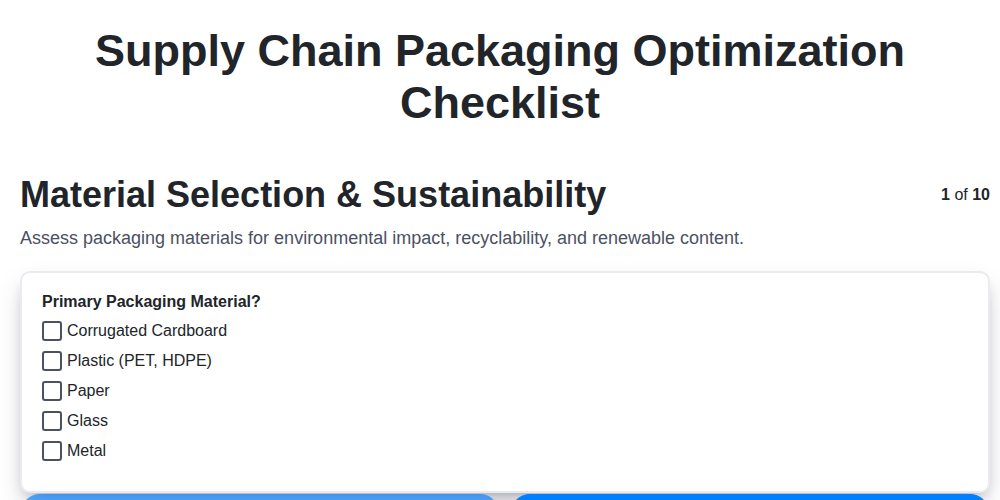
Table of Contents
- Introduction: Why Packaging Optimization Matters
- 1. Material Selection & Sustainability: Eco-Friendly Choices
- 2. Size & Weight Reduction: Minimizing Waste & Costs
- 3. Protective Performance: Ensuring Product Integrity
- 4. Compliance & Regulations: Navigating the Legal Landscape
- 5. Cost Analysis & ROI: Justifying Investment
- 6. Design for Automation: Streamlining the Packaging Process
- 7. Branding & Marketing: Packaging as a Marketing Tool
- 8. Supplier Collaboration: Building Strong Partnerships
- 9. Transportation Optimization: Reducing Shipping Costs
- 10. End-of-Life Management: Circularity and Recycling
- 11. Assessing Current Packaging Performance
- 12. Implementing Changes & Tracking Results
- Conclusion: The Future of Packaging Optimization
- Resources & Links
TLDR: Stop wasting money and resources on inefficient packaging! This checklist guides you through 10 critical areas - from eco-friendly materials to automation-ready design - ensuring your packaging is cost-effective, protects your products, complies with regulations, and supports your brand, all while minimizing environmental impact.
Introduction: Why Packaging Optimization Matters
In today's competitive landscape, supply chain packaging isn't just about containing a product - it's a critical lever for efficiency, sustainability, and profitability. Poorly optimized packaging can lead to increased shipping costs, higher material waste, damage during transit, and ultimately, a negative impact on your brand reputation.
Optimizing your packaging goes beyond aesthetics; it's a holistic approach encompassing material choices, design, and logistics. It directly impacts your bottom line, minimizes environmental impact, and contributes to a more resilient and responsive supply chain. This checklist is your guide to systematically evaluating and improving your packaging strategy, ensuring it aligns with your business goals and industry best practices. Let's explore how strategic packaging optimization can transform your supply chain.
1. Material Selection & Sustainability: Eco-Friendly Choices
Packaging is a significant contributor to waste and environmental impact. Moving beyond basic functionality, modern supply chains demand packaging that aligns with sustainability goals. This starts with carefully evaluating material selection.
Consider these crucial aspects:
- Recycled Content: Prioritize materials with a high percentage of post-consumer recycled content. This reduces reliance on virgin resources and minimizes landfill waste.
- Renewable Resources: Explore options like bamboo, mushroom packaging, or seaweed-based alternatives - materials that are naturally replenished.
- Biodegradability & Compostability: While requiring specific disposal conditions, biodegradable and compostable packaging offers a path toward closed-loop systems, returning nutrients to the earth. Be sure to verify certifications (e.g., BPI, ASTM) to ensure these claims are verified.
- Reduced Material Usage: Sometimes the most sustainable choice is simply less material. Optimize dimensions and thickness to achieve protection with minimal usage.
- Life Cycle Assessment (LCA): A more comprehensive approach is to conduct an LCA to understand the total environmental impact - from raw material extraction to end-of-life disposal - of different packaging options.
- Avoid Problematic Materials: Steer clear of materials with high environmental concerns, such as PVC or certain types of foam, unless viable alternatives are unavailable.
Remember, sustainability isn't just about feeling good; it's increasingly a customer expectation and can positively influence your brand reputation and bottom line.
2. Size & Weight Reduction: Minimizing Waste & Costs
Excessive packaging - bulky boxes, unnecessary void fill - isn't just wasteful; it directly impacts your bottom line and your brand's image. Reducing the size and weight of your packaging offers a wealth of benefits, from lower shipping costs and reduced material usage to a smaller carbon footprint and improved customer perception.
Here's how to tackle it:
- Analyze Current Dimensions: Start with a thorough audit of your existing packaging. Measure and weigh everything. Don't just look at the overall dimensions - consider individual components like dividers, inserts, and protective cushioning.
- Right-Size Your Packaging: This is the core principle. Determine the absolute minimum size required to safely transport and protect your product. Don't be afraid to scale down! Software and tools can often help with this process.
- Consider Product Configuration: Can your products be shipped in a more compact configuration? Re-engineering product assembly or using flat-pack designs can significantly reduce overall dimensions.
- Optimize Void Fill: Excessive void fill is a major culprit in unnecessary weight and size. Explore alternatives like air pillows, honeycomb paper, or even biodegradable packing peanuts, but always aim to minimize its use.
- Layered Packaging: Evaluate if you can reduce layers of packaging, potentially combining protective functions into a single material.
- Dimensional Weight: Be acutely aware of dimensional weight charges from carriers. Smaller, lighter packages often win out, even if the actual weight is slightly higher.
- Continuous Improvement: Size and weight reduction isn't a one-time project. Regularly review and adjust your packaging to ensure ongoing optimization.
3. Protective Performance: Ensuring Product Integrity
Packaging isn't just about containment; it's your last line of defense against damage during transit and handling. Compromised protective performance translates directly to returns, waste, and dissatisfied customers - impacting your bottom line and brand reputation. This section focuses on evaluating and optimizing your packaging's ability to safeguard your product.
Key Considerations:
- Drop Testing: Don't guess, test! Conduct drop tests simulating realistic handling conditions (warehouse stacking, conveyor belt drops, delivery impacts). Vary drop heights and impact angles.
- Vibration Testing: Simulate long-distance transportation with vibration testing. This identifies weaknesses in your packaging that might lead to product failure over time.
- Compression Testing: Evaluate how your packaging holds up under pressure, common in palletized shipments and warehouse storage.
- Cushioning & Impact Absorption: Assess the effectiveness of your cushioning materials (void fill, foam, bubble wrap, corrugated inserts). Are they adequately protecting vulnerable product areas? Consider alternative materials like molded pulp or honeycomb paper for increased performance.
- Product Vulnerability Assessment: Understand your product's weak points. Are there specific areas prone to damage? Tailor your protective measures accordingly.
- Damage Mapping: Analyze returned products to identify common damage points and patterns. This data provides invaluable insight into packaging shortcomings.
- Material Thickness & Strength: Optimize material gauge (thickness) to balance protection with material usage and cost. Thicker isn't always better; it's about the right thickness for the job.
By diligently focusing on protective performance, you minimize product damage, reduce waste, and cultivate customer trust.
4. Compliance & Regulations: Navigating the Legal Landscape
Supply chain packaging isn't just about protecting your product; it's also about adhering to a complex web of regulations. Failure to comply can result in costly fines, product recalls, and reputational damage. This section details key considerations.
Global and Regional Variations: Regulations vary significantly. The EU's Packaging and Packaging Waste Directive, for example, places strict requirements for recyclability and material usage. The US has regulations from agencies like the EPA regarding hazardous materials packaging and labeling. China's policies on waste and imports are also constantly evolving. Researching and understanding these variations for each market you operate in is paramount.
Specific Material Restrictions: Many regions have restrictions on certain materials. For instance, plastics are under increased scrutiny, leading to bans or limitations on their use in specific applications or for certain products. Consider alternatives, and stay abreast of updates on banned or restricted substances (RoHS, REACH, etc.).
Labeling Requirements: Accurate and compliant labeling is crucial. This includes details about materials used, recycling instructions, country of origin, and potentially hazard warnings. Misleading or inaccurate labeling can lead to significant penalties.
Food Safety Regulations: If you're in the food industry, packaging must comply with stringent food safety regulations. This might involve using specific food-grade materials and adhering to hygiene standards throughout the packaging process.
Accessibility Considerations: Packaging accessibility for individuals with disabilities is increasingly important, and some regions have mandates related to ease of opening and handling.
Staying Informed: Regulations change frequently. Subscribe to industry newsletters, consult with regulatory experts, and dedicate resources to ongoing compliance monitoring. A proactive approach minimizes risk and demonstrates your commitment to responsible packaging practices.
5. Cost Analysis & ROI: Justifying Investment
Packaging optimization isn't just about feeling good about sustainability or improved performance - it's about the bottom line. A thorough cost analysis and ROI calculation is crucial to justifying the investment in any packaging overhaul. This goes far beyond the initial material costs.
Breakdown the Total Cost of Ownership (TCO): Consider the entire lifecycle. This includes:
- Material Costs: The price per unit of packaging material, factoring in potential volume discounts.
- Manufacturing Costs: Internal labor, equipment usage, and overhead associated with packaging production.
- Transportation Costs: Reduced weight and smaller dimensions directly translate to lower shipping expenses. Factor in fuel costs, carrier rates, and potential for increased pallet/container utilization.
- Storage Costs: Optimized size can dramatically reduce warehouse space requirements, lowering storage and handling expenses.
- Damage & Returns: Improved protective performance reduces product damage and associated return costs - a significant, often overlooked, expense.
- Waste Disposal Costs: Consider costs associated with disposing of obsolete packaging or excess materials.
- Labor Costs (Packing & Unpacking): Design for automation or ergonomic improvements can reduce labor hours required for packing and unpacking operations.
Calculate the ROI: Compare the total cost of your current packaging solution against the projected costs of the optimized solution. Factor in both tangible savings (reduced material, transportation, damage) and intangible benefits (enhanced brand perception, increased customer satisfaction). A clear ROI calculation, projected over a reasonable timeframe (e.g., 1-3 years), provides compelling justification for the investment and demonstrates the long-term value of packaging optimization. Don't forget to consider the impact on revenue - improved packaging can even drive sales!
6. Design for Automation: Streamlining the Packaging Process
Modern warehouses and fulfillment centers are increasingly reliant on automated systems - robots, conveyors, and high-speed packing machines. Packaging that isn't designed with these systems in mind can cause bottlenecks, damage, and wasted time. This isn't just about fancy equipment; it's about making your packaging work with the technology already in use or planned for implementation.
Here's what to consider when designing for automation:
- Consistent Dimensions & Shape: Automated systems thrive on predictability. Avoid irregular shapes and varying dimensions. Standardized box sizes and shapes are key.
- Flat-Pack Potential: Can your packaging be shipped flat and assembled on-demand at the fulfillment center? This significantly reduces shipping volume and storage space.
- Easy Orientation: Ensure packages can be easily oriented by automated systems. Clear markings or designated 'up' arrows can be crucial.
- Barcode & QR Code Placement: Strategically place barcodes and QR codes for rapid and accurate scanning by automated systems. Consider placement that isn't obstructed by product or tape.
- Tamper-Evident Features Integration: Consider how tamper-evident features will interact with automated processes. Avoid designs that hinder scanning or damage systems.
- Material Compatibility: Ensure your packaging materials are compatible with robotic handling - they should be durable enough to withstand gripper pressure and not damage equipment.
By proactively designing for automation, you can minimize manual intervention, increase throughput, and reduce overall operational costs.
7. Branding & Marketing: Packaging as a Marketing Tool
Your packaging isn't just about protecting your product; it's a vital touchpoint with your customer and a powerful marketing asset. Think beyond basic functionality - consider how your packaging can tell your brand story and enhance the overall customer experience.
Here's how to leverage your packaging for marketing:
- Reinforce Brand Identity: Colors, logos, fonts, and imagery should be consistent with your overall brand aesthetic. Repetition builds recognition and trust.
- Highlight Key Benefits: Briefly and clearly communicate the product's value proposition on the packaging. What makes it special?
- Tell a Story: Consider incorporating elements that evoke emotion and connect with your target audience. This could be through imagery, text, or even the texture of the packaging.
- Create an Unboxing Experience: A memorable unboxing experience can generate excitement and social media buzz. Think about the ease of opening, the visual appeal, and any included extras.
- Sustainability Storytelling: Increasingly, consumers value eco-friendly practices. If you're using sustainable materials, clearly communicate that! Transparency builds trust and aligns with consumer values.
- Limited Editions & Seasonal Packaging: Create a sense of exclusivity and excitement with limited-edition designs for special occasions.
- Social Media Integration: Include QR codes or social media handles to encourage engagement and build community.
Don't underestimate the power of a well-designed package to create a lasting impression and drive sales.
8. Supplier Collaboration: Building Strong Partnerships
Packaging optimization isn't a solo endeavor. Successful implementation relies heavily on robust collaboration with your packaging suppliers. They possess deep material expertise, manufacturing capabilities, and often, innovative solutions you might not have considered internally.
Here's how to cultivate a strong supplier partnership for optimal packaging:
- Open Communication: Establish clear and consistent communication channels. Regularly share your packaging goals, performance data, and emerging challenges.
- Joint Innovation Sessions: Schedule dedicated sessions to brainstorm new materials, design approaches, and sustainable alternatives together. Suppliers can often provide valuable insights based on their industry experience.
- Early Involvement: Engage suppliers early in the design and development process - ideally, before finalizing your packaging specifications. This allows them to proactively identify potential issues and contribute to cost-effective and optimized solutions.
- Shared Data & Feedback Loops: Implement a system for sharing data - performance metrics, customer feedback, cost breakdowns - to foster continuous improvement and address any shortcomings.
- Long-Term Relationships: Prioritize building long-term partnerships over short-term cost savings. Consistent collaboration breeds trust and encourages suppliers to invest in your unique needs.
- Supplier Scorecards: Develop a scorecard to regularly evaluate supplier performance against agreed-upon metrics, ensuring accountability and driving continuous improvement.
By treating your packaging suppliers as strategic partners, you unlock a wealth of expertise and drive significant improvements in your packaging's performance, sustainability, and overall cost-effectiveness.
9. Transportation Optimization: Reducing Shipping Costs
Packaging doesn't exist in a vacuum. Its impact extends directly to your transportation costs. Overly bulky or heavy packaging dramatically increases freight charges, impacting your bottom line and carbon footprint. Optimizing for transport isn't just about shrinking sizes; it's about strategic design.
Here's how to tackle transportation optimization:
- Cube Utilization: Maximize the space utilized within each shipping container (pallets, truckloads, etc.). Work with your packaging engineers to design pack sizes that fill these spaces effectively, minimizing wasted volume.
- Weight Reduction: Every pound counts. Lighter packaging materials directly translate to lower shipping costs. Explore alternatives to heavy plastics or unnecessary layers of protection.
- Pallet Optimization: Consider non-standard pallet sizes or using unit load devices (ULDs) to maximize truck capacity.
- Consolidation: Group smaller shipments into larger ones whenever possible. Negotiate better rates with carriers based on volume.
- Carrier Negotiation: Regularly review carrier contracts and rates. Seek competitive bids and leverage your shipping volume.
- Mode Selection: Evaluate different transportation modes (truck, rail, air, sea) to identify the most cost-effective option for your specific needs. Factor in speed vs. cost trade-offs.
- Route Optimization: Leverage technology and data analytics to optimize delivery routes, minimizing mileage and fuel consumption.
- Package Consolidation: Can multiple items be combined into a single package, especially for e-commerce fulfillment?
- Consider Regionalization: For geographically dispersed customers, regional distribution centers can reduce shipping distances and costs.
10. End-of-Life Management: Circularity and Recycling
The lifecycle of your packaging doesn't end when the consumer receives the product. Responsible end-of-life management is crucial for sustainability and brand reputation. Moving beyond a linear "take-make-dispose" model and embracing circularity should be a key consideration.
Here's what to focus on:
- Material Recyclability: Prioritize materials with established recycling infrastructure. Research and verify recyclability rates in your target markets. Don't assume - check local guidelines.
- Design for Disassembly: Can the packaging be easily separated into its constituent materials for recycling? Complex multi-layer constructions significantly hinder the process.
- Compostability: For certain products and markets, compostable packaging offers a viable alternative. Ensure certifications (e.g., ASTM D6400 for compostability) are obtained and clearly communicated to consumers.
- Closed-Loop Systems: Explore the possibility of partnering with recycling facilities or creating your own take-back programs. This allows you to reclaim packaging materials and feed them back into your supply chain.
- Consumer Education: Clearly communicate recycling instructions on the packaging itself. Use recognizable symbols and concise messaging to encourage proper disposal.
- Reduce Waste & Reusable Options: Before considering recycling, assess if reusable packaging or reduced material usage can minimize end-of-life impact altogether.
Implementing these strategies will minimize environmental impact, reduce waste, and position your brand as a leader in sustainable packaging practices.
11. Assessing Current Packaging Performance
Before diving into optimization strategies, it's crucial to understand your current packaging performance. This isn't about just acknowledging what you think is happening; it's about data-driven insights. Start with a thorough audit.
Gather Data: Collect information on several key areas. This includes:
- Damage Rates: Track the percentage of shipments arriving damaged. Segment this data by product, shipping method, and geographic region.
- Packaging Costs: Detail all packaging-related expenses-materials, labor, storage, disposal.
- Shipping Costs: Analyze how packaging size and weight impact transportation costs (including fuel, handling, and potential surcharges).
- Customer Feedback: Review customer complaints related to packaging - excessive waste, difficult opening, or damage during transit.
- Internal Feedback: Solicit input from warehouse staff, fulfillment teams, and customer service representatives regarding packaging challenges.
- Sustainability Metrics: If you have existing sustainability initiatives, analyze current metrics like material usage, recyclability rates, and carbon footprint.
Analyze and Identify Bottlenecks: Once you've gathered data, look for patterns and areas for improvement. High damage rates point to inadequate protection. Excessive weight indicates opportunities for material reduction. Frequent customer complaints highlight design flaws or usability issues. A combination of these issues can signal a systemic problem. Document these findings-they're the baseline against which you'll measure your optimization progress. Don't skip this step; it informs the direction of your optimization efforts and allows you to quantify the benefits of any changes you implement.
12. Implementing Changes & Tracking Results
Optimizing your supply chain packaging is an iterative process, not a one-and-done project. Once you've completed the previous steps, it's crucial to implement your chosen changes systematically and meticulously track their impact.
Start with a phased rollout. Pilot your new packaging solutions with a smaller subset of products or distribution channels. This allows for controlled testing and identification of any unforeseen challenges before a full-scale implementation.
Key Metrics to Monitor:
- Damage Rates: A primary indicator of protective performance improvements.
- Shipping Costs: Track changes in transportation expenses per unit.
- Material Costs: Analyze the cost savings (or increases) associated with new materials.
- Labor Costs: Assess the impact on packing and unpacking efficiency.
- Sustainability Metrics: Monitor reductions in waste, carbon footprint, and water usage.
- Customer Feedback: Actively solicit feedback on packaging aesthetics, ease of opening, and overall experience.
Regularly review these metrics, compare them to your baseline data, and make necessary adjustments. Don't be afraid to revert to previous solutions or experiment with new approaches if the results aren't as expected. Document everything - your decisions, the data you collected, and the lessons you learned. This will build a valuable knowledge base for future optimization efforts and ensure continuous improvement in your supply chain packaging.
Conclusion: The Future of Packaging Optimization
The journey towards supply chain packaging optimization isn't a one-time fix, but an ongoing evolution. As consumer expectations shift towards sustainability and e-commerce continues to boom, agility and innovation will be paramount. Expect to see increased adoption of smart packaging solutions - incorporating sensors, data analytics, and even connected devices - to provide real-time visibility and predictive capabilities. Circular economy principles will become deeply embedded, prioritizing reusable, recyclable, and compostable materials. Ultimately, the future of packaging optimization isn't just about reducing costs; it's about building resilient, responsible, and brand-enhancing packaging strategies that contribute to a healthier planet and a more satisfied customer. Embracing this checklist and the principles it embodies is a crucial step toward that future.
Resources & Links
- Sustainable Packaging Coalition: A neutral forum for companies, organizations, and individuals to learn and evolve sustainable packaging practices. Provides resources, guidelines, and working definitions for sustainable packaging.
- United States Environmental Protection Agency (EPA) - Recycling: Official EPA information on recycling, including what can be recycled and the recycling process. Essential for understanding end-of-life management and circularity considerations.
- National Institute of Standards and Technology (NIST): NIST provides guidance and resources related to testing and standards for packaging performance, including drop tests and vibration tests - important for protective performance (section 2).
- PackagingLaw.com: A comprehensive resource for legal and regulatory compliance related to packaging, covering topics like labeling, extended producer responsibility (EPR), and food contact regulations (section 2).
- Supply Chain Digital: Offers articles and insights on various supply chain topics, including packaging optimization and technology advancements. Useful for staying updated on trends and best practices.
- McKinsey & Company: McKinsey publishes reports and articles on supply chain optimization, including considerations for cost analysis and ROI (section 4). Search for 'packaging' or 'supply chain' for relevant content.
- IHS Markit (now part of S&P Global): Provides market research and analysis for the packaging industry, including insights into material costs, trends, and technologies. Useful for cost analysis and supplier collaboration (section 2, 5, and 8).
- S&P Global: Following the acquisition of IHS Markit, S&P Global offers expanded market intelligence, including packaging industry data for cost analysis and ROI justification (section 4).
- Packaging Design: Showcases innovative packaging designs and provides insights into the role of packaging in branding and marketing (section 2).
- The Corrugated Packaging Alliance: Provides information on corrugated packaging, including its properties, benefits, and sustainability. Relevant for material selection and protective performance.
- Rigid Boxes, Inc.: Example website showcasing advanced packaging designs which can be inspiration for section 3 & 2.
- Packaging Machinery.com: Resource for understanding automation in the packaging process; helpful when discussing 'Design for Automation' (section 2).
- GS1: Global standards organization which creates standards for packaging labels and barcodes. Helps with compliance and traceability (section 2).
Frequently Asked Questions
What is supply chain packaging optimization?
Supply chain packaging optimization is the process of designing and implementing packaging solutions that minimize costs, reduce waste, improve efficiency, and enhance sustainability across the entire supply chain, from manufacturing to delivery and beyond. It considers factors like material usage, transportation, storage, and end-of-life disposal.
Why is packaging optimization important for my supply chain?
Optimized packaging can lead to reduced shipping costs, decreased damage rates, lower material costs, improved warehouse space utilization, a smaller environmental footprint, and a stronger brand image due to sustainability efforts. Ultimately, it boosts profitability and customer satisfaction.
Who should use this checklist?
This checklist is designed for anyone involved in supply chain packaging decisions, including procurement managers, packaging engineers, logistics specialists, sustainability officers, and operations managers. It's beneficial for businesses of all sizes, from startups to large corporations.
What are the key areas covered in the checklist?
The checklist covers a wide range of areas including packaging material selection, package design, dimensional optimization, protective packaging, labeling, sustainability considerations, regulatory compliance, and continuous improvement strategies.
What types of packaging materials should I consider for optimization?
The checklist encourages exploration of various materials including recycled content, biodegradable options, lightweight alternatives, and innovative materials like mushroom packaging or seaweed-based solutions. Consider the product's fragility and transportation conditions when making choices.
How does dimensional optimization contribute to packaging optimization?
Dimensional optimization (DO) focuses on minimizing the dimensions of packages while still providing adequate product protection. This reduces shipping volume and weight, leading to lower transportation costs and better utilization of warehouse space.
What role does sustainability play in packaging optimization?
Sustainability is a crucial aspect. The checklist emphasizes using eco-friendly materials, minimizing waste, designing for recyclability, and considering the overall environmental impact of the packaging solution. Reducing your carbon footprint and aligning with consumer demand for sustainable practices are key.
What are some common regulatory compliance considerations for packaging?
Depending on your industry and geographical location, you may need to comply with regulations related to labeling, material content (e.g., restriction of hazardous substances), and recycling requirements. The checklist guides you to consider these factors.
How often should I review and update my packaging solutions?
Packaging should be reviewed regularly - ideally at least annually - or whenever significant changes occur, such as changes in product design, transportation methods, regulatory requirements, or material availability. Continuous improvement is key.
Where can I find additional resources if I need more help?
The checklist provides links to relevant industry associations, packaging suppliers, and sustainability resources. You can also consult with packaging experts or conduct further research on specific areas of interest.
Comments
There are no comments yet. Be the first to add one!
SCM - Supply Chain Management Solution Demo
Struggling with supply chain disruptions & lack of visibility? ChecklistGuro delivers a centralized SCM solution, connecting your suppliers, manufacturers, & distributors for improved collaboration and control. Simplify operations & boost efficiency.
Related Articles
The Ultimate Supply Chain Inventory Accuracy Audit Checklist: A Step-by-Step Guide
Supply Chain Capacity Planning Checklist: Ensure Readiness for Peak Demand
The Ultimate Supply Chain Network Optimization Checklist: A Step-by-Step Guide
Supply Chain Risk Assessment Checklist: Your Guide to Resilience
Navigating Sustainability: Your Supply Chain Compliance Checklist

Top 10 SAP Logistics Business Network (LBN) Alternatives for 2025

Fortify Your Supply Chain: The Ultimate Resilience Assessment Checklist
Navigating Global Trade: Your Essential Import/Export Compliance Checklist
Need help with
Supply Chain Management (SCM)?
Have a question? We're here to help. Please submit your inquiry, and we'll respond promptly.