Mastering Warehouse Receiving: Your Compliance Checklist Template
Published: 12/09/2025 Updated: 07/02/2026
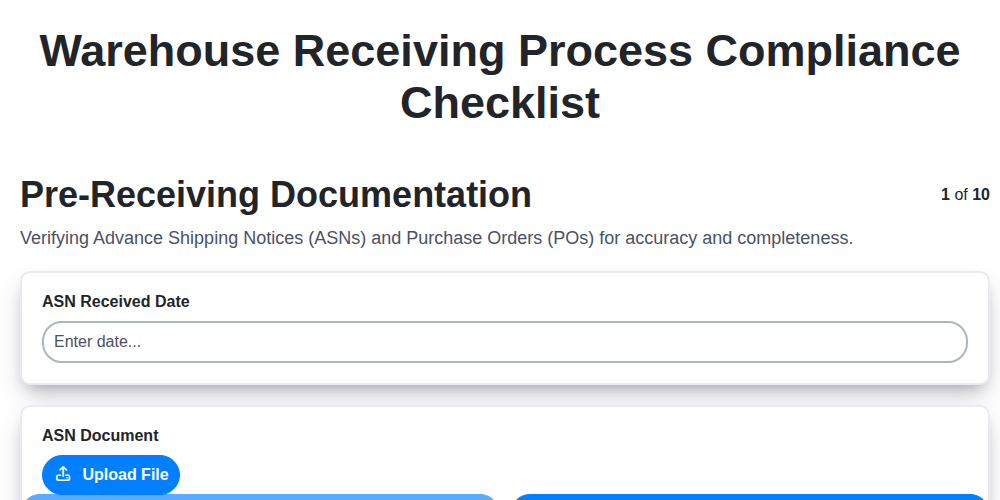
Table of Contents
- Introduction: Why a Receiving Compliance Checklist Matters
- 1. Pre-Receiving Documentation: Setting the Stage
- 2. Receiving Area Preparation: A Clean and Organized Workspace
- 3. Arrival & Dock Assignment: Efficient and Secure Loading
- 4. Goods Inspection & Verification: Accuracy is Key
- 5. Labeling and Marking: Clear Identification
- 6. Inventory Update & Putaway: Seamless Integration
- 7. Discrepancy Resolution: Addressing Issues Promptly
- 8. Documentation & Record Keeping: Traceability & Audit Trails
- 9. Safety & Security: Protecting People & Goods
- 10. Equipment Maintenance & Calibration: Reliability & Precision
- Common Receiving Compliance Challenges & Solutions
- Conclusion: Streamlining Your Receiving Process
- Resources & Links
TLDR: Overwhelmed by warehouse receiving? This checklist template streamlines the process, ensuring accuracy, safety, and compliance. It covers everything from pre-arrival paperwork to putaway and discrepancy resolution, minimizing errors and maximizing efficiency. Download it and ditch the chaos!
Introduction: Why a Receiving Compliance Checklist Matters
Receiving is the vital first step in your warehouse operations - a seemingly simple process that, if mishandled, can trigger a cascade of problems. Incorrectly received goods lead to inaccurate inventory, order fulfillment errors, increased costs, and dissatisfied customers. A robust receiving process is the backbone of a well-managed warehouse, but ensuring consistent adherence to best practices can be a challenge. That's where a receiving compliance checklist comes in. It's not just about ticking boxes; it's about establishing a standardized, auditable system that minimizes errors, protects your inventory, and ultimately, contributes to the overall efficiency and profitability of your business. This checklist provides a clear roadmap for your team, ensuring everyone follows the same steps, reducing variability, and improving accountability at every stage of the receiving process.
1. Pre-Receiving Documentation: Setting the Stage
Before a single box hits the receiving dock, a crucial step often overlooked is the pre-receiving documentation review. This isn't just about paperwork; it's about proactively minimizing errors and bottlenecks later on.
This process begins with receiving Advance Shipping Notifications (ASNs) from suppliers. These ASNs should detail the expected shipment - including items, quantities, and any special instructions. Thoroughly compare the ASN against your purchase orders to identify any potential discrepancies before the goods arrive. Look for mismatches in product codes, quantities, or delivery dates.
Don't stop at just the ASN. Consider checking supplier communications regarding specific requirements - pallet specifications, hazardous material handling instructions, or temperature requirements. Failure to account for these details upfront can lead to delays, re-work, and even safety hazards.
Finally, ensure all necessary receiving personnel are aware of the incoming shipment and any special instructions. Clear communication at this stage sets the foundation for a smoother, more efficient receiving process.
2. Receiving Area Preparation: A Clean and Organized Workspace
A chaotic receiving area is a recipe for errors, delays, and potential safety hazards. Before a single delivery arrives, a thorough preparation is vital. This isn't just about sweeping the floor (though that's a good start!). It involves a more comprehensive assessment and setup.
What to Check:
- Adequate Space: Ensure sufficient space for maneuvering forklifts, pallet jacks, and personnel. Clutter and obstructions significantly impact efficiency and increase the risk of accidents.
- Clear Pathways: Define clear and unobstructed pathways throughout the receiving area. Consider using floor markings or cones to guide traffic.
- Lighting: Verify adequate lighting levels to allow for accurate inspections and labeling. Dimly lit areas contribute to errors and safety concerns.
- Equipment Availability: Confirm the availability and functionality of necessary equipment such as pallet jacks, forklifts, scales, and inspection tools.
- Staging Area: Designate a clear staging area for incoming goods, separated from active receiving lanes to avoid bottlenecks.
- Waste Disposal: Ensure a readily accessible waste disposal area for packaging materials and damaged goods.
- Cleanliness: A thorough cleaning - sweeping, mopping, and removing debris - is essential for safety and maintaining product integrity.
A well-prepared receiving area isn't just tidy; it's a proactive measure to optimize workflow and minimize issues down the line.
3. Arrival & Dock Assignment: Efficient and Secure Loading
A smooth receiving process hinges on a well-managed arrival and dock assignment phase. Disorganization here can quickly snowball into delays, congestion, and potential safety hazards. This checklist item ensures a structured and secure loading experience.
Here's what needs to be checked:
- Advance Notification: Were advance shipping notices (ASNs) received and reviewed? This allows for proactive preparation.
- Carrier Check-in: Is there a designated check-in area and procedure for carriers? This minimizes driver loitering and improves flow.
- Dock Assignment Protocol: Is dock assignment based on pre-determined criteria (e.g., trailer size, product type, urgency)? Random assignment leads to inefficiencies.
- Communication: Is clear and timely communication maintained with the driver regarding expected arrival time and loading bay? Miscommunication causes frustration and delays.
- Security Checks: Are drivers properly identified and verified before entering the receiving area? This safeguards against unauthorized access.
- Trailer Inspection: Is a basic trailer inspection performed upon arrival (e.g., visible damage, load securement)? Early detection prevents potential issues later.
- Traffic Management: Is traffic flow directed safely and efficiently around the receiving area? Clearly marked lanes and designated routes are crucial.
- Yard Management System (YMS) Integration: If applicable, is the arrival accurately reflected and managed within the YMS?
- Driver Amenities: Is there access to basic amenities (restroom, water) for drivers, fostering positive relationships and compliance?
4. Goods Inspection & Verification: Accuracy is Key
This step is arguably one of the most critical in the entire receiving process. Simply unloading boxes isn't enough - ensuring you're receiving what you ordered, in the condition you expect, is paramount to minimizing errors downstream.
What to Check:
- Quantity Verification: Meticulously compare the quantity received against the purchase order and packing slip. Don't just eyeball it; count each item. Utilize handheld scanners where possible to automate and improve accuracy.
- Product Identification: Verify the product codes (SKUs), descriptions, and model numbers on the goods match the order documents and the product itself. Look for subtle variations that could indicate incorrect items.
- Condition Assessment: Inspect for any visible damage - dents, scratches, tears, or signs of mishandling. Note the condition on the receiving documents. Pictures are valuable here; take photos of any damage before accepting the shipment.
- Batch/Lot Numbers & Expiration Dates: For goods requiring traceability (food, pharmaceuticals, chemicals), carefully record batch/lot numbers and expiration dates. Verify they are within acceptable parameters.
- Packaging Integrity: Check for proper and secure packaging. Damaged packaging can often indicate internal damage.
- Sample Verification (If Applicable): For larger orders, consider randomly selecting a sample for a more detailed inspection.
Best Practices:
- Clear Acceptance Criteria: Define what constitutes an acceptable condition before the receiving process begins.
- Trained Personnel: Ensure receiving personnel are properly trained on inspection procedures and product knowledge.
- Document Everything: Detailed notes and photos are essential for resolving discrepancies and tracing issues.
5. Labeling and Marking: Clear Identification
Accurate labeling and marking are absolutely crucial for a smooth and efficient warehouse receiving process. It's more than just slapping a barcode on a box; it's about clear, consistent identification that minimizes errors and maximizes traceability.
Here's what your labeling and marking process should include:
- Verify Received Labels: Compare the received labels with the purchase order and packing slip immediately. Discrepancies here are early warning signs of potential issues further down the line.
- Apply Unique Warehouse Labels: Every item should receive a unique warehouse label containing critical information: part number, description, location code, lot number (if applicable), and date received. This ensures items can be easily located and tracked within your warehouse.
- Maintain Label Quality: Ensure labels are durable, legible, and securely affixed to the packaging. Poorly printed or falling-off labels lead to scanning errors and confusion. Consider using weatherproof labels if your environment is harsh.
- Standardize Label Placement: Consistent placement of labels makes scanning faster and more reliable. Train receiving staff to apply labels in the same location on all packages.
- Special Marking for Damaged Goods: Clearly mark any items received with visible damage. A red DAMAGED label, along with a brief description of the damage, is a simple yet effective way to flag these items for separate handling and reporting.
- Review and Update Label Formats: Regularly review your label formats and printing processes to ensure accuracy and compliance with evolving industry standards and your internal needs.
6. Inventory Update & Putaway: Seamless Integration
Once goods have cleared inspection and labeling, the critical transition to inventory update and putaway begins. This phase isn't just about physically moving products; it's about ensuring accuracy and optimizing warehouse efficiency.
The inventory management system should automatically trigger an update upon successful verification of received goods. This includes increasing on-hand quantities and, ideally, updating lot numbers, expiration dates (if applicable), and serial numbers. Manual entry is prone to error, so striving for automated integration between your receiving system and your Warehouse Management System (WMS) is paramount.
Putaway instructions generated by the WMS guide warehouse staff to the designated storage locations. These instructions should prioritize factors like product velocity (fast-moving items closer to receiving docks), storage type (e.g., ambient, refrigerated), and any special handling requirements. Consider implementing directed putaway, where staff are guided to specific locations via handheld scanners or voice-directed systems, minimizing errors and maximizing space utilization.
Regularly review and optimize your putaway strategies to accommodate seasonal fluctuations, new product introductions, and changing demand patterns. Incorrect putaway leads to wasted time searching for items during picking, negatively impacting order fulfillment speed and customer satisfaction. Confirming putaway completion in the system is as important as the receiving process itself - don't skip the final step!
7. Discrepancy Resolution: Addressing Issues Promptly
Discrepancies are inevitable in any warehouse receiving process. Whether it's a shortage in quantity, damage during transit, incorrect product codes, or a mismatch with the purchase order, failing to address these issues swiftly and effectively can lead to costly delays, inaccurate inventory records, and dissatisfied suppliers.
This section of your compliance checklist focuses on establishing clear procedures for identifying, documenting, and resolving discrepancies. Here's what should be included:
- Immediate Identification: Train receiving personnel to proactively look for discrepancies as they unload and inspect goods. Encourage them to flag any concerns immediately, rather than assuming they'll resolve themselves.
- Detailed Documentation: Any discrepancy must be thoroughly documented. This includes the date, time, description of the issue (e.g., Short 2 units of SKU 12345), the quantity affected, and the name of the person who identified it. Digital systems are ideal for this, but a paper log works too.
- Designated Responsibility: Clearly assign responsibility for discrepancy resolution. This might be a receiving supervisor, a purchasing agent, or a dedicated discrepancy resolution team.
- Supplier Communication: Establish a standardized process for contacting the supplier. This should include clear communication of the discrepancy details and the desired resolution (e.g., replacement shipment, credit, return authorization). Keep records of all communication.
- Internal Review: A system for periodic internal review of discrepancy resolution processes helps identify recurring issues and pinpoint opportunities for improvement in ordering, shipping, or receiving procedures.
- Root Cause Analysis: For significant or recurring discrepancies, conduct a root cause analysis to determine the underlying problem. Is it an incorrect PO? Packaging issues? Supplier error? Addressing the root cause prevents future occurrences.
- Corrective Action Tracking: Track corrective actions taken to resolve discrepancies and verify their effectiveness.
Prompt and accurate discrepancy resolution isn's just about fixing problems; it's about maintaining operational efficiency and building strong supplier relationships.
8. Documentation & Record Keeping: Traceability & Audit Trails
A robust receiving process isn't just about getting goods into the warehouse; it's about meticulously documenting everything that happens. This isn't just about ticking boxes; it's about creating a clear audit trail and ensuring full traceability of your inventory.
Here's why comprehensive documentation is crucial:
- Audit Readiness: Auditors (both internal and external) will scrutinize your receiving records. Accurate and complete documentation demonstrates compliance and best practices.
- Traceability: In the event of recalls, damage claims, or quality issues, you need to quickly identify the source of the problem and trace the goods back to their origin. Detailed records are essential for this.
- Problem Resolution: When discrepancies arise (and they will), clear records provide the information needed to investigate and resolve issues efficiently.
- Performance Analysis: Documented data allows you to analyze the receiving process, identify bottlenecks, and improve efficiency.
What to Record:
- Advance Shipping Notices (ASNs): Keep copies of all ASNs received.
- Receiving Reports: Generate a receiving report for each shipment, including details like carrier, date received, quantity received, and condition of goods.
- Inspection Reports: Document the results of all inspections, including photos of any damage or discrepancies.
- Discrepancy Reports: Record all discrepancies found, including descriptions, quantities, and resolution actions.
- Labeling Records: Maintain records of any labeling or marking performed.
- Communication Logs: Note any communication with suppliers, carriers, or internal departments related to the receiving process.
Best Practices:
- Digital Records: Embrace digital systems for record-keeping. This improves accessibility, reduces errors, and simplifies data analysis.
- Standardized Forms: Use standardized forms and templates to ensure consistency.
- Secure Storage: Store records securely, both digitally and physically.
- Retention Policy: Establish a clear record retention policy.
9. Safety & Security: Protecting People & Goods
Receiving isn't just about getting products into the warehouse; it's about doing so safely and securely. A lapse in either can lead to injuries, theft, and significant financial losses. This checklist section emphasizes the critical importance of prioritizing both.
Key Considerations & Checklist Items:
- Dock Door Security: Ensure dock doors are properly secured when not in use. This includes locking mechanisms and, where applicable, dock shelters or bumpers. Regularly inspect door seals and hardware.
- Traffic Control: Implement clear and visible traffic patterns for both vehicles and personnel. Use signage, floor markings, and barriers to delineate zones. Consider dedicated pedestrian walkways.
- Personal Protective Equipment (PPE): Mandate the use of appropriate PPE for all receiving personnel, including safety shoes, high-visibility vests, gloves, and eye protection. Ensure PPE is readily available and in good condition.
- Forklift and Equipment Safety: Verify forklift operators are properly trained and certified. Enforce speed limits and safe operating procedures. Implement regular equipment inspections.
- Perimeter Security: Secure the warehouse perimeter with fencing, lighting, and security cameras. Control access points and implement visitor protocols.
- Background Checks: Consider conducting background checks for receiving personnel, particularly those handling high-value goods.
- Theft Prevention: Implement measures to prevent theft, such as inventory tracking, secure storage areas, and regular audits.
- Emergency Procedures: Ensure all personnel are trained on emergency procedures, including fire safety, evacuation plans, and incident reporting. Regularly practice drills.
- Security Camera Review: Establish a schedule for reviewing security camera footage to identify potential threats or anomalies.
A proactive approach to safety and security during receiving isn't just about compliance; it's an investment in your employees, your inventory, and the overall success of your warehouse operation.
10. Equipment Maintenance & Calibration: Reliability & Precision
The efficiency and accuracy of your warehouse receiving process heavily rely on well-maintained and calibrated equipment. Forklifts, pallet jacks, scanners, scales, and even conveyor systems - all contribute to a smooth operation, and neglecting their upkeep can lead to costly errors, downtime, and safety hazards.
This section of the checklist focuses on ensuring your equipment is functioning optimally. Regular maintenance isn't just about preventing breakdowns; it's about guaranteeing the precision of your inventory data. An inaccurate scale, for example, could lead to discrepancies in stock levels and impact downstream processes.
Key actions to include:
- Scheduled Preventative Maintenance: Implement a documented schedule for routine maintenance of all receiving equipment. This should encompass visual inspections, lubrication, filter changes, and other manufacturer-recommended tasks.
- Calibration Verification: Scales, measurement devices, and barcode scanners must be regularly calibrated and verified against known standards. Document calibration results and establish a frequency based on usage and manufacturer guidelines (often annually, but potentially more frequently for high-volume or critical equipment).
- Forklift Inspections: Daily pre-shift inspections for forklifts are essential. Check fluid levels, tire condition, brakes, lights, and horn. Maintain logs and address any issues promptly.
- Scanner Functionality: Ensure barcode scanners are clean, functioning correctly, and can reliably read various barcode types.
- Record Keeping: Maintain detailed records of all maintenance activities, including dates, tasks performed, and technician signatures.
- Training: Ensure operators are properly trained on equipment operation and basic maintenance checks.
By prioritizing equipment maintenance and calibration, you're investing in the long-term reliability and accuracy of your warehouse receiving process.
Common Receiving Compliance Challenges & Solutions
Receiving isn't just about getting goods in; it's a critical control point impacting inventory accuracy, order fulfillment, and overall warehouse efficiency. Maintaining compliance throughout the receiving process can be surprisingly difficult. Here are some common pitfalls and practical solutions to keep your operation on track.
Challenge 1: Insufficient Pre-Receiving Communication: Lack of communication between suppliers and the receiving team leads to missed deliveries, incorrect dock assignments, and delays.
- Solution: Implement a standardized Advanced Shipping Notice (ASN) process. Ensure suppliers understand required information and deadlines. Automated ASN integration with your WMS is ideal.
Challenge 2: Inadequate Receiving Area Preparation: A disorganized or unprepared receiving area creates bottlenecks and increases the risk of damage.
- Solution: Establish a daily prep routine. Ensure adequate space, pallets, and necessary equipment (forklifts, scanners) are readily available. Designate specific zones for different product types.
Challenge 3: Dock Door Congestion & Assignment Errors: Incorrect or delayed dock assignments significantly impact receiving speed.
- Solution: Utilize a dock scheduling system. This could be a simple spreadsheet or a more sophisticated software solution. Clearly mark dock doors and communicate assignments effectively.
Challenge 4: Rushed Goods Inspection & Verification: Time pressure often leads to skipped or superficial inspections, risking the acceptance of damaged or incorrect items.
- Solution: Allocate sufficient time for inspection. Develop a standardized inspection checklist covering key criteria (quantity, condition, labeling). Train receiving staff thoroughly on inspection procedures.
Challenge 5: Improper Labeling & Marking Issues: Incorrect or missing labels cause confusion, misplacement, and potential order errors.
- Solution: Clearly define labeling requirements for suppliers. Implement a process for verifying labels upon receipt and applying corrective labels when necessary.
Challenge 6: Inventory Discrepancy Resolution Delays: Delayed resolution of discrepancies (quantity differences, damaged goods) disrupts workflow and creates inventory inaccuracies.
- Solution: Establish a clear discrepancy resolution process with defined roles and responsibilities. Implement a system for tracking and documenting discrepancies.
Challenge 7: Manual Documentation Errors: Reliance on paper-based documentation is prone to human error and is difficult to audit.
- Solution: Transition to a digital receiving system with barcode scanning and electronic signatures. Automate data entry to minimize errors.
Challenge 8: Lack of Safety Procedures: Ignoring safety protocols increases the risk of accidents and injuries.
- Solution: Conduct regular safety training for receiving personnel. Enforce proper forklift operation and pedestrian safety procedures.
Challenge 2: Overlooking Equipment Maintenance: Malfunctioning equipment leads to delays and potential safety hazards.
- Solution: Implement a preventative maintenance schedule for all receiving equipment, including forklifts, pallet jacks, and scanners.
Challenge 3: Calibration Neglect: Inaccurate scales or measuring devices impact inventory accuracy.
- Solution: Schedule regular calibration of all relevant equipment. Maintain records of calibration dates and results.
Challenge 2: Inconsistent Record Keeping: Poor record keeping makes it difficult to track receiving history and identify trends.
- Solution: Maintain a centralized, digital record of all receiving activities, including ASN details, inspection results, and discrepancy resolutions.
Challenge 3: Lack of Training: Untrained staff are more likely to make mistakes and compromise compliance.
- Solution: Provide comprehensive training on all receiving processes and procedures. Conduct refresher training periodically.
Conclusion: Streamlining Your Receiving Process
Ultimately, a robust and consistently followed receiving process is the backbone of a well-managed warehouse. This checklist isn't just a list of tasks; it's a framework for building a compliant, efficient, and safe receiving operation. By implementing and regularly reviewing this Warehouse Receiving Process Compliance Checklist, you can significantly reduce errors, minimize delays, and improve overall warehouse performance. Remember, ongoing training, periodic audits against this checklist, and a commitment to continuous improvement are key to maintaining a streamlined and compliant receiving process that supports your business goals. Don't view it as a burden, but as an investment in the health and success of your warehouse.
Resources & Links
- National Institute of Standards and Technology (NIST): NIST provides guidelines and standards relevant to supply chain security, metrology (measurement), and overall operational excellence. Their publications often inform best practices in receiving and inventory management. Specifically, investigate NIST Special Publication 800-184, Supply Chain Risk Management Practices for Federal Information Systems.
- Occupational Safety and Health Administration (OSHA): Crucial for safety compliance, OSHA provides regulations and resources related to warehouse operations, including forklift safety, material handling, and hazard communication. Ensure your receiving process adheres to relevant OSHA standards.
- Federal Motor Carrier Safety Administration (FMCSA): If your receiving process involves truck deliveries, the FMCSA website contains information on regulations for commercial drivers, vehicle maintenance, and loading/unloading procedures. Proper dock safety and driver communication are vital.
- APICS (The Association for Supply Chain Management): APICS offers certifications and resources related to supply chain management, including receiving and warehousing best practices. They provide training and information on optimizing logistics processes and improving efficiency. Look for resources related to CPIM (Certified in Production and Inventory Management).
- GS1: GS1 is a non-profit organization that develops and maintains global standards for supply chain visibility. Their barcode and RFID standards are essential for accurate receiving and inventory tracking. Understand and implement appropriate GS1 standards for product identification.
- International Organization for Standardization (ISO): ISO develops and publishes international standards. ISO 9001 (Quality Management) can be a helpful framework to implement and maintain a consistent and compliant receiving process. Consider ISO 9001 for a structured approach to quality assurance.
- Warehousing Education and Research Council (WERC): WERC conducts research and publishes benchmarking data related to warehousing operations, including receiving. Their research can provide insights into industry best practices and help identify areas for improvement in your receiving process. Explore their Benchmarking Studies.
- Steel Erectors Association of America: While focused on steel erection, this organization's resources on load securing, proper rigging, and material handling under load can be directly applicable to a robust, compliant receiving process, especially for heavy or bulky goods. Look for guidelines and training materials.
- Food and Drug Administration (FDA): If your warehouse handles food, pharmaceuticals, or medical devices, the FDA has stringent requirements for receiving, storage, and handling. Compliance with FDA regulations is critical to ensure product safety and integrity. Investigate FDA's guidance documents and regulations.
- SAE International: SAE develops standards related to automotive, aerospace, and commercial vehicle industries. Their standards can be relevant to equipment maintenance, calibration, and material handling procedures used in the receiving process. Explore SAE J3019 for load securement.
- Centers for Disease Control and Prevention (CDC): The CDC provides resources and guidelines for preventing the spread of infectious diseases in the workplace. Ensure your receiving area has appropriate protocols for handling potentially contaminated goods or materials, particularly relevant for imported items.
Frequently Asked Questions
What is warehouse receiving and why is it important?
Warehouse receiving is the process of accepting incoming shipments into a warehouse. It's crucial for maintaining accurate inventory, preventing costly errors, ensuring compliance with regulations, and ultimately, keeping your supply chain running smoothly.
Why do I need a compliance checklist for receiving?
A compliance checklist ensures consistency and accuracy in the receiving process. It helps prevent errors, minimizes discrepancies between orders and deliveries, reduces the risk of penalties from regulatory bodies, and improves overall efficiency.
What are the key elements typically included in a warehouse receiving compliance checklist?
A comprehensive checklist usually includes verifying the purchase order, inspecting the packaging for damage, counting the received goods, confirming product quantities and descriptions, checking expiration dates (if applicable), documenting discrepancies, and securing appropriate signatures and approvals.
What types of documents should I have readily available during the receiving process?
You'll generally need the purchase order (PO), packing slip, bill of lading (BOL), and potentially the supplier's invoice. Having these readily available allows for accurate verification against the shipment received.
What should I do if I notice damage to the shipment during receiving?
Immediately document the damage with photos and detailed notes on the packing slip and bill of lading. Notify the supplier and carrier about the damage as soon as possible and follow your company's damage claim procedure.
How should I handle discrepancies between the purchase order and the received shipment?
Carefully document all discrepancies (quantity, description, etc.). Notify the supplier and the relevant internal departments (purchasing, accounting) with detailed information and supporting documentation. Do not process the shipment until the discrepancy is resolved.
Who is responsible for completing the receiving compliance checklist?
Typically, warehouse receiving personnel or designated inventory specialists are responsible. However, your company's specific roles and responsibilities should be clearly defined in your standard operating procedures (SOPs).
What happens to the completed receiving compliance checklist after the receiving process is finished?
Completed checklists should be securely stored according to your company's record retention policy. They serve as valuable documentation for audits, discrepancy investigations, and performance tracking.
Where can I find more information on warehouse compliance regulations?
Resources include government agencies (like the FDA for food products), industry-specific trade associations, and legal counsel specializing in supply chain compliance.
Comments
There are no comments yet. Be the first to add one!
SCM - Supply Chain Management Solution Demo
Struggling with supply chain disruptions & lack of visibility? ChecklistGuro delivers a centralized SCM solution, connecting your suppliers, manufacturers, & distributors for improved collaboration and control. Simplify operations & boost efficiency.
Related Articles
The Ultimate Supply Chain Inventory Accuracy Audit Checklist: A Step-by-Step Guide
Supply Chain Capacity Planning Checklist: Ensure Readiness for Peak Demand
The Ultimate Supply Chain Network Optimization Checklist: A Step-by-Step Guide
Supply Chain Risk Assessment Checklist: Your Guide to Resilience
Navigating Sustainability: Your Supply Chain Compliance Checklist

Top 10 SAP Logistics Business Network (LBN) Alternatives for 2025

Fortify Your Supply Chain: The Ultimate Resilience Assessment Checklist
Navigating Global Trade: Your Essential Import/Export Compliance Checklist
Need help with
Supply Chain Management (SCM)?
Have a question? We're here to help. Please submit your inquiry, and we'll respond promptly.