Warehouse WMS Audit Checklist Template: Ensuring Operational Excellence
Published: 12/19/2025 Updated: 12/20/2025

Table of Contents
- Introduction: Why a WMS Audit is Crucial
- Understanding Your WMS Audit Checklist
- 1. System Configuration & Setup: Foundation for Success
- 2. Receiving & Putaway: Accuracy at the Entry Point
- 3. Inventory Management: Maintaining Visibility & Control
- 4. Order Processing & Picking: Efficiency in Fulfillment
- 5. Packing & Shipping: Ensuring Damage-Free Delivery
- 6. Data Accuracy & Reporting: The Truth in Your Numbers
- 7. User Access & Security: Protecting Sensitive Information
- 8. Integration with Other Systems: Seamless Data Flow
- 9. System Performance & Maintenance: Keeping Things Running Smoothly
- 10. Compliance & Documentation: Meeting Regulatory Requirements
- 11. Audit Findings and Corrective Actions
- Conclusion: Continuous Improvement with Your WMS
- Resources & Links
TLDR: Need to make sure your Warehouse Management System (WMS) is running smoothly and efficiently? This checklist template covers everything from setup and receiving to shipping and security. Use it to systematically audit your WMS, identify weaknesses, and boost warehouse operations - saving time, reducing errors, and improving overall performance!
Introduction: Why a WMS Audit is Crucial
A Warehouse Management System (WMS) is the backbone of efficient warehouse operations. But even the best system can drift from optimal performance over time. Changes in processes, personnel, product lines, or simply the passage of time can lead to misconfigurations, inaccuracies, and inefficiencies. That's where a regular WMS audit comes in. Think of it as preventative maintenance for your warehouse technology - catching potential problems before they snowball into costly errors, delays, and lost revenue. A robust WMS audit ensures your system is aligned with your current business needs, maximizes return on investment, and maintains regulatory compliance. Ignoring a WMS audit is like ignoring the warning lights in your car - it might seem fine now, but neglecting the issue can lead to a breakdown down the line. This checklist will provide a framework for a thorough assessment, keeping your WMS running smoothly and contributing to overall warehouse success.
Understanding Your WMS Audit Checklist
A Warehouse Management System (WMS) audit is a critical process for ensuring your warehouse operations are running efficiently, accurately, and securely. Think of it as a health check for your WMS - it identifies weaknesses, highlights areas for improvement, and ultimately safeguards your inventory and bottom line.
This checklist isn't just a list of tasks; it's a framework for evaluating the effectiveness of your WMS across various facets of your warehouse. Each section represents a key operational area impacted by your WMS. Skipping a section could mean overlooking significant vulnerabilities.
For example, a thorough review of System Configuration & Setup ensures your WMS is initially aligned with your business processes. Conversely, "Data Accuracy & Reporting" checks that the information driving your decisions is reliable. Similarly, examining "Integration with Other Systems" verifies seamless communication and data flow between your WMS and crucial platforms like your ERP or eCommerce systems.
Ultimately, a robust WMS audit, guided by a comprehensive checklist, helps optimize workflows, minimize errors, and drive continuous improvement within your warehouse. Let's break down what each of these sections covers in more detail.
1. System Configuration & Setup: Foundation for Success
A robust Warehouse Management System (WMS) hinges on a solid foundation - its initial configuration and setup. This isn't just about ticking boxes; it's about aligning the system to your warehouse's unique operational needs and future growth plans. A poorly configured system can lead to bottlenecks, inaccuracies, and frustrated users, negating the benefits of a WMS investment.
Here's what your audit should cover:
- Location Master Data: Verify that all storage locations (aisles, racks, bins) are accurately defined within the system, including dimensions and capacity. Are custom location types utilized effectively?
- User Roles & Permissions (Preliminary): While a deeper dive comes later in the security audit, confirm initial user role assignments are appropriate for their intended function.
- Units of Measure: Ensure consistency and accuracy in the system's handling of units of measure (e.g., each, case, pallet). Inconsistencies lead to errors in inventory counts.
- Workflow Definitions: Review and document the defined workflows for core processes like receiving, picking, and shipping. Do these workflows reflect best practices and your actual warehouse procedures?
- Hardware Integration: Confirm the successful integration and configuration of any connected hardware (scanners, printers, scales). Is data flowing accurately between hardware and the WMS?
- Customization Review: If customizations were implemented during setup, meticulously review their purpose, documentation, and impact on other system functions. Are they still relevant and effective?
- Initial Data Load Validation: If a large data migration occurred, verify the accuracy and completeness of the loaded data. Spot-check key items to ensure consistency.
2. Receiving & Putaway: Accuracy at the Entry Point
The receiving and putaway process is the critical first step in your warehouse operations - a flawed start can ripple through the entire system, impacting inventory accuracy, order fulfillment, and ultimately, customer satisfaction. This section of the WMS audit checklist focuses on ensuring that these processes are consistently executed and optimized.
Here's what we're checking:
- Receiving Documentation Verification: Are receiving documents (purchase orders, advance shipment notices) accurately matched with incoming goods before they enter the WMS? Are discrepancies immediately investigated and resolved?
- Item Identification & Data Entry: Are incoming items accurately identified (barcode scanning, manual entry) and entered into the WMS? Verify the use of appropriate units of measure and condition codes. Are damaged goods properly identified and flagged?
- Receiving Location Assignment: Is the WMS directing receiving staff to designated receiving locations? Are these locations optimized for efficiency and space utilization?
- Putaway Process Adherence: Are putaway instructions generated by the WMS being followed precisely? Are items placed in the correct location based on the system's logic (e.g., FIFO, ABC analysis)?
- Mobile Device Functionality: If using mobile devices for receiving and putaway, are they functioning correctly? Is data synchronization reliable?
- Exception Handling: How are discrepancies and errors handled during receiving and putaway? Is there a clear process for correcting mistakes and updating records?
- Training and SOPs: Are receiving and putaway personnel adequately trained? Are Standard Operating Procedures (SOPs) in place and consistently followed?
A robust receiving and putaway process minimizes errors, maximizes space utilization, and sets the stage for accurate inventory management.
3. Inventory Management: Maintaining Visibility & Control
This section of the audit assesses how effectively your Warehouse Management System (WMS) manages your inventory levels, location accuracy, and overall stock visibility. A robust inventory management module is crucial for minimizing losses, preventing stockouts, and optimizing warehouse space.
Key Areas to Review:
- Cycle Counting Procedures: Evaluate the frequency, methodology, and documentation of cycle counts. Are discrepancies investigated and resolved promptly? Does the WMS support cycle count tasks and reconciliation?
- Location Accuracy: Verify that the WMS maintains accurate location data for all inventory. Are location codes consistent and adhered to? Conduct spot checks of physical inventory versus WMS records.
- Lot/Serial Number Tracking: If applicable, ensure proper tracking of lot and serial numbers. Review procedures for expiration date management and traceability.
- Inventory Valuation: Assess the accuracy of inventory valuation methods within the WMS and their alignment with accounting practices.
- Dead Stock Identification & Management: Is the system configured to identify and flag slow-moving or obsolete inventory? Are there procedures for disposal or clearance?
- ABC Analysis & Segmentation: Does the WMS support ABC analysis to prioritize inventory management efforts based on value and demand?
- Reporting & Analytics: Are inventory reports (stock levels, turnover rates, obsolescence) generated regularly and utilized for decision-making?
- Physical Inventory Reconciliation: How does the WMS facilitate and manage the process of performing full physical inventory counts and reconciling discrepancies?
4. Order Processing & Picking: Efficiency in Fulfillment
This section of the WMS audit focuses on the core of your warehouse operations - how orders are processed and how items are picked. Inefficiencies here can significantly impact customer satisfaction and overall profitability.
Key Areas to Review:
- Order Routing & Prioritization: Are orders being routed to the optimal picking locations based on factors like priority, order type (e.g., urgent, wholesale), and available resources? Verify the logic behind the routing rules and ensure they's aligned with business needs.
- Picking Strategies: Evaluate the effectiveness of your picking methods (e.g., single order picking, batch picking, zone picking, wave picking). Is the chosen strategy maximizing efficiency while minimizing errors? Document the reasoning behind the chosen strategy.
- Picking Accuracy: Closely examine picking error rates. Are there recurring issues? Investigate root causes - are they related to barcode scanning, location accuracy, or picker training? Track and analyze error types.
- Picking Path Optimization: Does the WMS calculate the most efficient picking routes? Analyze travel time and distance for pickers. Is there a mechanism to optimize routes based on real-time conditions?
- Pick Verification: Are there checks in place to verify that the correct items are being picked? Consider weight checks, barcode scanning confirmations, or other verification methods.
- Task Interleaving: Does the system effectively interleave picking tasks with other warehouse activities to maximize resource utilization?
- Mobile Device Functionality: Assess the usability and functionality of mobile devices used for picking. Are they responsive and providing clear instructions?
- Putaway Verification Post-Picking: Does the system reconcile picked items with available inventory, and are discrepancies flagged for investigation?
Questions to Ask:
- What is the average time to process an order?
- What is the picking error rate?
- How are peak season demands handled within order processing and picking?
- How are new products and locations integrated into the picking process?
5. Packing & Shipping: Ensuring Damage-Free Delivery
This section focuses on the critical processes that ensure products leave your warehouse safely and reach customers in perfect condition. A breakdown here can highlight vulnerabilities leading to returns, lost revenue, and dissatisfied customers.
Checklist Items to Review:
- Packaging Materials: Are appropriate materials used for different product types (e.g., fragile items requiring extra cushioning)? Are these materials readily available and properly stocked? Verify their quality.
- Packing Procedures: Are packing instructions clear and consistently followed by warehouse staff? Are there standardized packing techniques for different product dimensions and weights? Observe packing stations for adherence to these procedures.
- Labeling Accuracy: Are shipping labels accurate, including correct addresses, barcodes, and tracking numbers? Are labels securely affixed to packages to prevent damage or detachment during transit? Utilize label verification technology if available.
- Shipping Carrier Selection: Are shipping carriers selected based on cost-effectiveness and reliability for specific destinations and product types? Are carrier performance metrics regularly monitored?
- Loading Procedures: Are packages loaded onto trucks or other transportation vehicles in a secure and organized manner to prevent shifting and damage during transit? Are pallets properly secured?
- Documentation & Manifests: Are shipping manifests accurate and complete? Do they match the physical shipment contents? Are discrepancies investigated and resolved promptly?
- Damage Prevention Training: Do packing and shipping personnel receive regular training on best practices for handling and packaging goods to minimize damage?
A systematic review here can identify areas for improvement, like adopting new packaging methods or revising loading protocols, leading to a reduction in shipping-related issues and boosting customer satisfaction.
6. Data Accuracy & Reporting: The Truth in Your Numbers
Data is the lifeblood of any warehouse operation, and your Warehouse Management System (WMS) is responsible for capturing and presenting it. But raw data isn't valuable; accurate data is. This section of your audit focuses on verifying the reliability of that data and the effectiveness of your reporting capabilities.
Here's what to scrutinize:
- Cycle Count Accuracy: Review cycle count procedures and results. Are discrepancies investigated and resolved promptly? Analyze the root causes of count errors - are they process-related, equipment-related, or training issues?
- Physical Inventory Reconciliation: Examine the process for reconciling physical inventory to WMS records. Are differences significant? How are they handled, and are corrective actions implemented?
- Report Validation: Test the accuracy of key WMS reports (e.g., inventory valuation, order fulfillment rate, shipping accuracy). Do the reports align with expected results? Can you easily extract the information needed for decision-making?
- Data Integrity Checks: Assess whether the WMS has built-in checks to prevent data entry errors and inconsistencies. Are these checks working effectively?
- Audit Trail Analysis: Review the audit trail functionality. Can you trace data changes and identify who made them? Is this data secure and accessible for authorized personnel?
- KPI Monitoring: Are Key Performance Indicators (KPIs) being tracked and reported consistently? Are targets being met? What steps are taken when KPIs fall below acceptable levels?
Ultimately, this audit segment isn't just about verifying numbers - it's about confirming the WMS is providing a trustworthy foundation for informed decisions and continuous improvement.
7. User Access & Security: Protecting Sensitive Information
Warehouse Management Systems (WMS) house a wealth of sensitive data - inventory levels, customer information, order details, and more. Robust user access controls and stringent security measures are paramount to prevent unauthorized access, data breaches, and operational disruptions. This section of the audit dives deep into ensuring your WMS is properly protected.
Key Audit Points:
- Role-Based Access Control (RBAC): Verify that user access is strictly controlled based on defined roles and responsibilities. Are users granted only the permissions necessary for their job functions? Are these roles clearly defined and consistently applied?
- Password Policies: Evaluate password complexity requirements (length, character types), expiration frequency, and enforcement mechanisms. Weak passwords are a significant vulnerability.
- Multi-Factor Authentication (MFA): Is MFA implemented for critical user accounts and administrative functions? This adds an extra layer of security beyond just a username and password.
- Regular User Access Reviews: Are user accounts periodically reviewed and deactivated for employees who have left the company or no longer require access? This prevents orphaned accounts.
- Audit Trails: Does the WMS maintain detailed audit trails of user actions, including logins, data modifications, and report generation? This helps identify suspicious activity.
- Security Awareness Training: Are warehouse staff trained on security best practices, including phishing awareness and secure data handling? Human error is often a contributing factor in breaches.
- Physical Security of Servers: While less common, if you manage your own servers, ensure the physical location is secure with appropriate access controls and environmental protections.
- Data Encryption: Is sensitive data, both in transit and at rest, encrypted?
8. Integration with Other Systems: Seamless Data Flow
Warehouse Management Systems (WMS) rarely exist in a vacuum. They're typically part of a larger ecosystem, interacting with ERP (Enterprise Resource Planning), e-commerce platforms, transportation management systems (TMS), and potentially even supplier portals. A critical area of any WMS audit focuses on the robustness and effectiveness of these integrations.
During the audit, we'll examine:
- Data Synchronization: Is data flowing consistently and accurately between the WMS and connected systems? Look for discrepancies in inventory levels, order status, and shipping information.
- API Functionality & Monitoring: Assess the APIs used for integration. Are they functioning correctly and are there mechanisms in place to monitor their performance and identify potential errors?
- Real-time vs. Batch Processing: Evaluate the integration method. While real-time integration is ideal for agility, batch processing might be acceptable for certain data. The suitability depends on business requirements and must be verified.
- Error Handling & Reconciliation: How are integration errors handled? Are there processes to identify, resolve, and reconcile any discrepancies that arise from failed data transfers?
- Customization & Maintenance: If customizations were made to the integrations, are they still functional and properly maintained? Outdated or poorly maintained integrations are a major source of errors.
- Security of Data Transfer: Secure data transfer protocols (like HTTPS) are essential. Verify encryption and access controls for all integrations.
A well-integrated WMS streamlines operations, minimizes manual intervention, and provides a holistic view of the supply chain. Conversely, flawed integrations lead to data silos, errors, and ultimately, inefficiencies.
9. System Performance & Maintenance: Keeping Things Running Smoothly
A Warehouse Management System (WMS) is only as effective as its uptime and efficiency. Neglecting system performance and maintenance can lead to slowdowns, errors, and ultimately, significant disruptions to your warehouse operations. This section of your audit checklist should focus on proactively identifying and addressing potential performance bottlenecks and ensuring the system remains robust and reliable.
Here's what to check:
- Regular Performance Monitoring: Are you tracking key performance indicators (KPIs) like transaction response times, database query speeds, and overall system load? Establish baseline metrics and regularly compare current performance against them.
- Database Maintenance: Is the database being optimized? This includes regular backups, index maintenance, and cleanup of obsolete data. A bloated and unoptimized database can significantly impact speed.
- Hardware Assessment: Evaluate server hardware (RAM, CPU, storage) to ensure it meets the current and anticipated future needs of the WMS. Consider scalability and potential upgrades.
- Software Updates & Patches: Are software updates and security patches applied promptly? Staying current is critical for performance improvements and vulnerability fixes.
- Error Log Review: Regularly review system error logs to identify and address recurring issues proactively.
- Scheduled Maintenance Windows: Are scheduled maintenance windows established and adhered to, minimizing disruption to warehouse operations?
- Disaster Recovery Plan: Do you have a documented and tested disaster recovery plan to ensure business continuity in the event of a system failure? This should include data backups and recovery procedures.
- User Feedback: Solicit feedback from warehouse users regarding system performance and usability. They often have valuable insights into areas for improvement.
10. Compliance & Documentation: Meeting Regulatory Requirements
Warehouse operations are increasingly scrutinized, and maintaining meticulous documentation and adhering to relevant regulations isn't just good practice - it's often legally required. Your WMS audit needs to thoroughly assess your compliance posture.
This section focuses on verifying that your WMS configuration and processes align with industry standards and legal mandates. Here's what to look for:
- Regulatory Alignment: Is your WMS configured to meet requirements for industries like food & beverage (FSMA, HACCP), pharmaceuticals (GxP), or hazardous materials handling? Documented procedures should reflect these specific regulations.
- Traceability Records: Can you easily trace products through your warehouse - from receipt to shipment - with complete details like lot numbers, expiration dates, and handling instructions? The WMS should support robust traceability.
- Audit Trails: Does the WMS maintain detailed audit trails of all user actions, system changes, and data modifications? This is crucial for investigations and demonstrating accountability.
- Record Retention Policies: Are your record retention policies clearly defined and adhered to? The WMS should support the secure storage and retrieval of records for the required retention period.
- Documentation of Changes: All modifications to the WMS configuration, processes, or user access should be documented with proper approvals. This includes change management procedures.
- Training Records: Verify that all warehouse personnel have received adequate training on the WMS and relevant compliance procedures. Keep records of training sessions and assessments.
- Disaster Recovery & Business Continuity: Evaluate if your disaster recovery plans are integrated with the WMS and adequately protect critical data and operational continuity. Are backups performed and tested regularly?
A strong compliance and documentation section within your WMS audit demonstrates a commitment to legal adherence and operational integrity, minimizing risk and building trust with stakeholders.
11. Audit Findings and Corrective Actions
The true value of a WMS audit lies not just in identifying issues, but in addressing them effectively. This section details a framework for documenting audit findings and outlining clear, actionable corrective actions.
Documenting Findings: For each area assessed (System Configuration, Receiving, etc.), clearly record:
- Finding Description: A concise explanation of the issue observed. Be specific (e.g., Receiving discrepancies exceeding 5% on average instead of Receiving issues).
- Severity Level: Assign a severity level (e.g., High, Medium, Low) based on the potential impact on operations. High severity findings warrant immediate attention.
- Responsible Party: Identify the individual or team accountable for resolving the finding.
- Target Completion Date: Establish a realistic deadline for resolving the issue.
Corrective Action Plan: For each finding, detail:
- Corrective Action: Specific steps to be taken to rectify the problem. This should be measurable and clearly defined.
- Resources Required: List any personnel, tools, or budget needed for the corrective action.
- Verification Method: Describe how the effectiveness of the corrective action will be verified (e.g., system reports, re-audit, observation).
- Sign-Off: Include a space for the responsible party and an auditor to sign off, acknowledging understanding and commitment.
Example Table:
| Finding Description | Severity | Responsible Party | Corrective Action | Resources | Verification Method | Completion Date | Sign-Off (Responsible) | Sign-Off (Auditor) |
|---|---|---|---|---|---|---|---|---|
| Receiving discrepancy threshold exceeded. | High | Receiving Team Lead | Implement cycle counting program; Review receiving procedures. | Cycle counter time; Training materials | Cycle Count Reports, Process Observation | 2024-03-15 | ||
| Insufficient user training on new picking method. | Medium | Training Coordinator | Develop and deliver training module; Create job aids. | Training time; Software License | Post-training assessment scores; Manager observation | 2024-02-29 |
Regularly review the corrective action plan's progress and adjust as necessary. A proactive approach to addressing audit findings strengthens the WMS and contributes significantly to warehouse efficiency and accuracy.
Conclusion: Continuous Improvement with Your WMS
Regular audits, using a comprehensive checklist like the one we've outlined, aren't a one-time fix; they's the foundation of continuous improvement. Think of it as preventative maintenance for your warehouse operations. By consistently reviewing and addressing areas for optimization, you'll proactively mitigate risks, boost efficiency, and ultimately enhance the ROI of your Warehouse Management System. Don't be afraid to revisit your checklist periodically, updating it to reflect changes in processes, technology, or regulatory requirements. A living, breathing audit process ensures your WMS remains a strategic asset, supporting your evolving business needs and keeping you ahead of the curve.
Resources & Links
- Supply Chain Digital: Offers in-depth articles, interviews, and insights on supply chain management, including warehouse management systems and operational excellence. Good for broader industry context.
- APICS (ASCM): Association for Supply Chain Management. Provides resources, certifications, and best practices related to supply chain and warehouse operations. Excellent for foundational knowledge and benchmarking.
- WMS Implementation Experts: Provides insights and guidance specifically around WMS implementation and optimization, including audit-related considerations. Offers practical advice and case studies.
- Zebra Technologies: A leading provider of barcode scanners, mobile computers, and related technologies often integrated with WMS. Their website offers information about industry trends and best practices.
- Infor: A major WMS provider. Their website provides information on WMS capabilities, features and relevant industry insights, useful for understanding system functionality.
- Blue Yonder (formerly JDA Software): Another key WMS provider. Their website has resources on supply chain management, warehousing, and order fulfillment technologies.
- Oracle: Offers a range of enterprise resource planning (ERP) and WMS solutions. Their website provides resources on supply chain management and related topics.
- Microsoft Dynamics 365 Supply Chain Management: Provides a cloud-based supply chain management solution, offering articles and guides on warehouse management best practices.
- National Institute of Standards and Technology (NIST): While not directly WMS-focused, NIST provides standards and guidelines for cybersecurity and data security, relevant to the 'User Access & Security' and 'Compliance' sections.
- ISO (International Organization for Standardization): Provides international standards related to quality management and process control, which can be helpful for the 'Compliance & Documentation' section.
Frequently Asked Questions
What is a Warehouse WMS Audit and why is it important?
A Warehouse WMS Audit is a systematic review of your Warehouse Management System (WMS) processes and functionalities. It's important to ensure operational excellence, identify inefficiencies, maintain data accuracy, comply with regulations, and optimize warehouse performance. It helps pinpoint areas for improvement, prevent costly errors, and ultimately boost profitability.
Who should perform a WMS audit?
Ideally, a combination of people should conduct the audit. This includes internal stakeholders like warehouse managers, process owners, and IT staff, as well as potentially external consultants with WMS expertise. A multi-faceted approach ensures a comprehensive evaluation.
What is the purpose of a WMS Audit Checklist Template?
The template provides a structured and consistent framework for conducting WMS audits. It outlines key areas to examine, ensuring no critical aspects are overlooked and allowing for accurate tracking of findings and corrective actions. It promotes consistency across audits and simplifies the process.
What are some of the key areas typically covered in a WMS Audit Checklist?
Common areas include data accuracy (inventory records, user permissions), system integration (ERP, shipping carriers), process adherence (receiving, putaway, picking, packing, shipping), security protocols, user training, and reporting functionality. The checklist template outlines each of these and more.
How often should a WMS Audit be conducted?
The frequency of audits depends on factors like warehouse size, complexity, and regulatory requirements. Generally, annual audits are recommended, but larger or more complex operations may benefit from semi-annual or quarterly reviews. Significant changes to the WMS or warehouse processes should trigger an immediate audit.
Can I customize the provided WMS Audit Checklist Template?
Yes, absolutely. The template is designed to be flexible and adaptable. You should customize it to reflect your specific warehouse processes, WMS functionalities, and business needs. Add or remove items as necessary to align with your unique environment.
What should I do after completing a WMS Audit?
After the audit, you should analyze the findings, prioritize areas for improvement, develop a corrective action plan with assigned responsibilities and deadlines, and implement the plan. Follow-up audits are crucial to verify the effectiveness of the corrective actions.
What are some potential benefits of implementing a WMS Audit Checklist Template?
Benefits include improved data accuracy, reduced operational costs, enhanced efficiency, better regulatory compliance, strengthened security, increased visibility into warehouse performance, and a more streamlined and optimized warehouse operation.
Where can I find additional resources or support for WMS Audits?
Look for industry associations, WMS vendors, consulting firms specializing in warehouse optimization, and online forums dedicated to supply chain and warehouse management. Many WMS vendors offer audit services and best practice guides.
Comments
There are no comments yet. Be the first to add one!
WMS - Warehouse Management System Solution Demo
Optimize your warehouse operations & boost efficiency! ChecklistGuro's WMS streamlines inventory management, order fulfillment, and shipping. Reduce errors, improve accuracy, & maximize space utilization. Manage it all with our Work OS.
Related Articles
Seamless RFID Integration: Your WMS Checklist Template for Success
Mastering Warehouse Labeling: Your WMS Process Checklist Template
The Ultimate Supply Chain Inventory Accuracy Audit Checklist: A Step-by-Step Guide
Mastering Putaway: Your WMS Optimization Checklist

Mastering Your Yard: A Warehouse WMS Yard Management Checklist Template
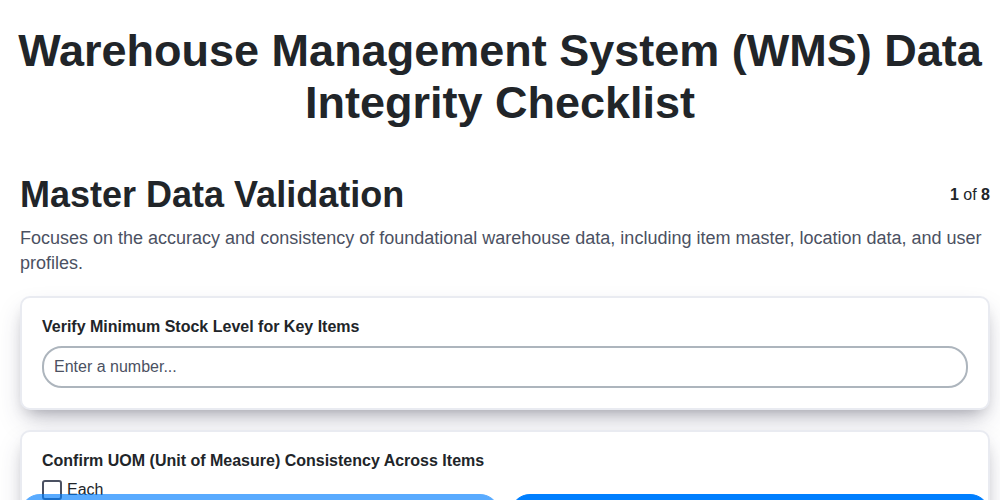
Warehouse Data Integrity: Your WMS Checklist Template
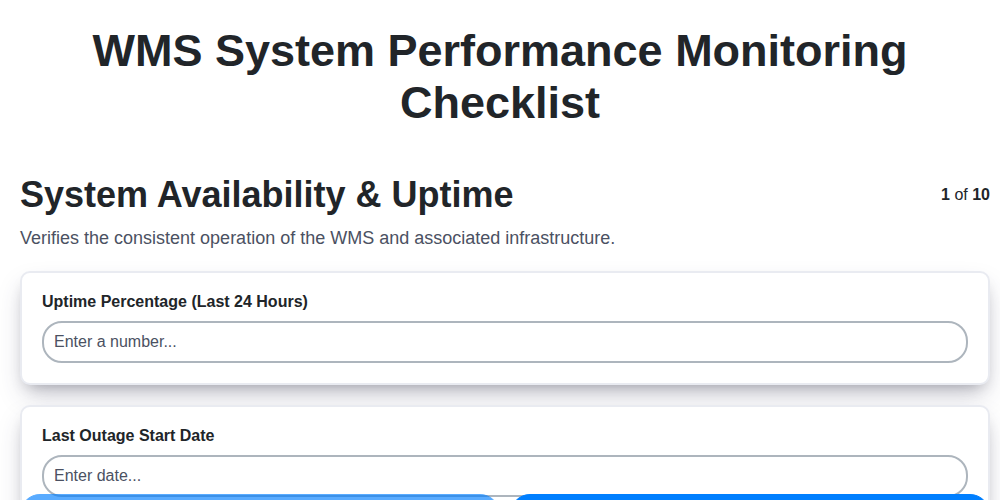
WMS System Performance Monitoring Checklist: A Comprehensive Guide
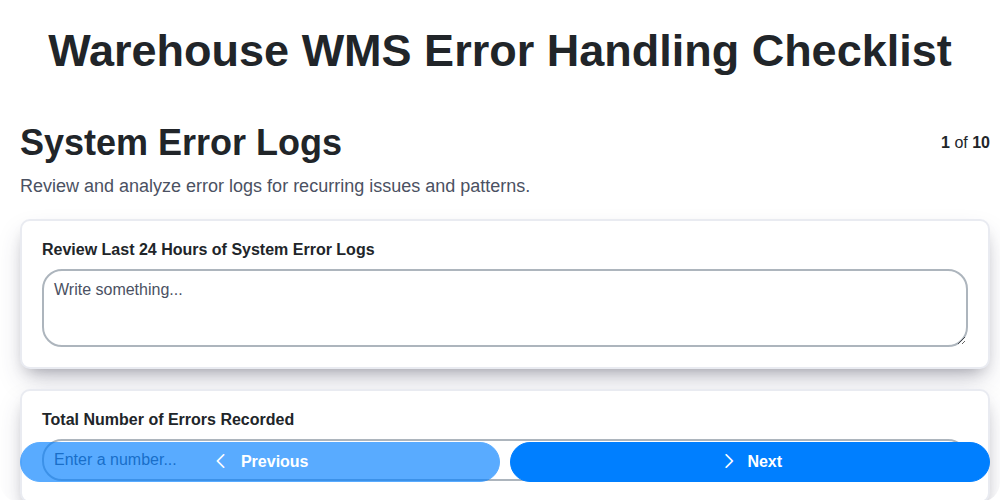
Warehouse WMS Error Handling Checklist: A Proactive Guide to Minimizing Disruptions
We can do it Together
Need help with
Warehouse Management System (WMS)?
Have a question? We're here to help. Please submit your inquiry, and we'll respond promptly.