Navigating Vendor Compliance: Your Warehouse WMS Checklist Template
Published: 12/20/2025 10:00 PM Updated: 12/21/2025 6:56 AM

Table of Contents
- Introduction: Why Vendor Compliance Matters in Your Warehouse
- 1. Vendor Onboarding & Setup: Laying the Foundation
- 2. Data Transmission & Integration: Seamless Data Flow
- 3. Order Confirmation & Acknowledgement: Ensuring Accuracy from the Start
- 4. ASN (Advance Shipment Notice) Compliance: Visibility and Planning
- 5. Labeling Standards Adherence: Preventing Delays & Errors
- 6. Shipping Documentation Accuracy: Avoiding Customs & Regulatory Issues
- 7. Packaging Requirements Compliance: Protecting Your Inventory
- 8. Security Protocols & Access Control: Maintaining Warehouse Integrity
- 9. Performance Monitoring & Reporting: Tracking Vendor Performance
- 10. Audit Trail & Documentation: Ensuring Accountability
- 11. Key Metrics to Track for Vendor Compliance
- 12. Addressing Non-Compliance: A Proactive Approach
- Conclusion: Building Strong Vendor Partnerships
- Resources & Links
TLDR: Worried about vendor compliance headaches with your warehouse WMS? This checklist template covers everything from onboarding and data integration to shipping docs, labeling, security, and reporting. Use it to ensure vendors meet your standards, minimize errors, and streamline your warehouse operations - saving you time and money!
Introduction: Why Vendor Compliance Matters in Your Warehouse
Your warehouse isn't just a building; it's the critical link in your supply chain. And when it comes to smooth operations and minimizing costly errors, vendor compliance is absolutely paramount. Without a robust vendor compliance program, you're opening yourself up to a host of problems: delayed shipments, inaccurate orders, incorrect labeling, damaged goods, and ultimately, dissatisfied customers.
Think about it: each vendor is a separate entity with its own processes. A lack of standardized procedures across those vendors can create chaos within your warehouse, leading to inefficiencies and increased operational costs. Simply put, consistent vendor compliance isn't just a "nice-to-have" - it's a necessity for warehouse efficiency, accuracy, and overall business success. This checklist will help you establish and maintain that crucial alignment.
1. Vendor Onboarding & Setup: Laying the Foundation
A smooth warehouse WMS vendor relationship begins long before the first shipment arrives. A robust onboarding process is crucial to avoid delays, errors, and frustration down the line. This initial phase isn't just about paperwork; it's about establishing clear expectations and building a collaborative foundation.
Here's what a comprehensive vendor onboarding checklist should encompass:
- Formal Introduction & Contractual Agreement: Clearly define roles, responsibilities, and expectations outlined in a signed agreement.
- Contact Information & Key Personnel: Ensure readily available and up-to-date contact details for all relevant personnel (account managers, logistics contacts, technical support).
- Warehouse WMS System Training: Provide adequate training on your warehouse's WMS system and specific processes relevant to the vendor. This minimizes confusion and ensures they understand data entry requirements.
- Standard Operating Procedures (SOPs): Share relevant SOPs related to shipping, receiving, and communication protocols.
- Security & Compliance Training: Conduct introductory training on your warehouse's security protocols and any compliance regulations impacting their operations.
- Initial Communication & Q&A: Facilitate open communication channels to address any immediate questions and concerns.
- Regular Check-in Meetings: Schedule initial check-in meetings to proactively identify and resolve any potential issues.
2. Data Transmission & Integration: Seamless Data Flow
Reliable data transmission and integration are the backbone of a successful Warehouse Management System (WMS) vendor compliance program. Inconsistent or inaccurate data can lead to delays, errors, and ultimately, negatively impact your warehouse operations and customer satisfaction. This section outlines crucial aspects of data transmission your vendors must adhere to.
Key Considerations:
- Data Formats & Protocols: Clearly define accepted data formats (e.g., EDI, CSV, XML, API) and communication protocols. Specify versions and acceptable character sets. Vendors should understand these requirements before transmitting any data.
- Real-time vs. Batch Transmission: Determine the appropriate method of data transfer. Real-time data provides immediate visibility and allows for proactive adjustments. Batch processing is suitable for less urgent updates but requires careful scheduling.
- Data Validation: Vendors must implement robust data validation processes to ensure accuracy before transmission. This includes checking for required fields, data type validation, and adherence to defined value ranges.
- Error Handling & Notification: A clearly defined error handling process is essential. Vendors should have mechanisms to identify, correct, and retransmit failed data transmissions, and promptly notify your team of any issues.
- API Integration (if applicable): If using API integration, ensure vendors follow your documented API specifications meticulously. This includes authentication protocols, request/response formats, and rate limits.
- Data Security During Transmission: Encryption (e.g., HTTPS, SFTP) must be used to protect sensitive data during transmission, adhering to your security policies and relevant regulations.
- Testing and Validation: Implement a testing phase for new data integration setups to verify functionality and data integrity before going live.
Failure to meet these data transmission and integration standards will require corrective action and could impact vendor performance ratings.
3. Order Confirmation & Acknowledgement: Ensuring Accuracy from the Start
A seamless warehouse WMS integration hinges on accurate order confirmations and acknowledgements. This isn't just about saying yes, we received your order; it's about verifying details and setting the stage for a flawless fulfillment process.
Here's why vendor compliance in this area is critical, and what's typically included:
- Detailed Order Verification: Vendors must acknowledge orders with complete accuracy. This goes beyond a simple yes. Confirmation should include quantity, product codes (SKUs), pricing, requested delivery date, and any specific instructions related to the order. Discrepancies at this stage create downstream problems - errors in picking, packing, and shipping - that significantly impact efficiency and customer satisfaction.
- Automated Acknowledgement Preference: Ideally, confirmations should be automated and transmitted electronically, using the agreed-upon WMS protocols. This minimizes manual processing and reduces the risk of human error.
- Confirmation Timeframes: Clear service level agreements (SLAs) around acknowledgement response times are essential. Vendors need to acknowledge orders within a defined timeframe to allow your warehouse team sufficient lead time for planning and preparation.
- Exception Handling: A robust process for handling order exceptions (e.g., partial shipments, backorders) is vital. Vendors must clearly communicate these exceptions promptly, providing explanations and revised timelines. This allows your warehouse to proactively manage the situation and minimize disruption.
- Error Reporting: A clearly defined system for vendors to report discrepancies or issues with the order details is necessary for continuous improvement and ensuring data integrity.
4. ASN (Advance Shipment Notice) Compliance: Visibility and Planning
ASNs are your early warning system for inbound shipments. They's more than just a notification; they're a critical data stream that allows your Warehouse Management System (WMS) to proactively plan for receiving. Non-compliance with ASN requirements can lead to significant disruption and inefficiencies in your warehouse operations.
Why are ASNs so important?
- Improved Receiving Accuracy: An accurate ASN, including details like quantity, weight, and contents, allows your team to reconcile the physical shipment with the expected delivery before it arrives. This reduces receiving errors, discrepancies, and potential re-work.
- Optimized Dock Scheduling: Knowing precisely what's coming, and when, enables you to allocate dock doors and staging areas efficiently. This minimizes congestion and reduces waiting times for carriers.
- Streamlined Putaway Processes: With ASN data, your WMS can pre-plan putaway locations, speeding up the process and maximizing space utilization.
- Reduced Labor Costs: Proactive planning translates directly to lower labor needs during receiving.
- Better Inventory Accuracy: ASN data contributes to maintaining a more accurate inventory record within your WMS.
Common ASN Compliance Issues & How to Address Them:
- Missing or Incomplete Information: Ensure vendors are providing all required data fields as specified by your WMS. Provide clear, detailed instructions and examples.
- Timing Discrepancies: ASNs need to be transmitted with sufficient lead time. Work with vendors to establish agreed-upon timelines.
- Data Format Errors: Strict adherence to the required data format (EDI, XML, etc.) is essential. Provide vendors with detailed specifications and support.
- Inaccurate Quantities/SKUs: Implement validation checks and vendor training to minimize errors.
- Lack of Unique Identifiers: Ensure vendors utilize consistent and accurate identifiers (e.g., GTINs, Serial Numbers) for each item.
Vendor Collaboration is Key:
Compliance isn't just about enforcing rules; it's about collaboration. Invest in educating your vendors on your ASN requirements and providing them with the resources they need to succeed. Regular communication and performance reviews are vital to ensure ongoing compliance and optimize your inbound processes.
5. Labeling Standards Adherence: Preventing Delays & Errors
Accurate and consistent labeling is critical for efficient warehouse operations and vendor compliance. A seemingly minor labeling error can snowball into significant delays, misdirected shipments, and ultimately, increased costs. Our Warehouse Management System (WMS) vendor compliance checklist places a high priority on adherence to labeling standards for a reason.
This isn't just about slapping a barcode on a box. It's about ensuring those barcodes contain the right data, are placed in the correct location, and follow a pre-defined and agreed-upon format. Here's what we look for in vendor labeling compliance:
- Barcode Symbology: Using the correct barcode type (e.g., GS1-128, UPC, QR Code) as specified by our WMS and agreed upon in our vendor onboarding process.
- Data Content: Confirming that the barcode data accurately reflects the product description, lot number, expiry date (if applicable), and other relevant identifiers.
- Label Placement: Ensuring labels are consistently placed in designated areas on the packaging, avoiding obstructions and making them easily scannable by our warehouse team.
- Label Durability: Utilizing labels that are durable enough to withstand the warehouse environment, resisting damage from moisture, abrasion, and temperature fluctuations.
- Human-Readable Information: Including clear, legible, and consistent human-readable descriptions alongside the barcodes for verification and backup purposes.
Non-compliance with our labeling standards can result in rejected shipments, manual intervention, and potential fines. We're happy to work with our vendors to provide templates, training, and ongoing support to ensure smooth and compliant labeling practices.
6. Shipping Documentation Accuracy: Avoiding Customs & Regulatory Issues
Accurate shipping documentation is the unsung hero of a smoothly running warehouse operation. It's often overlooked, but errors here can trigger significant delays, hefty fines, and even seizure of goods - a nightmare scenario for both your warehouse and your vendors. Non-compliance isn't just a headache; it can damage your reputation and impact your bottom line.
Your Warehouse Management System (WMS) vendor compliance checklist must emphasize the crucial role of accurate documentation. This includes everything from commercial invoices and packing lists to bills of lading and certificates of origin.
Key Areas of Focus:
- Correct Harmonized System (HS) Codes: Mismatched or incorrect HS codes directly impact import duties and taxes. Ensure vendors understand the correct classification for every product they ship. Regular training and clear communication are vital.
- Accurate Product Descriptions: Vague or misleading descriptions can raise red flags with customs officials. Descriptions should be precise and detail the product's composition and purpose.
- Correct Incoterms: Utilizing the correct Incoterms (International Commercial Terms) clearly defines responsibilities between the seller and buyer regarding shipping costs, insurance, and risk. Misinterpretation can lead to disputes and unexpected expenses.
- Weight and Dimensions Accuracy: Discrepancies between declared and actual weights and dimensions can result in re-weighing and re-measurement fees.
- Country of Origin Verification: Ensure vendors accurately identify the product's origin, as this affects tariffs and trade agreements.
- Compliance with Specific Regulatory Requirements: Depending on the product and destination, specific certifications or permits may be required (e.g., phytosanitary certificates for agricultural products).
Vendor Responsibility & WMS Integration:
Your WMS should facilitate this by validating vendor-supplied documentation against predefined rules and flags. It's also crucial to establish clear consequences for vendors who consistently fail to provide accurate documentation. Regular audits of vendor documentation are a must. Failing to do so exposes your warehouse to unnecessary risk.
7. Packaging Requirements Compliance: Protecting Your Inventory
Proper packaging is more than just a box; it's a crucial element in maintaining product integrity, preventing damage during transit, and streamlining our warehouse operations. To ensure a seamless flow and minimize losses, all vendors must adhere to the following packaging requirements.
Key Expectations:
- Material Specifications: Please use specified packaging materials (e.g., corrugated cardboard, wood pallets, shrink wrap) as outlined in our Vendor Manual. Deviations require prior approval.
- Palletization Standards: Pallets must be square, sturdy, and meet industry standards (e.g., GMA pallets). Stacking height and load distribution are critical - refer to the detailed specifications in our Vendor Manual for weight limits and stability requirements.
- Unit Packaging: Individual product packaging must be robust enough to withstand normal handling and stacking. Fragile items require additional protection like bubble wrap or foam inserts.
- Labeling of Packages: Clearly mark each package with the provided packing slip information, including product codes, quantity, and handling instructions (e.g., Fragile, This Side Up).
- Dimensional Accuracy: Packaging dimensions must match the stated product dimensions to ensure efficient space utilization within the warehouse.
- Sustainability Considerations: We encourage the use of sustainable packaging materials whenever feasible. Please inquire about our preferred environmentally friendly options.
- Hazardous Materials: For any products classified as hazardous, strict adherence to DOT regulations and our internal safety protocols is mandatory. Proper labeling, documentation, and containerization are essential.
Failure to meet these packaging requirements may result in rejection of the shipment, additional handling charges, or delays in processing. We're here to help; please don't hesitate to reach out with any questions or clarification needed.
8. Security Protocols & Access Control: Maintaining Warehouse Integrity
A robust Warehouse Management System (WMS) implementation relies heavily on stringent security protocols and controlled access. Vendor compliance in this area isn't just about preventing theft; it's about safeguarding sensitive data, protecting inventory accuracy, and ensuring operational continuity.
Here's what needs to be covered in your vendor compliance checklist regarding security:
- Background Checks & Personnel Verification: Vendors, especially those with physical access to your warehouse or access to your WMS data, should undergo thorough background checks. This should be documented and regularly reviewed.
- Role-Based Access Control (RBAC): Vendors should only be granted access to the specific WMS functions and data necessary for their tasks. Your checklist should define and enforce these roles clearly. Implement multi-factor authentication wherever possible.
- Password Management: Strict password complexity requirements and regular password resets are essential. Ensure vendors adhere to these guidelines.
- Physical Access Control: If vendors require physical warehouse access, controls like key card access, security badges, and visitor logs should be mandatory and monitored.
- Data Encryption & Transmission Security: Data transmitted between vendor systems and your WMS must be encrypted using secure protocols. Define accepted encryption methods within your compliance document.
- Cybersecurity Awareness Training: Vendors should demonstrate awareness of common cybersecurity threats like phishing and malware. Consider requiring proof of training.
- Incident Response Plan: Vendors should understand and adhere to your warehouse's incident response plan in the event of a security breach.
- Regular Security Audits: Schedule periodic audits of vendor security practices to ensure ongoing compliance and identify potential vulnerabilities. Document these audits.
Non-compliance in any of these areas poses significant risks, from data breaches to operational disruptions. A strong security and access control protocol, rigorously enforced through vendor compliance checks, is an absolute necessity for a thriving warehouse operation.
9. Performance Monitoring & Reporting: Tracking Vendor Performance
Vendor compliance isn't a one-time event; it requires ongoing monitoring and consistent reporting to ensure continued adherence to your Warehouse Management System (WMS) requirements. This section of the compliance checklist focuses on establishing metrics and processes to proactively identify and address potential issues before they impact your warehouse operations.
Key Elements to Monitor:
- On-Time Delivery: Track the percentage of shipments arriving at your warehouse within the agreed-upon timeframe. Delays can disrupt workflows and impact customer fulfillment.
- Order Accuracy: Monitor the accuracy of orders received from vendors. Discrepancies lead to rework, increased labor costs, and potential customer dissatisfaction.
- ASN Accuracy: Evaluate the accuracy of Advance Shipment Notices (ASNs). Inaccurate ASN data can create chaos upon arrival and necessitate manual verification.
- Labeling Compliance: Regularly audit the accuracy and completeness of vendor-applied labels.
- Damage Rate: Track the percentage of shipments arriving damaged. This reflects on vendor handling and packaging practices.
- Exception Rate: Monitor the frequency of exceptions encountered during receiving - discrepancies, incorrect products, etc.
Reporting Requirements:
- Regular Reports: Define a reporting schedule (weekly, monthly, quarterly) to share performance data with vendors.
- Clear Metrics: Ensure metrics are clearly defined and understandable.
- Actionable Insights: Provide vendors with actionable insights based on the data, highlighting areas for improvement.
- Performance Reviews: Schedule regular performance reviews with vendors to discuss progress and address challenges.
- Escalation Process: Implement an escalation process for vendors who consistently fail to meet compliance standards.
By proactively monitoring vendor performance and providing clear feedback, you can foster a collaborative relationship that drives continuous improvement and ensures seamless integration with your WMS.
10. Audit Trail & Documentation: Ensuring Accountability
Maintaining a robust audit trail and comprehensive documentation is paramount for vendor compliance within a Warehouse Management System (WMS). It's not just about ticking boxes; it's about demonstrating accountability, enabling traceability, and facilitating continuous improvement.
Here's why it's crucial and what it should include:
- Detailed Record Keeping: Every interaction, from initial onboarding to shipment delivery, should be meticulously documented. This includes communication logs, data transmission records, acknowledgement confirmations, ASN details, labeling instructions followed, shipping documentation copies, packaging verification, and access control events.
- Time-Stamped Activity: Records must be time-stamped to accurately reflect the sequence of events. This helps pinpoint responsibility and quickly identify discrepancies.
- User Identification: Clearly identify the user who performed each action. This adds a layer of accountability and allows for targeted training if necessary.
- Version Control: For documents like labeling standards or packaging requirements, ensure a clear version control system is in place. Vendors must be using the correct, approved versions.
- Regular Review & Retention: Establish a schedule for reviewing the audit trail and retaining records, aligned with legal and regulatory requirements.
- Vendor Access (Limited & Controlled): While controlled, vendors may require limited access to view specific records relevant to their shipments. This access should be tightly managed and audited.
A thorough audit trail provides the evidence needed for successful vendor compliance audits and quickly resolves any issues that arise, fostering a stronger, more reliable partnership.
11. Key Metrics to Track for Vendor Compliance
Vendor compliance isn't just about ticking boxes; it's about driving efficiency, minimizing errors, and fostering strong, reliable partnerships. To truly understand and optimize your vendor relationships, you need to track the right metrics. Here's a breakdown of essential KPIs to monitor:
- Order Accuracy Rate: Measures the percentage of orders received from a vendor that are correct (right product, quantity, and specifications). Low accuracy leads to costly returns and delays.
- On-Time Delivery Rate: Tracks the percentage of shipments arriving at your warehouse by the agreed-upon delivery date. Consistent lateness disrupts your operations and impacts customer fulfillment.
- ASN (Advance Shipment Notice) Accuracy: Evaluates the precision of information provided in ASNs, including product details, quantities, and estimated arrival times. Improves receiving efficiency and reduces discrepancies.
- Labeling Compliance Rate: Monitors adherence to your labeling standards, crucial for accurate identification and traceability.
- Documentation Accuracy Rate: Assesses the correctness of shipping documentation, such as packing lists and bills of lading. Minimizes customs issues and internal errors.
- Packaging Compliance Rate: Evaluates adherence to your packaging requirements (size, materials, weight limits). Prevents damage during transit and optimizes warehouse space.
- Receiving Discrepancy Rate: Tracks the frequency of discrepancies found during the receiving process. Highlights vendor errors and potential issues with data transmission.
- Returned Goods Rate (Vendor-Related): Specifically tracks returns attributed to vendor errors (wrong product, damage due to inadequate packaging).
- Audit Findings Severity & Frequency: Tracks the seriousness of findings during vendor audits and how often they occur, indicating areas needing immediate attention.
- Response Time to Compliance Issues: Measures how quickly a vendor addresses and resolves any compliance issues raised.
- Overall Compliance Score: A weighted average of all the above metrics, providing a single, easy-to-understand indicator of a vendor's overall performance.
Regularly tracking and analyzing these metrics will provide valuable insights into vendor performance, enabling you to identify areas for improvement, optimize your supply chain, and strengthen your vendor relationships.
12. Addressing Non-Compliance: A Proactive Approach
Vendor non-compliance isn't a reflection of a failed partnership; it't an opportunity for improvement. A reactive approach, dealing with issues as they arise, is costly and disruptive. Instead, implement a proactive strategy focused on identifying, addressing, and preventing non-compliance before it impacts your warehouse operations.
This begins with clear communication. When discrepancies are flagged during audits or performance monitoring, don't just issue a correction request. Schedule a collaborative meeting with the vendor to understand the root cause. Is it a process breakdown on their end? A misunderstanding of your requirements? Training gaps?
Document these discussions thoroughly, outlining the issue, the agreed-upon corrective actions, and timelines for implementation. Follow up diligently to ensure changes are made and validated. Establish a tiered escalation process for repeated or critical non-compliance issues, ensuring senior management is involved when necessary.
Consider incorporating non-compliance metrics into your vendor performance reviews. This provides a quantifiable measure of adherence to your WMS vendor compliance checklist and incentivizes ongoing improvement. Most importantly, view this as a collaborative effort - working with your vendors to achieve mutual success is far more effective than simply imposing rules.
Conclusion: Building Strong Vendor Partnerships
Ultimately, successful warehouse operations hinge on strong, compliant vendor partnerships. This checklist isn't just about ticking boxes; it's a roadmap for building those relationships. By proactively addressing these areas - from initial onboarding to ongoing performance - you're fostering transparency, minimizing disruptions, and ensuring a seamless flow of goods. A compliant vendor isn't just a supplier; they're a valued partner invested in your success. Remember, continuous improvement is key. Regularly review and update this checklist with your vendors to adapt to evolving needs and technologies. This collaborative approach will cultivate trust, efficiency, and a resilient supply chain for the long term.
Resources & Links
- Warehouse Management System (WMS) Providers: General resource for understanding Warehouse Management Systems and how they can support vendor compliance.
- GS1 Standards: Essential for labeling standards, barcodes, and data capture - critical for Vendor Compliance. Offers detailed information on GS1 standards.
- National Institute of Standards and Technology (NIST): Provides information and guidelines on security protocols, data integrity, and industry best practices - valuable for Security Protocols & Access Control.
- Retail Industry Leaders Association (RILA): Offers insights into retail supply chain requirements and vendor compliance expectations within the retail sector.
- EDI in Commerce: Resource for understanding Electronic Data Interchange (EDI), crucial for Data Transmission & Integration, Order Confirmation, and ASN compliance.
- Supply Chain Digital: Provides news, insights, and trends in supply chain management, often covering vendor compliance and best practices.
- Association for Supply Chain Management (ASCM): Professional organization providing resources, training, and certifications related to supply chain management and vendor compliance.
- International Organization for Standardization (ISO): Provides international standards covering quality management, environmental management, and other areas relevant to vendor compliance.
- NIST Cybersecurity Resources: Specific resources from NIST focused on cybersecurity and data protection, directly supporting Security Protocols & Access Control.
- Shopify Enterprise: While focusing on e-commerce, Shopify's Enterprise section provides insights into managing vendors and fulfilling orders which are relevant to larger warehouse operations.
- Council of Supply Chain Management Professionals (CSCMP): Provides a wealth of information, research, and educational resources related to all aspects of supply chain management, including vendor relationships.
- FedEx: Understanding carrier requirements and documentation for shipping is vital, FedEx's site is a resource for this.
Frequently Asked Questions
What is vendor compliance and why is it important for my warehouse?
Vendor compliance refers to a set of rules and requirements that vendors must adhere to when supplying goods to your warehouse. It ensures goods arrive in a consistent, usable condition, avoiding delays, rejections, and associated costs. Failing to comply can lead to receiving errors, damaged goods, storage issues, and strained vendor relationships.
What is a WMS and how does it relate to vendor compliance?
A Warehouse Management System (WMS) is software that manages warehouse operations, including receiving, storage, picking, packing, and shipping. A WMS can automate and streamline vendor compliance processes by enforcing requirements during the receiving stage, comparing vendor shipments to purchase orders, and flagging potential issues.
Why should I use a checklist template for vendor compliance?
A checklist provides a standardized process for receiving goods, ensuring consistency and reducing errors. It serves as a visual guide for your receiving team, minimizes subjective interpretation of requirements, and provides a record of compliance checks for audit purposes.
What are the typical elements included in a vendor compliance checklist?
Typical elements include verifying packing slip accuracy, checking pallet dimensions and weight, confirming labeling requirements (UPC, barcodes, lot numbers), inspecting product condition for damage, confirming product specifications, and verifying documentation like certificates of analysis or origin.
Can I customize the checklist template provided in the article?
Yes, absolutely! The provided template is a starting point. You should customize it to reflect your specific vendor agreements, product types, and warehouse requirements. Add or remove items as necessary to ensure it accurately represents your compliance needs.
What should I do if a vendor shipment fails to meet compliance requirements?
First, document the non-compliance issue clearly. Then, contact the vendor to inform them of the problem and request corrective action. Depending on the severity of the issue, you may need to reject the shipment or negotiate a return. Your vendor compliance policy should outline these steps.
How often should I review and update my vendor compliance checklist?
It's recommended to review your checklist at least annually, or more frequently if your vendor agreements, products, or regulations change. Regular review ensures the checklist remains relevant and effective in maintaining compliance.
What role does documentation play in vendor compliance?
Documentation is crucial. Keep records of vendor compliance checks, communication regarding non-compliance, and any corrective actions taken. This documentation serves as evidence of your due diligence and can be invaluable during audits or in resolving disputes.
How can a WMS help improve my vendor compliance process?
A WMS can automate the comparison of vendor shipments against purchase orders, flag discrepancies, enforce label requirements, and even alert relevant personnel to potential compliance issues in real-time. This reduces manual errors and improves overall efficiency.
Where can I find more information on vendor compliance regulations and best practices?
Resources like the National Retail Federation (NRF), the Voluntary Interindustry Commerce Standards Association (VICSA), and industry-specific trade groups offer valuable information and guidelines on vendor compliance.
Found this Article helpful?
Comments
There are no comments yet. Be the first to add one!
WMS - Warehouse Management System Solution Demo
Optimize your warehouse operations & boost efficiency! ChecklistGuro's WMS streamlines inventory management, order fulfillment, and shipping. Reduce errors, improve accuracy, & maximize space utilization. Manage it all with our Work OS.
Related Articles
Seamless RFID Integration: Your WMS Checklist Template for Success
Mastering Warehouse Labeling: Your WMS Process Checklist Template
The Ultimate Supply Chain Inventory Accuracy Audit Checklist: A Step-by-Step Guide
Mastering Putaway: Your WMS Optimization Checklist

Mastering Your Yard: A Warehouse WMS Yard Management Checklist Template
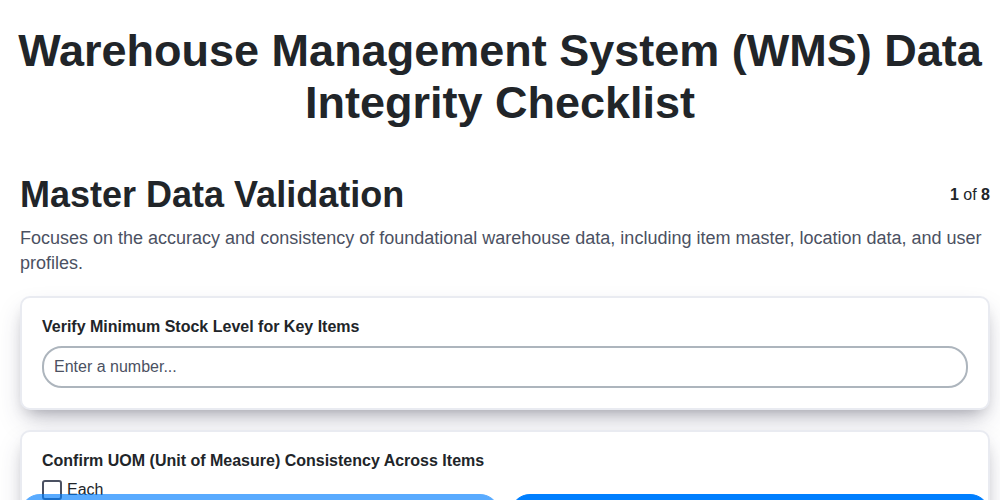
Warehouse Data Integrity: Your WMS Checklist Template
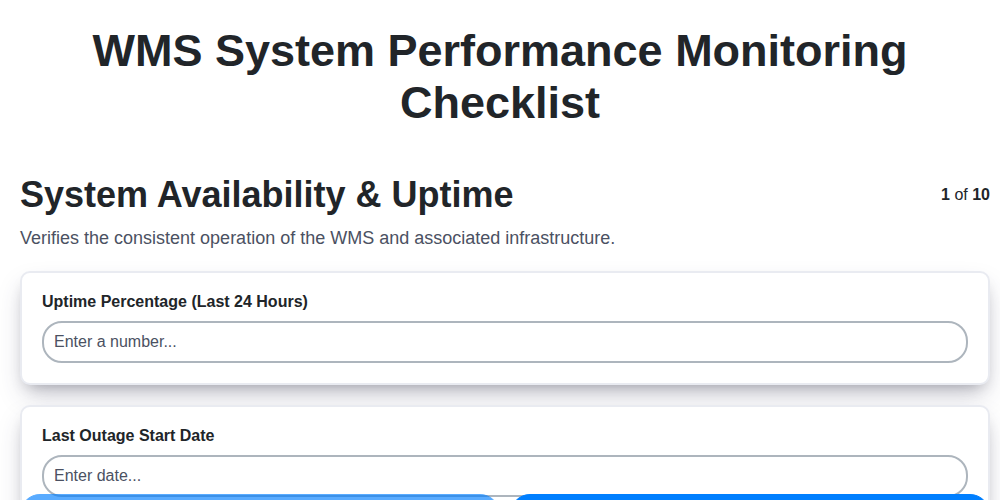
WMS System Performance Monitoring Checklist: A Comprehensive Guide
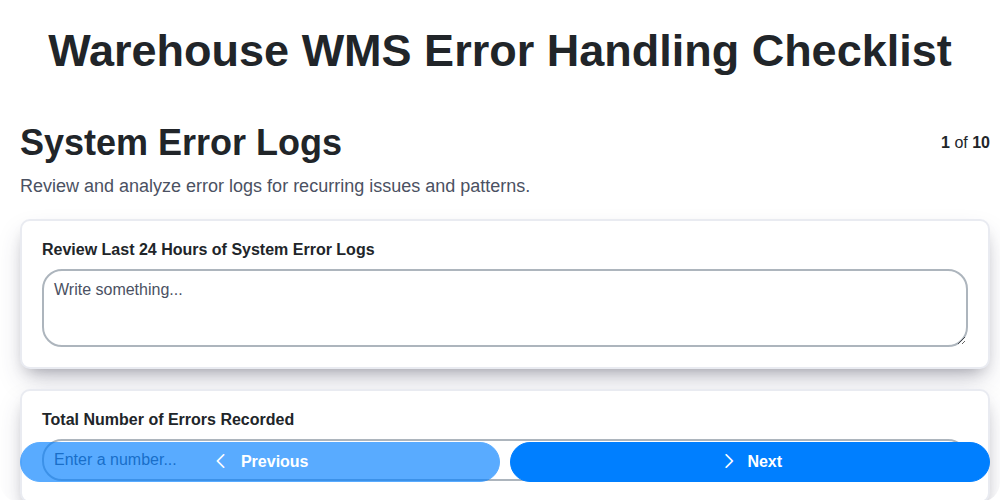
Warehouse WMS Error Handling Checklist: A Proactive Guide to Minimizing Disruptions
We can do it Together
Need help with
Warehouse Management System (WMS)?
Have a question? We're here to help. Please submit your inquiry, and we'll respond promptly.