Mastering Returns: Your WMS Returns Processing Checklist Template
Published: 12/20/2025 10:00 PM Updated: 12/21/2025 6:57 AM

Table of Contents
- Introduction: Why a Returns Processing Checklist is Essential
- 1. Return Authorization & Documentation: Setting the Foundation
- 2. Receiving & Inspection: Verifying the Return
- 3. Inventory Status Update: Accurate Records are Key
- 4. Disposition & Routing: Where Does the Returned Item Go?
- 5. Restocking, Refurbishment, or Scrapping: Options for Returned Goods
- 6. Financial Reconciliation: Recovering Value & Closing the Loop
- 7. Data Accuracy & Reporting: Insights from Returns Data
- 8. Audit Trail & Traceability: Ensuring Accountability
- 9. Common Challenges in Returns Processing
- 10. Best Practices for a Streamlined Returns Process
- 11. WMS Integration: Automating the Returns Workflow
- 12. Template Checklist: Your Step-by-Step Guide
- Conclusion: Minimizing Returns Impact & Maximizing Efficiency
- Resources & Links
TLDR: Overwhelmed by returns? This checklist template for your Warehouse Management System (WMS) streamlines the entire returns process - from authorization and inspection to restocking and financial reconciliation. It ensures accuracy, traceability, and keeps your team on track, minimizing errors and maximizing efficiency. Download it and conquer those returns!
Introduction: Why a Returns Processing Checklist is Essential
Returns processing can be a significant headache for any business, especially those utilizing a Warehouse Management System (WMS). It's not just about receiving the returned goods; it's about handling them efficiently, accurately, and in compliance with company policies and customer expectations. Without a structured process, returns can quickly become a drain on resources, leading to increased costs, inaccurate inventory, and dissatisfied customers.
A well-defined returns processing checklist, integrated within your WMS, acts as your roadmap. It ensures every return is handled consistently, minimizes errors, and provides valuable data for continuous improvement. It's a vital tool for optimizing your reverse logistics, reducing operational costs, and ultimately, strengthening customer loyalty. This isn't just a nice-to-have - it's a necessity for any company serious about maximizing efficiency and profitability within their WMS environment.
1. Return Authorization & Documentation: Setting the Foundation
The return process begins long before a package arrives back at your warehouse. A robust Return Authorization (RA) process is the crucial first step. This isn't just about issuing a number; it's about controlling the flow of returns and gathering essential information.
Your RA process should involve:
- Clear Return Policies: Have publicly visible and easily understandable return policies. This minimizes confusion and reduces unnecessary return requests.
- RA Request Form: Implement a digital or paper form that captures key details: order number, reason for return, requested resolution (refund, replacement), and any relevant customer notes.
- Automated Approval Workflow: Establish a system for RA approval. This may involve layers of approval based on return value, product type, or other criteria. Automation reduces processing time and ensures consistent application of your return policy.
- Documentation: Maintain meticulous records of the RA, including the initial request, approval status, associated communication, and any special instructions. This documentation is invaluable for troubleshooting and performance analysis.
- Unique RA Number: Assign a unique RA number to each return. This is your key identifier throughout the entire return processing lifecycle.
Proper return authorization and documentation lay the foundation for an efficient and controlled return process. Without it, errors and delays are almost guaranteed.
2. Receiving & Inspection: Verifying the Return
Once a return authorization is approved, the real work begins: receiving and inspecting the returned goods. This stage is critical for determining the true condition of the product and its potential for resale, refurbishment, or disposal. A thorough receiving and inspection process minimizes errors, prevents costly misclassifications, and ensures accurate inventory management.
Here's what your receiving & inspection checklist should cover:
- Verify Return Authorization (RA): Double-check that the received goods correspond to a valid and approved RA number. This prevents processing unauthorized returns.
- External Condition Assessment: Note any visible damage to the packaging or the product itself. Document any discrepancies from the original shipping condition. Photographs are invaluable here!
- Quantity Verification: Confirm the quantity of items received matches the quantity listed on the RA.
- Product Identification: Verify the product's SKU, model number, and serial number (if applicable) against the RA and your system records.
- Functional Testing: Perform basic functional testing according to predetermined criteria for that product type. This might include powering on, checking for missing parts, or running specific tests.
- Damage Assessment: Document any internal defects, malfunctions, or missing components. Use a standardized damage severity scale (e.g., cosmetic, minor, moderate, severe) for consistency.
- Reason Code Validation: Confirm the reason code documented on the RA aligns with the observed condition of the product. If not, update the reason code appropriately.
- Labeling: Ensure the returned item is clearly labeled with a "Returned" status and a unique return identifier for tracking.
This rigorous inspection lays the groundwork for the subsequent steps in your returns processing workflow.
3. Inventory Status Update: Accurate Records are Key
Once a return has been received and inspected, the next crucial step is updating your Warehouse Management System (WMS) to accurately reflect the returned inventory. This isn't just about marking something as 'returned'; it's about maintaining a clear and real-time picture of your stock levels.
Why is this so important? Inaccurate inventory records can trigger a domino effect of problems - inaccurate order fulfillment, delayed shipments, and ultimately, dissatisfied customers.
Here's what a robust inventory status update should include:
- Record the Return: Clearly identify the returned item(s) within the WMS, referencing the original order details and return authorization number.
- Quantity Adjustment: Deduct the returned quantity from the current on-hand stock.
- Condition Flagging: Record the condition of the returned item (e.g., 'like new,' 'damaged,' 'used'). This is critical for disposition decisions.
- Location Tracking: Update the item's location within the warehouse - is it going to a quarantine area, refurbishment, or directly to restocking?
- Lot/Serial Number Tracking (if applicable): For items requiring traceability, meticulously update the associated lot or serial numbers.
Don't underestimate the importance of automation here. If your WMS integrates with barcode scanners or RFID technology, leverage it to minimize manual entry and reduce the risk of errors. Regular reconciliation between your WMS data and physical inventory counts is also highly recommended to ensure accuracy.
4. Disposition & Routing: Where Does the Returned Item Go?
Once an item has cleared inspection and its condition is assessed, the next critical step is determining its disposition and routing. This isn't simply about putting it back in stock. A well-defined process here minimizes loss, maximizes recovery value, and ensures efficient warehouse operations.
The possible destinations for a returned item are varied and depend heavily on the reason for return, its condition, and your business's policies. Common routes include:
- Restockable: Items in excellent condition, meeting your quality standards, are returned to available inventory for resale. This requires careful repackaging and re-labeling.
- Refurbishment/Repair: Items with minor defects might be sent to a refurbishment department for repair. A detailed record of repairs performed is essential.
- Outlet/Discount Sales: Items with cosmetic damage or slight imperfections can be routed to an outlet store or offered at a discounted price online.
- Salvage/Recycling: Severely damaged or obsolete items are sent for salvage or recycling. Proper documentation is key to tracking materials and potentially recouping some value.
- Vendor Return: Certain returns are handled by the original vendor, often due to manufacturer defects or warranty claims. Clear communication and return authorization are vital.
The routing decision should be documented with a clear reason code associated with the return and the chosen disposition. This data is invaluable for identifying trends in returns, assessing supplier quality, and optimizing processes.
Consider implementing automated routing rules within your WMS based on return reason codes to streamline this phase and reduce manual errors.
5. Restocking, Refurbishment, or Scrapping: Options for Returned Goods
Once a returned item has been dispositioned, the next crucial step is determining its fate. This isn't a one-size-fits-all decision; each returned product needs to be evaluated and routed to the appropriate pathway. Here's a breakdown of the common options:
Restocking: The ideal scenario! If the item is in like-new condition, with all original packaging and accessories, it's a prime candidate for restock. This requires careful inspection to confirm its sellability and updating the inventory records accordingly. Proper labeling and placement within the warehouse are vital to ensure it's easily located and available for sale.
Refurbishment: For items that show minor wear and tear, or might be missing original packaging, refurbishment offers a second chance. This might involve cleaning, repairing minor defects, replacing missing parts, or updating software. Refurbished items are typically sold at a discounted price and require a clear indication of their refurbished status to customers. Robust quality control processes are essential after refurbishment to guarantee they meet the required standards.
Scrapping: Sadly, not all returned items can be resold. Damage, obsolescence, or a lack of repairability often necessitate scrapping. This involves safely disposing of the item, following environmental regulations and company policies. Properly documenting the reason for scrapping is critical for analysis and process improvement. It also helps prevent similar returns in the future.
Choosing the right disposition pathway - restocking, refurbishment, or scrapping - directly impacts your profitability, sustainability goals, and customer satisfaction. A well-defined process for evaluating and routing returned goods is a cornerstone of efficient WMS returns processing.
6. Financial Reconciliation: Recovering Value & Closing the Loop
Returns processing isn't just about moving product; it's about managing finances and ensuring accurate records. Financial reconciliation is the crucial step that ties all the previous return processing actions to the ledger, minimizing losses and maximizing recovery. This goes far beyond simply marking an item as returned.
Here's what financial reconciliation in a WMS returns processing workflow entails:
- Credit/Refund Processing: Confirming and initiating the refund or credit to the original customer. Ensuring the correct amount is processed and accurately recorded.
- Cost Analysis: Determining the total cost associated with the return, including shipping charges (both outbound and return), labor costs for inspection and processing, and any potential devaluation of the product.
- Revenue Recognition Adjustment: Reflecting the return in your revenue recognition process. This is particularly important for subscription-based or ongoing service models.
- Vendor Communication (RMAs): For returns to vendors (RMAs), tracking credit memos and confirming receipt to close the loop with suppliers.
- Tax Implications: Properly accounting for any sales tax implications related to the return, which can vary based on jurisdiction and product type.
- Loss Mitigation: Identifying and addressing any discrepancies or losses that occurred during the returns process. This might involve investigating the root cause and implementing preventative measures.
Accurate financial reconciliation provides a clear picture of the financial impact of returns, enabling you to identify areas for improvement in your overall returns management strategy. Neglecting this step can lead to inaccuracies in financial reporting, erode profitability, and hinder your ability to make data-driven decisions.
7. Data Accuracy & Reporting: Insights from Returns Data
Returns data isn't just about processing refunds; it's a goldmine of information when analyzed correctly. A robust WMS returns processing checklist must include steps to ensure data accuracy and comprehensive reporting. Without this, you're flying blind when it comes to identifying and addressing underlying issues.
Why Accurate Data Matters:
- Pinpointing Root Causes: Are returns spiking for a specific product line? Is a particular shipping method consistently problematic? Accurate data allows you to identify trends and pinpoint the root causes of returns.
- Improving Product Quality: High return rates for defective products are a clear signal that manufacturing or quality control processes need attention.
- Optimizing Fulfillment & Shipping: Tracking reasons for return (damaged in transit, wrong item, etc.) helps optimize packaging, carrier selection, and picking/packing procedures.
- Enhancing Customer Satisfaction: Understanding why customers are returning items allows for targeted improvements to product descriptions, sizing charts, or customer service interactions.
Key Reporting Metrics to Track:
- Return Rate: Overall percentage of orders returned.
- Return Reason Breakdown: Percentage of returns attributed to each reason (e.g., defective, wrong size, not as described).
- Product-Specific Return Rates: Identify problem products and categories.
- Channel-Specific Return Rates: See if returns vary by sales channel (e.g., online vs. retail).
- Time to Resolution: Track how long it takes to process and resolve returns.
- Cost Per Return: A crucial metric for understanding profitability.
Ensuring Data Integrity:
- Standardized Reason Codes: Use consistent and well-defined reason codes for returns.
- Real-Time Data Updates: Integrate your returns processing with your WMS for real-time data visibility.
- Automated Reporting: Set up automated reports to track key metrics and identify trends proactively.
- Regular Data Validation: Conduct periodic checks to ensure data accuracy and consistency.
By prioritizing data accuracy and comprehensive reporting within your WMS returns processing checklist, you're transforming a potential headache into a powerful tool for continuous improvement.
8. Audit Trail & Traceability: Ensuring Accountability
Maintaining a robust audit trail and traceability system is paramount for effective returns processing within a Warehouse Management System (WMS). It's not just about knowing what happened, but who did it, and when. This section details why and how to track every step of the returns process.
Why Audit Trails Matter:
- Accountability: Clear documentation identifies responsibility at each stage, simplifying investigations and improving process adherence.
- Compliance: Many industries face regulatory requirements for product returns and traceability. A thorough audit trail helps demonstrate compliance.
- Error Identification & Correction: Pinpointing the source of errors (e.g., misrouting, incorrect inventory adjustments) is far easier with a detailed record.
- Fraud Prevention: Provides visibility into potential fraudulent returns activities.
- Continuous Improvement: Analyzing audit trails reveals bottlenecks and opportunities for optimization.
Key Elements of a WMS Returns Audit Trail:
- User IDs: Record the user who initiated and completed each action (Return Authorization, Receiving, Inspection, etc.).
- Timestamps: Capture precise dates and times for all relevant activities.
- Reason Codes: Document the reason for the return (e.g., damaged, defective, wrong item).
- Location Tracking: Record the physical location of the returned item throughout the process.
- Disposition Details: Track the final disposition (restock, refurbish, scrap, etc.) and related actions.
- Comments/Notes: Allow users to add notes explaining decisions or providing additional context.
Leveraging Your WMS:
Your WMS should provide features to automatically generate and maintain this audit trail. Look for capabilities such as:
- Role-Based Access Control: Ensure users only have access to the functions they need.
- Electronic Signatures: Replace manual signatures with digital authentication.
- Reporting Tools: Generate reports that summarize return activity and highlight potential issues.
9. Common Challenges in Returns Processing
Returns processing isn't always smooth sailing. Several common challenges can derail efficiency and increase costs. Lack of Visibility is a big one - without a clear view of return status throughout the process, bottlenecks and lost returns are likely. Inconsistent Documentation across departments (sales, returns, warehouse) leads to confusion and errors. Data Silos prevent a unified view of returns, hindering analysis and proactive problem-solving. Manual Processes, especially in smaller warehouses, are time-consuming and prone to human error. Reverse Logistics Complexity - managing the return journey can be more complicated than the original shipment. Damage Assessment Discrepancies - disagreements between the customer and the warehouse about the condition of the returned item are frequent and resource-intensive to resolve. Integration Issues between your WMS and other systems (e.g., CRM, accounting) can create delays and inaccuracies. High Return Rates themselves, while often a symptom of other problems (product quality, inaccurate descriptions), exacerbate all these challenges. Finally, Staff Training Gaps in returns processing best practices can lead to inefficient workflows and costly mistakes.
10. Best Practices for a Streamlined Returns Process
A robust returns processing checklist is a great start, but truly streamlining your returns requires more than just ticking boxes. Here's how to elevate your process:
- Automate Where Possible: Leverage your WMS to automate tasks like return authorization, label generation, and inventory updates. Reducing manual input minimizes errors and accelerates processing.
- Clear Communication is Key: Ensure both customers and your internal teams understand the returns policy. Easy-to-find information online and clear instructions for returns requests significantly reduce confusion and frustration.
- Prioritize Returns Based on Value/Urgency: Implement a system to prioritize returns based on factors like item value, customer type, or reason for return. High-value returns or those from key clients should receive faster processing.
- Train Your Team Thoroughly: Returns processing requires specialized knowledge. Consistent training on the checklist, WMS functionalities, and customer service best practices ensures accuracy and efficiency.
- Feedback Loop for Continuous Improvement: Regularly review return reasons and processing times. Use this data to identify bottlenecks and areas for process improvement. Customer feedback is invaluable here.
- Consider a Dedicated Returns Team: As returns volume grows, a dedicated team can specialize in returns processing, leading to increased efficiency and reduced error rates.
- Integrate with Customer Service: Seamless integration between returns processing and customer service allows for proactive communication and resolution of customer issues.
- Optimize Inspection Criteria: Clearly define inspection criteria to ensure consistent and accurate assessment of returned goods.
- Leverage Data Analytics: Analyze returns data to identify trends, predict future returns volume, and optimize inventory planning.
- Regularly Review and Update the Checklist: Your business evolves, and so should your checklist. Periodically review and update it to reflect changes in processes, policies, and technology.
11. WMS Integration: Automating the Returns Workflow
The true power of a returns processing checklist shines when it's integrated with your Warehouse Management System (WMS). Manual checklist execution, while helpful, is prone to human error and slows down the overall process. WMS integration takes that checklist and transforms it into a dynamic, automated workflow.
Think about it: instead of manually entering return authorization numbers, the WMS can automatically populate them based on pre-approved return requests. Receiving and inspection can trigger automated inventory adjustments. Disposition and routing decisions can be streamlined based on predefined rules within the WMS, directing items to the appropriate location (restock, refurbishment, scrapping, etc.).
This automation extends to financial reconciliation, data accuracy, and even audit trail creation. The WMS automatically records each step, creating a comprehensive history of the return's journey. Real-time reporting becomes effortless, providing valuable insights into return patterns and areas for improvement.
Ultimately, WMS integration isn't just about checking boxes; it's about optimizing your entire returns process, reducing labor costs, minimizing errors, and boosting customer satisfaction. It allows your team to focus on more strategic tasks, rather than getting bogged down in repetitive manual steps.
12. Template Checklist: Your Step-by-Step Guide
To streamline your returns processing and minimize errors, we've created a comprehensive checklist template you can adapt to your specific WMS setup. This checklist is designed to be actionable and ensures consistency across your returns handling. Download it and use it as a guide. Here's a breakdown of the steps it covers:
1. Return Authorization & Documentation:
- Customer initiates return request.
- Return authorization (RA) number is generated and assigned.
- Reason for return is documented (customer feedback).
- Supporting documentation received (e.g., original invoice, packing slip).
- RA status tracked (pending, approved, rejected).
2. Receiving & Inspection:
- Received goods are scanned/identified.
- Physical condition of goods is assessed and documented (damage, defects).
- Packaging integrity is checked.
- Contents are verified against return documentation.
- Discrepancies (if any) are noted and investigated.
3. Inventory Status Update:
- Return status updated in the WMS (e.g., Returned, Pending Inspection).
- Quantity returned is accurately recorded.
- Location of returned goods is designated within the warehouse.
4. Disposition & Routing:
- Decision made regarding return disposition (restock, refurbishment, scrap, return to vendor).
- Appropriate routing determined based on disposition decision.
- Routing instructions communicated to relevant warehouse personnel.
5. Restocking/Refurbishment/Scrapping:
- Restocking: Goods are cleaned, inspected, and returned to sellable inventory.
- Refurbishment: Goods are sent to the refurbishment area for repair.
- Scrapping: Goods are designated for disposal and processed accordingly.
- Appropriate documentation updated for each disposition path.
6. Financial Reconciliation:
- Credit/refund initiated for the customer.
- Return shipping costs reconciled.
- Inventory valuation adjustments made (if necessary).
- Any associated fees documented.
7. Data Accuracy & Reporting:
- All data entered accurately in the WMS.
- Return data is automatically integrated into relevant reports.
- Key performance indicators (KPIs) tracked (e.g., return rate, processing time).
8. Audit Trail & Traceability:
- Complete audit trail maintained for each return transaction.
- Full traceability of goods throughout the return process.
- Ability to track return history and related actions.
Remember to customize this template with your specific WMS functionality and business rules. Consistent adherence to this checklist will significantly improve your returns processing efficiency and accuracy!
Conclusion: Minimizing Returns Impact & Maximizing Efficiency
Ultimately, a robust WMS returns processing checklist, like the one outlined above, isn't just about ticking boxes - it's about transforming a potentially costly and disruptive process into a streamlined, efficient operation. By diligently following each step, from initial return authorization to final financial reconciliation, you can significantly minimize the negative impact of returns on your bottom line and customer satisfaction. This structured approach reduces errors, improves inventory accuracy, enhances traceability, and provides valuable data for continuous improvement. Embrace the checklist - it's your key to turning returns from a headache into an opportunity for optimization and a competitive advantage.
Resources & Links
- WMS Expert: Provides comprehensive information and resources on Warehouse Management Systems (WMS), including insights into returns management and best practices. Useful for understanding the broader context of returns processing within a WMS.
- Supply Chain Digital: Features articles and case studies related to supply chain management, including topics like reverse logistics and returns processing. Look for articles specifically addressing returns optimization and technology.
- Inbound Logistics: Offers industry news and insights into logistics and supply chain management. Search for articles focused on reverse logistics, returns management, and technology solutions.
- APICS (The Performance Excellence Network): A professional organization for supply chain professionals. Offers resources, certifications, and events related to supply chain optimization, including reverse logistics and returns management best practices. Their publications are often very helpful.
- Zebra Technologies: A leading provider of barcode scanners, mobile computers, and other technology solutions used in warehousing and logistics. Their site offers insights into how technology can improve returns processes, especially barcode scanning for traceability.
- BlueHarbor: Specializes in reverse logistics solutions and provides resources on returns management, refurbishment, and asset recovery. A good resource for exploring the complexities of handling returned goods.
- Parcel Shipping: Offers a range of resources about shipping and logistics, including how to manage returns efficiently. They might have articles or guides focused on the transportation aspects of reverse logistics.
- GS1: GS1 is a non-profit organization that develops and maintains global standards for product identification and traceability. Understanding their standards is crucial for creating accurate and trackable returns processes.
- Shopify Returns Management (Enterprise): While focused on e-commerce, Shopify's insights into returns management for online businesses often contain valuable and applicable information for any company dealing with returns.
Frequently Asked Questions
What is a WMS and why is it important for returns processing?
A Warehouse Management System (WMS) is software that manages and optimizes warehouse operations, including receiving, putaway, picking, packing, shipping, and returns. It's crucial for returns processing because it provides visibility, automation, and control, leading to faster, more accurate, and cost-effective returns handling.
Why do I need a returns processing checklist?
A checklist ensures consistency and accuracy in your returns process. It minimizes errors, reduces handling time, improves customer satisfaction, and provides a standardized approach that can be easily trained to new employees. It also helps identify areas for process improvement.
What are the key steps included in the checklist template provided in the article?
The checklist template typically covers steps like: receiving the returned item, inspecting for damage/condition, verifying the return authorization, updating inventory status, processing refunds/exchanges, determining final disposition (restock, repair, disposal), and documenting the entire process.
Can I customize the checklist template to fit my specific business needs?
Absolutely! The template provided is a starting point. You should customize it to reflect your company's specific return policies, product types, and operational procedures. Consider adding or removing steps as necessary.
What information should I be collecting during the return inspection?
Record details like the reason for return, the item's condition (e.g., damaged, unused), any missing components, the return authorization number, and the employee who inspected the item. Photographs are also useful for documenting the condition.
How does the checklist template help with inventory management after a return?
The checklist ensures the returned item's inventory status is accurately updated in the WMS. It clarifies whether the item is restockable, requires repair, or should be disposed of, preventing discrepancies and avoiding selling items that shouldn't be.
What role does return authorization (RA) play in the checklist?
Verifying the RA number is a critical step. It confirms the return is approved and authorized, preventing unauthorized returns and providing traceability. The checklist should include a specific field to record the RA number.
How can I integrate this checklist with my existing WMS?
Many WMS systems allow you to upload custom checklists or integrate with third-party checklist applications. Refer to your WMS documentation or contact your WMS vendor for integration options. Some WMS have built-in workflow capabilities that can incorporate checklist steps.
What are some common mistakes to avoid when processing returns?
Common mistakes include failing to properly inspect returned items, incorrectly updating inventory status, issuing refunds without verifying authorization, and neglecting to document the return process.
Where can I access the checklist template mentioned in the article?
The article provides a link or instructions on how to download the checklist template. Look for a download button or a link to a downloadable file within the article content.
Found this Article helpful?
Comments
There are no comments yet. Be the first to add one!
WMS - Warehouse Management System Solution Demo
Optimize your warehouse operations & boost efficiency! ChecklistGuro's WMS streamlines inventory management, order fulfillment, and shipping. Reduce errors, improve accuracy, & maximize space utilization. Manage it all with our Work OS.
Related Articles
Seamless RFID Integration: Your WMS Checklist Template for Success
Mastering Warehouse Labeling: Your WMS Process Checklist Template
The Ultimate Supply Chain Inventory Accuracy Audit Checklist: A Step-by-Step Guide
Mastering Putaway: Your WMS Optimization Checklist

Mastering Your Yard: A Warehouse WMS Yard Management Checklist Template
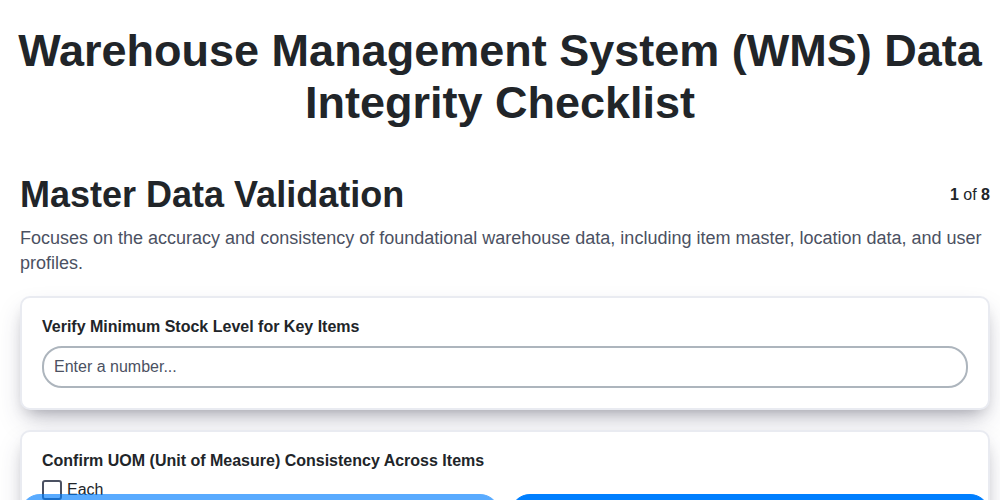
Warehouse Data Integrity: Your WMS Checklist Template
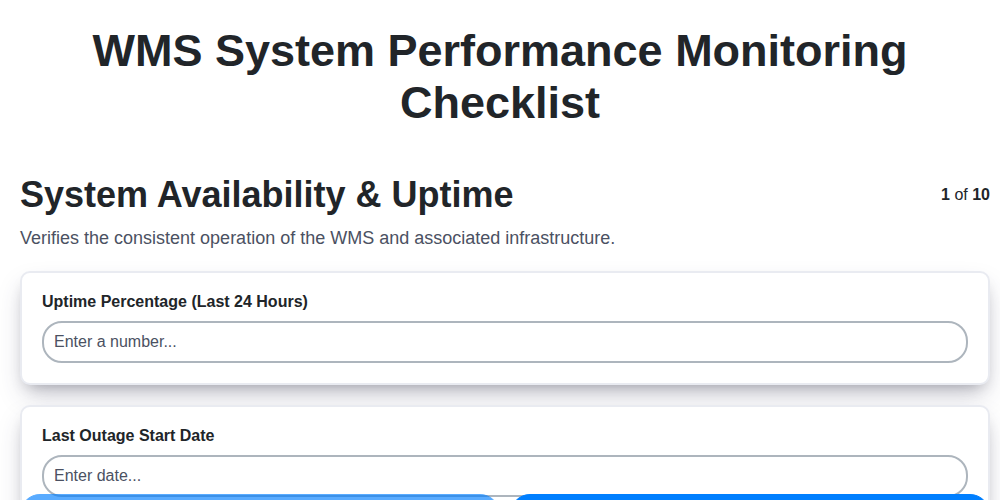
WMS System Performance Monitoring Checklist: A Comprehensive Guide
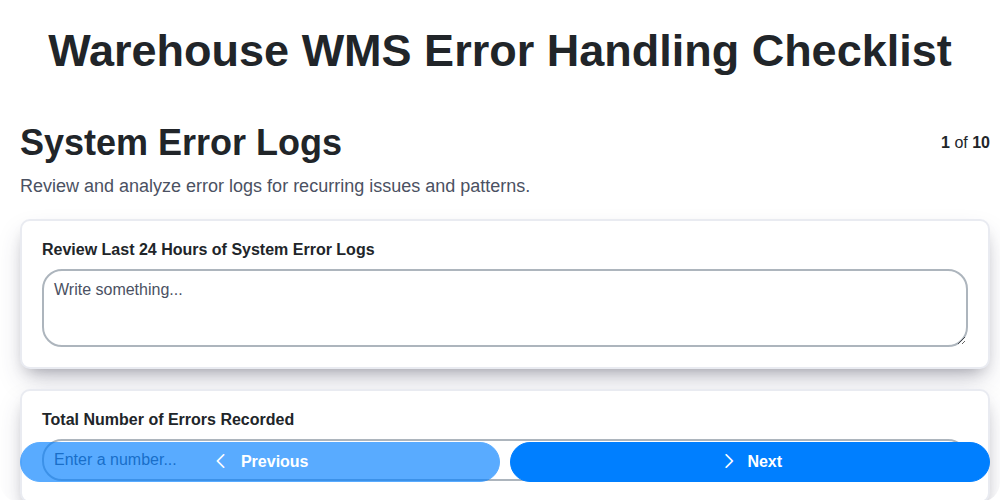
Warehouse WMS Error Handling Checklist: A Proactive Guide to Minimizing Disruptions
We can do it Together
Need help with
Warehouse Management System (WMS)?
Have a question? We're here to help. Please submit your inquiry, and we'll respond promptly.