Mastering Warehouse Efficiency: Your WMS Wave Planning Checklist Template
Published: 12/20/2025 10:00 PM Updated: 12/21/2025 6:47 AM
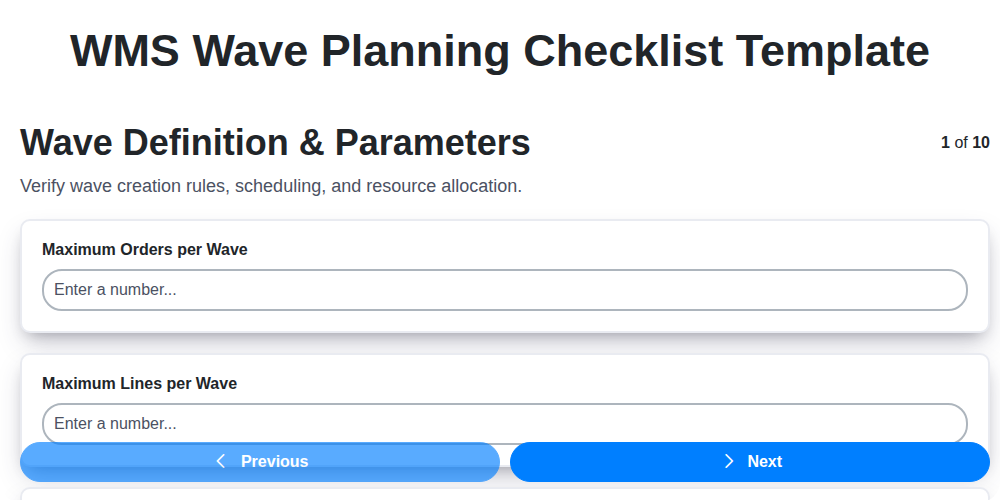
Table of Contents
- Introduction: The Power of Wave Planning
- What is WMS Wave Planning and Why Does It Matter?
- Wave Definition & Parameters: Setting the Foundation
- Order Prioritization: Ensuring the Right Orders First
- Resource Assignment: Matching Tasks to Teams
- Picking Route Optimization: Minimizing Travel Time
- Task Sequencing & Dependencies: The Flow of Work
- Wave Release & Monitoring: Keeping Things on Track
- Exception Handling: Addressing the Unexpected
- Reporting & Analytics: Measuring Wave Performance
- Integration with Other Systems: A Seamless Workflow
- User Training and Documentation: Empowering Your Team
- Wave Planning Checklist Template: Your Step-by-Step Guide
- Conclusion: Optimizing for Continuous Improvement
- Resources & Links
TLDR: Overwhelmed by warehouse chaos? This checklist template ensures your WMS wave planning is spot-on. It covers everything from defining wave parameters to analyzing results, helping you prioritize orders, optimize picking routes, and keep your warehouse running smoothly & efficiently. Think of it as your roadmap to warehouse mastery!
Introduction: The Power of Wave Planning
Wave planning in Warehouse Management Systems (WMS) is more than just a scheduling process; it's a strategic approach to maximizing warehouse efficiency and minimizing operational bottlenecks. Traditionally, warehouse picking often involved a chaotic and reactive environment, where orders were picked as they arrived, leading to congestion, wasted travel time, and ultimately, slower fulfillment. Wave planning introduces a structured method for grouping orders into manageable waves based on various factors like shipping deadlines, product type, or picking location. This allows you to orchestrate picking activities, optimize resource allocation, and dramatically improve throughput, leading to faster delivery times, reduced labor costs, and a more streamlined warehouse operation. Ultimately, effective wave planning transforms your warehouse from a reactive environment to a proactive, highly efficient powerhouse.
What is WMS Wave Planning and Why Does It Matter?
Wave planning within a Warehouse Management System (WMS) is a strategic approach to batching and releasing warehouse tasks. Instead of releasing orders individually as they arrive, wave planning groups them together into waves - collections of orders that are processed at the same time. Think of it like organizing your laundry - you wouldn't wash one sock at a time; you's group similar items together for efficiency.
This grouping isn't random. Waves are defined based on various factors like shipping deadlines, carrier requirements, product type, picking location, and even worker skill sets. The goal is to maximize the efficiency of warehouse operations by minimizing travel time, optimizing resource utilization, and ensuring timely order fulfillment.
Without effective wave planning, warehouses often suffer from bottlenecks, increased labor costs, and delays in shipping. Manual, ad-hoc processes lead to wasted effort and frustrated employees. A well-designed wave plan can drastically improve throughput, reduce errors, and enhance overall warehouse performance - directly impacting customer satisfaction and bottom-line profitability. It's the difference between a smoothly running engine and one that sputters and struggles.
Wave Definition & Parameters: Setting the Foundation
Before a wave can even be a wave, you need to meticulously define its parameters. This isn't just about picking a start time; it's about establishing the rules that govern its entire lifecycle. Poorly defined waves lead to inefficiencies, bottlenecks, and frustrated warehouse teams.
Here's what to consider when setting up your wave parameters:
- Wave Size (Units/Orders): Determine the optimal number of orders or units per wave. Too small, and you're wasting resources with frequent releases. Too large, and you risk overwhelming pickers and slowing down processing times. Analyze your data to find the sweet spot.
- Wave Frequency: How often will waves be released? This depends on order volume, staffing levels, and picking strategies. Consider a balance between minimizing wait times for orders and maximizing picker efficiency.
- Time Window: Specify the start and end times for each wave. This allows for staggered releases throughout the day to match workload patterns.
- Zone/Location Restrictions: Will waves be limited to specific zones or locations within the warehouse? This can be useful for specialized tasks or to manage congestion.
- Order Type Restrictions: Should certain order types (e.g., hazardous materials, large items) be excluded from certain waves?
- Priority Settings: While prioritization happens later, initial wave parameters can allow for pre-defined priority groups to be included or excluded.
Properly defining these parameters is the bedrock of successful wave planning. It directly impacts everything that follows.
Order Prioritization: Ensuring the Right Orders First
Within wave planning, order prioritization is absolutely critical for maximizing efficiency and meeting customer expectations. It's not simply about processing orders in the sequence they arrive; it's about strategically deciding which orders get included in a wave based on a variety of factors.
Think about the impact of delayed priority orders - a critical medication shipment, a retailer needing stock replenishment, or a customer with a guaranteed delivery date. Failing to prioritize appropriately can lead to costly expediting, customer dissatisfaction, and potentially lost business.
Here's what effective order prioritization in wave planning considers:
- Due Dates & Delivery Commitments: Orders with the most imminent due dates or those with guaranteed delivery windows should be prioritized.
- Order Type: Consider different order types. High-value orders, orders with special handling requirements (e.g., temperature controlled), or those influencing key performance indicators (KPIs) often require higher priority.
- Customer Importance: Account for customer segmentation. High-value or strategically important customers might warrant preferential treatment.
- Product Characteristics: Perishable goods, fragile items, or products with short shelf lives should be prioritized to prevent spoilage or damage.
- Inventory Availability: While prioritization is key, it must align with available inventory. An urgent order for an out-of-stock item can't be prioritized until the inventory issue is addressed.
- Carrier Constraints: Integration with carrier schedules and capacity can influence prioritization, ensuring timely dispatch and avoiding bottlenecks.
Your WMS should allow for configurable prioritization rules based on these factors, providing flexibility to adapt to changing business needs. Regularly review and adjust these rules to optimize wave performance and meet evolving customer expectations.
Resource Assignment: Matching Tasks to Teams
Effective wave planning isn't just about sequencing tasks; it's about ensuring the right people are doing the right jobs at the right time. This is where resource assignment becomes critical. A poorly assigned wave can lead to bottlenecks, frustrated pickers, and ultimately, delayed order fulfillment.
Here's what needs to be considered:
- Skillset Matching: Different tasks require different skill sets. Do you have dedicated packers? Do some pickers excel at specific item types? Ensure tasks are assigned based on individual expertise.
- Availability & Capacity: Knowing your team's capacity is essential. Consider scheduled breaks, training, and any other factors that impact availability. Don't overload individuals; spread the workload evenly.
- Equipment Considerations: Some tasks may require specialized equipment like forklifts or pallet jacks. Account for these requirements during assignment.
- Dynamic Adjustment: Wave plans are rarely static. Be prepared to re-assign tasks on the fly as unexpected issues arise or priorities shift. Real-time visibility into resource availability is key here.
- Role Definition: Clearly define roles and responsibilities within each wave. This minimizes confusion and promotes accountability.
- Balance Workload: Distribute tasks evenly across the team to prevent burnout and maintain productivity. Consider workload balancing techniques.
Picking Route Optimization: Minimizing Travel Time
Inefficient picking routes are a silent killer of warehouse productivity. Workers spending excessive time traversing the warehouse to fulfill orders directly impacts order fulfillment speed and increases operational costs. Effective Wave Planning includes a critical step: optimizing picking routes.
This isn't just about finding the shortest distance between items. It's about considering the entire picking journey. Here's what's involved:
- Warehouse Layout Analysis: A deep understanding of your warehouse layout - aisle widths, storage locations, dock door placement - is foundational.
- Travel Path Calculation: Implement algorithms that calculate the most efficient routes for pickers, minimizing backtracking and congestion. This often involves using techniques like shortest path algorithms (e.g., Dijkstra's algorithm) or more sophisticated methods that account for worker movement patterns.
- Zone Picking: Consider assigning specific zones to pickers, reducing their travel distance.
- Cluster Picking: Grouping multiple orders with items located near each other to be picked in a single pass.
- Travel Time Considerations: Factor in realistic travel times based on picker speed, equipment usage (e.g., forklifts, carts), and potential obstacles. Don't just focus on straight-line distances!
- Dynamic Route Adjustments: Real-time adjustments based on warehouse conditions (e.g., blocked aisles, sudden order changes) are vital for sustained efficiency. A static route plan quickly becomes obsolete.
By optimizing picking routes, you're directly addressing a major source of wasted time and creating a smoother, faster order fulfillment process.
Task Sequencing & Dependencies: The Flow of Work
Wave planning isn't just about grouping orders; it's about orchestrating the movement of goods within your warehouse. Task sequencing and dependency management are critical to ensuring a smooth, efficient, and error-free wave execution. Failing to consider the order in which tasks are performed, and how they rely on each other, can lead to bottlenecks, delays, and increased labor costs.
Think of it like this: you can't start packing an order until it's been picked. You can't move a pallet to staging until it's been sorted. Clearly defining these relationships is paramount.
Key Considerations for Sequencing & Dependencies:
- Identify Predecessor Tasks: What must happen before another task can begin? (e.g., Picking must precede Packing)
- Define Task Relationships: Are tasks sequential (one after the other), parallel (occurring simultaneously), or conditional (dependent on a specific event)?
- Consider Zone Dependencies: If items from different zones are in the same wave, determine the optimal sequence to minimize travel time for pickers.
- Account for Equipment Requirements: Does a task require a forklift, pallet jack, or other specialized equipment? Factor in availability and scheduling.
- Define Constraints: Are there any constraints impacting the order (e.g., temperature-sensitive goods needing immediate processing)?
- Visualize the Flow: Create visual diagrams or flowcharts to map out task dependencies and identify potential conflicts.
How your WMS helps:
A well-configured WMS allows you to formally define these task dependencies. You can specify which tasks are sequential, which can run concurrently, and what conditions must be met before a task can be initiated. This automation dramatically reduces the risk of errors and allows your team to focus on execution, not problem-solving. Utilizing features like task prioritization within the sequence further optimizes efficiency.
Wave Release & Monitoring: Keeping Things on Track
Releasing a wave is more than just hitting a button. It's the starting gun for a synchronized operation, and effective monitoring ensures that race goes smoothly. Here's what you need to consider:
Pre-Release Checks: Before hitting 'release,' verify that all parameters defined in the Wave Definition & Parameters stage are accurate. Double-check the order prioritization logic and resource allocation. A quick review can catch errors before they impact productivity.
Real-Time Visibility: Implement a dashboard or reporting tool that provides real-time visibility into wave performance. Key metrics to track include:
- Wave Progress: Percentage of orders picked, packed, and shipped.
- Resource Utilization: How efficiently are pickers, packers, and other resources being utilized?
- Pick Times: Are pick times within expected ranges? Significant deviations highlight potential bottlenecks.
- Error Rates: Monitor for misplaced items, incorrect labels, or other picking/packing errors.
- Wave Completion Time: Track the overall time it takes for a wave to complete.
Proactive Monitoring: Don't just look at the numbers; understand why they are what they are. Are pickers consistently behind schedule? Is a particular zone experiencing a higher error rate? This requires actively reviewing the data and identifying potential issues.
Alerting & Escalation: Set up automated alerts to notify supervisors of potential problems - e.g., if a wave is significantly behind schedule, if a critical resource becomes unavailable, or if error rates exceed a predefined threshold. Establish a clear escalation path for addressing these alerts promptly.
Dynamic Adjustments: Wave monitoring shouldn't be a passive activity. Be prepared to make adjustments during the wave, such as reassigning resources, adjusting picking routes, or even pausing a portion of the wave if necessary. This flexibility is crucial for maintaining efficiency and meeting service level agreements.
Exception Handling: Addressing the Unexpected
No warehouse operation runs perfectly smoothly. Unexpected events - damaged goods, system glitches, sudden order spikes, unavailable pickers - are inevitable. A robust WMS wave planning checklist must include a comprehensive exception handling process.
This isn't just about reacting to problems; it's about minimizing their impact and getting operations back on track quickly. Your checklist should detail steps for:
- Identifying Exceptions: Establish clear indicators of exceptions, such as order holds, missing items, or location errors.
- Escalation Procedures: Define a clear chain of responsibility and communication for different exception types. Who needs to be notified, and when?
- Resolution Paths: Document specific actions for common exception scenarios. Examples include re-slotting inventory, splitting orders, or manually adjusting pick quantities.
- Dynamic Wave Adjustment: Outline the process for temporarily suspending, re-routing, or modifying waves in response to significant exceptions. Can a wave be paused while a problem is resolved, and then automatically resumed?
- Root Cause Analysis: Include a post-exception review process to identify underlying causes and prevent recurrence. This might involve analyzing picking errors or evaluating resource allocation.
- Logging and Tracking: Maintain a detailed record of all exceptions, resolution steps, and contributing factors for performance tracking and continuous improvement.
A well-defined exception handling process transforms setbacks from disruptions into learning opportunities and strengthens the overall efficiency and resilience of your wave planning strategy.
Reporting & Analytics: Measuring Wave Performance
Wave planning isn't just about creating and releasing waves; it's about continuously improving them. Robust reporting and analytics are critical to understanding wave performance and identifying areas for optimization. You need to move beyond simply knowing if a wave completed on time and start digging into why it did or didn't.
Here's what you should be tracking and analyzing:
- Wave Cycle Time: This is the total time from wave creation to completion. Track this overall and break it down into sub-stages (e.g., planning, picking, packing). Longer cycle times indicate bottlenecks.
- Pick Rate (Units/Hour): This measures picker productivity. Track it at the individual picker level to identify training needs or potential issues with their assigned zones.
- Wave Completion Rate: What percentage of planned waves are completed successfully? Low rates signal problems with planning or resource allocation.
- Exception Rate: How often do exceptions (e.g., out-of-stock, incorrect items) occur within waves? High rates point to inaccurate inventory data or picking errors.
- Resource Utilization: Are your pickers, packers, and other resources being used efficiently? Underutilized resources indicate planning inefficiencies.
- Wave Cost: Calculate the cost associated with each wave (labor, equipment, etc.) to identify areas for cost reduction.
- Zone Performance: Analyze performance metrics by zone to identify areas that require process improvements or re-zoning.
Leverage your WMS reporting capabilities to create dashboards that visualize these metrics in real-time. Regularly review these reports with your team to identify trends, pinpoint root causes of issues, and implement corrective actions. A data-driven approach to wave planning will lead to increased efficiency, reduced costs, and improved overall warehouse performance.
Integration with Other Systems: A Seamless Workflow
Wave planning doesn't exist in a vacuum. To truly maximize efficiency and minimize errors, your WMS wave planning checklist must address integration with other critical systems. This isn't just about data transfer; it's about creating a unified, responsive workflow.
Here's what you need to consider:
- Order Management System (OMS): Real-time order information, including order details, customer shipping preferences, and special instructions, is the foundation of effective wave planning. Automate data feeds to avoid manual entry and ensure accuracy.
- Transportation Management System (TMS): Integrating with your TMS allows for optimized shipping routes, carrier selection based on wave requirements, and proactive tracking of shipments. This helps ensure timely delivery and reduces transportation costs.
- Yard Management System (YMS): If you have a YMS, seamless integration helps coordinate dock door assignments, inbound shipments, and outbound truck staging, all synchronized with your wave plans.
- ERP (Enterprise Resource Planning): Integration with your ERP system provides access to inventory levels, product costs, and other vital information needed for informed wave planning decisions.
- Warehouse Control System (WCS): For automated warehouses, integration with the WCS is paramount to control material handling equipment and coordinate automated picking processes within the wave.
- Labeling & Packing Systems: Automatic generation and application of labels based on wave assignments and order details streamlines the packing process and reduces errors.
Key considerations during integration:
- Data Mapping: Ensure accurate and consistent data mapping between systems to avoid misinterpretations.
- Real-time Updates: Favor real-time data synchronization to react quickly to changing conditions.
- API Availability: Leverage APIs for robust and flexible integration.
- Error Handling: Implement robust error handling mechanisms to gracefully manage integration failures.
Effective integration reduces manual intervention, minimizes data discrepancies, and creates a truly connected and responsive warehouse operation.
User Training and Documentation: Empowering Your Team
Implementing a new WMS wave planning process, or even optimizing an existing one, isn't just about the technology. It's about the people using it. Without proper training and readily accessible documentation, even the most sophisticated wave planning system can fall short of its potential.
A comprehensive training program should cover all aspects of wave planning, from the foundational concepts to the specifics of your implemented system. This includes:
- Role-Specific Training: Tailor training to different roles - warehouse managers, pickers, supervisors - to ensure everyone understands their responsibilities within the wave planning process.
- System Navigation & Functionality: Walk users through the wave planning interface, demonstrating key features and explaining how to execute tasks.
- Troubleshooting Common Issues: Equip users with the knowledge to identify and resolve basic problems independently.
- Best Practices: Share tips and techniques for efficient wave planning and order fulfillment.
Beyond initial training, robust documentation is crucial. This can include:
- User Manuals: Detailed guides outlining system functionality and procedures.
- Quick Reference Guides: Concise summaries of frequently used tasks.
- FAQs: Addressing common questions and concerns.
- Video Tutorials: Visual guides demonstrating processes and features.
Investing in user training and documentation isn't just a nice-to-have; it's a critical component of successful wave planning. It minimizes errors, boosts productivity, increases user adoption, and ultimately maximizes your return on investment. Regular updates to both training materials and documentation are also essential as the system evolves.
Wave Planning Checklist Template: Your Step-by-Step Guide
Wave planning is the backbone of efficient warehouse operations, transforming chaotic order fulfillment into a streamlined, predictable process. But getting it right requires more than just a basic understanding; it demands a meticulous approach. This checklist template provides a structured framework to ensure your wave planning strategy is robust and optimized. Use it to assess and refine your current processes, or as a guide when implementing a new system.
Here's a detailed breakdown of the key steps, along with considerations for each:
1. Wave Definition & Parameters:
- Define Wave Size: Determine the ideal number of orders or units per wave based on resource availability and throughput capacity. Too small, and you'll have too many waves; too large, and you risk bottlenecks.
- Wave Frequency: Establish a schedule for wave releases (e.g., every 2 hours, based on order volume). Consider peak times and fluctuating demand.
- Wave Type: Define wave types (e.g., standard, urgent, consolidation) and associated parameters.
- Time Windows: Set time windows for wave completion.
- Location Restrictions: Define any location-specific restrictions that might impact wave planning.
2. Order Prioritization:
- Prioritization Rules: Clearly define rules for order priority (e.g., carrier deadlines, customer service level agreements, product type).
- Dynamic Prioritization: Evaluate if dynamic prioritization (real-time adjustments based on changing conditions) is needed.
- Exception Orders: Establish a process for handling exception orders requiring special attention.
3. Resource Assignment:
- Picker Assignment: Allocate pickers based on skill, zone knowledge, and workload balance.
- Equipment Assignment: Assign necessary equipment (e.g., forklifts, carts, scanners) to waves.
- Consider Labor Availability: Account for breaks, shift changes, and unplanned absences.
4. Picking Route Optimization:
- Travel Path Optimization: Implement algorithms to minimize picker travel distance and time.
- Zone Picking: Utilize zone picking strategies to assign pickers to specific warehouse areas.
- Picking Sequence: Optimize the sequence of picking locations within a wave.
5. Task Sequencing & Dependencies:
- Task Dependencies: Define dependencies between tasks (e.g., picking must precede packing).
- Task Sequencing: Establish a logical sequence for tasks within a wave.
- Batching: Consider batching orders or items within a wave for efficiency.
6. Wave Release & Monitoring:
- Automated Release: Implement automated wave release based on defined parameters.
- Real-Time Monitoring: Monitor wave progress in real-time using dashboards and alerts.
- Performance Metrics: Track key performance indicators (KPIs) such as wave cycle time, picker productivity, and accuracy.
7. Exception Handling:
- Define Exception Codes: Establish clear exception codes for common issues (e.g., out-of-stock, damage).
- Escalation Procedures: Define escalation procedures for handling exceptions that require intervention.
- Root Cause Analysis: Conduct root cause analysis to prevent recurring exceptions.
8. Reporting & Analytics:
- Wave Performance Reports: Generate regular reports on wave performance, including cycle time, productivity, and accuracy.
- Trend Analysis: Analyze trends in wave data to identify areas for improvement.
- Data Visualization: Utilize data visualization techniques to communicate insights effectively.
9. Integration with Other Systems:
- Order Management System (OMS): Seamless integration with the OMS is crucial for accurate order information.
- Warehouse Execution System (WES): Integrate with the WES for real-time task management and optimization.
- Transportation Management System (TMS): Ensure integration for efficient shipping and delivery.
10. User Training and Documentation:
- Training Programs: Develop comprehensive training programs for all users involved in wave planning and execution.
- Standard Operating Procedures (SOPs): Create detailed SOPs for all wave planning processes.
- Knowledge Base: Maintain a knowledge base to address common questions and troubleshooting issues.
By diligently following this checklist, you're laying the groundwork for a more responsive, efficient, and cost-effective warehouse operation. Remember to regularly review and update your checklist to adapt to changing business needs and technological advancements.
Conclusion: Optimizing for Continuous Improvement
Ultimately, a robust WMS wave planning checklist, like the one outlined above, isn't a one-and-done solution. It's a living document that needs regular review and refinement. As your warehouse operations evolve - new products, fluctuating order volumes, changes in staffing - so too should your wave planning processes. Embrace a mindset of continuous improvement. Regularly revisit each checklist item, solicit feedback from your warehouse team, and analyze your key performance indicators (KPIs) to identify areas for optimization. By treating your wave planning checklist as a dynamic tool, you can consistently refine your processes, maximize efficiency, and ensure your warehouse remains agile and responsive to changing demands. Remember, consistent small improvements across these areas accumulate into significant gains in overall warehouse performance.
Resources & Links
- WMS Expert: A comprehensive resource for Warehouse Management System (WMS) knowledge, covering various aspects of WMS implementation, functionalities, and best practices, including wave planning strategies.
- Blue Harbor: Consulting firm specializing in supply chain optimization. Their website offers insights and articles on WMS and wave planning techniques, often with a focus on data-driven improvement.
- Infor WMS: Provides information and resources related to their WMS platform, including details on wave planning capabilities and implementation best practices. Good for understanding features found in modern WMS systems.
- JCS Computer Group: Provides overviews and explanations regarding WMS functionalities, with specific reference to wave planning and its benefits, including case studies and customer testimonials.
- 3PL Insights: Offers articles and analysis on the 3PL (Third-Party Logistics) industry, often discussing how WMS wave planning contributes to efficiency and cost savings in warehouse operations.
- NetStock: Offers articles and resources relating to inventory optimization and how a well-managed wave planning process contributes to inventory accuracy and reduced carrying costs.
- Oracle WMS Cloud: Provides information on Oracle's cloud-based WMS solution, showcasing how wave planning is integrated for efficient order fulfillment.
- SAP Extended Warehouse Management (EWM): Detailed information about SAP's EWM system, including features and benefits of advanced wave planning functionalities.
- Supply Chain Digital: Provides industry news, trends, and analysis related to supply chain management, including articles and case studies that touch upon wave planning and WMS optimization.
- DC Velocity: A leading publication for distribution and warehouse professionals. Provides articles and insights on topics including WMS and process improvement, often highlighting successful wave planning implementations.
Frequently Asked Questions
What is WMS Wave Planning and why is it important?
WMS Wave Planning is the process of batching orders together for picking and shipping within a Warehouse Management System (WMS). It's important because it optimizes picking routes, reduces travel time for pickers, and improves overall warehouse throughput and efficiency, ultimately leading to faster order fulfillment and reduced costs.
What is a WMS Wave Planning Checklist Template and how does it help?
A WMS Wave Planning Checklist Template is a structured guide that outlines the steps and considerations necessary to create effective wave plans. It helps ensure consistent, well-planned waves, prevents errors, and allows for continuous improvement of the wave planning process. The article provides a template as a starting point for your own customization.
Who should use this WMS Wave Planning Checklist Template?
This template is beneficial for warehouse managers, supervisors, and anyone involved in the wave planning process. It's useful for warehouses of all sizes, from small businesses to large enterprises, that utilize a WMS.
What are the key components/sections of the WMS Wave Planning Checklist Template?
The checklist template typically covers sections like order prioritization, zone assignment, picker assignment, wave size determination, and exception handling. It also includes considerations for order types, shipping methods, and any specific warehouse constraints.
How do I customize the provided template to fit my warehouse's specific needs?
Review each section of the checklist and consider your warehouse's unique processes, layout, order profiles, and equipment. Adjust the criteria, priorities, and responsibilities to align with your operations. Don't be afraid to add or remove steps as needed. Consider input from your pickers and supervisors during the customization process.
What is the difference between zone picking and task interleaving in the context of wave planning?
Zone picking assigns pickers to specific warehouse zones. Task interleaving allows pickers to pick for multiple orders within a zone, potentially optimizing their routes and reducing travel time. The template helps you determine which approach is best suited for your warehouse based on order profiles and zone layout.
How do I determine the optimal wave size?
The optimal wave size depends on factors like picker availability, warehouse layout, order volume, and complexity. The checklist helps you consider these factors and experiment with different wave sizes to find the sweet spot that maximizes efficiency without overwhelming pickers.
What is 'exception handling' in wave planning, and how does the checklist address it?
Exception handling refers to dealing with unexpected events like out-of-stock items, damaged goods, or missing labels. The checklist prompts you to outline procedures for handling these exceptions quickly and efficiently to minimize delays.
How often should I review and update my wave planning checklist?
Ideally, review and update your wave planning checklist at least quarterly, or whenever significant changes occur in your warehouse operations, such as changes in product mix, order volume, or staffing. Continuous improvement is key.
Can I use this checklist even if my WMS doesn't have advanced wave planning capabilities?
While the template is designed to work with a WMS, the principles and steps outlined are valuable for any warehouse seeking to improve their picking and fulfillment processes, even without a sophisticated WMS. It provides a framework for manual wave planning or a basic, spreadsheet-based system.
Found this Article helpful?
Comments
There are no comments yet. Be the first to add one!
WMS - Warehouse Management System Solution Demo
Optimize your warehouse operations & boost efficiency! ChecklistGuro's WMS streamlines inventory management, order fulfillment, and shipping. Reduce errors, improve accuracy, & maximize space utilization. Manage it all with our Work OS.
Related Articles
Seamless RFID Integration: Your WMS Checklist Template for Success
Mastering Warehouse Labeling: Your WMS Process Checklist Template
The Ultimate Supply Chain Inventory Accuracy Audit Checklist: A Step-by-Step Guide
Mastering Putaway: Your WMS Optimization Checklist

Mastering Your Yard: A Warehouse WMS Yard Management Checklist Template
Warehouse Data Integrity: Your WMS Checklist Template
WMS System Performance Monitoring Checklist: A Comprehensive Guide
Warehouse WMS Error Handling Checklist: A Proactive Guide to Minimizing Disruptions
We can do it Together
Need help with
Warehouse Management System (WMS)?
Have a question? We're here to help. Please submit your inquiry, and we'll respond promptly.