Mastering Efficiency: A Deep Dive into the Case Intake and Triaging Workflow
Published: 06/09/2026 Updated: 10/05/2026
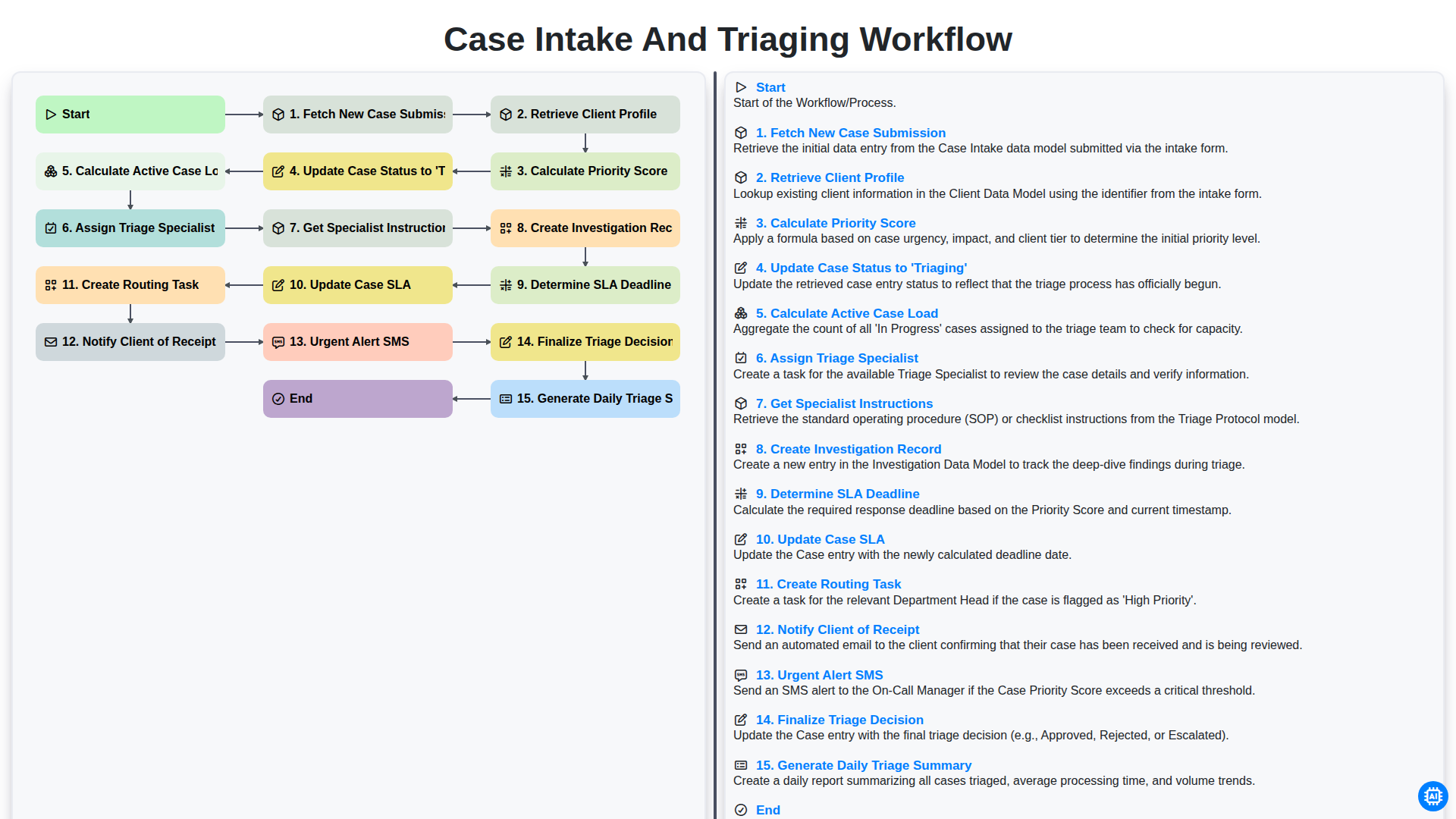
Table of Contents
- Introduction: The Critical Role of Streamlined Case Management
- Phase 1: Initial Reception and Client Identification
- Automating the Intake: Fetching New Case Submissions
- Contextualizing the Request: Retrieving Client Profiles
- Phase 2: Intelligent Prioritization and Status Tracking
- Data-Driven Decisions: Calculating the Priority Score
- Maintaining Visibility: Updating Case Status to 'Triaging'
- Phase 3: Resource Allocation and Load Balancing
- Optimizing Workforce Capacity: Calculating Active Case Load
- Smart Assignment: Allocating the Triage Specialist
- Phase 4: Operational Setup and Investigation Launch
- Empowering Specialists: Accessing Specialist Instructions
- Establishing the Audit Trail: Creating Investigation Records
- Phase 5: SLA Management and Deadline Enforcement
- Calculating Urgency: Determining SLA Deadlines and Updates
- Phase 6: Communication and Escalation Protocols
- Closing the Loop: Client Notifications and Urgent SMS Alerts
- Finalizing the Triage Decision and Continuous Improvement
- Conclusion: Driving Operational Excellence through Daily Summaries
- Resources & Links
TLDR: Learn how to streamline your operations with our comprehensive guide to the Case Intake and Triaging Workflow. This post breaks down how to automate the entire lifecycle-from initial submission and priority scoring to automated specialist assignment and SLA management-ensuring faster response times and smarter resource allocation.
Introduction: The Critical Role of Streamlined Case Management
In the fast-paced landscape of modern operations, the ability to respond to incoming requests with precision and speed is often the primary differentiator between success and operational chaos. Whether you are managing legal claims, customer support tickets, or internal IT incidents, the moment a new case enters your ecosystem, a high-stakes race begins. This initial phase-the transition from a raw submission to an actionable task-is where the foundation of your entire service delivery is laid.
Effective case management is not merely about receiving information; it is about the intelligent processing of that information. Without a structured workflow, organizations often fall into the trap of reactive firefighting, where urgent issues are buried under a mountain of routine requests, and critical deadlines are missed due to manual oversight. A fragmented intake process leads to inconsistent prioritization, uneven workloads among team members, and, ultimately, a breakdown in client trust.
A streamlined triage workflow acts as the central nervous engine of your operations. By implementing a standardized, automated sequence of steps-from the moment a submission is fetched to the finalization of a triage decision-you ensure that every case is evaluated against the same rigorous criteria. This systematic approach eliminates human error, optimizes resource allocation, and ensures that high-priority fire drills are escalated instantly. In this article, we will explore how a well-defined triage architecture transforms raw data into a structured roadmap for investigation, ensuring that no case is left behind and every deadline is met with confidence.
Phase 1: Initial Reception and Client Identification
The workflow begins the moment a new inquiry enters the system. The process is triggered by the Fetch New Case Submission step, where the system automatically captures incoming data from various channels-whether via email, web forms, or API integrations. This ensures that no request is lost in an inbox and every submission is immediately logged into the centralized database.
Once the submission is captured, the system moves instantly to Retrieve Client Profile. This critical step involves cross-referencing the incoming data with existing records to identify if the sender is a returning client or a new lead. By pulling historical context, such as previous interactions, contract tiers, and contact details, the system establishes a foundation of familiarity. This allows the incoming case to be viewed not just as an isolated ticket, but as part of a continuous client relationship, ensuring that the subsequent triage steps are informed by the client's specific history and importance.
Automating the Intake: Fetching New Case Submissions
The lifecycle of a successful resolution begins the moment a client reaches out. In a manual environment, the transition from a client's initial contact to an active investigation is often plagued by delays, human error, and lost emails. Automating the Fetch New Case Submission step is the critical first move in transforming a chaotic inbox into a structured pipeline.
By implementing automated triggers-whether through API integrations, webhooks, or monitored email parsers-your system can instantly detect a new submission the millisecond it hits your platform. Instead of waiting for a team member to manually check a queue, the workflow immediately captures the incoming data, extracts key metadata, and pulls it into your centralized management system. This ensures that no client concern falls through the cracks and sets the stage for the high-speed triage processes that follow.
Contextualizing the Request: Retrieving Client Profiles
Once a new case submission is successfully fetched, the workflow moves beyond simply acknowledging a new entry. To move from a generic notification to an actionable investigation, the system must establish a foundation of intelligence through the Retrieve Client Profile step.
A case does not exist in a vacuum; it is inextricably linked to a specific history, relationship, and set of expectations. By automatically pulling the relevant client profile, the triage engine can instantly access critical metadata-such as the client's service tier, historical incident frequency, and pre-defined communication preferences. This step is crucial because it transforms a new ticket into a contextualized event. Without this immediate retrieval of historical context, the subsequent priority scoring and resource allocation would be based on incomplete data, potentially leading to misaligned urgency levels and missed service commitments.
Phase 2: Intelligent Prioritization and Status Tracking
Once a case has been successfully ingested, the workflow transitions from mere data collection to active intelligence. This second phase, Intelligent Prioritization and Status Tracking, is where the system moves beyond manual oversight to automate the critical decision-making processes that prevent bottlenecks.
The core of this phase lies in the automated assessment of urgency. As soon as the Client Profile is retrieved, the system performs a deep dive into the account's history and metadata to Calculate a Priority Score. This isn't just a random assignment; it is a data-driven calculation that weighs the severity of the issue against the client's service level agreement. Simultaneously, the system Updates the Case Status to 'Triaging', ensuring that all stakeholders have real-time visibility into the lifecycle of the request.
To maintain operational equilibrium, the workflow automatically Calculates the Active Case Load of the available team members. This allows the engine to Assign a Triage Specialist based on capacity rather than just availability, ensuring no single agent is overwhelmed. Once assigned, the specialist is instantly provided with Specialized Instructions tailored to the specific case type, streamlining the path to resolution.
Precision is maintained through rigorous time-bound automation. The system automatically Creates an Investigation Record and immediately Determines the SLA Deadline, followed by an automated Update to the Case SLA timestamp. This ensures that every second of the resolution window is accounted for. To bridge the gap between internal action and external communication, the workflow Creates a Routing Task for the next stage of processing and simultaneously Notifies the Client of Receipt, providing immediate peace of mind.
For high-stakes scenarios, the system triggers an Urgent Alert SMS to critical stakeholders, ensuring that high-priority threats are never buried in an inbox. Finally, once the initial assessment is complete, the workflow moves to Finalize the Triage Decision, which culminates in the Generation of a Daily Triage Summary. This summary provides management with a high-level overview of trends, bottlenecks, and throughput, turning individual case data into actionable operational intelligence.
Data-Driven Decisions: Calculating the Priority Score
In a high-volume triage environment, manual evaluation is often the enemy of efficiency. To move away from subjective guesswork, our workflow integrates an automated Priority Score calculation immediately after retrieving the client profile. This step transforms raw data into actionable intelligence by analyzing specific variables-such as client tier, case severity, and historical impact-to assign a numerical value to every incoming submission.
By quantifying urgency through a standardized algorithm, the system removes human bias and ensures that critical issues are mathematically prioritized over routine requests. This calculation serves as the engine for the entire downstream process; it directly influences the subsequent determination of SLA deadlines and the urgency of the automated SMS alerts. Instead of simply reacting to the newest case, the system enables the triage team to focus their cognitive energy on the most impactful threats, ensuring that resources are always allocated where they are needed most.
Maintaining Visibility: Updating Case Status to 'Triaging'
Once a new case is successfully fetched and the initial client profile is retrieved, the very next critical action is to transition the case status to 'Triaging'. This step is more than just a label change; it serves as a vital communication signal to both your internal team and your clients.
By immediately moving a case into the 'Triaging' phase, you create an automated paper trail that eliminates the ambiguity of the pending state. For your team, this status update acts as a lock, signaling that the case is actively being analyzed and preventing duplicate efforts or conflicting actions from multiple specialists. For the client, this visibility provides peace of mind, ensuring they know their submission hasn't disappeared into a black hole, but is instead currently under active review. This real-time status update is the foundation of a transparent workflow, ensuring that every stakeholder knows exactly where a case sits in the lifecycle.
Phase 3: Resource Allocation and Load Balancing
Once the priority of a case has been established, the workflow shifts from assessment to intelligent distribution. This phase is critical to ensuring that no single team member becomes a bottleneck and that high-priority tasks are routed to the most capable hands.
The process begins by calculating the active case load for each available specialist to ensure an even distribution of work. To maintain high standards of accuracy, the system then assigns a Triage Specialist based on both availability and subject matter expertise. Once assigned, the specialist is immediately provided with specialist instructions, ensuring they have the necessary context and protocols to proceed without delay.
With the specialist assigned, the system automatically creates an investigation record to serve as the single source of truth for the lifecycle of the case. To maintain accountability and manage expectations, the system determines the SLA deadline based on the calculated priority score and immediately updates the case SLA within the database. Finally, to close the loop on the allocation stage, the system creates a routing task for the specialist and triggers the urgent alert SMS for high-priority items, ensuring that critical issues are surfaced instantly.
Optimizing Workforce Capacity: Calculating Active Case Load
A critical component of an efficient triaging engine is the ability to maintain visibility into your team's current bandwidth. The Calculate Active Case Load step serves as the operational heartbeat of the workflow, ensuring that work is distributed logically rather than arbitrarily.
By automatically auditing the number of ongoing, unresolved tasks assigned to each specialist, the system prevents the common pitfall of bottlenecking-where a single high-performing specialist is overwhelmed with incoming queries while others remain underutilized. This real-time calculation allows the workflow to dynamically balance the distribution of new cases based on actual capacity. When the system understands the true volume of active work, it transforms triaging from a manual guessing game into a data-driven process that protects employee well-being and maintains consistent service levels.
Smart Assignment: Allocating the Triage Specialist
Once the system has calculated the active case load for the team, the workflow moves into the critical phase of resource allocation. This stage is not about simply picking a name from a list; it is about a strategic match between the complexity of the incoming case and the expertise of the available personnel.
The process begins by executing the Assign Triage Specialist step, where the system evaluates real-time data to identify the most appropriate professional. To ensure this assignment is actionable, the workflow automatically performs the Get Specialist Instructions step. This ensures that the assigned specialist isn't just handed a ticket, but is provided with the specific context, pre-defined protocols, and necessary documentation required to begin their assessment immediately. By automating the bridge between workload assessment and instructional delivery, the workflow eliminates the decision fatigue that often plagues triage teams, allowing specialists to focus entirely on the investigation rather than the logistics of their assignment.
Phase 4: Operational Setup and Investigation Launch
Once the initial triage assessment is complete, the workflow transitions into the execution phase, where the focus shifts from assessment to active investigation. This stage, known as Operational Setup and Investigation Launch, is critical for ensuring that the workload is organized and that every case is equipped with the necessary resources for a successful resolution.
The process begins by formalizing the investigative path through the Creation of an Investigation Record. This record serves as the single source of truth, centralizing all data, notes, and evidence gathered during the intake process. To ensure accountability and maintain service standards, the system simultaneously Determines the SLA Deadline and performs an Update to the Case SLA, locking in the timeframe within which the investigation must be completed to prevent breaches.
To ensure the assigned specialist can act immediately without delay, the workflow triggers the Creation of a Routing Task. This task serves as the bridge between triage and action, delivering the investigation requirements directly to the specialist's queue. To maintain transparency and manage expectations, the system also triggers a Notification to the Client of Receipt, reassuring them that their case is officially in motion. For high-priority escalations, an Urgent Alert SMS is dispatched, ensuring that critical issues receive instantaneous attention. Finally, the phase concludes by Finalizing the Triage Decision, effectively transitioning the case from a pending state to an active, high-velocity investigation.
Empowering Specialists: Accessing Specialist Instructions
Once a triage specialist is assigned to a case, the workflow moves beyond simple data processing and into the realm of actionable intelligence. The Get Specialist Instructions step is a critical pivot point in the process, ensuring that the person handling the case isn't just looking at raw data, but is equipped with a clear, context-aware roadmap.
Rather than forcing specialists to hunt through disparate logs or manual notes, this automated step pulls specific, pre-defined guidance directly into their workspace. These instructions are tailored to the specific nature of the case-whether it involves a high-priority security breach, a standard service inquiry, or a complex technical bug. By delivering precise, step-by-step directions at the moment of assignment, the workflow minimizes cognitive load, reduces the margin for human error, and ensures that every specialist, regardless of experience level, can execute the initial investigation with consistent precision.
Establishing the Audit Trail: Creating Investigation Records
Once the triage specialist has been assigned and the initial parameters are set, the workflow moves into a critical phase of accountability: the creation of the investigation record. This step serves as the foundational paper trail for the entire lifecycle of the case. By automatically generating a dedicated investigation record, the system ensures that every piece of intelligence gathered during the triage phase is captured in a centralized, immutable location. This record acts as the single source of truth, documenting the transition from a raw submission to an active investigation, and ensuring that no critical detail is lost as the case moves toward resolution.
Phase 5: SLA Management and Deadline Enforcement
Once the investigation record is established, the workflow shifts focus toward accountability and time-sensitive-management. This phase is critical for ensuring that no case stagnates in the pipeline. The process begins with the automated calculation of the SLA Deadline, which is derived from the previously calculated Priority Score and the specific service level agreements associated with the client's profile.
Immediately following the deadline determination, the system performs an Update Case SLA action, hard-coding the target resolution time into the case metadata. This allows for real-time tracking and automated countdowns within the dashboard. To ensure the routing task is actionable, the system then executes a Create Routing Task, which acts as a formal trigger for the assigned specialist to begin their investigation. Finally, to close the loop on the initial intake, the system triggers a Notify Client of Receipt automation, providing the client with instant transparency, and, in high-priority scenarios, sends an Urgent Alert SMS to ensure that critical issues are flagged to stakeholders the moment they enter the system.
Calculating Urgency: Determining SLA Deadlines and Updates
Once the priority score has been established and the initial investigation record is created, the workflow shifts from assessment to accountability. A critical component of this stage is the precise determination of the SLA (Service Level Agreement) deadline. This isn't a one-size-fits-all calculation; rather, it is a dynamic process where the system evaluates the newly calculated priority score against predefined service tiers to establish a strictly enforceable timeframe for resolution.
Once the deadline is determined, the system immediately executes an Update Case SLA action. This step ensures that the ticking clock is visible to everyone involved, providing real-time visibility into how much time remains before a breach occurs. By automating the calculation and the subsequent status update, the workflow eliminates the risk of human error and ensures that both the triage specialist and the client have a unified, transparent understanding of the expected response time. This proactive timestamping serves as the foundation for all subsequent monitoring and escalation protocols.
Phase 6: Communication and Escalation Protocols
Once the triage decision is finalized, the workflow transitions from internal assessment to active stakeholder engagement. This phase is critical for maintaining transparency and ensuring that all parties are aligned on the next steps of the investigation.
The final automated steps in the workflow include:
- Notify Client of Receipt: As soon as the case is processed, an automated notification is triggered to the client. This confirms that their submission has been successfully logged and provides them with a unique case reference number, reducing follow-up inquiries.
- Urgent Alert SMS: For cases flagged with a high-priority score during the calculation phase, the system bypasses standard email queues and triggers an immediate SMS alert to the assigned specialist and relevant stakeholders. This ensures that critical issues receive near-instantaneous attention.
- Finalize Triage Decision: The workflow concludes by locking the triage parameters, officially transitioning the case from the Triaging status to In Investigation or Pending Assignment, ensuring a seamless handoff to the investigative team.
- Generate Daily Triage Summary: To provide management with high-level visibility, the system aggregates all processed data into a daily summary report. This report highlights volume trends, average priority scores, and any potential SLA breaches, allowing for proactive resource reallocation.
Closing the Loop: Client Notifications and Urgent SMS Alerts
Once the initial triage steps are underway, communication becomes the bridge between internal efficiency and client trust. A critical component of a robust workflow is the automated Notification of Client Receipt. The moment a new case is captured, the system triggers an immediate confirmation to the client. This automated touchpoint eliminates the black hole effect, providing instant reassurance that their submission has been successfully logged and is currently being processed by the triage team.
However, in high-stakes environments, standard email notifications aren't always enough. For cases flagged with a high priority score during the calculation phase, the workflow triggers an Urgent Alert SMS. This secondary, high-velocity communication layer ensures that stakeholders are notified of critical issues in real-time, bypassing the clutter of an overflowing inbox. By integrating these automated alerts, the workflow does more than just manage data; it manages expectations and ensures that urgent matters receive the immediate visibility they require to prevent SLA breaches.
Finalizing the Triage Decision and Continuous Improvement
Once the investigation is complete and the routing task is dispatched, the workflow moves into its final, critical phase: Finalizing the Triage Decision. This step is the moment of truth where all the previously gathered data-the priority score, the client profile, and the investigation findings-converge to form a definitive course of action. At this stage, the system or the specialist confirms the specific investigation path, ensuring that the case is not just moved forward, but moved forward with the correct strategic intent.
However, a truly effective workflow does not end when a single case is closed. To ensure long-term operational excellence, the process concludes with the generation of a Daily Triage Summary. This automated report serves as a high-level snapshot of the day's activity, highlighting volume trends, average response times, and any potential bottlenecks in the triage pipeline.
By analyzing these summaries, leadership can identify if certain types of cases are consistently triggering Urgent Alert SMS notifications or if specialist workloads are becoming disproportionately heavy. This transition from individual case management to macro-level oversight transforms the triage process from a reactive task into a proactive engine for continuous improvement, allowing for data-driven adjustments to staffing, SLA thresholds, and automation logic.
Conclusion: Driving Operational Excellence through Daily Summaries
The implementation of a structured Case Intake and Triaging Workflow does more than just organize incoming tasks; it transforms raw data into actionable intelligence. By automating the journey from the initial submission to the final triage decision, organizations can eliminate manual bottlenecks and ensure that no critical issue falls through the cracks.
The true power of this workflow, however, lies in the final stage: the Daily Triage Summary. This automated digest serves as the heartbeat of your operational oversight. Instead of wading through endless notification streams, leadership and specialists receive a distilled, high-level view of case volumes, priority shifts, and SLA adherence. This birds-eye perspective allows for proactive resource reallocation, identifies emerging patterns in client needs, and ensures that the team remains aligned with broader organizational goals. By turning a complex sequence of technical steps into a streamlined, predictable process, you aren't just managing tasks-you are driving continuous operational excellence.
Resources & Links
- Atlassian Service Management: A comprehensive guide to automating incident management and service desk workflows using Jira Service Management.
- ServiceNow Workflow Automation: Explore enterprise-grade solutions for automated case routing, SLA management, and intelligent workload distribution.
- Monday.com Work OS: Learn how to build customizable intake forms and automated status updates to streamline your triage process.
- Zapier Automation Guide: Detailed tutorials on connecting disparate tools to automate tasks like SMS alerts and client notifications.
- Salesforce Service Cloud: Deep dive into using CRM data to retrieve client profiles and drive intelligent case prioritization.
- McKinsey Operations Insights: Expert perspectives on implementing data-driven decision-making and operational excellence in large-scale workflows.
Frequently Asked Questions
What is the primary goal of optimizing the case intake and triaging workflow?
The primary goal is to increase operational efficiency by reducing manual errors, accelerating response times, and ensuring that high-priority cases are routed to the appropriate specialists immediately.
What are the key components of an effective case intake process?
An effective process includes standardized data collection (intake forms), automated data entry,-clear categorization, and multi-channel integration (email, portal, phone) to ensure no information is lost.
How does effective triaging impact resource allocation?
Effective triaging allows organizations to distribute workloads based on urgency and complexity, preventing bottlenecks and ensuring that skilled personnel are not overwhelmed by low-priority tasks.
What role does automation play in the triaging workflow?
Automation plays a critical role by using rules-based logic or AI to instantly categorize incoming requests, assign severity levels, and route tickets to the correct queues without human intervention.
How can an organization measure the success of their revamped intake and triaging workflow?
Success can be measured using key performance indicators (KPIs) such as Mean Time to Acknowledge (MTTA), Mean Time to Resolve (MTTR), error rates in categorization, and overall customer satisfaction scores.
Comments
There are no comments yet. Be the first to add one!
Case Management Solution Demo
Streamline your casework & improve outcomes! ChecklistGuro centralizes case details, tasks, & communication. Enhance efficiency, ensure compliance, & deliver exceptional service. Manage it all with our Work OS.
Related Articles
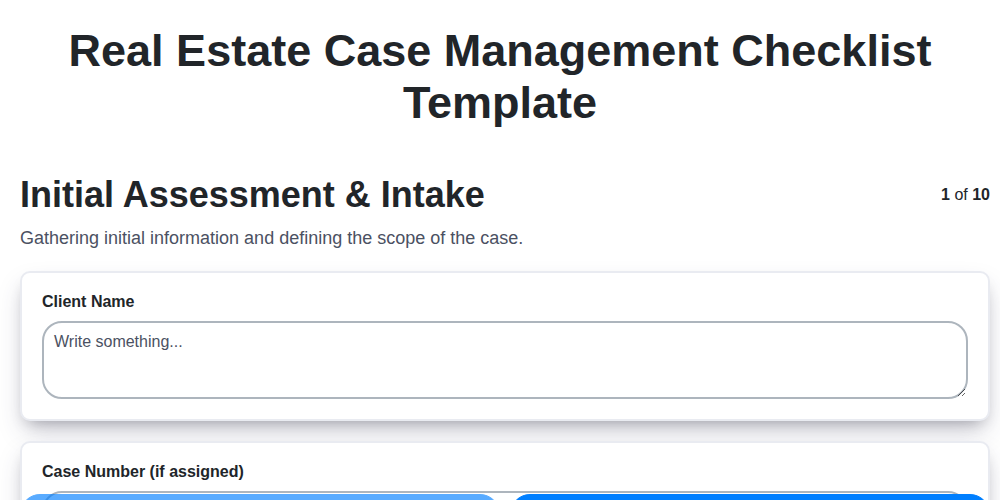
Streamline Your Deals: The Ultimate Real Estate Case Management Checklist Template
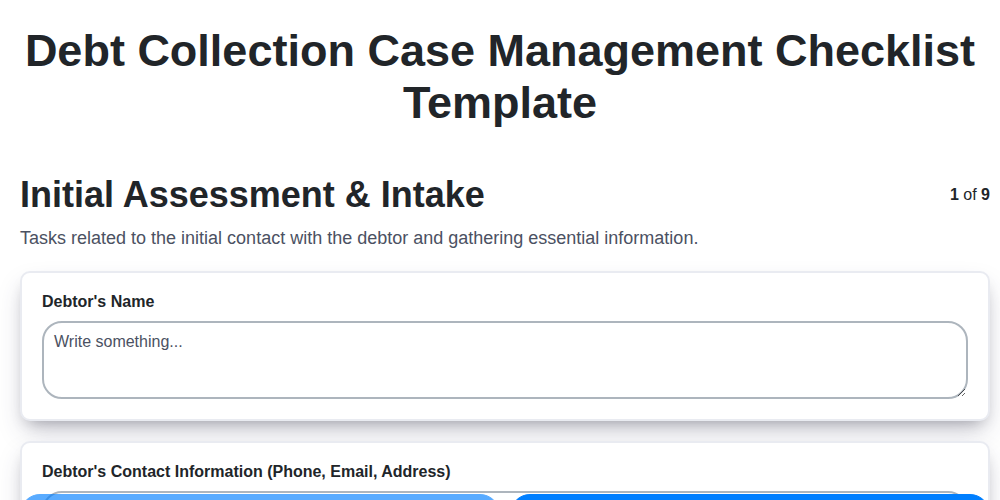
Streamline Your Debt Collection: A Case Management Checklist Template
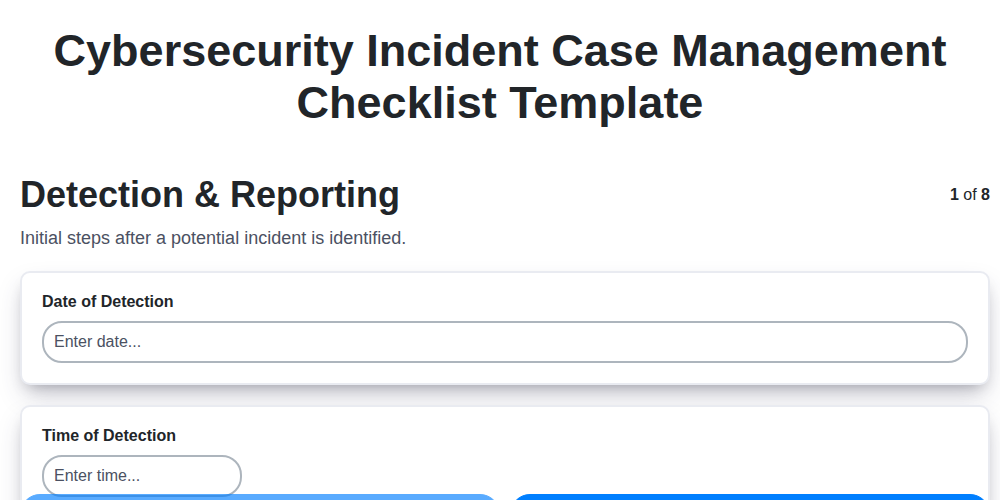
Cybersecurity Incident Response: Your Checklist Template for Success
Streamline Your Case Management: The Ultimate Checklist Template
Mastering IP: Your Intellectual Property Case Management Checklist Template
HR Case Management Checklist Template: Your Guide to Fair & Compliant Investigations
Streamlining Veteran Care: Your Comprehensive Case Management Checklist Template
Mastering Investigations: Your Case Management Checklist Template Guide
Need help with
Checklists?
Have a question? We're here to help. Please submit your inquiry, and we'll respond promptly.