Mastering Investigations: Your Case Management Checklist Template Guide
Published: 12/20/2025 10:00 PM Updated: 12/21/2025 7:06 AM
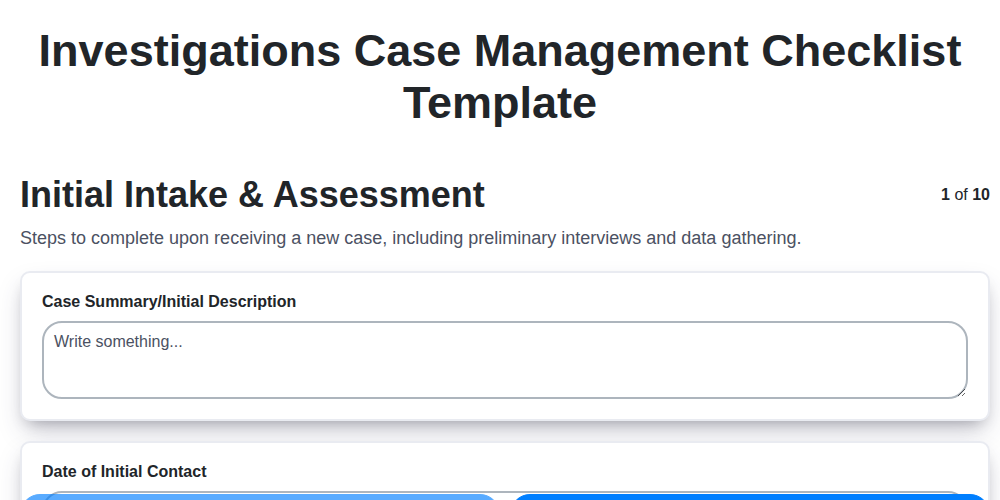
Table of Contents
- Introduction: Why a Case Management Checklist is Essential
- 1. Initial Intake & Assessment: Setting the Foundation
- 2. Evidence Collection & Preservation: Maintaining Chain of Custody
- 3. Witness Interviews & Statements: Gathering Accurate Accounts
- 4. Background Checks & Due Diligence: Uncovering Crucial Information
- 5. Legal Review & Consultation: Ensuring Compliance and Strategy
- 6. Reporting & Documentation: Building a Comprehensive Record
- 7. Security & Confidentiality: Protecting Sensitive Data
- 8. Case Escalation & Coordination: Managing Complexity
- 9. Closure & Archiving: Finalizing the Case
- 10. Compliance & Audit Trail: Demonstrating Accountability
- 11. Leveraging Technology for Efficient Case Management
- 12. Best Practices for a Robust Investigation Checklist
- 13. Customizing Your Checklist: Adapting to Specific Needs
- 14. Continuous Improvement: Refining Your Investigation Process
- Resources & Links
TLDR: Running investigations can be chaotic! This checklist template gives you a step-by-step guide - from initial intake to final archiving - covering everything from evidence gathering and witness interviews to legal review and security. It ensures thoroughness, consistency, and compliance, so you can manage investigations effectively and confidently.
Introduction: Why a Case Management Checklist is Essential
Case management, particularly in investigations, can be a complex and high-stakes undertaking. A single missed step can compromise the integrity of the process, leading to legal challenges, reputational damage, or even safety risks. That's why a robust case management checklist isn't just a helpful tool - it's an essential foundation for a well-managed and defensible investigation.
Think of a checklist as your roadmap, ensuring every critical action is consistently executed and documented. It provides structure, minimizes errors, and promotes accountability across the investigation team. Whether you're dealing with internal misconduct, regulatory inquiries, or complex fraud, a checklist standardizes procedures, reduces the risk of overlooking vital information, and ultimately, strengthens the overall case. It's about proactive prevention, not reactive correction.
1. Initial Intake & Assessment: Setting the Foundation
The very first step in any successful investigation is a thorough initial intake and assessment. This phase is critical for determining the scope of the investigation, identifying key stakeholders, and establishing a clear understanding of the allegations or concerns. A rushed or incomplete intake can lead to wasted resources and potentially compromise the entire process.
Here's what this stage should encompass:
- Receiving and Recording the Referral: Document the source of the referral - who brought the matter to your attention? Include date, time, and method of communication.
- Preliminary Information Gathering: Collect as much initial information as possible. This could include a written complaint, a verbal report, or a tip. Ask open-ended questions to encourage the reporter to share all relevant details.
- Allegation Assessment: Briefly evaluate the initial allegations. Are they credible? Do they fall within your organization's purview and investigative authority?
- Identifying Potential Witnesses & Subjects: Begin to identify individuals who may have knowledge of the matter or who are implicated in the allegations.
- Determining Scope & Objectives: Define the specific questions the investigation aims to answer. This helps maintain focus and prevents scope creep.
- Assigning an Investigator/Team: Based on the complexity of the allegations, assign a qualified investigator or team to handle the case.
- Conflict of Interest Check: Crucially, perform a conflict of interest check to ensure impartiality.
- Initial Risk Assessment: Identify potential risks associated with the investigation (legal, reputational, etc.).
A well-documented initial intake and assessment lays the groundwork for a robust and objective investigation.
2. Evidence Collection & Preservation: Maintaining Chain of Custody
Evidence is the bedrock of any successful investigation. Improper collection, handling, or storage can render it inadmissible, compromise the integrity of the case, and potentially derail the entire process. This section focuses on ensuring evidence is gathered and preserved meticulously, with a strict adherence to maintaining a robust chain of custody.
Key Steps & Best Practices:
- Document Everything: Each piece of evidence, from its initial discovery to its final storage, must be meticulously documented. This includes the date, time, location of discovery, who found it, and a brief description. Use standardized forms and photography/video recording is highly recommended.
- Secure the Scene: Immediately secure the area where evidence is found to prevent contamination or alteration. Limit access to authorized personnel only.
- Proper Packaging: Utilize appropriate containers (evidence bags, boxes, etc.) suitable for the type of evidence. Seal containers properly and label them clearly with identifying information (case number, date, time, description, collector's initials).
- Chain of Custody Log: This is critical. Every transfer of evidence - from collection to storage, analysis, or court - must be recorded in a dedicated Chain of Custody log. The log should include:
- Date and time of transfer
- Name of the person transferring the evidence
- Name of the person receiving the evidence
- Reason for the transfer
- Condition of the evidence upon transfer (e.g., sealed, broken seal, etc.)
- Limited Handling: Minimize the number of individuals handling the evidence. Each person involved should be properly trained in evidence handling procedures.
- Secure Storage: Maintain a secure and controlled environment for evidence storage. Access should be restricted and monitored.
- Regular Audits: Conduct regular audits of evidence storage to ensure proper handling and security protocols are being followed.
Failure to maintain a clear and unbroken chain of custody can cast doubt on the authenticity and reliability of the evidence, potentially leading to unfavorable outcomes.
3. Witness Interviews & Statements: Gathering Accurate Accounts
Effective investigations hinge on gathering reliable accounts, and that starts with meticulous witness interviews. This checklist step isn't just about talking to people; it's about creating a documented record of information obtained under controlled conditions.
Here's what needs to be considered:
- Identification & Prioritization: Identify all potential witnesses and prioritize interviews based on their proximity to the incident and potential knowledge.
- Interview Planning: Prepare structured interview guides tailored to each witness, outlining key questions while allowing for flexibility. Don't lead the witness or suggest answers.
- Interview Environment: Choose a quiet, private location minimizing distractions and ensuring the witness feels comfortable and safe.
- Recording & Documentation: Whenever legally permissible and with proper consent, consider recording interviews. Regardless, meticulous written notes, accurately reflecting the witness's statements, are essential. Include the date, time, location, and interviewer(s) present.
- Witness Understanding: Ensure the witness understands the purpose of the interview, their right to remain silent (where applicable), and the potential consequences of false statements.
- Review & Verification: After the interview, review notes for accuracy and completeness. Where possible and appropriate, seek a brief review of the statement by the witness for confirmation. Document any revisions made.
- Chain of Custody: Maintain a clear chain of custody for all witness statements, ensuring their integrity and admissibility.
- Confidentiality: Remind witnesses of the importance of confidentiality and avoid discussing the case with others.
Poorly conducted interviews can significantly weaken an investigation; thoroughness and professionalism are paramount.
4. Background Checks & Due Diligence: Uncovering Crucial Information
Thorough background checks and due diligence are paramount in any investigation. This isn't simply about verifying facts; it's about proactively identifying potential risks, validating claims, and strengthening the overall integrity of your case. A rushed or incomplete background check can leave you exposed to significant legal and reputational damage.
This stage involves a multifaceted approach, encompassing several critical areas:
- Subject Verification: Confirming the identity and current status (address, employment, aliases) of all individuals involved - subjects, key witnesses, and potentially even complainants.
- Financial Records Review (where applicable and legally permissible): Examining financial history can reveal hidden assets, debts, or potential motives. Always adhere to legal guidelines regarding accessing financial information.
- Criminal Record Checks: A comprehensive search of criminal records, including local, state, and federal databases.
- Asset Verification: Identifying and verifying assets owned by the subject, crucial in cases involving fraud, theft, or financial disputes.
- Social Media & Online Presence: Examining online activity for relevant information, potential inconsistencies, or red flags (always mindful of privacy laws).
- Professional License Verification: Validating the legitimacy and standing of any professional licenses held by the subject.
- Previous Litigation/Legal History: Researching past legal actions involving the subject, which can provide valuable context.
Documentation is Key: Every step taken and every piece of information discovered during the background check and due diligence phase must be meticulously documented. This demonstrates the thoroughness of your process and provides a clear audit trail should it be required. Remember to always adhere to legal and ethical boundaries when conducting background checks and obtain necessary consents where required.
5. Legal Review & Consultation: Ensuring Compliance and Strategy
This stage is absolutely critical. After gathering initial information and conducting preliminary assessments, a thorough legal review is essential to ensure the investigation adheres to all applicable laws, regulations, and legal precedents. This isn't just about avoiding legal pitfalls; it's about shaping the investigation's strategy and ensuring its findings are legally sound and defensible.
Here's what this phase typically involves:
- Review of Applicable Laws: Our legal team will analyze all relevant statutes, case law, and regulatory guidelines pertaining to the investigation's subject matter. This includes privacy laws, employment law, contract law, and any industry-specific regulations.
- Privilege Assessment: Determining which communications and documents are potentially privileged (e.g., attorney-client privilege, work product doctrine) is vital to protect sensitive information and maintain the integrity of the investigation.
- Strategic Guidance: Legal counsel provides strategic advice on investigative scope, interview techniques, evidence handling, and reporting protocols. They help ensure the investigation is focused, efficient, and aligned with legal objectives.
- Potential Legal Exposure: The legal review identifies potential legal risks and liabilities associated with the case, informing mitigation strategies and reporting requirements.
- Ongoing Consultation: Legal review isn't a one-time event. Ongoing consultation throughout the investigation ensures compliance and adapts to evolving circumstances.
6. Reporting & Documentation: Building a Comprehensive Record
Thorough and accurate documentation is the backbone of any successful investigation. It's not just about recording what happened; it's about creating a clear, defensible record that can be reviewed, audited, and potentially presented in legal proceedings. This section of the checklist focuses on ensuring your reporting and documentation practices are robust.
Here's what's essential:
- Standardized Report Templates: Implement pre-defined templates for various report types (initial assessment, witness summaries, evidence logs, final reports, etc.). This ensures consistency and completeness.
- Timeline Creation: Maintain a detailed timeline of events, including dates, times, and key actions taken. This provides context and aids in identifying gaps or inconsistencies.
- Evidence Logging: Meticulously log all evidence collected, including its source, chain of custody, and any observations related to its condition. Digital evidence logging systems are highly recommended.
- Photo and Video Documentation: Wherever possible, supplement written reports with photographic and video documentation. This provides visual evidence and strengthens the record.
- Version Control: Implement strict version control for all documents. Clearly label each version and track changes made.
- Review & Approval: Establish a process for reviewing and approving all reports before they are finalized and distributed.
- Secure Storage: Ensure all reports and supporting documentation are stored securely, with restricted access, and in compliance with data retention policies.
- Regular Audits: Conduct regular audits of your reporting and documentation practices to identify areas for improvement and ensure compliance.
Failure to maintain impeccable reporting and documentation can severely undermine the integrity of an investigation and expose your organization to significant risk.
7. Security & Confidentiality: Protecting Sensitive Data
Investigations invariably deal with highly sensitive information - personal data, financial records, proprietary information, and more. Maintaining strict security and confidentiality throughout the entire investigation lifecycle isn't just a best practice; it's often a legal and ethical imperative.
This section focuses on safeguarding that data. Your checklist should include the following:
- Data Encryption: All digital data, both in transit and at rest, must be encrypted using robust encryption methods. This applies to laptops, servers, cloud storage, and mobile devices.
- Access Control: Implement the principle of least privilege. Limit access to case files and data only to authorized personnel who require it for their specific roles. Regularly review access rights.
- Secure Storage: Utilize secure, password-protected storage solutions - physical and digital - with controlled access. Consider using dedicated case management systems with built-in security features.
- Data Handling Protocols: Establish clear protocols for handling physical documents, including secure storage, shredding procedures, and limitations on duplication.
- Confidentiality Agreements: Ensure all investigators, consultants, and involved parties sign confidentiality agreements.
- Regular Security Audits: Conduct routine security audits to identify vulnerabilities and ensure compliance with established protocols.
- Data Breach Response Plan: Have a documented and tested plan in place for responding to data breaches, including notification procedures as required by law.
- Training & Awareness: Provide ongoing training to all personnel on data security best practices, privacy laws, and the importance of maintaining confidentiality.
8. Case Escalation & Coordination: Managing Complexity
As investigations grow in complexity - involving multiple parties, sensitive information, or potential legal ramifications - a clear escalation and coordination process becomes vital. This checklist item isn't just about knowing who to contact; it's about when and how.
Here's what's covered:
- Defined Escalation Criteria: Establish specific triggers for escalating a case. Examples include significant financial loss, potential criminal activity, reputational risk, or conflicting information. Document these criteria clearly.
- Designated Escalation Path: Create a predefined chain of command. This should outline who receives notifications, their responsibilities, and approval levels for different actions. Consider assigning primary and secondary contacts.
- Inter-Departmental Coordination: Investigations often require input from Legal, HR, IT, Security, and other departments. This section ensures seamless communication and collaboration across teams, preventing duplication of effort and ensuring a unified approach.
- External Collaboration: Determine the procedures for involving external parties like law enforcement, regulatory bodies, or expert consultants. Outline communication protocols and information sharing agreements.
- Regular Status Updates: Implement a system for consistent updates to stakeholders, including leadership and legal counsel. Document these updates, noting key decisions and justifications.
- Conflict Resolution: Outline how disagreements or conflicts arising during the investigation will be addressed and resolved.
This proactive approach minimizes delays, reduces potential errors, and ensures investigations are handled with appropriate oversight and expertise.
9. Closure & Archiving: Finalizing the Case
Reaching the closure phase of an investigation marks a significant milestone. However, it's crucial to ensure a thorough and legally sound process to protect your organization and maintain compliance. This isn't just about putting the case away. It involves meticulous steps for secure archiving and proper documentation.
Here's what needs to be done:
- Verify Resolution: Confirm that all key findings have been addressed and any necessary corrective actions have been implemented. Document this verification.
- Final Review: Conduct a final review of all documentation, findings, and resolutions with relevant stakeholders (legal counsel, HR, security). This ensures accuracy and completeness.
- Secure Archiving: Transfer all case files - physical and digital - to a designated, secure archive location. Implement retention policies based on legal and regulatory requirements. Clearly label and index all archived materials for easy retrieval if needed.
- Data Sanitization (If Applicable): If sensitive data was handled, ensure proper data sanitization protocols are followed for any devices or platforms involved in the investigation.
- Access Restriction: Limit access to the archived case files to authorized personnel only. Document who has access and the purpose for which they are accessing the files.
- Notification (If Applicable): If applicable, formally notify relevant parties (e.g., the individual subject of the investigation) that the case has been closed, following established procedures and legal counsel advice.
- Record Closing Date: Clearly document the date of case closure within the case file itself.
- Periodic Review (Optional): Consider scheduling periodic reviews of archived cases to ensure continued compliance with retention policies and legal requirements.
10. Compliance & Audit Trail: Demonstrating Accountability
Maintaining a robust compliance and audit trail is paramount in any investigation case management process. It's not just about doing things right; it's about proving you did. This section details how to ensure accountability and demonstrate adherence to legal, regulatory, and internal policies.
Key Actions:
- Record Everything: Meticulously document every action taken, decision made, and communication sent throughout the investigation lifecycle. This includes who performed the action, when it occurred, and the rationale behind it. Utilize digital signatures and timestamps whenever possible.
- Version Control: Implement strict version control for all documents, reports, and evidence. Clearly identify revisions and the reasons for changes.
- Access Control: Limit access to case files and investigation data to authorized personnel only. Log all access attempts and modifications.
- Audit Logs: Utilize the case management system's built-in audit log functionality, or implement a separate audit trail system, to track user activity, data modifications, and system events.
- Regular Reviews: Schedule periodic reviews of the audit trail by compliance officers or internal audit teams to identify any gaps or areas of concern.
- Policy Adherence Verification: Document how each step in the investigation adhered to relevant company policies, procedures, and applicable laws. Note any deviations and their justification.
- Data Retention: Comply with data retention policies and securely archive investigation data for the required period, ensuring it remains accessible for potential audits.
- Training Documentation: Record all training provided to investigators and case management personnel regarding compliance and data handling procedures.
A comprehensive compliance and audit trail isn't just a best practice; it's a legal necessity and a key indicator of a well-managed and responsible investigation process.
11. Leveraging Technology for Efficient Case Management
Manual checklist processes, while valuable, can be time-consuming and prone to errors. Thankfully, modern technology offers powerful solutions to streamline investigations and ensure consistent adherence to your checklist. Case management software, specifically designed for investigations, offers a significant upgrade.
These platforms typically offer features like:
- Digital Checklists: Embed your Investigation Case Management Checklist Template directly into the software, triggering tasks and reminders automatically.
- Automated Workflows: Trigger specific actions (like background check initiation after initial assessment) based on checklist progress.
- Secure Document Storage: Centralize evidence, witness statements, and reports in a secure, accessible repository.
- Real-time Collaboration: Enable seamless communication and task assignment among team members.
- Audit Trails: Automatically log all actions and changes, ensuring a complete audit trail for compliance.
- Reporting & Analytics: Generate reports on case progress, completion times, and potential bottlenecks.
Investing in a robust case management system isn't just about efficiency; it's about minimizing risk, improving accuracy, and ultimately delivering more effective investigations. Consider exploring options that offer customizable checklists to perfectly align with your organization's specific needs.
12. Best Practices for a Robust Investigation Checklist
A checklist is only as good as its execution and ongoing refinement. Here are some key best practices to ensure your investigation checklist delivers maximum effectiveness:
- Regular Review & Updates: Investigations evolve. Laws change. New technologies emerge. Your checklist must be reviewed and updated at least annually, and ideally more frequently if there are significant changes in regulations or your organization's processes.
- Tailor to Specific Cases: While a core checklist provides structure, it shouldn't be rigid. Adapt it to the specifics of each investigation. Add or remove steps based on the nature of the allegations, the potential risks, and the resources available.
- Assign Clear Ownership: Each checklist item should have a clearly assigned owner responsible for its completion and documentation. This ensures accountability and prevents steps from being overlooked.
- Documentation is Key: Thoroughly document everything. Not just the actions taken, but also the rationale behind decisions and any deviations from the checklist. A well-documented audit trail is essential for compliance and defensibility.
- Training and Standardization: Provide training to all investigators using the checklist to ensure consistency in application and understanding of procedures. This reduces errors and improves quality.
- Technology Integration: Consider using investigation case management software to host your checklist. This can automate tasks, track progress, and provide secure collaboration.
- Feedback Loop: Establish a system for investigators to provide feedback on the checklist's effectiveness. This continuous improvement cycle ensures the checklist remains relevant and efficient.
- Consider Legal Counsel Input: Consult with legal counsel during the checklist's development and periodically to ensure compliance with relevant laws and regulations.
- Prioritize Sensitive Information: Clearly identify checklist items related to handling sensitive or confidential information and emphasize strict adherence to security protocols.
- Define 'Completion' Clearly: Ensure each checklist item has clear criteria for what constitutes completion. Avoid ambiguity that could lead to misunderstandings.
- Escalation Procedures: Outline clear procedures for escalating issues identified during the investigation process, including when and to whom concerns should be reported.
- Data Retention Policies: Integrate data retention policies within the checklist to ensure compliance with legal requirements and organizational best practices regarding recordkeeping.
13. Customizing Your Checklist: Adapting to Specific Needs
No two investigations are exactly alike. While our comprehensive checklist provides a solid foundation, true efficiency and accuracy come from tailoring it to the specific nuances of each case. Consider these customization points:
- Industry-Specific Regulations: Does your investigation involve healthcare, finance, or another highly regulated sector? Add steps related to relevant laws and reporting requirements (e.g., HIPAA, Sarbanes-Oxley).
- Type of Allegation: A sexual harassment claim requires different actions than a suspected financial fraud case. Modify steps to address the particular accusations.
- Role of the Investigator: Is this an internal investigation led by HR or a third-party forensic investigator? Adjust responsibilities and steps accordingly.
- Complexity of the Case: A simple employee dispute needs less rigorous scrutiny than a potential criminal matter. Scale the depth of your background checks and legal consultation.
- Geographic Location: Laws and cultural norms vary. Ensure your checklist accounts for jurisdictional differences.
- Adding Conditional Steps: Use "if/then" logic. For example: "If evidence of criminal activity is uncovered, THEN immediately notify legal counsel and consider involving law enforcement."
- Incorporating Technology: If you use specific case management software or forensic tools, integrate steps related to data entry, analysis, and reporting within those platforms.
Regularly review and update your customized checklist based on lessons learned from past investigations.
14. Continuous Improvement: Refining Your Investigation Process
No investigation process is ever truly finished. The best organizations view each investigation as a learning opportunity, constantly seeking ways to improve efficiency, accuracy, and overall effectiveness. This isn't about assigning blame for past decisions; it's about proactively identifying weaknesses and optimizing workflows.
After each investigation concludes (and even periodically between cases), conduct a thorough review. Ask yourself:
- Were there bottlenecks? Where did the process slow down? Were resources adequately allocated?
- Could data collection have been more effective? Were there gaps in information? Could technology have streamlined the process?
- Were witness interviews conducted optimally? Could training improve interviewing techniques?
- Did the team adhere to the checklist consistently? If not, why?
- Were there any unexpected challenges? How can we anticipate and prepare for them in the future?
Document these findings and formulate actionable steps to address them. This might involve updating the investigation checklist template itself, revising standard operating procedures, providing additional training for investigators, or exploring new technologies to automate tasks. Embrace feedback from investigators and stakeholders; their firsthand experience is invaluable. Regularly updating your investigation process ensures that it remains aligned with evolving legal requirements, best practices, and the unique needs of your organization.
Resources & Links
- National Institute of Standards and Technology (NIST): Provides guidelines and standards relevant to data preservation, digital forensics, and secure handling of information - key aspects of investigations.
- Information and Records Management Association (ARMA International): ARMA offers resources and best practices for records management, including considerations for investigative records and compliance. Useful for sections on reporting, archiving, and audit trails.
- International Federation of Investigative Accountants (IFIA): Provides resources and training related to fraud investigation and due diligence, relevant to background checks and legal review.
- U.S. Department of Justice: Provides information on legal frameworks and regulations that govern investigations, especially useful for legal review and compliance sections.
- LexisNexis: A legal research service offering comprehensive resources for legal review, case law, and regulatory compliance. Useful for the 'Legal Review & Consultation' header.
- Westlaw: Similar to LexisNexis, Westlaw provides legal research and analysis tools, beneficial for legal review and understanding relevant statutes and precedents.
- Society for Human Resource Management (SHRM): If your investigations often involve HR or employment-related issues, SHRM offers guidance on best practices for interviewing, documentation, and legal compliance.
- Forensic Science Technology: Offers insights into evidence collection and preservation techniques, covering chain of custody and forensic analysis. Relevant to 'Evidence Collection & Preservation'.
- Digital Forensics Magazine: Provides articles and resources on digital forensics, increasingly crucial in modern investigations. Supports sections on digital evidence and data security.
- SANS Institute - Incident Response: Provides training and resources on incident response, which overlaps significantly with investigation processes, particularly regarding security and escalation. Useful for case escalation & coordination sections.
- eDiscovery.com: Offers solutions and information regarding electronic discovery, essential for investigations involving digital data. Relevant to evidence collection and preservation.
- AuditBoard: Provides audit management software and resources that can aid in demonstrating accountability and maintaining a robust audit trail.
- LogicGate: Provides Governance, Risk, and Compliance (GRC) software that can streamline investigation workflows and create comprehensive audit trails. Useful for compliance and audit trail sections.
- Everlaw: A cloud-based eDiscovery and litigation platform that can enhance case management efficiency, evidence organization, and collaboration. Supports many sections of the checklist.
- ServiceNow: Offers workflow automation and case management tools applicable to investigations, particularly helpful for case escalation and coordination and overall process efficiency.
Frequently Asked Questions
What is a case management checklist and why do I need one?
A case management checklist is a structured guide that outlines the essential steps and tasks required to manage an investigation effectively. It ensures consistency, reduces errors, prevents missed deadlines, and ultimately improves the quality and efficiency of your investigations. It helps maintain an organized and auditable process.
Who is this checklist template guide for?
This guide is for anyone involved in investigations, including investigators, paralegals, legal professionals, compliance officers, and security personnel. It's suitable for both experienced investigators and those new to the field.
What types of investigations can this checklist template be used for?
This template is designed to be adaptable for a wide range of investigations, such as internal investigations, fraud investigations, compliance audits, workplace harassment investigations, and more. While specific modifications may be needed, the core framework is broadly applicable.
Is the checklist template customizable? Can I add or remove steps?
Absolutely! The template is designed to be highly customizable. Feel free to add, remove, or modify steps to perfectly align with the specific requirements and nuances of your investigations. It's a starting point, not a rigid structure.
What are some key elements typically included in a case management checklist?
Key elements often include things like: initial assessment, evidence gathering and preservation, witness interviews, legal research, report writing, case closure, and potential follow-up actions. The template provides a detailed breakdown of each stage.
How does using a checklist improve the auditability of my investigations?
A checklist provides a clear, documented record of all actions taken during the investigation. This creates a readily available audit trail, demonstrating due diligence and adherence to procedures, which is crucial for legal compliance and potential scrutiny.
Found this Article helpful?
Comments
There are no comments yet. Be the first to add one!
Case Management Solution Demo
Streamline your casework & improve outcomes! ChecklistGuro centralizes case details, tasks, & communication. Enhance efficiency, ensure compliance, & deliver exceptional service. Manage it all with our Work OS.
Related Articles
Streamline Your Bankruptcy Cases: The Ultimate Case Management Checklist Template
Streamline Your Debt Collection: A Case Management Checklist Template
Cybersecurity Incident Response: Your Checklist Template for Success
Streamline Your Case Management: The Ultimate Checklist Template
Mastering IP: Your Intellectual Property Case Management Checklist Template
HR Case Management Checklist Template: Your Guide to Fair & Compliant Investigations
Streamlining Veteran Care: Your Comprehensive Case Management Checklist Template
Streamline Your Deals: The Ultimate Real Estate Case Management Checklist Template
We can do it Together
Need help with
Case Management?
Have a question? We're here to help. Please submit your inquiry, and we'll respond promptly.