Streamlining Child Welfare: Your Essential Case Management Checklist Template
Published: 12/20/2025 10:00 PM Updated: 12/21/2025 7:24 AM
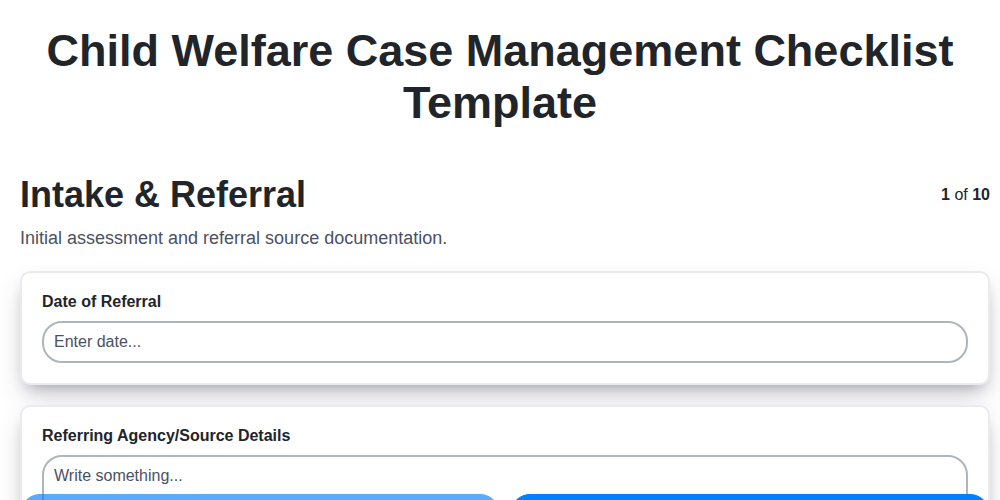
Table of Contents
- Introduction: The Critical Need for Structured Child Welfare Case Management
- Understanding the Child Welfare Case Management Process
- Your Comprehensive Child Welfare Case Management Checklist Template
- 1. Intake & Referral: Initial Assessment and Response
- 2. Family Assessment: Gathering Information and Identifying Needs
- 3. Safety Planning: Prioritizing Child Safety & Immediate Actions
- 4. Service Coordination: Connecting Families with Essential Resources
- 5. Legal Proceedings: Navigating the Court System
- 6. Visitation: Ensuring Safe and Supervised Contact
- 7. Progress Monitoring: Tracking Outcomes and Adjusting Strategies
- 8. Case Closure: Transitioning Families to Independence
- 9. Documentation & Record Keeping: Maintaining Accuracy and Transparency
- 10. Reporting & Compliance: Meeting Regulatory Requirements
- Best Practices for Utilizing the Checklist Effectively
- Resources & Links
TLDR: Overwhelmed by child welfare case management? This checklist template breaks down every step - from initial intake to case closure - ensuring you cover all critical bases for safety, legal requirements, and family support. It's a one-stop resource to stay organized, compliant, and focused on the well-being of children and families.
Introduction: The Critical Need for Structured Child Welfare Case Management
Child welfare case management is a high-stakes field demanding meticulous attention to detail and a consistent approach. The well-being of vulnerable children hangs in the balance, and errors, omissions, or inconsistencies in case handling can have devastating consequences. A structured framework isn't just beneficial; it's essential. This is where a comprehensive checklist becomes an invaluable tool. It serves as a vital safeguard, ensuring that all necessary steps are taken, deadlines are met, and critical information isn't overlooked. This isn't about stifling caseworker judgment; it's about providing a reliable roadmap for navigating the complexities of each case, promoting consistency across teams, and ultimately, improving outcomes for the children and families we serve. A well-designed checklist reinforces best practices, reduces the risk of liability, and supports a more efficient and equitable system.
Understanding the Child Welfare Case Management Process
Child welfare case management is a complex and nuanced process, designed to ensure the safety and well-being of children and families facing challenging circumstances. It's rarely a linear path, often requiring flexibility and adaptation based on individual needs. At its core, the process involves a series of interconnected phases, each with specific goals and actions. Understanding these phases is crucial for caseworkers, supervisors, and even families involved.
Typically, a case begins with an Intake & Referral, often triggered by concerns from teachers, neighbors, or mandated reporters. This initiates a thorough Family Assessment, where caseworkers gather information about the family's history, dynamics, strengths, and needs. A critical stage follows - Safety Planning - where immediate steps are taken to ensure the child's safety, which may involve temporary placement or protective measures.
Following safety interventions, the focus shifts to Service Coordination. This involves connecting the family with essential resources like therapy, parenting classes, or financial assistance. Cases frequently involve Legal Proceedings, requiring caseworkers to gather evidence, testify in court, and advocate for the child's best interests. Maintaining positive Visitation between children and their families (when safe and appropriate) is a vital component, supporting healthy attachments and reunification efforts.
Throughout the case, Progress Monitoring is ongoing, tracking the family's progress toward identified goals and adjusting interventions as needed. Eventually, the case may lead to Case Closure, signifying a return to stability and safety. However, meticulous Documentation & Record Keeping is vital throughout every phase, ensuring accountability and providing a clear record for future reference. Finally, all activities must adhere to strict Reporting & Compliance guidelines, upholding legal and ethical standards. Each of these elements works together to guide caseworkers toward positive outcomes for children and families.
Your Comprehensive Child Welfare Case Management Checklist Template
Navigating the complexities of child welfare case management requires meticulous organization and adherence to protocol. This checklist template is designed to be your guide, ensuring consistent, thorough, and legally sound practices throughout each case. Here's a breakdown of the key areas covered, and the critical steps within each - consider this your essential workflow blueprint.
1. Intake & Referral:
- Initial Contact Logged & Date/Time Recorded
- Referral Source Documented (Police, School, Parent, etc.)
- Preliminary Information Gathered (Family Composition, Immediate Concerns)
- Risk Assessment Tool Administered & Score Recorded
- Immediate Safety Concerns Addressed (Emergency Removal if Necessary)
- Intake Interview Conducted with Referring Party
- Notification to Family (if appropriate and safe)
2. Family Assessment:
- Comprehensive Family Interview Conducted (All Relevant Members)
- Home Visit Completed & Observations Documented
- Background Checks Completed (Parents/Guardians/Household Members)
- Relevant Records Reviewed (Medical, School, Legal, etc.)
- Strengths and Needs Identified - Family and Child
- Cultural Considerations Noted & Addressed
- Trauma Informed Approach Applied
3. Safety Planning:
- Safety Plan Developed Collaboratively with Family (when possible)
- Specific Safety Measures Outlined (Supervision, Restrictions, Reporting)
- Emergency Contacts Identified & Verified
- Safety Plan Reviewed & Updated Regularly
- Child's Voice Heard and Incorporated into Safety Planning
4. Service Coordination:
- Needs Assessment Completed for Child and Family
- Appropriate Services Identified and Referral Made (Therapy, Parenting Classes, etc.)
- Service Provider Coordination & Communication Established
- Transportation Assistance Arranged (if needed)
- Service Participation Tracked and Documented
5. Legal Proceedings:
- Court Hearings Attended & Notes Taken
- Court Orders Obtained and Distributed
- Legal Representation Informed & Contacted
- Legal Documents Prepared & Filed Accurately
- Adherence to Legal Timelines
6. Visitation:
- Visitation Schedule Established & Communicated
- Supervised Visitation Arrangements Made (if necessary)
- Visitation Observations Documented (Behavior, Interactions)
- Parental/Guardian Adherence to Visitation Guidelines Monitored
- Visitation Adjustments Made as Needed (with court approval if required)
7. Progress Monitoring:
- Regular Case Review Meetings Held
- Progress Towards Case Goals Documented
- Service Effectiveness Evaluated
- Case Plan Updated Based on Progress/Challenges
- Child's Well-being Continuously Assessed
8. Case Closure:
- Criteria for Case Closure Met (Safety, Permanency, Stability)
- Family Readiness for Closure Assessed
- Transition Planning Completed (if applicable)
- Case Closure Documentation Finalized & Approved
- Record Retention Procedures Followed
9. Documentation & Record Keeping:
- All Interactions and Observations Documented Timely & Accurately
- Case Files Organized & Accessible
- Confidentiality Maintained (HIPAA Compliance)
- Electronic Case Management System Utilized (if applicable)
- Record Reviews Conducted Regularly
10. Reporting & Compliance:
- Required Reports Submitted on Time (State, Federal)
- Agency Policies & Procedures Adhered To
- Training Requirements Met & Documented
- Audits & Inspections Prepared For
- Ethical Considerations Addressed
1. Intake & Referral: Initial Assessment and Response
The foundation of a successful child welfare case lies in a thorough and responsive intake and referral process. This phase isn't just about receiving a report; it's about understanding the urgency and potential risk involved. Here's what a comprehensive approach entails:
- Immediate Response & Triage: Upon receiving a referral, prioritize based on immediate safety concerns. Implement a clear triage system to quickly determine the level of urgency - is a child in imminent danger?
- Information Gathering: Diligently collect all available information from the referral source. This includes details about the child, family, allegations, and any supporting evidence. Ask clarifying questions - don't assume anything.
- Initial Risk Assessment: Conduct a brief, preliminary risk assessment to gauge the potential for harm. Utilize validated tools and consider factors like parental history, substance abuse, domestic violence, and child's age and vulnerabilities.
- Notification & Consultation: Immediately notify the supervisor and, if applicable, consult with specialists (e.g., medical, behavioral health) based on the referral details.
- Contacting the Family: Depending on the risk level, initiate contact with the family, prioritizing safety and transparency. Clearly explain the reason for contact and outline the process.
- Record Everything: Document every step taken, from the initial receipt of the referral to all communication and assessments. This forms the critical first record of the case.
2. Family Assessment: Gathering Information and Identifying Needs
A thorough family assessment is the cornerstone of effective child welfare case management. It moves beyond initial observations and delves into the complexities of the family's history, strengths, and challenges. This isn't a one-time event; it's an ongoing process that evolves as new information emerges.
Here's what a comprehensive family assessment includes:
- Gathering Information: This involves collecting data from multiple sources, including interviews with parents, children, extended family members, teachers, healthcare providers, and previous caseworkers. Reviewing existing records (school, medical, legal) is also crucial.
- Identifying Strengths: Focusing solely on deficits can be detrimental. Actively identify family strengths, supports, and resilience factors. This fosters collaboration and helps build on existing resources.
- Assessing Risks: Identifying and evaluating risks related to child safety, well-being, and development. This includes potential for abuse, neglect, substance use, mental health concerns, and domestic violence.
- Understanding Family Dynamics: Observing and understanding the interactions between family members and the overall family structure. Consider cultural factors, communication styles, and power dynamics.
- Child Development & Needs: Assessing the child's developmental stage, specific needs (medical, educational, emotional), and any trauma experienced.
- Parenting Capacity: Evaluating parents' ability to provide safe and nurturing care, including their understanding of child development, discipline techniques, and access to resources.
- Cultural Considerations: Recognizing and respecting cultural differences that may influence family practices, beliefs, and values. Assessments should be conducted in a culturally sensitive manner.
The information gleaned from the family assessment directly informs safety planning, service coordination, and overall case management strategies. It serves as the foundation for targeted interventions and measurable goals.
3. Safety Planning: Prioritizing Child Safety & Immediate Actions
Safety planning is arguably the most critical stage in child welfare case management. It's not merely a step; it's a continuous, evolving process designed to ensure the child's immediate and ongoing safety. This isn't a static plan; it's a living document that adapts as new information emerges.
A robust safety plan goes beyond simply identifying risks. It proactively outlines concrete steps to mitigate those risks and keep the child safe, even when the caseworker isn't directly present. This involves collaborating directly with the family - parents, caregivers, and sometimes even older children - to develop a plan they can actively participate in and realistically follow.
Key elements of a comprehensive safety plan include:
- Identification of Specific Risks: Clearly documenting the types of harm the child is at risk of experiencing (e.g., physical abuse, neglect, exposure to substance use).
- Identification of Protective Factors: Recognizing existing strengths and supports within the family and community that can contribute to safety.
- Immediate Safety Measures: These are actions taken immediately to reduce the risk (e.g., removal of weapons from the home, restrictions on contact with specific individuals, temporary placement with a relative).
- Ongoing Safety Strategies: These are longer-term actions to improve family functioning and reduce the likelihood of future harm (e.g., parenting classes, substance abuse treatment, mental health counseling).
- Emergency Contacts: Clearly defined and accessible contacts for the child and caseworker to reach in case of emergency.
- Roles & Responsibilities: Assigning clear responsibilities to each participant in the safety plan.
- Regular Review & Adjustment: The safety plan must be reviewed and updated regularly, ideally every few weeks or at least monthly, and adjusted based on observations and family feedback.
Remember, a safety plan isn's a substitute for ongoing case management, but it's the first and most crucial line of defense in protecting a child from harm. Its success relies on family involvement, meticulous planning, and constant vigilance.
4. Service Coordination: Connecting Families with Essential Resources
Service coordination is a cornerstone of effective child welfare case management. It's about more than just identifying needs; it's about actively connecting families with the resources they need to stabilize and thrive. This often involves a complex web of agencies and services, and a diligent case manager acts as the central point of contact, navigating this landscape on behalf of the family.
Our checklist emphasizes a proactive approach to service coordination, ensuring that families aren't simply offered services, but are successfully engaged and benefitting from them. This includes:
- Identifying Specific Needs: Beyond the initial assessment, ongoing identification of needs related to housing, employment, mental health, substance abuse, parenting skills, education, and healthcare.
- Resource Mapping: Maintaining a current and comprehensive list of available community resources and understanding eligibility requirements.
- Referral Process: Following a clear referral process, including obtaining necessary consents and providing families with information about services and their rights.
- Service Engagement: Following up with families to ensure they're attending appointments, understanding service plans, and receiving appropriate support. Addressing barriers to engagement is crucial.
- Coordination with Providers: Maintaining regular communication with service providers to monitor progress, address concerns, and advocate for the family's needs.
- Advocacy: Actively advocating for families to access needed resources and overcome bureaucratic hurdles.
Effective service coordination leads to improved family stability, reduced risk of further incidents, and ultimately contributes to the goal of keeping children safe and with their families whenever possible.
5. Legal Proceedings: Navigating the Court System
Legal proceedings are a critical, and often complex, component of child welfare case management. This section of the checklist focuses on ensuring all court-related tasks are handled accurately, efficiently, and in the best interest of the child.
Here's what's typically included:
- Petition Preparation & Filing: Ensuring all necessary legal documents (e.g., petitions for dependency, termination of parental rights) are meticulously prepared, reviewed for accuracy, and filed with the court within required timelines.
- Court Appearance Preparation: Thoroughly preparing the caseworker and supervisor for court hearings, including gathering relevant documentation, anticipating potential questions, and outlining key points to be presented.
- Evidence Gathering & Presentation: Collecting and organizing evidence to support legal arguments, including reports, assessments, and witness testimonies. This may involve collaborating with attorneys and investigators.
- Court Report Submission: Preparing and submitting timely and accurate court reports as mandated by the jurisdiction. These reports detail case progress, safety concerns, and recommendations.
- Order Implementation: Ensuring court orders (regarding custody, visitation, services, etc.) are promptly and effectively implemented. This includes clear communication of the orders to all parties involved.
- Compliance with Legal Deadlines: Maintaining strict adherence to all legal deadlines related to court filings, hearings, and appeals.
- Communication with Legal Counsel: Maintaining open and consistent communication with assigned legal counsel throughout the legal process.
6. Visitation: Ensuring Safe and Supervised Contact
Visitation in child welfare cases is a delicate and critical aspect of ensuring a child's well-being and maintaining family connection where appropriate. The primary goal is to balance the child's safety with the need for parental contact. This checklist item goes beyond simply scheduling visits; it encompasses a multifaceted approach.
Key Considerations for Visitation:
- Safety Assessment: Before any visitation occurs, a thorough safety assessment is mandatory. This includes evaluating potential risks to the child, considering the parent's behavior, and any history of violence, substance abuse, or neglect.
- Visitation Plan Development: A detailed visitation plan must be created, outlining the frequency, duration, and location of visits. This plan should be reviewed and adjusted based on the child's and parent's needs and progress.
- Supervision Requirements: Determine the level of supervision needed. This could range from supervised visits at a designated facility with trained professionals to virtual visits or unsupervised contact, depending on the assessed risk.
- Location Considerations: The visitation location should be safe and conducive to positive interaction. Consider options like agency-supervised visitation centers, the parent's home (if deemed safe), or a neutral public space.
- Child's Voice: Whenever possible and age-appropriate, the child's preferences regarding visitation should be considered and documented.
- Documentation: Meticulously document all visitation activities, including attendance, observations of interactions, and any concerns raised.
- Ongoing Review: Visitation plans are not static. Regularly review and update the plan based on ongoing assessment and the child's evolving needs. Factors to consider include parental compliance, the child's emotional responses, and any changes in circumstances.
- Addressing Non-Compliance: A clear protocol for addressing parental non-compliance or disruptive behavior during visitation must be in place. This may involve modifying the visitation plan or escalating to legal intervention.
7. Progress Monitoring: Tracking Outcomes and Adjusting Strategies
Progress monitoring isn't just about checking boxes; it's a dynamic process crucial for ensuring children and families receive the support they need to thrive. It's about regularly evaluating whether interventions are effective and making adjustments as needed. This involves a combination of quantitative and qualitative data collection.
What to Track:
- Child Well-being: This goes beyond safety and includes emotional, educational, and developmental progress. Are they attending school? Are their behavioral issues improving? Are they expressing their feelings appropriately?
- Parent/Guardian Engagement: Are they attending appointments? Are they actively participating in services? Are they demonstrating an understanding of the case plan?
- Goal Attainment: Are the goals outlined in the case plan being met? Break down these goals into measurable steps to effectively assess progress.
- Service Utilization: Are services being utilized as planned? If not, why not? Are there barriers preventing access?
Methods for Monitoring:
- Regular Check-ins: Frequent communication with the child, parents/guardians, and service providers.
- Reviewing Reports: Analyzing reports from therapists, educators, and other professionals.
- Observations: Observing interactions between the child and caregivers.
- Client Self-Reports: Utilizing questionnaires or interviews to gather the child and family's perspective.
- Data Analysis: Tracking key indicators and identifying trends.
Adjusting Strategies:
Progress monitoring data should trigger ongoing reflection and adjustments. If a child isn't making progress, don't be afraid to:
- Re-evaluate the Case Plan: Is it still relevant and appropriate?
- Modify Services: Explore alternative interventions or increase the intensity of services.
- Collaborate with the Team: Discuss challenges and brainstorm solutions with all involved parties.
- Consider New Perspectives: Are there factors influencing the situation that haven't been identified?
Remember, flexibility and responsiveness are key to effective progress monitoring. It's an opportunity to refine strategies and ensure the child's best interests remain at the forefront.
8. Case Closure: Transitioning Families to Independence
Reaching case closure isn't an ending, but a transition. It signifies a family has demonstrated the skills and stability needed to thrive independently, but a thoughtful and planned exit is crucial to ensure lasting positive outcomes. This checklist element focuses on that careful handover.
Before formally closing a case, a thorough review is essential. This includes re-evaluating the original concerns that led to intervention and confirming that those issues are resolved and ongoing safety is assured. Document these reassurances meticulously.
A crucial step is developing a post-closure support plan, even if it's minimal. This might involve connecting the family with community resources, providing referrals for ongoing support services (like parenting classes or job training), or establishing a contact person for brief check-ins. Clearly outline these resources and responsibilities in the case record.
Family input is paramount. Discuss the closure plan with the family, explaining the reasons for closure and the available support options. Address any remaining concerns or questions they may have.
Finally, confirm that all legal requirements for case closure have been met and document this confirmation. The goal is to empower families to navigate their lives successfully after intervention, fostering a sense of accomplishment and promoting sustained well-being. Remember, a well-managed closure lays the groundwork for lasting positive change.
9. Documentation & Record Keeping: Maintaining Accuracy and Transparency
In child welfare case management, meticulous documentation isn't just a best practice - it's a legal and ethical imperative. Accurate and complete records are vital for continuity of care, legal defensibility, and ensuring the child's best interests are always prioritized. This section outlines key elements for robust documentation.
What to Include:
- Chronological Record: Maintain a detailed, chronological record of all interactions, observations, assessments, and decisions related to the case.
- Objective Observations: Focus on factual observations, avoiding personal opinions or subjective interpretations. Use phrases like observed, stated, or reported.
- Direct Quotes: When a child, parent, or other individual makes a significant statement, record it verbatim (within reason, and noting it's a direct quote).
- Rationale for Decisions: Clearly document the reasoning behind all case management decisions, linking them back to assessments, safety plans, and legal mandates. Why you made a particular decision is as important as what you decided.
- Consent & Refusal: Document all instances of consent obtained from parents or guardians for services or releases of information. Equally important, record any refusals and the rationale provided.
- Communication Log: Maintain a log of all communication with involved parties - attorneys, therapists, teachers, family members, etc.
- Photo/Video Documentation (with proper consent): When relevant and permissible by law and agency policy, document conditions with photos or videos. Always obtain the required consents.
Best Practices:
- Timeliness: Complete documentation as close to the event as possible. Delayed documentation is more prone to inaccuracies and omissions.
- Review & Signature: All entries should be reviewed and signed by the case manager. Supervisors should regularly review case files.
- Secure Storage: Ensure records are stored securely, both physically and electronically, to protect confidentiality and comply with legal requirements.
- Electronic Health Records (EHR): If your agency utilizes an EHR system, become fully proficient in its features and utilize them to their fullest potential for organization and compliance.
Consistent and comprehensive documentation fosters transparency, accountability, and ultimately, contributes to better outcomes for children and families involved in child welfare services.
10. Reporting & Compliance: Meeting Regulatory Requirements
Child welfare case management operates within a complex web of legal and ethical guidelines. Accurate and timely reporting isn't just a best practice; it's a mandated responsibility. This section outlines crucial reporting and compliance considerations to ensure your case management aligns with relevant state and federal regulations.
Key Areas of Focus:
- Mandated Reporting: Familiarize yourself and your team with the specific mandated reporting laws in your jurisdiction. Understand who is considered a mandated reporter, what types of abuse or neglect must be reported, and the timelines for reporting.
- Court Reporting: Adhere strictly to court reporting requirements, including filing necessary documents, providing updates on case progress, and attending hearings. Keep meticulous records of all communication with the court.
- Data Reporting to State/Federal Agencies: Many states and the federal government require periodic data submissions regarding caseloads, outcomes, and demographics. Know the frequency and format of these reports and ensure accurate data entry.
- Compliance Audits: Be prepared for internal and external audits to assess adherence to policies and procedures. Maintain organized records and documentation to facilitate a smooth audit process.
- Confidentiality Regulations: Strictly adhere to confidentiality laws like HIPAA and state-specific protections regarding sensitive client information. Properly secure data and limit access to authorized personnel.
- Policy Updates: Stay informed about changes in legislation and regulatory updates impacting child welfare. Regularly review and update case management practices to ensure ongoing compliance.
Pro Tip: Develop a checklist within this reporting and compliance section to ensure all necessary reports are generated and submitted on schedule. This can be linked to your case management checklist for a comprehensive overview.
Best Practices for Utilizing the Checklist Effectively
A Child Welfare Case Management Checklist is a powerful tool, but its effectiveness hinges on how it's implemented. Simply having the checklist isn't enough; consistent and thoughtful application is key. Here's how to maximize its value:
- Team Training & Standardization: Ensure all case managers are thoroughly trained on the checklist's purpose, content, and the rationale behind each item. Standardized understanding reduces inconsistencies and promotes uniform case management.
- Active, Not Passive, Completion: Don't just check boxes. Each item should prompt critical thinking and thorough assessment. Document why a box is checked or not, reflecting the reasoning behind your decisions.
- Collaboration & Review: Utilize the checklist as a framework for team meetings and case consultations. Discuss items with supervisors and colleagues to ensure comprehensive consideration of all relevant factors.
- Client Involvement (Where Appropriate): Depending on the child's and family's age and circumstances, incorporating their input into the checklist's review can foster engagement and transparency.
- Regular Updates & Adaptation: Child welfare practices evolve. Review and update the checklist periodically to reflect changes in legislation, best practices, and organizational policies. Consider customizing it further to address specific local needs or program requirements.
- Use it as a Launchpad, Not a Script: The checklist is a guide, not a rigid script. Be prepared to deviate from the sequence or add items as unique case complexities arise. Document any deviations and the justification behind them.
- Integrate with Technology: Explore ways to integrate the checklist into your case management software for improved accessibility, tracking, and reporting.
Resources & Links
- Administration for Children and Families (ACF): The primary federal agency responsible for programs related to child welfare, family support, and early childhood development. Provides guidelines, research, and resources.
- Child Welfare Information Gateway: A service of the Children's Bureau, providing comprehensive information and resources on all aspects of child welfare.
- American Humane: Offers resources and training related to child protection and ensuring child well-being, with a focus on safety.
- National Center for Youth Law: Provides legal representation and advocacy for children and youth, including resources on child welfare systems and legal proceedings.
- Annie E. Casey Foundation: Conducts research and provides data-driven insights on child and family well-being, often highlighting best practices in child welfare.
- The Future of Children: A peer-reviewed journal that publishes research on child and family policy, providing evidence-based insights into effective interventions.
- Federal Courts: Links to information about the federal court system, including resources related to child custody and dependency cases.
- National Association of Social Workers (NASW): Provides resources, ethical guidelines, and professional development opportunities for social workers involved in child welfare.
- Council on Accreditation (COA): COA accredits human service organizations, ensuring quality and accountability in child welfare and other related fields. Useful for understanding provider standards.
- Children's Welfare League of America (CWLA): A national organization dedicated to advancing the well-being of children and families, providing training, advocacy, and resources.
Frequently Asked Questions
What is a case management checklist and why is it important in child welfare?
A case management checklist is a structured document that outlines the essential steps and tasks required to manage a child welfare case effectively. It helps ensure consistency, completeness, and accountability, reducing errors and improving outcomes for children and families. It ensures all necessary actions are taken, deadlines are met, and compliance is maintained.
Who should use this checklist template?
This template is designed for child welfare case managers, supervisors, and anyone involved in the direct management of child welfare cases, including social workers, investigators, and support staff. It can be adapted for different roles and case types.
Is this checklist template customizable?
Yes! The template is intentionally designed to be customizable. It includes placeholders and sections that you can modify to fit your agency's specific policies, procedures, and the unique needs of each case. Add, remove, or modify tasks as needed.
What types of information should I include when completing the checklist?
You should document all relevant information for each task, including dates, times, individuals involved, actions taken, observations, and any relevant case details. Be specific and objective in your documentation.
What are some examples of tasks typically included in a child welfare case management checklist?
Common tasks include: initial assessment, safety planning, family meetings, court hearings, service referrals (therapy, parenting classes), school coordination, and ongoing monitoring of case progress. The template provides categories to guide your inclusion of such tasks.
How can I ensure the checklist is used consistently across my agency?
Provide training on the checklist template and its purpose. Establish clear expectations for its completion and review. Regularly audit case files to ensure consistent use and accuracy. Encourage feedback from case managers to continuously improve the checklist.
What should I do if a checklist item is not applicable to a specific case?
Mark the item as 'N/A' (Not Applicable) and briefly explain why it doesn't apply. This demonstrates that you considered the task and it was intentionally omitted, not forgotten.
How often should I update the checklist for a case?
The frequency of updates depends on the case's complexity and urgency. Critical tasks should be updated immediately. Others may be updated weekly, bi-weekly, or monthly, as deemed appropriate based on the case plan and ongoing needs.
What is the difference between a task and a 'critical action' as referenced in the checklist template?
A 'critical action' denotes a task with immediate and significant impact on child safety or well-being. These actions require immediate attention and escalation if not completed promptly. A standard task is an important step, but not as immediately critical.
Where can I find additional resources or training on case management best practices?
Many state and national child welfare organizations offer training and resources. Examples include: the Children's Bureau, the National Child Welfare Resource Center, and your state's child welfare agency. Search online for "child welfare case management training" to find relevant programs.
Found this Article helpful?
Comments
There are no comments yet. Be the first to add one!
Case Management Solution Demo
Streamline your casework & improve outcomes! ChecklistGuro centralizes case details, tasks, & communication. Enhance efficiency, ensure compliance, & deliver exceptional service. Manage it all with our Work OS.
Related Articles
Streamline Your Deals: The Ultimate Real Estate Case Management Checklist Template
Streamline Your Debt Collection: A Case Management Checklist Template
Cybersecurity Incident Response: Your Checklist Template for Success
Streamline Your Case Management: The Ultimate Checklist Template
Mastering IP: Your Intellectual Property Case Management Checklist Template
HR Case Management Checklist Template: Your Guide to Fair & Compliant Investigations
Streamlining Veteran Care: Your Comprehensive Case Management Checklist Template
Mastering Investigations: Your Case Management Checklist Template Guide
We can do it Together
Need help with
Case Management?
Have a question? We're here to help. Please submit your inquiry, and we'll respond promptly.