Mastering Construction Case Management: Your Ultimate Checklist Template
Published: 12/20/2025 10:00 PM Updated: 12/21/2025 6:51 AM
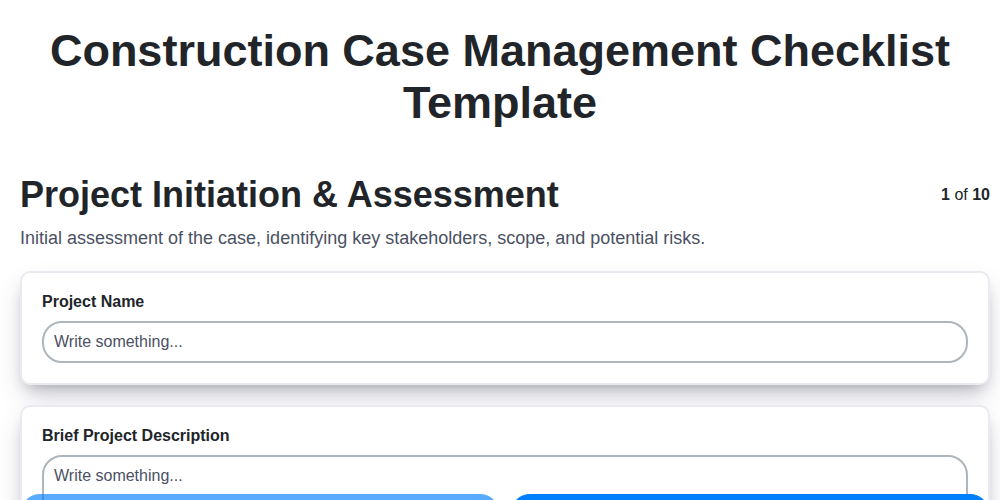
Table of Contents
- Introduction: Why Construction Case Management Matters
- 1. Project Initiation & Assessment: Laying the Foundation
- 2. Document Gathering & Review: Assembling the Evidence
- 3. Delay Analysis & Impact Assessment: Understanding the Timeline
- 4. Change Order Management: Tracking Modifications and Costs
- 5. Subcontractor Management & Disputes: Navigating Complex Relationships
- 6. Site Condition & Safety Compliance: Ensuring a Secure Environment
- 7. Payment & Billing Verification: Scrutinizing Financials
- 8. Communication & Reporting: Keeping Everyone Informed
- 9. Resolution & Closeout: Formalizing Agreements
- 10. Legal Review & Documentation: Protecting Your Interests
- 11. Utilizing Technology for Enhanced Case Management
- 12. Best Practices for Proactive Case Management
- 13. Common Pitfalls to Avoid
- Conclusion: Your Roadmap to Successful Construction Case Resolution
- Resources & Links
TLDR: Feeling overwhelmed by construction disputes? This checklist template is your lifeline! It breaks down complex case management - from initial assessment to final closeout - into actionable steps. Think of it as a roadmap to stay organized, identify potential issues early, and build a solid, defensible case. Download it and conquer those construction headaches!
Introduction: Why Construction Case Management Matters
Construction projects are complex endeavors, rife with potential pitfalls - delays, disputes, change orders, and unexpected site conditions. When problems arise, effective case management becomes critical to protecting your firm's interests, minimizing financial losses, and maintaining positive relationships with all stakeholders. Simply reacting to issues as they pop up is a recipe for chaos and can quickly escalate situations beyond control.
Construction case management is a proactive and systematic approach to identifying, documenting, analyzing, and resolving project-related issues. It's more than just keeping records; it's about building a defensible, organized history of the project's lifecycle. This meticulously maintained record serves as a crucial resource for dispute resolution, claims preparation, and ultimately, protecting your company from significant financial and reputational damage. Investing in a robust case management process isn't just about addressing problems after they occur; it's about preventing them, or at least mitigating their impact, from the very beginning.
1. Project Initiation & Assessment: Laying the Foundation
A construction case can unravel quickly if the initial assessment isn't thorough. This checklist item focuses on building a solid understanding of the project's baseline. Begin by meticulously reviewing the original contract documents - this includes the scope of work, drawings, specifications, and any associated addenda. Don't just skim; analyze them for ambiguities, inconsistencies, or potential conflict points.
Next, perform a detailed project assessment. This should involve:
- Understanding the Contractual Framework: Identify key dates, milestones, and clauses related to liability, dispute resolution, and termination.
- Assessing Project Scope & Complexity: Determine the scale of the project and the potential for unforeseen challenges.
- Identifying Potential Risks: Proactively identify potential sources of delay, cost overruns, or quality issues. This might include environmental concerns, permitting difficulties, or logistical hurdles.
- Establishing a Baseline Schedule: Review the initial project schedule to understand the planned timeline and critical path activities.
- Documenting Initial Assumptions: Clearly record any assumptions made during the initial assessment, as these will be crucial for later analysis.
A comprehensive project initiation and assessment establishes a clear understanding of the project's origin and sets the stage for a well-managed case. Neglecting this step can lead to costly misunderstandings and difficulties down the line.
2. Document Gathering & Review: Assembling the Evidence
Construction case management thrives on a foundation of meticulous documentation. This phase is arguably the most critical, forming the bedrock upon which your arguments and strategies will be built. Don't underestimate its importance - a comprehensive collection of relevant documents can make or break your case.
So, what constitutes relevant documentation? It's broad, but here's a starting point. You'll need to gather and carefully review:
- Contract Documents: This is paramount. The original contract, all amendments, addenda, and any incorporated specifications. Understand the scope of work, payment terms, and dispute resolution clauses.
- Project Schedules: Baseline schedules, updated schedules, and any related correspondence discussing schedule delays.
- Correspondence: Emails, letters, meeting minutes, and other written communication between all parties involved - owner, contractor, subcontractors, architects, engineers, and legal counsel.
- Drawings & Specifications: As-built drawings, shop drawings, and detailed specifications outlining the design and construction requirements.
- Daily Logs & Site Reports: Records of daily activities, weather conditions, personnel on site, and any unusual occurrences.
- Payment Applications & Invoices: All requests for payment, supporting documentation, and payment records.
- Change Order Requests & Approvals: Documentation related to proposed changes in scope, cost, or schedule.
- Photographs & Videos: Visual records of the site conditions, work progress, and any potential issues.
- Inspection Reports: Reports from inspections conducted by the owner, architect, or third-party inspectors.
- Submittals & Approvals: Documentation related to material submittals and their approval.
Thoroughly reviewing these documents allows you to identify potential issues, establish timelines, determine responsibility, and build a strong foundation for your case. Organize them logically and create a system for easy retrieval - a well-organized digital filing system is highly recommended. Don't just collect them; analyze them for inconsistencies, ambiguities, and potential sources of conflict.
3. Delay Analysis & Impact Assessment: Understanding the Timeline
Delays are almost inevitable in construction projects. However, effectively analyzing and assessing these delays is crucial for mitigating financial losses, maintaining project control, and resolving disputes. This section of your case management checklist focuses specifically on that critical process.
What's involved?
Delay analysis goes far beyond simply noting a task took longer than scheduled. It requires a systematic investigation to determine the cause of the delay, its impact on the overall project timeline, and the resulting cost implications. This includes:
- Identifying Delay Events: Meticulously document all events that contributed to delays, including weather, material shortages, labor issues, design changes, and unforeseen site conditions. Accurate records are your foundation.
- Cause & Effect Analysis: Determine the root cause of each delay event. Was it directly caused by a specific party's action or inaction? Was it a concurrent delay (multiple causes impacting the schedule simultaneously)? Understanding the 'why' is vital for liability determination.
- Critical Path Impact: Assess how each delay impacts the project's critical path - the sequence of activities that determine the minimum project duration. A delay on the critical path directly extends the project completion date.
- Schedule Impact Assessment: Quantify the length of the delay and its ripple effect on subsequent tasks. Utilize scheduling software (like Primavera P6 or Microsoft Project) to model the impact accurately.
- Cost Impact Assessment: Translate the schedule extension into financial terms. Account for increased labor costs, equipment rental fees, potential liquidated damages, and other related expenses.
- Concurrent Delay Resolution: Employ appropriate methodologies (e.g., time impact analysis, as-planned vs. as-built comparison) to disentangle concurrent delays and determine the extent of responsibility for each party.
Checklist Items:
- Document all delay events with dates, times, and descriptions.
- Identify the root cause(s) of each delay.
- Update project schedule to reflect actual progress and delays.
- Calculate the time impact of each delay event.
- Assess and document the cost impact of delays.
- Analyze and document concurrent delay scenarios.
- Maintain a clear audit trail of delay analysis documentation.
4. Change Order Management: Tracking Modifications and Costs
Change orders are an inevitable part of most construction projects. While they represent necessary adjustments to the original scope, poorly managed change orders can quickly spiral into cost overruns, delays, and disputes. A robust change order management system is crucial for maintaining project control and protecting your interests.
This section of the checklist focuses on meticulously tracking all modifications. It's not just about documenting what changed; it's about understanding why, assessing the impact, and controlling costs. Here's what your change order management process should encompass:
- Formal Request & Documentation: Ensure all change requests are submitted in writing, detailing the proposed modification, rationale, and estimated cost.
- Impact Assessment: Before approving any change order, thoroughly evaluate its impact on the project schedule, budget, and overall scope. This includes considering ripple effects on other tasks and potential risks.
- Cost Verification & Negotiation: Scrutinize the cost breakdown provided with each change order request. Negotiate pricing where appropriate and ensure it aligns with contractual terms and prevailing market rates.
- Approval Workflow: Establish a clear approval process with defined roles and responsibilities for authorizing change orders. Document all approvals.
- Budgetary Control: Track all approved change orders against the project budget. Regularly review these costs and adjust projections as necessary.
- Communication: Keep all relevant stakeholders informed about approved change orders and their impact on the project.
- Record Keeping: Maintain a complete and organized record of all change order requests, approvals, cost breakdowns, and related documentation. This is essential for audit trails and potential dispute resolution.
5. Subcontractor Management & Disputes: Navigating Complex Relationships
Subcontractors are vital to construction projects, but managing them effectively - and avoiding disputes - is a significant challenge. A proactive approach, built on clear expectations and meticulous record-keeping, is paramount.
Key Checklist Items & Best Practices:
- Pre-Qualification & Due Diligence: Don't just pick the lowest bid. Verify licenses, insurance, bonding capacity, safety records, and past performance. A thorough pre-qualification process minimizes future problems.
- Clear Scope of Work & Contracts: Ensure each subcontractor agreement precisely defines their responsibilities, deliverables, timelines, and payment terms. Ambiguity fuels disputes. Include clauses for change orders, delays, and termination.
- Regular Performance Monitoring: Schedule regular site meetings, conduct performance reviews, and track progress against the agreed-upon schedule. Early identification of potential issues allows for proactive intervention.
- Payment Verification & Schedule Adherence: Verify that work is completed to acceptable quality before approving payment. Adherence to the payment schedule (as outlined in the subcontract) is crucial for maintaining good relationships. Document all approvals and rejections clearly.
- Dispute Resolution Procedures: Include clear dispute resolution clauses in the subcontract - mediation, arbitration, or other agreed-upon methods - to bypass costly litigation. Maintain detailed documentation of all communication and events related to the subcontract.
- Change Order Management (Subcontractor Specific): Any changes impacting a subcontractor's scope of work must be properly documented via a formal change order process, signed by all parties. Don't rely on verbal agreements.
- Communication Logs: Keep detailed records of all communications with subcontractors, including emails, meeting minutes, and phone calls. This serves as invaluable evidence should disputes arise.
Proactive subcontractor management isn't just about avoiding problems; it's about fostering collaborative partnerships that contribute to project success.
6. Site Condition & Safety Compliance: Ensuring a Secure Environment
Construction sites are inherently risky environments. A proactive and meticulous approach to site condition and safety compliance isn't just about following regulations - it's about protecting your team, minimizing delays, and avoiding costly legal battles. This checklist item goes beyond just having a safety officer present.
Key Tasks & Considerations:
- Pre-Construction Site Assessment: Thoroughly document existing site conditions before work begins. This includes photos and videos of utilities, drainage, vegetation, and any potential hazards. This is crucial for addressing future claims regarding pre-existing conditions.
- Safety Plan Implementation: Ensure a comprehensive site safety plan is in place, covering everything from personal protective equipment (PPE) requirements to emergency procedures. Regularly review and update it.
- Permit Verification: Confirm all necessary permits (environmental, building, etc.) are secured and readily accessible on-site.
- Regular Inspections: Conduct frequent, documented safety inspections - daily is ideal. Record findings and corrective actions promptly. Include both formal and informal toolbox talks focused on specific hazards.
- Hazard Identification & Mitigation: Actively identify potential hazards (e.g., unstable ground, nearby traffic, asbestos) and implement mitigation strategies.
- Incident Reporting & Investigation: Establish a clear process for reporting all incidents and near misses. Conduct thorough investigations to determine root causes and prevent recurrence.
- Environmental Compliance: Adhere to environmental regulations regarding erosion control, waste disposal, and noise pollution. Maintain records of all environmental monitoring and reporting.
- Subcontractor Safety Management: Ensure subcontractors have adequate safety programs and that their employees are properly trained and equipped. Include safety performance as part of subcontractor selection and performance evaluation.
- Documentation: Diligently document all safety-related activities, inspections, training records, and incident reports. This documentation is invaluable in the event of an investigation or legal claim.
7. Payment & Billing Verification: Scrutinizing Financials
Payment disputes are a significant source of friction in construction projects, potentially derailing timelines and impacting profitability. Robust payment and billing verification is crucial for preventing these issues and ensuring a smooth financial flow. This isn't just about confirming amounts; it's a deep dive into the underlying documentation and contractual obligations.
Here's what your checklist should include:
- Review of Invoices: Thoroughly examine all invoices, ensuring they align with the scope of work, approved change orders, and agreed-upon rates. Don't just glance - cross-reference each line item.
- Work Completed Verification: Verify that the work claimed in the invoice has been completed to the specified quality and according to the project schedule. Photographic evidence, daily reports, and signed-off work packages are invaluable here.
- Contractual Compliance: Confirm the invoices adhere to the payment terms stipulated in the construction contract (e.g., net 30, progress payments). Are retainage amounts correctly applied?
- Subcontractor Payment Tracking: If you're the general contractor, verify you're properly managing and documenting subcontractor payments before releasing funds. This includes verifying they're completing their work and paying their own subcontractors.
- Change Order Validation: Ensure all invoices related to change orders have supporting documentation (approved change orders, revised scope of work) and are accurately reflecting the adjusted pricing.
- Lien Waivers: Secure lien waivers from subcontractors and suppliers upon payment, protecting your client from potential claims.
- Record Keeping: Maintain meticulous records of all invoices, payments, and supporting documentation for auditing and dispute resolution purposes.
By consistently applying these checks, you're proactively minimizing the risk of payment disputes and maintaining a transparent and reliable financial record for your construction project.
8. Communication & Reporting: Keeping Everyone Informed
Construction case management thrives on clear, consistent, and timely communication. A breakdown in communication can quickly escalate issues and undermine even the most meticulously planned strategies. This section of the checklist emphasizes the critical importance of proactive and documented reporting.
Key Actions:
- Establish a Communication Protocol: Define who needs to be informed about what, when, and through what medium (email, phone, meetings, project management software). Document this protocol and ensure all stakeholders understand and adhere to it.
- Regular Progress Reports: Generate and distribute regular progress reports - weekly, bi-weekly, or monthly, depending on the case complexity. These reports should summarize key events, potential risks, financial status, and milestones achieved.
- Meeting Minutes & Action Items: Meticulously document all meetings, including attendees, discussion points, and, crucially, action items with assigned responsibilities and deadlines.
- Risk Communication: Promptly communicate identified risks and potential delays to relevant parties. Don't wait for the problem to worsen; early awareness allows for proactive mitigation.
- Stakeholder Updates: Tailor communication to different stakeholders. Owners need a different level of detail than subcontractors, for example.
- Centralized Documentation: Utilize a centralized platform (cloud storage, project management software) to ensure everyone has access to the latest information. This reduces confusion and promotes transparency.
- Audit Trail: All communications should be documented and archived, creating an audit trail that can be vital if disputes arise.
Effective communication isn't just about sending emails; it's about fostering a collaborative environment and ensuring everyone is on the same page.
9. Resolution & Closeout: Formalizing Agreements
The final phase of construction case management is often the most crucial for long-term peace of mind. It's not just about ticking boxes; it's about formally documenting agreements, solidifying outcomes, and protecting your interests moving forward. This section focuses on ensuring a thorough and defensible resolution and closeout process.
Key Steps in Resolution & Closeout:
- Formalize Agreements: All negotiated settlements, compromises, or stipulations reached during the case must be documented in legally binding agreements. Ensure these agreements are reviewed by legal counsel and clearly outline the scope of resolution, payment terms, and release of claims.
- Final Accounting: Conduct a complete and accurate reconciliation of all costs, payments, and outstanding obligations. This includes verifying invoices, change orders, and any adjustments made throughout the project.
- Release of Claims: Secure legally binding releases of all claims from all relevant parties - owner, contractor, subcontractors, and suppliers. This confirms that everyone acknowledges the resolution and waives any further claims related to the dispute. Ensure these releases are notarized where required.
- Documentation Archiving: Create a complete and organized archive of all documents related to the case, including the resolution agreement, releases, financial records, correspondence, and any supporting evidence. This is vital for future reference and potential audits.
- Project Closeout Documentation: Incorporate the resolution outcomes into the official project closeout documentation. This provides a clear record for future stakeholders.
- Confirmation of Completion: Obtain written confirmation from all parties acknowledging the completion of the project and the resolution of all outstanding issues.
- Post-Resolution Review: Conduct an internal review of the case management process to identify lessons learned and improve future handling of similar situations.
Proper execution of this phase minimizes the risk of future disputes and provides a solid foundation for future projects.
10. Legal Review & Documentation: Protecting Your Interests
Construction case management isn't just about tracking timelines and budgets; it's about safeguarding your legal position. This final step, Legal Review & Documentation, is paramount for protecting your interests and providing a robust defense should disputes arise.
This phase involves a thorough review of all collected data, correspondence, and contractual agreements with a legal professional specializing in construction law. They'll analyze the situation to identify potential liabilities, assess compliance with relevant laws and regulations, and advise on strategies to mitigate risk.
Key actions within this step include:
- Contractual Analysis: A detailed examination of all contracts (prime contract, subcontracts, purchase orders) to understand obligations, liabilities, and potential breaches.
- Documentation Preservation: Maintaining a meticulous, organized, and secure archive of everything - emails, meeting minutes, photos, videos, reports, correspondence - following legal hold requirements if applicable.
- Claim Preparation: If a claim is anticipated, early legal consultation is vital. This allows for the development of a well-supported claim with appropriate documentation.
- Dispute Resolution Strategy: Working with legal counsel to develop a strategic approach for resolving disputes, whether through negotiation, mediation, or litigation.
- Expert Witness Identification: Identifying and potentially engaging expert witnesses who can support your position in legal proceedings.
- Compliance Verification: Ensuring all actions taken throughout the project complied with applicable laws, regulations, and contractual obligations.
Remember, proactive legal involvement during case management can be far more cost-effective than reactive defense later on. This stage isn's just about paperwork; it's about minimizing risk and protecting your business.
11. Utilizing Technology for Enhanced Case Management
Construction case management is increasingly reliant on technology to streamline processes, improve accuracy, and enhance collaboration. Forget endless stacks of paper and frantic email chains - modern solutions offer a significant upgrade. Dedicated construction case management software platforms are designed to handle the complexities of these cases, offering features beyond simple document storage.
Here's how technology can revolutionize your approach:
- Centralized Document Management: Cloud-based platforms provide a single source of truth for all project documents, accessible to authorized team members anytime, anywhere. Version control ensures everyone is working with the latest information.
- Automated Checklists & Workflow Management: Integrate your checklist (like the one outlined in this post!) directly into the software. Automated reminders and task assignments keep everything on track and reduce the risk of overlooked steps.
- Data Analytics & Reporting: Many platforms offer dashboards and reporting tools that visualize case progress, identify potential risks, and track key metrics like cost and schedule impacts.
- Collaboration Tools: Integrated communication features - like messaging, discussion forums, and task-specific commenting - foster seamless collaboration between legal teams, project managers, and other stakeholders.
- AI-Powered Insights: Some advanced platforms are beginning to incorporate AI to analyze contracts, predict potential delays, and identify areas of risk.
Investing in the right technology isn't just about efficiency; it's about strengthening your case and improving outcomes. Explore options that align with your specific needs and budget to unlock the full potential of digital case management.
12. Best Practices for Proactive Case Management
Reactive case management - dealing with issues after they arise - is a recipe for escalating costs, missed deadlines, and strained relationships. Proactive case management, on the other hand, anticipates potential problems and builds strategies to mitigate them before they become major headaches. Here's how to shift your approach:
- Embrace the Checklist: As outlined in our Construction Case Management Checklist Template, consistently following a structured process is fundamental. Don't skip steps, and tailor the checklist to each project's unique complexities.
- Early Assessment is Key: Thoroughly analyze the project initiation phase. Identify potential risks, review contracts meticulously, and establish clear roles and responsibilities from the outset. A robust project assessment upfront saves significant effort later.
- Maintain a Centralized Document Repository: Keep all project documents - contracts, drawings, RFIs, submittals, meeting minutes - organized and accessible. This facilitates swift information retrieval when issues arise. Version control is critical.
- Foster Open Communication: Encourage open and honest communication between all stakeholders. Regular meetings, progress reports, and a transparent communication channel can surface potential problems early.
- Proactive Delay Analysis: Don't wait for delays to materialize. Regularly monitor progress against the schedule and conduct mini-delay analyses to identify potential future issues and implement corrective actions.
- Subcontractor Vetting & Oversight: Diligent selection and ongoing monitoring of subcontractors are essential. Verify qualifications, review insurance and bonding, and actively manage their performance.
- Continuous Compliance Checks: Regularly inspect the site for safety compliance and ensure adherence to contractual obligations. Don't wait for citations to address potential issues.
- Early Dispute Resolution Processes: Implement clear procedures for handling disputes, encouraging negotiation and mediation before escalation to litigation.
- Learn from Past Cases: Conduct post-project reviews to identify lessons learned and update your case management processes accordingly. Continuous improvement is key to preventing similar issues in the future.
13. Common Pitfalls to Avoid
Construction case management can be incredibly complex, and even the most diligent teams can stumble. Here are some common pitfalls to watch out for that can significantly impact a case's outcome:
- Insufficient Initial Assessment: Rushing into analysis without a thorough project initiation and assessment can lead to missed critical information and flawed conclusions.
- Neglecting Document Control: Losing or misplacing vital documents (contracts, permits, correspondence) is a case-killer. Robust document gathering and review are paramount.
- Ignoring Early Warning Signs: Delay analysis needs to be proactive. Overlooking minor discrepancies or potential issues early on can allow problems to snowball.
- Poor Change Order Tracking: Failing to meticulously document and manage change orders - including scope, cost, and schedule impact - is a recipe for disputes.
- Subcontractor Oversight: Assuming subcontractors are complying with contractual obligations without proper monitoring and verification can lead to serious liability.
- Safety Compliance Blind Spots: A single safety incident can trigger a cascade of legal and financial repercussions. Continuous site condition monitoring and safety protocol enforcement are non-negotiable.
- Payment Verification Shortcuts: Failing to thoroughly verify payment requests and ensure alignment with work completed exposes the project to overpayment and potential fraud.
- Communication Silos: A lack of clear, consistent communication between all stakeholders (owners, contractors, subcontractors, legal counsel) breeds misunderstandings and mistrust.
- Delayed Dispute Resolution Attempts: Avoiding conflict resolution until a problem escalates into a full-blown lawsuit is almost always more costly.
- Inadequate Record Keeping: Relying on memory or informal records is simply not sufficient. Every action, decision, and communication must be documented.
- Skipping Legal Review: Complex construction cases often require specialized legal expertise. Failing to engage legal counsel early on can be a costly mistake.
- Hasty Closeout: Rushing the project closeout without proper verification of all outstanding issues and documentation leaves room for future claims.
- Assuming Good Faith: While collaboration is key, always maintain professional skepticism and thoroughly verify all information presented.
Conclusion: Your Roadmap to Successful Construction Case Resolution
Navigating construction disputes can feel overwhelming, but it doesn't have to be a chaotic freefall. This checklist, encompassing everything from initial assessment to final closeout, provides a structured roadmap for managing and resolving construction cases effectively. By systematically addressing each stage - meticulously gathering documentation, rigorously analyzing delays, proactively managing subcontractors, and maintaining clear communication - you significantly increase your chances of a favorable outcome.
Remember, proactive case management is key. Don't wait for issues to escalate. Consistent application of this checklist fosters transparency, minimizes misunderstandings, and strengthens your position. While legal counsel remains crucial, this framework empowers you to understand the situation comprehensively and contribute actively to a resolution. This isn't just about minimizing losses; it's about building a strong foundation for future projects and maintaining positive relationships within the construction industry. Embrace this checklist as more than a tool; view it as your partner in achieving successful case resolution.
Resources & Links
- Associated General Contractors of America (AGC): A leading construction industry trade association offering resources, publications, and training on project management, legal issues, and risk mitigation.
- Construction Risk Management, Inc. (CRMI): Provides experts and resources for construction claims, delay analysis, and risk management. A good source for understanding delay impacts and methodologies.
- AEC Daily: A digital platform offering news, articles, and resources for the architecture, engineering, and construction industry, often covering legal and risk management topics.
- BuilderTrend: Offers construction management software solutions that can aid in document tracking, change order management, and communication - helpful for understanding technology solutions.
- Procore: Another leading construction management software platform. Provides insights into digital documentation, collaboration, and workflow management - relevant for the 'Utilizing Technology' section.
- LexisNexis Construction: Provides legal research and analysis specific to the construction industry. Helpful for understanding legal precedents and requirements for 'Legal Review & Documentation'.
- Construction Law News: A website focusing on news and legal insights within the construction industry, useful for staying updated on legal developments.
- International Society of Certified Delay Analysis Professionals (ISCSP): Provides training and certification in delay analysis. A key resource for understanding 'Delay Analysis & Impact Assessment'.
- Occupational Safety and Health Administration (OSHA): Government agency responsible for workplace safety. Essential for understanding 'Site Condition & Safety Compliance'.
- New York State Department of State, Division of Licensing: Example of a state licensing body; replace with appropriate state-specific resource. Illustrates requirements for contractor licensing and compliance.
- National Association for Construction Professionals (NACP): Offers resources and training for construction professionals, including legal and financial aspects.
- Business Information Systems & Consulting, Inc. (BISCI): Provides construction claims support and consulting services, offering expertise in delay and disruption analysis.
Frequently Asked Questions
What is construction case management?
Construction case management involves proactively identifying, documenting, and managing potential claims or disputes that may arise during a construction project. It's about maintaining detailed records, tracking communication, and implementing strategies to minimize risk and resolve issues efficiently.
Why is a checklist template helpful for construction case management?
A checklist template ensures consistency and thoroughness in your case management process. It prevents crucial steps from being overlooked, minimizes errors, and provides a structured approach for all team members to follow.
Who should use this checklist template?
This template is designed for project managers, construction managers, field superintendents, claims professionals, and anyone involved in construction project oversight who wants to improve their proactive risk management and dispute avoidance strategies.
What types of information should be documented using the checklist?
The checklist helps document critical items like contract reviews, meeting minutes, change order processes, communication logs, site conditions, delays, quality control issues, and any potential conflicts or discrepancies.
Is the checklist template customizable?
Yes, the template is designed to be customizable. You can add, remove, or modify items based on the specific requirements of your project and your company's procedures.
What's the difference between case management and claims management?
Case management is proactive - focusing on prevention and early resolution. Claims management is reactive and deals with issues that have escalated into formal claims or legal action. This checklist focuses on case management principles.
How does proactive case management benefit a construction project?
It can lead to reduced costs associated with claims, improved project outcomes, stronger relationships with stakeholders, and a more efficient and predictable construction process overall.
What if I'm new to construction case management, can I still use this checklist?
Absolutely! The checklist is structured to be user-friendly, and the prompts and guidance within it will help guide you through the process. Consider seeking mentorship or training for a deeper understanding of the concepts.
Where should I store the completed checklists?
Store completed checklists in a secure, organized, and easily accessible location, either digitally (e.g., cloud storage, project management software) or physically (e.g., project files). Ensure version control and easy retrieval.
What are some best practices for regularly updating the checklist?
Schedule regular updates (e.g., weekly or after significant project milestones). Assign responsibility for updates and encourage team members to contribute. Review and revise the checklist periodically to ensure it remains relevant and effective.
Found this Article helpful?
Comments
There are no comments yet. Be the first to add one!
Case Management Solution Demo
Streamline your casework & improve outcomes! ChecklistGuro centralizes case details, tasks, & communication. Enhance efficiency, ensure compliance, & deliver exceptional service. Manage it all with our Work OS.
Related Articles
Streamline Your Deals: The Ultimate Real Estate Case Management Checklist Template
Streamline Your Debt Collection: A Case Management Checklist Template
Cybersecurity Incident Response: Your Checklist Template for Success
Streamline Your Case Management: The Ultimate Checklist Template
Mastering IP: Your Intellectual Property Case Management Checklist Template
HR Case Management Checklist Template: Your Guide to Fair & Compliant Investigations
Streamlining Veteran Care: Your Comprehensive Case Management Checklist Template
Mastering Investigations: Your Case Management Checklist Template Guide
We can do it Together
Need help with
Case Management?
Have a question? We're here to help. Please submit your inquiry, and we'll respond promptly.