Streamlining Consumer Protection Cases: Your Complete Management Checklist Template
Published: 12/20/2025 10:00 PM Updated: 12/21/2025 7:25 AM
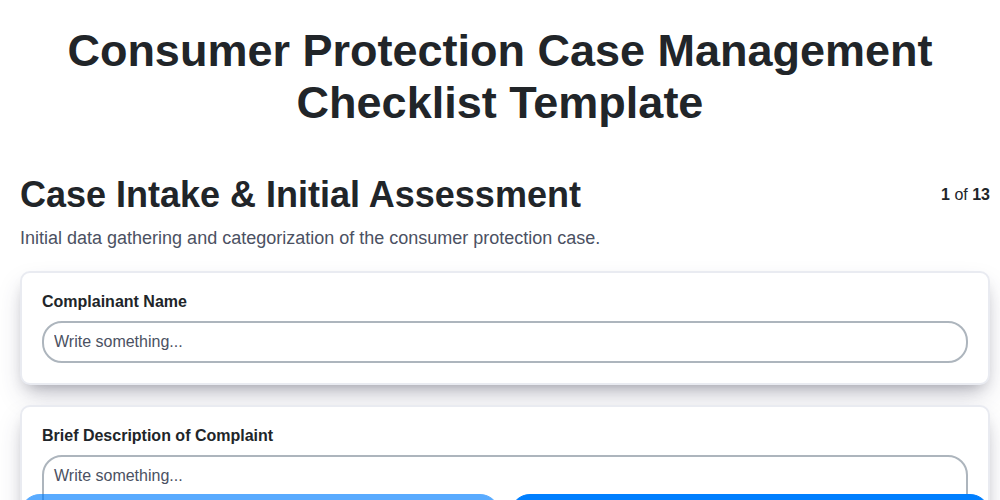
Table of Contents
- Introduction: The Importance of Structured Consumer Protection Case Management
- 1. Case Intake & Initial Assessment: Setting the Foundation
- 2. Complainant Information Verification: Ensuring Accuracy and Legitimacy
- 3. Respondent Identification & Contact: Locating and Notifying the Business
- 4. Documentation Review & Evidence Gathering: Building a Strong Case
- 5. Legal Research & Applicable Laws: Understanding Your Legal Framework
- 6. Demand Letter/Initial Communication: First Steps Towards Resolution
- 7. Negotiation & Resolution Attempts: Exploring Alternative Solutions
- 8. Mediation/Arbitration (If Applicable): Considering Assisted Negotiation
- 9. Complaint Filing (If Necessary): Proceeding with Formal Action
- 10. Litigation (If Applicable): Navigating the Court System
- 11. Settlement/Judgment: Achieving a Favorable Outcome
- 12. Case Closure & Record Keeping: Maintaining Comprehensive Records
- 13. Compliance & Remediation: Ensuring Business Corrective Action
- 14. Template Customization & Best Practices
- Resources & Links
TLDR: Overwhelmed by consumer protection cases? This checklist template guides you through every step - from initial intake to case closure - ensuring you don't miss crucial details and stay compliant. It's your all-in-one resource for efficient and organized case management.
Introduction: The Importance of Structured Consumer Protection Case Management
Consumer protection cases demand meticulous handling. They're often emotionally charged, involve vulnerable individuals, and carry significant legal and reputational implications for businesses. A haphazard approach can lead to missed deadlines, inaccurate information, procedural errors, and ultimately, a failure to adequately protect consumers. This is where structured case management becomes paramount. A well-defined process ensures consistency, improves efficiency, reduces errors, and provides a clear audit trail - all vital components for successful consumer protection case resolution. Utilizing a checklist, as we'll explore in detail below, isn't just about ticking boxes; it's about creating a framework for justice and providing a robust defense against potential liabilities. It allows for proactive management, ensuring no crucial step is overlooked, and contributes to a demonstrably fair and transparent process.
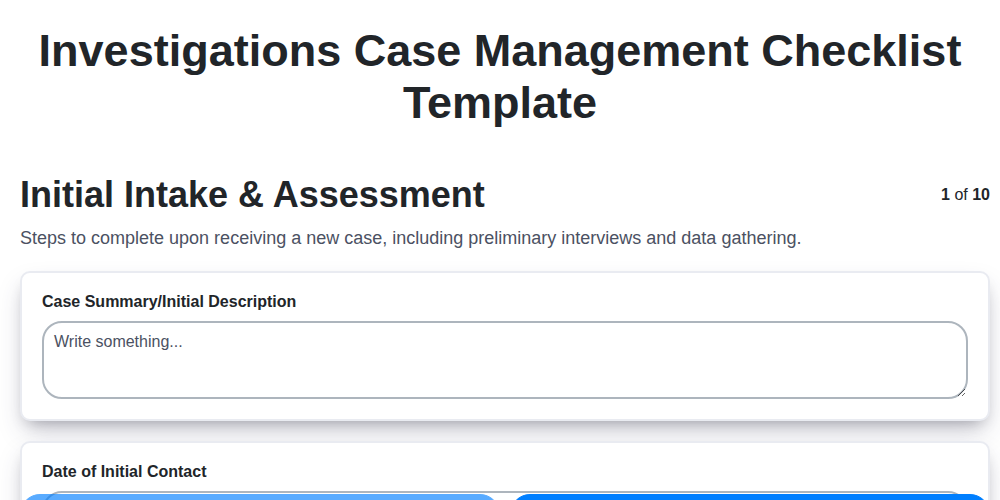
1. Case Intake & Initial Assessment: Setting the Foundation
The first step in effective consumer protection case management is a thorough intake and initial assessment. This phase is critical for determining whether a case is viable, understanding its potential complexities, and allocating resources appropriately.
Here's what this stage involves:
- Initial Contact & Information Gathering: This begins with the consumer's initial contact - whether it's a phone call, email, or online form. Clearly explain the process, your role, and potential outcomes. Gather basic information about the issue, including the product or service involved, the date of the transaction, and a brief summary of the complaint.
- Preliminary Screening: Quickly assess the case's potential merit based on the initial information. Does it appear to involve a potential violation of consumer protection laws? Are the facts presented consistent with a possible claim? This isn't a full legal evaluation, but a crucial filter.
- Conflict of Interest Check: Perform a conflict of interest check to ensure representing this consumer won't compromise existing or previous client relationships.
- Fee Discussion (if applicable): If your services are not pro bono, clearly explain your fee structure and any potential costs associated with the case.
- Setting Expectations: Be transparent about the potential timeline, challenges, and possible outcomes. Manage the consumer's expectations early on to avoid frustration later.
- Documentation Request: Request preliminary documentation that supports the consumer's claim. This might include contracts, receipts, advertisements, and correspondence.
2. Complainant Information Verification: Ensuring Accuracy and Legitimacy
This critical step forms the bedrock of any successful consumer protection case. Before proceeding, meticulous verification of the complainant's information is paramount. Simply accepting what's presented at face value can lead to wasted time, resources, and even compromise the entire case.
Here's what verification entails:
- Identity Confirmation: Verify the complainant's identity using official documents like driver's licenses, passports, or utility bills. Cross-reference provided details with publicly available records.
- Contact Information Validation: Confirm addresses, phone numbers, and email addresses are accurate and current. A non-responsive complainant significantly hinders progress.
- Ownership/Entitlement: If the complaint involves property or services, verify the complainant's legal right to complain. Are they the rightful owner, lessee, or authorized representative?
- Complaint Origin Verification: Especially important with online submissions, confirm the complainant is the genuine source of the information. Be alert for potential fraud or fabricated claims.
- Prior Complaints: Check if the complainant has previously filed similar complaints against the respondent or elsewhere. This can reveal patterns or potentially indicate ulterior motives.
Document all verification steps and findings diligently. Discrepancies or red flags should be investigated further before proceeding. A thorough verification process strengthens the case's legitimacy and prevents wasted effort on potentially fraudulent claims.
3. Respondent Identification & Contact: Locating and Notifying the Business
Identifying and formally notifying the business (the respondent) is a crucial, and often challenging, step in consumer protection case management. It's about ensuring they're aware of the complaint and have an opportunity to respond. Here's a breakdown of the process:
1. Gathering Initial Information: The complainant's initial intake forms often provide a starting point - the business name, address, and contact information. However, this isn't always accurate or complete.
2. Verification & Due Diligence: Don's rely solely on the complainant's details. Verify the business's legal name, address, and principal place of business using online resources like:
- Secretary of State's Website: Most states have online databases where you can search for registered businesses. This provides official records.
- Better Business Bureau (BBB): The BBB provides business profiles and can help confirm details.
- Online Search Engines: A simple Google search can sometimes reveal updated contact information.
- Professional Licensing Boards: If the business operates in a regulated industry (e.g., contractors, real estate agents), check the relevant licensing board's website for verification.
3. Contact Methods & Formal Notification: Once the business is accurately identified, proceed with formal notification. Consider a tiered approach:
- Initial Contact (Optional): A phone call or email may be appropriate to briefly explain the complaint and request information. Document this communication carefully. This is optional and depends on the specific case and policy.
- Certified Mail with Return Receipt: This is the gold standard for formal notification. Certified mail provides proof that the respondent received the complaint. The return receipt is essential documentation.
- Email (with Caution): While convenient, email alone may not be legally sufficient proof of receipt. If used, supplement with a follow-up certified letter.
- Process Server (If Necessary): In more complex cases or when contact proves difficult, a process server can ensure official delivery.
4. Document Everything: Keep meticulous records of all attempts to identify and contact the respondent, including dates, methods used, and outcomes. This is critical for demonstrating due diligence and adhering to procedural requirements.
Important Considerations:
- DBA (Doing Business As) Names: Businesses often operate under a trade name different from their legal name. Identify both.
- Franchises: Determine the correct entity to serve - the franchisor or the individual franchisee.
- Sole Proprietorships: Identifying and locating a sole proprietor can be particularly challenging.
4. Documentation Review & Evidence Gathering: Building a Strong Case
A robust consumer protection case hinges on thorough documentation and compelling evidence. This phase moves beyond the initial complaint and delves into the specifics. It's about uncovering the truth and supporting your claims with facts.
Here's what this stage entails:
- Collecting Relevant Documents: This includes contracts, receipts, invoices, emails, letters, advertisements, promotional materials, website screenshots (date-stamped!), and any other communication between the complainant and the respondent. Think of it as assembling the puzzle pieces.
- Analyzing Terms and Conditions: Scrutinize contracts for deceptive or misleading clauses. Are they clearly understandable? Were they presented fairly? Did the consumer acknowledge and agree to them?
- Identifying Supporting Witnesses: Interview anyone who has knowledge of the events surrounding the complaint. Written statements or recorded testimonies can be invaluable.
- Financial Records Examination: Analyzing bank statements, credit reports, and other financial documents helps determine the extent of financial harm suffered by the complainant.
- Public Records Search: Relevant public records, such as business registration information or past complaints against the respondent, can strengthen your case.
- Creating a Timeline: A chronological record of events clarifies the sequence of actions and highlights any inconsistencies or misleading practices.
This meticulous approach transforms a simple complaint into a well-supported case, significantly increasing the likelihood of a favorable outcome. Don't underestimate the power of organized and compelling evidence!
5. Legal Research & Applicable Laws: Understanding Your Legal Framework
Consumer protection laws are complex and vary significantly depending on the jurisdiction and the nature of the complaint. This step is absolutely critical and cannot be skipped. A superficial understanding can lead to missed opportunities, ineffective strategies, and ultimately, a less successful outcome for your client.
Here's what this stage involves:
- Identifying Relevant Statutes: Determine which federal, state, and local laws govern the consumer's situation. This might include the Consumer Credit Protection Act, Truth in Lending Act, Fair Debt Collection Practices Act, state-specific deceptive trade practices acts, and more.
- Analyzing Case Law: Research relevant court decisions that interpret these statutes and laws. Understanding how courts have previously ruled in similar cases provides valuable insight into potential outcomes.
- Regulatory Guidance: Consult agency guidelines and opinions issued by bodies like the Federal Trade Commission (FTC) or state Attorney General offices. These documents often clarify legal interpretations and best practices.
- Understanding Jurisdiction: Confirm the correct jurisdiction for filing a complaint or lawsuit. Consumer protection laws often have specific geographic limitations.
- Staying Updated: Consumer protection laws are frequently amended. Regularly update your legal knowledge to ensure you're working with the most current legal framework.
Proper legal research forms the foundation for a strong case and informs every subsequent step in the process.
6. Demand Letter/Initial Communication: First Steps Towards Resolution
Often, the first formal step in consumer protection case management is crafting and sending a demand letter or initiating an initial communication with the respondent. This isn't about aggression; it's about formally outlining the consumer's complaint, detailing the harm suffered, and clearly stating the desired resolution.
This letter serves multiple purposes. It puts the respondent on notice of the issue, provides them an opportunity to address the complaint directly, and creates a documented record of the attempted resolution.
Key elements of an effective demand letter include:
- Clear Identification: Identify yourself (the complainant) and the respondent accurately.
- Detailed Complaint: Concisely and chronologically describe the events leading to the complaint. Avoid emotional language and stick to the facts.
- Specific Harm: Clearly articulate the damages incurred - financial loss, emotional distress, etc. Provide supporting documentation whenever possible (receipts, contracts, emails).
- Desired Resolution: State precisely what you want the respondent to do to rectify the situation - refund, repair, cancellation of contract, etc. Be reasonable.
- Deadline: Provide a reasonable timeframe for the respondent to respond to your demands.
- Contact Information: Clearly provide your contact information.
This initial communication sets the tone for the rest of the case and provides a foundation for potential negotiation. Remember to keep a copy of the letter and any responses for your records.
7. Negotiation & Resolution Attempts: Exploring Alternative Solutions
Often, the most effective and cost-efficient way to resolve a consumer protection case is through direct negotiation. This phase focuses on attempting to reach a mutually agreeable solution without resorting to formal legal action.
Here's what this stage typically involves:
- Understanding the Complainant's Desired Outcome: Clearly outline what the complainant seeks - is it a refund, repair, replacement, cancellation of a contract, or something else? Knowing their goals is crucial for crafting a reasonable counteroffer.
- Assessing Respondent's Position: Understand why the respondent believes they are not liable or why they believe the complaint is unfounded. This requires analyzing their perspective and identifying potential areas of compromise.
- Crafting Initial Offers: Start with a well-reasoned offer that addresses the complainant's concerns while acknowledging the respondent's position. Be prepared to justify your offer with supporting evidence and applicable regulations.
- Iterative Communication: Negotiation is a back-and-forth process. Be responsive to counteroffers, explain your rationale, and be willing to adjust your position. Maintaining professional and respectful communication is vital, even when disagreements arise.
- Exploring Creative Solutions: Sometimes, standard remedies aren't enough. Consider offering alternative solutions - such as extended warranties, discounts on future services, or apologies - to bridge the gap and achieve a resolution.
- Documenting All Communication: Meticulously record all negotiation attempts, including dates, times, methods of communication (phone, email, letter), and the content of discussions. This documentation is invaluable should further action become necessary.
The goal is to find a win-win scenario, preserving relationships and avoiding costly litigation. However, be realistic - not all cases are amenable to resolution through negotiation.
8. Mediation/Arbitration (If Applicable): Considering Assisted Negotiation
Sometimes, direct negotiation stalls or proves unproductive. This is where assisted negotiation methods like mediation and arbitration can become valuable tools in consumer protection case management.
Mediation: In mediation, a neutral third party (the mediator) facilitates communication between you and the respondent. The mediator doesn't make a decision; instead, they help identify common ground, explore potential solutions, and guide you towards a mutually agreeable outcome. Mediation is non-binding, meaning either party can walk away if a resolution isn't reached. It's often a cost-effective and less adversarial alternative to litigation.
Arbitration: Arbitration is similar to mediation but with a crucial difference: it's binding. An arbitrator (or a panel of arbitrators) hears both sides of the case and makes a decision, which is legally enforceable. While arbitration can be faster and less formal than litigation, it's essential to understand the specific rules and limitations of the arbitration process, often dictated by a contract or agreement. Check carefully for any clauses requiring arbitration, as they can significantly impact your legal options.
When to Consider Assisted Negotiation:
- Negotiations have reached an impasse.
- Communication has broken down.
- There's a desire to avoid the cost and time of litigation.
- A contract mandates arbitration.
Before pursuing either method, thoroughly research the mediator or arbitrator's qualifications and experience. Consider the potential costs associated with these processes and the impact on your overall case strategy.
9. Complaint Filing (If Necessary): Proceeding with Formal Action
Despite best efforts in negotiation and resolution attempts, some consumer protection cases require formal complaint filing with a relevant agency or regulatory body. This section outlines the steps and considerations when that becomes necessary.
When to File: If all informal resolution attempts have failed, the case presents significant harm to the consumer, or a pattern of illegal conduct is evident, filing a formal complaint may be the appropriate next step.
Identifying the Correct Agency: Research and pinpoint the correct agency to file with. This could be a state Attorney General's office, the Federal Trade Commission (FTC), a state consumer protection agency, or an industry-specific regulator. The checklist's earlier "Legal Research & Applicable Laws" stage is crucial here, as it should have highlighted the appropriate governing bodies.
Complaint Preparation: Most agencies have specific complaint forms or processes. Gather all relevant documentation and information compiled throughout the case - invoices, contracts, correspondence, records of communication - to accurately and comprehensively detail the consumer's grievances. Ensure the complaint clearly states the consumer's losses and the specific laws violated.
Filing and Follow-up: Submit the complaint according to the agency's instructions, maintaining meticulous records of the submission date, method, and any confirmation received. Be prepared to provide ongoing updates and respond to any requests for additional information from the agency during their investigation. Understand that agency investigations can take time, and there's no guarantee of a favorable outcome.
10. Litigation (If Applicable): Navigating the Court System
When negotiation, mediation, and other resolution attempts fail, litigation may become necessary to protect consumer rights. This stage represents a significant escalation in the case management process and requires careful preparation and adherence to strict procedural rules.
Key Steps in the Litigation Phase:
- Complaint Drafting & Filing: This involves meticulously crafting a formal complaint outlining the consumer's grievances, detailing the legal basis for the claims, and specifying the desired remedies. Accurate and persuasive drafting is crucial. Filing must comply with court rules and deadlines.
- Service of Process: Properly serving the respondent with the complaint and summons is essential for the court to have jurisdiction. Strict adherence to service rules is critical to avoid dismissal.
- Discovery: This extensive process involves exchanging information with the respondent through interrogatories, requests for production of documents, and depositions. Thorough preparation and organization are vital.
- Motion Practice: Addressing legal issues through motions (e.g., motions to dismiss, motions for summary judgment) can significantly impact the case's trajectory.
- Trial Preparation: This involves gathering and organizing evidence, preparing witnesses, and developing legal arguments for presentation at trial.
- Trial: If the case proceeds to trial, a compelling presentation of evidence and persuasive legal arguments are essential to secure a favorable outcome.
- Appeals: If either party is dissatisfied with the court's decision, an appeal can be pursued, requiring a detailed analysis of legal errors.
Important Considerations:
- Cost and Time Commitment: Litigation is considerably more expensive and time-consuming than alternative dispute resolution methods.
- Legal Expertise: This phase typically requires specialized legal expertise in consumer protection law and litigation procedures.
- Public Record: Litigation proceedings are public record, which can have implications for privacy and reputation.
- Strategic Decisions: Ongoing assessment of the case's strengths, weaknesses, and potential outcomes is crucial for making informed strategic decisions.
11. Settlement/Judgment: Achieving a Favorable Outcome
Reaching a settlement or securing a judgment represents a pivotal point in any consumer protection case. While litigation can be a lengthy and expensive process, a well-negotiated settlement often provides a faster and more predictable resolution for the complainant. This phase requires careful assessment and strategic maneuvering.
Evaluating Settlement Offers: Don't automatically accept the first offer. Scrutinize it thoroughly. Does it adequately address the complainant's losses, including financial damages, emotional distress (where applicable), and any necessary remediation? Consider the strength of your case and the potential risks of proceeding to trial. Legal counsel is invaluable here, providing an objective evaluation of the offer's fairness and potential outcomes.
Judgment Enforcement: If a judgment is obtained, ensure its enforcement. This might involve wage garnishment, asset seizure, or other legal mechanisms to compel the respondent to fulfill their obligations. Understanding the applicable laws and procedures for enforcement is crucial.
Protecting the Settlement: A settlement agreement is a legally binding contract. Ensure the terms are clearly documented and include specific performance requirements. Consider including clauses for penalties or further action in case of non-compliance, providing an extra layer of protection for the complainant.
Documenting the Outcome: Meticulously document the settlement terms, the amount paid, and any associated agreements. This documentation is essential for record-keeping and serves as proof of resolution should any disputes arise later.
12. Case Closure & Record Keeping: Maintaining Comprehensive Records
Closing a consumer protection case isn't just about marking it "resolved." It's the critical final stage where meticulous record-keeping ensures future reference, potential audits, and protects your organization. A robust case closure process minimizes risk and strengthens your overall compliance posture.
Here's what comprehensive record-keeping entails:
- Final Documentation: Consolidate all documents related to the case - intake forms, correspondence, investigation reports, legal research, demand letters, negotiation records, settlement agreements, judgments, and any supporting evidence.
- Resolution Summary: Create a detailed summary outlining the case's origin, the complaint, the actions taken, the resolution achieved (or lack thereof), and the final outcome.
- Retention Schedule: Adhere to a clearly defined document retention schedule based on legal requirements and organizational policies. Knowing how long to keep records is vital.
- Secure Storage: Store records in a secure, accessible location, whether digital or physical. Digital records should have appropriate access controls and backup systems.
- Audit Trail: Maintain an audit trail of who accessed and modified case files, ensuring accountability and transparency.
- Data Analysis (Optional): Aggregate data from closed cases to identify trends, common issues, and areas for process improvement within your organization. This proactive approach can help prevent future complaints.
Proper case closure and record-keeping isn't simply an administrative task; it's a cornerstone of effective consumer protection case management.
13. Compliance & Remediation: Ensuring Business Corrective Action
Consumer protection cases aren't just about resolving individual complaints; they're often a signal of systemic issues within a business. This final stage, Compliance & Remediation, is crucial to prevent future violations and protect consumers. It's about going beyond the immediate resolution and ensuring lasting change.
This phase involves a thorough review of the practices that led to the complaint. We're looking for patterns, vulnerabilities, and areas where policies or training were inadequate. This might involve:
- Root Cause Analysis: Identifying the why behind the violation. Was it a faulty process, lack of training, or a flawed policy?
- Corrective Action Plan: Developing a detailed plan to address the root causes. This could include revised policies, updated training programs for employees, improved internal controls, and enhanced monitoring systems.
- Implementation & Tracking: Implementing the corrective action plan with clear timelines and assigning responsibility for each step. We actively track progress and document adherence to the plan.
- Verification of Compliance: Regularly verifying that the corrective actions are effective and that the business is operating in full compliance with relevant laws and regulations. This could involve periodic audits and ongoing monitoring.
- Reporting: Maintaining detailed records of the compliance & remediation process, including the plan, implementation, and verification activities. These records can be essential for demonstrating good faith efforts and future compliance.
Ultimately, successful Compliance & Remediation demonstrate a commitment to consumer protection and build trust with customers and regulators. Ignoring this vital step leaves the door open for repeat offenses and potentially more serious legal consequences.
14. Template Customization & Best Practices
While our Consumer Protection Case Management Checklist Template provides a solid foundation, remember that every case is unique. Successful implementation requires thoughtful customization. Here's how to adapt the template to maximize its effectiveness and ensure compliance:
1. Tailor to Specific Consumer Protection Laws: Your jurisdiction's consumer protection laws will vary. Carefully review each step of the checklist and adjust language and required actions to align with your local statutes (e.g., Truth in Lending Act, Fair Credit Reporting Act, state-specific Deceptive Trade Practices Acts).
2. Define Evidence: Explicitly list examples of what constitutes evidence for your organization. This prevents subjective interpretations and maintains consistency across caseworkers. Think: contracts, receipts, emails, letters, advertisements, witness statements.
3. Risk Assessment Integration: Consider incorporating a risk assessment component into the Case Intake & Initial Assessment section. This helps prioritize cases based on potential harm, complexity, and resource needs.
4. Deadline Tracking: Add columns for key deadlines - statute of limitations, response dates, court filing deadlines - and assign responsibility for monitoring them. Automated reminders are highly recommended.
5. Communication Logs: Expand the Negotiation & Resolution Attempts section to include detailed communication logs. Record dates, methods (phone, email, letter), individuals involved, and summary of conversations.
6. Internal Review Points: Add checkpoints for supervisor review at critical stages - after initial assessment, before sending a demand letter, before filing a complaint. This ensures quality control and reduces errors.
7. Data Security & Privacy: Consumer protection cases often involve sensitive personal information. Ensure your customized template and associated systems comply with all relevant data privacy regulations (e.g., GDPR, CCPA).
8. Version Control: Maintain clear version control of your template to track changes and ensure all caseworkers are using the current, approved version.
By customizing this template and adhering to these best practices, you can significantly streamline your consumer protection case management process, improve efficiency, and enhance client outcomes.
Resources & Links
- Federal Trade Commission (FTC): The FTC's website offers a wealth of information on consumer protection laws, regulations, and enforcement actions. It's a vital resource for understanding your legal framework and identifying potential violations.
- Consumer.FTC.gov: A consumer-facing portal from the FTC, providing easy-to-understand guides, tips, and tools related to consumer rights and protections. Excellent for understanding common complaints.
- International Committee of the Red Cross (ICRC): While primarily known for humanitarian work, the ICRC has excellent resources on mediation and negotiation techniques - valuable for section 7 and 8 of your checklist. Provides a deeper understanding of principles.
- U.S. Department of Justice (DOJ): The DOJ's website offers information about enforcement actions and provides insights into how legal cases are handled, particularly relevant for sections 9 and 10 relating to complaints and litigation.
- Nolo - Legal Information for Consumers: Nolo provides accessible legal information and resources for consumers, including explanations of consumer protection laws and procedures. Useful for understanding specific legal aspects.
- American Bar Association (ABA): The ABA offers resources and publications related to legal practice, including consumer protection law. It can assist in understanding the legal precedents and best practices.
- National Association of Consumer Advocates (NACA): NACA provides resources, education, and networking opportunities for consumer advocates. Offers a unique perspective on consumer protection.
- LexisNexis: A comprehensive legal research platform (subscription required) for in-depth legal research and case law analysis (relevant for section 2 & 5). Provides access to a vast collection of legal resources.
- Westlaw: Similar to LexisNexis, Westlaw is a legal research platform (subscription required) invaluable for conducting legal research (section 2 & 5). Provides access to case law, statutes, and legal journals.
- Mediate.com: A resource for finding mediators and information on mediation processes. Particularly useful for section 8 - Mediation/Arbitration - providing a deeper understanding of the practice.
Frequently Asked Questions
What is this checklist template for?
This checklist template is designed to help legal professionals and consumer protection advocates systematically manage consumer protection cases, from initial intake to resolution. It aims to streamline processes, ensure compliance, and improve case outcomes.
Who is this checklist template for?
This template is beneficial for a wide range of users, including lawyers specializing in consumer protection, paralegals, consumer advocacy organizations, and even individuals pursuing consumer complaints who want a structured approach.
What types of consumer protection cases does this checklist cover?
The checklist is designed to be adaptable and covers a broad spectrum of consumer protection cases, such as debt collection issues, unfair business practices, warranty disputes, fraud, and deceptive advertising. Specific sections can be adjusted based on the case details.
Is this a digital or printable checklist?
The template is provided in a format that's easily adaptable to both digital and printable formats. You can use it directly in a document editor or print it for physical use. Check the description on where you obtained the template for specific file formats (e.g., Word, Excel, PDF).
Can I customize the checklist template?
Absolutely! The checklist is meant to be a starting point. You can add, delete, or modify tasks to align with your specific needs, local laws, and the nuances of individual cases. Feel free to tailor it to your firm's or organization's procedures.
What are the key sections included in the checklist?
While specifics may vary depending on the version, common sections include: Initial Intake & Assessment, Investigation & Evidence Gathering, Demand Letter/Complaint Drafting, Negotiation/Mediation, Litigation (if applicable), Settlement/Resolution, and Case Closure. There are also sections for document management and deadline tracking.
How does this checklist help with deadlines?
The checklist incorporates deadline tracking elements. It prompts you to identify key deadlines (statute of limitations, response dates, court filing deadlines) and provides space to note dates and track progress. You can also set reminders.
What does 'due diligence' refer to in the checklist?
'Due diligence' refers to the thoroughness and carefulness exercised in investigating the facts of the case, verifying information, and ensuring compliance with all applicable laws and regulations. It's a critical aspect of responsible case management.
I'm an individual consumer pursuing a complaint. Can I use this checklist?
Yes! While geared toward professionals, the checklist's structure can be incredibly helpful for individuals pursuing consumer complaints. It helps you stay organized, track progress, and ensure you don't miss important steps. You might need to simplify some entries but it's still valuable.
Where can I obtain the complete checklist template?
Please refer to the article itself for download or access instructions. The article provides links or detailed information on how to obtain the full checklist template. Check for any associated costs or registration requirements.
Found this Article helpful?
Comments
There are no comments yet. Be the first to add one!
Case Management Solution Demo
Streamline your casework & improve outcomes! ChecklistGuro centralizes case details, tasks, & communication. Enhance efficiency, ensure compliance, & deliver exceptional service. Manage it all with our Work OS.
Related Articles
Streamline Your Deals: The Ultimate Real Estate Case Management Checklist Template
Streamline Your Debt Collection: A Case Management Checklist Template
Cybersecurity Incident Response: Your Checklist Template for Success
Streamline Your Case Management: The Ultimate Checklist Template
Mastering IP: Your Intellectual Property Case Management Checklist Template
HR Case Management Checklist Template: Your Guide to Fair & Compliant Investigations
Streamlining Veteran Care: Your Comprehensive Case Management Checklist Template
Mastering Investigations: Your Case Management Checklist Template Guide
We can do it Together
Need help with
Case Management?
Have a question? We're here to help. Please submit your inquiry, and we'll respond promptly.