Choosing the Right Customs Broker: A Supply Chain Selection Checklist
Published: 12/08/2025 Updated: 07/02/2026
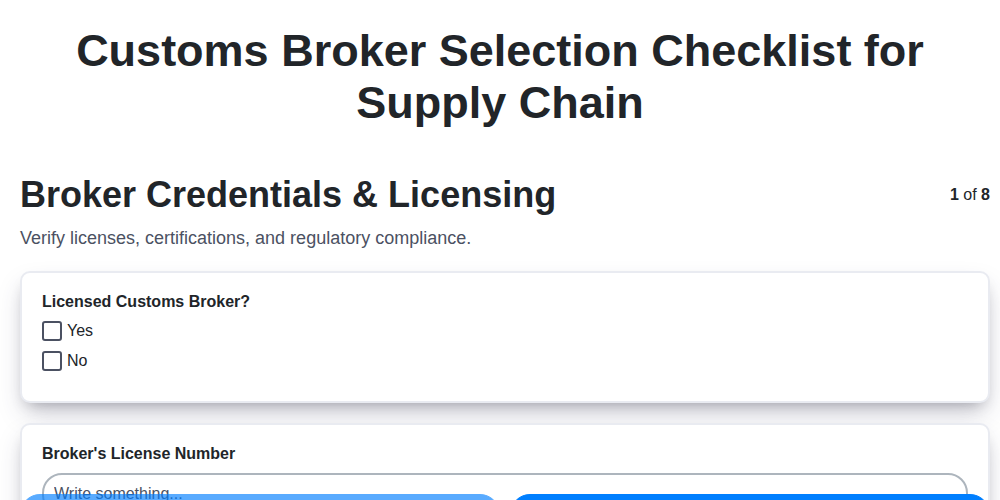
Table of Contents
- Introduction: Why a Customs Broker Matters
- 1. Broker Credentials & Licensing: Ensuring Legitimacy
- 2. Service Offerings & Expertise: Matching Your Needs
- 3. Technology & Communication: Streamlining the Process
- 4. Compliance & Risk Management: Protecting Your Business
- 5. Pricing & Contract Terms: Understanding the Costs
- 6. References & Reputation: What Others Say
- 7. Geographic Coverage & Expertise: Global Reach, Local Knowledge
- 8. Disaster Recovery & Business Continuity: Planning for the Unexpected
- 9. Specialization: Industry-Specific Knowledge
- 10. Value-Added Services: Beyond the Basics
- 11. Due Diligence: A Deeper Dive
- 12. Contract Negotiation: Key Considerations
- 13. Ongoing Evaluation: Maintaining a Strong Partnership
- Resources & Links
TLDR: Need to choose a customs broker? This checklist guides you through essential factors - licensing, expertise, tech, compliance, pricing, reputation, disaster recovery, and geographic coverage - to ensure a reliable partner that streamlines your supply chain and avoids costly issues. Download the template and use it to confidently evaluate potential brokers!
Introduction: Why a Customs Broker Matters
Navigating the complexities of international trade and customs regulations can be a significant hurdle for any business. Importing and exporting goods isn't as simple as just getting them from point A to point B. You're dealing with tariffs, duties, permits, inspections, and a constantly evolving landscape of rules and regulations that vary greatly from country to country. That's where a customs broker becomes invaluable.
Choosing the right customs broker isn't just about ticking a box; it's about securing a strategic partner who can streamline your supply chain, minimize delays, ensure compliance, and ultimately, protect your bottom line. A poor choice can lead to costly errors, penalties, and disrupted shipments. This checklist will help you make an informed decision and select a broker who aligns with your business needs.
1. Broker Credentials & Licensing: Ensuring Legitimacy
Before partnering with a customs broker, verifying their credentials and licensing is absolutely paramount. This isn't just a formality; it's your first line of defense against potential fraud, delays, and significant penalties.
Here's what you need to confirm:
- Licensed Customs Broker: Ensure the broker is licensed by the U.S. Customs and Border Protection (CBP). You can easily verify this using the CBP's Broker Search tool on their website (https://www.cbp.gov/trade/learn-about/importing/find-customs-broker). This tool will confirm the broker's license number and status.
- Individual Broker Registration: Beyond the brokerage's license, check if the individual brokers who will be handling your shipments are also registered with CBP. This provides a further layer of accountability.
- License Validity: Confirm the license is current and has not expired. Expired licenses render the broker unable to legally clear goods.
- Compliance History: While not always readily available, inquire about any past compliance issues or warnings the broker may have received from CBP. This can provide insights into their operational integrity.
Due diligence here establishes a foundation of trust and ensures you're working with a legitimate and authorized entity.
2. Service Offerings & Expertise: Matching Your Needs
Beyond just clearing goods, a good customs broker provides a range of services that can significantly impact your supply chain efficiency and cost-effectiveness. Don't just look for a broker who can clear your goods - find one who should be clearing them, given your specific needs.
Consider these questions when evaluating a broker's offerings:
- Product-Specific Expertise: Does the broker have experience with the specific types of goods you import/export? Certain commodities (e.g., food, chemicals, electronics) have unique regulations and require specialized knowledge. Ask about their experience and training in handling these goods.
- Trade Agreements & Programs: Do they understand and can they leverage free trade agreements (FTAs), Foreign Trade Zones (FTZs), or other import programs that could reduce your duty costs?
- Customs Bond Management: How do they handle bond requirements and ensure compliance with regulations?
- Consulting Services: Do they offer consulting on import/export compliance, duty optimization, or tariff classification?
- Value-Added Services: Do they offer services like origin determination, document preparation, or shipment tracking?
- Team Structure & Expertise: Who will be handling your account? What are their qualifications and experience levels? A dedicated account manager can be invaluable.
Carefully assess whether the broker's expertise aligns with your product categories, trade routes, and compliance needs. Don't be afraid to ask for details and examples of their experience.
3. Technology & Communication: Streamlining the Process
In today's fast-paced supply chain, relying on outdated processes and manual communication can lead to delays, errors, and frustrated stakeholders. A modern customs broker should leverage technology to provide seamless and transparent experiences. Here's what to look for:
- Portal Access: Does the broker offer a secure online portal where you can submit documentation, track shipments in real-time, and access updates? A self-service portal significantly reduces reliance on email chains and phone calls.
- EDI Capabilities: Electronic Data Interchange (EDI) integration with your systems demonstrates a commitment to automation and data accuracy. This minimizes manual data entry and potential for error.
- Automated Notifications: Look for automated alerts regarding shipment status, potential issues, or required actions. Timely notifications empower you to proactively manage potential disruptions.
- Communication Channels: Beyond email, does the broker offer alternative communication methods like instant messaging or dedicated account manager contacts? This ensures swift and accessible support.
- Mobile Accessibility: Can you access shipment information and communicate with the broker via mobile devices? This is crucial for on-the-go visibility and responsiveness.
- Data Security: Verify the broker's cybersecurity measures and data protection protocols. Your sensitive trade data needs to be safeguarded.
A broker who embraces technology isn't just modern - they're positioned to be a proactive partner in optimizing your supply chain and minimizing delays.
4. Compliance & Risk Management: Protecting Your Business
Selecting a customs broker isn't just about getting your goods cleared; it's about safeguarding your entire supply chain. A strong compliance and risk management framework is absolutely crucial. Here's what to look for:
- Regulatory Expertise: Does the broker demonstrate a deep understanding of relevant trade regulations, including US Customs and Border Protection (CBP) requirements, export controls, and Free Trade Agreements (FTAs)? Ask about their experience with specific commodities or industries that might have heightened scrutiny.
- Auditing & Internal Controls: Inquire about the broker's internal audit processes. Do they regularly audit their own procedures to ensure accuracy and adherence to regulations? A proactive approach to internal controls can prevent costly errors and penalties.
- Recordkeeping & Data Security: Compliance requires meticulous recordkeeping. Verify that the broker maintains accurate and complete records for the legally required retention period and has robust data security measures in place to protect sensitive information. Ask about their adherence to data privacy regulations.
- Due Diligence on Partners: Customs brokers often work with other parties (carriers, forwarders, etc.). Does the broker conduct due diligence on these partners to ensure they also adhere to compliance standards?
- Staying Current: Regulations are constantly evolving. How does the broker ensure their team stays informed of the latest changes and updates impacting import/export processes? Ask about training programs and professional development.
A broker with a robust compliance program minimizes your risk of penalties, delays, and reputational damage, making them a valuable partner in your supply chain.
5. Pricing & Contract Terms: Understanding the Costs
Choosing a customs broker isn't just about finding someone who can process your shipments; it's about securing a reliable and cost-effective partner. Carefully scrutinizing their pricing and contract terms is a critical step in that process. Don't let hidden fees or unclear obligations derail your budget and create unnecessary complications down the line.
Here's what to look for:
- Transparency is Key: Request a detailed breakdown of all potential fees. This should include entry fees, merchandise processing fees (MPF), examination fees (if applicable), duties, taxes, and any surcharges. Be wary of vague pricing structures or "handling fees" that lack specificity.
- Clearly Defined Scope of Services: Ensure the contract precisely outlines the services included for each fee. Does the price include document preparation, data entry, classification assistance, or something else?
- Audit and Reconciliation: Ask about their audit process and reconciliation procedures. How do they handle discrepancies in duty rates or classification? Understanding how they resolve issues is essential.
- Potential for Additional Charges: Inquire about any potential for additional charges beyond the initially quoted price. These might arise from unusual situations, special requirements, or expedited services. Get these scenarios and their associated fees clearly outlined.
- Contract Length & Termination: What's the contract length, and what are the termination clauses? Are there penalties for early termination? Understand the commitment and any exit strategies.
- Payment Terms: Confirm the payment terms, including due dates and acceptable payment methods.
Don't hesitate to negotiate - customs brokerage services aren't one-size-fits-all. A proactive approach to understanding the costs upfront will contribute to a smoother and more predictable import process.
6. References & Reputation: What Others Say
Choosing a customs broker is a significant decision, and their track record speaks volumes. Don't just rely on marketing materials - delve into what their existing clients are saying.
Here's how to check their reputation:
- Request References: Ask the broker for a list of current clients, ideally within your industry or with similar import/export profiles. Don't hesitate to reach out - a reputable broker should be happy to share them.
- Check Online Reviews: Explore online platforms like Google Reviews, Yelp (if applicable), or industry-specific forums. While online reviews should be taken with a grain of salt, they can provide a general sense of customer satisfaction.
- LinkedIn Recommendations: Check the broker's LinkedIn profile and those of key personnel. Recommendations from colleagues and past clients can be insightful.
- Industry Associations: Some industry associations have directories or forums where members share experiences with various service providers.
- Ask Your Peers: Tap into your own network. Ask other importers/exporters if they're familiar with the broker and what their experience has been.
A strong reputation isn't just about positive reviews; it reflects a broker's commitment to service, reliability, and professionalism.
7. Geographic Coverage & Expertise: Global Reach, Local Knowledge
Your supply chain likely spans multiple countries. Selecting a customs broker with appropriate geographic coverage is therefore critical. Don't just consider where they operate; evaluate the depth of their expertise in those regions.
Beyond Simple Presence: A broker might claim to handle imports from China, but do they truly understand the nuances of Chinese import regulations, specific port procedures, and potential trade agreements impacting your goods? Similarly, experience with the complexities of EU customs, South American trade blocs, or African import requirements can be a significant differentiator.
Considerations:
- Direct Presence vs. Network: Does the broker have physical offices in key import/export locations, or do they rely on a network of partners? Both models can work, but understand the level of direct control and accountability.
- Language Capabilities: Fluent communication in the local language(s) of the countries you trade with is invaluable for smooth clearance and addressing unexpected issues.
- Regional Specializations: Some brokers focus on specific regions or trade lanes. If you deal primarily with a particular geographic area, a specialist might offer a competitive advantage.
- Emerging Markets Expertise: As you expand into new markets, ensure your broker has the knowledge to navigate unfamiliar regulations and potential challenges.
Ultimately, a broker with broad geographic coverage combined with deep local expertise can significantly streamline your supply chain and minimize disruptions.
8. Disaster Recovery & Business Continuity: Planning for the Unexpected
Supply chains are vulnerable. Natural disasters, cyberattacks, economic disruptions - any number of unexpected events can throw your operations into chaos. Your customs broker isn't just a service provider; they're a critical partner in navigating these challenges. A robust Disaster Recovery & Business Continuity plan is essential for ensuring trade continues, even when the unexpected happens.
Don't just ask if they have a plan - delve into its specifics. Here's what to look for:
- Data Backup & Redundancy: How frequently are their data backups performed? Where are they stored (multiple locations are key)? Do they have redundant systems in place to ensure data accessibility?
- Communication Protocols: How will they communicate with you and other stakeholders (carriers, suppliers, government agencies) during a disruption? Do they have alternative communication channels in place (satellite phones, dedicated emergency contacts)?
- Alternate Work Locations: Do they have a plan for remote work capabilities or backup offices outside of potential disaster zones?
- Business Impact Analysis: Has the broker conducted a Business Impact Analysis to identify critical functions and prioritize recovery efforts?
- Testing & Training: How often do they test their Disaster Recovery plan? Do they provide training to their staff on these procedures?
- Specific Scenario Planning: Inquire about their plans for specific, relevant scenarios (e.g., port closures, cybersecurity breaches, regional natural disasters). A generic plan isn't enough; it needs to be tailored to your needs.
A broker who prioritizes disaster preparedness demonstrates a commitment to your long-term success, minimizing disruptions and safeguarding your supply chain.
9. Specialization: Industry-Specific Knowledge
Many customs brokers handle a wide variety of goods, but the complexities of international trade often demand more than general knowledge. Does your broker possess a deep understanding of your industry? Certain products - like food, pharmaceuticals, chemicals, or textiles - face unique regulations, documentation requirements, and potential risks. A specialist broker understands these intricacies, proactively addresses potential challenges, and can often streamline processes to save you time and money. Ask about their experience with your specific product categories and related import/export regulations. A broker with industry-specific expertise can be an invaluable asset, minimizing delays, avoiding costly penalties, and ensuring a smoother supply chain.
10. Value-Added Services: Beyond the Basics
Beyond simply clearing goods through customs, a truly exceptional customs broker can offer value-added services that streamline your entire supply chain. Consider brokers who provide services like:
- Duty Drawback Assistance: Recovering duties paid on imported goods that are subsequently exported. This can represent significant cost savings.
- Trade Compliance Training: Educating your internal team on import/export regulations, reducing risk and fostering a culture of compliance.
- Supply Chain Visibility & Reporting: Providing detailed insights into shipment status, duties paid, and potential delays, allowing for proactive adjustments.
- Product Classification Assistance: Accurate classification is crucial for tariff application; a broker with strong expertise here can minimize errors and penalties.
- Duty Optimization Strategies: Exploring options like Free Trade Agreements (FTAs) and Foreign Trade Zones (FTZs) to legally minimize duty costs.
- Customs Audit Support: Assisting with customs audits, ensuring a smooth and transparent process.
These services can go beyond just moving goods; they can be a strategic advantage for your business.
11. Due Diligence: A Deeper Dive
Selecting a customs broker isn't just about ticking boxes on a checklist; it's about building a partnership. This is where true due diligence comes into play. Beyond verifying credentials and reviewing initial offerings, you need to dig deeper to ensure long-term alignment and risk mitigation.
Go beyond the surface: Don't accept assurances at face value. Request detailed documentation to support claims made during the initial assessment. Ask for examples of how they've handled complex situations, particularly those similar to your company's import/export profile.
Investigate their internal processes: Ask about their quality control measures. How do they ensure accuracy and minimize errors? What internal audits do they conduct?
Assess their staff's expertise: While the sales team might be impressive, who will be handling your day-to-day operations? Inquire about the experience and qualifications of the specific team members assigned to your account. Don't be afraid to ask technical questions.
Evaluate their data security protocols: Customs data is highly sensitive. Understand how the broker protects your information from breaches and complies with relevant data privacy regulations.
Consider a mock scenario: Present the broker with a hypothetical import/export situation involving complexities you frequently encounter. Assess their response - is it thorough, proactive, and demonstrates a true understanding of your needs?
Regularly review performance: Due diligence isn't a one-time event. Schedule regular reviews of the broker's performance against agreed-upon KPIs and proactively address any concerns.
12. Contract Negotiation: Key Considerations
The initial discussions and due diligence are vital, but the contract itself is your legally binding agreement. Don't rush this stage! Here's what to scrutinize:
- Scope of Services - Specificity is Key: Ensure the contract precisely details all services the broker will provide. Avoid vague language. List specific tasks, responsibilities, and what's explicitly excluded.
- Liability & Indemnification: Understand the broker's liability in case of errors, delays, or compliance issues. The indemnification clause protects you, but ensure it's reasonable and clearly defined.
- Termination Clause: What are the conditions under which you or the broker can terminate the agreement? What are the associated penalties or notice periods?
- Data Security & Confidentiality: Given the sensitive information brokers handle, verify data security protocols and confidentiality agreements.
- Fees & Payment Terms - Transparency Matters: Beyond the initial pricing, clarify how fees are calculated for surcharges, penalties, or additional services. Look for potential hidden costs.
- Dispute Resolution: Define the process for resolving disagreements - mediation, arbitration, or legal action?
- Review by Legal Counsel: Always have your own legal counsel review the contract before signing to ensure your interests are protected.
13. Ongoing Evaluation: Maintaining a Strong Partnership
Selecting a customs broker isn't a "set it and forget it" endeavor. A strong partnership thrives on continuous evaluation and open communication. Regularly review your broker's performance against the initial criteria you established. Are they consistently meeting deadlines? Are their responses timely and accurate? Are they proactively identifying potential issues and offering solutions?
Schedule periodic performance reviews - quarterly or semi-annually - to discuss any concerns and identify areas for improvement. Encourage feedback from your internal teams who interact with the broker. Stay informed about changes in regulations and ensure your broker is adapting their processes accordingly. A proactive approach to ongoing evaluation not only safeguards your supply chain but also fosters a collaborative and mutually beneficial relationship with your customs broker. This ensures they remain a valuable asset for years to come.
Resources & Links
- U.S. Customs and Border Protection (CBP): The official website of the CBP. Contains information on regulations, forms, and broker licensing. Essential for understanding legal requirements and confirming broker legitimacy.
- National Customs Brokers & Forwarders Association of America (NCBFAA): Represents licensed customs brokers in the U.S. Provides information on industry standards, ethics, and a directory of member brokers (though membership doesn't guarantee superior service, it indicates a commitment to professional standards).
- World Trade Organization (WTO): Provides a global context for customs regulations and trade agreements. Helpful for understanding the broader landscape impacting your imports/exports.
- Importing Guide: A helpful resource for understanding import regulations and requirements, including information related to customs brokers.
- International Trade Administration (ITA): Part of the U.S. Department of Commerce, ITA provides resources and information for exporters and importers, including guidance on navigating customs procedures.
- U.S. Chamber of Commerce: Provides general information and resources for businesses involved in international trade, including a focus on regulatory compliance and trade facilitation.
- Thomasnet: A directory of industrial suppliers and service providers; useful for finding customs brokers and comparing offerings.
- LinkedIn: Use LinkedIn to research brokers, check their team's experience and qualifications, and potentially find references or contact previous clients.
- Supply Chain Brain: An online publication that provides analysis and insights on supply chain management, including customs brokerage and trade compliance. Good for understanding current trends.
- Logistics Management: Another industry publication focusing on logistics and supply chain, often features articles about customs brokerage and compliance.
- Shiply: While primarily a shipping marketplace, Shiply often includes customs brokerage as part of its service and offers insight into broker capabilities.
- FedEx: Large carrier providing brokerage services; useful to compare brokerage options and understand integration capabilities with carriers.
- DHL: Another major carrier offering brokerage services; helpful for comparing service offerings and understanding integration possibilities.
Frequently Asked Questions
What is a customs broker and why do I need one?
A customs broker is a licensed professional who acts as an intermediary between importers/exporters and government agencies (like Customs and Border Protection) to ensure compliance with import/export regulations. You generally need one to navigate the complex paperwork, duties, taxes, and regulations associated with international trade - it's difficult to do yourself and non-compliance can lead to delays, penalties, and seizure of goods.
What's included in the 'Supply Chain Selection Checklist' mentioned in the article?
The checklist covers key factors like broker licensing and insurance, technology capabilities, industry expertise, communication protocols, pricing transparency, compliance record, and references. It's a comprehensive guide to evaluating potential customs brokers.
What does 'licensed' mean when referring to a customs broker?
'Licensed' means the broker has met specific requirements and passed examinations to be authorized by Customs and Border Protection (CBP) to act on behalf of importers. This ensures they possess a fundamental understanding of U.S. customs laws and regulations.
Why is technology integration important when choosing a customs broker?
Modern customs brokers use technology for tasks like electronic data submission (EDI), tracking shipments, managing compliance documentation, and providing real-time updates. Integration with your own systems can streamline processes, improve visibility, and reduce errors.
The article mentions 'compliance record.' Why is that a crucial factor?
A strong compliance record demonstrates the broker's ability to adhere to customs regulations and avoid penalties. This minimizes your risk of issues with CBP and protects your business's reputation.
What is 'duty' and how does a customs broker help with it?
'Duty' refers to taxes levied on imported goods. A customs broker accurately calculates and pays these duties on your behalf, ensuring proper documentation and avoiding delays.
How does industry expertise benefit my business?
Brokers with industry expertise understand the specific regulations and requirements related to your products, which can lead to more efficient clearance, reduced costs, and proactive solutions to potential challenges.
What should I do if I have a complaint about a customs broker?
You can file a complaint with CBP directly. The article provides links to relevant resources for reporting concerns and seeking resolution.
Can I choose a customs broker based solely on price?
While cost is a factor, choosing solely based on price can be risky. Prioritize a broker's experience, compliance record, technology, and responsiveness - a cheaper broker with inadequate expertise could lead to costly errors.
How do I verify a customs broker's license?
You can verify a broker's license through the CBP website. The article provides a direct link to the Broker Enrollment Management System (BEMS) for verification.
Comments
There are no comments yet. Be the first to add one!
SCM - Supply Chain Management Solution Demo
Struggling with supply chain disruptions & lack of visibility? ChecklistGuro delivers a centralized SCM solution, connecting your suppliers, manufacturers, & distributors for improved collaboration and control. Simplify operations & boost efficiency.
Related Articles
The Ultimate Supply Chain Inventory Accuracy Audit Checklist: A Step-by-Step Guide
Supply Chain Capacity Planning Checklist: Ensure Readiness for Peak Demand
The Ultimate Supply Chain Network Optimization Checklist: A Step-by-Step Guide
Supply Chain Risk Assessment Checklist: Your Guide to Resilience
Navigating Sustainability: Your Supply Chain Compliance Checklist
Top 10 SAP Logistics Business Network (LBN) Alternatives for 2025

Fortify Your Supply Chain: The Ultimate Resilience Assessment Checklist
Navigating Global Trade: Your Essential Import/Export Compliance Checklist
Need help with
Supply Chain Management (SCM)?
Have a question? We're here to help. Please submit your inquiry, and we'll respond promptly.