Mastering Environmental Case Management: Your Checklist Template Guide
Published: 12/20/2025 10:00 PM Updated: 12/21/2025 7:07 AM
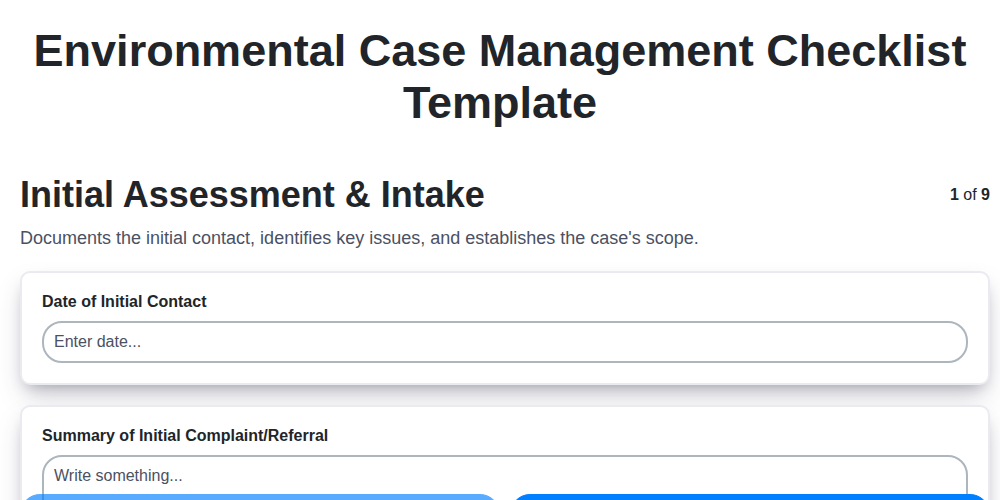
Table of Contents
- Introduction: Why a Checklist is Crucial for Environmental Case Management
- 1. Initial Assessment & Intake: Setting the Foundation
- 2. Regulatory Compliance & Permits: Navigating the Legal Landscape
- 3. Site Investigation & Analysis: Uncovering the Scope of the Problem
- 4. Remediation Planning & Execution: Designing and Implementing Solutions
- 5. Stakeholder Communication & Engagement: Building Trust and Collaboration
- 6. Monitoring & Reporting: Tracking Progress and Ensuring Accountability
- 7. Closure & Long-Term Management: Securing a Sustainable Outcome
- 8. Documentation & Record Keeping: Maintaining a Comprehensive Audit Trail
- 9. Legal & Financial Review: Mitigating Risks and Managing Resources
- 10. Utilizing Technology for Environmental Case Management
- Best Practices for Checklist Implementation
- Customizing Your Environmental Case Management Checklist
- Conclusion: Achieving Environmental Excellence with a Solid Checklist
- Resources & Links
TLDR: Overwhelmed by environmental case management? This checklist template breaks down the entire process - from initial assessment to long-term monitoring - into clear, actionable steps. It ensures regulatory compliance, effective remediation, strong stakeholder communication, and meticulous record-keeping, ultimately simplifying complex projects and minimizing risk.
Introduction: Why a Checklist is Crucial for Environmental Case Management
Environmental case management is a complex undertaking, often involving intricate regulations, potential liabilities, and long-term responsibilities. Successfully navigating these cases demands meticulous attention to detail and a systematic approach. That's where a robust checklist becomes indispensable. Think of it as your roadmap, ensuring no crucial step is overlooked, deadlines are met, and compliance is maintained throughout the entire process. Without a well-structured checklist, projects can easily spiral into costly delays, regulatory penalties, and even legal challenges. This template is designed to be a guide, helping you streamline workflows, minimize risk, and ultimately, protect both the environment and your organization. It's not just about ticking boxes; it's about ensuring a comprehensive and defensible environmental management strategy.
1. Initial Assessment & Intake: Setting the Foundation
The journey to successful environmental case management begins with a thorough initial assessment and intake process. This crucial first step lays the groundwork for every subsequent action and determines the scope and complexity of the project. It's more than just gathering information; it's about understanding the history, potential risks, and the stakeholders involved.
Here's what this phase should encompass:
- Client Interview & Background Review: A detailed discussion with the client is essential to understand the nature of the environmental concern, its history, and their goals. Reviewing any existing documentation (past assessments, complaints, permits) is equally important.
- Preliminary Site Reconnaissance: A brief on-site visit (if applicable) allows for a visual assessment of the area, identifying potential sources of contamination and observing site conditions. This isn't a comprehensive investigation, but a 'first look'.
- Data Gathering & Review: Collect publicly available information like historical aerial photos, property records, and environmental databases. This helps build a preliminary understanding of past land uses and potential contamination sources.
- Risk Assessment (Initial): Conduct an initial, high-level risk assessment to identify potential hazards and prioritize areas of concern. This informs the planning of further investigation.
- Define Project Scope & Objectives: Clearly define the scope of work, objectives, and expected outcomes with the client. This ensures everyone is aligned on the goals of the case management process.
A well-executed initial assessment minimizes wasted effort later on, allowing for a targeted and efficient approach to environmental case management.
2. Regulatory Compliance & Permits: Navigating the Legal Landscape
Environmental case management frequently involves a complex web of local, state, and federal regulations. Failing to adhere to these requirements can lead to significant penalties, project delays, and reputational damage. This section focuses on ensuring regulatory compliance and obtaining the necessary permits throughout your environmental case.
Key Considerations:
- Identify Applicable Regulations: Begin by meticulously identifying all relevant environmental regulations. This includes clean water acts, hazardous waste management laws, air quality standards, and brownfield redevelopment programs. Utilize online resources, consult with legal counsel specializing in environmental law, and engage with regulatory agencies.
- Permit Requirements: Determine which permits are required for activities like groundwater monitoring, soil excavation, or remediation. Typical permits might involve discharge permits (NPDES), air permits, hazardous waste handling permits, and remediation permits.
- Application Process: Understand the specific application process for each required permit. This often involves detailed site descriptions, proposed work plans, and impact assessments. Be prepared to address potential concerns raised by regulatory agencies.
- Public Notice & Comment: Many permit applications require a public notice and comment period. Actively engage with community members and address their concerns to facilitate a smoother approval process.
- Record Keeping: Maintain meticulous records of all communications with regulatory agencies, permit applications, approvals, and any associated correspondence. This documentation is vital for audits and potential future challenges.
- Staying Updated: Environmental regulations are subject to change. Establish a system to stay informed about updates and amendments to ensure continued compliance.
Effective management of this stage will minimize risk and contribute to a successful project outcome.
3. Site Investigation & Analysis: Uncovering the Scope of the Problem
This phase is critical; it moves beyond the initial assessment to truly understand the nature and extent of contamination. A thorough site investigation and analysis lays the groundwork for effective remediation planning. It involves a systematic process of gathering data to define the problem, not just acknowledging its existence.
Here's what a robust site investigation typically includes:
- Detailed Site History Review: Expanding on the initial assessment, this delves deeper into past land use, industrial activities, and potential sources of contamination. Historical aerial photographs, property records, and interviews with former employees or residents can be invaluable.
- Subsurface Exploration: This involves drilling boreholes, installing monitoring wells, and conducting soil and groundwater sampling. The number and placement of these points are based on the potential contaminants, geological conditions, and suspected migration pathways.
- Contaminant Identification & Quantification: Laboratory analysis of collected samples determines what contaminants are present and how much is present. This requires selecting appropriate analytical methods and adhering to strict quality control procedures.
- Hydrogeological Assessment: Understanding groundwater flow direction and velocity is essential. This dictates how contaminants are likely to migrate and impacts the design of remediation strategies.
- Surface Water Assessment (if applicable): For sites near surface water bodies, sampling and analysis of sediments and water are needed to evaluate potential impacts.
- Risk Assessment (Preliminary): While a full risk assessment might be a later stage activity, an initial, preliminary assessment is beneficial at this point to identify potential exposure pathways and prioritize remediation efforts.
The data generated from this phase are synthesized into a conceptual site model (CSM). This visual representation details the contaminants, their sources, migration pathways, receptors, and potential risks. The CSM serves as a living document, updated as new information becomes available, and guides subsequent decisions regarding remediation strategies. Without a comprehensive understanding gleaned from this investigation, remediation efforts risk being ineffective, costly, and potentially miss critical aspects of the contamination.
4. Remediation Planning & Execution: Designing and Implementing Solutions
This phase moves beyond assessment and dives into the crucial task of actively cleaning up the contaminated site. A robust remediation plan is the backbone of this stage and needs to be meticulously developed. It begins with a comprehensive review of the Site Investigation & Analysis findings - understanding the contaminants present, their distribution, and the potential risks they pose.
Developing the Remediation Plan: This isn't a one-size-fits-all process. The plan must be tailored to the specifics of the site, considering:
- Technology Selection: Evaluating various remediation technologies (e.g., soil vapor extraction, bioremediation, excavation and disposal, chemical oxidation) and selecting the most appropriate based on contaminant type, site conditions, and regulatory requirements. A detailed cost-benefit analysis is essential.
- Performance Objectives: Defining clear, measurable objectives for the remediation process. What level of contaminant reduction is required? What timelines are realistic?
- Pilot Testing (Highly Recommended): Before full-scale implementation, pilot tests help validate the chosen technology's effectiveness and optimize parameters for the main cleanup effort. This minimizes risks and potential cost overruns.
- Health and Safety Plan: Prioritizing worker safety and public health is paramount. A detailed health and safety plan, covering potential hazards and mitigation strategies, is a mandatory component.
Execution & Quality Control: Once the plan is approved, the remediation work begins. Rigorous quality control is vital to ensure the process adheres to the plan and achieves the desired results. This includes:
- Regular Inspections: Monitoring the progress of work and verifying compliance with the remediation plan.
- Sampling and Analysis: Performing ongoing sampling to track contaminant levels and assess the effectiveness of the remediation techniques.
- Adaptive Management: The remediation process isn't static. Continuous monitoring and analysis should inform adjustments to the plan as needed - an adaptive management approach ensures optimal performance.
5. Stakeholder Communication & Engagement: Building Trust and Collaboration
Environmental case management isn't just about technical expertise; it's fundamentally about building and maintaining relationships. Effective stakeholder communication and engagement are absolutely critical for successful remediation and long-term sustainability. Ignoring or mishandling this aspect can lead to delays, legal challenges, reputational damage, and ultimately, a less effective outcome.
Who are your stakeholders? They're likely a diverse group, including local residents, community leaders, government agencies (EPA, state environmental agencies), indigenous communities (if applicable), potential future property owners, and even businesses potentially impacted by the remediation efforts.
Why is engagement so important?
- Builds Trust: Transparency fosters trust. Openly communicating about the environmental concerns, planned actions, and potential impacts demonstrates respect for the community.
- Reduces Conflict: Addressing concerns early and proactively minimizes potential disputes and delays.
- Gathers Valuable Insights: Stakeholders often possess local knowledge and perspectives that can inform remediation strategies.
- Ensures Community Acceptance: Successful remediation requires community buy-in and cooperation.
- Mitigates Risk: Early engagement helps identify and address potential issues that might otherwise escalate.
Key Engagement Strategies:
- Public Meetings: Provide updates, answer questions, and solicit feedback in a public forum.
- Fact Sheets & Newsletters: Regularly disseminate information about the project's progress and any relevant updates.
- Dedicated Website/Online Portal: Create a central hub for information, documents, and contact details.
- One-on-One Meetings: Engage with key stakeholders to address specific concerns or build rapport.
- Community Advisory Groups (CAGs): Establish a formal group of stakeholders to provide ongoing input.
- Plain Language Communication: Avoid technical jargon and explain complex issues in an accessible manner.
Remember, stakeholder engagement isn't a one-time event - it's an ongoing process that requires consistent effort and responsiveness.
6. Monitoring & Reporting: Tracking Progress and Ensuring Accountability
Consistent and robust monitoring and reporting are crucial for demonstrating the effectiveness of your environmental case management efforts and maintaining transparency with all stakeholders. This phase extends far beyond simply collecting data; it's about analyzing trends, identifying potential issues, and adjusting your strategy as needed.
Here's what's involved:
- Establish Baseline Data: Clearly define the initial conditions and parameters against which progress will be measured. This includes soil/water quality data, ecological assessments, and any relevant community health indicators.
- Define Monitoring Frequency & Methods: Determine how often monitoring will occur and what techniques will be used. Consider regulatory requirements, the nature of the contamination, and the sensitivity of the surrounding environment.
- Data Validation & Quality Assurance: Implement rigorous quality control measures to ensure the accuracy and reliability of the data collected. This might involve laboratory audits, field instrument calibration, and data review protocols.
- Regular Progress Reporting: Generate reports at defined intervals (e.g., monthly, quarterly, annually) summarizing monitoring results, progress towards remediation goals, and any deviations from the remediation plan.
- Visualization and Interpretation: Present data in a clear and understandable format, using graphs, charts, and maps to highlight trends and potential areas of concern. Don't just present numbers - provide context and analysis.
- Adaptive Management: Utilize monitoring data to evaluate the effectiveness of remediation actions and make necessary adjustments to the remediation plan. This demonstrates a proactive and responsive approach.
- Regulatory Reporting: Ensure compliance with all applicable regulatory reporting requirements, submitting data and reports to the relevant agencies within specified timelines.
- Stakeholder Communication: Share monitoring results with stakeholders in a timely and accessible manner, promoting transparency and fostering trust.
7. Closure & Long-Term Management: Securing a Sustainable Outcome
Reaching closure on an environmental case isn't simply about stopping active remediation efforts. It's about ensuring the site remains safe and protective of human health and the environment for the foreseeable future. This phase demands a proactive and carefully considered approach to long-term management.
Key steps in this critical phase include:
- Establishing Institutional Controls: These are legal and administrative controls that restrict activities at the site to prevent exposure to residual contamination. Examples include deed restrictions, land use covenants, and groundwater use restrictions. Clearly defined and enforceable, they're essential for maintaining the integrity of the remediation.
- Developing a Long-Term Monitoring Plan: Continued monitoring of soil, groundwater, and potentially air quality is often required to confirm the effectiveness of the remediation and to detect any unforeseen changes over time. The frequency and parameters of monitoring should be determined based on site-specific conditions and regulatory requirements.
- Risk Assessment Review & Updates: Regularly review the original risk assessment and update it as needed based on monitoring data and any changes in land use or regulatory standards.
- Financial Assurance: Ensuring sufficient funds are available for ongoing monitoring, maintenance, and potential future remediation needs is vital. This often involves setting up a dedicated trust fund or providing a financial guarantee.
- Site Security: Implement measures to prevent unauthorized access to the site and potential disturbance of remediation efforts.
- Periodic Review and Adaptation: Long-term management isn't static. The plan should be reviewed periodically (e.g., every 5-10 years) and adapted as necessary based on monitoring results, changes in regulations, and advancements in remediation technologies.
Effective closure and long-term management not only safeguards human health and the environment but also demonstrates a commitment to responsible environmental stewardship.
8. Documentation & Record Keeping: Maintaining a Comprehensive Audit Trail
Environmental case management thrives on meticulous documentation. A robust record-keeping system isn't just good practice; it's essential for demonstrating due diligence, ensuring regulatory compliance, and providing a clear history of actions taken throughout the entire process. This section outlines critical documentation requirements.
What to Document:
- Initial Assessment & Intake Records: All information gathered during the initial assessment, including interviews, observations, and preliminary data.
- Regulatory Correspondence: Copies of all permits, notices of intent, approvals, and communications with regulatory agencies.
- Site Investigation Data: Detailed records of sampling locations, analytical methods, lab reports, geophysical surveys, and all field observations. Chain of custody documentation is absolutely critical here.
- Remediation Plans & Modifications: Original plans, any subsequent revisions, contractor proposals, and as-built drawings.
- Communication Logs: Records of all interactions with stakeholders - community members, government officials, property owners, etc. Include dates, attendees, topics discussed, and any actions agreed upon.
- Monitoring Results: Data from groundwater, soil, air, and surface water monitoring events. Ensure data is linked to specific monitoring well/location identifiers.
- Closure Reports: Detailed documentation outlining final site conditions, confirmation sampling results, and closure activities.
- Financial Records: Invoices, payments, budgets, and cost tracking related to all phases of the project.
- Legal Agreements: Copies of contracts, easements, and any legal documents impacting the site.
Best Practices:
- Centralized System: Implement a centralized database or electronic document management system (EDMS) for easy access and organization.
- Version Control: Implement strict version control to track changes to plans, reports, and other documents.
- Accessibility: Ensure all personnel involved have appropriate access to relevant documentation.
- Retention Policy: Establish a clear document retention policy in accordance with legal and regulatory requirements.
- Regular Audits: Conduct periodic audits of documentation to verify completeness and accuracy.
Accurate and comprehensive record keeping forms the backbone of a successful environmental case management strategy, offering transparency, accountability, and peace of mind.
9. Legal & Financial Review: Mitigating Risks and Managing Resources
Environmental case management isn't just about the science and remediation - it's about minimizing legal exposure and ensuring responsible financial stewardship. This crucial phase involves a thorough review to protect your organization and optimize resource allocation.
Here's what a robust Legal & Financial Review entails:
- Liability Assessment: Scrutinize potential legal liabilities associated with the contamination, including past, present, and future obligations. This includes identifying potentially responsible parties (PRPs) and evaluating contribution defense strategies.
- Contractual Review: Examine contracts relevant to the site, such as lease agreements, purchase agreements, and operating permits, to understand liabilities and potential recovery options.
- Insurance Coverage: Identify and assess available insurance policies that may cover remediation costs or legal defense expenses.
- Budgeting & Cost Control: Review and refine project budgets, track expenses meticulously, and identify opportunities for cost optimization throughout the remediation process. This includes analyzing bids from contractors and consultants.
- Financial Modeling: Develop financial models to forecast long-term costs associated with operation, maintenance, and potential future remediation.
- Regulatory Updates: Continuously monitor changes in environmental regulations and assess their potential financial impact on the project.
- Risk Transfer Strategies: Explore options for transferring risk, such as indemnity agreements or surety bonds, where appropriate.
- Tax Implications: Understand the tax implications of remediation expenses and explore potential tax credits or incentives.
A proactive Legal & Financial Review ensures you are prepared for unexpected challenges, maximizes recovery opportunities, and demonstrates a commitment to responsible environmental management. Ignoring this step can lead to costly litigation, regulatory penalties, and reputational damage.
10. Utilizing Technology for Environmental Case Management
The sheer volume of data and complex processes involved in environmental case management can easily become overwhelming. Thankfully, technology offers powerful solutions to streamline workflows, improve accuracy, and enhance collaboration. Moving beyond spreadsheets and paper files is no longer optional - it's essential for efficient and defensible case management.
Several software platforms are specifically designed for environmental professionals. These typically offer features such as:
- Centralized Data Storage: Say goodbye to scattered files. A robust system creates a single source of truth for all case-related information.
- Automated Workflows: Trigger actions based on specific events (e.g., automatic notifications when a sample result exceeds a threshold).
- GIS Integration: Visualizing data on maps provides crucial context and helps identify patterns and trends.
- Mobile Accessibility: Field teams can collect data, access protocols, and update records directly from the site, in real-time.
- Reporting & Analytics: Generate customized reports effortlessly and identify areas for improvement.
- Secure Collaboration: Facilitate communication and document sharing among team members, consultants, and regulatory agencies.
Investing in the right technology can significantly reduce administrative burdens, minimize errors, and ultimately lead to better environmental outcomes. Researching and selecting a platform that aligns with your specific needs and budget is a crucial step in optimizing your environmental case management processes.
Best Practices for Checklist Implementation
Implementing an Environmental Case Management Checklist Template effectively requires more than just ticking boxes. It's about embedding the process into your workflow and ensuring continuous improvement. Here are some best practices to maximize its value:
- Training is Key: Ensure all team members, regardless of their role, understand the checklist's purpose, each step's significance, and how to properly document their actions. Regular refresher training is also valuable.
- Customize for Context: While our template provides a strong foundation, environmental cases vary widely. Don't hesitate to modify the checklist to reflect site-specific conditions, regulatory requirements, and project needs. Document any customizations made.
- Integrate with Existing Systems: Where possible, link the checklist to your existing case management software, GIS platforms, or data management systems. This streamlines data entry and improves accessibility.
- Assign Clear Responsibilities: Clearly define who is responsible for completing each task on the checklist. This accountability helps prevent steps from being overlooked.
- Utilize Checklists as Living Documents: Regularly review and update the checklist to incorporate lessons learned from previous cases, changes in regulations, or advancements in remediation technologies.
- Promote a Culture of Transparency: Encourage open communication about checklist findings and any challenges encountered. This fosters a proactive approach to environmental management.
- Quality Control Reviews: Implement periodic quality control reviews of completed checklists to ensure accuracy, completeness, and adherence to best practices.
- Feedback Loop: Establish a system for team members to provide feedback on the checklist's usability and effectiveness. Use this feedback to drive continuous improvement.
Customizing Your Environmental Case Management Checklist
While our template provides a robust framework, environmental cases are rarely one-size-fits-all. Customization is key to ensuring your checklist accurately reflects the specific complexities of each project. Consider these points when tailoring it:
- Site-Specific Risks: Add steps addressing unique contaminants or geological conditions present at your site. For example, if dealing with PFAS, include dedicated testing and disposal protocols.
- Regulatory Nuances: Local, state, and federal regulations vary. Integrate checkpoints for specific permit requirements or reporting deadlines relevant to your jurisdiction.
- Project Scope: A Brownfield remediation requires a different focus than a spill cleanup. Adjust the checklist to reflect the scale and nature of the project.
- Team Roles & Responsibilities: Clearly define who is responsible for each task and adjust the checklist to facilitate accountability.
- Technology Integration: If you're using environmental data management software, incorporate steps for data entry, quality assurance, and reporting directly into the checklist.
- Iteration & Improvement: Treat your checklist as a living document. Review and update it regularly based on lessons learned and changes in regulations.
Conclusion: Achieving Environmental Excellence with a Solid Checklist
Ultimately, effective environmental case management isn't about luck; it's about diligence and a systematic approach. This checklist template provides a robust framework to navigate the complexities of environmental remediation, from initial assessment to long-term management. By consistently following these steps, organizations can minimize risks, ensure regulatory compliance, protect human health and the environment, and build a reputation for environmental stewardship. Remember, a well-maintained checklist isn't just a document; it's a testament to your commitment to environmental excellence and a valuable tool for ensuring a successful and sustainable remediation process. Regularly review and update your checklist to reflect evolving regulations and lessons learned, further solidifying your environmental management capabilities.
Resources & Links
- United States Environmental Protection Agency (EPA): The EPA's website provides comprehensive information on environmental regulations, guidelines, and resources related to various environmental issues and remediation strategies. A crucial resource for understanding legal requirements.
- Washington Department of Ecology: (Example State Agency) State environmental agencies provide detailed guidance on local regulations, permitting requirements, and best practices for environmental case management. Replace with your relevant state agency.
- American Society for Quality (ASQ): ASQ offers information and training on quality management principles, which are highly applicable to creating and implementing effective checklists and process management for environmental case management.
- International Organization for Standardization (ISO): ISO standards, particularly ISO 14001 (Environmental Management Systems), provide a framework for establishing and maintaining a robust environmental management system, which can be integrated with checklist implementation.
- American Industrial Hygiene Association (AIHA: AIHA provides resources and expertise related to industrial hygiene and environmental health and safety, important considerations for site investigation and remediation planning.
- SRM Materials: (Example Remediation Service) Links to companies specializing in environmental remediation can provide insights into best practices and technological advancements in the field. Replace with relevant remediation service providers.
- Enviroinformatics: (Example Environmental Software Provider) Enviroinformatics and similar providers showcase software solutions designed for environmental data management, reporting, and regulatory compliance - vital for modern case management. Replace with relevant software providers.
- Texas Railroad Commission: (Example Agency with Specific Focus) Agencies focused on specific environmental concerns (e.g., oil & gas, mining) offer tailored regulations and guidance. Substitute with relevant agencies.
- American Public Works Association (APWA): APWA focuses on public infrastructure and environmental protection, offering insights into long-term management and closure strategies.
- Earth911: Earth911 provides information on recycling, waste reduction, and environmental responsibility, useful for remediation and long-term management considerations.
Frequently Asked Questions
Where can I find more resources on Environmental Case Management?
Several resources are available. Search for industry-specific guides from regulatory agencies (like the EPA), professional organizations (like the Association of Environmental Professionals), and online training courses dedicated to ECM.
Found this Article helpful?
Comments
There are no comments yet. Be the first to add one!
Case Management Solution Demo
Streamline your casework & improve outcomes! ChecklistGuro centralizes case details, tasks, & communication. Enhance efficiency, ensure compliance, & deliver exceptional service. Manage it all with our Work OS.
Related Articles
Streamline Your Deals: The Ultimate Real Estate Case Management Checklist Template
Streamline Your Debt Collection: A Case Management Checklist Template
Cybersecurity Incident Response: Your Checklist Template for Success
Streamline Your Case Management: The Ultimate Checklist Template
Mastering IP: Your Intellectual Property Case Management Checklist Template
HR Case Management Checklist Template: Your Guide to Fair & Compliant Investigations
Streamlining Veteran Care: Your Comprehensive Case Management Checklist Template
Mastering Investigations: Your Case Management Checklist Template Guide
We can do it Together
Need help with
Case Management?
Have a question? We're here to help. Please submit your inquiry, and we'll respond promptly.