Navigating Family Law: Your Essential Case Management Checklist Template
Published: 19/12/2025 22:00 Updated: 20/12/2025 12:11
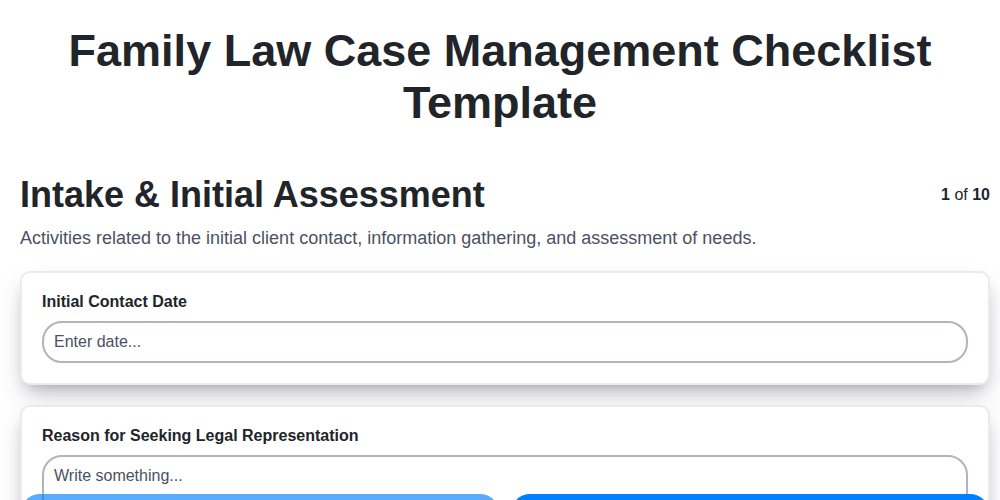
Table of Contents
- Introduction: Why a Family Law Case Management Checklist is Crucial
- 1. Intake & Initial Assessment: Setting the Foundation
- 2. Client Information & Documentation: Gathering Essential Details
- 3. Legal Research & Strategy: Defining Your Approach
- 4. Discovery & Evidence Management: Unearthing the Facts
- 5. Court Filings & Deadlines: Staying on Track
- 6. Negotiations & Mediation: Exploring Resolution Options
- 7. Litigation & Trial Preparation: Readying for Court
- 8. Financial Management & Support: Tracking Assets and Obligations
- 9. Communication & Reporting: Keeping Everyone Informed
- 10. Case Closure & Review: Finalizing and Learning
- Template Download: Your Family Law Case Management Checklist
- Pro Tips for Efficient Family Law Case Management
- Disclaimer: Legal Advice and Checklist Limitations
- Resources & Links
TLDR: Feeling overwhelmed by your family law case? This checklist template breaks down every step - from initial assessment to case closure - so you don't miss crucial deadlines or important details. It's your roadmap to staying organized and confident throughout a complex legal process.
Introduction: Why a Family Law Case Management Checklist is Crucial
Family law cases are notoriously complex, emotionally charged, and often involve a significant amount of moving parts. From initial consultations to final orders, navigating the process can be overwhelming - both for clients and for legal professionals. A single missed deadline, a forgotten document, or a miscommunication can have serious consequences, potentially impacting outcomes and adding unnecessary stress. That's where a comprehensive family law case management checklist becomes absolutely crucial. It's more than just a to-do list; it's a structured framework designed to ensure every critical step is addressed, deadlines are met, and client needs are consistently prioritized. This level of organization not only increases efficiency and reduces errors but also fosters trust and transparency with your clients, ultimately contributing to a more positive and successful outcome for everyone involved.
1. Intake & Initial Assessment: Setting the Foundation
The initial intake and assessment phase is absolutely crucial for a successful family law case. It's more than just gathering basic information; it's about building trust, understanding the client's goals, and identifying potential challenges early on. During this stage, we prioritize a thorough discussion about the client's situation, including the reasons they are seeking legal assistance, their desired outcomes, and any immediate concerns. We also meticulously document key details like the family dynamics, history of conflict, and any safety concerns (such as domestic violence). This initial assessment informs our overall strategy and ensures we're equipped to provide the most appropriate and effective representation. We'll also briefly explain the legal process and our firm's procedures, setting clear expectations from the outset. This groundwork is vital for building a strong attorney-client relationship and laying the foundation for a successful case.
2. Client Information & Documentation: Gathering Essential Details
This stage is the bedrock of a successful family law case. Thoroughness here prevents countless headaches later. We need a complete and accurate picture of your situation. This means collecting a wide range of documents and information, including (but not limited to):
- Personal Information: Full legal names, dates of birth, social security numbers, current and previous addresses for all parties involved, and contact information.
- Marriage/Relationship History: Date and place of marriage (or commencement of the relationship), any previous marriages or partnerships, divorce decrees, and related documents.
- Children's Information: Names, dates of birth, social security numbers, current living arrangements, and any relevant medical or educational records.
- Financial Records: Pay stubs, tax returns (federal and state), bank statements, investment account statements, retirement account statements, loan documents, property deeds, vehicle titles, and business ownership documents.
- Property Details: Appraisals, mortgage statements, rental agreements, and any documentation related to real estate or personal property.
- Supporting Documentation: Emails, text messages, photographs, and any other communications or evidence relevant to the case.
- Prior Legal History: Records of any previous legal proceedings related to the family or individuals involved.
We will provide you with a detailed document request list and will guide you through the process of gathering these materials. Remember, honesty and transparency are paramount. Withholding information can significantly impact your case. Don't hesitate to ask questions if you're unsure about what to provide.
3. Legal Research & Strategy: Defining Your Approach
This stage is the foundation upon which your entire family law case will be built. It's more than just Googling statutes; it's a deep dive into relevant case law, statutes, and legal precedent to understand the nuances of your client's situation and chart the most effective course of action.
Key Steps:
- Thorough Legal Research: Go beyond the surface. Understand the applicable state laws related to divorce, custody, support, property division, and any other relevant issues. Utilize legal databases like Westlaw or LexisNexis, and consult with senior colleagues if necessary.
- Case Law Analysis: Analyze similar cases to identify potential arguments, outcomes, and possible challenges. How have courts ruled on similar facts and legal issues in the past? Understanding precedent is crucial.
- Developing a Strategic Plan: Based on your research, formulate a clear strategy aligned with your client's goals. This includes identifying key strengths and weaknesses, anticipating the opposing party's arguments, and outlining a roadmap for achieving the desired outcome.
- Client Communication & Goal Alignment: Regularly discuss your legal research and strategic plan with your client, ensuring they understand the reasoning behind your approach and remain on board with the overall direction. This fosters trust and sets realistic expectations.
- Consider Alternative Dispute Resolution (ADR): Evaluate the potential benefits of mediation or collaborative law early on. Research the local ADR resources and understand the implications of pursuing these options.
- Risk Assessment: Identify potential legal pitfalls and develop strategies to mitigate risks throughout the case.
4. Discovery & Evidence Management: Unearthing the Facts
Discovery is a critical phase in any family law case, often determining the strength of your position and influencing the final outcome. It's the formal process of gathering information from the other party and third parties relevant to the case. Effectively managing this process is paramount.
Here's what's involved and key considerations for a streamlined approach:
- Identifying Relevant Information: Begin by clearly defining the scope of information needed. What facts are essential to proving your client's case? This includes financial records, communication history, parenting schedules, and any other documentation supporting their claims.
- Formal Discovery Requests: This encompasses a range of tools:
- Interrogatories: Written questions requiring detailed answers under oath.
- Requests for Production of Documents: Demands for specific documents and electronically stored information.
- Depositions: Oral examinations of parties and witnesses under oath.
- Subpoenas: Orders compelling third parties to produce documents or testify.
- Responding to Discovery Requests: Thoroughly review all requests, gather responsive documents, and formulate accurate and complete answers. Be mindful of privilege (attorney-client, spousal) and redact sensitive information appropriately.
- Evidence Organization: Establish a robust system to organize and track all discovered documents and materials. This could involve digital folders, spreadsheets, or specialized e-discovery software. Labeling and indexing are crucial for efficient retrieval.
- Witness Identification & Preparation: Identify potential witnesses and begin the process of preparing them for depositions or trial testimony.
- Managing Electronically Stored Information (ESI): Increasingly, relevant information exists electronically (emails, texts, social media). Be prepared to address ESI discovery and preservation requirements.
- Objecting to Improper Requests: Not all discovery requests are appropriate. Be ready to object to overly broad, burdensome, or irrelevant requests.
- Motion to Compel: If the other party fails to respond adequately, a Motion to Compel may be necessary to obtain the requested information.
Properly executed discovery and evidence management not only strengthens your case but also prevents delays and reduces the risk of surprises at trial.
5. Court Filings & Deadlines: Staying on Track
Navigating court filings and deadlines is arguably the most crucial - and often most stressful - aspect of family law case management. Missing a deadline can have serious consequences, potentially impacting your client's case significantly. This is where meticulous organization and proactive planning are absolutely essential.
Here's a breakdown of how to effectively manage this critical area:
- Create a Centralized Calendar: Don't rely solely on memory. Utilize a digital calendar (like Google Calendar, Outlook, or Clio) and immediately input every deadline as soon as it's known. Include reminders well in advance - a week, a few days, and a final 24-hour notification is a good starting point.
- Docket Tracking: Maintain a detailed docket, a spreadsheet or dedicated software, listing every filing, hearing, and deadline. Include the court, case number, filing type, due date, and any specific requirements (e.g., number of copies, format).
- Local Rules Mastery: Each court has its own local rules. Familiarize yourself with these before a deadline approaches. Rules on formatting, filing methods (e-filing vs. physical), and required language can vary significantly. Ignorance of the rules is not an excuse.
- E-Filing Proficiency: If your jurisdiction offers electronic filing (e-filing), become proficient with the system. Understanding its nuances-including confirmation receipts and potential error messages-is vital.
- Deadline Anticipation & Buffer Time: Don't just react to deadlines; anticipate them. Factor in time for drafting, review, and potential revisions. A buffer allows for unexpected delays.
- Regular Docket Reviews: Dedicate time - ideally weekly - to review your entire docket. Confirm deadlines are accurate, filings are progressing, and any potential roadblocks are identified early.
By prioritizing these strategies, you can minimize the risk of missed deadlines and ensure your client's case progresses smoothly through the legal process.
6. Negotiations & Mediation: Exploring Resolution Options
Often, the most effective and cost-efficient path to resolving a family law case lies outside the courtroom. This phase focuses on exploring those alternatives - primarily negotiation and mediation - to reach a mutually agreeable outcome.
Negotiation: Direct communication between parties (often through their attorneys) is a crucial first step. This involves exchanging information, understanding each other's positions, and identifying potential areas of compromise. A skilled lawyer will guide you through this process, advocating for your interests while seeking realistic solutions. Key activities include:
- Drafting Settlement Proposals: Clearly outlining your desired outcomes in a formal document.
- Responding to Counteroffers: Evaluating the other party's offers and formulating appropriate responses.
- Identifying Common Ground: Finding areas of agreement that can form the basis for a comprehensive settlement.
Mediation: If direct negotiation proves challenging, mediation offers a structured process facilitated by a neutral third party - the mediator. The mediator's role is not to decide the case but to guide the conversation, help parties understand each other's perspectives, and facilitate a resolution. Benefits of mediation include:
- Confidentiality: Discussions remain private.
- Control: You and the other party retain control over the outcome.
- Cost Savings: Generally less expensive than litigation.
- Improved Communication: Can foster a more amicable and respectful dialogue.
Important Considerations:
- Preparation is Key: Thoroughly understand your case and your desired outcomes before entering negotiations or mediation.
- Realistic Expectations: Be prepared to compromise and consider all possible outcomes.
- Legal Advice: Always consult with your attorney throughout the negotiation and mediation process to ensure your rights are protected.
7. Litigation & Trial Preparation: Readying for Court
When negotiation and mediation fail, litigation becomes the necessary path. This phase demands meticulous preparation and a sharp focus on detail. It's not just about knowing the law; it's about showcasing it persuasively in court.
Here's what we focus on:
- Witness Preparation: Identifying key witnesses (both favorable and potentially adverse) and conducting thorough interviews. This includes preparing witnesses for direct and cross-examination, ensuring they understand courtroom decorum, and refining their testimony.
- Exhibit Organization & Management: A chaotic exhibit list can sink your case. We meticulously organize all physical and digital evidence, creating clear summaries and ensuring accessibility for court presentation. This includes labeling, numbering, and creating demonstrative exhibits where appropriate.
- Motion Practice: Preparing and filing motions to address legal issues before trial - perhaps to exclude evidence, clarify the scope of discovery, or challenge a procedural ruling. We anticipate potential motions from the opposing party and prepare responses accordingly.
- Trial Brief Development: Crafting a comprehensive trial brief outlining the legal arguments, factual basis, and desired outcome of the case. This serves as a roadmap for the trial and helps the court understand your position.
- Jury Selection (if applicable): Developing a strategy for jury selection, identifying potential biases, and crafting questions to ensure a fair and impartial jury.
- Direct & Cross Examination Outline: Building detailed outlines for direct and cross-examination of all witnesses, ensuring we cover critical points and anticipate opposing counsel's arguments.
- Mock Trial (Optional): Conducting a mock trial run-through to identify weaknesses in our presentation and refine our strategy.
This phase demands a heightened level of organization and precision. We're not just preparing for court; we're actively building the strongest possible case.
8. Financial Management & Support: Tracking Assets and Obligations
Family law cases are frequently complex webs of financial considerations. Properly managing these intricacies is crucial for a successful outcome and can prevent significant stress for your client. This section of the case management checklist focuses on meticulous tracking and understanding of all financial aspects.
Key Tasks:
- Asset Identification & Valuation: Compile a comprehensive list of all assets - real estate, vehicles, bank accounts, investments, retirement funds, business interests, personal property, and more. Obtain accurate valuations for each, utilizing appraisals, bank statements, brokerage reports, and other relevant documentation.
- Debt Assessment: Similarly, meticulously list all debts - mortgages, loans, credit card debt, taxes, and any other outstanding obligations. Gather supporting documentation to verify amounts and terms.
- Income Verification: Gather and verify income for all relevant parties. This includes pay stubs, W-2s, tax returns, business profit and loss statements, and any other sources of income.
- Support Calculation & Analysis: Conduct thorough support calculations (child support and spousal support/alimony) based on applicable state guidelines. Analyze potential outcomes and discuss them with the client, explaining the factors involved.
- Financial Affidavit Preparation & Review: Assist the client in preparing accurate and complete financial affidavits. Review the affidavit carefully for errors or omissions.
- Tracing and Documentation of Funds: If there are allegations of hidden assets or dissipation of funds, diligently investigate and document all transactions.
- Expert Consultation (if needed): Determine if expert assistance (e.g., forensic accountant, certified divorce financial analyst) is required to analyze complex financial matters.
- Regular Updates: Maintain updated financial summaries and projections throughout the case to reflect changes and inform strategy.
Proper financial management isn't just about compliance; it's about advocating for your client's best interests and ensuring a fair and equitable resolution.
9. Communication & Reporting: Keeping Everyone Informed
Effective communication is the bedrock of a successful family law case. It's not just about keeping your client in the loop; it's also about managing expectations, fostering trust, and ensuring everyone involved understands the progress and potential challenges. This section of the checklist emphasizes proactive and documented communication.
Client Communication: Regularly scheduled updates - weekly or bi-weekly - are crucial. These shouldn't just be about "what happened," but also a review of the case's trajectory, upcoming deadlines, and potential implications. Utilize various methods (phone calls, emails, secure client portals) to cater to your client's preferred style. Document every significant conversation, summarizing key takeaways and agreed-upon actions.
Opposing Counsel/Parties: Maintaining professional and respectful communication with opposing counsel, even in contentious situations, is paramount. All correspondence should be documented, and consider utilizing certified mail or other methods to ensure delivery and create a clear record. When interacting with the opposing party directly (if appropriate and with client permission), meticulous notes are essential.
Internal Team Communication: If you have a team (paralegals, associates), consistent internal communication is vital. This ensures everyone is on the same page regarding deadlines, strategies, and client needs. Utilize shared calendars, task management software, and regular team meetings.
Reporting: Create a system for reporting progress to your client, outlining key milestones achieved, potential roadblocks, and adjustments to strategy. This written documentation protects you and the client, ensuring transparency and providing a clear audit trail. Consider providing summary reports after significant events (e.g., a deposition, mediation).
Checklist Items for this Phase:
- Schedule regular client update meetings/calls.
- Document all communication (client, opposing counsel, parties).
- Utilize secure communication channels.
- Establish internal communication protocols for the team.
- Create and distribute progress reports.
- Confirm client understanding of updates and next steps.
- Maintain a log of all correspondence and communications.
10. Case Closure & Review: Finalizing and Learning
Closing a family law case isn't just about submitting the final paperwork. It's a critical opportunity to ensure all loose ends are tied up and to reflect on the process for both the client and the legal team. This stage involves several key steps:
- Final Order Review: Carefully review the final order or judgment with the client, ensuring they understand all terms and conditions. Address any remaining questions or concerns.
- Document Management & Archiving: Consolidate all case files, both physical and electronic, into a secure and organized system. This includes pleadings, correspondence, discovery responses, financial records, and any other relevant documents. Retain these records according to legal and ethical guidelines.
- Client Debriefing: Conduct a final meeting with the client to discuss the outcome, answer any lingering questions, and confirm their satisfaction (or address any concerns). This is a chance to assess their experience and gather feedback.
- Billing and Accounting: Finalize all billing and ensure accurate record-keeping regarding fees, expenses, and payments.
- Team Review: Conduct an internal review of the case with the legal team. Identify what went well, areas for improvement in strategy or process, and potential lessons learned for future cases. This contributes to continuous professional development.
- Updating Systems: Ensure the case is properly closed in your case management system and that all relevant data is recorded for reporting and analysis.
- Follow-up (If Necessary): In some cases, there may be a need for periodic follow-up to ensure compliance with the final order, particularly concerning financial obligations or parenting plans.
Ultimately, the case closure and review phase isn't just about ending a case; it's about ensuring a positive outcome for the client, strengthening your legal practice, and continually improving your service delivery.
Template Download: Your Family Law Case Management Checklist
Navigating family law cases can feel overwhelming, with countless details and deadlines demanding attention. That's why we've created a comprehensive Family Law Case Management Checklist Template to streamline your workflow and minimize the risk of missed steps.
This template isn't just a list; it's a structured guide, broken down into ten essential phases, each containing key tasks and considerations:
- Intake & Initial Assessment: Initial client meeting checklist, conflict checks, fee agreements.
- Client Information & Documentation: Collecting vital personal and financial data, gathering initial documents.
- Legal Research & Strategy: Researching applicable laws, developing a case strategy, identifying potential issues.
- Discovery & Evidence Management: Drafting discovery requests, organizing documents, managing exhibits.
- Court Filings & Deadlines: Tracking filing deadlines, preparing and submitting pleadings.
- Negotiations & Mediation: Preparing for settlement discussions, mediation preparation.
- Litigation & Trial Preparation: Witness identification, deposition preparation, trial exhibit preparation.
- Financial Management & Support: Gathering financial records, calculating support obligations.
- Communication & Reporting: Maintaining client communication logs, reporting case progress.
- Case Closure & Review: Final orders, case file closure, post-closure review.
Download your free template today!
This template is designed to be adaptable. Feel free to customize it to reflect your firm's specific processes and the unique requirements of each case. It's a valuable tool to ensure accuracy, efficiency, and ultimately, better outcomes for your clients.
Pro Tips for Efficient Family Law Case Management
Family law cases are notoriously complex, emotionally charged, and demanding of meticulous organization. A robust case management system isn't just helpful; it's essential for providing effective client representation and avoiding costly errors. Here's how to elevate your efficiency beyond the basics:
Leverage Technology: Don't be afraid to embrace software! Client relationship management (CRM) tools, dedicated case management platforms, and even advanced calendaring apps can automate tasks like deadline tracking, document organization, and client communication. Many offer secure portals for document sharing, streamlining collaboration.
Standardize Your Intake: A well-structured intake process sets the foundation for the entire case. Use a detailed intake form (and stick to it!) to gather crucial information upfront, minimizing back-and-forth later. Video conferencing for initial consultations can also boost efficiency and build rapport.
Color-Code Everything: Develop a color-coding system for files, documents, and calendar entries. For example, use one color for deadlines, another for discovery-related items, and another for court dates. This visual cue instantly helps prioritize tasks.
Automate Document Assembly: Create templates for frequently used legal documents. Use mail merge or document automation software to populate these templates with client-specific information, significantly reducing drafting time.
Prioritize and Batch Tasks: Don't try to juggle everything at once. Identify high-priority tasks and block out dedicated time to focus solely on them. Batch similar tasks (e.g., responding to discovery requests, reviewing financial documents) to improve concentration and efficiency.
Regularly Review and Update: Your case management plan isn't static. Schedule brief, regular reviews (weekly or bi-weekly) to assess progress, identify bottlenecks, and adjust strategies as needed. This proactive approach keeps you on track.
Disclaimer: Legal Advice and Checklist Limitations
Disclaimer: Legal Advice and Checklist Limitations
Please understand that this checklist is intended as a general guide for family law case management and should not be considered legal advice. Every family law case is unique, with its own specific facts and legal complexities. This template is a starting point and may need to be modified to suit your individual circumstances.
We strongly recommend consulting with a qualified family law attorney for personalized advice and representation. This checklist is not a substitute for professional legal counsel. Using this checklist does not create an attorney-client relationship.
Furthermore, the accuracy and completeness of this checklist are not guaranteed. Laws and procedures change, and while we strive to keep this information updated, there may be discrepancies. Relying solely on this checklist without verifying its accuracy and applicability to your specific situation could have negative consequences. It's your responsibility to ensure compliance with all applicable laws and court rules.
Resources & Links
- American Bar Association (ABA): The ABA provides resources, publications, and continuing legal education on family law topics. Useful for staying up-to-date and accessing model forms.
- State Bar of Texas (Example - Replace with relevant state bar): Most state bar associations have sections dedicated to family law, offering guidance and resources specific to local laws and procedures. This is an example, find the one relevant to your target audience's location.
- Federal Courts Website: Provides access to federal court rules and procedures, relevant for cases involving federal jurisdiction or interstate issues.
- Nolo.com: Offers plain-language legal information and do-it-yourself legal forms, including some related to family law. Useful for clients wanting to understand basic concepts.
- FindLaw: A comprehensive legal website with articles, legal information, and a directory of attorneys. Good for both lawyers and clients seeking information.
- LexisNexis: A subscription-based legal research service. Attorneys will frequently use this for in-depth legal research and case law analysis.
- Westlaw: Similar to LexisNexis, Westlaw is another major legal research service for attorneys. Offers extensive case law and legal analysis.
- Divorce.net: Provides information and resources related to divorce, including articles and a directory of divorce professionals. Can be useful for client education and referrals (though use with caution - review information carefully).
- Family Law Attorney Directory: A directory of family law attorneys across the United States. Helpful for identifying qualified legal professionals. (Consider including a disclaimer about vetting listed attorneys).
- U.S. Department of Justice: Provides information on federal laws and legal resources, particularly relevant for child support or interstate custody issues.
- LawHelp.org: Provides links to legal aid organizations across the United States. A valuable resource for clients with limited financial means.
Frequently Asked Questions
What is a case management checklist and why do I need one in family law?
A case management checklist is a structured document that breaks down all the steps involved in a family law case, from initial filing to potential trial or settlement. It helps you stay organized, track deadlines, ensure nothing falls through the cracks, and ultimately streamline the legal process. It's particularly helpful given the complex timelines and procedural rules in family law.
Is this checklist template designed for a specific type of family law case (e.g., divorce, custody, support)?
The template is designed to be generally applicable to most family law cases, including divorce, legal separation, child custody, child support, and spousal support. However, you're responsible for adapting it to the specifics of your individual situation and the applicable laws in your jurisdiction. Certain cases (like complex asset divisions or domestic violence orders) may require significant customization.
What sections are included in the checklist template?
The template typically includes sections covering initial filings, discovery (gathering information), motions (formal requests to the court), mediation/negotiation, trial preparation, and post-judgment matters. It also includes spaces to track deadlines and relevant court dates.
Can I edit the checklist template to fit my specific needs?
Absolutely! The template is intended to be a starting point. You should feel free to add, remove, or modify items to accurately reflect the particulars of your case and local court rules. Consider adding specific dates, case numbers, attorney contact information, and document names.
What are some important deadlines I should pay close attention to when using the checklist?
Deadlines vary greatly by jurisdiction and the specifics of your case. Common deadlines include responses to pleadings, disclosure requirements, motion filing deadlines, mediation schedules, and trial dates. It is crucial to review the rules of civil procedure and any court orders to determine the precise deadlines that apply to your case.
I'm representing myself (pro se). Is this checklist still useful?
Yes! Pro se litigants especially benefit from using a case management checklist. It can help you understand the process, meet deadlines, and present your case effectively, even without legal representation. It reduces the risk of errors that could negatively impact your case.
What if I miss a deadline listed on the checklist? What should I do?
Missing a deadline can have serious consequences. Immediately notify your attorney (if you have one) and/or the opposing party and the court. You may need to file a motion to request an extension or address the missed deadline, but failure to do so can lead to sanctions or dismissal of your case. It's always better to be proactive.
Where can I find resources for family law in my jurisdiction?
Your state's bar association website is a good starting point. Many courts also have self-help centers or websites with information on family law procedures. You can also consult with a qualified attorney for legal advice specific to your situation.
Found this Article helpful?
Comments
There are no comments yet. Be the first to add one!
Case Management Solution Demo
Streamline your casework & improve outcomes! ChecklistGuro centralizes case details, tasks, & communication. Enhance efficiency, ensure compliance, & deliver exceptional service. Manage it all with our Work OS.
Related Articles
Streamline Your Deals: The Ultimate Real Estate Case Management Checklist Template
Streamline Your Debt Collection: A Case Management Checklist Template
Cybersecurity Incident Response: Your Checklist Template for Success
Streamline Your Case Management: The Ultimate Checklist Template
Mastering IP: Your Intellectual Property Case Management Checklist Template
HR Case Management Checklist Template: Your Guide to Fair & Compliant Investigations
Streamlining Veteran Care: Your Comprehensive Case Management Checklist Template
Mastering Investigations: Your Case Management Checklist Template Guide
We can do it Together
Need help with
Case Management?
Have a question? We're here to help. Please submit your inquiry, and we'll respond promptly.