Fraud Case Management: Your Checklist Template for Success
Published: 12/19/2025 10:00 PM Updated: 12/20/2025 12:24 PM
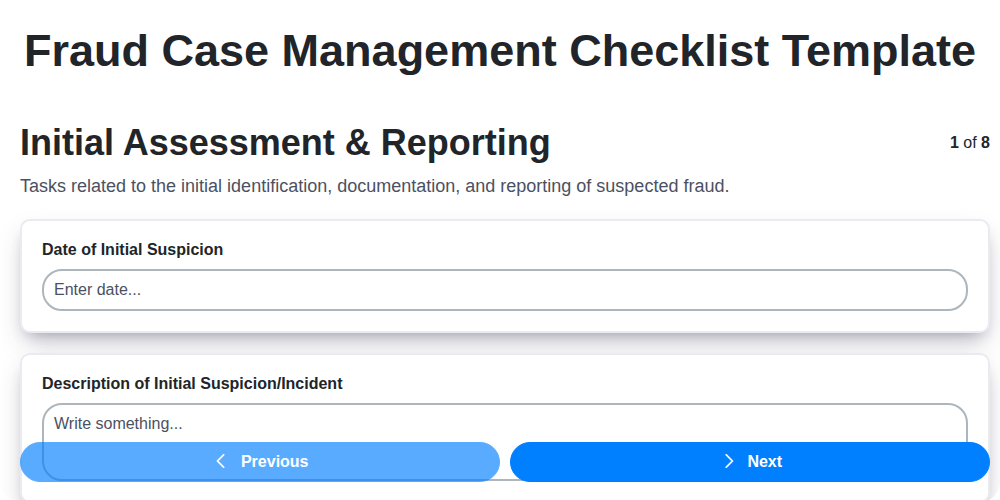
Table of Contents
- Introduction: Why a Fraud Case Management Checklist is Essential
- 1. Initial Assessment & Reporting: Recognizing and Documenting Suspicion
- 2. Evidence Gathering & Preservation: Securing the Digital Trail
- 3. Investigation & Analysis: Uncovering the Scope and Impact
- 4. Legal Review & Consultation: Navigating the Legal Landscape
- 5. Remediation & Recovery: Mitigating Losses and Restoring Systems
- 6. Reporting & Documentation: Maintaining a Clear Audit Trail
- 7. Prevention & Controls: Fortifying Against Future Fraud
- 8. Closure & Audit: Formalizing Case Resolution
- 9. Key Roles & Responsibilities in Fraud Management
- 10. Technology's Role: Tools for Fraud Detection and Management
- 11. Maintaining Confidentiality and Chain of Custody
- 12. Training and Awareness Programs: Empowering Employees
- 13. Continuous Improvement: Refining Your Fraud Management Process
- Resources & Links
TLDR: Facing a fraud case? This checklist template guides you through every step - from initial reporting to closure and audit - ensuring thoroughness, legal compliance, and effective recovery. It's your roadmap to handling fraud cases strategically and minimizing future risk.
Introduction: Why a Fraud Case Management Checklist is Essential
Fraud incidents can strike any organization, regardless of size or industry. The fallout - financial losses, reputational damage, legal liabilities - can be devastating. Reacting effectively and consistently when fraud is suspected or confirmed is paramount, but often, in the chaos of the situation, critical steps can be missed or overlooked. That's where a robust Fraud Case Management Checklist becomes invaluable. This isn't just about ticking boxes; it's about establishing a structured, repeatable process that ensures thoroughness, reduces risk, and protects your organization. A checklist provides a roadmap, guiding your team through the complexities of fraud investigation and management while minimizing errors and ensuring compliance. It promotes accountability, facilitates collaboration, and ultimately, strengthens your organization's defenses against future fraudulent activity.
1. Initial Assessment & Reporting: Recognizing and Documenting Suspicion
The first critical step in fraud case management is recognizing potential fraud and documenting your initial observations. This phase isn't about proving anything; it's about carefully noting what triggered your suspicion.
Key Actions:
- Identify the Trigger: What specific event, transaction, or observation raised your suspicion? Be precise. (e.g., Unusual transaction pattern, anonymous tip, internal audit finding, employee concern).
- Document Initial Observations: Record everything you've noticed, even if it seems insignificant. Include dates, times, individuals involved, and specific details. Use clear, concise language. Avoid making assumptions or conclusions at this stage.
- Immediate Notification: Follow your organization's reporting procedures. Identify the appropriate contact person (e.g., compliance officer, legal counsel, internal audit). Document the date, time, and method of notification (e.g., email, phone call).
- Secure Potential Evidence: Take steps to protect any potential evidence immediately. This might involve restricting access to systems or accounts, or temporarily halting specific processes. Caution: Avoid altering data or making changes that could be misconstrued as tampering.
- Maintain Confidentiality: Treat the matter with utmost confidentiality. Discuss the potential fraud only with authorized personnel who need to know.
Example Documentation Snippet:
Date: 2024-02-29. Observed five unusually large invoices from vendor 'XYZ Corp' exceeding previous invoice amounts by 30-50%. Invoice numbers: [List Invoice Numbers]. Initiated contact with Accounts Payable via email at 10:15 AM to inquire about the validity of these invoices. Email documented as Exhibit A.
2. Evidence Gathering & Preservation: Securing the Digital Trail
In fraud case management, evidence is king. A compromised or lost trail can completely derail an investigation and leave you vulnerable to legal challenges. This phase focuses on meticulously gathering and preserving all potential evidence, ensuring its integrity and admissibility.
Key Actions:
- Identify Potential Sources: This includes emails, financial records, system logs, transaction histories, physical documents, video surveillance, and employee communications (text messages, instant messaging). Don't limit yourself - brainstorm every possible location where evidence might reside.
- Secure Digital Data: Immediately isolate affected systems and devices to prevent alteration or deletion of data. This might involve imaging hard drives, copying data to secure locations, and restricting user access. Consult with IT and cybersecurity professionals for best practices; chain of custody is crucial.
- Chain of Custody: Meticulously document every step taken with each piece of evidence. Who handled it? When? Where was it stored? Maintain a detailed chain of custody log, signed and dated by each individual involved. This demonstrates the evidence hasn't been tampered with.
- Forensic Imaging: Consider using forensic imaging tools to create bit-by-bit copies of electronic devices. This preserves the original data and allows for analysis without risking damage to the original source.
- Physical Evidence Handling: For physical documents or items, store them in secure, locked containers. Photograph or scan them to create duplicates for review, keeping the originals in a safe location.
- Metadata Preservation: Don't just collect the data itself; preserve the associated metadata (creation date, modification date, author, etc.). This information can be critical for establishing timelines and verifying authenticity.
- Employee Devices: Develop a clear policy for handling employee-owned devices (BYOD) that may contain relevant evidence. Legal counsel should review these policies to ensure compliance.
- Legal Hold: Implement a legal hold to prevent the deletion or alteration of electronically stored information (ESI) once an investigation is initiated.
Proper evidence gathering and preservation aren't just about collecting data; it's about protecting its integrity and ensuring it's usable in any subsequent legal proceedings.
3. Investigation & Analysis: Uncovering the Scope and Impact
This is arguably the most critical phase of fraud case management. Simply identifying a potential fraud isn't enough - you need to understand how far it goes and what the consequences are. This involves meticulously digging deeper, beyond initial reports, to uncover the full scope of the fraudulent activity.
Here's what this stage typically entails:
- Data Analytics & Transaction Review: Utilize data analytics tools to identify patterns, anomalies, and unusual transactions. This goes beyond surface-level scrutiny to look for hidden connections and suspicious behavior. Focus on financial records, system logs, and relevant data sources.
- Interviews & Witness Statements: Conduct thorough interviews with individuals who may have knowledge of the fraud, including employees, customers, vendors, and potentially external parties. Ensure interviews are properly documented and conducted with legal counsel's guidance.
- Tracing Funds & Assets: Follow the money trail. Identify where funds were diverted, how assets were concealed, and who benefited from the fraud. This often requires specialized forensic accounting skills.
- Identifying Collusion: Determine if the fraud was perpetrated by a single individual or involved a network of collaborators. This is crucial for understanding the vulnerabilities exploited and who else might be involved.
- Quantifying Losses: Carefully calculate the financial impact of the fraud, including direct losses, indirect costs, and potential legal fees. Accurate quantification is vital for insurance claims, legal action, and internal reporting.
- System & Process Review: Analyze the internal controls and processes that were circumvented to allow the fraud to occur. This provides insight into weaknesses that need to be addressed.
This phase requires a combination of investigative skills, financial expertise, and a keen eye for detail. The findings here will directly inform the next steps, from legal action to remediation efforts.
4. Legal Review & Consultation: Navigating the Legal Landscape
The complexities of fraud cases often necessitate legal expertise. This stage is crucial for ensuring all investigative and remediation actions are legally sound and compliant with relevant regulations. Here's what this phase entails:
- Identify Applicable Laws & Regulations: Determine which laws govern the fraud, including criminal statutes (like those addressing embezzlement, wire fraud, or identity theft), civil statutes (related to breach of contract or unjust enrichment), and industry-specific regulations (e.g., HIPAA for healthcare fraud, SOX for financial reporting fraud).
- Consult with Legal Counsel: Engage experienced legal counsel specializing in fraud investigations and litigation. They can provide guidance on legal risks, potential liabilities, and reporting obligations.
- Privilege Considerations: Implement procedures to protect attorney-client privilege during the investigation. This includes clearly defining the scope of work for legal counsel and documenting communications appropriately.
- Reporting Obligations: Understand and fulfill any mandatory reporting obligations to regulatory bodies (e.g., SEC, IRS, state agencies) or law enforcement. Legal counsel can advise on timing and content of these reports.
- Potential Litigation: Assess the likelihood and potential scope of any civil or criminal litigation that might arise from the fraud. Legal counsel can assist in preparing for such scenarios.
- Evidence Admissibility: Review collected evidence with legal counsel to determine its admissibility in potential legal proceedings.
5. Remediation & Recovery: Mitigating Losses and Restoring Systems
Once the investigation reveals the extent of the fraud and its impact, the focus shifts to remediation and recovery. This phase isn't just about patching up immediate damage; it's about rebuilding trust and ensuring similar incidents are less likely to occur. Key steps include:
- Financial Recovery: Pursue legal avenues to recover lost funds. This may involve litigation, insurance claims, or negotiation with perpetrators. Employ forensic accountants to trace and recover assets.
- Data Breach Response: If sensitive data was compromised, implement a comprehensive data breach response plan. This includes notifying affected individuals, offering credit monitoring services, and complying with relevant data privacy regulations.
- System Restoration: Restore compromised systems and data to a secure and operational state. This may involve rebuilding systems from backups, re-imaging affected computers, and reinforcing security controls.
- Reputation Management: Address public perception and rebuild trust with stakeholders. Communicate transparently about the incident and the steps being taken to prevent recurrence.
- Employee Support: Provide support and counseling to employees impacted by the fraud, particularly those directly involved or who experienced emotional distress.
- Process Adjustments: Re-evaluate processes and controls identified as weaknesses during the investigation. Implement corrective actions to prevent future incidents. This may involve segregation of duties, stricter authorization limits, and enhanced training.
6. Reporting & Documentation: Maintaining a Clear Audit Trail
Robust reporting and meticulous documentation are cornerstones of effective fraud case management. A clear audit trail isn't just good practice; it's essential for legal defensibility, demonstrating due diligence, and facilitating future investigations.
This section focuses on establishing a structured approach to recording every action and decision taken throughout the fraud case management process. Here's what's critical:
- Centralized Record Keeping: Utilize a secure, centralized system (digital preferred) to store all case-related documents, communications, and findings. This could be a dedicated case management software, a secure shared drive, or a combination of tools.
- Detailed Chronology: Maintain a detailed timeline of events, outlining dates, times, individuals involved, and specific actions taken. This helps reconstruct the sequence of events and identify potential gaps.
- Document Every Action: Record every interview, meeting, communication (emails, phone calls), and decision made - even seemingly minor ones. Document who did what, when, and why. Use standardized forms or templates to ensure consistency.
- Preserve Electronic Data: Implement procedures for preserving electronic data, including emails, computer logs, and transaction records. This may require forensic imaging or specialized data preservation tools.
- Secure Chain of Custody: Establish and maintain a clear chain of custody for all physical evidence, documenting who handled it, when, and where it was stored.
- Regular Reporting: Generate regular status reports to stakeholders, detailing progress, challenges, and outstanding tasks. Ensure these reports are accurate, objective, and well-documented.
- Version Control: Implement version control for all documents to track changes and ensure that the most current version is always accessible.
Proper reporting and documentation not only support investigations but also provide a valuable resource for training, process improvement, and future fraud prevention efforts.
7. Prevention & Controls: Fortifying Against Future Fraud
Reacting to fraud is costly and disruptive, but proactive prevention is the ultimate defense. This stage isn't just about fixing the current problem; it's about building a fortress against future attacks. A robust prevention and controls framework should be integrated into your business operations, not treated as an afterthought.
Here's what that looks like:
- Strengthen Internal Controls: Review and update your internal controls, ensuring segregation of duties, requiring multiple approvals for financial transactions, and implementing mandatory vacation policies for key employees. This reduces the opportunity for a single individual to commit fraud.
- Implement Robust Access Controls: Limit access to sensitive data and systems based on the principle of least privilege. Regularly review and update access permissions as roles change. Consider multi-factor authentication for critical systems.
- Mandatory Ethics Training: Regular, engaging ethics training for all employees is vital. It reinforces the importance of integrity, highlights potential red flags, and provides clear reporting channels. Tailor training to address specific fraud risks relevant to your industry.
- Whistleblower Program: A confidential and accessible whistleblower program encourages employees to report suspicious activity without fear of retribution. Ensure the program is well-publicized and investigations are handled promptly and fairly.
- Data Analytics & Monitoring: Leverage data analytics tools to identify anomalies and unusual patterns that may indicate fraudulent activity. Develop key performance indicators (KPIs) related to fraud prevention and monitor them regularly.
- Vendor Risk Management: Extend your fraud prevention efforts to third-party vendors. Conduct due diligence on vendors, include fraud prevention clauses in contracts, and regularly assess their security practices.
- Regular Risk Assessments: Conduct periodic fraud risk assessments to identify emerging threats and evaluate the effectiveness of existing controls. This allows you to adapt your prevention strategies to the evolving landscape.
8. Closure & Audit: Formalizing Case Resolution
Once remediation and recovery efforts are complete, and any required legal actions have concluded, the final steps involve formally closing the fraud case and conducting a thorough audit to ensure lessons learned are captured and processes are strengthened. This isn't just about marking the case closed; it's about validating effectiveness and preventing recurrence.
Here's what this phase entails:
- Final Documentation Review: Ensure all documentation is complete, accurate, and properly stored according to the organization's record retention policies. This includes investigation reports, evidence logs, recovery details, and all communication records.
- Case File Closure: Officially close the case file within the fraud management system, updating its status and adding any final notes or recommendations.
- Performance Audit: Conduct a post-case audit to evaluate the effectiveness of the investigation and remediation efforts. Did the investigation uncover all aspects of the fraud? Were recovery efforts successful? Were controls circumvented?
- Control Effectiveness Assessment: Specifically review the effectiveness of the fraud prevention and detection controls that were in place. Identify any gaps or weaknesses that contributed to the incident.
- Lessons Learned Documentation: Formally document the lessons learned from the case - what worked well, what didn't, and recommendations for improvement. This document should be readily accessible for future reference.
- Process Improvement Recommendations: Based on the audit findings and lessons learned, formulate specific, actionable recommendations for improving fraud prevention and detection controls, investigation procedures, and overall fraud risk management practices.
- Distribution and Training: Distribute the findings and recommendations to relevant stakeholders, including management, internal audit, and training departments. Ensure appropriate personnel receive training on revised procedures.
- Periodic Review: Schedule periodic reviews (e.g., annually) of closed cases to ensure that implemented controls remain effective and to identify any emergent risks.
9. Key Roles & Responsibilities in Fraud Management
Effective fraud case management isn't a solo effort. It requires a clearly defined team with distinct roles and responsibilities to ensure thoroughness and accountability. Here's a breakdown of critical roles and their typical duties:
- Fraud Risk Officer (FRO): Oversees the overall fraud risk management program, develops policies and procedures, monitors fraud trends, and reports to senior management.
- Fraud Investigator: Conducts detailed investigations, gathers and analyzes evidence, interviews witnesses, and prepares reports. Often possesses expertise in forensic accounting or digital forensics.
- Legal Counsel: Provides legal guidance on investigation procedures, compliance with laws and regulations, and potential litigation.
- Compliance Officer: Ensures adherence to relevant regulations and internal policies, and assists in developing training programs.
- Internal Audit: Provides independent assessment of the effectiveness of fraud prevention and detection controls.
- IT Security Team: Critical for digital forensics, data preservation, and securing systems vulnerable to fraud. They provide expertise in data recovery, log analysis, and network security.
- Line Management/Department Heads: Responsible for initial reporting of suspected fraud within their respective areas and cooperating with investigations.
- Human Resources: Involved in employee-related fraud investigations, disciplinary actions, and policy enforcement.
- Public Relations/Communications: Manages external communication regarding fraud incidents, safeguarding the organization's reputation (in consultation with legal counsel).
Clear delineation of these roles, along with regular cross-functional collaboration, is essential for a robust fraud management framework.
10. Technology's Role: Tools for Fraud Detection and Management
The complexities of fraud case management are significantly eased with the right technology. Gone are the days of relying solely on manual processes; today's fraud professionals leverage a suite of tools to streamline investigations and bolster prevention. Here's a look at how technology plays a critical role:
- Data Analytics & AI: Machine learning algorithms can analyze vast datasets - transactional data, employee behavior, system access logs - to identify unusual patterns and anomalies that might indicate fraudulent activity. This proactive approach helps flag potential cases before they escalate.
- Case Management Software: Centralizing case information, tasks, and communications within a dedicated platform improves collaboration, tracks progress, and ensures nothing falls through the cracks. Features like automated workflows and document management are invaluable.
- eDiscovery Platforms: Essential for gathering and processing digital evidence from emails, computers, and mobile devices, eDiscovery tools expedite the evidence gathering process and ensure chain of custody is maintained.
- Fraud Detection Systems (FDS): These systems often integrate with financial institutions' or e-commerce platforms' systems to monitor transactions in real-time, identifying suspicious activity and triggering alerts.
- Data Visualization Tools: Visualizing data helps identify trends and connections that might be missed in spreadsheets or tables, allowing investigators to quickly grasp the scope and nature of fraudulent schemes.
- Secure Communication Platforms: Maintaining confidentiality and compliance is crucial. Secure messaging and collaboration tools protect sensitive case information.
- Automated Reporting: Generating reports for stakeholders, regulators, and legal teams is time-consuming. Automated reporting tools ensure accurate and timely updates.
By embracing these technologies, organizations can move beyond reactive fraud management and build a more robust and proactive defense.
11. Maintaining Confidentiality and Chain of Custody
Maintaining confidentiality and upholding a strong chain of custody are absolutely paramount in fraud case management. A breach in either can jeopardize the entire investigation, potentially invalidating evidence and hindering prosecution.
Confidentiality: Limit access to information related to the fraud case to only those individuals who need to know. Implement strict access controls on digital files, physical documents, and verbal communications. Clearly define who is authorized to view, discuss, or share information. Use password protection, encryption, and secure storage methods. Remind team members of their obligation to maintain discretion and avoid discussing the case outside of designated forums.
Chain of Custody: This meticulous record tracks the movement and handling of evidence from its discovery to its presentation in court (or its secure disposal). For every piece of evidence - whether a financial record, a computer file, a physical object - document:
- Who handled the evidence.
- When it was handled.
- Where it was stored.
- Why it was handled.
- How it was secured.
This detailed log ensures the integrity and authenticity of the evidence. Any deviation from established procedures must be documented with a clear explanation and justification. Consistent and accurate chain of custody records build trust and demonstrate the evidence's reliability. Consider using tamper-evident seals and packaging to further safeguard physical evidence.
12. Training and Awareness Programs: Empowering Employees
A robust fraud case management system isn't just about reacting to incidents; it's about preventing them in the first place. A critical component of proactive fraud prevention is comprehensive employee training and awareness programs. These programs should go beyond simply outlining company policies; they should cultivate a culture of vigilance and ethical conduct.
Here's what effective training should include:
- Recognizing Red Flags: Educate employees on common fraud indicators - unusual transaction patterns, suspicious emails, pressure to override controls, etc. Practical examples and real-world scenarios are far more effective than simply listing definitions.
- Reporting Procedures: Clearly outline how to report suspected fraud, emphasizing confidentiality and non-retaliation policies. Make reporting easy and accessible, offering multiple channels (anonymous hotlines, direct supervisors, internal audit).
- Policy Reinforcement: Regularly refresh employee understanding of the company's fraud prevention policies and ethical guidelines.
- Tailored Training: Different departments and roles will require different levels of training. For example, procurement teams need specific training on vendor management and contract fraud risks, while finance teams require deeper dives into financial statement manipulation techniques.
- Phishing & Social Engineering: Frequent training on identifying and avoiding phishing emails and other social engineering tactics is essential, as these are common entry points for fraudsters.
- Regular Updates: Keep training current with evolving fraud schemes and regulatory changes.
By empowering employees with the knowledge and tools to identify and report suspicious activity, you create a powerful first line of defense against fraud.
13. Continuous Improvement: Refining Your Fraud Management Process
Fraud management isn't a "set it and forget it" endeavor. The landscape of fraud is constantly evolving - new technologies, emerging scams, and shifting regulatory environments demand a proactive and adaptive approach. This is where continuous improvement comes into play.
Regularly revisit and refine your fraud case management checklist template. Don't assume what worked well last year will be sufficient today. Here's how to foster continuous improvement:
- Post-Case Reviews: After each case is closed (and audited - see step 9!), conduct a thorough review. What went well? What could have been done better? Were there any inefficiencies or gaps in the process?
- Trend Analysis: Identify recurring fraud patterns. Are similar vulnerabilities being exploited? Do certain departments or business units experience disproportionate fraud attempts? Use this data to proactively strengthen controls.
- Feedback Loops: Establish channels for employees to report potential fraud and provide feedback on the case management process. Encourage open communication without fear of reprisal.
- Technology Updates: Regularly assess and update your fraud detection and prevention tools. Staying current with emerging technologies can significantly enhance your capabilities.
- Training & Awareness: Ensure your team receives ongoing training on fraud detection, prevention, and investigation techniques. Adapt training to address evolving threats and incorporate lessons learned from past cases.
- Regulatory Updates: Stay abreast of changes in fraud-related laws, regulations, and industry best practices. Update your checklist and procedures accordingly.
- Benchmarking: Compare your fraud case management process against industry benchmarks and best practices. This can reveal areas for potential improvement.
By embracing a culture of continuous improvement, you can strengthen your fraud defenses and stay one step ahead of those seeking to exploit vulnerabilities.
Resources & Links
- Association of Certified Fraud Examiners (ACFE): The leading anti-fraud organization, offering certifications, resources, and conferences. Essential for fraud professionals and those wanting to learn more.
- American Institute of Certified Public Accountants (AICPA): Provides resources, standards, and guidance on internal controls and fraud prevention for accountants and businesses.
- Internal Revenue Service (IRS): For information on fraud related to tax and financial crimes. Useful for understanding legal frameworks.
- U.S. Department of Justice (DOJ): Provides information about federal fraud investigations and prosecutions.
- National Institute of Standards and Technology (NIST): Offers cybersecurity frameworks and guidance that are relevant to fraud prevention and data security.
- Securities Industry and Financial Markets Association (SIFMA): Provides insights and resources related to financial crime prevention within the securities industry. Relevant for certain sectors.
- Federal Bureau of Investigation (FBI): Provides information on investigations into various types of fraud, as well as helpful resources and public service announcements.
- SANS Institute: Provides in-depth training and resources on incident response, which is crucial for handling fraud cases effectively. Includes checklists and playbooks.
- ISACA - COBIT: COBIT (Control Objectives for Information and Related Technologies) provides a framework for IT governance and management, which helps manage fraud risk.
- Privacy Rights Clearinghouse: Offers resources related to data privacy and security, important considerations when dealing with sensitive information in fraud investigations.
- LexisNexis: Legal research service providing access to statutes, regulations, and case law - vital for legal review and consultation. (Subscription required)
- Westlaw: Similar to LexisNexis, Westlaw is a comprehensive legal research platform. (Subscription required)
- Forensic Focus: Provides a range of articles and resources related to digital forensics, which is a key aspect of evidence gathering and preservation in fraud cases.
Frequently Asked Questions
What is Fraud Case Management?
Fraud Case Management is the systematic process of identifying, investigating, documenting, and resolving suspected fraudulent activities. It involves tracking cases, assigning tasks, and ensuring compliance with regulations, all aimed at mitigating financial and reputational losses.
Why do I need a Fraud Case Management Checklist?
A checklist ensures a consistent and thorough approach to fraud investigations. It helps avoid overlooking crucial steps, promotes accountability, and improves the overall efficiency and effectiveness of your fraud case management process. It also helps ensure compliance and defensibility.
What are the key elements of a good Fraud Case Management Checklist?
A good checklist typically includes steps for initial assessment, data gathering, interviewing, evidence analysis, reporting, and resolution. It should also cover regulatory compliance, documentation requirements, and escalation protocols.
Who should use this checklist?
This checklist is designed for anyone involved in fraud case management, including fraud investigators, compliance officers, internal auditors, and risk managers. It's useful for organizations of all sizes across various industries.
Can I customize the checklist template provided in the article?
Absolutely! The checklist is a template intended to be adapted to your specific organization's policies, procedures, and regulatory requirements. Feel free to add, remove, or modify items to fit your unique needs.
What types of fraud cases can this checklist be used for?
The checklist is broadly applicable and can be used for various fraud types, such as employee fraud, vendor fraud, customer fraud, and insurance fraud. You might need to tailor it slightly based on the specific nature of the suspected fraud.
What is the significance of documentation in fraud case management?
Thorough documentation is critical for several reasons. It provides a clear audit trail, supports investigative findings, helps demonstrate due diligence, and strengthens legal defensibility if the case escalates.
How can I ensure the checklist is followed consistently across my organization?
Implement clear training programs, establish designated roles and responsibilities for checklist execution, regularly review and update the checklist, and incorporate it into your organization's fraud prevention and detection policies.
What should I do if I suspect fraud?
Immediately report your suspicions through your organization's designated reporting channels. Do not attempt to investigate the matter yourself, as this could potentially compromise evidence or create legal issues. Follow the established procedures outlined in your fraud prevention and detection policies.
How often should I review and update my Fraud Case Management Checklist?
We recommend reviewing and updating your checklist at least annually, or more frequently if there are significant changes in regulations, internal policies, or the fraud landscape.
Found this Article helpful?
Comments
There are no comments yet. Be the first to add one!
Case Management Solution Demo
Streamline your casework & improve outcomes! ChecklistGuro centralizes case details, tasks, & communication. Enhance efficiency, ensure compliance, & deliver exceptional service. Manage it all with our Work OS.
Related Articles
Streamline Your Deals: The Ultimate Real Estate Case Management Checklist Template
Streamline Your Debt Collection: A Case Management Checklist Template
Cybersecurity Incident Response: Your Checklist Template for Success
Streamline Your Case Management: The Ultimate Checklist Template
Mastering IP: Your Intellectual Property Case Management Checklist Template
HR Case Management Checklist Template: Your Guide to Fair & Compliant Investigations
Streamlining Veteran Care: Your Comprehensive Case Management Checklist Template
Mastering Investigations: Your Case Management Checklist Template Guide
We can do it Together
Need help with
Case Management?
Have a question? We're here to help. Please submit your inquiry, and we'll respond promptly.