The Ultimate Mine Equipment Maintenance & Reliability Checklist 2026: A Comprehensive Template for Operational Excellence
Published: 10/31/2026 Updated: 11/01/2026
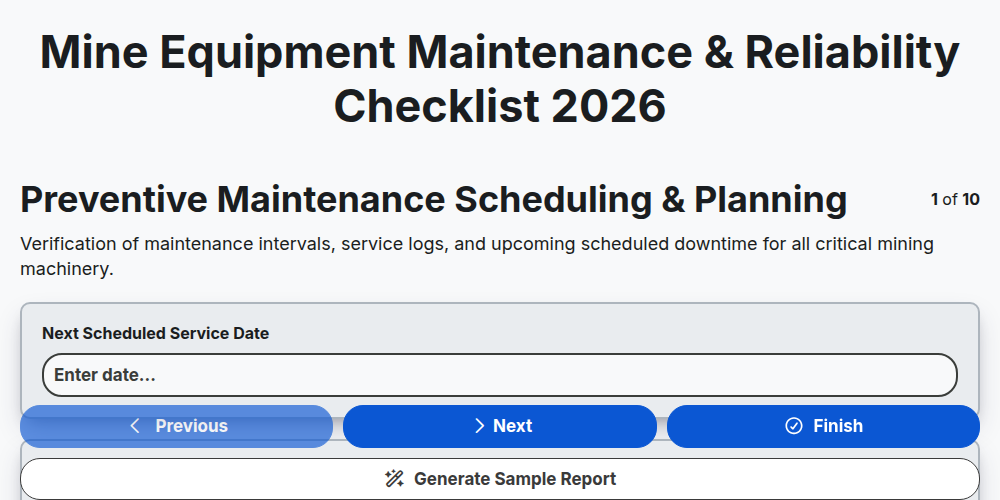
Table of Contents
- Introduction: Driving Asset Reliability in the 2026 Mining Landscape
- Strategic Foundations: Preventive Maintenance Scheduling & Planning
- Mobile Fleet Readiness: Comprehensive Inspection of Haul Trucks & Loaders
- Ensuring Plant Continuity: Fixed Plant & Crushing Circuit Integrity
- Fluid Lifecycle Management: Precision Lubrication & Fluid Control
- Supply Chain Resilience: Critical Spare Parts & Inventory Control
- Smart Mining Integration: Diagnostic & Sensor Calibration
- The Human Element: Maintaining Operator & Mechanic Competency Records
- Closing the Loop: Post-Maintenance Quality Assurance Protocols
- Safety First: Safety Systems & Emergency Shutdown Verification
- Regulatory Rigor: Maintenance Documentation & Compliance
- Conclusion: Future-Proofing Your Maintenance Strategy
- Resources & Links
TLDR: Ensure maximum uptime and operational safety in 2026 with this definitive maintenance roadmap. This guide provides a structured checklist covering everything from preventive scheduling and mobile equipment inspections to advanced sensor calibration and safety system verification, designed to help mine managers eliminate unplanned downtime and optimize asset reliability.
Introduction: Driving Asset Reliability in the 2026 Mining Landscape
In the rapidly evolving landscape of 2026 mining operations, the margin for error in asset management has effectively vanished. As the industry moves toward deeper ore bodies, more autonomous operations, and heightened ESG (Environmental, Social, and Governance) scrutiny, the cost of unplanned downtime has reached unprecedented levels. We are no longer just managing machines; we are managing complex, integrated ecosystems of technology and heavy iron.
The Shift from Reactive to Predictive Excellence
The era of fix it when it breaks is officially a relic of the past. As we navigate 2026, the integration of Industrial IoT (IIoT), real-time edge computing, and advanced telemetry means that maintenance teams are now expected to function as data scientists as much as mechanics. Reliability is no longer a secondary metric-it is the primary driver of total cost of ownership (TCO) and site-wide throughput.
Failure to implement a rigorous, standardized maintenance framework doesn't just result in a broken belt or a flat tire; it triggers a cascade of operational failures, ranging from missed production targets to significant safety breaches and environmental non-compliance.
Why This 2026 Checklist is Essential
This checklist is designed to serve as a strategic blueprint for maintenance managers, reliability engineers, and site leads. It moves beyond simple task lists to address the holistic pillars of modern mine reliability:
- Systemic Integrity: Ensuring the seamless interaction between mobile and fixed assets.
- Data-Driven Decision Making: Leveraging sensor calibration and diagnostic precision to predict failures before they occur.
- Human-Centric Reliability: Aligning technician competency and safety protocols with advanced mechanical complexity.
- Risk Mitigation: Strengthening the supply chain and spare parts availability in an increasingly volatile global market.
By systematically auditing your operations against these ten critical domains, you aren't just performing maintenance-you are engineering a competitive advantage that ensures your mine remains productive, safe, and profitable in the years to come.
Strategic Foundations: Preventive Maintenance Scheduling & Planning
Building a Proactive Maintenance Culture
In 2026, the era of run-to-failure is officially obsolete. As mining operations become increasingly automated and data-driven, the foundation of a reliable site lies in the sophistication of your Preventive Maintenance (PM) Scheduling & Planning. A robust schedule is no longer just about a calendar of dates; it is about integrating predictive intelligence with strategic resource allocation to eliminate unplanned downtime before it occurs.
Transitioning from Reactive to Predictive Planning
To achieve operational excellence, your planning must move beyond simple intervals. Effective scheduling in 2026 requires a synchronized approach where maintenance windows are aligned with production targets and real-time equipment health data.
- Dynamic Interval Adjustment: Move away from static hourly intervals. Utilize sensor-driven data to adjust service schedules based on actual component wear and duty cycles.
- Resource Synchronization: Ensure that labor, specialized tools, and parts are staged and ready prior to the machine entering the workshop to minimize bay time.
- Production Alignment: Integrate maintenance windows with mine plan short-term scheduling to ensure that high-priority pit movements are never compromised by unexpected fleet unavailability.
Key Components of a High-Performance Maintenance Plan
1. The Master Maintenance Schedule (MMS)
The MMS serves as your single source of truth. It must provide a clear roadmap of all upcoming interventions, categorized by asset criticality. A high-performing MMS tracks not only when a service is due but also the projected impact on total fleet availability.
2. Integrated Work Order Management
Every scheduled task must be accompanied by a detailed, standardized work order. In 2026, these work orders should be digital-first, containing:
- Standard Operating Procedures (SOPs): Step-by-step technical instructions to ensure uniformity.
- Pre-requisite Task Lists: Ensuring all necessary permits and safety clearances are addressed.
- Real-time Feedback Loops: Allowing technicians to report found work (unplanned defects discovered during PM) directly into the planning loop.
3. Capacity & Labor Forecasting
A schedule is only as good as the hands available to execute it. Strategic planning must include a rigorous audit of mechanic competency and workshop capacity. By forecasting labor requirements against the maintenance backlog, you can identify potential bottlenecks months in advance, allowing for strategic overtime planning or external contractor mobilization.
4. Data-Driven Downtime Analysis
Planning must be iterative. Use the data from completed PM cycles to perform Root Cause Analysis (RCA) on any failures that occurred between scheduled intervals. This continuous loop of Plan → Execute → Analyze → Refine is what transforms a standard maintenance department into a world-class reliability center.
Mobile Fleet Readiness: Comprehensive Inspection of Haul Trucks & Loaders
Ensuring Maximum Uptime for Your Primary Haulage Fleet
In the high-stakes environment of 2026 mining operations, the reliability of your mobile fleet is the heartbeat of your production cycle. When a haul truck or loader goes offline unexpectedly, the ripple effect through the entire supply chain can be devastating to your daily tonnage targets. To mitigate unplanned downtime, your inspection protocols must move beyond simple visual checks and toward a rigorous, data-driven assessment of mechanical and structural integrity.
Critical Inspection Pillars for Heavy Mobile Equipment
To maintain peak performance and extend the lifecycle of your assets, every inspection cycle-whether daily, weekly, or during major intervals-must focus on these four high-impact areas:
1. Powertrain and Drivetrain Integrity
The core of your mobile fleet's power lies in its ability to move massive payloads across challenging terrains. Inspections must prioritize:
Engine Performance Monitoring: Checking for abnormal thermal signatures, exhaust discoloration, and turbocharger efficiency.
Transmission and Torque Converter Analysis: Inspecting for slippage, pressure irregularities, and gear engagement smoothness.
Differential and Final Drive Health: Verifying the absence of leaks and monitoring for unusual acoustic signatures that indicate internal gear wear.
2. Hydraulic System & Articulation Stability
The hydraulic systems of loaders and haul trucks are prone to high-pressure fatigue. A failure here often leads to catastrophic-scale downtime.
- Hose and Fitting Audits: Systematic scanning for weeping leaks, abrasions, or signs of bubbling in high-pressure lines.
- Cylinder Rod Inspection: Checking for scoring, pitting, or chrome degradation that can destroy seals upon retraction.
- Articulation Point Lubrication & Wear: Evaluating the play in the center pins and pivot points to prevent structural fatigue.
3. Undercarriage, Tires, and Braking Systems
The interface between your machine and the mine floor is where the most significant wear occurs.
- Tire/Track Condition Monitoring: For rubber-tired fleets, monitoring Tread Depth (TKPH management) and sidewall integrity is vital. For tracked units, assessing chain tension and bushing wear is non-negotiable.
- Brake System Calibration: Testing service brakes, emergency brakes, and retarder functionality to ensure they meet the high-torque deceleration requirements of heavy descent operations.
- Suspension Strut Functionality: Assessing nitrogen/oil levels in struts to ensure proper load leveling and vibration dampening.
4. Structural and Safety Interface
A machine that is mechanically sound but structurally compromised is a liability.
- Chassis and Bucket Integrity: Inspecting for stress cracks in the frame, loader arms, and bucket lips.
- Operator Interface & Safety Controls: Verifying the functionality of ROPS/FOPS (Roll-Over/Falling Object Protective Structures), steering controls, and all in-cab warning displays.
- Integrated Sensor Health: Ensuring that proximity detection sensors and fatigue monitoring systems are communicating correctly with the vehicle's central ECU.
Ensuring Plant Continuity: Fixed Plant & Crushing Circuit Integrity
Maintaining the Heart of the Operation
In the high-pressure environment of a modern mine site, the crushing circuit and fixed plant infrastructure represent the heart of the production flow. Unlike mobile equipment, which can be rerouted or sidelined temporarily, a failure in the fixed plant often creates an immediate downstream bottleneck, halting the entire value chain.
As we move into 2026, the complexity of processing circuits is increasing with the integration of more advanced automation and harder ore profiles. Maintaining structural and mechanical integrity is no longer just about fixing what breaks-it is about predictive oversight and rigorous structural auditing.
Critical Focus Areas for 2026
To ensure maximum uptime and prevent catastrophic structural failures, your maintenance checklist must prioritize the following three pillars:
1. Structural & Mechanical Integrity Audits
Periodic inspections must go beyond visual checks. Focus on the fatigue levels of conveyor frameworks, the alignment of drive pulleys, and the condition of belt splices. For crushers (primary, secondary, and tertiary), monitoring the wear patterns on liners and mantle thickness is non-negotiable to prevent unplanned shutdowns during high-tonnage periods.
2. Vibration Analysis & Component Health
With the advancement of IoT-enabled sensors, your 2026 strategy should leverage real-time vibration monitoring on large motors and gearboxes. Identifying the signature of a bearing failure weeks before it occurs allows for scheduled interventions rather than emergency repairs.
3. Conveyor System & Belt Health
The conveyor network is the lifeline of your plant. Your checklist must include:
- Belt Tracking & Alignment: Preventing edge fraying and misalignment.
- Idler & Roller Assessment: Identifying seized rollers that contribute to belt wear and energy inefficiency.
- Scraper & Cleaner Effectiveness: Ensuring efficient fines removal to prevent material buildup.
The Cost of Neglect
Neglecting the integrity of the crushing circuit leads to more than just downtime; it leads to increased secondary costs, including unplanned energy spikes, excessive downstream wear, and heightened safety risks due to structural instability. By treating fixed plant maintenance as a proactive discipline rather than a reactive necessity, you secure the stability of your entire production output.
Fluid Lifecycle Management: Precision Lubrication & Fluid Control
Precision Lubrication & Fluid Management: The Lifeblood of Heavy Machinery
In the high-stakes environment of 2026 mining operations, where equipment downtime is measured in thousands of dollars per minute, managing lubrication and fluids is no longer just a routine task-it is a critical pillar of predictive maintenance. As machinery becomes more complex and integrated with sophisticated sensor arrays, the margin for error in fluid management has vanished.
The Shift from Reactive to Proactive Fluid Control
Gone are the days of simple top-off maintenance. To achieve true reliability, your 2026 checklist must focus on the chemical and physical integrity of every fluid circulating through your fleet and fixed plants.
1. Advanced Oil Analysis & Wear Particle Monitoring
Effective fluid management begins with deep-dive diagnostics. It is not enough to know if the oil level is correct; you must know the condition of the lubricant.
- Spectrometric Analysis: Regular scheduling of oil sampling to detect trace metals (iron, copper, chrome) that signal early-stage component wear.
- Viscosity Stability Tracking: Monitoring how thermal stress impacts the fluid's ability to maintain a protective film.
- Contamination Control: Implementing rigorous testing for water ingress, glycol, and particulate matter (ISO Cleanliness Codes) to prevent abrasive wear in hydraulic systems.
2. Strategic Lubrication Integrity
The goal is to ensure the right lubricant reaches the right component at the precise interval required by modern OEM specifications.
- Automated Lubrication System Audits: Routine verification of automated grease systems to ensure nozzles are not clogged and delivery volumes are consistent.
- Lubricant Compatibility Checks: Ensuring that new lubricant additives do not react negatively with legacy fluids, which can lead to sludge formation and seal degradation.
- Temperature-Controlled Storage: Maintaining strict climate control in lubricant storage facilities to prevent oxidation and moisture condensation before the fluid even reaches the machine.
3. Zero-Leakage Protocols & Environmental Stewardship
In 2026, reliability is inextricably linked to environmental compliance. A leak is not just a maintenance failure; it is a regulatory and safety risk.
- Seal & Gasket Integrity Inspections: Scheduled visual and ultrasonic inspections of high-pressure hydraulic lines and critical engine seals.
- Containment Verification: Ensuring all fluid transfer processes utilize closed-loop systems to minimize evaporation and environmental exposure.
- Fluid Lifecycle Tracking: Digital logging of every fluid batch, from the moment it enters the site to its final disposal or recycling, ensuring full traceability and compliance with 2026 environmental mandates.
By elevating fluid management from a secondary task to a primary diagnostic tool, mining operations can significantly extend the Mean Time Between Failures (MTBF) and ensure that their most expensive assets operate at peak thermal and mechanical efficiency.
Supply Chain Resilience: Critical Spare Parts & Inventory Control
Navigating the New Era of Parts Availability
As we approach 2026, the mining industry faces a paradox: while digital tracking has never been more advanced, global supply chain volatility remains a significant threat to uptime. Managing your inventory is no longer just about having enough stock; it is about strategic positioning and risk mitigation. To maintain high reliability, your maintenance strategy must move beyond reactive ordering toward a predictive, data-driven inventory model.
Strategic Inventory Optimization
To prevent costly downtime caused by stock-out scenarios, your checklist must include a rigorous audit of your high-impact components. Focus on the following three pillars:
- Criticality Mapping: Not all parts are created equal. Categorize your inventory based on the consequence of failure. A worn hydraulic hose is a nuisance; a failed crusher main shaft is a catastrophic shutdown. Your 2026 strategy should prioritize the availability of long-lead-time items that directly impact the production bottleneck.
- Lead-Time Forecasting: In an era of fluctuating logistics, your inventory levels must be dynamic. Use your maintenance schedule to anticipate demand surges. If a major overhaul of the haul truck fleet is scheduled for Q3, your procurement cycle for filters, seals, and bearings must begin in Q1.
- Vendor Managed Inventory (VMI) & Partnerships: Strengthen your ecosystem by integrating your digital inventory systems with key suppliers. Real-time data sharing allows for automated replenishment, reducing the administrative burden on your warehouse team and ensuring that critical consumables are always on-site before they are needed.
Mitigating the Risk of Obsolescence and Degradation
Inventory control is not merely about quantity, but also about quality and relevance. As mine technology evolves, your spares management must adapt:
- Shelf-Life Management: Ensure a strict rotation policy (FIFO - First In, First Out) for perishable items such as seals, O-rings, and specialized lubricants that can degrade while sitting in storage.
- Digital Twin Integration: Leverage your digital asset management tools to ensure that the physical part in the warehouse matches the exact technical specifications of the equipment currently in the pit. Misidentifying a part during an emergency repair is a primary driver of extended Mean Time to Repair (MTTR).
- The Dead Stock Audit: Periodically purge obsolete components from your warehouse to free up capital and physical space. This ensures that your working capital is tied up in parts that drive actual reliability, not historical relics.
By treating your spare parts inventory as a strategic asset rather than a secondary cost center, you transform your maintenance department from a cost-recovery unit into a driver of mine-site profitability.
Smart Mining Integration: Diagnostic & Sensor Calibration
Bridging the Gap Between Physical Assets and Digital Intelligence
As we move into 2026, the boundary between traditional mechanical maintenance and digital oversight has officially dissolved. In the modern mining landscape, a machine's physical integrity is only as reliable as the data driving its maintenance schedule. To achieve true operational excellence, your checklist must move beyond simple visual inspections and incorporate rigorous Diagnostic & Sensor Calibration.
In an era of autonomous hauling and semi-autonomous drilling, the eyes and ears of your fleet are your onboard sensors. If a sensor provides inaccurate data, your entire predictive maintenance strategy collapses, leading to either catastrophic failure or unnecessary, costly downtime.
The Calibration Standard for 2026
To ensure your reliability program remains robust, your maintenance routine must include the following verification steps:
- Sensor Accuracy Verification: Regular cross-referencing of telemetry data (pressure, temperature, and vibration) against manual physical measurements to detect sensor drift.
- Automated System Health Checks: Implementing routine diagnostics on the CAN bus and communication networks to ensure seamless data transmission between mobile assets and the central control room.
- Hydraulic & Engine Telemetry Validation: Specifically auditing the precision of load-sensing valves and fuel-injection sensors to ensure real-time performance metrics reflect actual mechanical states.
- Calibration Traceability: Maintaining a digital audit trail that logs exactly when each sensor was last calibrated, by whom, and against what standard.
Eliminating the False Positive Trap
The greatest risk in modern mining is the false positive-a faulty sensor signaling a critical fault that doesn't exist, triggering an emergency shutdown of a healthy machine. Conversely, a false negative can mask a developing thermal issue in a crusher bearing.
By integrating systematic sensor calibration into your 2026 maintenance framework, you transform your maintenance team from reactive mechanics into proactive stewards of high-tech assets, ensuring that every decision made in the control room is based on ground truth.
The Human Element: Maintaining Operator & Mechanic Competency Records
Beyond the Machine: The Human Element of Reliability
In the era of 2026, where autonomous systems and advanced telemetry dominate the mining landscape, it is easy to fall into the trap of believing that maintenance is purely a mechanical or digital challenge. However, the most sophisticated predictive sensors are only as effective as the people interpreting the data and executing the repairs.
The reliability of your fleet and fixed plants ultimately rests on the skill, precision, and-most importantly-the documented competency of your workforce.
Bridging the Gap Between Data and Execution
As mining technology evolves, the complexity of maintenance tasks increases. A technician who was proficient in hydraulic systems five years ago must now be equally skilled in navigating IoT-integrated diagnostic tools. Maintaining rigorous competency records ensures that your workforce is not just experienced, but specifically trained for the high-tech demands of modern mining.
Key Components of Competency Tracking
To ensure your maintenance strategy is future-proof, your checklist must include the following sub-steps:
- Skill Gap Analysis & Training Matrices: Regularly audit the technical capabilities of your mechanics and operators against the requirements of new equipment arrivals. Identify where training is needed before a breakdown occurs.
- Certification Tracking for Specialized Tasks: Ensure that high-risk procedures-such as heavy lifting, high-voltage electrical work, or working within crushing circuits-are performed only by personnel with up-to-date, verified certifications.
- Operator-Led Inspection Proficiency: Reliability starts with the first person to touch the machine. Documenting that operators are trained in early warning detection (identifying subtle changes in vibration, sound, or temperature) transforms your entire crew into a frontline defense against unplanned downtime.
- Digital Training Logs: Move away from paper-based tracking. Implement integrated digital logs that link training completion directly to maintenance management software (CMMS). This creates a seamless audit trail for compliance and safety audits.
Why Documentation Matters for Reliability
Maintaining detailed competency records serves two critical functions:
- Root Cause Analysis (RCA): When a component fails prematurely, the first question in an RCA is often, Was the task performed according to the standard operating procedure? Verifiable training records provide the proof needed to determine if the failure was mechanical or procedural.
- Safety & Compliance: In the event of a safety incident, having a robust, timestamped record of personnel training is your strongest defense in demonstrating adherence to global mining safety standards.
By treating human competency as a measurable asset within your maintenance checklist, you ensure that your mechanical reliability is backed by an equally reliable workforce.
Closing the Loop: Post-Maintenance Quality Assurance Protocols
The Final Gate: Ensuring Excellence Before Recommissioning
Completing a maintenance task is not synonymous with completing the maintenance process. The final, and perhaps most critical, stage of your 2026 reliability strategy is the implementation of rigorous Post-Maintenance Quality Assurance (PMQA). This phase serves as the final gate to prevent infant mortality failures-breakdowns that occur immediately after a machine is returned to service due to human error or overlooked details.
Verification of Workmanship and Specification
Once the mechanical or electrical tasks are finished, the equipment must be audited against the original work order specifications. This is not merely a visual check; it is a technical validation.
- Torque Verification: Random sampling of high-stress fasteners and structural bolts to ensure they meet OEM torque specifications.
- Clearance and Tolerance Audits: Re-measuring critical gaps, such as valve clearances or bearing tolerances, to ensure they align with the engineering tolerances defined in the 2026 reliability standards.
- Leak Testing: Conducting pressurized testing on hydraulic lines and pneumatic systems to ensure all connections remain intact under operational loads.
The Recommissioning Protocol
Before a machine is cleared for full-duty cycle, it must undergo a structured re-introduction to the production environment.
1. The Controlled Run-In Period
Avoid the temptation to immediately push haul trucks or crushers to 100% capacity. Implement a graduated load profile. For mobile equipment, this involves monitoring engine temperatures and transmission pressures during the first few hours of operation to detect thermal instability.
2. Sensor and Control Loop Validation
In an era of increasing automation, functional is not enough. You must verify that all diagnostic sensors, pressure transducers, and automated shut-off valves are communicating correctly with the central control system. A sensor that appears functional but provides inaccurate data is a silent killer of reliability.
3. The Clean Site Standard
A critical component of QA is the inspection of the work area. Residual tools, forgotten rags, or spilled hydraulic fluid left near a crusher or inside a machine engine bay are significant safety hazards and can lead to catastrophic mechanical contamination.
4. Final Sign-Off and Data Integration
The QA process concludes only when the lead technician or engineer signs off on the completed work order, confirming that all steps-from lubrication to safety verification-have been executed. This signature is the trigger to update your CMMS (Computerized Maintenance Management System), ensuring that the as-maintained state of the asset is accurately reflected in your long-term reliability analytics.
Safety First: Safety Systems & Emergency Shutdown Verification
Prioritizing Life-Critical Systems
In the mining industry, a maintenance strategy that overlooks safety is not a strategy at all-it is a liability. As we move into 2026, the integration of smarter, more automated safety protocols means that your maintenance checklist must move beyond simple visual inspections to rigorous, functional verification of all protective layers.
Verification of Emergency Shutdown (ESD) Systems
The cornerstone of mine site safety is the ability to bring equipment to a zero-energy state instantly. Your checklist must include documented testing of:
- Emergency Stop (E-Stop) Functionality: Systematic testing of all physical E-stop buttons on mobile and fixed assets to ensure immediate circuit interruption.
- Automated Shutdown Triggers: Verification of sensors that trigger shutdowns during abnormal conditions (e.g., high temperature, extreme vibration, or hydraulic pressure loss).
- Remote Shutdown Capabilities: For fixed plants, testing the integrity of remote isolation protocols from the control room.
Safety Guarding and Interlock Integrity
Mechanical barriers and electronic interlocks are your last line of defense against catastrophic injury.
- Physical Guarding Inspection: Ensuring all enclosures around moving parts, belts, and rotating shafts are secure and free from corrosion or bypass tampering.
- Interlock Function Testing: Routine validation that safety gates and access panels cannot be opened while machinery is in operation.
Fire Suppression and Detection Readiness
As equipment operates in increasingly harsh environments, the reliability of fire suppression systems is non-negotiable.
- Detection Sensor Health: Regular testing of heat and flame detectors to ensure they are free from dust occlusion and functional.
- Suppression Agent Integrity: Verifying pressure levels in extinguishers and checking the expiration dates of chemical agents or nitrogen canisters.
- Auto-Activation Drills: Periodic simulation of suppression deployment to ensure all nozzles and discharge paths are unobstructed.
Compliance and Audit Readiness
Every safety verification must leave a digital paper trail. In 2026, if it wasn't documented, it didn't happen. Ensure that every safety system test is logged with timestamps, technician signatures, and specific pass/fail outcomes to remain compliant with evolving global mining safety regulations and to provide a clear audit trail for incident investigations.
Regulatory Rigor: Maintenance Documentation & Compliance
Navigating the Audit Trail
In the 2026 mining landscape, documentation is no longer just a best practice-it is a critical component of your license to operate. As regulatory bodies and environmental agencies move toward real-time digital oversight, the ability to prove that your maintenance protocols were followed is just as important as the maintenance itself. Compliance documentation serves as your primary defense during safety audits, environmental inspections, and insurance assessments.
The Shift Toward Digital Traceability
Gone are the days of relying on fragmented paper logs or isolated spreadsheets. To achieve true operational excellence, your maintenance records must be integrated, searchable, and immutable.
Key Compliance Requirements for 2026:
- Digital Audit Trails: Every inspection, repair, and part replacement must be timestamped and linked to a specific technician or automated sensor. This creates an unbroken chain of accountability.
- Standard Operating Procedure (SOP) Alignment: Documentation must demonstrate that all maintenance activities directly align with the latest OEM (Original Equipment Manufacturer) specifications and updated site-specific safety protocols.
- Regulatory Reporting Integration: Your system should be capable of instantly generating reports for mining inspectors, showing that mandatory safety checks-such as brake testing and emergency shutdown verifications-are being performed within prescribed intervals.
Managing the Paperwork Burden
The goal of an efficient maintenance program is to minimize administrative friction. By leveraging automated data capture from telematics and mobile inspection apps, you can ensure that compliance is a byproduct of the work being done, rather than a separate, burdensome task for your mechanics.
Closing the Loop
Effective documentation does more than satisfy regulators; it provides the data necessary for root cause analysis (RCA). When a failure occurs, a robust compliance record allows your engineering team to look back at past interventions, identify patterns of negligence or component fatigue, and refine your predictive maintenance models for even greater reliability.
Conclusion: Future-Proofing Your Maintenance Strategy
As we approach 2026, the landscape of mining is shifting from reactive repairs to predictive intelligence. The transition from fixing what is broken to predicting what might fail is no longer a luxury-it is a prerequisite for staying competitive in an era of rising operational costs and tightening ESG (Environmental, Social, and Governance) standards.
Implementing the Mine Equipment Maintenance & Reliability Checklist 2026 is about more than just checking off tasks; it is about building a culture of precision and foresight.
Moving Beyond the Checklist: A Proactive Mindset
While the checklist provides the structural framework, true operational excellence requires integrating these steps into your daily DNA. To maximize the impact of this template, consider these three strategic pillars:
1. Data-Driven Decision Making
The items under Diagnostic & Sensor Calibration and Maintenance Documentation are the building blocks of your digital twin. By meticulously recording every vibration reading, oil analysis, and downtime event, you are creating the dataset required to leverage AI-driven predictive maintenance. In 2026, the most successful mines will be those that use their maintenance logs to train smarter algorithms.
2. Empowering the Human Element
No amount of advanced technology can replace the expertise of your workforce. By focusing on Operator & Mechanic Competency Records, you are investing in your most critical asset. A reliable maintenance program must prioritize continuous training, ensuring that your team is as proficient with digital diagnostic tools as they are with a wrench.
3. Integration of Safety and Sustainability
A breakdown is not just a loss in productivity; it is a potential safety risk and an environmental hazard. By unifying Safety Systems Verification with Lubrication & Fluid Management, you ensure that your reliability strategy inherently supports your sustainability goals. A well-maintained machine is a clean, safe, and efficient machine.
Final Thoughts
The roadmap to 2026 is paved with disciplined execution. Use this checklist as your foundational blueprint to reduce unplanned downtime, extend the lifecycle of your heavy assets, and drive down the total cost of ownership. The goal is simple: Zero Unplanned Downtime, Maximum Safety, and Uninterrupted Production.
Resources & Links
- Mining.com: Global news and analysis for the mining industry, providing context on the 2026 mining landscape and technological shifts.
- Caterpillar: Industry leader in heavy machinery; essential for researching maintenance standards for haul trucks, loaders, and mobile fleets.
- Komatsu: Key resource for technical specifications and maintenance best practices for large-scale mining equipment and autonomous fleets.
- Equipment World: Provides technical insights into heavy equipment maintenance, fleet management, and operational efficiency.
- Society of Maintenance & Reliability Professionals (SMRP): The gold standard for maintenance engineering, offering frameworks for reliability-centered maintenance (RCM).
- International Lubrication Association: Crucial for the 'Fluid Lifecycle Management' section, focusing on precision lubrication and contamination control.
- IBM Mining: A primary resource for 'Smart Mining Integration,' focusing on AI, predictive diagnostics, and sensor-driven maintenance.
- McKinsey & Company (Mining & Metals): Provides strategic insights into supply chain resilience and the digital transformation of mining operations.
- U.S. Environmental Protection Agency (EPA): Reference for regulatory compliance, fluid disposal, and environmental safety protocols in mining maintenance.
- OSHA (Occupational Safety and Health Administration): The essential authority for safety system verification, lockout/tagout (LOTO), and emergency shutdown protocols.
- ScienceDirect: Access to peer-reviewed research on reliability engineering, fatigue analysis, and structural integrity of crushing circuits.
- SAP for Mining: A leading resource for Enterprise Asset Management (EAM) and inventory control strategies for critical spare parts.
- IIoT Solutions: Focuses on the integration of Industrial Internet of Things (IIoT) sensors into fixed plant and mobile equipment.
- ISO (International Organization for Standardization): Critical for establishing documentation standards, quality assurance protocols, and global compliance frameworks.
- Ricoh (Document Management): Useful for exploring digital documentation and the management of maintenance competency records.
- Forbes (Technology Section): Offers high-level perspectives on how automation and the human element are evolving in industrial maintenance.
Comments
There are no comments yet. Be the first to add one!
Mining Management Solution Demo
Maximize efficiency & safety in mining operations! ChecklistGuro streamlines task management, equipment tracking, and compliance reporting. Optimize workflows, reduce risk, & boost productivity. Manage it all with our Work OS.
Related Articles
Ensuring Mine Safety: Your Geotechnical Stability Checklist Guide
Ensuring Safety & Efficiency: Your Mine Haul Road Inspection Checklist Guide
Mastering Mine Safety: Your Guide to the Ground Control Checklist
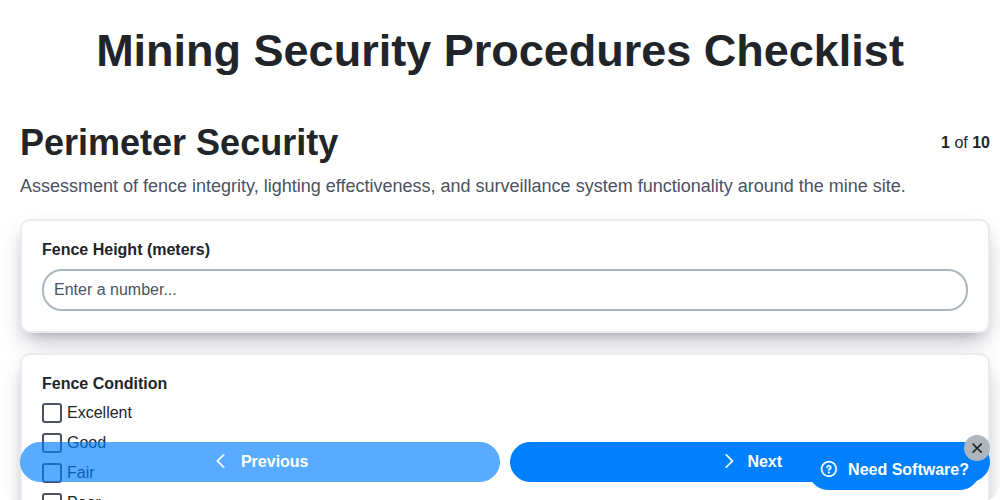
Mining Security Procedures Checklist: A Comprehensive Template for Safety
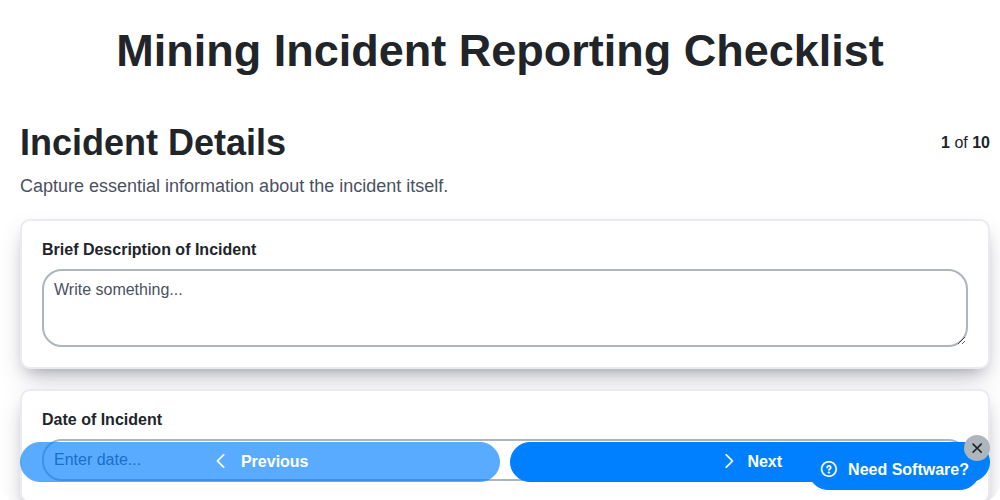
Ensuring Safety: Your Mining Incident Reporting Checklist Guide
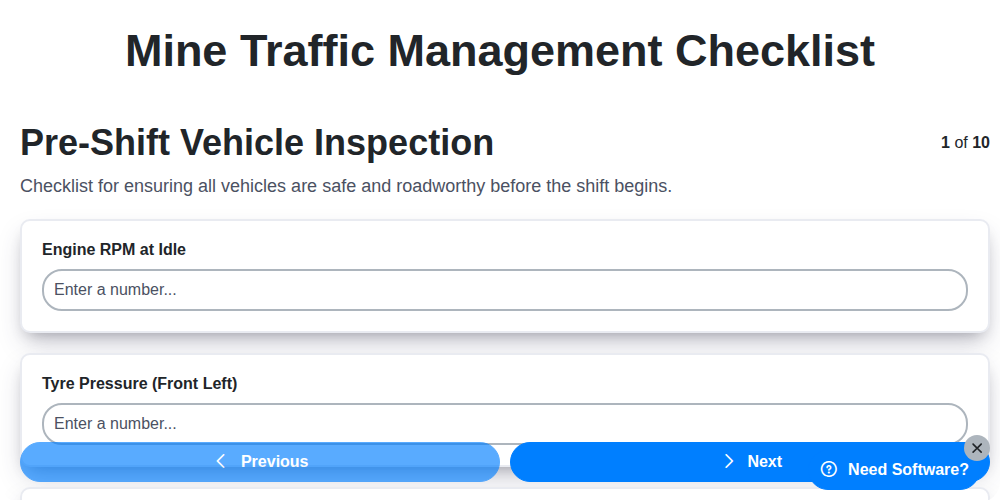
Ensuring Safety Underground: Your Mine Traffic Management Checklist Guide
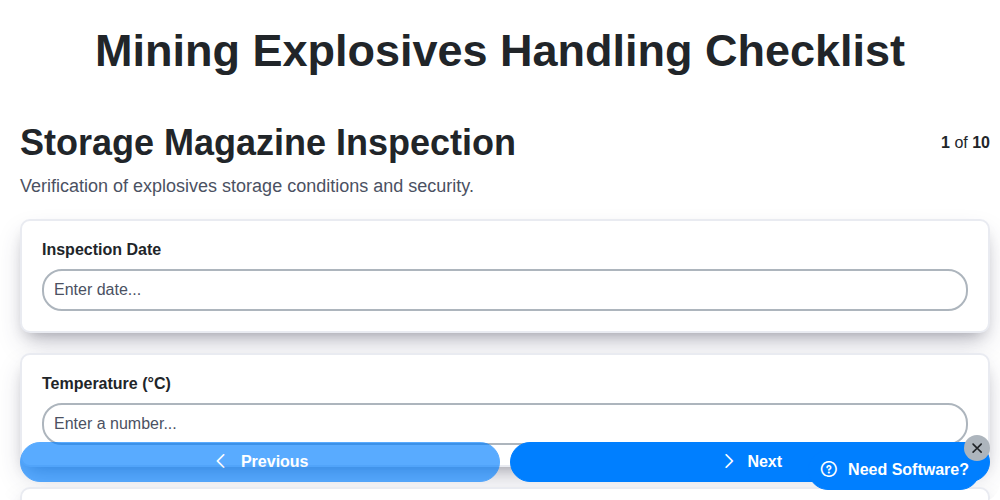
Ensuring Safety: Your Mining Explosives Handling Checklist Template
Ensuring Safety & Compliance: Your Mining Noise Monitoring Checklist Guide
Need help with
Mining Management?
Have a question? We're here to help. Please submit your inquiry, and we'll respond promptly.