Ensuring Safety & Compliance: Your Mining Noise Monitoring Checklist Guide
Published: 11/22/2025 Updated: 07/02/2026
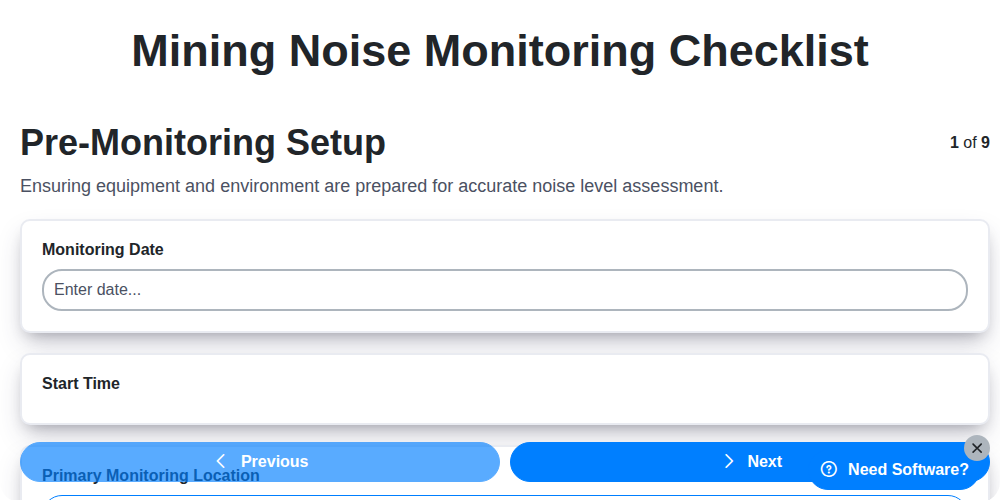
Table of Contents
- Introduction: Why Mining Noise Monitoring Matters
- 1. Pre-Monitoring Setup: Planning and Preparation
- 2. Equipment Calibration & Functionality: Ensuring Accuracy
- 3. Selecting Measurement Locations: Identifying Noise Hotspots
- 4. Ambient Noise Readings: Establishing a Baseline
- 5. Operational Noise Readings: Capturing Mining Activity
- 6. Near-Field/Worker Exposure Measurements: Protecting Personnel
- 7. Data Recording & Documentation: Maintaining a Clear Record
- 8. Equipment Shutdown & Storage: Preserving Your Investment
- 9. Review & Analysis: Interpreting Results and Taking Action
- Resources & Links
TLDR: Worried about noise levels in your mine? This checklist is your guide! It systematically covers everything from setting up your equipment to analyzing data, ensuring you're compliant with regulations and protecting worker hearing. Follow it step-by-step for accurate measurements, detailed records, and a safer mining environment.
Introduction: Why Mining Noise Monitoring Matters
Mining operations are inherently noisy environments. From blasting and drilling to heavy machinery and material handling, the constant barrage of sound poses significant risks to the health and safety of workers and the surrounding community. Ignoring noise pollution isn't just an oversight; it's a potential liability.
Effective noise monitoring is crucial for several reasons. It helps identify areas of excessive noise levels, allows for proactive implementation of noise reduction strategies (like engineering controls or personal protective equipment), ensures compliance with relevant regulations and legal requirements (which vary by region), and most importantly, protects the hearing health of your workforce. This blog post will explore a comprehensive checklist for mining noise monitoring, ensuring a thorough and reliable assessment of your operations. Ignoring noise can lead to hearing loss, stress, and reduced productivity; taking proactive steps is a responsible investment in your people and your business.
1. Pre-Monitoring Setup: Planning and Preparation
Successful noise monitoring hinges on meticulous planning. Before even touching your equipment, dedicate time to the foundational steps. This involves clearly defining the scope of your monitoring project - what activities are you assessing, what regulatory limits apply, and what are your specific goals?
Thorough site reconnaissance is crucial. Understand the layout, identify potential noise sources, and note any factors that might influence readings (weather conditions, nearby traffic, etc.). Consider worker schedules and potential interference from machinery maintenance or other activities.
Develop a detailed monitoring plan outlining these considerations, including dates, times, durations, and assigned personnel. Secure any necessary permits or permissions well in advance. A well-defined plan minimizes disruptions and ensures accurate, reliable data. Don't underestimate the power of a well-thought-out plan - it's the bedrock of a credible noise monitoring program.
2. Equipment Calibration & Functionality: Ensuring Accuracy
Accurate noise monitoring hinges on reliable equipment. Before any readings are taken, a thorough check of your sound level meters and associated devices is absolutely critical. This isn't just a 'nice to have'; it's a cornerstone of defensible data.
Here's what your calibration & functionality check should include:
- Battery Life: Verify sufficient battery power for the entire monitoring period. Unexpected shutdowns mid-measurement render data unusable.
- Microphone Integrity: Inspect the microphone for any physical damage - cracks, debris, or obstructions. Even minor damage can significantly affect readings.
- Acoustic Calibrator Check: Use a certified acoustic calibrator to check the meter's accuracy. Perform both a 94 dB and 104 dB calibration (if your meter supports it) and record the results. Discrepancies exceeding the manufacturer's specifications require calibration by a qualified technician before proceeding.
- Functionality Test: Test all measurement ranges and filters (e.g., A-weighting, C-weighting, Fast, Slow). Listen for any unusual noises or static during operation.
- Software/Data Logging Verification: If using software or data loggers, confirm they are functioning correctly, data is being recorded accurately, and time synchronization is precise. A test recording is a good practice.
- Wind Shield Assessment: If utilizing wind shields, check for proper fit and function. Wind noise can dramatically skew results; ensure the shield is effectively reducing wind interference.
Document all calibration results and any issues identified in the monitoring log. Regular calibration and maintenance records are essential for demonstrating compliance and data integrity.
3. Selecting Measurement Locations: Identifying Noise Hotspots
Choosing the right measurement locations is absolutely critical for accurate and useful noise monitoring data. Don't just pick spots at random! A thorough assessment is necessary to identify potential noise hotspots - areas where noise levels are likely to be highest and represent the most significant risks.
Here's a breakdown of how to approach location selection:
- Identify Noise Sources: Begin by identifying all potential noise sources within the mining operation. This could include blasting, crushing, drilling, heavy machinery (trucks, loaders, excavators), ventilation systems, conveyors, and more.
- Consider Propagation Paths: Understand how sound travels. Obstacles like buildings, berms, and terrain can block or reflect sound, impacting noise levels at different locations.
- Worker Proximity: Prioritize locations where workers are regularly present and potentially exposed to noise. This includes operating stations, walkways, and areas where maintenance is performed.
- Community Boundaries: Carefully select locations near the mine boundary to assess potential impacts on surrounding communities.
- Representative Sampling: Choose locations that offer a representative sample of the overall noise environment. This might involve multiple points within a specific area to account for variations in noise levels.
- Documentation: Meticulously document the rationale for selecting each measurement location, including the noise sources expected to be present and the potential exposure risks. This is essential for future reference and regulatory compliance.
Don't be afraid to perform preliminary walk-throughs with a sound level meter to get a feel for the noise environment before establishing your monitoring points. This can help you fine-tune your location choices and ensure you're capturing the most relevant data.
4. Ambient Noise Readings: Establishing a Baseline
Before assessing noise generated by mining operations, it's crucial to establish a baseline - a record of the existing ambient noise levels. This provides context for later comparisons and helps differentiate between naturally occurring sounds and noise directly attributable to mining activities.
Ambient noise readings should be taken at the same locations you'll use for operational noise measurements (see section on Measurement Locations). These readings should be conducted under typical, quiet conditions - ideally when no mining equipment is operating nearby. Avoid times when traffic, construction, or other significant noise sources are present.
Record the date, time, and weather conditions (wind speed, rain, etc.) alongside each ambient noise reading. Weather can significantly impact noise propagation, so noting these conditions is vital for accurate analysis. Measure and record the A-weighted sound level (Leq) over a representative period (typically 5-15 minutes). This provides an average noise level for that timeframe. Note any unusual sounds that might have briefly impacted the reading and how they were addressed (e.g., discarded). The resulting Leq values will form your ambient noise baseline for comparison.
5. Operational Noise Readings: Capturing Mining Activity
This section focuses on measuring noise generated by actively running mining operations. It's crucial for identifying specific sources and assessing their impact. Here's what needs to be considered:
- Define Operational Stages: Clearly outline the activities you're measuring. This might include blasting, drilling, hauling, crushing, and conveyor belt operation. Each activity will generate different noise profiles.
- Strategic Positioning: Don't just take a single reading. Move the measurement equipment strategically around the active area. Consider the propagation of sound - how does noise travel from the source? Account for terrain and obstacles that might affect the readings.
- Representative Duration: Capture sufficient data. A few seconds might not be enough. Allow for a representative duration of each activity (e.g., 30-60 seconds for blasting, longer for continuous operations) to account for fluctuations.
- Multiple Readings: Take multiple readings at each location to ensure consistency and identify any transient spikes in noise levels. Record the time and details of each reading.
- Operator/Equipment Identification: Critically, record which specific equipment or operational stage each reading corresponds to. This is vital for pinpointing problematic areas and informing mitigation strategies. For example, Crusher #3 - 10:15 AM is far more useful than Crusher.
- Consider Vibration: While primarily focused on noise, be aware of any significant vibrations accompanying the operations. These can be indicative of equipment issues contributing to noise generation. Note any unusual vibrations observed.
6. Near-Field/Worker Exposure Measurements: Protecting Personnel
Mining operations inherently involve noise, and protecting the hearing of workers directly exposed to that noise is paramount. Near-field measurements are crucial for assessing the noise levels impacting individuals performing specific tasks or working in close proximity to machinery. These readings differ from ambient readings, focusing on the sound pressure levels experienced by the worker rather than the overall background noise.
This section of the checklist prioritizes safety. It involves measuring noise levels at the ear level of the worker performing typical tasks, utilizing appropriate hearing protection (or simulating its use for a more accurate assessment). Consider factors like the worker's posture and distance from the noise source. Document the task being performed, the worker's location, and the hearing protection used (if any) for each measurement.
These readings aren't just about compliance; they've identified areas where engineering controls (machine modifications, enclosures) or administrative controls (job rotation, task scheduling) can be implemented to reduce worker exposure. Thorough and consistent near-field/worker exposure measurements, combined with appropriate action plans, contribute directly to a safer and healthier work environment. Remember to always consult with a qualified audiologist or occupational hygienist for guidance on measurement protocols and interpretation of results.
7. Data Recording & Documentation: Maintaining a Clear Record
Consistent and thorough data recording is the backbone of any successful noise monitoring program. It's not enough to just collect numbers; you need a clear, organized record of the entire process to ensure data integrity, facilitate analysis, and support future comparisons or audits.
Here's what your data recording and documentation should include:
- Date and Time Stamps: Every reading taken, and every action performed, needs a precise date and time stamp.
- Equipment Details: Record the serial numbers of all equipment used (sound level meters, calibrators, etc.) and the date of their last calibration.
- Environmental Conditions: Note any significant weather conditions (wind speed, rain, temperature) that could potentially influence readings.
- Location Identification: Clearly identify each measurement location with descriptive names or codes - avoid vague terms like "near machine A." GPS coordinates can be invaluable.
- Operator Identification: Indicate who performed the monitoring and took the readings.
- Raw Data: Preserve the raw data obtained directly from the sound level meter. This provides an unedited baseline.
- Calibration Records: Attach copies of calibration certificates to the monitoring report.
- Notes & Observations: Detailed notes are crucial. Document anything unusual observed during the monitoring - nearby traffic, unusual machinery operation, or any factors that might affect the results.
- Deviation Reporting: If any deviations from the monitoring plan occurred (e.g., measurement location temporarily inaccessible), document them and explain how they were addressed.
Digital data logging is increasingly common and highly recommended for ease of organization and analysis. However, even with digital systems, paper backups of critical data are advisable. A well-maintained, comprehensive record proves the rigor and reliability of your noise monitoring program.
8. Equipment Shutdown & Storage: Preserving Your Investment
Proper shutdown and storage are just as crucial as the monitoring process itself. Neglecting these steps can lead to equipment damage, inaccurate future readings, and ultimately, costly replacements. Here's how to ensure your noise monitoring equipment remains in top condition:
- Cleanliness is Key: Before powering down, wipe down all equipment (sound level meters, calibrators, tripods, microphones) with a clean, dry cloth to remove dust and debris. This prevents corrosion and protects sensitive components.
- Battery Management: Remove batteries from sound level meters and other battery-powered devices if they won't be used for an extended period. This prevents leakage and corrosion that can damage the device. If leaving batteries in, ensure they are fully charged.
- Microphone Protection: Microphones are especially vulnerable. Store them in their protective cases, ensuring the windscreen and any other accessories are securely in place. Avoid storing microphones where they might be knocked or exposed to extreme temperatures.
- Tripod & Mounting Secureness: Disassemble tripods and carefully secure all components. This prevents damage during storage and makes setup faster next time.
- Storage Environment: Store equipment in a cool, dry, and clean environment, away from direct sunlight, extreme temperatures, and humidity. A dedicated storage box or cabinet is ideal.
- Cable Management: Neatly coil and secure all cables to prevent tangling and potential damage. Label cables clearly to avoid confusion during future use.
- Documentation Review: Briefly review the day's readings and any notes related to equipment performance before storage. This can highlight any potential issues for future investigation or maintenance.
By following these simple steps, you're extending the lifespan of your noise monitoring equipment and ensuring reliable data collection for years to come.
9. Review & Analysis: Interpreting Results and Taking Action
The data collected during noise monitoring isn't valuable unless it's properly reviewed and analyzed. This final step is crucial for identifying trends, pinpointing noise sources, and ultimately, implementing effective mitigation strategies.
Begin by comparing your recorded noise levels against relevant regulatory limits and internal action levels. Are any measurements exceeding these thresholds? If so, immediate investigation and corrective action are necessary.
Beyond simple compliance checks, look for patterns. Are noise levels consistently high during specific operations or at certain times of the day? This can highlight problem areas requiring targeted solutions. Consider the impact of weather conditions - wind or rain can significantly affect readings.
Document your findings thoroughly. Note any anomalies, potential sources of error, and the conclusions drawn from the data. This documentation provides a record for future reference and supports any decisions made.
Finally, don't just identify problems - propose and implement solutions. This might involve equipment modifications, operational changes, or engineering controls. The review & analysis phase is a continuous loop; after implementing changes, repeat the monitoring process to verify their effectiveness and ensure long-term compliance and a healthier working environment.
Resources & Links
- OSHA (Occupational Safety and Health Administration): The primary US federal agency responsible for workplace safety and health regulations, including noise exposure limits and requirements. Find guidelines, standards, and resources related to noise monitoring and protection.
- MSHA (Mine Safety and Health Administration): The US federal agency focused solely on mining safety and health. Offers specific regulations and guidance related to noise control and monitoring in mining operations. Crucial for understanding US legal requirements.
- ISO (International Organization for Standardization): Provides international standards related to acoustics and noise measurement, such as ISO 14001 (environmental management) and ISO 1999-1 (noise measurement procedures). Provides a framework for consistent and reliable noise monitoring.
- National Institute of Environmental Health Sciences (NIEHS): While not solely focused on mining, NIEHS provides research and information about the health effects of noise exposure, crucial for understanding the 'why' behind monitoring. Useful for demonstrating the impact of noise on worker health.
- Cirrus Research: A leading manufacturer of noise measurement equipment. Their website offers product information, application notes, and resources for understanding noise monitoring techniques. Good for understanding equipment capabilities.
- 3M: Offers a range of noise measurement devices and hearing protection products. Their website contains resources, including white papers and application notes, related to noise control and monitoring.
- Senvion (formerly REMO): Specializes in environmental monitoring solutions, often including noise monitoring. Provides information on advanced noise monitoring systems, including real-time monitoring and reporting.
- Decibel X: Offers noise measurement apps and devices, providing accessible options for preliminary noise assessments and basic monitoring. Provides an introduction to practical noise measurement.
- Cochlea: Although primarily focused on hearing implants, Cochlea's website provides valuable information regarding the impact of noise on hearing and the importance of hearing protection - reinforcing the 'why' behind stringent noise monitoring practices.
- Brüel & Kjær: Another significant manufacturer of noise measurement instrumentation. Offers comprehensive documentation, tutorials, and application notes on acoustics and vibration measurement - covering a wide range of measurement techniques and equipment calibration.
- NoiseAware: Provides sound level monitoring systems. Although aimed more at hospitality/property management, the principles of persistent noise logging and analysis can be adapted to a mining context for understanding noise trends over time. Demonstrates continuous monitoring solutions.
Frequently Asked Questions
What is mining noise monitoring and why is it important?
Mining noise monitoring involves measuring and analyzing noise levels in and around a mining operation. It's crucial for protecting worker health, complying with regulations (like MSHA in the US or equivalent bodies globally), minimizing community disturbance, and preventing noise-induced hearing loss (NIHL).
Who is responsible for mining noise monitoring?
Responsibility typically falls on the mine operator and site management. However, designated personnel (often safety officers or environmental specialists) are usually assigned to conduct the actual monitoring, data collection, and reporting. Regular audits from regulatory bodies also play a vital role.
What are the key components of a mining noise monitoring checklist?
A comprehensive checklist should include: assessing noise sources, selecting appropriate monitoring equipment (sound level meters, dosimeters), establishing monitoring locations (work areas, boundaries), defining measurement durations, documenting environmental conditions (weather, background noise), recording data accurately, and ensuring proper calibration and maintenance of equipment.
What type of equipment is needed for accurate noise monitoring?
Essential equipment includes a calibrated sound level meter, dosimeters (for personal exposure monitoring), wind screens, extension microphones (for distant measurements), and a reliable data logging system.
How often should noise monitoring be conducted?
Monitoring frequency depends on factors like the type of mining operation, the level of noise risk, and regulatory requirements. Regular monitoring (e.g., weekly, monthly) is common, with more frequent checks in high-risk areas. Periodic surveys and baseline assessments are also important.
What should I do if noise levels exceed regulatory limits?
If noise levels exceed limits, immediate action is required. This may include: identifying and addressing the noise source (e.g., equipment maintenance, enclosure), implementing engineering controls (e.g., noise barriers), adjusting work practices, providing hearing protection, and retraining employees. Detailed documentation of corrective actions is essential.
What role does hearing protection play in noise control?
Hearing protection (earplugs, earmuffs) is a critical last line of defense when noise sources cannot be adequately controlled. It's essential to provide appropriate hearing protection, ensure proper fit and use, and conduct regular training on its effectiveness.
How do I document my mining noise monitoring results?
Detailed records should be kept, including: dates and times of monitoring, locations, equipment used, readings, weather conditions, personnel involved, corrective actions taken, and any deviations from the monitoring plan. Electronic data logging is highly recommended for accuracy and traceability.
What are some common challenges in mining noise monitoring?
Challenges can include: background noise interference, difficulty accessing remote areas, equipment malfunction, lack of trained personnel, and difficulties in accurately identifying and controlling all noise sources.
Comments
There are no comments yet. Be the first to add one!
Mining Management Solution Demo
Maximize efficiency & safety in mining operations! ChecklistGuro streamlines task management, equipment tracking, and compliance reporting. Optimize workflows, reduce risk, & boost productivity. Manage it all with our Work OS.
Related Articles
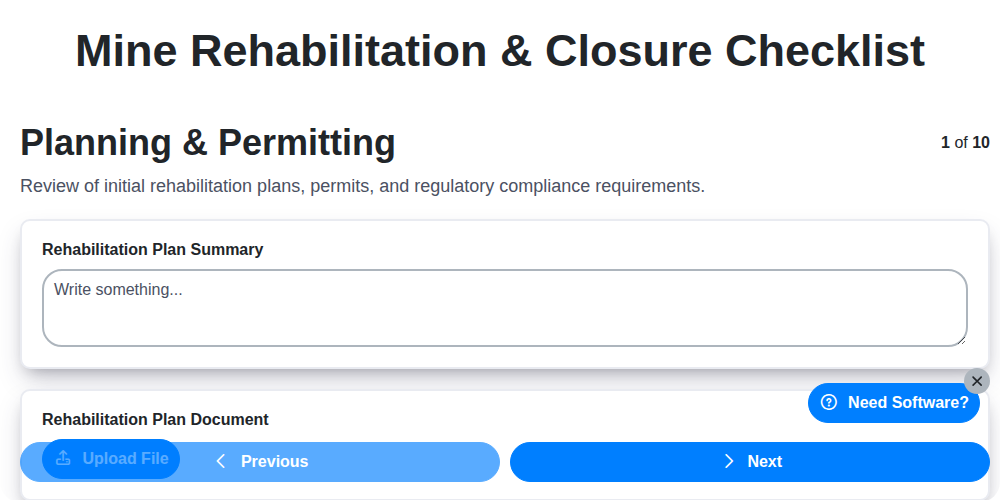
Ensuring a Sustainable Future: Your Mine Rehabilitation & Closure Checklist Guide
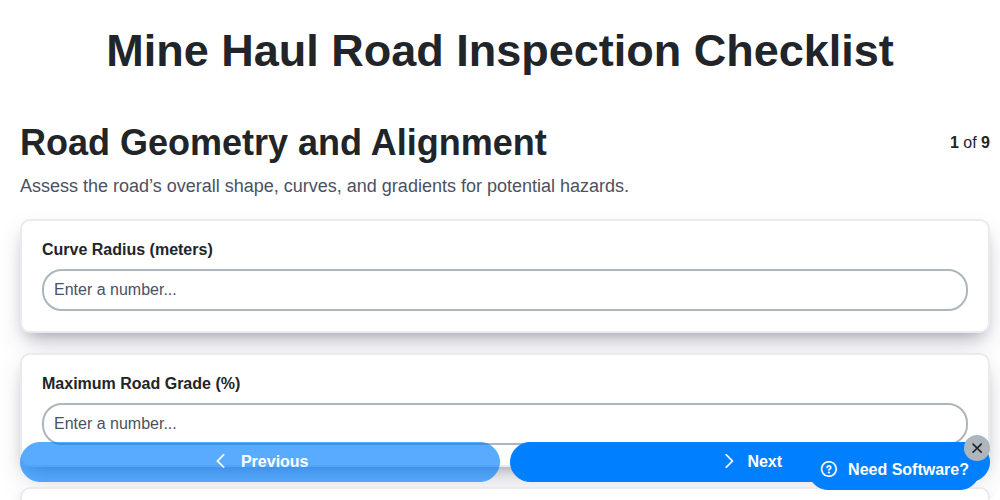
Ensuring Safety & Efficiency: Your Mine Haul Road Inspection Checklist Guide
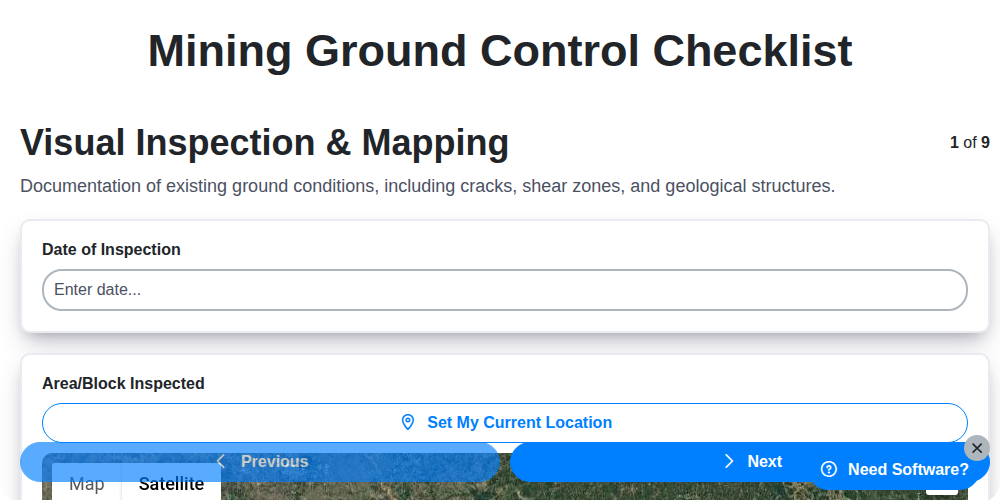
Mastering Mine Safety: Your Guide to the Ground Control Checklist
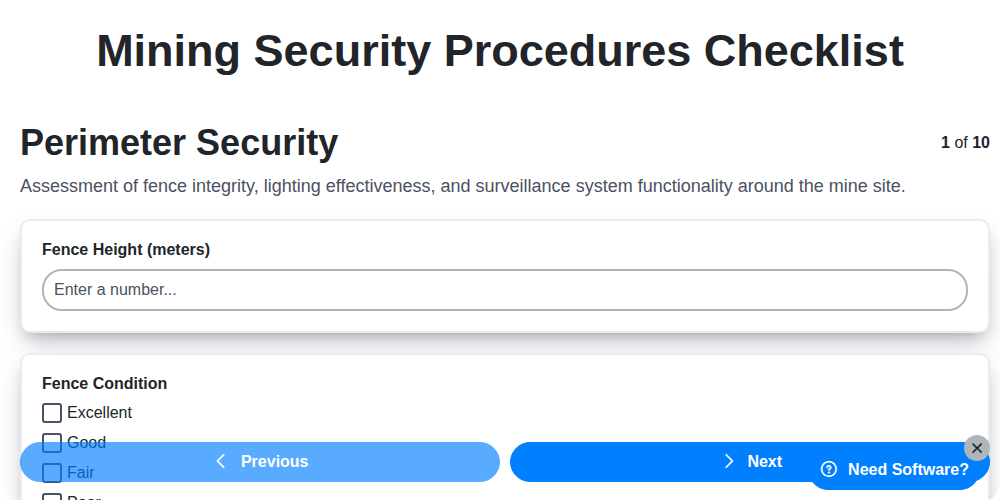
Mining Security Procedures Checklist: A Comprehensive Template for Safety
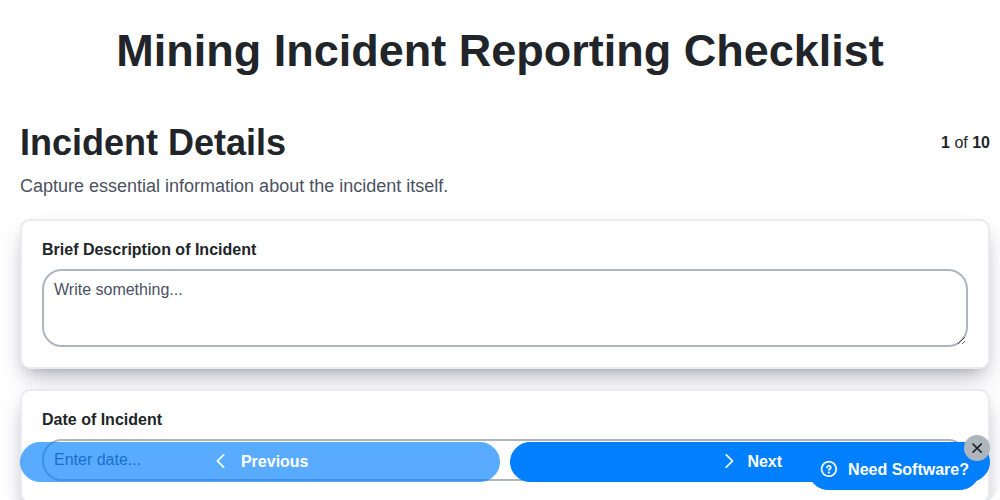
Ensuring Safety: Your Mining Incident Reporting Checklist Guide
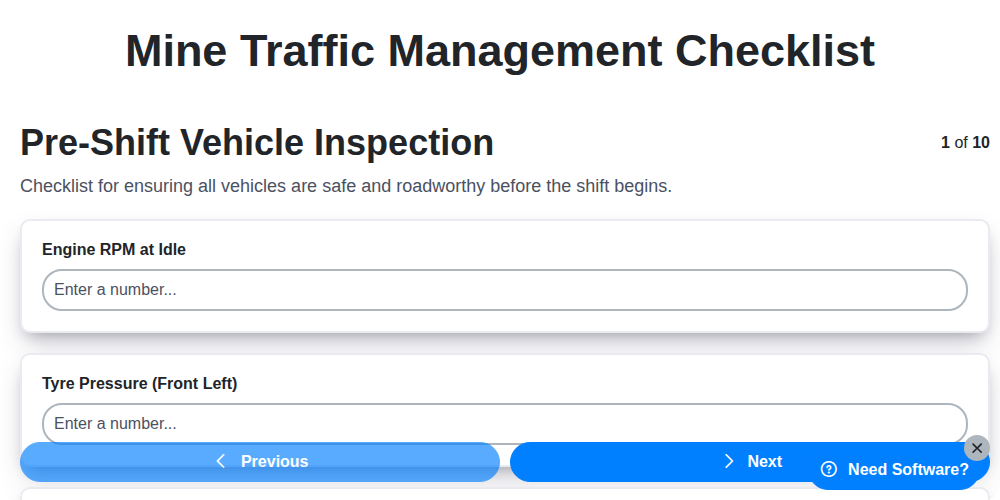
Ensuring Safety Underground: Your Mine Traffic Management Checklist Guide
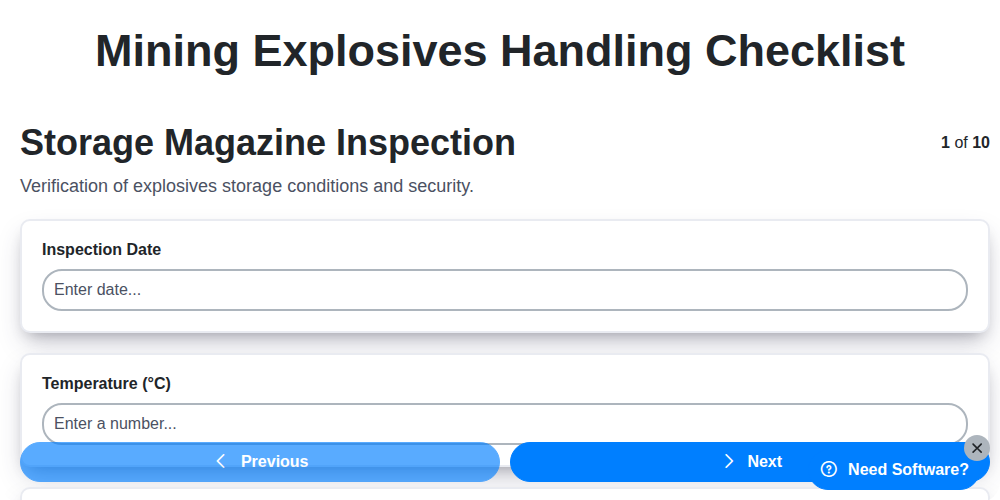
Ensuring Safety: Your Mining Explosives Handling Checklist Template
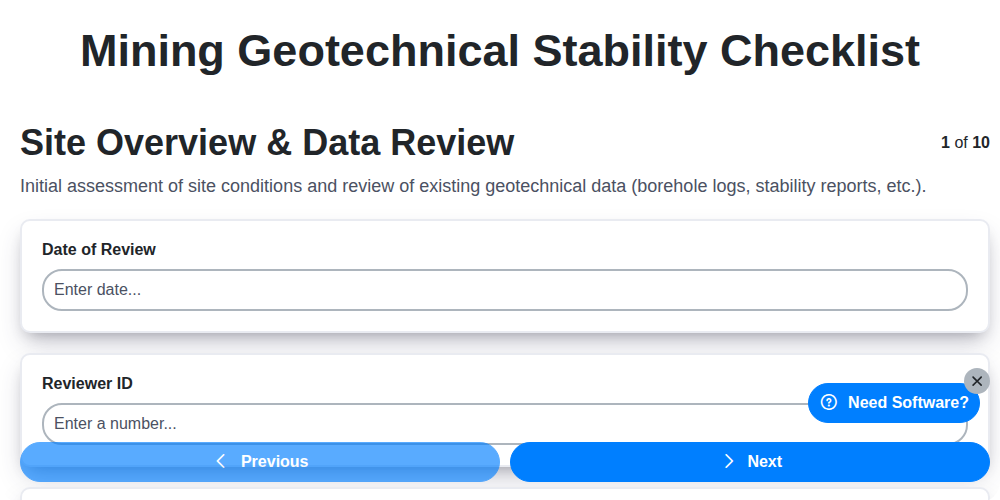
Ensuring Mine Safety: Your Geotechnical Stability Checklist Guide
Need help with
Mining Management?
Have a question? We're here to help. Please submit your inquiry, and we'll respond promptly.