Mastering Mine Safety: Your Guide to the Ground Control Checklist
Published: 20.11.2025 Updated: 2.07.2026
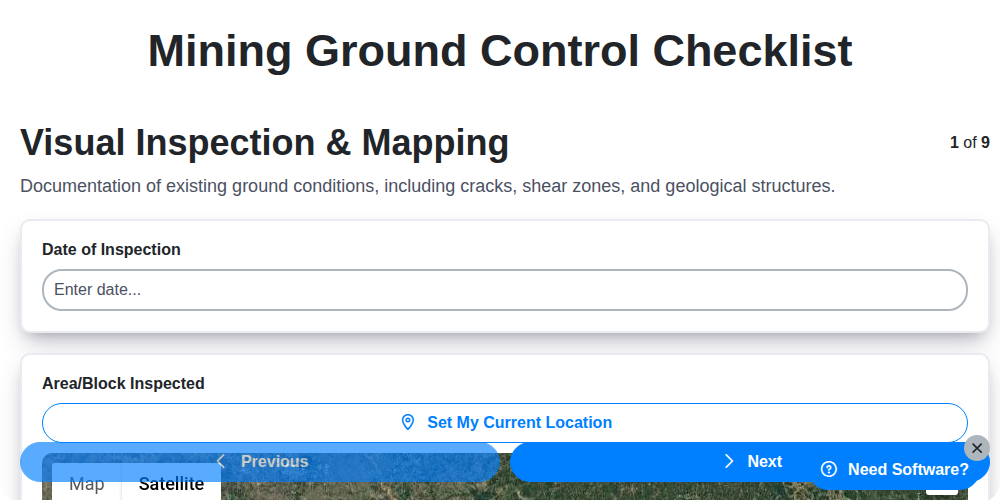
Table of Contents
- Introduction: Why Ground Control is Paramount
- 1. Visual Inspection & Mapping: Laying the Foundation
- 2. Support System Assessment: Evaluating Existing Infrastructure
- 3. Convergence Monitoring: Tracking Roof Movement
- 4. Instrumentation Functionality: Ensuring Data Accuracy
- 5. Ground Condition Changes: Identifying Potential Hazards
- 6. Scaling & Mucking: Managing Loose Material
- 7. Support Installation Verification: Confirming Secure Fixation
- 8. Water Ingress: Addressing Water-Related Risks
- 9. Recommendations & Actions: Documenting and Implementing Solutions
- Resources & Links
TLDR: This checklist is your essential tool for mine ground control! It guides you through key steps - from visual inspections and support assessments to monitoring convergence, checking instruments, and managing water - ensuring your mine remains stable and safe. Use it consistently to identify risks, track progress, and proactively prevent ground failures. Think of it as your proactive ground control guardian!
Introduction: Why Ground Control is Paramount
Maintaining a safe and productive mining operation hinges on one critical element: robust ground control. Instability in underground environments poses significant risks to personnel, equipment, and overall productivity. A proactive and systematic approach to ground control management is not just a best practice; it's a necessity. This isn't simply about bolting rock - it's a comprehensive, ongoing process involving vigilant observation, meticulous documentation, and swift corrective actions. Ignoring potential issues can lead to catastrophic events, disrupting operations and, most importantly, endangering lives. This blog post will delve into a crucial tool for ensuring ground control excellence: the Ground Control Checklist - specifically, the "Mining Ground Control Checklist." We'll explore each step in detail, outlining what to look for and the importance of consistent application.
1. Visual Inspection & Mapping: Laying the Foundation
The first, and arguably most crucial, step in ground control management is a thorough visual inspection and mapping of the area. This isn't just a cursory glance; it's a systematic examination designed to identify existing conditions and establish a baseline for future monitoring.
Begin by meticulously documenting the immediate surroundings - note the rock type, geological structure (faults, joints, bedding planes), and any pre-existing signs of instability. This includes cracks, loose rock, evidence of past ground movement, and the overall orientation of the rock mass. High-resolution photographs and detailed sketches are invaluable here.
Mapping the area accurately is equally important. Create a scaled map highlighting key features - existing support, geological structures, and any observed instability. GPS coordinates or survey markers should be used to ensure accuracy and allow for easy relocation during subsequent inspections. Consider using drone imagery or laser scanning for larger or more complex areas.
This initial assessment forms the foundation for everything that follows. It allows you to identify potential hazards, prioritize areas for further investigation, and track changes over time. A well-executed visual inspection and mapping exercise is the bedrock of effective ground control.
2. Support System Assessment: Evaluating Existing Infrastructure
A robust ground control system is the bedrock of safe and productive mining operations. This assessment goes beyond a cursory glance, demanding a thorough evaluation of existing infrastructure to identify weaknesses, ensure proper function, and anticipate potential failures.
Begin by meticulously examining all installed support elements - be it rock bolts, cable bolts, shotcrete, mesh, timber, or steel sets. Check for signs of distress: cracking, bulging, corrosion, displacement, or degradation. Pay close attention to the interfaces between different support components; these are often points of stress concentration.
Document the type, spacing, and condition of each support element. Compare the installed system with the original design specifications. Any deviations should be investigated and documented, with consideration given to their potential impact on overall ground stability. Consider the age of the support system; older installations may require more frequent and detailed inspections.
Specific areas of focus should include:
- Rock Bolt Condition: Look for signs of corrosion, bent or broken bolts, and loosening. Torque testing should be incorporated where possible to quantify bolt effectiveness.
- Shotcrete/Mesh Integrity: Check for cracks, delamination, and areas where the shotcrete has separated from the rock face. Mesh should be assessed for corrosion and bond.
- Timber/Steel Set Condition: Inspect for rot, warping, and structural damage. Check for proper connection and alignment.
- Anchor Plate Condition: Inspect for corrosion and proper seating.
This assessment isn't just about identifying current problems; it's about predicting future issues. Historical performance data, any previous incidents or repairs, and the overall geological context should all be factored into the evaluation. A comprehensive assessment lays the foundation for proactive maintenance and strategic reinforcement decisions.
3. Convergence Monitoring: Tracking Roof Movement
Convergence monitoring is a critical component of ground control management, providing early warning signs of potential instability. It involves systematically measuring and analyzing the movement of the ground - primarily roof and wall convergence - to detect trends and predict future behavior. This data informs proactive support adjustments and ensures worker safety.
Several techniques are employed, often in combination:
- Surveying: Traditional surveying methods utilizing theodolites and levels are still valuable for establishing baseline data and measuring larger-scale movements.
- Laser Scanning: Time-of-flight (TOF) laser scanners provide rapid, detailed 3D point clouds, allowing for precise measurement of convergence over time. These are particularly useful in areas with complex geometries.
- Extensometers: These devices directly measure the change in distance between two points, providing highly accurate data on localized deformation.
- Inclinometers: These instruments measure the inclination or tilt of the ground, indicating potential instability.
Data is typically recorded at regular intervals (daily, weekly, or monthly, depending on the site's risk profile) and analyzed for trends. Sudden increases in convergence rates, or deviations from established patterns, necessitate immediate investigation and potential corrective action. It's crucial to have clearly defined trigger levels - specific convergence rates that automatically trigger a re-evaluation of ground conditions and potential support adjustments. The data collected should be meticulously documented and readily accessible to all relevant personnel.
4. Instrumentation Functionality: Ensuring Data Accuracy
Reliable ground control depends heavily on accurate data, and that data comes from the instrumentation installed within the mine. This isn't just about having instruments; it's about verifying they're working correctly and providing trustworthy readings. Regular checks of instrumentation functionality are a critical component of ground control management.
This involves a multi-faceted approach. We begin with a visual inspection of each instrument - gauges, extensometers, inclinometers, piezometers - checking for physical damage, loose connections, or signs of tampering. Next, we perform a functional test. For extensometers, this might involve applying a known load and verifying the reading matches expectations. Inclinometers should be checked for zero drift and consistent readings across multiple points. Piezometers require verification of the pressure sensor's responsiveness. Data loggers must be inspected for proper logging intervals and data integrity.
Calibration records are paramount. All instrumentation should have a documented calibration history, and deviations from manufacturer specifications should trigger immediate investigation and recalibration. Don't assume an instrument is accurate just because it's been in place for a while; periodic calibration is essential. Any instrument failing these checks is immediately taken out of service and replaced until repaired and verified. A log of all instrumentation checks, including dates, results, and corrective actions, is absolutely essential for tracking trends and identifying potential issues proactively. Neglecting instrumentation functionality can lead to false confidence and ultimately compromise the entire ground control system.
5. Ground Condition Changes: Identifying Potential Hazards
The stability of a mine is constantly evolving. What might be stable today could become a potential hazard tomorrow. Diligence in observing and documenting ground condition changes is paramount for proactive risk mitigation. This involves far more than just a quick glance; it requires a systematic approach and detailed record-keeping.
Look for subtle shifts - are walls or roofs noticeably different from previous surveys? Are there new cracks, bulging, or signs of settling? Pay close attention to any evidence of ground movement, even minor ones. Note the location, size, and orientation of any observed changes. Are these changes isolated, or are they part of a larger pattern?
Consider geological factors like fault lines, bedding planes, and groundwater influence. These can all contribute to ground instability. Unexpected changes in rock type or soil conditions should also be flagged and investigated further.
Remember, seemingly insignificant changes can be precursors to more serious issues. Consistent and thorough observation, coupled with meticulous documentation, allows for early detection and allows for informed decisions regarding support adjustments or further investigation. A photographic record alongside written observations is invaluable for tracking changes over time.
6. Scaling & Mucking: Managing Loose Material
Scaling and mucking are critical tasks in ground control management, directly impacting stability and worker safety. Scaling involves removing loose rock and debris from the exposed face of the excavation, while mucking is the process of removing this material from the working area. This isn't just about tidiness; it's about proactively preventing rockfalls and maintaining sufficient space for equipment and personnel.
The process begins with a careful visual assessment of the face. Identifying areas of potential instability - fractured rock, heavily weathered zones, or signs of previous falls - is paramount. Scaling should be performed systematically, using appropriate tools (handheld hammers, hydraulic splitters, or powered scaling tools) and techniques based on the rock type and condition. Experienced personnel are essential for correctly identifying the nature of the instability and choosing the appropriate method.
Mucking needs to be efficient and regular. Allowing accumulated material to build up increases the risk of instability and creates a hazard for workers. Use of loaders, conveyors, or manual labor will depend on the volume of material and site conditions. Careful consideration should be given to how the mucked material is stockpiled; avoid creating unstable piles near the active face.
Crucially, these activities are not isolated. Scaling and mucking should be integrated with other ground control measures, like support installation. Removing loose material before installing support ensures the support is properly seated and effective. Regular observation during and after these activities is essential to identify any changes in ground behavior. Properly documented records of scaling and mucking efforts contribute to a clearer understanding of ground conditions and inform future control strategies.
7. Support Installation Verification: Confirming Secure Fixation
Proper support installation is paramount to ground control stability. This verification step goes beyond simply confirming the support is in place; it confirms it's installed correctly and with the intended level of security. This involves a detailed assessment of several key factors:
- Correct Type & Size: Is the installed support the specified type (e.g., rock bolts, mesh, cable bolts, shotcrete) and the correct size according to the ground control plan? Mismatched supports can compromise stability.
- Anchor Quality & Penetration (for Rock Bolts & Cable Bolts): Verify the anchor is securely embedded in the rock mass. This includes checking the depth of penetration, grout quality (if applicable), and ensuring there are no signs of displacement or looseness. Use calibrated torque wrenches for rock bolt installation and document torque values.
- Mesh Coverage & Overlap: If mesh is used, ensure complete coverage of the exposed ground surface with appropriate overlap as per design specifications. Inspect for gaps or areas where the mesh isn't tightly adhered.
- Shotcrete Thickness & Adhesion: For shotcrete installations, confirm the correct thickness is applied and that it's properly bonded to the rock surface. Look for signs of segregation, honeycomb, or rebound.
- Alignment & Orientation: Supports should be installed with the correct orientation and alignment as indicated in the design. Misaligned supports are less effective.
- Documentation: Thoroughly document all installation details, including support type, size, location, installation method, and any deviations from the approved plan. Photos and detailed records are essential.
This verification is not a one-time check. It should be ongoing throughout the mining operation, especially following any ground disturbance or significant geological changes.
8. Water Ingress: Addressing Water-Related Risks
Water ingress is a constant threat in underground mining operations, potentially causing instability, equipment damage, and safety hazards. This section of the ground control checklist focuses on identifying, assessing, and mitigating water-related risks.
Observation & Documentation: Regularly check for any signs of water presence, including seepage, dripping, pooling, and dampness on walls, roofs, and floors. Document the location, volume, and any changes observed over time. Use clear photographic evidence to create a detailed record. Pay particular attention to areas near fault lines, geological contacts, and existing water features.
Source Identification: Attempt to identify the source of the water. Is it surface runoff, groundwater seepage, or a connection to an underground water body? Identifying the source is crucial for implementing effective mitigation strategies.
Impact Assessment: Evaluate the impact of the water ingress. Is it affecting ground stability, corroding equipment, or creating slippery working conditions? Assess the potential for increased water flow and the potential consequences.
Mitigation & Control: Implement appropriate mitigation measures based on the severity of the ingress. This may include:
- Drainage Systems: Install or improve drainage systems to redirect water away from the work area.
- Grouting: Use grouting techniques to seal cracks and fissures in the rock mass.
- Waterproof Membranes: Apply waterproof membranes to exposed surfaces.
- Pump Systems: Utilize pump systems to remove accumulated water.
- Increased Ventilation: Employ ventilation to reduce humidity and minimize water vapor condensation.
Reporting & Escalation: Immediately report any significant water ingress to the appropriate personnel. Escalate concerns to the mine engineer for further investigation and action. Consistent monitoring and proactive management are essential to preventing water-related incidents.
9. Recommendations & Actions: Documenting and Implementing Solutions
The checklist isn't just about identifying issues; it's a springboard for action. This final section is critical for translating observations into tangible improvements in ground control. Every recommendation, regardless of perceived severity, must be documented here.
Detailed Record-Keeping is Key: For each observation noted in the earlier sections (Visual Inspection, Support Assessment, etc.), this section requires a clear and concise recommendation. Don't just say support needs adjustment. Specify what adjustment is needed - e.g., Install an additional rock bolt with a 6-meter length at location X, 3 meters from the wall face. Include the rationale behind the recommendation - briefly explain why you believe the action is necessary.
Action Assignment and Tracking: Crucially, each recommendation needs an assigned individual responsible for its implementation. This ensures accountability and prevents issues from falling through the cracks. The checklist should also include a space for documenting the completion date and any relevant notes on the implementation process. Did the solution work as expected? Were there unforeseen challenges? Record it all.
Prioritization: Not all recommendations carry equal weight. A robust prioritization system - High, Medium, Low - allows the team to address the most critical risks first. Consider factors like potential for collapse, impact on production, and available resources when assigning priority.
Feedback Loop: The Recommendations & Actions section isn't a dead end. It should feed back into the overall ground control management plan. Recurring issues or failed remedies indicate a need to re-evaluate the initial assessment and potentially adjust support systems or mining methods. Regular review of this section by senior engineers and supervisors is essential for continuous improvement.
Resources & Links
- Mine Safety and Health Administration (MSHA): The primary U.S. government agency responsible for mine safety and health. Provides regulations, training materials, statistics, and alerts. Essential for understanding legal requirements and best practices.
- Saskatchewan Mining Safety: Provides resources, guidance, and training related to mine safety in Saskatchewan, Canada. Contains articles, best practices, and training programs relevant to ground control. Many principles are globally applicable.
- Mining Engineering Magazine: A trade publication covering all aspects of mining, including safety. Often features articles and case studies on ground control issues and solutions. Search for 'ground control' or 'roof support' for relevant content.
- Canadian Institute of Mining, Metallurgy, and Petroleum (CIM): Offers technical publications, conferences, and professional development opportunities. Their publications often include in-depth analyses of ground control techniques and research findings.
- Australasian Institute of Mining and Metallurgy (AusIMM): Similar to CIM/AusIMM, provides a wide range of resources including technical publications, conferences, and training courses often with specific focus on Australian mining environments and ground control challenges.
- United States Geological Survey (USGS): Provides geological data and expertise relevant to understanding ground conditions and potential hazards in mining areas. Can inform risk assessments and support planning.
- Rock Support Engineering: A company specializing in ground support design and consulting. Their website features technical information, case studies, and insights into various ground control methods.
- Terra Geosciences: Provides geotechnical engineering services, including ground control assessments and design. Offers white papers and resources related to ground stability.
- Baker Hughes - Geologic Storage: Baker Hughes offers geothermal energy & storage solutions with considerable geological and ground control knowledge. While geared towards energy, their geological expertise can inform ground control practices.
- Engineering.com: A platform for engineering professionals, including mining engineers. Provides forums, articles, and tools that often discuss ground control challenges and solutions. Search for relevant keywords.
- Snowgoose: Specializes in laser scanning and 3D modelling for the mining industry. Their technology can be crucial for visual inspection, mapping, and convergence monitoring as mentioned in the article.
Frequently Asked Questions
What is ground control and why is it important?
Ground control refers to methods used to stabilize slopes and underground excavations to prevent collapses and rockfalls. It's critical for miner safety, preventing injuries and fatalities, and ensuring continuous operation by minimizing disruptions caused by instability.
What is a ground control checklist and who should use it?
A ground control checklist is a step-by-step guide to assess and manage ground stability. It's designed for all personnel involved in underground mining - miners, supervisors, engineers, and safety officers - to ensure consistent and thorough ground control practices.
What are some common ground control methods mentioned in the checklist?
The checklist likely covers methods such as bolting (rock bolts, cable bolts), shotcrete application, meshing (steel or wire mesh), ground improvement techniques (grouting, pre-grouting), and support structures (timber, steel sets).
How often should a ground control checklist be completed?
The frequency depends on the site's ground conditions, mining method, and regulatory requirements. Generally, checklists should be completed regularly (daily or shift-based), after blasting, and after any incidents that may affect ground stability.
What constitutes a 'high-risk' observation identified through the checklist?
A high-risk observation typically indicates an imminent danger of ground failure, such as significant fracturing, unexpected convergence, water ingress affecting stability, or loss of existing support. Immediate action and escalation to qualified personnel are required.
What should I do if I identify a potential ground control issue while using the checklist?
Immediately report the observation to your supervisor or designated ground control personnel. Follow established procedures for halting work in the affected area and implementing corrective measures. Do not proceed until the issue is assessed and addressed by a competent person.
Who is responsible for signing off on the ground control checklist?
The person completing the checklist is responsible for verifying the observations and initial actions. A qualified person (e.g., a mining engineer or ground control specialist) is typically responsible for reviewing the checklist, verifying corrective actions, and formally approving the findings.
Where can I find additional information or training on ground control practices?
Consult your company's safety manual, ground control procedures, and training materials. Contact your supervisor, mining engineer, or safety officer for guidance. Regulatory bodies and industry organizations often provide resources and training courses on ground control.
Does the checklist account for different mining methods (e.g., longwall, cut-and-fill)?
A comprehensive checklist should be adaptable to different mining methods. Variations in ground conditions and support requirements necessitate method-specific considerations and adjustments to the checklist to ensure its relevance and effectiveness.
How does the checklist contribute to a culture of safety in the mine?
By providing a standardized and repeatable process for assessing ground stability, the checklist promotes awareness, encourages proactive identification of risks, and fosters a collective responsibility for miner safety. Consistent adherence builds a strong safety culture.
Comments
There are no comments yet. Be the first to add one!
Mining Management Solution Demo
Maximize efficiency & safety in mining operations! ChecklistGuro streamlines task management, equipment tracking, and compliance reporting. Optimize workflows, reduce risk, & boost productivity. Manage it all with our Work OS.
Related Articles
Ensuring a Sustainable Future: Your Mine Rehabilitation & Closure Checklist Guide
Ensuring Safety: Your Mining Incident Reporting Checklist Guide
Ensuring Safety: Your Mining Explosives Handling Checklist Template
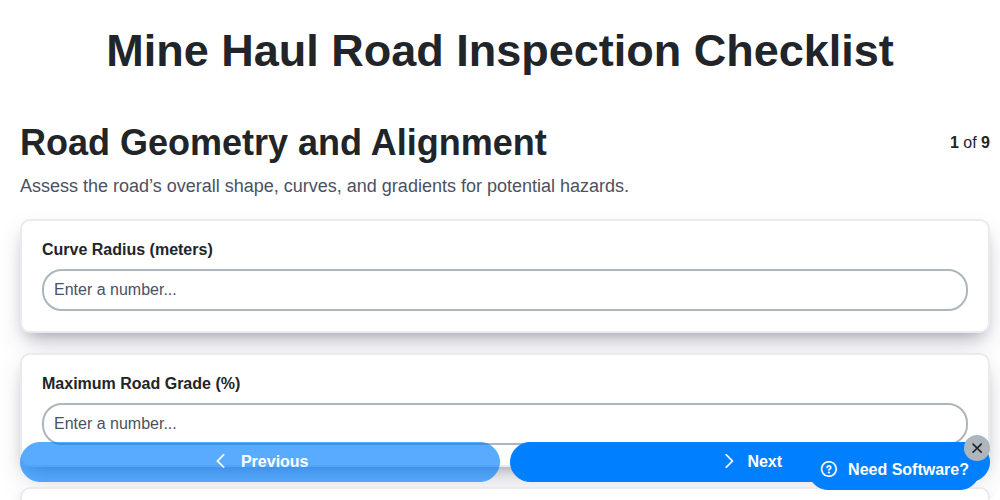
Ensuring Safety & Efficiency: Your Mine Haul Road Inspection Checklist Guide
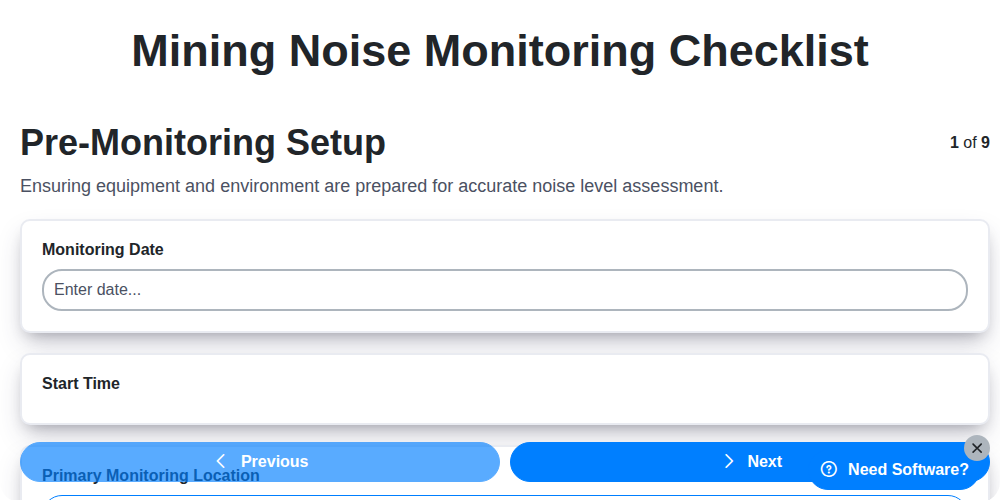
Ensuring Safety & Compliance: Your Mining Noise Monitoring Checklist Guide
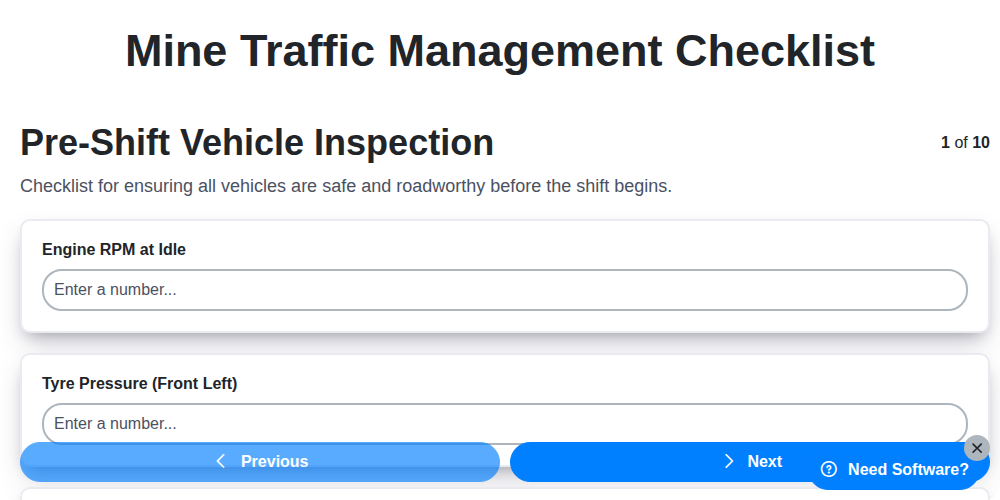
Ensuring Safety Underground: Your Mine Traffic Management Checklist Guide
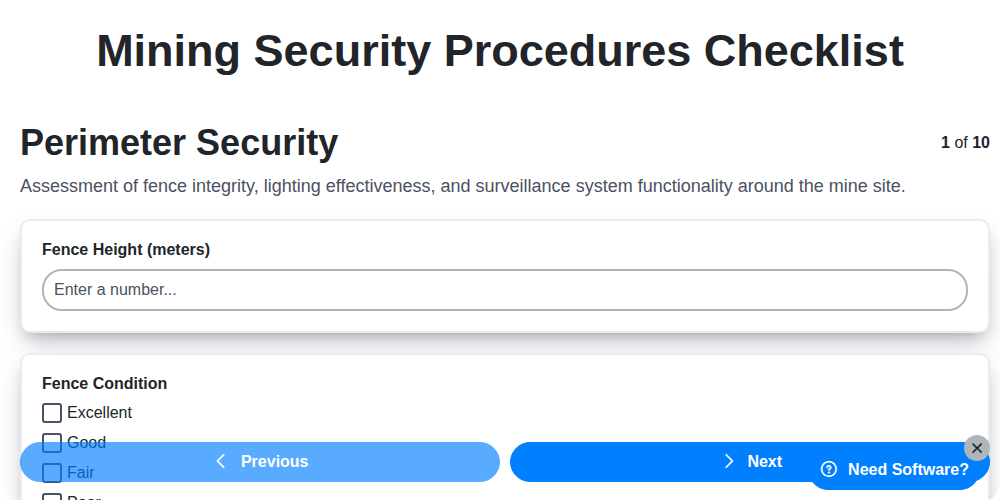
Mining Security Procedures Checklist: A Comprehensive Template for Safety
Ensuring Mine Safety: Your Geotechnical Stability Checklist Guide
Need help with
Mining Management?
Have a question? We're here to help. Please submit your inquiry, and we'll respond promptly.