Ensuring Safety: Your Mining Incident Reporting Checklist Guide
Published: 11/22/2025 Updated: 07/02/2026
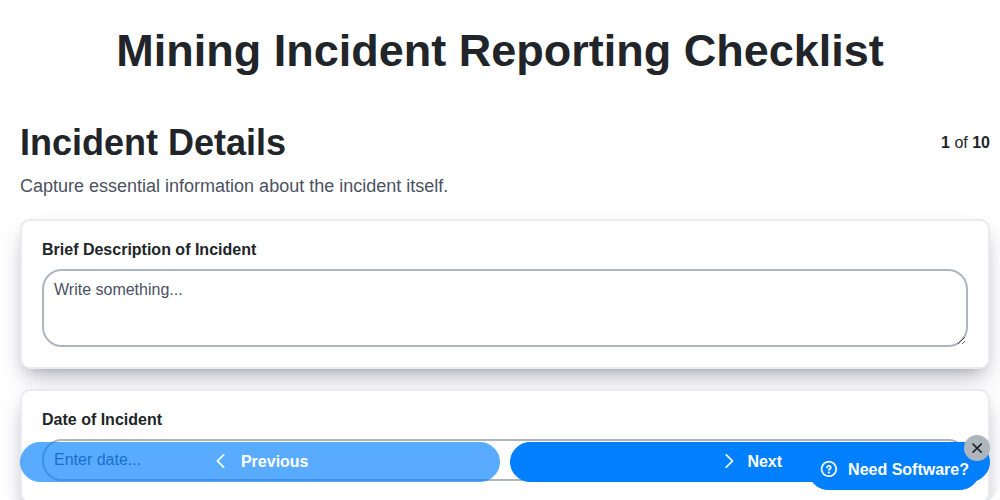
Table of Contents
- Introduction: Why Meticulous Incident Reporting Matters
- 1. Incident Details: Capturing the Essentials
- 2. Location & Time: Pinpointing the Event
- 3. Personnel Involved: Identifying Those Affected
- 4. Equipment & Environment: Assessing Contributing Factors
- 5. Immediate Actions Taken: Documenting Initial Response
- 6. Witness Statements: Gathering Multiple Perspectives
- 7. Injury/Damage Assessment: Quantifying the Impact
- 8. Root Cause Analysis: Digging Deeper for Prevention
- 9. Corrective Actions: Implementing Solutions
- 10. Review & Sign-off: Ensuring Accountability
- Resources & Links
TLDR: After a mining incident, quick and thorough reporting is crucial. This checklist guide breaks down the process - from initial details & personnel involved to root cause analysis & corrective actions - ensuring nothing is missed and helping prevent future incidents. Download the template and use it to streamline your reporting and boost mine safety!
Introduction: Why Meticulous Incident Reporting Matters
Mining operations, by their nature, involve inherent risks. From ground instability and equipment malfunctions to unexpected geological events, incidents can, and sometimes do, occur. While proactive safety measures are paramount, when incidents do happen, how we respond - particularly through thorough and accurate incident reporting - is crucial. Meticulous incident reporting isn't just about ticking a box for compliance; it's about learning from mistakes, preventing future occurrences, and safeguarding the well-being of everyone on site. A rushed or incomplete report can mask vital information, hindering the ability to identify underlying causes and implement effective preventative measures. This checklist is designed to guide you through a comprehensive reporting process, ensuring that no critical detail is overlooked and contributing to a safer mining environment for all.
1. Incident Details: Capturing the Essentials
The foundation of any effective incident reporting process lies in meticulously documenting the initial details. This section isn't just about recording what happened, but about creating a clear and unambiguous record for later analysis and action. Start with the basics:
- Brief Description: A concise summary of the incident. Think of it as an executive summary - what happened in a few sentences. Be factual, not judgmental.
- Incident Type: Categorize the incident (e.g., fall, equipment malfunction, near miss, vehicle accident, gas leak). This helps with trend analysis and targeted prevention measures.
- Date and Time: Accurate timestamps are crucial for reconstructing the sequence of events and identifying potential contributing factors.
- Severity Level: Assess the initial perceived severity (e.g., minor, moderate, serious, critical). This helps prioritize immediate responses and investigations.
- Initial Cause (Preliminary): While a full root cause analysis follows later, note any immediately obvious potential causes. This is a preliminary observation, subject to change.
- Reporting Individual: Clearly identify who is submitting the report.
2. Location & Time: Pinpointing the Event
Accurately documenting the location and time of a mining incident is absolutely critical. This seemingly straightforward step provides invaluable context and aids in later investigations and prevention efforts. Simply stating "near the conveyor belt" isn't sufficient. Be as precise as possible.
Consider these points:
- GPS Coordinates: If available, recording GPS coordinates is the gold standard for pinpointing the exact location.
- Specific Area: Detail the specific area within the mine - e.g., Level 3, Section B, approximately 50 meters past the ventilation shaft.
- Landmark Reference: Include reference points - "near the blue painted wall," or "adjacent to the ore pass."
- Time of Incident: Note the precise time, including date, hour, minute, and second if possible. If the exact time isn't known, provide an estimated time frame (e.g., between 2:15 PM and 2:30 PM).
- Shift Information: Record the shift on which the incident occurred (e.g., Day Shift, Night Shift).
- Time Zone: Explicitly state the time zone to avoid confusion.
The level of detail provided in this section directly impacts the accuracy of subsequent analysis. Vague location and time data can hinder investigations and prevent effective preventative measures.
3. Personnel Involved: Identifying Those Affected
Accurately documenting everyone involved in a mining incident is crucial. This goes beyond just the individual who directly experienced the incident. It includes:
- Directly Injured/Affected Personnel: Obviously, record the full name, role, and contact information of any individual who sustained an injury or experienced adverse health effects as a direct result of the incident.
- Near Misses: Don't overlook those who could have been injured. Document their presence and proximity to the incident, even if they weren't directly harmed. This helps identify potential systemic issues that put others at risk.
- Contractors & Visitors: Mining operations often involve contractors and visitors. Be sure to identify them by name, company (if applicable), and role.
- Supervisors & Management: Record the names and roles of any supervisors or managers present or notified about the incident. Their involvement might be relevant to understanding the context and response.
- Emergency Responders: Document the names and roles of any medical personnel, rescue teams, or other emergency responders involved in the incident.
For each individual, note their position at the time of the incident and the nature of their involvement. Accurate and complete personnel identification is vital for follow-up care, investigation clarity, and ensuring the safety of all workers.
4. Equipment & Environment: Assessing Contributing Factors
Beyond the immediate incident details, it's crucial to thoroughly document the state of the equipment and the surrounding environment. This section isn't about assigning blame; it's about uncovering potential contributing factors that might not be immediately apparent.
Consider these points:
- Equipment Condition: Note the age, maintenance history, and any visible defects or malfunctions of the equipment involved. Was it recently inspected? Were any warning signs ignored? Be specific - don't just say equipment was faulty; detail how it was faulty (e.g., frayed cable, loose bolt, malfunctioning sensor).
- Environmental Factors: Assess weather conditions (visibility, lighting, ground conditions), noise levels, ventilation, and any other environmental elements that could have played a role. Was the area well-lit? Was there excessive dust or debris?
- Layout & Design: Was the layout conducive to safe operation? Were there any obstructions or inadequate space? Consider the design of the work area and whether it contributed to the incident.
- Potential Hazards: Document any existing or newly identified hazards in the area that weren't previously addressed in risk assessments.
Thorough documentation in this section can illuminate systemic issues that require preventative measures beyond addressing the immediate cause of the incident.
5. Immediate Actions Taken: Documenting Initial Response
The period immediately following a mining incident is critical. Your actions during these initial moments can significantly impact the severity of the situation and the subsequent investigation. This section of the Incident Reporting Checklist focuses on accurately documenting those crucial first responses.
Beyond simply addressing the immediate danger (like rescuing injured personnel or securing a hazardous area), it's vital to record exactly what was done. Be specific. Don't just write provided first aid. Instead, detail what first aid was administered, who administered it, and when. Note the sequence of actions - did you call for assistance? Did you shut down equipment? Did you evacuate the area?
Include details like:
- Who initiated the response and their roles.
- What steps were taken to stabilize the situation.
- When each action was performed.
- Why those specific actions were deemed necessary (even if it was a quick judgment call).
Accuracy here prevents assumptions later and provides a clear timeline of events. Vague entries like "took action" are unhelpful - paint a complete picture. Remember, this is not about assigning blame; it's about understanding what happened and how it was initially addressed.
6. Witness Statements: Gathering Multiple Perspectives
Gathering witness statements is a crucial step in a thorough incident reporting process. It's rarely enough to rely on just one account; multiple perspectives paint a much clearer picture of what transpired. Encourage all individuals who observed the incident, regardless of their perceived involvement, to provide a written statement.
Here's why multiple witness statements are vital:
- Completeness: Each witness may have observed different aspects of the incident that others missed. Combining these observations provides a more complete understanding.
- Verification: Comparing accounts can help identify inconsistencies or confirm details, strengthening the accuracy of the report.
- Bias Mitigation: Individual accounts can be subjective and potentially influenced by personal feelings or interpretations. Multiple perspectives help balance these biases.
- Identifying Missed Details: Sometimes, seemingly insignificant details noticed by one witness can prove vital in understanding the root cause.
When collecting statements, ensure witnesses understand they are providing factual accounts, avoiding speculation or assumptions. Provide a standardized form with prompts such as: "What did you see? Where were you? What did you hear? What actions did you observe?" and assure them that their statements will be treated confidentially.
7. Injury/Damage Assessment: Quantifying the Impact
Moving beyond simply noting that an incident occurred, a thorough Injury/Damage Assessment is crucial for understanding the full extent of the event and its consequences. This isn't just about ticking a box; it's about generating data that informs future prevention strategies.
Here's what a robust assessment should cover:
- Personnel Injuries: Document all injuries sustained, including severity (minor, moderate, severe). Record medical treatment received, lost workdays, and any long-term impacts. Utilize a standardized severity scale to ensure consistency in reporting.
- Equipment Damage: Detail the extent of damage to any equipment involved. This includes visual inspection, potential repair costs, downtime required for repair, and any impact on production schedules. Capture photographic evidence whenever possible.
- Environmental Damage: Assess any environmental impact, such as spills, contamination, or damage to vegetation. Report quantities involved, containment measures taken, and any potential remediation requirements.
- Property Damage: Record any damage to buildings, infrastructure, or other physical property. Obtain estimates for repair or replacement costs.
- Financial Impact: Begin to quantify the overall financial impact, including medical expenses, repair/replacement costs, lost production, potential fines, and legal fees. While a precise figure may not be immediately available, preliminary estimates are vital.
- Near Miss Considerations: Even if no immediate injury or damage occurred, document the potential for harm that existed. This helps identify vulnerabilities and prevent future incidents.
Accurate and detailed documentation in this section provides valuable data for insurance claims, regulatory reporting, and most importantly, for identifying trends and implementing effective preventative measures.
8. Root Cause Analysis: Digging Deeper for Prevention
Simply addressing the symptoms of a mining incident - the visible injuries or equipment damage - isn't enough. True prevention requires a thorough Root Cause Analysis (RCA). This isn't about assigning blame; it's about systematically uncovering the underlying factors that led to the incident.
Think of it like peeling back the layers of an onion. The immediate cause (e.g., a slip and fall) is just the surface. RCA aims to identify the contributing factors behind that, asking why repeatedly until you reach the core issues.
Here's what a solid RCA should involve:
- 5 Whys Technique: A common method where you ask Why? five times, drilling down through each level of cause. For example:
- Why did the worker fall? Because they missed a step.
- Why did they miss the step? Because the lighting was inadequate.
- Why was the lighting inadequate? Because the bulb was burned out.
- Why was the bulb burned out? Because the maintenance schedule wasn't followed.
- Why wasn't the maintenance schedule followed? Due to staffing shortages and lack of prioritization.
- Fishbone Diagram (Ishikawa Diagram): This visual tool helps brainstorm potential causes across categories like Equipment, Methods, Materials, Manpower, Environment, and Measurement.
- Fault Tree Analysis: A more complex method using logic gates to identify possible combinations of events that could lead to an incident.
- Data Review: Examining maintenance records, training logs, safety inspections, and other relevant data.
Key considerations for a successful RCA:
- Team Involvement: Include personnel from various departments - operations, maintenance, safety - to gain diverse perspectives.
- Objectivity: Focus on facts, not assumptions or opinions.
- Documentation: Clearly record the RCA process, findings, and recommendations.
By diligently performing Root Cause Analysis, we move beyond reactive measures and build a proactive safety culture - preventing similar incidents from happening again.
9. Corrective Actions: Implementing Solutions
Identifying the root cause is only half the battle. The real value in incident reporting comes from translating those findings into tangible corrective actions. This section of the checklist focuses on how you'll prevent similar incidents from happening again.
Don't just list actions; detail them. For each corrective action, clearly outline:
- Specific Action: What exactly will be done? Be precise. For example, instead of Improve training, write Implement a refresher training program on confined space entry procedures, including hands-on drills, to be completed by all relevant personnel within 30 days.
- Responsible Party: Who is accountable for implementing this action? Assign clear ownership.
- Target Completion Date: When will the action be completed? Set a realistic deadline.
- Resources Required: What resources (time, money, personnel, equipment) will be needed to complete the action?
- Verification Method: How will you verify that the corrective action has been effectively implemented and is working as intended? This might involve inspections, audits, or ongoing monitoring.
Corrective actions can range from simple procedural changes (like updating signage) to significant investments in new equipment or infrastructure. Prioritize actions based on the severity of the incident, the likelihood of recurrence, and available resources. Documenting these details within the checklist ensures accountability and allows for tracking progress. Remember, continuous improvement hinges on consistently translating lessons learned into impactful change.
10. Review & Sign-off: Ensuring Accountability
The final step, and arguably one of the most critical, is the review and sign-off process. This isn't just about ticking a box; it's about verifying the completeness and accuracy of the entire incident reporting process.
This review should be conducted by a designated individual, typically a supervisor, safety manager, or relevant subject matter expert, who has the authority and knowledge to assess the report's validity. They need to ensure that all sections have been thoroughly completed, all data is accurate and supported by evidence, and the proposed corrective actions are appropriate and actionable.
The sign-off signifies accountability. It confirms that the reviewer has examined the report and acknowledges the findings, the proposed solutions, and their commitment to ensuring implementation. This formal approval process creates a clear line of responsibility and reinforces the importance of learning from incidents to prevent recurrence. Keep a record of the sign-off, including the reviewer's name and date, within the incident report file for auditing and future reference.
Resources & Links
- Mine Safety and Health Administration (MSHA): The primary federal agency responsible for mine safety and health. Contains regulations, guidance documents, statistics, and training materials related to incident reporting and prevention. Crucial for understanding legal requirements and best practices.
- Occupational Safety and Health Administration (OSHA): While primarily focused on surface mining and related industries, OSHA's general safety and health principles and reporting requirements provide a broader context for incident reporting and investigation. Provides resources on hazard recognition and prevention.
- International Organization for Standardization (ISO): Explore ISO 45001, the international standard for occupational health and safety management systems. Provides a framework for creating a comprehensive safety culture and robust incident reporting processes. Provides framework for continual improvement.
- National Council on Compensation Insurance (NCCI): Provides data and resources related to workplace injuries and claims. Understanding industry trends in mining incidents can inform prevention strategies. Relevant for understanding the financial impact of incidents.
- SRM (Society for Mining, Minerals & Exploration): SRM offers training, publications, and resources for the mining industry, including materials related to safety and risk management. Check their publications for incident reporting best practices and case studies.
- Centers for Disease Control and Prevention (CDC): Provides research and information on occupational health and safety issues, including those relevant to mining. Can provide insights into the health consequences of mining incidents and inform prevention strategies.
- American Industrial Hygiene Association (AIHA): Offers resources and expertise in industrial hygiene, which is vital for assessing environmental hazards and protecting worker health in mining operations. Useful for understanding exposure risks and contributing factors to incidents.
- Cametrics: Cametrics specializes in real-time monitoring and analysis systems that can be valuable for capturing data related to environmental conditions and potential hazards in mining operations, assisting with incident identification and prevention. (Example of Technology Resource)
- Exeltech: Specializes in safety technologies including proximity detection and collision avoidance systems, which can help prevent accidents and improve incident reporting in mining environments. (Another Example of Technology Resource).
- Lockheed Martin: While a broad company, Lockheed Martin's mining and infrastructure solutions division provides advanced technologies for monitoring and managing underground environments, which can enhance safety and incident response capabilities. Demonstrates advanced technology approaches.
Frequently Asked Questions
What is the purpose of this incident reporting checklist?
This checklist is designed to provide a clear, step-by-step guide for reporting mining incidents, ensuring thoroughness, accuracy, and timely communication to relevant stakeholders. It aims to improve safety by analyzing incidents and preventing future occurrences.
Who should use this checklist?
All personnel involved in a mining incident, including those who witnessed the event, supervisors, safety officers, and anyone responsible for reporting. It applies to all types of incidents, from minor injuries to near misses and significant accidents.
What constitutes a 'mining incident' for reporting purposes?
A mining incident is any unplanned event or occurrence that results in, or could have resulted in, harm to personnel, damage to equipment, or disruption to operations. This includes injuries, illnesses, equipment failures, near misses, and environmental releases.
How soon after an incident should a report be submitted?
Reports should be submitted as soon as reasonably practicable after the incident occurs. Ideally, a preliminary report should be filed within 24 hours, followed by a more detailed report within a defined timeframe (e.g., 72 hours) as mandated by your company's policy and regulatory requirements.
What information should be included in an incident report?
The checklist covers essential details like date, time, location, personnel involved, description of the incident, immediate causes, contributing factors, injuries sustained (if any), equipment damage, witness statements, and suggested corrective actions. Be as specific and factual as possible.
What is the difference between an incident, an injury, and a near miss?
An **incident** is any unplanned event. An **injury** is a physical harm resulting from an incident. A **near miss** is an incident that did not result in injury or damage but had the *potential* to do so. All three should be reported.
How do I document witness statements accurately?
Obtain written or recorded statements from all witnesses as soon as possible after the incident. Encourage them to describe what they saw and heard without speculation or assumptions. Ensure they sign and date their statements.
What should I do if I'm unsure about completing a section of the checklist?
If you have any doubts or are unsure how to complete a section, consult with your supervisor, safety officer, or the designated person responsible for incident reporting. It's better to ask for clarification than to submit an incomplete or inaccurate report.
Where should the completed incident report be submitted?
Follow your company's established procedures for submitting incident reports. This may involve submitting it electronically, delivering a hard copy to a designated person, or both. Verify submission confirmation.
How will incident reports be used after submission?
Incident reports are used for investigation, root cause analysis, identification of corrective actions, and development of preventative measures. The information helps improve safety protocols and prevent similar incidents from happening again. Reports are often kept confidential and used for improvement purposes only.
Comments
There are no comments yet. Be the first to add one!
Mining Management Solution Demo
Maximize efficiency & safety in mining operations! ChecklistGuro streamlines task management, equipment tracking, and compliance reporting. Optimize workflows, reduce risk, & boost productivity. Manage it all with our Work OS.
Related Articles
Ensuring a Sustainable Future: Your Mine Rehabilitation & Closure Checklist Guide
Ensuring Safety & Efficiency: Your Mine Haul Road Inspection Checklist Guide
Mastering Mine Safety: Your Guide to the Ground Control Checklist
Mining Security Procedures Checklist: A Comprehensive Template for Safety
Ensuring Safety & Compliance: Your Mining Noise Monitoring Checklist Guide
Ensuring Safety Underground: Your Mine Traffic Management Checklist Guide
Ensuring Safety: Your Mining Explosives Handling Checklist Template
Ensuring Mine Safety: Your Geotechnical Stability Checklist Guide
Need help with
Mining Management?
Have a question? We're here to help. Please submit your inquiry, and we'll respond promptly.