Ensuring Safety: Your Mining Explosives Handling Checklist Template
Published: 11/22/2025 Updated: 07/02/2026
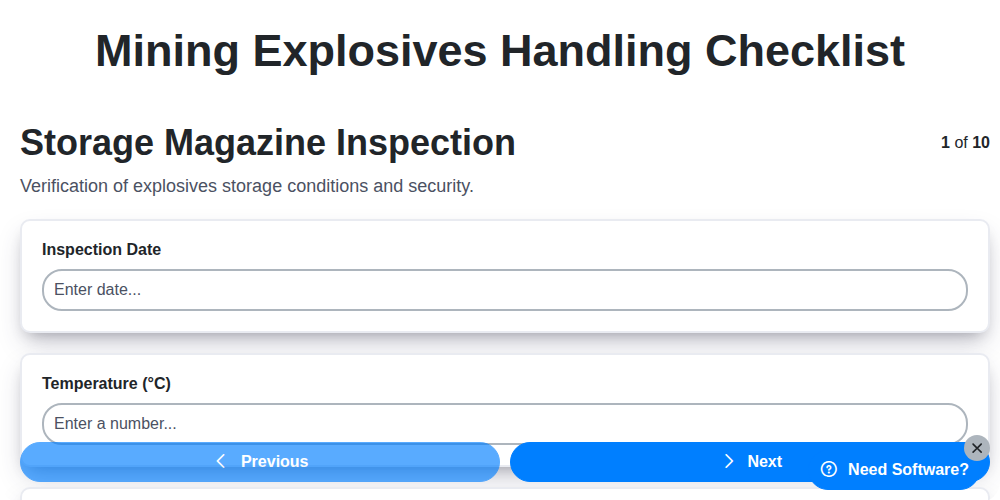
Table of Contents
- Introduction: The Critical Importance of Explosives Handling
- 1. Storage Magazine Inspection: Maintaining Secure Inventory
- 2. Transportation Security: Protecting Explosives in Transit
- 3. Drill Hole Preparation: Laying the Foundation for Safe Loading
- 4. Explosive Loading: Precise Placement for Controlled Blasting
- 5. Initiation System Check: Verifying Detonation Reliability
- 6. Clearance and Warning Procedures: Ensuring a Safe Blast Zone
- 7. Post-Blast Inspection: Assessing Results and Identifying Hazards
- 8. Record Keeping & Documentation: Tracking and Auditing Operations
- Resources & Links
TLDR: This checklist template is your essential guide to safely handling explosives in mining. It covers everything from secure storage and transport to post-blast inspection and record keeping, ensuring compliance and protecting your team. Download it to reduce risk and boost operational efficiency.
Introduction: The Critical Importance of Explosives Handling
The responsible and safe handling of explosives in mining operations is non-negotiable. It's a complex process fraught with inherent risks, demanding meticulous attention to detail and unwavering adherence to established procedures. A single deviation, a missed step, or a lack of proper training can have devastating consequences, impacting not only the operation's productivity but, more importantly, the lives of personnel and the surrounding environment. This isn't simply about following rules; it's about creating a culture of safety where every individual understands their role in mitigating risk and ensuring the well-being of the entire team. This checklist is designed as a framework to guide every stage of explosives handling, from secure storage to post-blast evaluation, emphasizing the paramount importance of minimizing risk at every point.
1. Storage Magazine Inspection: Maintaining Secure Inventory
The storage magazine is the bedrock of any safe explosives handling operation. A rigorous and consistent inspection process is paramount to preventing accidents, theft, and unauthorized access. This isn't just about ticking boxes; it's about actively verifying the integrity of your entire system.
Here's what your storage magazine inspection checklist should cover:
- Structural Integrity: Check for any signs of damage to the magazine's construction - cracks in walls, deterioration of roofing, compromised doors and locks. Regular maintenance is key.
- Security Systems: Verify functionality of all security measures: alarm systems, surveillance cameras (ensure clear views and recording capabilities), and access control systems. Test alarm responses regularly.
- Inventory Accuracy: Conduct regular inventory counts, reconciling physical stock with records. Discrepancies must be investigated and resolved immediately.
- Environmental Conditions: Monitor temperature and humidity levels - explosives are sensitive to extremes. Ensure proper ventilation and climate control.
- Housekeeping: Maintain a clean and organized storage area. This minimizes fire hazards and facilitates easy inspection.
- Security Breaches: Look for signs of tampering, unauthorized entry, or suspicious activity. Document any anomalies promptly.
- Proper Labeling & Segregation: Ensure all explosives are clearly labeled with type, quantity, and date received. Strict adherence to segregation requirements is essential.
- Emergency Response Equipment: Verify the presence and functionality of fire suppression equipment, spill kits, and communication devices.
Regular, documented inspections - and prompt corrective action - are vital for maintaining a secure and compliant explosives storage magazine.
2. Transportation Security: Protecting Explosives in Transit
Moving explosives from storage to the blast site is arguably one of the most vulnerable points in the entire process. A robust transportation security protocol is absolutely critical to prevent theft, diversion, and accidental detonation. This isn't just about following regulations; it's about a culture of diligence and proactive risk mitigation.
Here's a breakdown of essential practices:
- Route Planning & Security Escort: Carefully plan transportation routes to minimize exposure and potential threats. Consider using secured routes whenever possible. Depending on the quantity and type of explosives, a security escort may be mandatory and should be rigorously assessed for competence and reliability.
- Vehicle Security: Vehicles transporting explosives must be purpose-built or suitably modified for security. This includes robust locking mechanisms, GPS tracking, and potentially, alarm systems. Regular maintenance and inspections of vehicles are vital.
- Secure Packaging & Labeling: Explosives must be securely packaged according to manufacturer's instructions and regulatory requirements. Clear, durable, and compliant labeling is essential to identify the contents and associated hazards. Tamper-evident seals should be used to detect any unauthorized access.
- Driver Qualifications & Background Checks: Drivers must be properly trained, certified, and vetted. Thorough background checks, including criminal history checks, are essential. Drivers must understand and strictly adhere to all transportation regulations and emergency procedures.
- Communication & Tracking: Maintain constant communication with the transport team throughout the journey. Real-time tracking provides visibility and enables rapid response to any incidents. Designated check-in points and reporting protocols are crucial.
- Unattended Vehicle Protocol: Strict protocols must be in place for situations where the vehicle must be left unattended, even briefly. This includes securing the vehicle, posting warning signs, and establishing a clear handover procedure.
By prioritizing these security measures, we significantly reduce the risk of incidents and ensure the safe movement of explosives to the point of use.
3. Drill Hole Preparation: Laying the Foundation for Safe Loading
Proper drill hole preparation is absolutely critical for safe and effective explosive loading. It's far more than just creating a hole in the ground; it's about setting the stage for controlled detonation and minimizing risk. Here's a breakdown of key considerations:
Hole Depth, Diameter, and Angle: These must strictly adhere to the blast design specifications. Deviations can lead to inaccurate explosive placement, increased risk of misfires, and unpredictable fragmentation. Regularly verify measurements with calibrated instruments.
Hole Condition: The drill hole needs to be clean and free of debris like water, loose rock, and drill cuttings. Water can reduce the explosive's energy transfer and potentially create hazardous conditions. A thorough cleaning process, often involving compressed air or mechanical methods, is essential.
Borehole Stability: Instability can cause the hole to collapse during loading, potentially leading to delays, complications, and safety hazards. Assess the ground conditions. If instability is a concern, consider using hole stabilizers (reames) to maintain the hole's diameter and prevent caving.
Deviation Checks: Utilize downhole surveys to check for deviation from the designed trajectory. Significant deviations require re-drilling or adjustments to the loading plan, documented meticulously.
Ground Assessment: A visual inspection of the surrounding ground should be performed to identify any signs of instability or potential hazards that could impact the blast.
Proper drill hole preparation isn't a shortcut; it's a fundamental safety practice. A well-prepared drill hole significantly reduces the potential for accidents and ensures the intended blasting results are achieved.
4. Explosive Loading: Precise Placement for Controlled Blasting
Explosive loading is arguably the most critical phase in a blasting operation. It's not simply about putting explosives in a hole; it's about precise placement, accurate weight, and meticulous attention to detail to ensure predictable fracturing and maximize efficiency while minimizing risk. Improper loading can lead to inaccurate blasts, ground vibration issues, misfires, and even dangerous fly rock.
This section of the checklist demands rigorous adherence to the blast design. This includes verifying the depth of the holes as per the plan, the type of explosive being used (dynamite, emulsion, ammonium nitrate fuel oil - ANFO - etc.), and the precise weight of explosive per hole. The pattern of loading - whether it's a traditional deck loading, a fan loading, or another customized design - must be followed exactly.
Technicians must use calibrated weighing devices to ensure accurate explosive quantities are loaded. Stemming, the material placed above the explosive charge, is equally crucial; it directs the blast energy and helps to contain the explosion. Stemming material (typically gravel, sand, or rock) should be properly compacted to prevent premature detonation or loss of confinement. Any variations from the blast design must be documented and approved by a qualified supervisor before proceeding. Observation of hole conditions (water, gas) and proper ventilation are paramount during this phase.
5. Initiation System Check: Verifying Detonation Reliability
The initiation system - the sequence of events that triggers the explosive charge - is arguably the most critical element in safe blasting operations. A faulty initiation system can lead to misfires, premature detonations, and severe safety consequences. Therefore, a rigorous and meticulous check is paramount.
This phase involves several key steps:
- Primer Inspection: Each primer must be visually inspected for damage, cracks, or signs of moisture. Damaged primers are immediately removed and replaced.
- Detonator Continuity Testing: Using a suitable continuity tester (never a standard multimeter!), each detonator must be checked for electrical continuity. This ensures the electrical current can effectively pass through the detonator.
- Wiring Inspection: All connecting wires must be meticulously examined for breaks, kinks, or corrosion. Proper connections are vital for a reliable circuit. Use approved connectors and ensure they are securely fastened.
- Timing Verification (for electronic detonators): If using electronic detonators, verify the programmed timing sequence according to the blast design. Double-check the timing parameters and confirm they align with the intended sequence.
- Functional Testing (where applicable & permitted): Some detonator systems allow for limited functional testing under strictly controlled conditions, performed by qualified personnel. This is a complex procedure requiring adherence to manufacturer's guidelines and stringent safety protocols. Always consult the manufacturer's documentation for acceptable testing methods.
- Documentation: Record the results of each inspection and test. Any deviations from expected results must be documented and investigated before proceeding.
Crucially: Never tamper with or attempt to repair detonators. Replace any suspect components. Always follow manufacturer's instructions and seek guidance from experienced, qualified personnel.
6. Clearance and Warning Procedures: Ensuring a Safe Blast Zone
Before any explosive detonation can occur, establishing a meticulously defined and strictly enforced clearance and warning zone is paramount. This isn't just a formality; it's the critical line of defense against injury and property damage. Here's a breakdown of the vital steps:
1. Defining the Zone: The size of the clearance zone must be calculated based on several factors, including the amount of explosives used, the geological conditions (rock type, fracture density), the blast design, and any surrounding infrastructure. Regulations often dictate minimum distances, but a thorough risk assessment should always inform the final zone size.
2. Pre-Blast Warnings: This involves a multi-faceted approach. Clear and conspicuous warning signs must be posted at all perimeter boundaries of the designated zone. These signs should be easily visible, weather-resistant, and display universal warning symbols. Verbal warnings should also be issued to anyone within earshot - including workers and wildlife. Consider using audible signals (horns, sirens) to supplement visual and verbal warnings, particularly in noisy environments.
3. Positive Confirmation of Clearance: Simply posting signs isn't enough. A designated Clearance Officer (or equivalent) must physically verify that the area is clear of all personnel, vehicles, and animals before arming the blast. This involves a systematic walk-through of the zone. A documented all clear confirmation is required.
4. Maintaining the Zone: The clearance zone must be actively maintained throughout the arming and firing process. Unauthorized entry is a serious risk and requires immediate corrective action - which may include pausing the operation and re-clearing the area.
5. Continuous Monitoring: For ongoing blasting operations, consider employing real-time monitoring systems (e.g., cameras, sensors) to aid in maintaining clearance and detect any potential breaches.
6. Communication is Key: Consistent and clear communication between the blast crew, the Clearance Officer, and any potentially affected parties (e.g., nearby residents, site supervisors) is absolutely essential.
Failure to adhere to these procedures can have devastating consequences. A robust clearance and warning system is not merely a checklist item; it's a life-saving protocol.
7. Post-Blast Inspection: Assessing Results and Identifying Hazards
The post-blast inspection is a critical step, often overlooked, yet vital for ensuring safety and optimizing future blasting operations. This isn't just about confirming the rock has fractured; it's a thorough assessment of the blast's effectiveness and a proactive search for potential hazards.
What to Look For:
- Fragmentation: Evaluate the size and distribution of the fragmented rock. Is the fragmentation as predicted based on the blast design? Significant deviations may indicate issues with explosive type, burden, or initiation timing.
- Ground Vibration: Monitor ground vibration levels. Excessive vibration can damage surrounding structures and potentially indicate overcharging or improper blast design.
- Air Overpressure: Measure air overpressure to ensure compliance with regulatory limits and minimize disturbance to nearby communities.
- Fly Rock: Scour the blast area for any fly rock - rocks ejected beyond the predicted range. This signifies a problem with blast design or execution.
- Unexploded Explosives (UXO): This is paramount. A meticulous search for any remaining explosives is absolutely essential. Use appropriate detection equipment and procedures.
- Structural Damage: Carefully inspect any nearby structures for signs of damage from the blast.
- Gas Emissions: Monitor for any unusual gas emissions that could indicate instability or the presence of hazardous materials.
Documentation & Corrective Actions:
All observations made during the post-blast inspection must be documented. If any anomalies or hazards are identified, immediate corrective actions should be taken, and those actions must also be documented. This includes modifying future blast designs, improving loading techniques, or retraining personnel. The inspection report should be reviewed by a qualified professional.
8. Record Keeping & Documentation: Tracking and Auditing Operations
Meticulous record keeping is the backbone of any safe and compliant explosives handling program. It's not just about ticking boxes; it's about providing a complete and verifiable history of every step taken, from magazine storage to post-blast analysis. What gets documented? Everything.
This includes, but isn't limited to:
- Magazine Inspections: Dates, findings, corrective actions, and signatures of inspectors. Digital photos or videos accompanying inspection reports are highly recommended for visual verification.
- Transportation Records: Manifests detailing explosives type, quantity, route, security personnel, and delivery confirmation.
- Drill Hole Logs: Depth, diameter, deviation, and any unusual geological conditions encountered.
- Loading Data: Type and quantity of explosives used in each hole, loading patterns, and crew involved.
- Initiation System Records: Details of detonators, boosters, and firing circuits, along with test results and personnel signatures.
- Clearance and Warning Signage Records: Dates, times, and confirmations that areas were properly secured.
- Post-Blast Inspection Reports: Observations of blast performance, any anomalies, and follow-up actions.
- Training Records: Dates, courses completed, and certifications held by all personnel involved in explosives handling.
- Regulatory Audit Results: Reports from any regulatory inspections, along with corrective actions taken.
Why is this so important?
- Accountability: Provides a clear audit trail to identify responsible parties.
- Trend Analysis: Allows for identification of potential issues and areas for improvement.
- Legal Protection: Demonstrates due diligence in the event of an incident.
- Continuous Improvement: Facilitates ongoing evaluation and refinement of safety protocols.
Implement a robust, organized, and easily accessible record-keeping system, whether digital or physical. Regular reviews of these records are crucial to proactively manage risk and ensure ongoing compliance with all applicable regulations.
Resources & Links
- Mine Safety and Health Administration (MSHA): The primary federal agency responsible for mine safety and health regulations. This site provides access to regulations, guidance documents, training materials, and incident reports specifically pertaining to explosives handling and blasting. Essential resource for staying compliant and understanding best practices.
- The Institute for Chemical Process Safety (ICPF): While not solely focused on mining, ICPF provides extensive resources and guidance on process safety management (PSM) which directly applies to the safe handling of hazardous materials like explosives. Relevant for storage, transport and overall risk mitigation.
- Dynamis Works: Dynamis Works provides software and services for explosives management, including inventory tracking, loading data, and electronic blasting. Resources and case studies available demonstrating best practices in digital explosives management.
- Blasting Info: A comprehensive resource for blasting professionals, including articles, technical information, and product directories related to explosives and blasting techniques. Often covers latest technologies and safety procedures.
- Norilsk Nickel: A large mining company with significant experience in blasting operations. Although not a direct resource, their publications and presentations (searchable online) occasionally offer insights into safety protocols used in large-scale mining projects.
- Australian Resources Sector: The Australian resources sector has rigorous safety standards. Their government resources and publications regarding mining safety often contain valuable insights adaptable to other jurisdictions, particularly regarding risk assessment and safe work procedures.
- Global Mining Review: Provides industry news, technical articles, and case studies covering all aspects of mining, including safety and explosives handling. Search for articles specifically addressing safety improvements and accident prevention.
- RockWord: A journal focusing on surface mining and blasting. Offers technical articles and case studies relevant to blasting operations and safety best practices. Useful for understanding challenges and solutions in the field.
- Cvent - Mining Conferences: A platform for finding mining-related conferences and events. Attending these events provides opportunities for networking, learning about new technologies, and gaining insights into industry best practices concerning explosives handling.
- International Organization for Standardization (ISO): While not directly mining-specific, ISO standards on quality management (ISO 9001) and environmental management (ISO 14001) can be adapted to create a strong safety management system for explosives handling, ensuring consistency and continuous improvement.
Frequently Asked Questions
What is the purpose of this explosives handling checklist template?
This template is designed to help mining operations systematically track and document all steps involved in the safe handling of explosives, ensuring compliance with regulations and minimizing risk of accidents. It provides a standardized approach to verify procedures and accountability.
Who should use this checklist?
This checklist is intended for use by all personnel involved in explosives handling, including blasters, explosives handlers, supervisors, and safety officers. It's a resource for everyone involved in the process.
What types of explosives does this checklist cover?
The checklist is designed to be adaptable to various types of explosives commonly used in mining, including dynamite, emulsion explosives, and ANFO. Specific details for each type should be added as needed.
How do I customize the checklist template?
The checklist is built to be customizable. You can add or remove steps based on your site's specific procedures, the type of explosives being used, and relevant local regulations. Use the 'Notes' sections to add specific instructions or details.
What does it mean when a step requires a 'Signature'?
A signature indicates that the person completing the step confirms they understood the procedure and performed it correctly. This provides a record of responsibility and accountability. Supervisors should review and sign off on completed checklists.
What should I do if I identify a potential safety hazard during explosives handling?
Immediately stop work and report the hazard to your supervisor. Document the hazard in the 'Notes' section of the checklist and follow your company's established procedures for hazard mitigation. Do not proceed until the hazard is addressed.
Where can I find information on relevant explosives regulations and best practices?
Refer to your local mining regulations, national explosives laws (e.g., ATF regulations in the US), and industry best practices guidelines. Your company's safety manual should also provide relevant information.
What is the 'Notes' section used for?
The 'Notes' section is for recording any deviations from the standard procedure, observations made during handling, or any unusual circumstances. It allows for a more detailed record of the process.
How often should I use this checklist?
This checklist should be used for every explosives handling operation, regardless of the size or complexity. Regular use ensures consistent safety protocols are followed.
What if I'm unsure about a step in the checklist?
Do not proceed if you're unsure. Seek clarification from your supervisor or a qualified explosives expert. Safety is paramount, and asking questions is always encouraged.
Comments
There are no comments yet. Be the first to add one!
Mining Management Solution Demo
Maximize efficiency & safety in mining operations! ChecklistGuro streamlines task management, equipment tracking, and compliance reporting. Optimize workflows, reduce risk, & boost productivity. Manage it all with our Work OS.
Related Articles
Ensuring a Sustainable Future: Your Mine Rehabilitation & Closure Checklist Guide
Ensuring Safety: Your Mining Incident Reporting Checklist Guide
Mastering Mine Safety: Your Guide to the Ground Control Checklist
Ensuring Safety & Efficiency: Your Mine Haul Road Inspection Checklist Guide
Ensuring Safety & Compliance: Your Mining Noise Monitoring Checklist Guide
Ensuring Safety Underground: Your Mine Traffic Management Checklist Guide
Mining Security Procedures Checklist: A Comprehensive Template for Safety
Ensuring Mine Safety: Your Geotechnical Stability Checklist Guide
Need help with
Mining Management?
Have a question? We're here to help. Please submit your inquiry, and we'll respond promptly.