Your Personal Injury Case Management Checklist: A Template for Success
Published: 20/12/2025 22:00 Updated: 21/12/2025 07:08
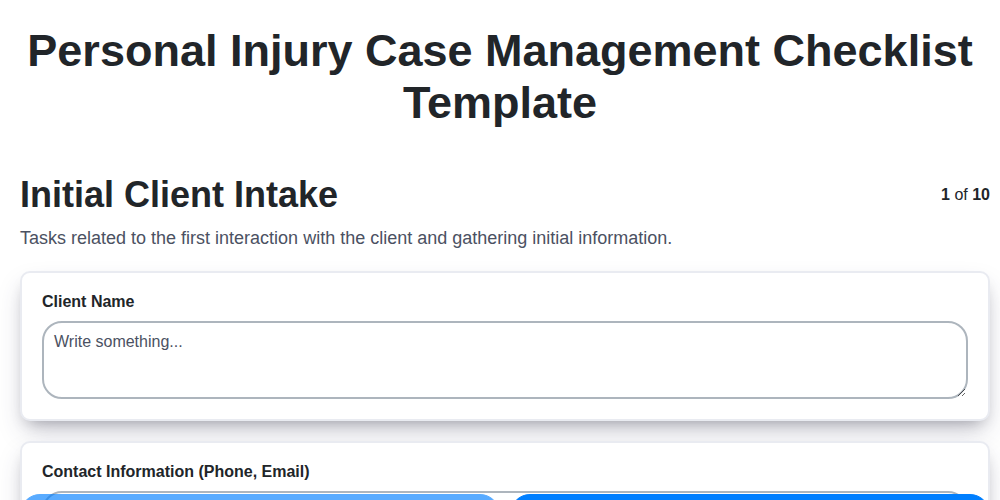
Table of Contents
- Introduction: Navigating Your Personal Injury Case
- 1. Initial Client Intake: Building a Strong Foundation
- 2. Investigation & Evidence Gathering: Uncovering the Facts
- 3. Medical Records & Treatment: Documenting Injuries & Care
- 4. Lost Wages & Expenses: Quantifying Your Financial Losses
- 5. Liability Assessment: Establishing Fault
- 6. Demand & Negotiation: Seeking Fair Compensation
- 7. Litigation Preparation (If Applicable): Readying for Court
- 8. Settlement & Release: Formalizing the Agreement
- 9. Case Closure: Finalizing the Process
- 10. Communication & Updates: Keeping Your Client Informed
- 11. Maintaining Organized Records: A Key to Success
- 12. Legal Research and Precedent
- 13. Potential Pitfalls and How to Avoid Them
- Resources & Links
TLDR: Overwhelmed by your personal injury case? This checklist template breaks down the process - from initial client intake to case closure - into manageable steps. Think of it as your roadmap for organized case management, ensuring nothing falls through the cracks and maximizing your chances of a successful outcome.
Introduction: Navigating Your Personal Injury Case
Facing a personal injury can be overwhelming. Between dealing with injuries, medical bills, and potential lost income, understanding the legal process can feel like another burden. This blog post aims to demystify that process and provide you with a clear roadmap for managing your personal injury case. We've compiled a comprehensive checklist outlining the key steps involved, from initial consultation to final case closure. Think of this checklist as a guide, helping you stay organized, track progress, and ensure nothing crucial falls through the cracks. While every case is unique, this template will provide a solid foundation for effective case management, whether you've hired an attorney or are attempting to navigate the process yourself. Let's break down each stage, empowering you with knowledge and a structured approach to protecting your rights and pursuing the compensation you deserve.
1. Initial Client Intake: Building a Strong Foundation
The first impression is critical. A thorough initial client intake sets the stage for a successful personal injury case. This isn't just about gathering basic information; it's about establishing trust, understanding their needs, and realistically assessing the potential of their claim.
Here's what a robust initial intake should cover:
- Detailed Interview: Conduct a comprehensive interview to understand the circumstances of the incident. Ask open-ended questions to encourage them to share their story in their own words. Don't interrupt - just listen.
- Identification & Contact Information: Obtain full names, addresses, phone numbers, email addresses, and emergency contacts.
- Incident Details: Document the date, time, location, and specific details of the incident. Ask for their account of what happened, who was involved, and any witnesses present.
- Injury Documentation: Gather information regarding their injuries, treatment received, and ongoing pain or limitations.
- Police Reports & Documentation: Obtain copies of any police reports, incident reports, or other official documentation related to the accident.
- Insurance Information: Collect information on all involved parties' insurance policies (auto, health, homeowner's, etc.).
- Release Forms & Agreements: Clearly explain the attorney-client relationship, fees, and scope of representation. Secure signed release forms and a representation agreement.
- Conflict of Interest Check: Perform a thorough conflict of interest check to ensure representation won't compromise your firm's ethical obligations.
- Initial Case Assessment: Provide a preliminary assessment of the case's potential viability, being careful to manage expectations and avoid guarantees.
A strong initial intake builds trust, allows for accurate case evaluation, and provides the crucial foundation for effective case management.
2. Investigation & Evidence Gathering: Uncovering the Facts
A strong personal injury case hinges on a thorough and meticulous investigation. It's more than just collecting information; it's about building a compelling narrative that proves liability and damages. This phase requires proactive effort and a systematic approach.
Here's what you need to focus on:
- Scene Documentation: Immediately following the incident (if possible and safe), photograph and video record the scene. Capture details like road conditions, vehicle damage, property damage, and environmental factors.
- Witness Identification & Interviews: Identify all witnesses and diligently collect their contact information. Conduct interviews as soon as possible while their recollections are fresh. Document their statements thoroughly, either through written summaries or recordings (with consent, where required).
- Police Reports & Official Records: Obtain copies of police reports, accident reports, fire department reports, and any other official records related to the incident. These documents often contain crucial details and establish the official account of what occurred.
- Expert Consultation (Potentially): Depending on the complexity of the case (e.g., product liability, complex medical issues), consulting with experts - accident reconstruction specialists, engineers, or medical professionals - can be vital. Their expertise can clarify technical aspects and strengthen your position.
- Preservation of Evidence: Take steps to preserve all physical evidence related to the incident. This might involve securing damaged vehicles, obtaining surveillance footage, or collecting samples of relevant materials. Chain of custody is critical if physical evidence is needed for court.
- Social Media & Digital Footprint: Be aware of and potentially investigate social media accounts of involved parties. While caution is needed (and attorney-client privilege is crucial), publicly available posts could provide valuable context or contradict claims.
3. Medical Records & Treatment: Documenting Injuries & Care
This section is absolutely critical in a personal injury case. Thoroughly documenting your client's injuries and the treatment they're receiving forms the backbone of proving damages. Here's what needs to be done:
- Obtain Complete Medical Records: Request records from all treating physicians, therapists, specialists, hospitals, and clinics. This includes emergency room visits, diagnostic testing (X-rays, MRIs, CT scans), physical therapy, and any ongoing care. Don't just get summaries - get the full, detailed records.
- Organize & Review: Methodically organize the records by date. Review each record for descriptions of injuries, diagnoses, treatment plans, prognoses, and any limitations on activity. Note any inconsistencies or gaps.
- Identify Pre-Existing Conditions: It's essential to identify and document any pre-existing conditions that could potentially complicate the case. Demonstrate how the incident aggravated or worsened those conditions.
- Establish Causation: Clearly link the injuries directly to the incident causing the personal injury. Medical records are key to establishing this crucial connection. Expert opinions may be necessary to solidify this link.
- Track Future Medical Needs: Obtain expert opinions regarding the client's long-term prognosis and any anticipated future medical treatment. Document the estimated costs associated with these future needs.
- Client Testimony: Corroborate medical records with detailed client testimony about pain levels, limitations, and the impact on daily life.
4. Lost Wages & Expenses: Quantifying Your Financial Losses
Personal injury cases often involve more than just medical bills. You've likely suffered financial setbacks due to your injuries, and these deserve to be fully accounted for and compensated. Accurately documenting and calculating your lost wages and expenses is a crucial part of building a strong claim.
Here's a breakdown of what to consider and how to gather the necessary documentation:
Lost Wages:
- Document Your Income: Gather pay stubs, W-2 forms, tax returns, and employment contracts. If you're self-employed, collect profit and loss statements, invoices, and bank statements demonstrating your income.
- Calculate Lost Time: Determine the number of days, weeks, or months you were unable to work due to your injuries. Consider both missed work and any reduced working hours you're currently experiencing.
- Consider Future Lost Earning Capacity: In severe cases involving permanent disabilities, we'll need to assess your potential loss of future income. This often requires expert testimony from economists or vocational rehabilitation specialists.
- Benefits Received: Note any workers' compensation, short-term disability, or paid time off benefits you received during your recovery. These may need to be factored into your overall calculation.
Expenses:
Beyond lost wages, other expenses stemming from your injury need to be documented. This includes:
- Transportation Costs: Keep records of mileage, taxi fares, or public transportation used for medical appointments, therapy, or other related needs.
- Medication Costs: Keep all receipts for prescription medications and over-the-counter remedies.
- Home Modifications: If your injury required modifications to your home (e.g., ramps, grab bars), document the costs.
- Assistive Devices: Costs for crutches, wheelchairs, braces, or other assistive devices are also recoverable.
- Household Services: If you needed to hire help for household tasks due to your injury, keep records of payments.
- Property Damage: Document any damage to your vehicle or other personal property resulting from the incident.
Pro Tip: Create a detailed spreadsheet or use a dedicated expense tracking app to organize all related financial information. This organized approach will simplify the process and make a strong impression on the opposing party or jury.
5. Liability Assessment: Establishing Fault
Determining liability - who is at fault for the injury - is a critical step in any personal injury case. It's more than just saying "they did it"; it's about proving it. This involves meticulous analysis of the facts, applicable laws, and legal precedents.
Here's what's involved in a thorough liability assessment:
- Reviewing the Incident Report: Police reports, accident reports, or other official documentation provide an initial perspective, though they aren't definitive.
- Witness Statements: Gathering statements from anyone who witnessed the incident is crucial. These provide firsthand accounts of what happened.
- Scene Investigation: Visiting the scene, if possible, and documenting conditions - road conditions, lighting, obstructions, etc. - can bolster your case.
- Legal Research: Identifying the relevant laws and legal principles that apply to the situation. Was negligence involved? Was there a violation of a statute?
- Analyzing Contributing Factors: Exploring any factors that might have contributed to the incident, not just the actions of the defendant.
- Comparative Negligence: Many jurisdictions follow comparative negligence principles. This means determining if the injured party also bears some responsibility for the accident. This can significantly impact the potential recovery.
- Expert Consultation: Depending on the complexity of the case (e.g., a vehicle accident involving mechanical failure, or a premises liability case involving code violations), consulting with an expert - an accident reconstructionist, engineer, or other specialist - might be necessary.
A robust liability assessment provides the foundation for a strong case, guiding your strategy throughout the legal process. It allows you to accurately assess the defendant's responsibility and build a compelling argument for your client's recovery.
6. Demand & Negotiation: Seeking Fair Compensation
Once a solid liability assessment and a clear picture of your client's damages have been established, the demand and negotiation phase begins. This is a crucial step in most personal injury cases, often leading to a resolution without the need for litigation.
Crafting the Demand Package: A well-crafted demand package is your strongest tool. It should include:
- A Detailed Summary of the Incident: Clearly explain how the incident occurred, highlighting the defendant's negligence.
- Liability Analysis: Briefly reiterate the legal basis for holding the defendant responsible.
- Comprehensive Damages Calculation: Itemize all damages, including medical expenses (past and future), lost wages (past and future), property damage, pain and suffering, and any other applicable losses. Be specific and provide supporting documentation.
- Demand for a Specific Settlement Amount: Based on the damages calculation and your assessment of the case's value, state a specific monetary amount you're seeking on behalf of your client.
Negotiation Strategy:
- Maintain Professionalism: Negotiations should be conducted professionally and respectfully, even when dealing with difficult opposing counsel or insurance adjusters.
- Justify Your Demand: Be prepared to thoroughly justify your demand, backing it up with evidence and legal arguments.
- Be Flexible (Within Reason): While it's important to advocate for your client's best interests, some flexibility in negotiations can often lead to a quicker and more favorable resolution.
- Document Everything: Meticulously document all communications, offers, and counteroffers.
- Know Your Walk-Away Point: Before entering negotiations, establish a minimum acceptable settlement amount. This will help you avoid accepting an offer that doesn't adequately compensate your client.
7. Litigation Preparation (If Applicable): Readying for Court
While many personal injury cases settle out of court, sometimes litigation becomes necessary. If your case progresses to this stage, meticulous preparation is paramount. This phase builds upon all the work previously completed and requires a sharp focus on legal strategy and courtroom readiness.
Here's what's involved:
- Witness Identification & Deposition: We'll identify and locate all relevant witnesses, both favorable and potentially unfavorable. Depositions (formal questioning under oath) will be conducted to gather information and assess testimony.
- Expert Witnesses: Engaging qualified experts (medical, accident reconstruction, economic) is crucial. This includes identifying, retaining, and preparing them to testify. Expert reports will be prepared and potentially exchanged with opposing counsel.
- Motion Practice: We'll anticipate and respond to pre-trial motions filed by the opposing side. This may include motions to dismiss, motions for summary judgment, or motions to compel discovery.
- Trial Briefs & Exhibits: Crafting compelling trial briefs outlining our legal arguments and meticulously organizing all exhibits for presentation at trial is essential.
- Jury Selection Strategy: If the case goes to a jury trial, we'll develop a strategy for jury selection aimed at securing a favorable panel.
- Mock Trial (Optional): In some cases, a mock trial may be conducted to refine arguments and assess potential outcomes.
- Witness Preparation: Preparing all witnesses (clients, experts, others) for courtroom testimony involves thorough review of facts and potential cross-examination.
Preparing for litigation is a significant undertaking requiring precision and experience. Our team is dedicated to ensuring we're fully prepared to advocate for your rights in court should it become necessary.
8. Settlement & Release: Formalizing the Agreement
Once a settlement is reached, it's crucial to formally document everything. This isn't just a handshake deal; it requires a carefully drafted Release Agreement. This document outlines the terms of the settlement, including the amount paid, what claims are being released, and any other stipulations agreed upon.
We'll thoroughly review the Release Agreement with you, ensuring you understand every clause and its implications. It's vital that you are comfortable and fully aware of what you're signing away. We'll explain any legal jargon and address any questions you may have.
The Release Agreement typically includes:
- Parties Involved: Clearly identifying the plaintiff, defendant, and any other involved parties (e.g., insurance companies).
- Release of Claims: A specific list of claims and causes of action being released.
- Payment Terms: Details regarding the amount to be paid, payment method, and timeline.
- Confidentiality (if applicable): Provisions regarding the confidentiality of the settlement terms.
- Governing Law: Specifies the jurisdiction whose laws govern the agreement.
After you're satisfied with the Release Agreement, we'll handle its execution and ensure its proper filing, if necessary. This is the final, formal step in resolving your personal injury case, ensuring a clear and legally binding resolution.
9. Case Closure: Finalizing the Process
Once a settlement is reached and finalized, or a case concludes after trial, proper case closure is absolutely critical. This isn't just about filing paperwork; it's about ensuring all loose ends are tied up to protect both your firm and your client.
Here's what's involved in a thorough case closure:
- Review and Execute Release Forms: Carefully review the settlement release forms with your client to ensure they understand the terms and conditions. Answer any questions they may have and obtain their signed consent.
- Distribution of Funds: Distribute the settlement funds according to the agreement, including attorney's fees, costs, and client's share. Provide a detailed accounting to the client.
- File Archiving: Organize and archive all case files securely, both physically and digitally. This includes pleadings, correspondence, medical records, photographs, expert reports - everything. Ensure retention policies are followed based on applicable statutes of limitations.
- Client Confirmation: Send a final communication to the client confirming the case closure, detailing the outcome and thanking them for their trust.
- Internal Review: Conduct an internal case review to identify lessons learned and areas for improvement in future cases.
- Statutory Reporting: Fulfill any necessary statutory reporting requirements related to settlements or judgments.
Proper case closure minimizes risk and ensures professional responsibility is maintained.
10. Communication & Updates: Keeping Your Client Informed
Consistent and clear communication is arguably one of the most crucial aspects of personal injury case management. Clients hire you to advocate for them, and a significant part of that advocacy is keeping them in the loop. Lack of communication breeds anxiety, distrust, and potential client complaints.
Here's what a strong communication & updates strategy looks like:
- Regular Updates: Aim for regular communication, even when there's nothing new to report. A brief email or phone call every 2-4 weeks is a good baseline.
- Multiple Channels: Offer communication options - phone calls, emails, text messages - and let the client choose their preference.
- Explain Complexities: Personal injury law can be complex. Break down legal jargon and explain the progress of their case in understandable terms.
- Be Honest About Setbacks: Don't sugarcoat challenges. Transparency about potential hurdles builds trust.
- Document Everything: Keep meticulous records of all communication, including dates, times, and key topics discussed. This protects you and provides a clear timeline for the client.
- Promptly Respond to Inquiries: Address client questions and concerns quickly and thoroughly. Even a brief acknowledgment that you received their message and will investigate is better than silence.
- Manage Expectations: Be realistic about timelines and potential outcomes. Avoid making promises you can't keep.
Remember, proactive communication fosters a strong attorney-client relationship and contributes significantly to a successful case resolution.
11. Maintaining Organized Records: A Key to Success
Personal injury cases generate a lot of documentation. From initial consultations to medical bills and police reports, staying on top of it all is crucial, not just for efficient case management, but also for a positive outcome. A disorganized file can lead to missed deadlines, lost evidence, and ultimately, a weakened case.
Here's why meticulous record-keeping is paramount:
- Easy Retrieval: Quickly locate crucial documents when needed for communication, negotiations, or court proceedings.
- Accuracy & Consistency: Avoid errors and ensure a clear, consistent narrative throughout the case.
- Client Confidence: Demonstrates professionalism and instills trust in your client.
- Audit Trail: Provides a detailed history of the case for internal review or potential audits.
- Protection from Malpractice: A well-organized file serves as evidence of diligent representation.
Tips for Organized Record-Keeping:
- Digital is Ideal: Consider using case management software or a secure cloud-based system. These often include features like optical character recognition (OCR) for scanning and indexing documents.
- Clear Naming Conventions: Develop a consistent naming system for files and documents (e.g., ClientName_MedicalRecord_Date).
- Chronological Order: Generally, arrange documents chronologically to provide a clear timeline of events.
- Secure Storage: Protect client information with robust security measures.
- Regular Backups: Implement a reliable backup system to prevent data loss.
12. Legal Research and Precedent
Personal injury law isn't static; it's constantly evolving through legislation and court decisions. Thorough legal research is crucial throughout the entire case management process. This isn't a one-time activity but an ongoing element, particularly when assessing liability, calculating damages, and crafting demand letters or legal arguments.
We regularly research:
- Statutory Laws: Reviewing relevant state statutes concerning negligence, comparative fault, contributory negligence, and specific types of injuries (e.g., medical malpractice, premises liability).
- Case Law: Analyzing prior court decisions in your jurisdiction (and potentially persuasive authority from other jurisdictions) that address similar fact patterns, legal issues, and arguments. This includes researching rulings on causation, damages, and the application of legal principles.
- Jury Instructions: Familiarizing yourself with the instructions juries are typically given in personal injury cases. This helps understand the legal standards jurors will apply and strengthens your ability to present a compelling argument.
- Recent Developments: Staying abreast of any new legislation, regulations, or court decisions that might impact your case.
- Precedent Specific to the Type of Injury: Deep diving into precedent related to the specific injury sustained, such as traumatic brain injuries, spinal cord injuries, or wrongful death, as these often have unique legal considerations.
Understanding and applying relevant precedent strengthens your legal strategy and helps ensure you're advocating for your client with the most informed and persuasive arguments possible.
13. Potential Pitfalls and How to Avoid Them
Navigating a personal injury case can be complex, and even with meticulous planning, unexpected hurdles can arise. Here's a breakdown of common pitfalls and strategies to steer clear of them:
1. Statute of Limitations Missed: This is the most critical. Failing to file a claim within the state's legal deadline (often two years, but varies) means you lose the right to sue. Avoidance: Immediately note the statute of limitations upon initial client intake and calendar all relevant dates. Regularly remind clients about deadlines.
2. Insufficient Investigation: A weak investigation can seriously damage your case. Rushing to judgment based on limited information can be detrimental. Avoidance: Thoroughly investigate the scene, gather police reports, interview witnesses promptly, and utilize accident reconstruction experts when necessary.
3. Medical Records Gaps/Discrepancies: Missing records or inconsistencies can be exploited by the opposing side. Avoidance: Proactively request all relevant medical records and treatment notes. Review them meticulously for any red flags or discrepancies. Address inconsistencies with the client and medical providers directly.
4. Lost Wage Documentation Weakness: Vague or undocumented wage loss claims are easily challenged. Avoidance: Require pay stubs, tax returns, employment contracts, and potentially, a sworn affidavit from the employer detailing lost wages and benefits.
5. Failure to Establish Causation: Simply proving an injury exists isn't enough; you must prove it was caused by the defendant's negligence. Avoidance: Gather expert testimony (medical and potentially accident reconstruction) to establish the direct link between the incident and the client's injuries.
6. Improper Demand Package: A poorly drafted demand can set a negative tone for negotiations. Avoidance: Ensure the demand package is comprehensive, accurate, and clearly outlines liability, damages, and legal basis for the claim. Review it carefully for clarity and persuasiveness.
7. Negotiating Too Quickly: Rushing a settlement without fully exploring options can result in a lower settlement than deserved. Avoidance: Be prepared to negotiate strategically, understand the client's goals, and consider the strengths and weaknesses of your case.
8. Missing Key Witnesses: Key witnesses can disappear or change their stories over time. Avoidance: Obtain witness contact information as soon as possible and consider obtaining recorded statements or affidavits while memories are fresh.
9. Overlooking Relevant Insurance Policies: The responsible party may have multiple insurance policies that could cover the claim. Avoidance: Diligently investigate all potential sources of insurance coverage.
10. Inadequate Expert Selection: Choosing the wrong expert can weaken your case and increase costs. Avoidance: Carefully vet potential experts, considering their experience, qualifications, and ability to effectively communicate complex issues.
11. Ignoring Client Communication Preferences: Poor communication can damage the attorney-client relationship and potentially lead to ethical issues. Avoidance: Understand the client's preferred methods of communication and provide regular, clear updates.
12. Failure to Properly Document Everything: A lack of documentation can make it difficult to defend the case or track important details. Avoidance: Maintain meticulous records of all communications, investigations, and expenses.
13. Ethical Violations: Failing to adhere to ethical guidelines can lead to disciplinary action. Avoidance: Regularly review and adhere to all relevant state bar rules regarding confidentiality, conflict of interest, and client communication.
Resources & Links
- Nolo: Provides legal information and resources, including articles on personal injury and legal forms. A good starting point for understanding basic legal concepts.
- American Bar Association (ABA): The ABA offers resources for lawyers and the public, including information about personal injury law and ethical guidelines. Useful for understanding legal professional standards.
- FindLaw: A comprehensive legal website with articles, directories, and resources for finding legal professionals. Offers overviews of personal injury types and a lawyer directory.
- U.S. Department of Justice: Provides information on federal laws and legal resources, including some related to personal injury and negligence.
- Federal Courts: Provides information about federal courts and legal processes, which can be relevant for complex personal injury cases.
- IRMI (Insurance Risk Management Institute): Provides industry-specific resources and information regarding insurance and liability, valuable for understanding how insurance companies operate in personal injury claims.
- LexisNexis: A legal research platform offering access to statutes, case law, and other legal documents. Essential for legal professionals conducting in-depth research (typically requires a subscription).
- Westlaw: Another leading legal research service similar to LexisNexis, offering comprehensive legal research tools (typically requires a subscription).
- Expert Institute: Provides resources and training on expert witnesses, which is crucial for complex personal injury cases needing specialized testimony.
- Law Clerk: A legal technology platform offering task management, time tracking and client communication tools - beneficial for managing the workflow of a personal injury case.
- MyCase: Another legal case management software focused on organization, task management and client communication, particularly well-suited for personal injury law practices.
Frequently Asked Questions
What is a personal injury case management checklist and why do I need one?
A personal injury case management checklist is a structured document outlining all the tasks and deadlines involved in handling your case, from initial investigation to potential settlement or trial. It helps you stay organized, ensures nothing is overlooked, and ultimately increases your chances of a successful outcome. It's especially helpful for both attorneys and clients to maintain clarity and track progress.
Is this checklist template meant for attorneys or clients, or both?
This checklist template is designed to be adaptable for both attorneys and clients. Attorneys can use it to guide their case management process, while clients can use it to understand the steps involved and stay informed about their case's progress. You may need to tailor certain sections based on your role.
What types of personal injury cases is this checklist suitable for?
This checklist is designed to be broadly applicable to various personal injury cases, including motor vehicle accidents, slip and falls, medical malpractice, and product liability. However, specific details may need adjusting depending on the unique circumstances of your case. Complex or highly specialized cases may require more tailored checklists.
How should I customize this checklist for my specific case?
Carefully review each item and consider how it applies to your situation. Add or remove tasks as needed. Assign deadlines for each task, taking into account the statute of limitations and other crucial timelines. Assign responsibility for each task - whether it's the attorney, the client, or a third party.
What is the statute of limitations, and why is it important to track it?
The statute of limitations is a legal deadline for filing a lawsuit. It varies depending on the type of injury and the state where the injury occurred. Missing the statute of limitations will permanently bar your claim, so tracking it is crucial. This checklist includes a section to remind you of this crucial deadline.
What kind of documentation should I be gathering for my personal injury case?
Gathering comprehensive documentation is vital. This includes police reports, medical records and bills, witness statements, photographs of the scene or injuries, contracts, and any other evidence supporting your claim. The checklist outlines many examples and helps ensure you don't miss important records.
How can I best communicate with my attorney using this checklist?
Use the checklist as a shared document with your attorney. Regularly review it together to track progress, discuss concerns, and ensure everyone is on the same page. It promotes transparency and facilitates open communication.
Where can I find reliable medical records for my case?
You can request medical records directly from your healthcare providers. Your attorney can also assist in obtaining these records. Be sure to understand any associated fees for record retrieval.
What happens if I miss a deadline listed in the checklist?
Missing a deadline can have serious consequences, potentially jeopardizing your claim. If you anticipate missing a deadline, immediately inform your attorney to explore potential options and mitigate any negative impacts. This checklist aims to proactively avoid this situation.
Found this Article helpful?
Comments
There are no comments yet. Be the first to add one!
Case Management Solution Demo
Streamline your casework & improve outcomes! ChecklistGuro centralizes case details, tasks, & communication. Enhance efficiency, ensure compliance, & deliver exceptional service. Manage it all with our Work OS.
Related Articles
Streamline Your Deals: The Ultimate Real Estate Case Management Checklist Template
Streamline Your Debt Collection: A Case Management Checklist Template
Cybersecurity Incident Response: Your Checklist Template for Success
Streamline Your Case Management: The Ultimate Checklist Template
Mastering IP: Your Intellectual Property Case Management Checklist Template
HR Case Management Checklist Template: Your Guide to Fair & Compliant Investigations
Streamlining Veteran Care: Your Comprehensive Case Management Checklist Template
Mastering Investigations: Your Case Management Checklist Template Guide
We can do it Together
Need help with
Case Management?
Have a question? We're here to help. Please submit your inquiry, and we'll respond promptly.