Streamline Pharmaceutical Case Management: Your Checklist Template Guide
Published: 12/20/2025 10:00 PM Updated: 12/21/2025 7:09 AM
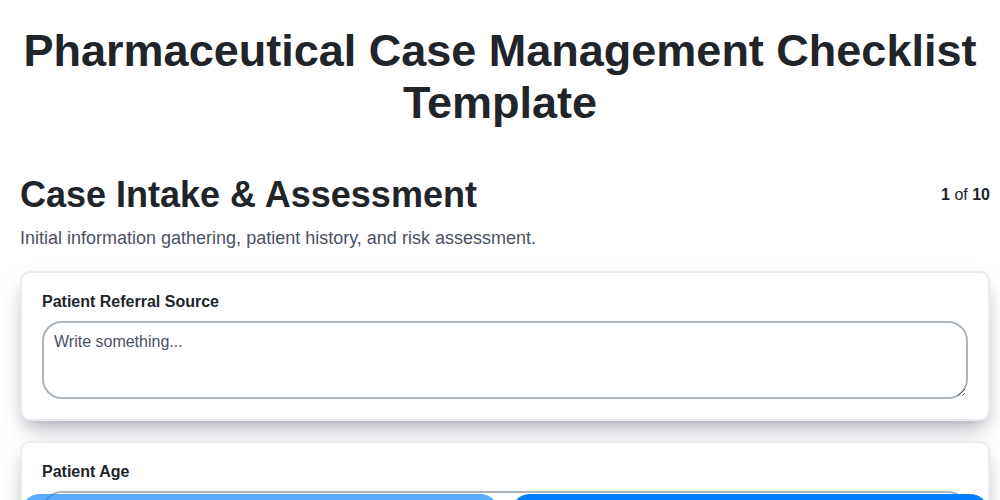
Table of Contents
- Introduction: Why a Pharmaceutical Case Management Checklist is Essential
- 1. Case Intake & Assessment: Gathering the Initial Details
- 2. Regulatory Compliance: Navigating the Legal Landscape
- 3. Patient Communication & Education: Building Trust and Understanding
- 4. Medication Management: Ensuring Safe and Effective Treatment
- 5. Clinical Monitoring: Tracking Progress and Identifying Concerns
- 6. Adherence & Support: Addressing Barriers and Promoting Engagement
- 7. Data Security & Privacy: Protecting Sensitive Patient Information
- 8. Case Updates & Reporting: Maintaining Accurate Records
- 9. Case Closure & Documentation: Finalizing the Case
- 10. Risk Management & Incident Reporting: Proactive Problem Solving
- 11. The Pharmaceutical Case Management Checklist Template - A Deep Dive
- 12. Customizing Your Checklist for Specific Case Types
- Conclusion: Optimizing Pharmaceutical Case Management with Checklists
- Resources & Links
TLDR: Overwhelmed by pharmaceutical case management? This checklist template breaks down the process into 10 crucial steps - from initial patient assessment and regulatory compliance to medication management, data security, and ultimately, case closure. Use it to ensure consistency, reduce errors, improve patient care, and simplify your workload!
Introduction: Why a Pharmaceutical Case Management Checklist is Essential
Pharmaceutical case management is a complex undertaking, demanding meticulous attention to detail and a commitment to patient well-being. With increasingly stringent regulations and a growing emphasis on personalized care, the potential for errors or oversights can have serious consequences - impacting patient health, legal standing, and organizational reputation. A robust pharmaceutical case management checklist isn't merely a nice-to-have; it's a critical foundation for consistent, compliant, and effective case management. This checklist serves as a guide, ensuring each case progresses through essential steps, mitigating risk, and ultimately leading to better patient outcomes. It promotes standardization across your team, reduces the likelihood of missed tasks, and provides a documented trail of actions taken - a vital asset for audits and ongoing quality improvement. Ignoring a structured approach can expose your organization to significant liability and compromise the care you provide.
1. Case Intake & Assessment: Gathering the Initial Details
The foundation of successful pharmaceutical case management lies in a thorough and accurate initial assessment. This phase is crucial for understanding the patient's situation, identifying their needs, and establishing a strong working relationship. Our checklist ensures you capture all vital information from the outset.
Here's what should be covered:
- Verify Patient Identification: Confirm name, date of birth, contact information, and insurance details.
- Medical History Review: Obtain and review relevant medical records, including diagnoses, medications, allergies, and previous treatments.
- Current Medication List: Obtain a complete and current list of all medications, dosages, and frequency.
- Problem List: Collaboratively create a clear problem list with the patient, prioritizing their concerns.
- Social Determinants of Health (SDOH) Screening: Assess factors like housing stability, food security, transportation, and access to care, as these significantly impact outcomes.
- Patient Goals & Preferences: Actively listen to and document the patient's goals for case management and their preferred methods of communication.
- Family/Caregiver Involvement: Determine if and how family members or caregivers can be involved in the case management process, with the patient's consent.
- Initial Risk Assessment: Identify any immediate safety concerns or risk factors requiring prompt attention.
- Consent Forms: Obtain necessary consents for communication, information sharing, and access to medical records.
2. Regulatory Compliance: Navigating the Legal Landscape
Pharmaceutical case management operates within a complex web of regulations. Staying compliant isn't just about avoiding penalties; it's about upholding ethical standards and ensuring patient safety. This section outlines key regulatory considerations for your checklist.
HIPAA Compliance: Patient health information (PHI) is paramount. Ensure all data collection, storage, and sharing practices strictly adhere to HIPAA guidelines. This includes obtaining proper consent, implementing secure data storage solutions, and limiting access to authorized personnel. Regularly review and update privacy policies.
State Pharmacy Laws: These laws govern the handling of medications, prescribing protocols, and patient counseling. Case managers must be acutely aware of and compliant with the specific requirements of each state involved in a case.
FDA Regulations: When dealing with clinical trials or post-market surveillance, adherence to FDA regulations is critical. This includes accurate record-keeping, reporting adverse events, and maintaining data integrity.
GDPR (If Applicable): If any patient data originates from the EU, GDPR compliance is mandatory. This entails obtaining explicit consent, providing data portability options, and ensuring the right to be forgotten.
Documentation is Key: Meticulous and accurate documentation of all compliance-related actions is vital. This provides an audit trail in case of inquiries or audits. Regularly review regulatory updates and incorporate changes into your case management processes. Consulting with legal counsel specializing in healthcare law is highly recommended to ensure ongoing compliance.
3. Patient Communication & Education: Building Trust and Understanding
Effective pharmaceutical case management hinges on clear, consistent, and empathetic communication with patients and their caregivers. This goes far beyond simply relaying information; it's about fostering trust, understanding, and active participation in the treatment journey.
Here's why robust patient communication and education are critical:
- Improved Adherence: When patients understand why they are taking medication and what to expect, they're more likely to adhere to their prescribed regimen.
- Reduced Anxiety & Misunderstandings: Pharmaceutical treatments can be complex. Providing clear explanations and addressing concerns proactively reduces patient anxiety and minimizes misunderstandings.
- Empowerment & Shared Decision-Making: Education empowers patients to actively participate in their care, fostering a collaborative relationship with the case management team.
- Early Identification of Issues: Open communication encourages patients to report any side effects, concerns, or challenges they're experiencing, enabling timely intervention.
Key Communication Strategies:
- Tailored Information: Provide information in formats and languages patients understand. Consider visual aids, simplified explanations, and alternative communication methods.
- Active Listening: Create a safe space for patients to voice concerns and ask questions. Demonstrate genuine empathy and respond thoughtfully.
- Regular Updates: Keep patients informed of progress, any changes to their plan, and relevant updates from their healthcare providers.
- Educational Resources: Provide access to reliable and easy-to-understand resources about their condition, medications, and support services. (Consider links to reputable websites, patient brochures, or videos.)
- Family/Caregiver Involvement: With patient consent, involve family members or caregivers in the communication process to provide additional support and understanding.
Documentation is vital. Record all communication efforts, patient responses, and educational materials provided within the case management system.
4. Medication Management: Ensuring Safe and Effective Treatment
Pharmaceutical case management often involves intricate medication regimens. This checklist item focuses on ensuring patient safety and optimizing treatment outcomes through meticulous medication management. Here's what's included:
- Medication Reconciliation: Thoroughly review all medications, including prescriptions, over-the-counter drugs, and supplements, upon case initiation and during subsequent reviews. Document discrepancies and collaborate with the patient's physician to resolve them.
- Dosage Verification: Verify dosages with prescribing physicians to avoid errors. Implement double-checks for high-risk medications.
- Drug Interaction Checks: Regularly perform comprehensive drug interaction checks using reliable databases. Communicate any potential interactions to the patient and their physician immediately.
- Allergy Documentation: Meticulously document all known allergies and sensitivities. Ensure this information is readily available to all involved parties.
- Medication Refills & Prior Authorizations: Proactively manage refill requests and navigate prior authorization processes, minimizing interruptions in treatment.
- Patient Education on Medication: Provide clear and concise information about each medication's purpose, dosage, potential side effects, and interactions. Encourage patient questions and address concerns.
- Adherence Monitoring: Assess and monitor medication adherence. Identify barriers to adherence and collaboratively develop solutions.
- Medication Storage & Handling: Provide guidance on proper medication storage and handling practices.
- Medication Changes Documentation: Document all medication changes, including the rationale and approval process.
- Review for Adverse Reactions: Regularly assess the patient for potential adverse drug reactions and promptly report any concerns to the physician.
5. Clinical Monitoring: Tracking Progress and Identifying Concerns
Consistent and thorough clinical monitoring is paramount in pharmaceutical case management. This goes beyond simply knowing a patient is taking their medication; it's about actively observing their condition, treatment response, and overall well-being. Our checklist emphasizes this through several key steps:
- Regular Status Reviews: Schedule consistent check-in points (weekly, bi-weekly, monthly - frequency determined by individual case complexity) to assess the patient's current state. Document observations objectively.
- Symptom Tracking: Utilize standardized tools and questionnaires to systematically record symptom severity and frequency. Look for patterns and trends that may indicate a change in condition.
- Lab Result Review: Promptly and critically evaluate lab results relevant to the patient's condition and medication. Flag any values outside of expected ranges and escalate as necessary.
- Physician Collaboration: Maintain open and ongoing communication with the prescribing physician. Share clinical observations, discuss treatment adjustments, and seek their expertise when concerns arise.
- Side Effect Monitoring: Actively inquire about and document any adverse events or side effects experienced by the patient. Assess severity and take appropriate action per established protocols (e.g., reporting to pharmacovigilance).
- Functional Assessment: Evaluate how the patient's condition impacts their daily activities and quality of life. Identify areas where additional support or intervention may be beneficial.
By diligently performing these clinical monitoring steps, we can proactively identify potential issues, optimize treatment strategies, and ultimately improve patient outcomes.
6. Adherence & Support: Addressing Barriers and Promoting Engagement
Medication adherence is often the biggest hurdle in successful pharmaceutical case management. It's not simply about patients knowing they need a medication; it's about ensuring they can take it correctly and consistently. This section focuses on proactive strategies to overcome barriers and foster patient engagement.
Identifying and Addressing Barriers: Our case management approach begins with actively identifying potential adherence barriers. These can range from financial constraints and transportation difficulties to complex dosing schedules and lack of understanding. We utilize open-ended questioning and empathetic listening to uncover these challenges, creating a safe space for patients to share their concerns.
Personalized Support Plans: Recognizing that every patient's situation is unique, we develop individualized adherence support plans. This might involve:
- Simplifying Regimens: Working with prescribers to explore medication combination options or alternative formulations that are easier to manage.
- Medication Reminders: Utilizing various reminder methods, including text messages, phone calls, and automated apps, tailored to the patient's preference.
- Financial Assistance Navigation: Helping patients navigate prescription assistance programs and explore options for reducing medication costs.
- Transportation Assistance: Connecting patients with local transportation resources if needed.
- Caregiver Involvement: Encouraging and supporting caregiver involvement, where appropriate and with patient consent.
Motivational Interviewing: We employ motivational interviewing techniques to empower patients to take ownership of their health and adherence goals. This collaborative approach focuses on exploring their motivations, identifying their concerns, and building confidence in their ability to succeed.
Ongoing Engagement & Reinforcement: Adherence isn't a one-time fix. We maintain regular contact with patients, providing ongoing support, addressing emerging challenges, and reinforcing the importance of medication adherence. This ongoing engagement fosters a strong patient-case manager relationship and promotes long-term success.
7. Data Security & Privacy: Protecting Sensitive Patient Information
Pharmaceutical case management deals with incredibly sensitive patient data - medical history, medication details, personal contact information, and more. Robust data security and privacy measures aren't just best practice; they are essential and legally mandated. A breach can lead to devastating consequences, impacting patients, the pharmaceutical company, and your case management team.
This section of the checklist focuses on safeguarding this information. Here's what you need to ensure:
- Encryption: All patient data, both in transit and at rest, must be encrypted using industry-standard encryption protocols. Regularly review and update encryption methods.
- Access Controls: Implement strict access controls, limiting data access to only authorized personnel who require it for their role. Role-based access control (RBAC) is a recommended practice.
- HIPAA Compliance: Thoroughly understand and adhere to all relevant HIPAA regulations (in the US) and equivalent privacy laws in other jurisdictions. This includes Business Associate Agreements (BAAs) with vendors.
- Data Loss Prevention (DLP): Utilize DLP tools and policies to prevent sensitive data from leaving the secure environment, whether through email, file transfer, or other means.
- Regular Audits: Conduct frequent security audits to identify vulnerabilities and ensure compliance with security policies.
- Employee Training: Provide ongoing training to all case management staff on data security best practices, phishing awareness, and privacy regulations.
- Incident Response Plan: Develop and regularly test a detailed incident response plan to address data breaches or privacy violations effectively and minimize damage.
- Secure Disposal: Implement procedures for the secure disposal of data, both electronic and paper, when it's no longer needed.
Maintaining patient trust and complying with legal requirements necessitates a proactive and vigilant approach to data security and privacy.
8. Case Updates & Reporting: Maintaining Accurate Records
Consistent and thorough case updates and reporting are critical for effective pharmaceutical case management. This isn't just about documenting what's been done; it's about creating a clear, auditable trail for all actions and decisions made throughout the case.
Here's what's involved in robust case updates and reporting:
- Regular Progress Notes: Document key interactions with the patient, healthcare providers, and any other relevant parties. These notes should be objective and fact-based, focusing on observations, actions taken, and patient responses.
- Timeline Tracking: Maintain a detailed timeline of events, including medication refills, lab results, clinical monitoring findings, and any communication regarding concerns or changes in treatment.
- Reporting to Stakeholders: Ensure timely reports are generated and distributed to the appropriate stakeholders, such as the pharmaceutical company, medical directors, and potentially, patient advocates (with patient consent). These reports should adhere to pre-defined templates and frequency.
- Data Integration: Ensure that all updates and reports integrate seamlessly with the case management system to maintain data integrity and accessibility.
- Audit Trails: Leverage audit trail capabilities within the system to track all changes made to the case file, providing a clear record of who accessed and modified data, and when.
- Deviation Reporting: Any deviations from the established care plan or protocol should be promptly documented and reported according to established procedures.
Accurate and timely reporting demonstrates accountability, facilitates effective collaboration, and ultimately contributes to better patient outcomes and adherence to regulatory requirements.
9. Case Closure & Documentation: Finalizing the Case
Reaching case closure signifies a significant milestone, but it's critical to approach this final stage with meticulous attention to detail. Thorough documentation is paramount for legal protection, continuity of care, and future reference. This checklist ensures a comprehensive and compliant closure process.
Here's what needs to be completed:
- Final Review of Case File: Conduct a comprehensive review of the entire case file to ensure all relevant information has been recorded and is accurate. This includes assessments, correspondence, clinical notes, medication records, and any patient communications.
- Confirmation of Patient Stability: Verify that the patient's condition is stable and their needs are met, or appropriate transfer plans are in place. Document the rationale for closure, noting any ongoing concerns or recommendations for future care.
- Transfer of Care (If Applicable): If the patient is being transitioned to another provider or care setting, confirm the transfer has been completed and documented. This includes sharing necessary records and providing a comprehensive handoff report. Obtain written confirmation of receipt from the receiving party whenever possible.
- Final Patient Communication: Communicate the case closure to the patient (and their legal representatives, if applicable) in a clear and understandable manner. Document this communication, including the date, method, and content. Address any remaining questions or concerns.
- Secure Case File Archiving: Archive the complete case file according to established retention policies. Ensure the file is accessible for future reference while maintaining confidentiality. This may involve digitization and secure storage.
- Completion of Closure Forms: Complete all necessary closure forms or checklists as mandated by the pharmaceutical company, regulatory bodies, and internal procedures.
- Final Billing & Reimbursement: Ensure all outstanding billing and reimbursement issues related to the case are resolved.
- System Updates: Update relevant systems (e.g., CRM, case management software) to reflect the case's closed status.
- Debriefing & Lessons Learned (Optional): Consider a brief debriefing with the case management team to identify any areas for improvement in future cases.
10. Risk Management & Incident Reporting: Proactive Problem Solving
Pharmaceutical case management inherently carries potential risks - from adverse drug reactions and patient safety concerns to data breaches and regulatory non-compliance. A robust risk management and incident reporting process isn't just a reactive measure; it's a cornerstone of proactive and ethical case management.
This section focuses on identifying, mitigating, and responding to potential risks throughout the patient journey. Here's what it entails:
- Risk Identification: Regularly assess potential risks associated with each case. This includes evaluating patient health status, medication interactions, social determinants of health, and potential vulnerabilities within the case management process itself.
- Risk Assessment: Prioritize risks based on their potential impact and likelihood of occurrence. Utilize a standardized risk matrix to guide this evaluation.
- Mitigation Strategies: Develop and implement strategies to minimize or eliminate identified risks. This could involve enhanced patient monitoring, medication reconciliation, or adjustments to the case management plan.
- Incident Reporting System: Establish a clear and accessible system for reporting incidents, near misses, and adverse events. Ensure all case managers are thoroughly trained on reporting procedures and understand the importance of timely reporting.
- Root Cause Analysis: Conduct thorough investigations of reported incidents to identify underlying causes and prevent recurrence. This should be a collaborative process involving case managers, supervisors, and potentially quality assurance specialists.
- Corrective Actions: Implement corrective actions based on root cause analysis findings. Monitor the effectiveness of these actions to ensure they are achieving the desired results.
- Training & Awareness: Provide ongoing training to case managers on risk management principles and incident reporting protocols. Foster a culture of open communication and transparency, encouraging proactive reporting of potential issues.
- Documentation: Meticulously document all risk assessments, mitigation strategies, incident reports, and corrective actions taken. This documentation is crucial for demonstrating compliance and facilitating continuous improvement.
By embracing a proactive approach to risk management and incident reporting, pharmaceutical case management programs can safeguard patient well-being, maintain regulatory compliance, and continually enhance the quality of care provided.
11. The Pharmaceutical Case Management Checklist Template - A Deep Dive
Pharmaceutical case management demands meticulous attention to detail and unwavering adherence to complex regulations. A robust checklist template isn't just helpful; it's essential for ensuring patient safety, legal compliance, and optimal outcomes. Let's break down each section of a comprehensive Pharmaceutical Case Management Checklist Template, highlighting key considerations and potential pitfalls.
1. Case Intake & Assessment: This initial step is critical. The checklist should ensure thorough gathering of patient history (medical, social, financial), current medications, allergies, previous treatments, and relevant family history. Verify source documentation and confirm patient consent for data sharing. Checklist items: Initial contact documentation, Patient demographics confirmation, Medical history review, Assessment of patient needs and goals.
2. Regulatory Compliance: Pharma case management operates within a strict regulatory landscape (HIPAA, GDPR, etc.). This section confirms adherence. Checklist items: HIPAA compliance verification, Data protection protocol adherence, State-specific reporting requirements acknowledgment, Legal counsel consultation documentation (if needed).
3. Patient Communication & Education: Clarity and understanding are paramount. This ensures patients are fully informed and engaged in their care. Checklist items: Explanation of treatment plan, Medication instruction verification, Provision of patient resources (written materials, online portals), Confirmation of patient understanding.
4. Medication Management: This is a high-risk area requiring rigorous oversight. Checklist items: Medication reconciliation (initial and ongoing), Prescription verification, Monitoring for adverse effects, Coordination with prescribing physician.
5. Clinical Monitoring: Regular monitoring of patient progress is vital. Checklist items: Scheduled patient calls/visits, Review of lab results, Assessment of treatment efficacy, Documentation of patient responses.
6. Adherence & Support: Addressing barriers to medication adherence is key to success. Checklist items: Identification of adherence challenges (financial, logistical, understanding), Provision of support services (reminders, counseling, transportation assistance), Documentation of interventions and outcomes.
7. Data Security & Privacy: Patient data is highly sensitive. This section focuses on safeguarding it. Checklist items: Secure data storage and transmission, Access control verification, Audit trail maintenance, Data breach protocol adherence.
8. Case Updates & Reporting: Maintaining accurate records and providing regular updates is crucial. Checklist items: Documentation of all interactions, Progress reports to referring physicians, Team communication logs, Stakeholder updates.
9. Case Closure & Documentation: A structured closure process ensures a smooth transition. Checklist items: Final assessment of patient status, Documentation of final outcomes, Referral to primary care physician (if applicable), Proper file archiving.
10. Risk Management & Incident Reporting: Identifying and mitigating risks protects both the patient and the organization. Checklist items: Identification of potential risks (medication interactions, falls, non-adherence), Implementation of preventative measures, Reporting of adverse events and near misses.
Using this template ensures a systematic and compliant approach to pharmaceutical case management, contributing to better patient outcomes and reduced organizational risk.
12. Customizing Your Checklist for Specific Case Types
Pharmaceutical case management isn't a one-size-fits-all endeavor. The complexities of each case - whether it involves adverse events, medication errors, product recalls, or patient support programs - demand tailored approaches. This is where the true power of your checklist lies: its adaptability.
Don't treat the template as a rigid document. Instead, view it as a foundational structure that you can modify to suit specific case types. Consider these adjustments:
- Prioritize Tasks: Some tasks might be more critical for certain case types. Reorder the checklist to reflect this importance. For instance, Risk Management & Incident Reporting might move higher in priority for cases involving serious adverse events.
- Add or Remove Tasks: Depending on the complexity of the case, you might need to add steps. A clinical trial patient case might require specific data collection and reporting steps not relevant to a standard adverse event report. Conversely, if a case is straightforward, you may omit less relevant tasks.
- Refine Task Details: Generic checklist items can be expanded. For example, under Patient Communication & Education, specify which information needs to be communicated in each type of case.
- Add Checkboxes for Case-Specific Documentation: Create fields to track documentation specific to a particular case type - a product lot number for recall cases, or specific clinical lab results for adverse drug reactions.
- Assign Responsible Parties: Clearly define who is responsible for each task based on the case type and team roles.
By customizing your checklist, you create a more relevant, efficient, and ultimately safer process for managing pharmaceutical cases.
Conclusion: Optimizing Pharmaceutical Case Management with Checklists
Pharmaceutical case management is a complex undertaking, demanding meticulous attention to detail and a commitment to patient well-being. As we've explored, a comprehensive checklist isn't just a helpful tool - it's a necessity. From the initial intake and assessment to the final case closure, a structured approach minimizes errors, ensures regulatory adherence, and fosters a culture of consistent, high-quality care.
Implementing a robust checklist, like the Pharmaceutical Case Management Checklist Template we've outlined, provides a framework for proactive risk mitigation, improves data security, and ultimately, empowers case managers to focus on what truly matters: supporting patients on their treatment journeys. It's an investment in efficiency, compliance, and, most importantly, patient outcomes. By embracing this systematic approach, pharmaceutical case management can be consistently optimized for excellence.
Resources & Links
- U.S. Food and Drug Administration (FDA): The FDA's website provides comprehensive information on pharmaceutical regulations, guidelines, and compliance requirements, crucial for understanding the legal landscape of pharmaceutical case management.
- HIPAA Journal: Provides news, resources, and updates related to HIPAA compliance and data privacy regulations, essential for understanding and adhering to patient data protection requirements.
- Centers for Medicare & Medicaid Services (CMS): Provides information about Medicare and Medicaid regulations, which often intersect with pharmaceutical case management, particularly for patients with chronic conditions.
- American Health Information Management Association (AHIMA): Offers resources, standards, and education related to health information management, documentation, and data governance - vital for maintaining accurate case records.
- National Association of Pharmaceutical Case Management Societies (NAPCS): NAPCS offers professional development, networking opportunities, and resources specifically for pharmaceutical case managers. (Note: May require membership for full access)
- Patient Education Institute: Provides a library of patient education materials across various disease states. Useful for supporting patient communication and education efforts within case management.
- Centers for Disease Control and Prevention (CDC): Provides valuable information and guidelines on disease management, medication safety, and public health initiatives that are frequently relevant to pharmaceutical case management.
- Social Security Administration (SSA): Provides information regarding social security benefits and programs which may impact some patients within pharmaceutical case management.
- National Association for Healthcare Data Interchange (NAHDI): Provides information and standards for data exchange within healthcare, important for ensuring interoperability and data sharing if applicable to case management processes.
- LexisNexis: Offers legal research and compliance resources - useful for staying abreast of relevant pharmaceutical laws and regulations. (Subscription usually required)
Frequently Asked Questions
What is pharmaceutical case management?
Pharmaceutical case management involves coordinating care and support for patients taking specific medications, often in complex or chronic conditions. It ensures adherence to treatment plans, manages potential adverse events, and provides education and resources to both patients and healthcare providers.
Why is streamlining pharmaceutical case management important?
Streamlining improves efficiency, reduces administrative burden, enhances patient outcomes, and potentially lowers healthcare costs. It minimizes errors, ensures consistent care, and allows case managers to focus on patient needs rather than paperwork.
What is a checklist template and how does it help?
A checklist template is a pre-designed document outlining the essential steps in a process. In case management, it provides a structured guide, ensuring all necessary actions are taken consistently and nothing is overlooked, leading to improved accuracy and adherence to protocols.
Who is this checklist template guide for?
This guide is designed for pharmaceutical case managers, care coordinators, healthcare providers involved in medication management, and anyone looking to improve the efficiency and effectiveness of their case management processes.
What types of tasks does the checklist template cover?
The checklist template typically covers areas like patient onboarding, medication reconciliation, adherence monitoring, adverse event reporting, patient education, communication with healthcare providers, and documentation. Specific tasks will vary based on the medication and patient condition.
Is the checklist template customizable?
Yes, the checklist template is designed to be highly customizable. You can add, remove, or modify tasks to align with specific medication protocols, patient needs, and organizational requirements. Tailoring it is crucial for optimal effectiveness.
What are some examples of tasks included in the checklist?
Examples include verifying patient demographics, reviewing medication history, assessing patient understanding of instructions, scheduling follow-up appointments, documenting patient education, and reporting any observed adverse events to the prescriber.
What are the benefits of using a digital checklist versus a paper checklist?
Digital checklists offer advantages like accessibility from anywhere, automated reminders, real-time data tracking, easier collaboration, and potential integration with electronic health records (EHRs). Paper checklists are suitable for simpler processes or situations with limited technology access.
How can I implement the checklist template within my organization?
Start by identifying key stakeholders, piloting the template with a small group, gathering feedback, refining the template based on feedback, training case managers on using the template, and integrating the checklist into existing workflows.
Found this Article helpful?
Comments
There are no comments yet. Be the first to add one!
Case Management Solution Demo
Streamline your casework & improve outcomes! ChecklistGuro centralizes case details, tasks, & communication. Enhance efficiency, ensure compliance, & deliver exceptional service. Manage it all with our Work OS.
Related Articles
Streamline Your Deals: The Ultimate Real Estate Case Management Checklist Template
Streamline Your Debt Collection: A Case Management Checklist Template
Cybersecurity Incident Response: Your Checklist Template for Success
Streamline Your Case Management: The Ultimate Checklist Template
Mastering IP: Your Intellectual Property Case Management Checklist Template
HR Case Management Checklist Template: Your Guide to Fair & Compliant Investigations
Streamlining Veteran Care: Your Comprehensive Case Management Checklist Template
Mastering Investigations: Your Case Management Checklist Template Guide
We can do it Together
Need help with
Case Management?
Have a question? We're here to help. Please submit your inquiry, and we'll respond promptly.