Reverse Logistics Process Checklist: Your Step-by-Step Guide
Published: 12/09/2025 Updated: 07/02/2026
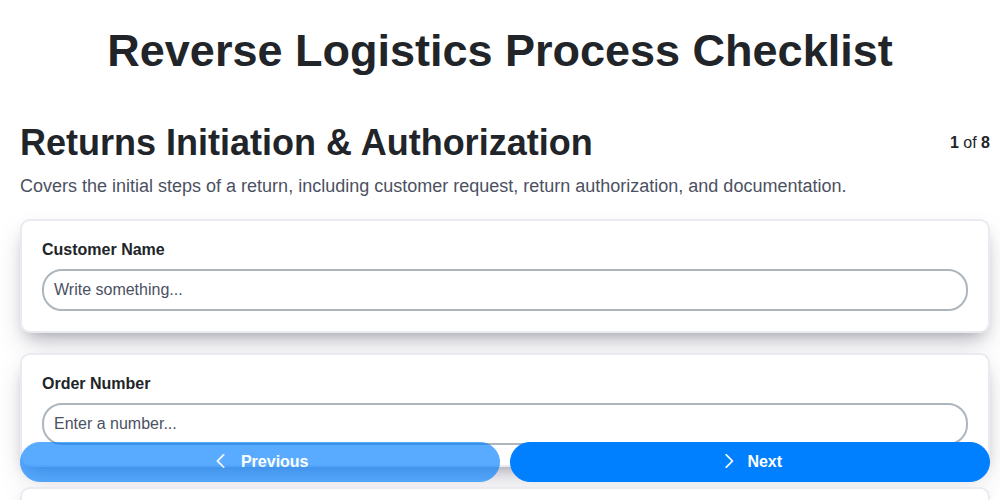
Table of Contents
- Introduction: Why a Reverse Logistics Checklist Matters
- 1. Returns Initiation & Authorization: Setting the Foundation
- 2. Returns Transportation & Receiving: Handling Returns Safely and Efficiently
- 3. Inspection & Assessment: Evaluating Return Condition and Value
- 4. Disposition & Processing: Determining the Best Course of Action
- 5. Inventory Management & Updates: Reintegrating Returned Goods
- 6. Financial Reconciliation & Reporting: Tracking Costs and Revenue
- 7. Customer Communication & Feedback: Keeping Customers Informed
- 8. Compliance & Documentation: Adhering to Regulations
- 9. Technology Integration for Reverse Logistics
- 10. Key Performance Indicators (KPIs) for Reverse Logistics
- 11. Common Reverse Logistics Challenges & Solutions
- 12. Optimizing Your Reverse Logistics Process
- Conclusion: Streamlining Returns for Customer Satisfaction
- Resources & Links
TLDR: Overwhelmed by returns? This checklist breaks down your entire reverse logistics process - from initial authorization to financial reporting - into manageable steps. Use it to streamline returns, reduce errors, improve customer satisfaction, and ensure compliance, saving you time and money!
Introduction: Why a Reverse Logistics Checklist Matters
Reverse logistics - the process of handling returns, repairs, and recycling - is often an overlooked aspect of supply chain management. However, in today's e-commerce driven world, it's increasingly critical. A poorly managed reverse logistics process can lead to increased costs, dissatisfied customers, damaged brand reputation, and even regulatory penalties. Think about it: returns are a reality, and how you handle those returns can make or break a customer's perception of your business.
That's where a comprehensive reverse logistics process checklist becomes invaluable. It's more than just a list; it's a roadmap for efficiency, accuracy, and customer satisfaction. By standardizing procedures, minimizing errors, and ensuring accountability at each step, a checklist transforms a potentially chaotic process into a well-oiled machine. This leads to reduced costs, improved resource utilization, and a better overall experience for both your business and your customers. This article will break down each step of the reverse logistics process and highlight why a checklist is essential for success.
1. Returns Initiation & Authorization: Setting the Foundation
The returns process begins long before a package is back in your warehouse. A well-defined returns initiation and authorization phase is crucial for efficiency, cost control, and maintaining a positive customer experience. This initial step sets the tone for the entire reverse logistics journey.
Here's a breakdown of what needs to be covered:
- Clearly Defined Return Policy: Your return policy should be easily accessible (website, order confirmation emails, packing slips) and written in plain language. Outline eligible items, timeframes, conditions for return (e.g., unused, original packaging), and potential fees. Ambiguity here leads to confusion and increased support requests.
- Easy Return Request Process: Customers should be able to initiate a return request easily, ideally online through a self-service portal. This reduces the burden on your customer service team. Offer multiple channels (online form, email, phone) to cater to different customer preferences.
- Authorization Workflow: Implement a clear authorization workflow. Not all returns are approved automatically. Define criteria for automatic approvals vs. those requiring manual review. This could be based on product type, reason for return, or customer history.
- Return Authorization Number (RAN): Always issue a RAN after authorization. This number is essential for tracking the return and verifying its validity throughout the process. Include instructions on how to clearly display the RAN on the return package.
- Reason for Return Documentation: Require customers to provide a reason for return. This data is invaluable for identifying product defects, improving quality control, and refining your product descriptions. Categorize reasons for easier analysis.
- Return Shipping Instructions: Clearly communicate shipping instructions to the customer, including preferred carriers, packaging requirements, and address details. Consider offering prepaid return labels for convenience, but factor in the associated costs.
A robust returns initiation and authorization process minimizes fraudulent returns, streamlines subsequent steps, and ultimately enhances customer satisfaction.
2. Returns Transportation & Receiving: Handling Returns Safely and Efficiently
The journey of a returned item doesn't end with the customer shipping it back. This phase - Returns Transportation & Receiving - is critical for maintaining product condition, minimizing loss, and keeping your reverse logistics process running smoothly. A well-defined process here prevents damage, ensures accurate record-keeping, and ultimately, reduces costs.
Here's what needs to be covered:
- Carrier Selection & Management: Establish relationships with reliable carriers who understand the delicate nature of returns. Negotiate rates and ensure they are trained to handle returns appropriately (especially for fragile or high-value items).
- Tracking & Visibility: Implement a robust tracking system so you (and potentially the customer) can monitor the return's progress. Real-time updates reduce anxiety and prevent lost returns.
- Receiving Area Setup: Designate a specific, organized receiving area for returns. This area should be well-lit, secure, and capable of accommodating the volume of returns you process.
- Damage Assessment upon Arrival: Visually inspect each returned item immediately upon arrival. Document any visible damage on the receiving report before it's moved from the receiving area. Photos are highly recommended.
- Receiving Report Accuracy: Meticulously record all details on the receiving report: item condition, tracking number, customer information, and any discrepancies.
- Secure Storage: Place received returns in a designated, secure location pending inspection and assessment. This minimizes loss and prevents unauthorized access.
- Initial Data Entry: Begin the data entry process, linking the return to the original order and customer record.
- Escalation Protocol: Have a clear escalation process for damaged or suspicious returns, including notifying the responsible team members.
Proper execution in this step significantly impacts the efficiency of later stages, contributing to overall reverse logistics success.
3. Inspection & Assessment: Evaluating Return Condition and Value
This stage is critical in determining the future path of the returned item and minimizing losses. A thorough and standardized inspection process is essential. Here's what needs to be covered:
1. Condition Grading: Establish a clear and consistent condition grading system (e.g., New, Like New, Used - Excellent, Used - Good, Used - Fair, Damaged). This should be easily understood by your inspection team and used consistently across all returns. Include detailed descriptions for each grade to minimize ambiguity (e.g., Like New: No visible signs of use, original packaging may be missing.).
2. Damage Assessment: Meticulously document any damage, defects, or missing parts. Take high-quality photographs from multiple angles for accurate record-keeping. Determine the severity of the damage - is it cosmetic, functional, or catastrophic?
3. Reason for Return Verification: Confirm the customer's stated reason for return against the observed condition. Discrepancies should be investigated to understand the root cause and potentially improve processes. Was the product defective, or was it a case of incorrect selection or unmet expectations?
4. Functionality Testing: For applicable products (electronics, appliances, etc.), perform basic functionality tests to assess operational status. Document results clearly.
5. Value Determination: Based on the condition grading and functionality testing, determine the residual value of the return. This influences whether the item will be restocked, refurbished, sold as open box, or disposed of.
6. Documentation: Every aspect of the inspection - condition grading, damage descriptions, test results, and value determination - must be documented accurately and comprehensively. This documentation serves as a critical audit trail and informs future decisions.
Pro-Tip: Consider utilizing digital tools (mobile apps, image recognition software) to streamline the inspection process and improve accuracy.
4. Disposition & Processing: Determining the Best Course of Action
Once an item has been assessed, the real work of disposition begins. This isn't a one-size-fits-all process; the optimal route depends entirely on the condition of the returned product, the reason for return, and your business's policies. Here's a breakdown of common disposition options and considerations:
- Refurbishment/Repair: Items with minor defects or damage are often the best candidates for refurbishment. This involves cleaning, repairing, and potentially replacing components. Properly refurbished products can be sold at a discounted price, recouping some of the initial investment. A robust refurbishment process includes quality checks at each stage.
- Resale (as New or Used): Depending on the assessment, the product may be suitable for resale, either as "new" (if the return was due to a customer error) or as a "used/open box" item. Accurate labeling and transparent descriptions are crucial here to avoid customer dissatisfaction.
- Remarketing: Consider remarketing the product through online marketplaces (like eBay or Amazon) or liquidation websites. This can reach a wider audience and maximize recovery value.
- Donation: Donating returned items, especially if they are in good working condition but cannot be readily resold, can benefit local charities and offer tax advantages.
- Recycling: For items that are beyond repair or resale, responsible recycling is essential. Partnering with certified recyclers ensures environmentally sound disposal and potentially recovers valuable materials.
- Scrapping: As a last resort, products may be scrapped - this should be minimized and documented.
Important Considerations for Disposition:
- Cost Analysis: Each disposition method carries different costs (labor, materials, shipping). Perform a cost analysis to determine the most profitable option.
- Brand Reputation: Be mindful of how disposition choices impact brand perception. Selling damaged goods as new could severely damage customer trust.
- Sustainability: Prioritize environmentally responsible options whenever possible.
This stage should be tightly integrated with your inventory management system to accurately reflect the change in status of the returned goods.
5. Inventory Management & Updates: Reintegrating Returned Goods
Successfully processing returns isn't just about getting the product back; it's about efficiently reintegrating it into your inventory and ensuring accurate records. This stage is crucial for avoiding stock discrepancies and maximizing the value of returned items.
Here's what to consider:
- Categorization is Key: Immediately upon disposition (repair, refurbishment, resale, etc.), categorize the returned item with the appropriate status within your inventory system. This might be Refurbished - Available, Damaged - Scrap, or Restockable - New. Accurate categorization directly impacts future sales and reporting.
- Location Tracking: Precisely record the returned item's new location within your warehouse or storage facility. This prevents lost items and streamlines retrieval when the item is ready for resale or another use.
- Quantity Adjustments: Automatically update inventory quantities based on the disposition outcome. For example, if a returned item is deemed restockable, add it back to the Available quantity for that SKU. If it's scrapped, reduce the overall inventory count.
- Condition Notes: Record details about the condition of the returned item. This is especially important for refurbished or repaired goods. Adding notes like Minor Scratches - Grade B or "Fully Functional - Refurbished" increases transparency and helps guide future pricing or sales strategies.
- System Integration: Ideally, your returns management system should be seamlessly integrated with your overall inventory management system. This automation minimizes manual data entry, reduces errors, and provides real-time visibility into inventory levels.
- Cycle Counts & Reconciliation: Regularly perform cycle counts of returned goods to ensure accuracy and reconcile any discrepancies between physical inventory and system records. This is a critical step in maintaining overall inventory health.
6. Financial Reconciliation & Reporting: Tracking Costs and Revenue
Reverse logistics isn't just about moving product back; it's about managing the financial implications of that movement. This step is critical for understanding the true cost of returns and identifying areas for optimization. Without accurate tracking, you're flying blind, potentially losing money on what should be a recoverable process.
Here's what needs to be included in your financial reconciliation and reporting:
- Cost Tracking: Detail every cost associated with the return. This includes:
- Transportation Costs: Outbound shipping of returns, inbound shipping to your facility, carrier fees.
- Labor Costs: Time spent by employees processing returns - receiving, inspection, assessment, disposition.
- Warehouse Costs: Storage space utilized for returned goods.
- Disposal Costs: Fees associated with scrap, recycling, or donation.
- Restocking/Refurbishment Costs: Labor and materials needed to get the product back to a saleable condition (if applicable).
- Revenue Tracking: Determine the potential revenue recovered from each return. This could include:
- Resale Value: The price the product can be sold for again.
- Refurbishment Value: The value created by refurbishing the product.
- Parts Salvage Value: The revenue generated from selling components.
- Credit/Refund Value: The amount credited back to the customer or processed as a refund.
- KPI Calculation: Regularly calculate key performance indicators (KPIs) like:
- Return Cost Ratio: (Total Return Costs / Total Revenue) - This shows the percentage of revenue consumed by returns.
- Recovery Rate: (Value Recovered from Returns / Total Value of Returned Goods) - Indicates the effectiveness of your disposition strategies.
- Return Cost per Return: Provides a baseline for identifying and addressing inefficiencies.
- Reporting & Analysis: Create regular reports (weekly, monthly, quarterly) that provide a clear picture of reverse logistics costs and revenue. Analyze these reports to identify trends, areas of waste, and opportunities for process improvement. Share these insights with relevant stakeholders to drive informed decision-making.
By diligently tracking financials and providing insightful reporting, you can transform your reverse logistics process from a cost center into a potential source of revenue and a valuable tool for optimizing your overall supply chain.
7. Customer Communication & Feedback: Keeping Customers Informed
Reverse logistics isn't just about moving products back; it's about maintaining a positive customer experience throughout the entire process. Poor communication during returns can lead to frustration, negative reviews, and lost future business. Here's how to handle customer communication effectively:
- Proactive Updates: Don't wait for customers to inquire. Send automated updates at each key stage: return authorization, shipment receipt, inspection completion, and final disposition.
- Clear & Concise Language: Avoid jargon. Explain the process in easy-to-understand terms. Be upfront about timelines and potential delays.
- Multiple Communication Channels: Offer options like email, SMS, and even phone support. Cater to customer preferences.
- Personalized Communication: Wherever possible, personalize communications to build trust and show you value their business. Address them by name and reference specific details of their return.
- Feedback Collection: Actively solicit feedback about their return experience. This reveals areas for improvement and demonstrates a commitment to customer satisfaction. Use surveys (short and sweet!), email feedback forms, or even a brief phone call.
- Transparency about Outcomes: Clearly explain the outcome of the inspection and resolution. Whether it's a refund, replacement, or repair, ensure the customer understands why and what to expect.
- Empathetic Approach: Acknowledge any inconvenience caused by the return and apologize if necessary. A little empathy goes a long way.
8. Compliance & Documentation: Adhering to Regulations
Reverse logistics isn't just about getting products back; it's about doing so legally and ethically. Compliance and meticulous documentation are crucial for avoiding penalties, maintaining a positive brand reputation, and ensuring a sustainable reverse supply chain. This section outlines key considerations.
Regulatory Landscape: The specific regulations impacting your reverse logistics process will vary based on product type (electronics, hazardous materials, pharmaceuticals, etc.), geographic location, and industry. Be aware of:
- Environmental Regulations: Proper disposal and recycling of returned goods, especially electronics (WEEE Directive in Europe), batteries, and hazardous materials, is paramount. Ensure you have processes in place to handle these responsibly, including necessary permits and partnerships with certified recyclers.
- Data Privacy (GDPR, CCPA): Returned electronics and devices often contain personal data. Robust data sanitization procedures are essential before resale, recycling, or disposal. Document these procedures meticulously.
- Product Safety Regulations: If returned products are refurbished and resold, they must meet the same safety standards as new products. Documentation proving compliance is vital.
- Consumer Protection Laws: Understand your legal obligations regarding refunds, returns, and warranties, as these directly impact your reverse logistics workflow.
Documentation Essentials:
- Returns Policies: Clearly defined and accessible return policies should be readily available to customers.
- Authorization Records: Keep detailed records of return authorizations, including reasons for return and associated approvals.
- Transportation Logs: Document the chain of custody for returned goods, from origin to final disposition.
- Inspection Reports: Comprehensive records of inspection findings, damage assessments, and grading.
- Disposition Records: Detailed tracking of how each returned item was handled (resale, refurbishment, recycling, disposal).
- Data Sanitization Certificates: Proof of secure data wiping from returned devices.
- Recycling Certificates: Documentation from certified recycling partners confirming responsible disposal.
- Audit Trails: Maintain a complete audit trail of all actions taken throughout the reverse logistics process.
Continuous Improvement: Regularly review your compliance procedures and documentation practices to ensure they are up-to-date with evolving regulations and best practices. Stay informed about changes in legislation and adapt your processes accordingly. Consider periodic audits to verify adherence to internal policies and external regulations.
9. Technology Integration for Reverse Logistics
Reverse logistics is notoriously complex, and manual processes simply can't scale or provide the visibility needed for efficiency. That's where technology shines. Integrating the right tools isn't just a nice-to-have; it's becoming a competitive necessity.
Here's how technology can revolutionize each stage of your reverse logistics process:
- Returns Initiation & Authorization: Implement a self-service online portal or mobile app where customers can initiate returns, track status, and receive instant authorization. Automated workflows streamline the approval process, reducing delays and improving customer satisfaction.
- Returns Transportation & Receiving: Utilize GPS tracking for return shipments, enabling real-time visibility and improved delivery accuracy. Warehouse Management Systems (WMS) can automate receiving processes, scanning products upon arrival and updating inventory records instantly.
- Inspection & Assessment: Employ image recognition and AI-powered tools to automate product condition assessment. This minimizes human error and speeds up the evaluation process, allowing for quicker disposition decisions.
- Disposition & Processing: Use robotics and automated sorting systems to efficiently process returned products based on their condition and disposition plan (repair, resale, recycle, etc.).
- Inventory Management & Updates: Real-time inventory tracking, integrated with your forward logistics system, ensures accurate stock levels and prevents stockouts or overstocking of refurbished or returned items.
- Financial Reconciliation & Reporting: Automated accounting software can reconcile return authorizations, shipping costs, refurbishment expenses, and revenue generation, providing a clear picture of profitability.
- Customer Communication & Feedback: Implement chatbots and automated email sequences to keep customers informed about the status of their returns and solicit feedback on the process.
- Compliance & Documentation: Utilize blockchain technology to create a secure and transparent record of the entire reverse logistics chain, ensuring compliance and traceability.
Ultimately, leveraging technologies like cloud-based platforms, IoT devices, machine learning, and data analytics is critical for optimizing your reverse logistics operations, reducing costs, and improving customer experiences. Don't just manage returns - master them with the power of technology.
10. Key Performance Indicators (KPIs) for Reverse Logistics
Tracking the success of your reverse logistics process isn't just about seeing if packages are moving; it's about understanding how efficiently and effectively they're moving. That's where KPIs come in. Here are some crucial metrics to monitor:
- Return Rate: This is the percentage of products returned compared to total sales. A high rate signals potential product quality issues, inaccurate product descriptions, or problems with sizing/fit.
- Cost Per Return: This metric reveals the total expenses associated with handling a single return. Track this closely to identify areas for cost reduction.
- Return Processing Time: How long does it take to process a return from initiation to final disposition? A shorter timeframe improves customer satisfaction.
- Disposition Rate: The percentage of returned products that are successfully refurbished, resold, or recycled. A higher rate indicates optimized disposition processes.
- First-Pass Yield (Refurbishment): For products undergoing refurbishment, this measures the percentage of items that pass inspection the first time. Low yields indicate inefficiencies in the refurbishment process.
- Customer Satisfaction Score (Returns Process): Directly assess customer perception of the returns experience. This is often collected through surveys or feedback forms.
- Transportation Costs (Reverse Logistics): Monitor transportation expenses associated specifically with returns. This helps identify opportunities for optimized shipping routes and carrier negotiations.
- Inventory Accuracy (Returned Goods): Ensure returned goods are accurately reflected in your inventory system. Discrepancies lead to inaccurate reporting and potential stockouts.
- Compliance Adherence Rate: Measures how consistently your reverse logistics process adheres to relevant regulations and internal policies.
- Recovery Rate (Value from Returns): The percentage of value recovered from returned products through resale, refurbishment, or recycling. This represents the overall financial benefit of an effective reverse logistics program.
11. Common Reverse Logistics Challenges & Solutions
Reverse logistics, while essential, isn't without its hurdles. Here's a look at some frequently encountered challenges and practical solutions to navigate them:
1. High Return Rates & Lack of Visibility: A significant challenge is managing unexpectedly high return volumes, often stemming from inaccurate product descriptions, quality issues, or changing customer preferences. Solution: Invest in detailed product information, accurate descriptions, high-quality imagery, and proactively gather customer feedback to address underlying causes. Implement robust tracking and real-time visibility tools throughout the reverse logistics process.
2. Complex Product Variety & Returns Reasons: Dealing with a wide range of product types and varied return reasons complicates handling and disposition. Solution: Categorize returns based on reason codes and product type. This allows for streamlined processing, efficient disposition strategies (repair, refurbishment, recycle, etc.), and targeted analysis to reduce future returns.
3. Inefficient Transportation & Receiving: High transportation costs and delays in receiving returned goods impact efficiency and customer satisfaction. Solution: Negotiate favorable rates with carriers, optimize routing, and streamline the receiving process with automated scanning and data entry. Consider offering customers prepaid return labels to ease the return process.
4. Assessment & Disposition Uncertainty: Accurately assessing the condition of returned goods and deciding on the best disposition pathway can be time-consuming and costly. Solution: Implement standardized assessment criteria, train inspectors, and leverage technology (AI-powered image recognition, for example) to expedite the process. Clearly define disposition options and associated costs.
5. Inventory Discrepancies: Inaccuracies in inventory tracking, particularly related to returned goods, lead to stockouts and order fulfillment errors. Solution: Integrate reverse logistics systems with existing inventory management software. Automate updates upon receipt and disposition of returned items. Regular audits help identify and rectify discrepancies.
6. Costly Processing & Reprocessing: Labor-intensive processes and the cost of reprocessing (repair, refurbishment) often erode profit margins. Solution: Automate repetitive tasks where possible. Standardize processes. Explore outsourcing options for specialized reprocessing tasks. Analyze the cost-benefit of different disposition pathways.
7. Customer Dissatisfaction: A poorly managed returns process can damage customer loyalty. Solution: Make the returns process easy, transparent, and customer-friendly. Provide clear instructions and proactive communication. Promptly address customer inquiries and concerns.
8. Lack of Integration: Siloed operations - returns handling separate from sales, inventory, and accounting - hinder efficiency and visibility. Solution: Integrate reverse logistics systems with core business systems for seamless data flow and end-to-end visibility.
9. Regulatory Compliance: Regulations surrounding returns handling, especially for hazardous materials or electronics, require careful attention. Solution: Stay informed about relevant regulations and implement processes to ensure compliance. Maintain thorough documentation.
10. Reverse Logistics Skills Gap: A lack of trained personnel specifically familiar with reverse logistics processes can lead to errors and inefficiencies. Solution: Invest in training for employees involved in reverse logistics. Consider partnering with specialists in this area.
11. Data Analysis & Continuous Improvement: Failing to analyze returns data to identify trends and areas for improvement limits optimization efforts. Solution: Implement robust data collection and analysis capabilities. Track key metrics (return rates, disposition costs, customer satisfaction) and use insights to drive continuous improvement.
12. Optimizing Your Reverse Logistics Process
Reverse logistics, while often perceived as a necessary evil, can be a significant opportunity for cost savings, customer satisfaction, and even sustainability gains. But haphazardly managing returns can quickly lead to increased expenses and frustrated stakeholders. A well-defined and consistently followed reverse logistics process is key to unlocking these benefits. Here's where a robust checklist becomes your secret weapon.
Implementing a checklist isn't just about ticking boxes; it's about systematizing your operations and identifying areas for improvement. It ensures every return follows a standardized path, minimizing errors, delays, and wasted resources. Beyond simply executing the existing process, actively reviewing and refining your checklist based on performance data - return volume, processing time, costs - allows for continuous optimization. Consider these points while reviewing and updating your checklist:
- Automation Opportunities: Can any steps be automated, such as return authorization or inventory updates?
- Data Analysis: What insights can you gain from the data collected during each stage? (e.g., common return reasons, transportation bottlenecks)
- Process Simplification: Are there unnecessary steps that can be eliminated or combined?
- Training & Consistency: A checklist serves as a valuable training tool for new employees and reinforces best practices for experienced team members.
By consistently leveraging your reverse logistics checklist, you move from reactive problem-solving to proactive process management, transforming returns from a burden into a strategic asset.
Conclusion: Streamlining Returns for Customer Satisfaction
Ultimately, a well-defined and consistently followed reverse logistics process is more than just about handling returns; it's about safeguarding customer loyalty and optimizing business efficiency. This checklist, encompassing everything from initial authorization to final reporting, provides a roadmap for minimizing friction and maximizing value recovery. By diligently working through each step, businesses can transform what was once a cost center - returns - into a strategic advantage. Remember, a positive returns experience can be a powerful differentiator, building trust and encouraging repeat business. Continuous evaluation and refinement of this checklist, based on data and feedback, will ensure your reverse logistics process remains streamlined and customer-centric.
Resources & Links
- APICS (The Association for Supply Chain Management): APICS offers certifications, training, and resources related to supply chain management, including aspects of reverse logistics. Useful for understanding broader supply chain context and best practices. Focuses on process improvement and professional development.
- Supply Chain Brain: A leading publication covering supply chain management, often featuring articles and case studies relevant to reverse logistics. Excellent for industry trends and insights.
- Logistics Management: Provides news, articles, and resources focused on logistics, transportation, and supply chain management. Search for reverse logistics specific content for practical guidance.
- Inbound Logistics: Offers information and analysis of supply chain operations, including insights related to returns management and reverse logistics. Covers a wide range of topics, including warehousing and transportation.
- Returns Portal: Provides solutions and insights into the world of returns management. Resources cover topics from return authorization to disposition. Good for practical strategies and technological considerations.
- Parcel Shipping: Provides in-depth information and comparison of shipping and logistics providers. Useful for researching cost-effective reverse logistics transportation options. Covers various carrier comparison tools.
- 3PL World: Provides information and resources related to third-party logistics (3PL) providers. Consider partnering with a 3PL for reverse logistics support.
- National Institute of Standards and Technology (NIST): While not solely focused on reverse logistics, NIST provides resources and frameworks for supply chain security and traceability, crucial for compliance aspects of reverse logistics, especially in regulated industries.
- SGS: A global leader in inspection, verification, testing and certification. Offers services to ensure compliance with regulations surrounding product returns, disposal, and environmental sustainability within reverse logistics.
- Shopify: Even if you don't use Shopify, they have excellent blog posts and guides on e-commerce related topics, including returns management best practices for online retailers. Relevant for the customer communication and authorization aspects.
- IBM: IBM offers insights and technology solutions for supply chain optimization. Their publications often cover advanced reverse logistics strategies using AI and automation. Can be useful for understanding technology integration.
- Oracle: Oracle provides enterprise resource planning (ERP) software that can be used to manage and track reverse logistics processes. Relevant for businesses seeking technology integration.
Frequently Asked Questions
What is reverse logistics?
Reverse logistics is the process of managing the return of goods - whether they's returns, repairs, recycling, or disposal - back through the supply chain, from the customer back to the manufacturer or distributor. It's the opposite of the forward logistics that delivers products to customers initially.
Why is reverse logistics important?
Effective reverse logistics can improve customer satisfaction, reduce waste, recover value from returned products, and optimize supply chain efficiency. Poor reverse logistics can lead to increased costs, damage to brand reputation, and dissatisfied customers.
Who needs a reverse logistics process?
Any business that receives returned products, whether for returns, repairs, recycling, or disposal, needs a reverse logistics process. This includes retailers, manufacturers, e-commerce businesses, and companies in industries with high return rates (like electronics or apparel).
What are the key steps in a reverse logistics process?
The checklist outlines these steps: Initial Return Request, Return Authorization, Receiving & Inspection, Sorting & Disposition (Repair, Refurbish, Recycle, Dispose), Data Analysis & Reporting, and Process Improvement. Each stage has specific actions to ensure efficiency and accuracy.
What's the difference between a return authorization and a return request?
A return request is the initial inquiry from the customer wanting to return a product. A return authorization is the formal approval from your company granting permission for the return, often accompanied by instructions and a return shipping label.
How does inspection and sorting play a role in reverse logistics?
Inspection determines the condition of the returned item and its potential for resale, repair, or recycling. Sorting separates products based on their disposition, streamlining further processing and optimizing resource allocation.
What are the different disposition options for returned goods?
Disposition options typically include: Resale (as new or used), Repair/Refurbishment, Recycling (materials recovery), and Disposal (landfill). The choice depends on the product's condition and potential value.
How can I measure the success of my reverse logistics process?
Key metrics include return rate, processing cost per return, customer satisfaction with the return process, time to process returns, and recovery rate (percentage of returns that are resold or refurbished).
What are some common challenges in reverse logistics?
Common challenges include high return rates, inaccurate return reasons, lack of visibility into returns, inefficient processing, and difficulty in managing returns across multiple channels.
How can technology help improve my reverse logistics process?
Technology solutions like reverse logistics software, barcode scanners, and real-time tracking systems can automate tasks, improve visibility, and optimize efficiency throughout the return process.
Comments
There are no comments yet. Be the first to add one!
SCM - Supply Chain Management Solution Demo
Struggling with supply chain disruptions & lack of visibility? ChecklistGuro delivers a centralized SCM solution, connecting your suppliers, manufacturers, & distributors for improved collaboration and control. Simplify operations & boost efficiency.
Related Articles
The Ultimate Supply Chain Inventory Accuracy Audit Checklist: A Step-by-Step Guide
Supply Chain Capacity Planning Checklist: Ensure Readiness for Peak Demand
The Ultimate Supply Chain Network Optimization Checklist: A Step-by-Step Guide
Supply Chain Risk Assessment Checklist: Your Guide to Resilience
Navigating Sustainability: Your Supply Chain Compliance Checklist

Top 10 SAP Logistics Business Network (LBN) Alternatives for 2025

Fortify Your Supply Chain: The Ultimate Resilience Assessment Checklist
Navigating Global Trade: Your Essential Import/Export Compliance Checklist
Need help with
Supply Chain Management (SCM)?
Have a question? We're here to help. Please submit your inquiry, and we'll respond promptly.