Streamlining Care: A Step-by-Step Guide to the Social Work Case Management Process Workflow
Published: 06/04/2026 Updated: 07/02/2026
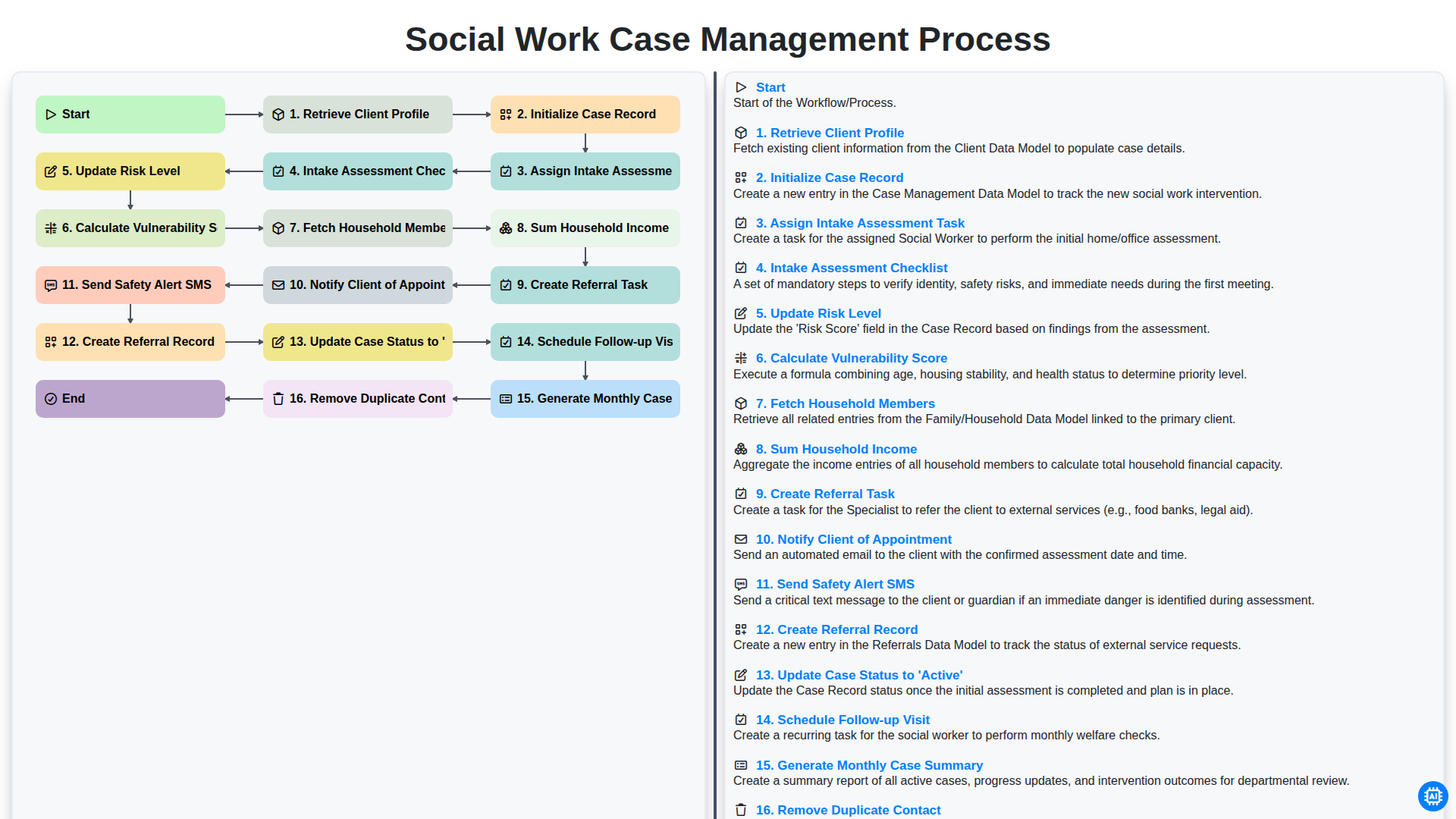
Table of Contents
- Introduction: The Importance of a Structured Case Management Workflow
- Phase 1: Client Intake and Initial Documentation
- Retrieving Client Profiles and Initializing Case Records
- Executing the Intake Assessment and Checklist
- Phase 2: Risk Assessment and Vulnerability Scoring
- Updating Risk Levels and Calculating Vulnerability Scores
- Phase 3: Comprehensive Household and Financial Analysis
- Fetching Household Members and Calculating Total Income
- Phase 4: Intervention and Referral Management
- Creating Referral Tasks and Documentation
- Communication: Notifying Clients and Sending Safety Alerts
- Phase 5: Case Activation and Ongoing Monitoring
- Updating Case Status to 'Active' and Scheduling Follow-ups
- Data Integrity: Generating Summaries and Managing Duplicates
- Resources & Links
TLDR: Learn how to optimize your social work operations using our automated Case Management Process workflow. This guide explains how the template automates everything from initial client intake and risk assessment to household analysis and follow-up scheduling, helping practitioners reduce manual administrative tasks and focus more on client care.
Introduction: The Importance of a Structured Case Management Workflow
In the demanding field of social work, the difference between providing impactful support and falling into administrative chaos often lies in the strength of one's operational framework. Case management is more than just a series of interactions; it is a complex, multi-layered process that requires precision, consistency, and timely intervention. When a workflow is unstructured, critical details can slip through the cracks-a missed risk assessment, a delayed referral, or an overlooked household detail can directly impact the safety and well-being of the individuals and families served.
A structured case management workflow acts as a roadmap for practitioners, ensuring that every client journey-from the initial retrieval of a profile to the scheduling of long-term follow-up visits-is handled with standardized care. By implementing a systematic approach, social workers can move away from reactive crisis management and toward proactive, data-driven advocacy. A well-defined process not only enhances service delivery and ensures regulatory compliance but also empowers case managers to focus on what truly matters: building meaningful connections and driving positive outcomes for the community.
Phase 1: Client Intake and Initial Documentation
The foundation of effective social work begins with a meticulous intake process designed to ensure accuracy and immediate-term safety. This initial phase focuses on transforming raw client information into a structured, actionable case file. The workflow begins by retrieving the client profile and immediately initializing a case record within the management system to ensure all subsequent data is captured in a dedicated environment.
Once the record is established, the process moves into active assessment. An intake assessment task is automatically assigned to the caseworker, accompanied by a standardized intake assessment checklist to ensure no critical information is overlooked. During this stage, the system performs vital data-driven analysis: the caseworker must update the risk level and calculate the vulnerability score based on the gathered qualitative data. This step is crucial for prioritizing high-need cases and allocating resources effectively.
To build a comprehensive view of the client's ecosystem, the workflow requires the caseworker to fetch household members and sum household income, providing a clear picture of the family's socioeconomic landscape. As the intake concludes, the system triggers essential communication and administrative actions. This includes the automatic generation of a referral task and a referral record to connect the client with necessary services, alongside urgent communication protocols such as notifying the client of their appointment and sending a safety alert SMS if immediate intervention is required. Finally, once the documentation is verified, the process concludes by updating the case status to 'Active', officially transitioning the client from a prospect to an ongoing participant in the care program.
Retrieving Client Profiles and Initializing Case Records
The foundation of an effective social work intervention lies in the precision of the initial data entry. The process begins with Retrieving Client Profiles, a critical step where practitioners pull existing data from the database to ensure continuity of care. This stage is vital for identifying whether the individual is a new entrant to the system or a returning client, thereby preventing fragmented care.
Once the profile is retrieved, the next step is to Initialize Case Records. This stage involves creating a dedicated, structured workspace within the management system that serves as the single source of truth for the client's journey. By properly initializing these records, social workers establish a formal digital environment where every subsequent assessment, interaction, and milestone can be tracked accurately, ensuring that no critical detail is lost in the transition from intake to active management.
Executing the Intake Assessment and Checklist
Once the initial case record is established, the workflow moves into its most critical phase: the Intake Assessment and Checklist. This stage serves as the foundation for the entire intervention, as it is where the depth of the client's needs is first formally identified.
The process begins by automatically assigning an Intake Assessment Task to the designated caseworker. This ensures that no new client falls through the cracks and that the assessment process begins immediately upon case creation. To maintain consistency and high standards of care, the caseworker follows a standardized Intake Assessment Checklist. This structured approach ensures that every vital piece of information-from immediate safety concerns to long-term stability factors-is systematically captured.
During this assessment, the system works in tandem with the caseworker to perform real-time data analysis. As the clinician inputs observations, the workflow triggers an automatic Update Risk Level protocol. By evaluating the data against predefined criteria, the system can instantly Calculate a Vulnerability Score, providing an objective measure of the urgency of the case. This data-driven approach removes much of the subjectivity from the initial assessment, allowing the agency to prioritize resources toward those in the most immediate danger.
Phase 2: Risk Assessment and Vulnerability Scoring
Once the initial intake is underway, the focus shifts toward a deep dive into the client's specific needs through the Intake Assessment Checklist. This phase is critical for transforming raw data into actionable insights. As the assessment progresses, the system automatically performs an Update Risk Level operation, ensuring that any emerging red flags are immediately flagged for clinical review.
To ensure a standardized approach to care, the workflow utilizes a data-driven model to Calculate Vulnerability Score. This score is not based on intuition alone; it integrates complex data points, including the ability to Fetch Household Members and Sum Household Income to understand the socioeconomic landscape of the client's environment. By quantifying these variables, the system provides a precise measure of the client's stability, allowing social workers to prioritize high-need cases and allocate resources where they are most urgently required.
Updating Risk Levels and Calculating Vulnerability Scores
Once the initial intake assessment is completed, the workflow moves into a critical phase of data-driven decision-making. After reviewing the intake assessment checklist, the system triggers a process to Update Risk Level based on the specific needs identified during the assessment. This is not merely a manual entry; it is a dynamic update that reflects the current urgency of the client's situation.
To ensure objective and standardized care, the system then automatically performs the step to Calculate Vulnerability Score. By analyzing the variables captured during the intake-such as health status, living conditions, and immediate safety concerns-the system generates a precise score. This calculation is vital for prioritization, allowing case managers to identify high-risk individuals who require immediate intervention and ensuring that resources are allocated to those in the greatest need. This automated precision minimizes human error and ensures that no critical red flags are overlooked in the transition from assessment to active management.
Phase 3: Comprehensive Household and Financial Analysis
Once the initial intake assessment is complete and the risk level has been updated, the focus shifts toward a deeper dive into the client's domestic environment. This stage is critical for understanding the socio-economic landscape that shapes the client's lived experience.
The process begins by performing a Fetch Household Members operation to identify everyone living within the client's primary residence. This ensures that the care plan accounts for dependents, elderly relatives, or any other individuals residing in the home who may be impacted by the case. Following this, the workflow moves into a financial evaluation by executing the Sum Household Income step. By aggregating all available income streams within the household, the system provides a clear picture of the family's economic stability and eligibility for specific support programs. This granular level of analysis is vital for identifying hidden stressors and ensuring that the subsequent interventions are both targeted and resource-efficient.
Fetching Household Members and Calculating Total Income
Understanding the financial landscape of a client's environment is a critical component of a holistic assessment. Once the initial intake details are captured, the workflow automatically proceeds to Fetch Household Members, a step designed to bridge the gap between an individual profile and their broader support system. By pulling all related individuals linked to the primary client, social workers can gain a comprehensive view of the household composition, identifying potential caregivers, dependents, or additional stressors within the home.
Following the identification of all residents, the system performs an automated Sum Household Income operation. This step aggregates all documented income streams-including wages, government benefits, andalimony-to provide an instant, accurate picture of the total household resources. Automating this calculation eliminates manual errors and provides the real-time financial data necessary to accurately determine eligibility for various assistance programs and to inform the subsequent calculation of the client's vulnerability score.
Phase 4: Intervention and Referral Management
Once the initial assessment is complete and the client's needs are clearly defined, the workflow transitions into the critical phase of active intervention and resource connection. This stage is where data-driven insights are transformed into actionable support.
The process begins by formalizing the client's status by performing a Create Referral Record action, which ensures that all necessary external services are documented within the system. To ensure seamless continuity of care, the system automatically triggers a Create Referral Task, notifying the relevant specialists to step in. To bridge the gap between the agency and the client, the workflow executes automated communication protocols, such as Notify Client of Appointment and Send Safety Alert SMS, ensuring that urgent safety needs are addressed instantly and that clients are kept informed of their next steps.
As these interventions are set in motion, the system performs a final administrative cleanup, such as Remove Duplicate Contact, to maintain data integrity. Once all connections are established, the workflow concludes this phase by executing an Update Case Status to 'Active', signaling that the client has moved from intake to a period of sustained support and monitoring.
Creating Referral Tasks and Documentation
Once the initial assessments are complete and the client's needs are clearly identified, the workflow transitions into the critical phase of connecting clients with essential services. This stage involves several integrated steps to ensure that no gap in care occurs. First, the system will Create a Referral Task, which alerts the appropriate specialists or community partners that a new request for service is pending.
To ensure accountability and maintain a clear paper trail, the system then automatically proceeds to Create a Referral Record. This detailed record acts as a permanent log of the specific services requested, the organizations contacted, and the status of the referral. By automating the creation of these records, case managers can minimize manual data entry errors and ensure that every necessary intervention is tracked from the moment of identification through to completion.
Communication: Notifying Clients and Sending Safety Alerts
Effective case management relies heavily on timely and reliable communication to ensure client safety and engagement. Within this workflow, two critical automated actions bridge the gap between administrative processing and real-world intervention: Notify Client of Appointment and Send Safety Alert SMS.
Once an intake assessment is processed and a follow-up visit is scheduled, the system automatically triggers a notification to the client. This ensures that individuals are well-informed of their upcoming engagements, which significantly reduces no-show rates and helps maintain the continuity of care.
Even more vital is the automated Safety Alert SMS feature. In high-risk scenarios-identified during the risk level update and vulnerability scoring phases-the system can instantly dispatch emergency alerts to both clients and caregivers. This ensures that when a change in circumstances necessitates immediate attention, the information moves faster than manual processes ever could, providing a critical layer of protection for vulnerable populations.
Phase 5: Case Activation and Ongoing Monitoring
Once the initial assessment and risk evaluation are complete, the workflow transitions into the critical stage of Case Activation and Ongoing Monitoring. This phase is where the strategic plan moves from paper to practice, ensuring that the client is officially integrated into the agency's care system and that immediate safety interventions are triggered.
The process begins by formalizing the client's presence in the system; once the assessment is finalized, the system will Update Case Status to 'Active'. This transition is crucial as it unlocks the ability to perform long-term tracking and resource allocation. To ensure continuity of care, the workflow automatically triggers a Create Referral Task to connect the client with necessary external services, simultaneously ensuring the Create Referral Record is documented for audit compliance.
Safety and communication are the pillars of this phase. To prevent crisis situations, the system will Send Safety Alert SMS to the client or designated guardians, providing immediate instructions or emergency contact information. Simultaneously, the system will Notify Client of Appointment to ensure they are aware of upcoming engagements, reducing no-show rates.
To maintain the integrity of the data and the quality of the longitudinal care, the workflow includes automated maintenance steps. The system will Schedule Follow-up Visit to ensure no client falls through the cracks, and periodically Generate Monthly Case Summary reports to provide case managers with a high-level overview of progress and emerging trends. Finally, to ensure the database remains accurate and prevents fragmented care, the system will automatically Remove Duplicate Contact entries, ensuring that every intervention is recorded against a single, unified client identity.
Updating Case Status to 'Active' and Scheduling Follow-ups
Once the initial assessment is complete and all necessary referrals are in place, the workflow transitions from the intake phase to the active service phase. The process officially moves forward as the system triggers the Update Case Status to 'Active' step. This transition is a critical milestone, signaling that the client has moved from a candidate for services to an engaged participant in the program, allowing for long-term monitoring and resource allocation.
With the case now officially active, the focus shifts toward continuity of care. The system automatically triggers the Schedule Follow-up Visit task, ensuring that no client falls through the cracks after the initial intake. By automating this scheduling step, case managers can proactively manage their calendars and ensure that interventions are reviewed at regular intervals, maintaining the momentum of the support plan and ensuring that the client's evolving needs are met with timely, consistent engagement.
Data Integrity: Generating Summaries and Managing Duplicates
A robust case management workflow extends beyond initial intake; it relies heavily on the ongoing accuracy and cleanliness of your data. To ensure long-term-term success, the process must include automated mechanisms to Generate Monthly Case Summary reports, providing practitioners with a clear, high-level overview of progress and caseload trends. However, as data accumulates, the risk of fragmentation increases. To maintain a single source of truth, the system must proactively Remove Duplicate Contact entries, preventing fragmented histories and ensuring that every intervention is recorded against the correct individual profile. This commitment to data integrity ensures that decisions are always based on a unified and reliable dataset.
Resources & Links
- National Association of Social Workers (NASW): Professional resources, ethical standards, and best practices for social work case management and clinical practice.
- Child Welfare Information Gateway: Comprehensive information and resources regarding child welfare processes, assessment tools, and systemic workflows.
- Centers for Disease Control and Prevention (CDC): Data-driven insights into social determinants of health and vulnerability assessment frameworks used in community health workflows.
- Social Work Today: Industry news and articles focusing on modern approaches to case documentation, client engagement, and practice management.
- UNICEF: Global standards for protection workflows, safety alerts, and vulnerability scoring in child and family support systems.
- Health IT.gov: Technical guidance on managing digital client records, data integrity, and automating healthcare/social work workflows.
Frequently Asked Questions
What is social work case management?
Social work case management is a collaborative process that involves assessing, planning, coordinating, and monitoring services to ensure clients receive the necessary support to meet their social, medical, or psychological needs.
What are the key stages of the case management workflow?
The typical workflow includes intake and assessment, care planning, implementation of services, ongoing monitoring, and case closure.
Why is the 'Assessment' phase critical in the process?
The assessment phase is crucial because it identifies the client's specific needs, strengths, and challenges, which serves as the foundation for creating an effective and personalized care plan.
How does streamlined documentation improve case management?
Streamlining documentation reduces administrative burden, minimizes errors, ensures compliance with regulatory standards, and allows social workers to focus more time on direct client interaction.
When is it appropriate to close a case?
A case is typically closed when the predefined goals of the care plan have been met, the client has achieved stability, or the service is no longer required or available.
How can technology assist in streamlining the workflow?
Technology, such as Electronic Health Records (EHR) and case management software, can automate repetitive tasks, provide real-time data access, and improve communication between multidisciplinary teams.
Comments
There are no comments yet. Be the first to add one!
Case Management Solution Demo
Streamline your casework & improve outcomes! ChecklistGuro centralizes case details, tasks, & communication. Enhance efficiency, ensure compliance, & deliver exceptional service. Manage it all with our Work OS.
Related Articles
Streamline Your Deals: The Ultimate Real Estate Case Management Checklist Template
Streamline Your Debt Collection: A Case Management Checklist Template
Cybersecurity Incident Response: Your Checklist Template for Success
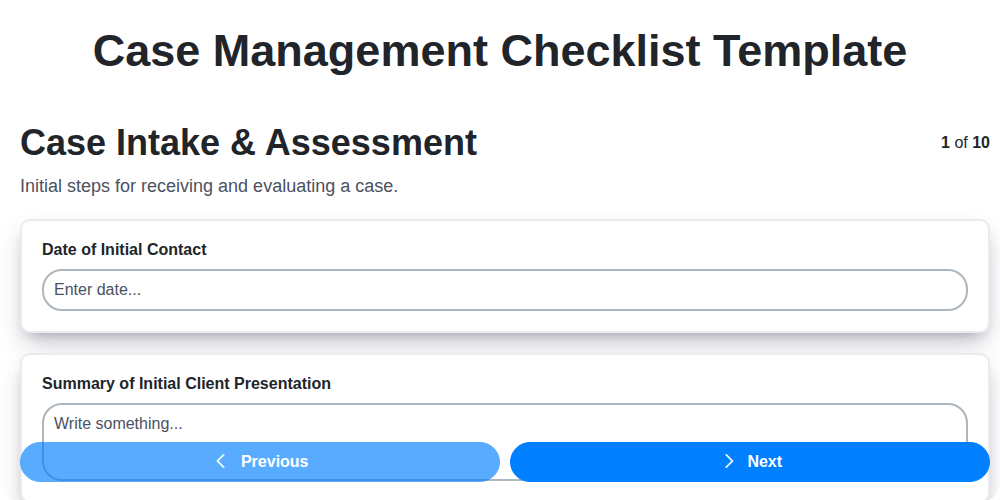
Streamline Your Case Management: The Ultimate Checklist Template
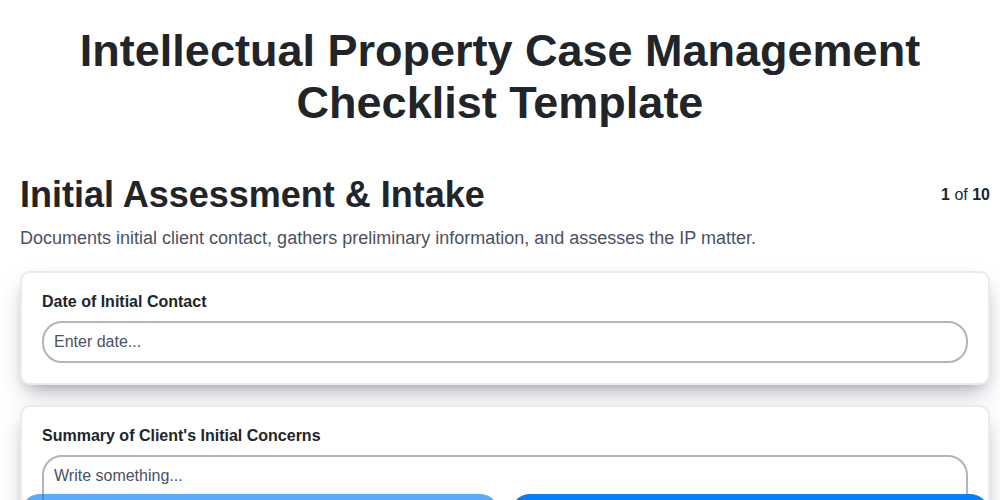
Mastering IP: Your Intellectual Property Case Management Checklist Template
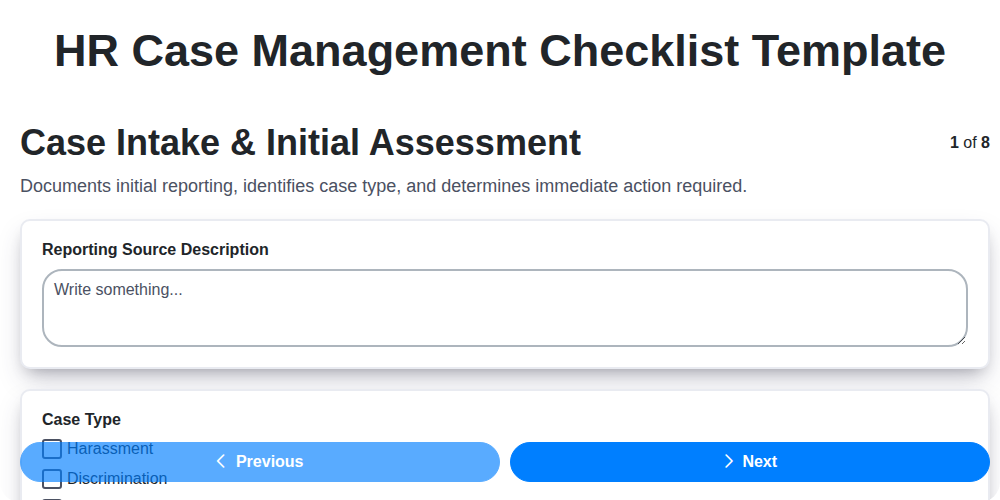
HR Case Management Checklist Template: Your Guide to Fair & Compliant Investigations
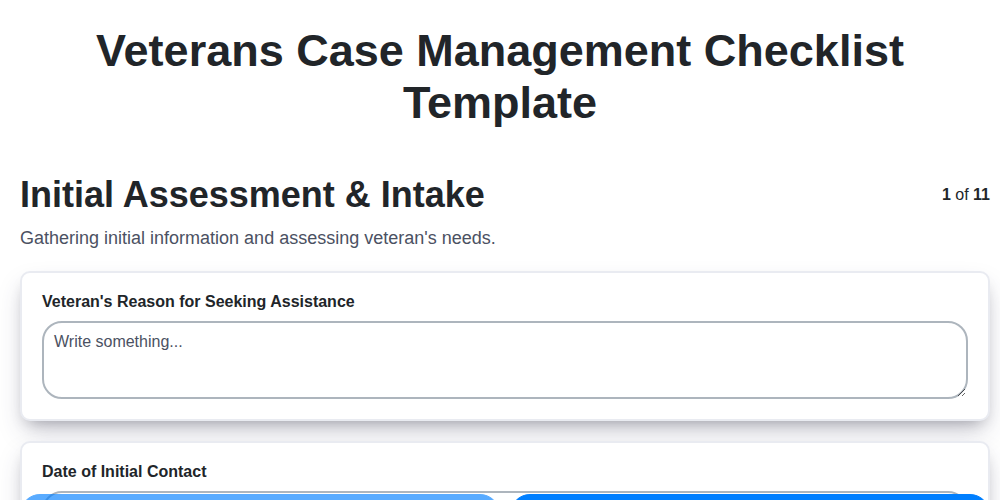
Streamlining Veteran Care: Your Comprehensive Case Management Checklist Template
Mastering Investigations: Your Case Management Checklist Template Guide
Need help with
Checklists?
Have a question? We're here to help. Please submit your inquiry, and we'll respond promptly.