Navigating Complexity: Your Supply Chain Labor Compliance Checklist
Published: 12/09/2025 Updated: 07/02/2026
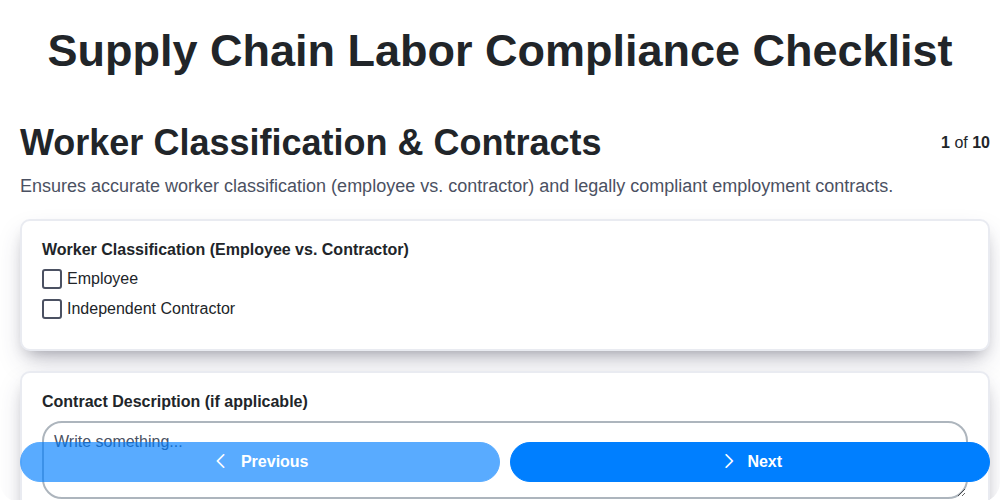
Table of Contents
- Introduction: Why Supply Chain Labor Compliance Matters
- 1. Worker Classification & Contracts: Defining Roles & Responsibilities
- 2. Wage & Hour Laws: Ensuring Fair Compensation
- 3. Working Conditions & Safety: A Foundation of Dignity
- 4. Child Labor & Forced Labor Prevention: Zero Tolerance
- 5. Freedom of Association & Collective Bargaining: Respecting Workers' Rights
- 6. Discrimination & Harassment Prevention: Fostering an Inclusive Environment
- 7. Health and Medical Requirements: Protecting Worker Wellbeing
- 8. Subcontractor Compliance: Extending Your Responsibility
- 9. Auditing and Reporting: Monitoring Performance
- 10. Remediation and Corrective Action: Addressing Identified Risks
- 11. Technology and Tools for Compliance
- 12. Training and Awareness: Empowering Stakeholders
- Conclusion: Building a Sustainable and Ethical Supply Chain
- Resources & Links
TLDR: Worried about supply chain labor issues? This checklist is your guide! It covers everything from worker contracts and wages to safety, ethical sourcing, and auditing - helping you minimize risks, ensure fair labor practices, and protect your brand reputation. Download it to simplify compliance and build a more responsible supply chain.
Introduction: Why Supply Chain Labor Compliance Matters
In today's interconnected global economy, businesses are increasingly accountable for the practices of their suppliers. Consumers, investors, and governments are demanding greater transparency and ethical behavior across entire supply chains. Ignoring labor compliance isn't just a moral failing; it poses significant legal, financial, and reputational risks.
Think about it: a single supplier's failure to uphold basic labor standards can tarnish a brand's image, trigger costly lawsuits, disrupt operations, and even impact share prices. Beyond the bottom line, however, lies a fundamental responsibility to ensure workers throughout your supply chain are treated with dignity and respect.
This isn't just about ticking boxes; it's about actively safeguarding the rights of vulnerable workers and building a sustainable, ethical, and resilient supply chain. From worker safety and fair wages to preventing exploitation and promoting freedom of association, comprehensive labor compliance is a cornerstone of responsible business practices. The following checklist outlines key areas to focus on, empowering you to proactively manage risk and contribute to a more equitable world.
1. Worker Classification & Contracts: Defining Roles & Responsibilities
Accurate worker classification is the bedrock of supply chain labor compliance. Misclassifying employees as independent contractors can lead to significant legal and financial repercussions, including back taxes, penalties, and potential lawsuits. This goes beyond simply labeling someone; it requires a thorough understanding of legal definitions and consistent application.
Key Considerations:
- Independent Contractor vs. Employee: Carefully evaluate the level of control your company (or your suppliers) exert over the worker. Do you dictate work hours, location, or tools? Do you provide training? Greater control indicates employee status.
- Written Contracts: Implement clear, legally sound contracts that accurately reflect the worker's status and outline responsibilities. These contracts should be regularly reviewed and updated to reflect any changes in work arrangements.
- Consistent Application: Ensure consistent application of classification standards across your entire supply chain. Discrepancies raise red flags and increase compliance risk.
- Regular Review: Laws and interpretations change. Conduct regular reviews of worker classification practices to ensure ongoing compliance.
- Documentation is Key: Maintain detailed records of the factors considered when classifying workers. This documentation is vital in defending against potential misclassification claims.
2. Wage & Hour Laws: Ensuring Fair Compensation
Navigating wage and hour laws is a critical element of supply chain labor compliance. These laws, varying significantly by country and even region, dictate minimum wage requirements, overtime pay, working hours, meal and rest breaks, and record-keeping obligations. Failure to adhere to these regulations can lead to significant financial penalties, reputational damage, and legal action.
Key Considerations:
- Minimum Wage: Understand and consistently meet the applicable minimum wage for all workers within your supply chain. This includes direct employees and those employed by subcontractors.
- Overtime Pay: Properly calculate and compensate overtime hours according to local regulations. Classify workers correctly (exempt vs. non-exempt) to ensure accurate overtime payment.
- Working Hours: Monitor and enforce reasonable working hours, complying with mandated limits and ensuring adequate rest periods. Excessive working hours can be a key indicator of underlying issues.
- Payroll Deductions: Ensure payroll deductions are lawful and transparent, clearly communicated to workers, and comply with applicable regulations.
- Record Keeping: Maintain accurate and complete records of wages, hours worked, and other relevant information to demonstrate compliance and facilitate audits.
- Payment Frequency: Adhere to legally required payment frequencies and ensure timely payment of wages.
- Contractor vs. Employee Distinction: Be certain you're correctly classifying workers. Misclassifying employees as independent contractors can lead to significant liabilities.
Regularly update your understanding of relevant wage and hour laws, as they are frequently amended. Consultation with legal counsel specializing in labor law is highly recommended.
3. Working Conditions & Safety: A Foundation of Dignity
Beyond legal minimums, ethical supply chains prioritize the wellbeing and safety of every worker. This section moves beyond mere compliance and focuses on creating a supportive and dignified working environment.
Key Elements to Consider:
- Reasonable Work Hours: Excessive overtime, unpredictable schedules, and consistent pressure to work beyond established hours are red flags. Ensure working hours adhere to legal limits and respect worker wellbeing. Regularly review and adjust schedules based on worker feedback.
- Adequate Breaks & Rest: Sufficient breaks for meals and rest are crucial for maintaining productivity and preventing burnout. Implement and enforce policies that guarantee these breaks.
- Safe Working Environment: A thorough risk assessment of all work areas is essential. This includes identifying and mitigating hazards related to machinery, chemicals, and physical strain. Provide appropriate Personal Protective Equipment (PPE) and ensure its proper use.
- Ergonomics: Implement ergonomic assessments and training to minimize repetitive strain injuries and musculoskeletal disorders.
- Hygiene & Sanitation: Provide clean restrooms, potable water, and adequate sanitation facilities.
- Emergency Procedures: Develop and communicate clear emergency procedures (fire, medical emergencies, natural disasters) and conduct regular drills.
- Worker Consultation: Actively seek worker input regarding working conditions. Empower workers to report safety concerns without fear of reprisal. Anonymous reporting mechanisms can be particularly effective.
- Training & Awareness: Provide comprehensive training on safety procedures, hazard identification, and reporting mechanisms.
- Ventilation & Temperature: Ensure adequate ventilation and temperature control to prevent heat stress and other health issues.
Maintaining safe and supportive working conditions isn't just about avoiding legal trouble; it's about respecting human dignity and fostering a productive and engaged workforce.
4. Child Labor & Forced Labor Prevention: Zero Tolerance
Protecting vulnerable workers from exploitation is not just a legal requirement; it's a fundamental ethical responsibility. Child labor and forced labor are abhorrent practices, and a robust supply chain requires a zero-tolerance approach to their prevention. This goes far beyond simply adhering to minimum legal standards - it demands proactive and continuous vigilance.
Understanding the Risks: Assess your supply chain to identify areas and tiers most susceptible to these risks. This often involves examining regions with high poverty rates, informal economies, and limited regulatory oversight. Specific industries, like agriculture, garment manufacturing, and mining, are often flagged as higher risk.
Due Diligence and Risk Mapping: Conduct thorough due diligence on all suppliers, including direct and indirect tiers. This includes:
- Supplier Questionnaires: Implement detailed questionnaires specifically targeting child labor and forced labor indicators.
- On-Site Audits: Independent third-party audits are crucial to verify supplier practices and conditions firsthand.
- Worker Interviews: Confidential interviews with workers provide valuable insight into actual working conditions, often revealing issues not evident in documentation.
Prohibition and Contractual Obligations: Include stringent clauses prohibiting child labor and forced labor in all supplier contracts. These clauses must be clearly defined, understood, and actively enforced.
Training and Awareness: Provide regular training for your procurement teams, suppliers, and workers on the risks of child labor and forced labor, and how to identify and report them.
Reporting Mechanisms: Establish confidential and accessible reporting mechanisms for workers and other stakeholders to report suspected cases of child labor or forced labor without fear of reprisal.
Remediation & Collaboration: Develop clear protocols for responding to confirmed cases. This includes immediate remediation for victims, investigation of the root causes, and collaborative efforts with suppliers and local authorities to prevent recurrence.
Remember, prevention is the most effective solution. A proactive, rigorous approach is vital to ensuring a supply chain free from child labor and forced labor.
5. Freedom of Association & Collective Bargaining: Respecting Workers' Rights
A robust supply chain prioritizes the fundamental right of workers to freely associate and bargain collectively. This isn't just a legal obligation in many regions; it's a core principle of ethical business practice. Failure to respect these rights can lead to significant reputational damage, legal action, and disruption to your supply chain.
Here's what your checklist needs to address:
- Policy Acknowledgement: Ensure your suppliers have clear policies that recognize and respect workers' rights to form and join trade unions or other worker organizations of their choosing, without fear of interference, intimidation, or discrimination.
- Non-Interference: Your suppliers must not engage in actions that prevent or obstruct workers from exercising these rights. This includes prohibiting union meetings, retaliating against union representatives, or creating an environment of fear.
- Collective Bargaining Support: Suppliers should engage in good-faith collective bargaining with worker representatives when requested. Understand that the process itself is important, even if outcomes aren't always agreeable.
- Training: Supplier management and local supervisors should receive training on freedom of association principles and their obligations.
- Due Diligence: Actively monitor supplier practices to ensure compliance. This includes monitoring local news, engaging with worker organizations, and asking direct questions during audits. Look for signs of intimidation, restrictions on communication, or unexplained shifts in worker representation.
Ultimately, upholding freedom of association demonstrates a commitment to fair labor practices and fosters a more stable and productive workforce throughout your supply chain.
6. Discrimination & Harassment Prevention: Fostering an Inclusive Environment
A robust supply chain labor compliance program isn't just about avoiding legal trouble; it's about creating a respectful and inclusive workplace for every worker. Discrimination and harassment can take many forms - based on gender, race, religion, ethnicity, sexual orientation, disability, or any other protected characteristic - and can significantly impact worker well-being, productivity, and overall supply chain stability.
Your checklist should include verification of the following:
- Clear Policies: Are there clearly written and readily accessible policies prohibiting discrimination and harassment? These should cover all forms of unacceptable behavior and outline reporting procedures. Ensure policies are translated into local languages and are culturally appropriate.
- Training Programs: Are workers and management consistently trained on recognizing, preventing, and reporting discrimination and harassment? This training should go beyond just legal requirements and focus on building a culture of respect.
- Reporting Mechanisms: Are there safe, confidential, and accessible channels for workers to report incidents of discrimination or harassment without fear of retaliation? This includes multiple avenues for reporting, catering to varying comfort levels.
- Investigation Procedures: Does your supplier have a clear and impartial process for investigating complaints? Investigations must be prompt, thorough, and fair to all parties involved.
- Remediation & Support: Are appropriate measures taken to address and remediate incidents, including providing support to victims and ensuring repeat offenses are handled swiftly and decisively?
- Cultural Sensitivity: Remember that definitions and perceptions of discrimination and harassment can vary across cultures. Your compliance program needs to be sensitive to these nuances.
By proactively addressing discrimination and harassment, your supply chain will not only be compliant with regulations, but will also cultivate a more equitable, productive, and sustainable operation.
7. Health and Medical Requirements: Protecting Worker Wellbeing
A robust supply chain demands a commitment to the physical and mental wellbeing of all workers. Neglecting health and medical needs not only exposes individuals to unnecessary risk but can also lead to decreased productivity, increased absenteeism, and significant legal repercussions.
Here's what your checklist should cover in this crucial area:
- Access to Healthcare: Workers should have access to adequate medical care, including preventative care, emergency treatment, and sick leave. Evaluate whether your suppliers provide on-site clinics, partner with local healthcare providers, or offer health insurance options.
- Occupational Health and Safety (OHS) Standards: Suppliers must adhere to established OHS standards, including regular health screenings, ergonomic assessments, and programs to address specific occupational hazards prevalent in their operations.
- Exposure to Hazardous Substances: Assess whether workers are adequately trained and equipped to handle hazardous materials safely. This includes providing appropriate personal protective equipment (PPE), ventilation, and hygiene facilities.
- Mental Health Support: Recognize the impact of work-related stress and provide resources for mental health support. This can include counseling services, stress management training, and promotion of a supportive work environment.
- Hygiene and Sanitation: Ensure access to clean and safe restrooms, potable water, and adequate sanitation facilities.
- Pandemic Preparedness: Evaluate supplier plans for handling outbreaks of infectious diseases, including protocols for testing, isolation, and contact tracing.
- Record Keeping: Verify that suppliers maintain accurate records of worker health assessments, medical treatments, and any incidents related to health or safety.
Regular audits and worker interviews are essential to ensure that these requirements are consistently met and that workers feel empowered to raise concerns without fear of reprisal.
8. Subcontractor Compliance: Extending Your Responsibility
Your company's commitment to ethical supply chains doesn't end with your direct suppliers. Increasingly, scrutiny is falling on the labor practices of their subcontractors - the entities they, in turn, rely upon. Failing to address this "second-tier" risk can expose your brand to significant legal, reputational, and operational damage.
Why Subcontractor Compliance Matters:
- Extended Supply Chain Visibility: Labor abuses can easily slip through the cracks when you only monitor your immediate suppliers. Subcontractors often operate with less oversight, making them vulnerable to non-compliance.
- Joint and Several Liability: Legal frameworks are evolving to hold brands accountable for the labor practices of their entire supply chain, even those involving multiple tiers.
- Reputational Risk: Consumer awareness and social media can quickly amplify negative press surrounding labor violations within your extended supply chain.
- Operational Disruptions: Non-compliance can lead to production halts, delays, and increased costs due to remediation efforts.
What to Do:
- Mapping & Identification: Identify and map your Tier 1 suppliers' subcontractors. This isn't always easy, requiring diligence and strong supplier collaboration.
- Contractual Clauses: Include clauses in your contracts with Tier 1 suppliers that mandate they ensure compliance of their subcontractors and provide visibility into their operations. Require them to audit subcontractor labor practices.
- Risk Assessment: Prioritize subcontractors based on geographical location, industry sector, and known risk factors (e.g., prevalence of forced labor in a region).
- Due Diligence: Implement a risk assessment questionnaire and potentially require audits of high-risk subcontractors.
- Collaboration & Transparency: Encourage open communication and collaboration with Tier 1 suppliers to share information and address concerns.
- Continuous Improvement: Regularly review and update your subcontractor compliance program to adapt to evolving risks and regulations.
Addressing subcontractor compliance is an investment in your brand's integrity and long-term success.
9. Auditing and Reporting: Monitoring Performance
A robust supply chain labor compliance program isn't just about establishing policies; it's about verifying their effectiveness and demonstrating ongoing commitment. Regular auditing and transparent reporting are crucial for monitoring performance, identifying gaps, and proactively addressing potential risks.
Beyond the Initial Assessment: Initial assessments provide a snapshot, but continuous monitoring is essential. This means moving beyond one-time audits and establishing a system for ongoing data collection and evaluation.
Types of Audits: Consider a tiered approach to auditing, including:
- Self-Assessments: Regular internal reviews by suppliers, allowing them to identify potential areas of improvement.
- First-Party Audits: Conducted by the supplier themselves, often using a recognized auditing standard.
- Second-Party Audits: Your company conducts audits of your direct suppliers.
- Third-Party Audits: Independent auditors provide an unbiased assessment of supplier compliance. These are particularly valuable for high-risk areas or to enhance credibility. Consider using reputable auditing firms specializing in labor compliance.
Key Reporting Metrics: Develop a reporting framework that includes quantifiable metrics. Examples include:
- Number of worker complaints received and resolved
- Audit scores and findings
- Percentage of workers receiving training on labor rights
- Instances of non-compliance identified and corrected
- Time taken to implement corrective actions
Transparency & Communication: Reporting shouldn't be an internal exercise. Share findings with relevant stakeholders - including suppliers, investors, and potentially even publicly - to demonstrate accountability and build trust. Clear and consistent communication fosters collaboration and continuous improvement.
Leveraging Technology: Utilize technology solutions - like supply chain mapping platforms and compliance management software - to streamline data collection, analysis, and reporting, improving efficiency and accuracy.
10. Remediation and Corrective Action: Addressing Identified Risks
Finding issues during supply chain audits is rarely a setback - it's an opportunity for improvement. However, the real value of a robust compliance program isn't just identifying risks; it's how you respond to them. Remediation and corrective action are the critical steps that turn findings into tangible progress.
This phase goes beyond simply documenting violations. It requires a systematic approach:
- Prioritization: Not all findings are equal. Rank issues based on severity, likelihood of recurrence, and potential impact on workers and your brand reputation. High-risk issues need immediate attention.
- Root Cause Analysis: Dig deeper than the surface-level problem. Understand why the non-compliance occurred. Was it a training gap? A systemic issue within the supplier's management system?
- Action Plan Development: Create a detailed plan outlining specific actions to address the root causes. This plan should include timelines, responsible parties (both you and your supplier), and measurable goals.
- Supplier Collaboration: Remediation is rarely a solo effort. Work with your suppliers to develop and implement corrective actions. Offer support, training, and resources to help them succeed.
- Verification & Follow-Up: Don't just assume the problem is fixed. Conduct follow-up audits or assessments to verify that the corrective actions have been implemented effectively and are sustainable.
- Documentation: Meticulously document all remediation efforts, including the action plan, progress updates, and verification results. This transparency is essential for accountability and future reference.
- Escalation Procedures: Define clear escalation paths for situations where suppliers are not cooperating or failing to implement agreed-upon corrective actions.
Remember, remediation isn't a one-time fix. It's an ongoing process of continuous improvement, reinforcing a culture of ethical and responsible sourcing throughout your supply chain.
11. Technology and Tools for Compliance
Staying on top of supply chain labor compliance is no longer a purely manual process. Thankfully, technology offers powerful tools to automate tasks, improve visibility, and enhance accuracy. Here's how you can integrate tech into your checklist:
- Risk Assessment Platforms: Utilize platforms that leverage data analytics and machine learning to identify high-risk regions, factories, and commodities within your supply chain. These tools often incorporate publicly available data, news reports, and NGO findings to flag potential compliance issues.
- Supplier Management Systems (SMS): Centralize supplier information, including compliance documentation, audit results, and corrective action plans, within a single, accessible platform. This streamlines communication and ensures consistent data tracking.
- Worker Hotlines & Reporting Tools: Implement confidential and accessible channels for workers to report grievances or concerns related to labor practices. These platforms often offer multilingual support and anonymity to encourage reporting.
- Blockchain Technology: For increased transparency and traceability, explore blockchain solutions that can track worker conditions and payment records, creating an immutable record of compliance efforts. While still emerging, this technology holds significant promise.
- AI-Powered Auditing: Emerging AI tools can analyze large datasets from audits, worker interviews, and documentation to identify patterns and anomalies that might indicate non-compliance. This can enhance audit efficiency and uncover hidden risks.
- Data Analytics Dashboards: Create dashboards that visualize key compliance metrics, allowing you to quickly identify areas needing attention and track progress over time.
Remember to choose tools that integrate with your existing systems and are scalable to accommodate your supply chain's growth.
12. Training and Awareness: Empowering Stakeholders
A robust supply chain labor compliance program isn't just about policies and audits - it's about fostering a culture of respect and understanding. That's where comprehensive training and awareness programs become essential. Simply having a policy on paper isn't enough; everyone involved - from factory workers to senior management - needs to understand their rights and responsibilities.
What should be covered?
- Worker Training: Focus on fundamental rights, including wage & hour regulations, safe working conditions, prohibited labor practices (child labor, forced labor), grievance mechanisms, and how to report concerns anonymously. Training should be in the local language(s) and easily accessible.
- Management Training: Equip managers with the knowledge to identify and address labor risks, ensure compliance with policies, and effectively handle worker grievances. They need to understand their legal obligations and the importance of ethical leadership.
- Supplier Training: Extend training to your direct suppliers and encourage them to extend it to their subcontractors. This cascading effect reinforces best practices throughout the supply chain.
- Awareness Campaigns: Utilize posters, digital platforms, and regular communication to keep labor rights top-of-mind.
- Regular Refreshers: Compliance isn't a one-time event. Periodic refresher training is critical to reinforce understanding and address any new regulations or best practices.
Why is it important?
Training and awareness programs build trust, empower workers to speak up, reduce the risk of non-compliance, and ultimately contribute to a more ethical and sustainable supply chain. Investing in your stakeholders' knowledge is an investment in a responsible and resilient business.
Conclusion: Building a Sustainable and Ethical Supply Chain
Ultimately, a robust Supply Chain Labor Compliance Checklist isn't just about ticking boxes; it's about fostering a culture of respect and ethical practices throughout your entire network. By diligently implementing and regularly updating this checklist - encompassing worker classification, wage & hour adherence, safe working conditions, prevention of child and forced labor, respect for worker rights, and diligent subcontractor oversight - you're investing in a more sustainable and resilient supply chain. This proactive approach minimizes legal and reputational risks, builds trust with consumers, and contributes to a more equitable global marketplace. Remember, continuous improvement and a commitment to ongoing assessment are key. Regularly auditing, reporting on progress, and swiftly addressing any identified gaps are essential to demonstrating your dedication to ethical sourcing and building a truly responsible supply chain for the future.
Resources & Links
- U.S. Department of Labor: The primary federal agency responsible for enforcing labor laws and regulations in the United States. Offers comprehensive information on worker rights, wage and hour laws, child labor laws, and more. Vital for understanding baseline U.S. legal requirements.
- International Labour Organization (ILO): The leading international organization for worker rights and social justice. Provides conventions, recommendations, and resources on a wide range of labor standards, including forced labor, child labor, and freedom of association. A crucial resource for global compliance.
- U.S. Department of State - Compilation of International Labor Standards: Provides a compilation of international labor standards, conventions, and recommendations. Useful for understanding requirements beyond US law, especially relevant for global supply chains.
- Business for Social Responsibility (BSR): A non-profit organization that helps companies to improve their sustainability and social impact. Offers guidance and resources on supply chain due diligence and worker rights. Good for practical guidance.
- Sedex: A global platform for supply chain transparency. Offers a membership-based system for sharing ethical data and conducting audits. Useful for supplier management and demonstration of due diligence.
- Fair Labor Association (FLA): A collaborative organization that works with companies, universities, and trade unions to improve labor conditions in factories. Provides resources, assessments, and remediation programs. Relevant for athletic apparel and other consumer goods.
- Ethisource (formerly ETI): An international membership organization working to eliminate poverty and injustice in global supply chains. Provides tools, training, and resources for ethical sourcing. Useful for comprehensive ethical considerations.
- SA8000 Standard: A social accountability standard that focuses on worker rights and working conditions. Provides a framework for auditing and continuous improvement. Offers a robust framework for social accountability.
- Riskmethods: Provides supply chain risk management solutions, including labor compliance monitoring. Good for technology & tools section - showcases how technology can assist with compliance.
- Sourcemap: A supply chain traceability platform. Helps companies map their supply chains and identify risks, including labor compliance issues. Another tool option for supply chain mapping and visibility.
- Cirium (formerly Ideo): Provides workforce compliance solutions and supports understanding wage and hour laws across different jurisdictions, useful for the Wage & Hour Laws section.
- Transparency International: A global organization fighting corruption. Supply chain corruption often intersects with labor rights abuses; this is a resource for understanding broader risk factors.
- United Nations Sustainable Development Goals - Decent Work and Economic Growth (Goal 8): Highlights the UN's commitment to decent work and economic growth, providing context for the importance of labor compliance within a broader sustainability framework. Reinforces ethical sourcing themes.
Frequently Asked Questions
What is supply chain labor compliance?
Supply chain labor compliance refers to ensuring your suppliers adhere to fair labor practices and legal requirements throughout their operations. This includes things like wages, working hours, health and safety, freedom of association, and prohibition of child labor and forced labor. It's about verifying ethical and legal standards are met at every stage of your supply chain, not just within your own company.
Why is supply chain labor compliance important?
It's important for ethical reasons - ensuring workers are treated fairly and with dignity. It also reduces reputational risk, minimizes legal liabilities (fines, lawsuits), strengthens brand value, and can even improve supply chain resilience by fostering more stable and trustworthy supplier relationships.
Who is responsible for supply chain labor compliance?
Ultimately, the responsibility lies with the company sourcing the goods or services. While suppliers are responsible for their own practices, the brand or company purchasing those goods is accountable for ensuring compliance throughout the entire supply chain. This often requires a shared responsibility model with suppliers and potentially third-party auditors.
What are the key areas covered in a supply chain labor compliance checklist?
A comprehensive checklist typically covers: wages and overtime, working hours, freedom of association and collective bargaining, health and safety, child labor prevention, forced labor prevention, non-discrimination and harassment, and grievance mechanisms. It should also address contractual clauses related to compliance.
What types of documents should I request from my suppliers to verify compliance?
You should request: copies of employment contracts, wage records, safety training records, policies on child labor and forced labor, supplier codes of conduct, audit reports (both internal and external), and any corrective action plans addressing previous compliance issues.
What is a social compliance audit and why is it important?
A social compliance audit is an independent assessment of a supplier's labor practices. It helps verify that the supplier is adhering to agreed-upon standards and regulations. Regular audits provide objective evidence of compliance, identify areas for improvement, and help mitigate risk.
How often should I audit my suppliers?
The frequency of audits depends on the risk level associated with your suppliers and the products being sourced. High-risk suppliers or sectors (e.g., apparel, electronics) may require more frequent audits (annual or even semi-annual). Low-risk suppliers may be audited less often.
What should I do if a supplier is found to be non-compliant?
First, document the findings and immediately engage with the supplier to develop a corrective action plan with clear timelines and measurable goals. Provide support and resources if needed. Follow up on the plan's implementation and conduct follow-up audits to verify remediation. Repeated or serious non-compliance may require terminating the relationship.
How can I build a sustainable and long-term supply chain labor compliance program?
Focus on building strong, collaborative relationships with suppliers, providing training and capacity building, establishing clear expectations and performance indicators, integrating compliance into supplier contracts, and continuously monitoring and improving your program based on data and feedback.
Are there any international standards or frameworks that can help me develop a supply chain labor compliance program?
Yes. Several frameworks exist, including: SA8000, BSCI, SMETA, ILO Core Conventions, UN Guiding Principles on Business and Human Rights. Using these as benchmarks can provide structure and credibility to your program.
Comments
There are no comments yet. Be the first to add one!
SCM - Supply Chain Management Solution Demo
Struggling with supply chain disruptions & lack of visibility? ChecklistGuro delivers a centralized SCM solution, connecting your suppliers, manufacturers, & distributors for improved collaboration and control. Simplify operations & boost efficiency.
Related Articles
The Ultimate Supply Chain Inventory Accuracy Audit Checklist: A Step-by-Step Guide
Supply Chain Capacity Planning Checklist: Ensure Readiness for Peak Demand
The Ultimate Supply Chain Network Optimization Checklist: A Step-by-Step Guide
Supply Chain Risk Assessment Checklist: Your Guide to Resilience
Navigating Sustainability: Your Supply Chain Compliance Checklist
Top 10 SAP Logistics Business Network (LBN) Alternatives for 2025

Fortify Your Supply Chain: The Ultimate Resilience Assessment Checklist
Navigating Global Trade: Your Essential Import/Export Compliance Checklist
Need help with
Supply Chain Management (SCM)?
Have a question? We're here to help. Please submit your inquiry, and we'll respond promptly.