Supply Chain Tech Implementation: Your Essential Checklist for Success
Published: 12/09/2025 Updated: 07/02/2026
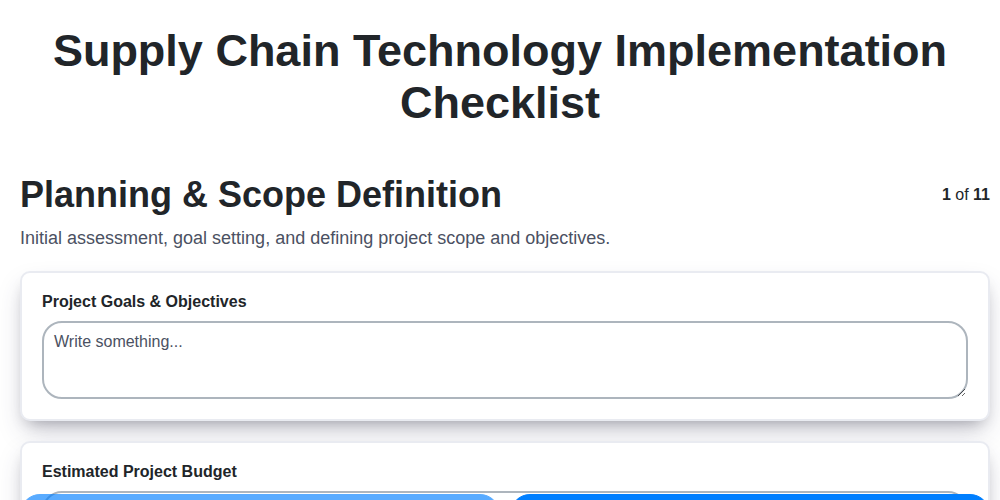
Table of Contents
- Introduction: Navigating the Complexities of Supply Chain Tech Implementation
- 1. Planning & Scope Definition: Laying the Foundation
- 2. Requirements Gathering & Analysis: Understanding Your Needs
- 3. Vendor Selection & Contract Negotiation: Choosing the Right Partner
- 4. Technical Design & Architecture: Blueprinting Your System
- 5. Data Migration & Cleansing: Preparing Your Data for Success
- 6. System Configuration & Customization: Tailoring the Tech to Your Business
- 7. Integration Testing: Ensuring Seamless Connectivity
- 8. User Acceptance Testing (UAT): Validating User Experience
- 9. Training & Documentation: Empowering Your Team
- 10. Deployment & Go-Live: Executing the Transition
- 11. Post-Implementation Support & Monitoring: Maintaining Performance
- 12. Risk Mitigation: Anticipating and Addressing Potential Issues
- Conclusion: Maximizing Your ROI
- Resources & Links
TLDR: Implementing new supply chain tech? Don't risk chaos! This checklist breaks down the process into 11 crucial steps - from planning and vendor selection to go-live and ongoing support - ensuring a smoother, more successful transition and maximizing your ROI. Download the template and minimize costly errors and delays!
Introduction: Navigating the Complexities of Supply Chain Tech Implementation
Implementing new supply chain technology-whether it's a new ERP, a warehouse management system (WMS), a transportation management system (TMS), or a blockchain solution-is rarely a walk in the park. It's a complex undertaking with the potential to significantly improve efficiency, visibility, and resilience, but also one fraught with potential pitfalls. Many organizations underestimate the scope of the work, leading to missed deadlines, budget overruns, and ultimately, a system that doesn't fully meet their needs.
This isn's just about installing software; it's about transforming processes, aligning stakeholders, and ensuring data integrity. A disorganized or rushed implementation can derail operations, disrupt relationships with suppliers and customers, and negatively impact the bottom line. That's why a robust, well-defined checklist is absolutely essential. This post will outline a comprehensive checklist, breaking down the implementation journey into manageable steps, ensuring a smoother transition and maximizing your return on investment. Let's dive in and explore how to navigate these complexities effectively.
1. Planning & Scope Definition: Laying the Foundation
A successful supply chain technology implementation doesn't just happen; it's the result of meticulous planning and a clearly defined scope. Skipping this crucial first step is like building a house on sand - it's destined to crumble.
This phase is all about establishing what you're trying to achieve and why. Start with a thorough assessment of your current state. What are your existing pain points in the supply chain? Where are inefficiencies costing you time, money, or customer satisfaction?
Next, define your objectives. Be specific and measurable. Instead of "improve efficiency," aim for "reduce order fulfillment time by 15%." Consider the breadth of your supply chain - will the new technology impact procurement, warehousing, transportation, or all three?
Crucially, outline the project's boundaries. What isn't included? What processes will remain untouched? This prevents scope creep, a common pitfall that can derail timelines and budgets. Document your goals, assumptions, constraints, and key performance indicators (KPIs) in a comprehensive project charter. This serves as your guiding document throughout the entire implementation journey.
Finally, secure buy-in from all relevant stakeholders - from executive leadership to end-users - to ensure everyone is aligned and committed to the project's success.
2. Requirements Gathering & Analysis: Understanding Your Needs
This phase is arguably the most critical in your supply chain technology implementation. Rushing it can lead to a system that doesn't solve your actual problems, resulting in wasted investment and frustrated users. It's more than just listing features - it's about truly understanding why you need them.
Dig Deep: Asking the Right Questions
Start by assembling a diverse team - representatives from procurement, logistics, warehousing, sales, finance, and IT - to ensure a holistic view of your supply chain processes. Don't just ask "What features do you want?" Instead, focus on uncovering the underlying needs driving those desires. Here are some guiding questions:
- Process Mapping: How do your current processes actually work? Document every step, from order placement to final delivery. Identify pain points, bottlenecks, and inefficiencies.
- Key Performance Indicators (KPIs): What metrics are critical to your business success (e.g., order fulfillment rates, inventory turnover, on-time delivery)? How will the new technology impact these KPIs?
- Future State Vision: Where do you want your supply chain to be in 1, 3, and 5 years? How can the technology support this growth and adaptation?
- Current System Limitations: What are the biggest frustrations with your existing systems (or lack thereof)? What functionalities are missing?
- User Stories: Develop user stories to capture specific needs. For example: As a warehouse manager, I need to be able to easily track inventory levels in real-time to prevent stockouts.
- Prioritization: Once you've gathered a long list of requirements, prioritize them - must-haves, should-haves, could-haves, won't-haves. This helps manage scope and budget effectively.
Documenting and Validating
Don't let the gathered information live only in people's heads. Compile a detailed Requirements Document - a living document that clearly outlines all functional and non-functional requirements. This document should be reviewed and signed off by all key stakeholders to ensure alignment and avoid misunderstandings later on. Regularly revisit this document throughout the implementation process to ensure nothing has been overlooked and to account for any changing business needs.
3. Vendor Selection & Contract Negotiation: Choosing the Right Partner
Selecting the right technology vendor is arguably as crucial as the technology itself. A mismatch here can derail your entire implementation, leading to delays, cost overruns, and ultimately, a system that doesn't meet your needs. This phase goes far beyond simply comparing features; it's about building a partnership.
Here's a breakdown of key considerations:
- Define Selection Criteria: Before even looking at vendors, solidify your non-negotiables. What's essential functionality? What's your budget? What level of support do you require? Rank these criteria to ensure objective evaluation.
- Research and Shortlisting: Leverage industry reports, peer recommendations, and online reviews. Create a shortlist of vendors aligning with your initial criteria. Don't be afraid to include smaller, niche players alongside established giants.
- Request for Proposal (RFP) Process: Develop a detailed RFP outlining your requirements. This ensures all bidders respond to the same questions, allowing for a fair comparison. Include technical specifications, integration needs, and expected service level agreements (SLAs).
- Demo & Proof of Concept: A compelling demo is just the start. Ideally, negotiate a proof of concept (POC) where the vendor demonstrates their solution within your data and processes. This validates their claims and identifies potential roadblocks early on.
- Financial Stability & References: Investigate the vendor's financial health. A financially unstable vendor can jeopardize your project. Check references from clients with similar implementations.
- Contract Negotiation - Beyond the Price: Don't just focus on the total cost of ownership (TCO). Scrutinize the contract meticulously. Pay close attention to clauses related to:
- SLA's: Guaranteeing uptime, response times, and issue resolution.
- Data Security & Ownership: Clearly define data ownership, security protocols, and compliance requirements.
- Escrow Agreements: Consider an escrow agreement for source code access in case of vendor issues.
- Exit Strategy: Outline procedures for transitioning away from the vendor's platform if necessary.
- Legal Review: Always have your legal team review the contract before signing. They can identify potential risks and ensure the agreement protects your interests.
Choosing a vendor isn't just about software; it's about aligning with a partner who understands your business and is committed to your success.
4. Technical Design & Architecture: Blueprinting Your System
This phase is where the vision from planning and the requirements gathered truly take shape. Technical design and architecture goes beyond just selecting the software; it's about outlining how the technology will function within your existing infrastructure and processes.
Here's what this crucial step entails:
- Defining System Architecture: This involves outlining the overall structure of the supply chain technology - is it a cloud-based solution, on-premise, or a hybrid? What are the key components and how do they interact? Consider scalability, security, and resilience at this stage.
- Infrastructure Assessment: Evaluate your current IT infrastructure to ensure it can support the new system. This includes network capacity, server requirements, database compatibility, and security protocols. Identify any necessary upgrades or modifications.
- Data Flow Diagrams: Visual representations of how data moves within the system and between integrated applications. This helps identify potential bottlenecks and ensure data integrity.
- Integration Design: Detail how the new technology will interface with existing systems (ERP, WMS, TMS, etc.). This goes beyond simply listing integrations; it involves specifying data formats, protocols, and integration methods (APIs, EDI, etc.).
- Security Architecture: Design security measures to protect sensitive supply chain data. This encompasses access controls, encryption, and vulnerability mitigation strategies.
- Disaster Recovery Planning: Develop a plan for system recovery in the event of an outage or disaster. This includes data backups, failover mechanisms, and recovery procedures.
- Technical Documentation: Document the design decisions and technical specifications for future reference and maintenance.
Failing to thoroughly plan the technical architecture can lead to performance issues, integration failures, and increased maintenance costs down the road. Investing time and expertise in this phase is critical for a successful implementation.
5. Data Migration & Cleansing: Preparing Your Data for Success
Often underestimated, data migration and cleansing are critical phases in any supply chain technology implementation. Simply installing new software doesn't guarantee success; the quality of the data it operates on does. Garbage in, garbage out, as the saying goes.
This isn't just about moving data from one system to another. It's about ensuring that data is accurate, complete, consistent, and properly formatted before it lands in your new platform. A flawed migration can lead to inaccurate reporting, disrupted processes, and ultimately, a loss of trust in the new system.
Here's what to focus on:
- Data Audit & Profiling: Before you even think about moving data, conduct a thorough audit. Understand its current state - identify inconsistencies, duplicates, missing information, and data quality issues. Data profiling tools can be invaluable here.
- Data Cleansing Rules: Define clear rules for cleansing. This includes standardizing formats (dates, addresses, units of measure), correcting errors, removing duplicates, and enriching incomplete data.
- Data Mapping: Precisely map fields from your legacy system(s) to the corresponding fields in the new system. This mapping should clearly define transformations required during the migration.
- Data Transformation: Implement the cleansing and transformation rules. This might involve scripting, using ETL (Extract, Transform, Load) tools, or manual intervention for complex data.
- Data Validation: Rigorous validation is key. Implement checks and balances throughout the migration process to ensure data integrity. This includes sample data verification and reconciliation with source systems.
- Archiving Strategy: Decide what data needs to be migrated and what can be archived. Migrating unnecessary data adds complexity and cost.
- Test Migration: Perform multiple test migrations with representative datasets to identify and address any migration issues before the final cutover.
A well-executed data migration and cleansing process lays a solid foundation for a successful supply chain technology implementation and delivers the data-driven insights your new system promises.
6. System Configuration & Customization: Tailoring the Tech to Your Business
So, you've chosen your technology and laid the groundwork. Now comes the critical phase: truly making it yours. System configuration and customization aren't about just switching a few buttons; they're about aligning the new technology to your unique workflows, processes, and data structures. This is where the general functionality of the platform transforms into a solution genuinely designed for your business needs.
This step involves deep dives into the system's parameters. Think about defining user roles and permissions, configuring workflows for order fulfillment or inventory management, setting up alerts and notifications, and establishing reporting dashboards. It's about ensuring the system speaks the language of your organization.
Customization, while powerful, demands careful consideration. While it allows for solutions beyond the standard offering, excessive customization can lead to increased complexity, higher maintenance costs, and potential compatibility issues during future upgrades. Prioritize customizations that deliver significant business value and actively explore configuration options first.
Key Considerations:
- Business Rules Engine (BRE): Leverage BRE capabilities whenever possible for defining rules without code-level changes.
- Standardization vs. Uniqueness: Regularly question if a customization is truly necessary or if a standardized process can achieve similar results.
- Version Control: Implement strict version control for all configuration changes to enable easy rollback if needed.
- Documentation: Meticulously document all configuration and customization changes for future reference and troubleshooting.
A well-executed configuration and customization phase significantly increases the likelihood of user adoption and ultimately, a successful supply chain technology implementation.
7. Integration Testing: Ensuring Seamless Connectivity
Successfully implementing new supply chain technology doesn't just mean the software works. It means it works together with your existing systems. Integration testing is the critical phase where you validate that connectivity. This isn't just about the new system talking to your ERP; it's about every touchpoint - warehouse management systems (WMS), transportation management systems (TMS), order management platforms, even spreadsheets and legacy databases - playing nicely together.
What to Focus On:
- Data Flow Validation: Verify data accuracy and consistency as it moves between systems. Look for discrepancies, lost data, or incorrect transformations. This includes testing data types, formats, and field mappings.
- Real-Time vs. Batch Processing: If real-time data exchange is required, rigorously test latency and error handling. Batch processes also need scrutiny to ensure data is processed correctly and on schedule.
- Error Handling & Notification: Establish clear procedures and automated notifications for any integration failures. These alerts should be routed to the appropriate personnel for prompt resolution.
- Edge Case Testing: Don't just focus on the happy path. Test unusual scenarios, high volumes, and potential bottlenecks to identify and address vulnerabilities.
- Documentation: Document all integration points, dependencies, and testing results for future reference and troubleshooting.
Effective integration testing is more than just ticking boxes; it's about ensuring your entire supply chain operates smoothly and efficiently with the new technology in place.
8. User Acceptance Testing (UAT): Validating User Experience
User Acceptance Testing (UAT) is arguably the most critical phase of your supply chain technology implementation. It's where the rubber meets the road - where your end users, the people who will actually use the system daily, get their hands on it and put it through its paces. This isn't about technical functionality; it's about validating the user experience and ensuring the system meets their real-world needs and workflows.
Why is UAT so important?
- Real-World Validation: Testing by users mimics how the system will be used in day-to-day operations, uncovering issues that development and internal testing often miss.
- Workflow Alignment: UAT confirms the system supports existing workflows and identifies potential bottlenecks or necessary adjustments.
- User Buy-In: Involving users early fosters a sense of ownership and increases adoption rates. Resistance to change can be significantly reduced when users feel heard and have influenced the final product.
- Identify Usability Issues: Discover pain points related to navigation, data entry, reporting, and overall usability.
Key Steps in a Successful UAT Phase:
- Define UAT Scenarios: Develop clear, specific test scenarios that cover key business processes and user roles. These should be based on the requirements gathered earlier.
- Select UAT Participants: Choose representative users from different departments and levels of experience.
- Provide Training & Support: Ensure users have basic training on the system before they begin testing. Provide readily available support during the UAT phase.
- Document Results Meticulously: Users should document everything - not just failures, but also unexpected behaviors and suggestions for improvements. Utilize a standardized format for reporting issues.
- Prioritize and Resolve Issues: Establish a clear process for prioritizing and resolving issues identified during UAT. Assign ownership and track progress.
- Obtain Formal Sign-Off: Once all critical issues are resolved and users are satisfied, obtain formal sign-off from key stakeholders signifying acceptance of the system.
Don't underestimate the power of a well-executed UAT phase. It's your final chance to ensure a smooth and successful launch and build a system that truly empowers your supply chain operations.
9. Training & Documentation: Empowering Your Team
A technically sound supply chain technology implementation is only as effective as the people using it. Don't underestimate the crucial role of comprehensive training and readily accessible documentation. Rushing this phase can lead to user frustration, adoption challenges, and ultimately, a failure to realize the system's potential.
What should be included?
- Role-Based Training: Tailor training to specific roles within your organization. What a warehouse worker needs to know is different from what a procurement manager needs.
- Multiple Training Formats: Cater to different learning styles with a blend of instructor-led sessions, online modules, video tutorials, and quick reference guides.
- Train-the-Trainer Approach: Empower key users to become internal champions and provide ongoing support to their colleagues.
- Comprehensive Documentation: Create user manuals, FAQs, troubleshooting guides, and process flow diagrams. Make these documents easily accessible through a centralized knowledge base.
- Just-in-Time Resources: Provide short, focused guides to assist users during their tasks, especially in the early days of implementation.
- Ongoing Refresher Training: Schedule periodic refreshers to reinforce best practices and cover any new features or updates.
Key Considerations:
- Early Planning: Begin planning training and documentation during the project's planning phase, not as an afterthought.
- Dedicated Resources: Allocate sufficient time and resources for both training development and delivery.
- Feedback Loop: Continuously solicit feedback from users to improve training materials and documentation.
10. Deployment & Go-Live: Executing the Transition
This is arguably the most nerve-wracking phase, but meticulous planning and preparation during the earlier stages will significantly increase your chances of a smooth go-live. It's not just about flipping a switch; it's a carefully orchestrated sequence of events.
Pre-Go-Live Activities:
- Final Readiness Assessment: A comprehensive review of all preceding steps. Confirm data migration is complete, integrations are stable, UAT sign-off is secured, and training is finalized. This is your last chance to catch any lingering issues.
- Cutover Planning: Define a detailed cutover plan outlining the precise steps, timelines, and responsibilities for transitioning from the legacy system to the new platform. Include rollback procedures in case of major issues.
- Communication Plan: Keep stakeholders informed about the go-live schedule, potential disruptions, and support channels. Transparency is key to managing expectations and minimizing anxiety.
- Environment Freeze: Establish a defined period where changes to the existing legacy system are frozen to prevent data inconsistencies and ensure a clean transition.
- Pilot/Phased Rollout (Highly Recommended): Consider a pilot program or phased rollout, implementing the new system for a smaller group or department first. This allows for real-world testing and refinement before a full-scale deployment.
Go-Live Execution:
- Execute Cutover Plan: Follow the cutover plan meticulously, closely monitoring progress and addressing any issues that arise.
- Data Validation: Immediately after the switch, validate data integrity and functionality within the new system.
- Intensive Monitoring: Establish intensive monitoring of key system metrics and user activity during the initial days and weeks.
- Rapid Response Team: Assemble a dedicated team to handle any immediate post-go-live issues and provide rapid support to users.
Important Considerations:
- Rollback Plan Activation: Be prepared to activate the rollback plan if critical issues are encountered that prevent the system from operating effectively.
- Contingency Planning: Have contingency plans in place to address potential disruptions to business operations.
- Documentation: Update all relevant documentation with post-implementation notes and lessons learned.
Successful deployment isn't about eliminating all challenges; it's about anticipating them and having the resources and plans to overcome them swiftly and effectively.
11. Post-Implementation Support & Monitoring: Maintaining Performance
The launch isn't the finish line - it's the starting point for a new phase. Robust post-implementation support and continuous monitoring are crucial for ensuring your supply chain technology investment delivers sustained value and avoids costly regressions. Neglecting this stage can quickly erode the gains made during implementation.
Here's what you need to focus on:
- Establish a Support Structure: Define clear roles and responsibilities for ongoing support. This could involve an internal team, a dedicated vendor support team, or a hybrid approach. Document escalation paths and SLAs (Service Level Agreements) for issue resolution.
- Performance Monitoring: Implement robust monitoring dashboards to track key performance indicators (KPIs) - order cycle times, inventory accuracy, on-time delivery rates, system uptime, etc. Set up alerts for deviations from expected performance.
- User Feedback Loop: Create a system for users to report issues and provide feedback. This could be a dedicated email address, a ticketing system, or regular feedback sessions. Actively address concerns and incorporate suggestions for improvement.
- Regular System Reviews: Schedule periodic reviews (e.g., monthly, quarterly) to assess system health, identify areas for optimization, and plan for future upgrades.
- Version Control & Updates: Stay abreast of vendor updates and patches. Plan and execute these updates carefully, following a documented change management process. Thorough testing is essential before applying any updates to your production environment.
- Documentation Maintenance: Ensure all documentation (user guides, system manuals, troubleshooting guides) remains up-to-date and reflects any system modifications.
- Knowledge Transfer: Continue to build internal expertise. Encourage users to actively engage with the system and participate in ongoing training.
- Security Audits: Perform regular security audits to identify and address potential vulnerabilities.
By prioritizing post-implementation support and diligent monitoring, you can ensure your supply chain technology investment remains a valuable asset, driving efficiency, visibility, and resilience for years to come.
12. Risk Mitigation: Anticipating and Addressing Potential Issues
Implementing new supply chain technology is rarely a perfectly smooth process. Unexpected challenges can derail timelines, inflate budgets, and impact adoption. Proactive risk mitigation is crucial to minimizing these disruptions and maximizing the return on your investment.
Here's what to consider:
- Identify Potential Risks: Brainstorm potential pitfalls at each stage of implementation. Think about data errors during migration, integration failures with existing systems, user resistance to change, and vendor performance issues. A risk register documenting these, their likelihood, and potential impact is invaluable.
- Prioritize Risks: Not all risks are created equal. Focus on those with high likelihood and significant impact. Use a risk matrix (likelihood vs. impact) to visualize and prioritize your mitigation efforts.
- Develop Mitigation Strategies: For each prioritized risk, define specific actions to reduce its likelihood or impact. This might involve:
- Data Quality Checks: Implement rigorous data validation rules before migration.
- Phased Rollout: Deploy the system in stages, starting with a pilot group to identify and address issues before wider adoption.
- Contingency Plans: Develop backup plans for critical integrations and data recovery.
- Communication Plan: Keep all stakeholders informed of progress, risks, and changes.
- Regularly Review and Update: Risk assessment isn't a one-time activity. Continuously monitor for new risks and update mitigation strategies as the project progresses. A weekly or bi-weekly risk review meeting with key team members is a good practice.
- Executive Sponsorship & Buy-in: Secure strong executive support to provide resources and overcome potential roadblocks that may arise from organizational inertia or competing priorities.
By proactively identifying, assessing, and mitigating risks, you significantly increase the chances of a successful and valuable supply chain technology implementation.
Conclusion: Maximizing Your ROI
Implementing new supply chain technology is a significant investment, and the checklist we've outlined is your roadmap to ensuring a successful journey. It's not just about ticking boxes; it's about deliberate, phased progress with built-in validation at each stage. Remember, a rushed implementation, skipped testing, or inadequate training will inevitably lead to cost overruns, frustrated users, and a technology that doesn't deliver the promised benefits.
By diligently following this checklist - and adapting it to your specific business needs - you're setting the foundation for a robust, integrated system that drives efficiency, visibility, and resilience across your supply chain. Don't view this as a one-time project; ongoing monitoring, continuous improvement, and regular updates are crucial for maximizing your return on investment and ensuring your technology remains a competitive advantage for years to come. The initial effort will pay dividends in optimized processes, reduced risk, and ultimately, a stronger, more agile supply chain.
Resources & Links
- APICS (The Association for Supply Chain Management): A leading professional organization offering certifications, training, and resources related to supply chain management, providing insights into best practices and emerging technologies. Useful for foundational knowledge and industry standards.
- Project Management Institute (PMI): Offers resources and certifications (like PMP) related to project management, crucial for managing complex supply chain tech implementation projects. Provides frameworks and methodologies for structured execution.
- Gartner: Provides research and advisory services covering a wide range of technologies, including supply chain management software. Their Magic Quadrant reports can assist with vendor selection, although access often requires a subscription.
- Forrester: Similar to Gartner, Forrester provides research and analysis of technology vendors and market trends. Their Wave reports offer comparative assessments of supply chain platforms, also usually requiring a subscription.
- Supply Chain Brain: Offers news, articles, and webinars on various supply chain topics, including technology implementations. Provides real-world examples and perspectives from industry professionals.
- Supply Chain Executive: Provides articles, reports, and podcasts covering trends and best practices in supply chain technology and operations. A good source for staying up-to-date on industry advancements.
- MIT Center for Transportation & Logistics (CTL): Provides research and insights on supply chain management, often with a focus on technology. Their publications and case studies can offer valuable context and lessons learned.
- Amazon Web Services (AWS) - Supply Chain Solutions: Showcases how AWS cloud services can be used for supply chain technology implementations, providing potential architectural considerations and technology options. Useful for understanding cloud-based solutions.
- Microsoft Azure - Supply Chain Solutions: Similar to AWS, Microsoft Azure offers cloud-based solutions for supply chains. Provides information on integration with other Microsoft products and services.
- SAP - Supply Chain Management: SAP is a major player in supply chain software. Their site provides information about their solutions, use cases and implementation services.
- Oracle - Supply Chain Management: Another major player in supply chain software. Their site provides information about their solutions, use cases and implementation services.
- Smartsheet: Offers project management and collaboration tools that can be invaluable for tracking tasks, managing resources, and facilitating communication during implementation. Useful for project tracking and collaboration.
- Atlassian: Provides tools like Jira and Confluence for issue tracking, project planning, and documentation - essential for managing the complexities of a tech implementation. Good for collaboration and issue resolution.
Frequently Asked Questions
What is Supply Chain Tech Implementation and why is it important?
Supply Chain Tech Implementation refers to the process of deploying new technology solutions (like ERP, WMS, TMS, blockchain, or AI) within your supply chain operations. It's important because it can significantly improve efficiency, visibility, resilience, and cost savings. A successful implementation avoids disruption and maximizes ROI.
What are the biggest challenges companies face when implementing supply chain tech?
Common challenges include lack of clear objectives, data integration issues, resistance to change from employees, inadequate training, choosing the wrong technology, insufficient budget, and a lack of executive sponsorship.
What is the 'Essential Checklist' mentioned in the article?
The 'Essential Checklist' is a structured guide outlining the key steps and considerations for a successful supply chain tech implementation, covering areas like planning, data management, team building, testing, and post-implementation support. It's designed to help avoid common pitfalls and ensure a smooth transition.
Why is a clear definition of objectives so crucial before starting?
Without clear, measurable objectives (e.g., reduce shipping costs by 15%, improve inventory accuracy by 98%), it's impossible to determine if the implementation is successful. Objectives provide a benchmark, guide decision-making, and ensure alignment with business goals.
What role does data play in supply chain tech implementation, and what needs to be done?
Data is the lifeblood of any supply chain tech solution. You need to assess data quality, cleanse and standardize data, ensure proper data integration between systems, and establish data governance policies. Garbage in, garbage out applies here - clean, accurate data is essential for accurate results.
Why is change management so important, and what should be included?
Technology implementation significantly impacts employees' workflows. Change management focuses on communicating the benefits, addressing concerns, providing training, and involving employees in the process to minimize resistance and ensure adoption.
What's the difference between testing and UAT (User Acceptance Testing)?
Testing encompasses various technical checks to verify functionality. UAT involves end-users testing the system in a simulated real-world environment to ensure it meets their needs and workflows. UAT is a critical final step before go-live.
What does 'phased rollout' mean, and why might it be recommended?
A phased rollout involves implementing the new technology in stages, starting with a pilot group or a specific region. This allows for identifying and addressing issues on a smaller scale before expanding to the entire organization, reducing risk and disruption.
What kind of post-implementation support is needed for ongoing success?
Ongoing support includes technical assistance, user training refreshers, performance monitoring, troubleshooting, and periodic system updates. A dedicated support team or vendor relationship is crucial for long-term stability and optimization.
How do I choose the right supply chain tech for my business?
Consider your specific business needs, existing infrastructure, budget, and future scalability. Conduct thorough research, get demos, talk to other users, and conduct a proof of concept before making a final decision. Don't just focus on features; consider the vendor's reputation and support capabilities.
Comments
There are no comments yet. Be the first to add one!
SCM - Supply Chain Management Solution Demo
Struggling with supply chain disruptions & lack of visibility? ChecklistGuro delivers a centralized SCM solution, connecting your suppliers, manufacturers, & distributors for improved collaboration and control. Simplify operations & boost efficiency.
Related Articles
The Ultimate Supply Chain Inventory Accuracy Audit Checklist: A Step-by-Step Guide
Supply Chain Capacity Planning Checklist: Ensure Readiness for Peak Demand
The Ultimate Supply Chain Network Optimization Checklist: A Step-by-Step Guide
Supply Chain Risk Assessment Checklist: Your Guide to Resilience
Navigating Sustainability: Your Supply Chain Compliance Checklist
Top 10 SAP Logistics Business Network (LBN) Alternatives for 2025

Fortify Your Supply Chain: The Ultimate Resilience Assessment Checklist
Navigating Global Trade: Your Essential Import/Export Compliance Checklist
Need help with
Supply Chain Management (SCM)?
Have a question? We're here to help. Please submit your inquiry, and we'll respond promptly.