Supply Chain Visibility Audit Checklist: Your Step-by-Step Guide
Published: 12/09/2025 Updated: 07/02/2026
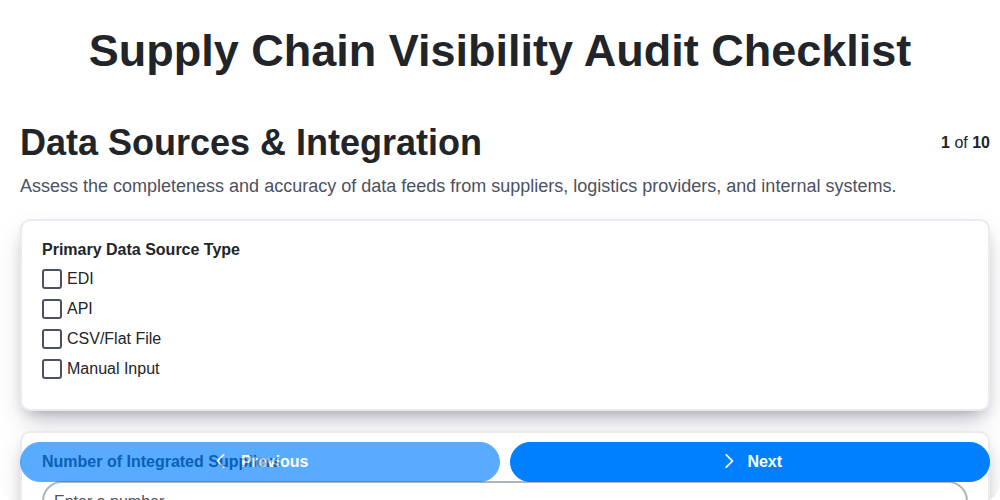
Table of Contents
- Introduction: Why a Supply Chain Visibility Audit Matters
- 1. Data Sources & Integration: Mapping Your Data Landscape
- 2. Real-time Tracking Capabilities: Assessing Your Tracking Accuracy
- 3. Event Management & Alerts: Are You Proactive or Reactive?
- 4. Data Security & Access Controls: Protecting Your Sensitive Information
- 5. Reporting & Analytics: Turning Data into Actionable Insights
- 6. Supplier Collaboration & Information Sharing: Building Strong Partnerships
- 7. System Integration & Data Consistency: Ensuring Data Harmony
- 8. Exception Handling & Root Cause Analysis: Digging Deeper into Disruptions
- 9. User Training & Adoption: Empowering Your Team
- 10. Future Scalability & Innovation: Planning for Growth
- 11. Audit Scoring & Prioritization
- 12. Remediation Planning: Addressing Identified Gaps
- Conclusion: Continuous Visibility Improvement
- Resources & Links
TLDR: Feeling lost in your supply chain? This checklist helps you assess your visibility setup! It covers everything from data sources to future innovation, ensuring you can track goods, spot problems quickly, collaborate with suppliers, and make data-driven decisions - ultimately boosting efficiency and resilience.
Introduction: Why a Supply Chain Visibility Audit Matters
In today's dynamic and increasingly complex business landscape, a robust supply chain is no longer a competitive advantage - it's a necessity. Disruptions, evolving customer expectations, and rising operational costs demand more than just knowing where your goods are; you need visibility into every step of your supply chain journey.
A Supply Chain Visibility Audit is a critical process to assess the effectiveness of your current visibility solutions. It's more than just a quick look; it's a deep dive into your data, technology, and processes to identify gaps, vulnerabilities, and areas for improvement. Failing to proactively audit your visibility can lead to inefficiencies, increased risk, lost revenue, and ultimately, erosion of customer trust. This checklist provides a framework to evaluate your current state and chart a course toward a more resilient, transparent, and efficient supply chain.
1. Data Sources & Integration: Mapping Your Data Landscape
A robust supply chain visibility platform is only as good as the data feeding it. This section focuses on identifying, assessing, and integrating your data sources. Start by comprehensively listing all data sources currently used across your supply chain. This isn't just about your ERP system - consider: supplier portals, logistics providers (TMS, 3PLs), warehouse management systems (WMS), manufacturing execution systems (MES), IoT devices (sensors on trucks, in warehouses), and even spreadsheets.
Next, evaluate the quality and reliability of each data source. Are they accurate, complete, and consistently updated? Poor data quality will lead to inaccurate visibility and flawed decisions.
Crucially, examine how these disparate data sources integrate. Are there manual data transfers? Are APIs utilized? What is the frequency and format of data exchange? Identify potential bottlenecks and areas for automation. Prioritize integrating the most critical data points first (e.g., order status, inventory levels, shipment tracking). A data integration strategy should outline protocols for data cleansing, transformation, and standardization to ensure a unified view across your entire supply chain. Don't forget to document your data lineage - understanding where your data comes from is paramount for trust and troubleshooting.
2. Real-time Tracking Capabilities: Assessing Your Tracking Accuracy
Real-time visibility isn't just about having tracking - it's about the accuracy of that tracking. A system that tells you something is in a location but is consistently wrong is worse than no visibility at all. This section drills down into evaluating the reliability of your current tracking capabilities.
Key Questions to Ask:
- GPS Accuracy & Coverage: How accurate is the GPS data collected from your assets? What's the margin of error? Are there dead zones or areas with poor signal reception that impact tracking reliability? Perform spot checks at known locations to verify accuracy.
- Sensor Calibration & Maintenance: Are sensors (temperature, humidity, shock, etc.) properly calibrated and maintained? Outdated or faulty sensors provide inaccurate data, leading to misinterpretations and potentially flawed decisions.
- Data Latency: How long does it take for tracking data to be updated and available within your system? High latency reduces the value of real-time visibility. A delay of several hours negates the benefits of real-time insights.
- Tracking Frequency: Is the tracking frequency appropriate for the types of goods and the risks involved? High-value or perishable goods require more frequent tracking than less critical items.
- Validation Processes: Are there automated or manual validation processes in place to confirm the accuracy of the tracking data? Cross-referencing data from multiple sources can help identify and correct errors.
- Geofencing Accuracy: If using geofences, are they accurately defined and consistently triggered? Are the boundaries precise enough to provide meaningful alerts?
- Integration with Transportation Providers: Does your tracking data accurately reflect the actual movements of goods as reported by carriers? Discrepancies can indicate issues with carrier reporting or data synchronization.
Scoring:
- Excellent: Highly accurate tracking data with minimal discrepancies, consistent reporting, and proactive error detection.
- Good: Generally accurate tracking data with occasional minor discrepancies. Error detection is in place.
- Fair: Noticeable discrepancies in tracking data, requiring frequent manual verification.
- Poor: Inaccurate and unreliable tracking data, rendering real-time visibility practically useless. Immediate improvement is needed.
3. Event Management & Alerts: Are You Proactive or Reactive?
In a complex supply chain, things will go wrong. The difference between a minor hiccup and a major disruption often boils down to how quickly and effectively you respond. Reactive approaches - scrambling to fix problems after they've impacted your operations - are costly and frustrating. A robust supply chain visibility system should empower you to be proactive.
This isn't just about knowing what happened, it's about knowing when and why, and triggering appropriate responses before the impact spreads. A solid event management and alerts system in your visibility platform should include:
- Configurable Alert Thresholds: Define acceptable performance parameters (lead times, inventory levels, temperature ranges, etc.) and set alert thresholds based on your business needs. Don't just flag deviations - customize the severity levels.
- Real-Time Event Notification: Alerts should be delivered instantly via your preferred channels (email, SMS, dashboards) when thresholds are breached. Timeliness is critical.
- Automated Responses: Consider automating responses to certain events. For example, an alert about a shipment delay could trigger an automatic notification to the customer and a search for alternative transportation.
- Escalation Paths: Define clear escalation paths for different alert types. Who needs to be notified depending on the severity and impact?
- Contextual Information: Alerts shouldn't just say "Something's wrong." They should provide context - relevant data, affected locations, potential causes - to enable faster and more informed decision-making.
- Alert Fatigue Mitigation: Too many alerts will lead to alert fatigue. Implement filtering, suppression, and prioritization to ensure critical alerts are always seen.
Ultimately, a well-designed event management and alerts system transforms your supply chain visibility from a passive observation tool into an active, preventative measure.
4. Data Security & Access Controls: Protecting Your Sensitive Information
Supply chain visibility inherently involves sharing data - often highly sensitive information - across multiple parties. A robust data security and access control framework is not optional; it's foundational to maintaining trust, compliance, and protecting your organization from potential breaches.
This section of your visibility audit should rigorously assess the following:
- Data Encryption: Is data encrypted both in transit (while being transferred) and at rest (when stored)? What encryption standards are employed?
- Access Permissions: Are access controls granular? Do employees and partners have access only to the data they need to perform their roles? Role-Based Access Control (RBAC) should be a key consideration.
- Authentication Methods: Are strong authentication methods (e.g., multi-factor authentication, biometric verification) in place? Weak passwords or shared credentials are major vulnerabilities.
- Data Masking & Anonymization: Where possible, are sensitive data elements masked or anonymized for users who don't require direct access to the raw data?
- Audit Trails: Are comprehensive audit trails maintained, tracking user access, data modifications, and system events? Regular review of these logs is crucial.
- Compliance with Regulations: Does the system adhere to relevant data privacy regulations (e.g., GDPR, CCPA)?
- Vendor Security Assessments: Have your visibility platform vendors undergone security assessments? Review their security policies and certifications.
- Data Loss Prevention (DLP): Are DLP measures in place to prevent unauthorized data exfiltration?
A failing grade in this area can negate the benefits of supply chain visibility, creating significant legal and reputational risks.
5. Reporting & Analytics: Turning Data into Actionable Insights
Visibility is useless without the ability to interpret and act on the information it provides. Robust reporting and analytics are the crucial bridge between raw data and informed decision-making within your supply chain. This isn't just about pretty dashboards; it's about identifying trends, predicting potential issues, and continuously optimizing your processes.
Key Considerations:
- Customizable Dashboards: Can you tailor dashboards to different roles (e.g., procurement, logistics, executive team) to provide the specific data they need?
- Key Performance Indicators (KPIs): Are you tracking the right KPIs? Common examples include on-time delivery, inventory turnover, order fulfillment rates, and supplier performance scores. Ensure these KPIs align with your overall business objectives.
- Historical Data Analysis: Can you analyze historical data to identify patterns, seasonality, and areas for improvement?
- Predictive Analytics: Does the system offer any predictive capabilities, such as demand forecasting or potential risk identification?
- Drill-Down Capabilities: Can you easily drill down from high-level summaries to the underlying data to investigate anomalies and root causes?
- Report Automation: Can reports be automatically generated and distributed, saving time and ensuring consistent information sharing?
- Data Visualization: Are reports visually clear and understandable, enabling quick comprehension of complex data?
6. Supplier Collaboration & Information Sharing: Building Strong Partnerships
Visibility isn't just about seeing what's happening; it's about sharing that information with your suppliers. True supply chain resilience and efficiency hinge on collaborative relationships, and a visibility audit should rigorously assess how effectively you're enabling this.
Key Questions to Ask:
- Data Sharing Protocols: Do you have clearly defined protocols for sharing data with key suppliers? Is it automated or reliant on manual processes? Automating reduces errors and speeds up information flow.
- Supplier Portal/Platform: Do you offer a secure and user-friendly portal or platform where suppliers can access relevant data (e.g., forecasts, inventory levels, order status)? Assess its usability and adoption rate among your suppliers.
- Two-Way Communication: Does the system support two-way communication? Can suppliers provide updates on potential delays, inventory discrepancies, or quality issues? Is this feedback actively incorporated into your processes?
- Standardized Formats: Are data formats standardized to avoid confusion and integration issues? Are suppliers trained on these formats?
- Performance Feedback: Do you share performance metrics with suppliers, allowing them to identify areas for improvement? Is this feedback constructive and actionable?
- Relationship Management: How is collaboration tracked and measured? Are there dedicated resources for supplier relationship management?
- Security & Access: Are supplier access controls granular and aligned with data sensitivity?
Beyond Technology: Remember that technology is just a tool. A strong collaboration strategy involves building trust and fostering open communication - ensure your audit considers the people and processes behind the data. A disjointed system, even with advanced technology, will fail to realize the full potential of enhanced visibility.
7. System Integration & Data Consistency: Ensuring Data Harmony
Supply chain visibility isn't just about collecting data; it's about making sense of it. Disparate systems, fragmented data formats, and a lack of integration create chaos and negate the value of any visibility platform. A robust supply chain visibility audit must rigorously examine how your various systems - ERP, WMS, TMS, supplier portals, and more - connect and share information.
Here's what to scrutinize:
- API Availability and Functionality: Are APIs available for data exchange between systems? Are they well-documented, reliable, and capable of handling the volume of data required?
- Data Format Standardization: Is data being transformed and standardized as it moves between systems? Inconsistent data formats (e.g., different date/time formats, unit of measure discrepancies) lead to errors and misinterpretations.
- Master Data Management (MDM): Is there a centralized master data repository? Inconsistencies in product descriptions, supplier information, and location data are common pitfalls without effective MDM.
- Data Synchronization Frequency: How often are data updates synchronized between systems? Real-time visibility demands near real-time synchronization. Assess latency and potential for data staleness.
- Error Handling and Reconciliation: What processes are in place to detect and resolve data integration errors? A robust system includes error logging, alerting, and reconciliation procedures.
- End-to-End Data Flow Mapping: Visually map the flow of data from origin to destination. This helps identify potential bottlenecks and points of failure.
A lack of system integration and data consistency leads to inaccurate data, duplicated efforts, and ultimately, a loss of trust in your visibility platform. Prioritizing this area during your audit is crucial for realizing the full potential of supply chain visibility.
8. Exception Handling & Root Cause Analysis: Digging Deeper into Disruptions
Visibility isn't just about seeing what's happening; it's about understanding why things go wrong and having a plan to fix them quickly. A robust supply chain visibility system needs a dedicated focus on exception handling and root cause analysis.
This goes beyond simple alerts. It demands the ability to:
- Define Exceptions Clearly: Establish measurable thresholds and criteria that trigger alerts (e.g., late shipments, quality deviations, inventory shortages). Ensure these are agreed upon and understood across the supply chain.
- Automated Exception Routing: Automatically route exceptions to the appropriate personnel with clear context and relevant data. Avoid overwhelming the team with irrelevant alerts.
- Detailed Investigation Tools: Provide users with tools to easily investigate exceptions - pulling together data from various sources (tracking updates, supplier communications, quality reports) into a single view.
- Root Cause Identification: Implement processes and potentially AI-powered tools to analyze historical data and pinpoint the underlying causes of recurring exceptions. Is it a systemic supplier issue? A flawed process? A logistical bottleneck?
- Corrective Action Planning & Tracking: Facilitate collaborative planning and documentation of corrective actions to address root causes. Crucially, track the implementation and effectiveness of these actions to prevent recurrence.
- Feedback Loop: Create a feedback loop between exception handling and process improvement teams. Insights gleaned from exception analysis should directly inform improvements to your overall supply chain design and operational practices.
Without a strong focus on exception handling and root cause analysis, your visibility system becomes just a reporting dashboard - valuable, perhaps, but ultimately unable to protect you from costly disruptions.
9. User Training & Adoption: Empowering Your Team
A powerful supply chain visibility platform is only as effective as the people using it. Implementing the technology is just the first step; ensuring your team understands how to leverage its capabilities is critical for maximizing ROI and driving real improvement. Without proper training and adoption, your investment risks becoming a costly, underutilized resource.
This checklist item focuses on building a comprehensive training plan tailored to different user roles. Consider these key areas:
- Role-Based Training: Recognize that different departments (procurement, logistics, planning, etc.) will need different levels of detail and training focused on their specific tasks.
- Interactive Sessions: Move beyond passive lectures. Incorporate hands-on exercises, simulations, and real-world examples relevant to your team's daily activities.
- Quick Reference Guides & Documentation: Provide easily accessible resources for ongoing support and troubleshooting. These should be clear, concise, and readily available.
- Champion Program: Identify and train 'champions' within each department who can act as local experts and provide peer-to-peer support.
- Ongoing Support & Refreshers: Visibility platforms evolve, and user needs change. Schedule regular refresher training and be prepared to offer ongoing support to address new features or challenges.
- Feedback Loop: Establish a system for users to provide feedback on the platform and the training itself. This helps identify areas for improvement and ensures the solution remains user-friendly.
- Measure Adoption: Track key metrics like login rates, data usage, and report generation to gauge user adoption and identify areas where additional training or support might be needed.
By investing in robust user training and a proactive adoption strategy, you empower your team to become data-driven decision-makers and unlock the full potential of your supply chain visibility platform.
10. Future Scalability & Innovation: Planning for Growth
Supply chains are dynamic. What works today might be inadequate tomorrow. A robust supply chain visibility audit isn't just about fixing current issues; it's a forward-looking exercise. This section focuses on ensuring your visibility solution can adapt and thrive as your business expands and the industry evolves.
Key Questions to Consider:
- Modular Design: Is your current visibility platform built on a modular architecture? This allows you to add new data sources, functionalities, and integrations without disrupting existing systems. Avoid monolithic solutions that become difficult and costly to modify.
- API-First Approach: Prioritize platforms with a strong API-first design. This allows for seamless integration with emerging technologies like blockchain, IoT devices, and advanced AI/ML tools.
- Cloud-Native Capabilities: Consider cloud-native solutions for inherent scalability and flexibility. Cloud platforms offer on-demand resources to handle fluctuating data volumes and new requirements.
- Data Structure for Future Use: Evaluate how your data is structured. Is it flexible enough to accommodate new data types and formats that might arise from evolving product lines or supply chain models?
- Emerging Technologies: Explore the potential of technologies like AI and machine learning for predictive analytics, automated exception handling, and enhanced decision-making within your visibility platform. Can your system readily incorporate these advancements?
- Vendor Roadmap: Engage with your visibility solution vendor to understand their future development plans and ensure they align with your long-term goals.
By proactively addressing scalability and innovation, you're not just maintaining visibility; you're investing in a future-proof supply chain foundation.
11. Audit Scoring & Prioritization
Once you've completed the audit using the checklist, it's time to translate those findings into actionable insights. Simply identifying gaps isn't enough; you need a system for prioritizing which ones to address first. This is where scoring and prioritization come in.
Develop a Scoring System: Create a simple scoring matrix (e.g., 1-5, with 1 being "Needs Immediate Attention" and 5 being "Excellent"). Assign scores to each checklist item based on its criticality to your supply chain's resilience, efficiency, and compliance. Consider factors like:
- Impact: How significant is the risk or opportunity if this area is improved?
- Effort: How much time, resources, and cost will be required to address it?
- Regulatory Requirements: Does failure to comply carry legal or financial consequences?
Prioritization Matrix: Utilize a prioritization matrix (e.g., Impact vs. Effort) to visualize and rank the audit findings. High-impact, low-effort items should be tackled first (Quick Wins). High-impact, high-effort items require careful planning and resource allocation. Low-impact items can be deferred or even eliminated.
Stakeholder Alignment: Share the scored audit results with key stakeholders, including supply chain leaders, IT, and relevant business units. Ensure everyone understands the prioritization rationale and agrees on the action plan. This fosters buy-in and facilitates accountability.
Regular Review: The prioritization landscape can change. Regularly review and adjust the scoring and prioritization based on evolving business needs, regulatory changes, and technological advancements.
12. Remediation Planning: Addressing Identified Gaps
Once your Supply Chain Visibility (SCV) audit reveals areas needing improvement, the real work begins: remediation planning. This isn't just about fixing problems; it's about building a roadmap to a more resilient, transparent, and efficient supply chain.
Here's a breakdown of key considerations for effective remediation planning:
- Prioritization: Not all gaps are created equal. Prioritize fixes based on potential impact (risk mitigation, cost savings, regulatory compliance) and feasibility. A simple impact/effort matrix can be invaluable here.
- Define Clear Ownership: Assign specific individuals or teams responsibility for each remediation task. Ambiguity breeds inaction.
- Detailed Action Plans: Break down large remediation tasks into smaller, manageable steps with deadlines and metrics for success.
- Resource Allocation: Ensure adequate resources (budget, personnel, technology) are allocated to support the remediation plan. Don't underestimate the cost of change.
- Phased Implementation: Consider a phased approach, starting with quick wins to build momentum and demonstrate value. This also allows for iterative adjustments based on early results.
- Documentation: Document all remediation plans, actions taken, and lessons learned. This provides a valuable reference for future audits and improvements.
- Regular Review and Adjustment: Supply chains are dynamic. Regularly review the remediation plan's progress and adjust as needed to reflect changing circumstances.
- Communication: Keep stakeholders informed about the remediation efforts, progress, and any challenges encountered. Transparency fosters trust and buy-in.
A robust remediation plan isn't just about fixing what's broken; it's a vital investment in the long-term health and agility of your supply chain.
Conclusion: Continuous Visibility Improvement
Achieving true supply chain visibility isn't a one-and-done project; it's a journey of continuous improvement. The audit checklist we've outlined provides a robust starting point, but the landscape of your supply chain - and the technology available - will inevitably evolve. Regularly revisiting these points, perhaps annually or bi-annually, ensures your visibility remains accurate, relevant, and supportive of your business goals. Encourage a culture of proactive assessment, where your team continuously seeks opportunities to refine data sources, optimize tracking, and leverage new technologies. Don't be afraid to experiment with innovative solutions and adapt your approach as your business grows and faces new challenges. A commitment to ongoing visibility improvement will not only mitigate risk and enhance efficiency but also unlock a deeper understanding of your entire supply chain, providing a crucial competitive advantage.
Resources & Links
- Supply Chain Brain: A leading industry publication offering articles, news, and insights on supply chain management, often covering visibility, risk, and technology. Excellent for current trends and best practices.
- APICS (The Association for Supply Chain Management): Provides professional development and certification programs related to supply chain management. Their resources often touch on data, visibility, and process improvement; look for webinars and whitepapers.
- GS1: A global standards organization focused on barcoding, RFID, and other identification technologies crucial for supply chain tracking. Provides valuable information on data standards and interoperability.
- efteling Supply Chain: A supply chain consulting firm and data provider, offering a great amount of articles and insights about Supply Chain Visibility, from definition to tools.
- IBM Supply Chain Insights: IBM offers visibility solutions and publishes thought leadership content on supply chain trends, including data management, risk mitigation, and the role of technology.
- Oracle Supply Chain Management: A major provider of SCM software. Their website offers numerous resources on visibility, planning, and execution, as well as case studies showcasing successful implementations.
- SAP Supply Chain Management: Another leading SCM software vendor. Explore their website for whitepapers, demos, and articles focused on optimizing supply chain processes and achieving greater visibility.
- BlueChain: Specializes in supply chain visibility solutions. Their site contains resources on data integration, real-time tracking, and risk management-aligned with several of the checklist's areas.
- Project44: Focuses on real-time transportation visibility. Their website and resources can be particularly helpful for assessing and improving the 'Real-time Tracking Capabilities' section of the checklist.
- LinkedIn (Supply Chain Groups): Search for and join supply chain management and visibility-focused groups. Engage in discussions, ask questions, and share experiences with other professionals - a great way to learn and get diverse perspectives.
- ISC2: The International Information System Security Certification Consortium offers resources and information regarding data security and access controls. Useful for Section 4 of the checklist.
- NIST (National Institute of Standards and Technology): Provides frameworks and guidelines for cybersecurity and data management. Relevant to data security and access control, particularly when dealing with sensitive information (Section 4).
Frequently Asked Questions
What is a Supply Chain Visibility Audit?
A Supply Chain Visibility Audit is a comprehensive assessment of your ability to track and understand the movement of goods and information throughout your entire supply chain. It identifies gaps in your current visibility and helps you develop a roadmap for improvement.
Why should I conduct a Supply Chain Visibility Audit?
A visibility audit helps mitigate risks (e.g., disruptions, delays, quality issues), improve efficiency, reduce costs, enhance customer satisfaction, and ensure compliance. It highlights areas where you lack awareness, enabling you to proactively address potential problems.
Who should be involved in the audit?
A cross-functional team is essential, including representatives from procurement, logistics, operations, IT, sales, and potentially key suppliers and customers. Leadership buy-in is also critical for successful implementation of findings.
What level of detail is expected when completing the checklist?
Be as specific as possible. Instead of just noting 'Lack of tracking', specify *what* isn't being tracked (e.g., 'Temperature data for refrigerated goods during transport'). Document the current process, associated tools, and any existing challenges.
What technologies are commonly assessed in a visibility audit?
Typical technologies reviewed include ERP systems, WMS, TMS, track-and-trace solutions (RFID, GPS, barcode scanning), blockchain platforms, IoT devices, and data analytics tools. The focus is on whether they're integrated and providing actionable data.
What does 'end-to-end visibility' really mean?
End-to-end visibility means having a clear and consistent view of your supply chain from the origin of raw materials to the final delivery to the customer. It's not just about tracking location; it's about understanding the status, condition, and potential risks at each stage.
How often should I conduct a Supply Chain Visibility Audit?
Ideally, a full audit should be performed annually. However, shorter, more focused 'health checks' can be done quarterly or even monthly, especially after significant changes in your supply chain (e.g., new supplier, new product).
What's the difference between visibility and traceability?
Visibility provides a general understanding of where goods are and what's happening. Traceability is a more granular view, allowing you to pinpoint the exact history and movement of a specific batch or item. Traceability is a subset of visibility.
How do I prioritize the findings from the audit?
Prioritize based on risk, potential impact, and feasibility of implementation. High-risk, high-impact areas should be addressed first. Consider quick wins that can demonstrate value and build momentum.
What are some common challenges encountered during a Supply Chain Visibility Audit?
Challenges often include data silos, lack of standardization, inaccurate data, insufficient training, resistance to change, and a lack of collaboration between departments and partners.
Comments
There are no comments yet. Be the first to add one!
SCM - Supply Chain Management Solution Demo
Struggling with supply chain disruptions & lack of visibility? ChecklistGuro delivers a centralized SCM solution, connecting your suppliers, manufacturers, & distributors for improved collaboration and control. Simplify operations & boost efficiency.
Related Articles
The Ultimate Supply Chain Inventory Accuracy Audit Checklist: A Step-by-Step Guide
Supply Chain Capacity Planning Checklist: Ensure Readiness for Peak Demand
The Ultimate Supply Chain Network Optimization Checklist: A Step-by-Step Guide
Supply Chain Risk Assessment Checklist: Your Guide to Resilience
Navigating Sustainability: Your Supply Chain Compliance Checklist
Top 10 SAP Logistics Business Network (LBN) Alternatives for 2025

Fortify Your Supply Chain: The Ultimate Resilience Assessment Checklist
Navigating Global Trade: Your Essential Import/Export Compliance Checklist
Need help with
Supply Chain Management (SCM)?
Have a question? We're here to help. Please submit your inquiry, and we'll respond promptly.