Vendor Performance Evaluation Checklist for Supply Chain: A Comprehensive Guide
Published: 12/09/2025 Updated: 07/02/2026
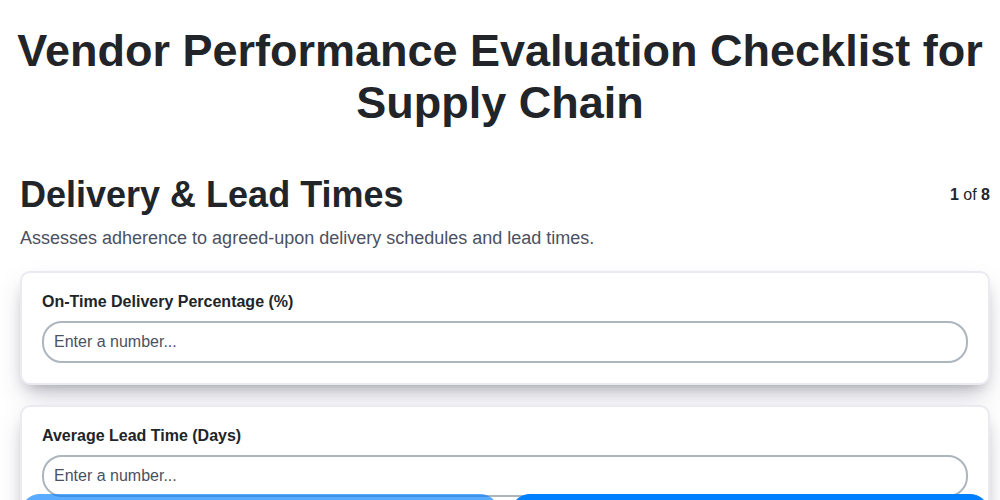
Table of Contents
- Introduction: Why Vendor Performance Evaluation Matters
- 1. Delivery & Lead Times: Assessing Reliability
- 2. Product Quality & Compliance: Ensuring Standards
- 3. Pricing & Cost Management: Value for Money
- 4. Communication & Responsiveness: Building Strong Relationships
- 5. Risk Management & Business Continuity: Mitigating Disruptions
- 6. Sustainability & Ethical Practices: Responsible Sourcing
- 7. Innovation & Collaboration: Driving Improvement
- 8. Contractual Compliance: Adherence to Agreements
- 9. Defining Key Performance Indicators (KPIs) for Vendor Evaluation
- 10. Scoring & Weighting: A Structured Approach
- 11. Regular Review & Feedback: Continuous Improvement
- 12. Utilizing Technology for Efficient Evaluation
- Conclusion: Building a Resilient Supply Chain
- Resources & Links
TLDR: Struggling to keep your suppliers in check? This checklist helps you evaluate vendor performance across crucial areas like delivery, quality, cost, and ethics. Use it to rate suppliers, identify areas for improvement, and build a stronger, more reliable supply chain!
Introduction: Why Vendor Performance Evaluation Matters
In today's complex and interconnected supply chains, relying on a network of vendors is essential for success. However, simply having vendors isn't enough. Ensuring they consistently deliver on expectations is critical for maintaining operational efficiency, product quality, and ultimately, customer satisfaction. That's where vendor performance evaluation comes in.
A robust vendor performance evaluation process goes beyond simply paying invoices on time. It's a proactive approach to assessing a vendor's capabilities, identifying potential weaknesses, and fostering a collaborative relationship that drives mutual growth. Failing to regularly evaluate vendor performance can lead to disruptions in supply, compromised quality, increased costs, and reputational damage. This checklist provides a structured approach to systematically assess key performance indicators, allowing you to make informed decisions, optimize your supply chain, and build stronger, more resilient partnerships with your vendors.
1. Delivery & Lead Times: Assessing Reliability
Consistent and predictable delivery is the bedrock of a stable supply chain. This section of your vendor performance evaluation checklist focuses on assessing a vendor's ability to meet your required timelines and delivery commitments.
Here's what to evaluate:
- On-Time Delivery Percentage: Track the percentage of orders delivered on or before the agreed-upon date. Aim for a consistently high percentage (95% or higher is often a target).
- Lead Time Accuracy: Compare the vendor's quoted lead times with the actual time it takes for them to fulfill orders. Significant discrepancies indicate potential forecasting issues or production bottlenecks.
- Delivery Flexibility: Can the vendor accommodate rush orders or changes in delivery schedules? Their ability to adapt to changing demands is crucial.
- Shipping Costs: Evaluate shipping costs relative to market rates and the level of service provided. Unusually high shipping costs can impact overall profitability.
- Tracking & Visibility: Does the vendor provide adequate tracking information and visibility into the delivery process? Transparency builds trust and allows for proactive problem solving.
- Root Cause Analysis of Delays: When delays do occur, does the vendor conduct thorough root cause analysis to prevent recurrence? A reactive approach isn's sufficient - proactive measures are key.
Consider implementing a scoring system for each of these factors to provide a quantifiable measure of vendor delivery performance.
2. Product Quality & Compliance: Ensuring Standards
Maintaining consistent product quality and adherence to regulatory compliance isn't just about avoiding recalls - it's about building trust, protecting your brand reputation, and ensuring customer satisfaction. This section of your vendor performance evaluation checklist should delve deep into how your supplier meets these critical requirements.
Key Areas to Assess:
- Quality Control Processes: Does the vendor have robust quality control processes in place? This includes raw material inspection, in-process checks, and finished goods testing. Request documentation such as quality manuals, process flowcharts, and control plans.
- Certifications & Accreditations: Verify relevant certifications, such as ISO 9001 (Quality Management), industry-specific certifications (e.g., FDA for food/pharmaceuticals), or other recognized standards. Check the validity and scope of these certifications.
- Defect Rates & Returns: Track defect rates, return rates, and customer complaints related to the vendor's products. Analyze trends to identify potential systemic issues. Establish clear KPIs for acceptable defect levels.
- Compliance with Regulations: Ensure the vendor complies with all applicable laws, regulations, and industry standards related to product safety, labeling, and environmental impact. This may require audits or third-party verification.
- Traceability: Does the vendor have a system for tracing products and components back to their origin? This is crucial for identifying and rectifying issues quickly.
- Corrective & Preventive Actions (CAPA): Evaluate the vendor's CAPA process. How do they identify, investigate, and correct quality issues? Do they have a system for preventing recurrence?
- Material Safety Data Sheets (MSDS/SDS): For chemical or hazardous materials, confirm the vendor provides accurate and up-to-date MSDS/SDS.
Regularly review and update this section of the checklist to reflect evolving regulations and customer expectations.
3. Pricing & Cost Management: Value for Money
Pricing and cost management isn't just about finding the cheapest option; it's about achieving the best value for your investment. A vendor offering the absolute lowest price might seem attractive initially, but it can often mask hidden costs and compromise quality or reliability.
This section of your vendor performance evaluation checklist should delve beyond the sticker price. Consider these factors:
- Total Cost of Ownership (TCO): Evaluate not just the unit price, but also factors like shipping costs, import duties, storage fees, potential rework or returns due to quality issues, and even the cost of managing the relationship itself.
- Price Trends: Is the vendor's pricing stable, or are they frequently increasing prices? A history of unpredictable pricing can disrupt budgeting and forecasting.
- Volume Discounts & Payment Terms: Are favorable volume discounts offered? Are payment terms flexible and aligned with your cash flow requirements?
- Cost Breakdown Transparency: Does the vendor offer transparency into their cost breakdown? This can provide valuable insight into their operations and potential areas for negotiation.
- Competitive Pricing: How does the vendor's pricing compare to other reputable suppliers in the market? Don't automatically accept their initial offer.
- Value-Added Services: Does the vendor provide any value-added services that contribute to cost savings or efficiency gains, such as customized packaging, just-in-time delivery, or technical support?
Focus on a balanced approach that prioritizes both cost efficiency and long-term value.
4. Communication & Responsiveness: Building Strong Relationships
Effective communication isn't just about exchanging information; it's the foundation of a strong and resilient vendor relationship. A responsive vendor demonstrates respect for your time and a commitment to partnership. This section of your evaluation should meticulously assess how well your vendor communicates and how quickly they react to your needs.
Consider these points:
- Timeliness of Responses: How quickly do they respond to inquiries, requests for quotes, and issue escalations? Delays can disrupt operations and impact project timelines.
- Clarity and Accuracy: Is the information provided clear, concise, and accurate? Ambiguity can lead to misunderstandings and errors.
- Proactive Communication: Do they proactively keep you informed about potential issues, changes in lead times, or disruptions to their operations? Transparency is key.
- Preferred Communication Channels: Do they readily utilize your preferred communication channels (e.g., email, portal, meetings)?
- Issue Resolution Process: How effectively do they handle and resolve issues when they arise? A robust and documented process is vital.
- Contact Person Accessibility: Is a designated contact person readily available and knowledgeable?
- Feedback Incorporation: Do they actively seek and incorporate feedback on their communication and responsiveness?
A vendor who prioritizes clear, timely, and proactive communication signals a partner invested in your success. Poor communication, conversely, can be a major red flag, suggesting a lack of commitment and potential for future problems.
5. Risk Management & Business Continuity: Mitigating Disruptions
Supply chain disruptions are a constant threat, and a vendor's ability to navigate them is critical. This section assesses their preparedness and resilience. Don't just evaluate their current performance; look at their plans for the future.
Checklist Items:
- Business Continuity Plan (BCP) Existence & Review: Does the vendor have a documented BCP? Has it been reviewed and updated recently (within the last year is ideal)? Request a copy and review its key components.
- Disaster Recovery Capabilities: How does the vendor recover from a disaster impacting their operations (natural disaster, cyberattack, facility failure)? What are their backup locations and recovery time objectives (RTOs)?
- Financial Stability: A financially unstable vendor is a risky vendor. Evaluate their financial health - review credit ratings, annual reports (if available), and look for any red flags like debt levels or negative cash flow.
- Geopolitical Risk Assessment: Do they understand and proactively assess risks related to the geopolitical landscape impacting their sourcing or production regions?
- Single Point of Failure Identification: Does the vendor proactively identify and mitigate single points of failure in their supply chain (e.g., reliance on a single raw material supplier)? What are their contingency plans?
- Cybersecurity Measures: With increasing cyber threats, evaluate their cybersecurity posture. Do they have robust security protocols, employee training, and incident response plans? Ask for certifications or audit reports.
- Dependency on Critical Resources: Assess their dependence on specific resources (energy, water, specialized labor) and how disruptions to these could impact their ability to deliver.
Scoring Considerations: A vendor with a robust, tested, and regularly updated BCP deserves a high score. Lack of a plan or a plan that appears superficial should raise serious concerns.
6. Sustainability & Ethical Practices: Responsible Sourcing
Beyond simply meeting regulatory requirements, today's supply chains demand a commitment to sustainability and ethical practices. Consumers and stakeholders are increasingly scrutinizing businesses, expecting transparency and accountability across the entire value chain. This section of the vendor evaluation checklist focuses on assessing a vendor's alignment with these expectations.
Consider these points:
- Environmental Impact: Does the vendor have demonstrable efforts to minimize their environmental footprint? This includes assessing their carbon emissions, waste management practices, water usage, and adherence to environmental regulations. Look for certifications like ISO 14001.
- Labor Standards: Verify adherence to fair labor practices. This includes assessing working conditions, wages, working hours, and the prohibition of child labor and forced labor. Are they compliant with local and international labor laws?
- Supply Chain Transparency: Can the vendor trace their raw materials and components back to their origin? This transparency helps identify potential risks related to unethical sourcing or environmental damage.
- Conflict Minerals: Evaluate their policies and processes for ensuring responsible sourcing of minerals like tin, tantalum, tungsten, and gold, minimizing contribution to conflict zones.
- Ethical Sourcing Policies: Does the vendor have a documented ethical sourcing policy that outlines their commitments and expectations for suppliers?
- Auditing & Verification: Does the vendor conduct regular audits (either internal or third-party) to verify compliance with their ethical and sustainability policies? Request audit reports and assess their thoroughness.
A strong score in this area demonstrates a vendor's commitment to responsible business practices, mitigates reputational risks, and contributes to a more sustainable supply chain.
7. Innovation & Collaboration: Driving Improvement
A truly effective vendor isn't just fulfilling orders; they're actively seeking ways to improve your supply chain. This section assesses their willingness and ability to innovate and collaborate.
Checklist Items:
- Proactive Suggestions: Does the vendor proactively offer suggestions for process improvements, cost savings, or new product development? Document examples.
- Joint Problem Solving: How effectively do they collaborate to resolve issues and address challenges? Are they willing to participate in joint problem-solving sessions?
- Technology Integration: Are they open to integrating their systems with yours for better visibility and data sharing? Do they leverage technology to enhance performance?
- Feedback Mechanism: Do they have a structured process for gathering and responding to your feedback?
- New Ideas Implementation: Have they successfully implemented any of your ideas or suggestions? What was the outcome?
- Market Trend Awareness: Do they demonstrate awareness of industry trends and emerging technologies that could benefit your supply chain?
- Joint Innovation Projects: Have you engaged in any joint innovation projects with the vendor? Assess the results and relationship dynamics.
A vendor willing to innovate and collaborate is an invaluable asset, contributing to a more resilient, efficient, and competitive supply chain. A low score in this area signals a missed opportunity for growth and should prompt a discussion about how to foster a more collaborative partnership.
8. Contractual Compliance: Adherence to Agreements
This section goes beyond simply receiving goods or services; it's about ensuring the vendor is upholding their legal and agreed-upon obligations. A strong contractual compliance assessment verifies they're adhering to the specifics outlined in your contracts.
Key Considerations:
- Service Level Agreements (SLAs): Are they consistently meeting agreed-upon SLAs regarding response times, error rates, or uptime? Document deviations and analyze root causes.
- Payment Terms: Are invoices accurate and submitted on time, adhering to the established payment schedule?
- Intellectual Property (IP) Rights: Are they respecting IP agreements, especially critical for custom components or designs?
- Confidentiality Agreements (NDAs): Confirm ongoing adherence to NDA terms, protecting sensitive company information.
- Regulatory Compliance: Does the contract stipulate specific regulatory requirements (e.g., data privacy, environmental regulations)? Verify the vendor's compliance with those regulations.
- Change Management: Are changes to scope, specifications, or pricing handled according to the contract's change management process?
- Audit Rights: Do you have the right to audit their records and processes to ensure compliance? Have you exercised this right, and what were the findings?
- Termination Clauses: Are they aware of the termination clauses and potential penalties for non-compliance?
Scoring & Action: Consistent non-compliance in this area can have serious legal and financial repercussions, demanding immediate and decisive action. A failing score warrants a formal discussion, potential contract renegotiation, and potentially, a vendor replacement.
9. Defining Key Performance Indicators (KPIs) for Vendor Evaluation
Moving beyond simply assessing performance, it's crucial to define how you're assessing it. This is where Key Performance Indicators (KPIs) come into play. KPIs provide a quantifiable measure of vendor performance, allowing for objective comparisons and identifying areas for improvement.
Don't just pull numbers out of thin air! Your KPIs should be directly linked to your supply chain goals and the specific aspects of vendor performance outlined in your evaluation checklist. Here's a breakdown of how to approach this:
- Align with Checklist Categories: Each of the areas covered in your vendor evaluation checklist (Delivery & Lead Times, Product Quality, etc.) should have associated KPIs.
- SMART Goals: Ensure your KPIs are Specific, Measurable, Achievable, Relevant, and Time-bound. For example, instead of Improve delivery, use Reduce average delivery lead time by 10% within Q3.
- Examples by Category:
- Delivery & Lead Times: On-time delivery percentage, lead time variance, order fill rate.
- Product Quality & Compliance: Defect rate, number of non-conformances, audit compliance score.
- Pricing & Cost Management: Cost reduction percentage, price competitiveness ratio.
- Communication & Responsiveness: Average response time to inquiries, resolution time for issues.
- Risk Management & Business Continuity: Successful completion of risk assessment exercises, recovery time objective (RTO) for business disruptions.
- Sustainability & Ethical Practices: Supplier environmental impact score, number of ethical violations reported.
- Innovation & Collaboration: Number of jointly developed solutions, percentage of innovation ideas implemented.
- Contractual Compliance: Percentage of contract terms adhered to, frequency of contract breaches.
- Regular Review: KPIs aren't set in stone. Review them regularly (at least annually) to ensure they remain relevant and effective in measuring what's important.
10. Scoring & Weighting: A Structured Approach
Simply collecting data isn't enough; you need a system to translate it into actionable insights. This is where scoring and weighting come in. Develop a clear scoring system - a simple numerical scale (e.g., 1-5, 1-10, or Excellent-Poor) - for each of the criteria outlined in your vendor performance evaluation checklist.
But not all criteria are created equal. Weighting allows you to prioritize the factors most critical to your business. For example, Product Quality & Compliance might be worth 30% of the total score, while Innovation & Collaboration receives a lower 10%. This reflects the relative importance of each factor to your overall supply chain success.
Here's an example of how weighting might be applied:
- Delivery & Lead Times: 15%
- Product Quality & Compliance: 30%
- Pricing & Cost Management: 20%
- Communication & Responsiveness: 10%
- Risk Management & Business Continuity: 15%
- Sustainability & Ethical Practices: 20%
- Innovation & Collaboration: 10%
(Note: These percentages are illustrative and should be adjusted based on your specific organizational priorities).
Document your weighting system clearly. This ensures consistency in evaluations, facilitates comparisons across vendors, and provides a transparent basis for discussions with your suppliers. Regularly review and update your weighting to reflect changing business needs and strategic priorities.
11. Regular Review & Feedback: Continuous Improvement
Vendor performance isn't a "set it and forget it" situation. Consistent evaluation and actionable feedback are vital for sustained improvement and a thriving supply chain. This isn't just about scoring vendors; it's about fostering a partnership.
Schedule regular review meetings (quarterly is a good starting point, adjusting based on vendor criticality) to discuss performance against the established checklist. These should involve key stakeholders from both your organization and the vendor's.
- Document Everything: Keep meticulous records of evaluation scores, feedback provided, and agreed-upon corrective actions.
- Two-Way Communication: Encourage open and honest dialogue. Understand the vendor's perspective and challenges. They may have valuable insights into process improvements.
- Actionable Feedback: Don't just point out deficiencies; provide specific suggestions and resources to help the vendor improve.
- Track Progress: Monitor the vendor's progress on implemented changes.
- Recognize Success: Acknowledge and reward vendors who consistently exceed expectations. Positive reinforcement encourages continuous excellence.
Ultimately, a commitment to regular review and feedback creates a culture of continuous improvement, strengthens vendor relationships, and ensures your supply chain remains resilient and efficient.
12. Utilizing Technology for Efficient Evaluation
Manually compiling and analyzing vendor performance data is time-consuming and prone to error. Thankfully, technology offers a wealth of tools to streamline this process and enhance the accuracy of your evaluations. Consider leveraging these solutions:
- Vendor Performance Management (VPM) Software: These platforms centralize data, automate scorecards, facilitate feedback collection, and often integrate with your existing ERP and procurement systems. They offer a holistic view of vendor performance and provide valuable insights.
- Data Analytics Dashboards: Connect your data sources (delivery records, quality reports, invoices) to a dashboarding tool. Visualizations can quickly highlight trends, outliers, and areas requiring attention.
- Automated Reporting: Set up automated reports that regularly update key performance indicators (KPIs) related to your vendor evaluation criteria. This frees up your team's time and ensures consistent monitoring.
- AI-Powered Analysis: Emerging AI tools can analyze large datasets to identify hidden patterns and potential risks associated with vendor performance. This provides a deeper understanding beyond simple metrics.
- Cloud-Based Collaboration Tools: Facilitate seamless communication and feedback sharing between your team, procurement, and the vendor themselves through shared online platforms.
Investing in technology not only improves efficiency but also enhances the objectivity and accuracy of your vendor evaluations, ultimately strengthening your supply chain.
Conclusion: Building a Resilient Supply Chain
Ultimately, a robust vendor performance evaluation checklist, like the one outlined above, isn't just about identifying problems - it's about proactively building a resilient and thriving supply chain. Regularly assessing vendors across these critical areas-from delivery and quality to ethics and innovation-allows you to move beyond transactional relationships and foster true partnerships. By continuously monitoring performance and driving improvements, you're not just mitigating risks; you're paving the way for agility, efficiency, and long-term value creation within your supply chain. Remember, your vendors are an extension of your own organization - their success is intrinsically linked to yours.
Resources & Links
- APICS: The Association for Supply Chain Management (APICS) provides resources, certifications, and training focused on supply chain management, including vendor evaluation best practices. They offer insights into overall supply chain performance and efficiency, which is crucial for vendor evaluation context.
- ISM (Institute for Supply Management): ISM provides education, training, and resources related to procurement and supply management. Their publications and certifications offer frameworks and data on evaluating supplier performance across various categories.
- Sourcing Journal: This online publication focuses on the sourcing, procurement, and supply chain industries, often covering topics related to supplier evaluation and risk management. They offer articles and insights into current industry trends.
- Procurement Leaders: A global procurement intelligence network that provides data-driven insights and benchmarks for procurement professionals. Their research and reports can help establish realistic performance expectations for vendors.
- McKinsey & Company: McKinsey's website contains articles and reports on supply chain management, including vendor performance. Look for pieces focused on resilience, risk management, and digital transformation of supply chains - all relevant to vendor evaluation.
- Gartner: Gartner provides research and advisory services covering a wide range of business areas, including supply chain management. While much of their content is behind a subscription, free resources and blog posts can provide valuable insights into vendor evaluation trends and best practices. Look for reports on procurement technology and strategic sourcing.
- Supply Chain Digital: This online publication provides news, analysis, and reports on the global supply chain industry. Search for articles on supplier performance management and risk mitigation.
- CRS4: CRS4 is a consulting firm with a focus on supply chain management. Their website contains whitepapers and blog posts covering various topics, including vendor performance and risk assessment. They offer detailed insights into evaluation metrics.
- ISO (International Organization for Standardization): ISO standards, particularly those related to quality management (ISO 9001) and environmental management (ISO 14001), are frequently relevant when evaluating vendor performance. Understanding these standards can inform your evaluation criteria and ensure compliance.
- Sedex: Sedex provides a platform for assessing suppliers' social and environmental performance.
- BSCI (Business Social Compliance Initiative): Similar to Sedex, BSCI focuses on social responsibility within the supply chain.
- SAS: SAS provides analytics solutions that can be used to streamline vendor performance evaluation, including automated data collection and analysis - especially useful for sections on utilizing technology.
- Coupa: Coupa is a prominent procurement platform that often includes vendor management capabilities. Their website's resources section might contain relevant articles and webinars on performance evaluation best practices.
- Everest Group: Everest Group provides market research and advisory services focused on procurement and supply chain. They can provide insights on sourcing technology and vendor management strategies.
Frequently Asked Questions
What is a Vendor Performance Evaluation Checklist and why is it important?
A Vendor Performance Evaluation Checklist is a standardized tool used to assess a vendor's performance against pre-defined criteria. It's crucial for supply chain optimization, risk mitigation, cost reduction, and ensuring consistent quality and reliability of goods and services.
Who should use this checklist?
This checklist is beneficial for supply chain managers, procurement specialists, quality assurance teams, and anyone involved in vendor selection, management, and performance monitoring.
What are the key categories typically included in a vendor performance evaluation checklist?
Common categories include: Quality, Delivery, Price/Cost, Communication, Responsiveness, Innovation, Financial Stability, Sustainability, and Compliance (with regulations and standards).
How often should vendor performance evaluations be conducted?
The frequency depends on the vendor's criticality, contract terms, and risk profile. Generally, evaluations should be performed at least annually, with more frequent assessments for high-risk or strategically important vendors (e.g., quarterly or even monthly).
What's the difference between a weighted and an unweighted evaluation?
An unweighted checklist assigns equal importance to each criterion. A weighted checklist assigns different weights based on the relative importance of each criterion, allowing for a more nuanced assessment.
How do I determine the appropriate weights for a weighted evaluation?
Weights should be determined based on your organization's strategic priorities, risk tolerance, and the specific requirements of the goods or services being procured. Input from stakeholders is critical in this process.
What constitutes 'quality' in a vendor performance evaluation?
'Quality' encompasses a wide range of factors, including product or service specifications, defect rates, consistency, durability, and adherence to agreed-upon standards.
How should I handle a vendor that consistently scores poorly in one or more areas?
Document the issues, communicate the concerns to the vendor, and collaboratively develop a corrective action plan. Set clear expectations for improvement and monitor progress. Ultimately, be prepared to explore alternative vendors if performance doesn't improve.
What role does communication play in vendor performance evaluation?
Effective communication is vital. Regularly sharing feedback, both positive and negative, helps vendors understand expectations and address areas for improvement. Transparent communication builds stronger vendor relationships.
Can this checklist be customized?
Absolutely. This guide provides a framework. It should be customized to align with your organization's specific needs, industry standards, and the unique characteristics of each vendor.
How does sustainability factor into vendor performance?
Sustainability encompasses environmental, social, and governance (ESG) factors. Evaluate vendors based on their environmental impact, labor practices, ethical sourcing, and commitment to corporate social responsibility.
What data sources should I use to populate the checklist?
Utilize a variety of sources including purchase order data, quality control reports, customer feedback, internal audits, vendor self-assessments, and industry benchmarks.
Comments
There are no comments yet. Be the first to add one!
SCM - Supply Chain Management Solution Demo
Struggling with supply chain disruptions & lack of visibility? ChecklistGuro delivers a centralized SCM solution, connecting your suppliers, manufacturers, & distributors for improved collaboration and control. Simplify operations & boost efficiency.
Related Articles
The Ultimate Supply Chain Inventory Accuracy Audit Checklist: A Step-by-Step Guide
Supply Chain Capacity Planning Checklist: Ensure Readiness for Peak Demand
The Ultimate Supply Chain Network Optimization Checklist: A Step-by-Step Guide
Supply Chain Risk Assessment Checklist: Your Guide to Resilience
Navigating Sustainability: Your Supply Chain Compliance Checklist
Top 10 SAP Logistics Business Network (LBN) Alternatives for 2025

Fortify Your Supply Chain: The Ultimate Resilience Assessment Checklist
Navigating Global Trade: Your Essential Import/Export Compliance Checklist
Need help with
Supply Chain Management (SCM)?
Have a question? We're here to help. Please submit your inquiry, and we'll respond promptly.