Keeping Your WMS Automation Running Smoothly: A Maintenance Checklist Template
Published: 12/19/2025 10:00 PM Updated: 12/20/2025 12:30 PM

Table of Contents
- Introduction: Why WMS Automation Maintenance Matters
- 1. System Hardware: The Foundation of Your Operation
- 2. Network Connectivity: Ensuring Seamless Communication
- 3. Automated Equipment (Conveyors, AS/RS): Keeping the Flow Moving
- 4. Robotics and AGV Systems: Precision and Reliability
- 5. Software Updates and Patches: Staying Current and Secure
- 6. Integration Points: Monitoring Data Exchange
- 7. Backup and Recovery: Your Safety Net
- 8. Security Checks: Protecting Your Data and Systems
- 9. Performance Monitoring: Identifying Bottlenecks
- 10. User Training and Documentation: Empowering Your Team
- 11. Preventative Maintenance Schedules: A Proactive Approach
- 12. Common WMS Automation Issues and Troubleshooting
- Conclusion: Continuous Improvement for Optimal Performance
- Resources & Links
TLDR: Your Warehouse Management System (WMS) automation is a complex beast! This checklist helps you proactively maintain it. It covers everything from hardware and network to software updates and robot systems, ensuring smooth operations, preventing downtime, and keeping your warehouse running like a well-oiled machine. Download the template and start checking!
Introduction: Why WMS Automation Maintenance Matters
Warehouse Management System (WMS) automation isn't just about boosting efficiency and reducing labor costs - it's an investment. And like any significant investment, it requires diligent and proactive maintenance to ensure optimal performance and a strong return. Neglecting automation maintenance can lead to costly downtime, inaccurate inventory, order fulfillment errors, and ultimately, a negative impact on customer satisfaction and profitability.
This isn't just about fixing things when they break. A robust maintenance program anticipates potential issues, proactively addresses them, and keeps your automated systems running smoothly. Think of it as preventative healthcare for your warehouse - a small investment now can prevent a major crisis down the line. This checklist, and the practices it represents, are critical for maximizing your WMS automation's lifespan and ensuring it continues to deliver the promised benefits.
1. System Hardware: The Foundation of Your Operation
The physical hardware underpinning your Warehouse Management System (WMS) is the bedrock upon which everything else relies. Neglecting it can lead to cascading failures and significant operational disruptions. This section of the maintenance checklist focuses on ensuring the longevity and reliability of this critical foundation.
Here's what you need to verify:
- Server Health: Regularly check server CPU usage, RAM utilization, and disk space. High utilization can indicate bottlenecks and potential slowdowns.
- Storage Devices: Inspect hard drives/SSDs for errors, SMART status, and free space. Implement proactive replacement strategies for aging storage.
- Power Supplies: Verify the functionality of redundant power supplies and ensure proper cooling to prevent overheating.
- Racks and Cabling: Assess the physical environment - check for proper airflow, cable management (preventing damage and future issues), and overall cleanliness. Dust accumulation can significantly impact hardware performance.
- Environmental Conditions: Monitor temperature and humidity levels in server rooms and equipment areas. Extreme conditions can shorten hardware lifespan.
- Hardware Inventory: Maintain an accurate inventory of all WMS hardware, including serial numbers and warranty information, for efficient troubleshooting and replacement.
Regularly scheduled hardware inspections, coupled with proactive maintenance, are key to preventing costly downtime and maximizing the return on your WMS investment.
2. Network Connectivity: Ensuring Seamless Communication
A Warehouse Management System (WMS) thrives on data - constant, real-time data flowing between hardware, automated equipment, and users. A stable and robust network connection is the lifeblood of this process. A dropped connection, slow speeds, or intermittent outages can cripple warehouse operations, leading to delays, errors, and ultimately, lost productivity.
This checklist item goes beyond simply verifying that devices have network access. It's about ensuring reliable and high-performance connectivity. Consider these points:
- Physical Infrastructure: Regularly inspect cabling (both wired and wireless) for damage, kinks, and proper termination. Test cable integrity and signal strength.
- Wireless Network Health: For wireless connections, check signal strength across the warehouse floor. Identify and mitigate sources of interference (e.g., metal shelving, other electronic devices). Conduct site surveys periodically.
- Network Device Performance: Monitor routers, switches, and firewalls for resource utilization and errors. Ensure firmware is up-to-date.
- Bandwidth Testing: Regularly test network bandwidth to ensure it meets the WMS's demands, particularly during peak operation hours.
- Redundancy: Evaluate network redundancy measures (e.g., multiple internet connections, redundant switches) to minimize downtime in case of a failure.
- Segmentation: Verify proper network segmentation to isolate WMS traffic and enhance security.
- VPN Connections: If using VPNs for remote access or site-to-site connectivity, test connection stability and performance.
- IP Address Management: Ensure proper IP address assignment and conflict resolution.
A proactive approach to network maintenance is far more cost-effective than reacting to disruptions. Scheduled checks and vigilant monitoring are key to keeping your WMS connected and your warehouse running smoothly.
3. Automated Equipment (Conveyors, AS/RS): Keeping the Flow Moving
Automated equipment like conveyors, Automated Storage and Retrieval Systems (AS/RS), and other material handling solutions are the backbone of a streamlined warehouse operation. Keeping these systems running smoothly is paramount to overall WMS efficiency. This section of your maintenance checklist should focus on both preventative care and proactive troubleshooting.
Here's what to include:
- Visual Inspections: Regularly check for physical damage - broken belts, worn rollers, misaligned components. Look for signs of excessive wear and tear.
- Lubrication: Adhere to the manufacturer's recommended lubrication schedule for all moving parts. Poor lubrication leads to increased friction, heat, and eventual failure.
- Belt/Chain Tension & Alignment: Incorrect tension or misalignment can cause excessive wear, noise, and even system shutdowns. Verify and adjust as needed.
- Roller Inspection & Cleaning: Accumulation of debris can hinder roller performance. Regularly clean and inspect rollers for wear and damage.
- Emergency Stop Functionality: Test all emergency stop buttons and safety devices to ensure they are operational and responsive.
- Sensor Calibration: AS/RS systems rely on precise sensors. Verify sensor accuracy and recalibrate if necessary.
- Motor & Drive System Checks: Monitor motor performance (temperature, current draw) and inspect drive systems for unusual noises or vibrations.
- Software Integration Verification: Confirm that the automated equipment is correctly communicating with the WMS and other integrated systems. Specifically check order status updates and error reporting.
- Capacity and Throughput Monitoring: Track equipment capacity utilization to identify potential bottlenecks and plan for future upgrades or adjustments.
Consistent attention to these automated equipment checks will minimize downtime and maximize throughput.
4. Robotics and AGV Systems: Precision and Reliability
Your Warehouse Management System (WMS) often orchestrates complex workflows involving robotics and Automated Guided Vehicles (AGVs). Ensuring their seamless integration and reliable operation is crucial for overall warehouse efficiency. This section of your maintenance checklist should focus on their specific needs.
Here's what to check:
- Physical Inspections: Regularly inspect robots and AGVs for physical damage - dents, scratches, loose parts. Pay attention to wheels, sensors, and charging contacts.
- Sensor Calibration: Robots and AGVs rely heavily on sensors for navigation and object recognition. Verify the accuracy of these sensors through calibration checks. Incorrect calibration can lead to collisions or inaccurate picking.
- Navigation System Checks: Test AGV navigation paths and robot movement sequences. Ensure they are accurate and follow designated routes. Identify and address any deviations or obstructions.
- Battery Health & Charging Stations: Monitor battery performance - check voltage, capacity, and charging times. Inspect charging stations for proper function and cleanliness. Consider scheduled battery replacements based on performance degradation.
- Software & Firmware Updates: Just like your WMS, robots and AGVs receive software and firmware updates. Track and apply these updates promptly to benefit from bug fixes, performance enhancements, and new features.
- Emergency Stop Functionality: Regularly test the emergency stop buttons and safety circuits on all robots and AGVs to ensure immediate shutdown in case of an issue.
- Path Obstruction Detection: Verify that systems correctly identify and respond to obstacles in their paths, preventing collisions and ensuring safe operation.
5. Software Updates and Patches: Staying Current and Secure
Your Warehouse Management System (WMS) isn't a set it and forget it solution. It's a dynamic platform that requires ongoing maintenance, and a crucial part of that is diligently managing software updates and patches. Ignoring these updates is a significant risk, leaving your system vulnerable to security breaches, performance degradation, and compatibility issues.
Why are Updates So Important?
- Security Vulnerabilities: Hackers are constantly probing for weaknesses in software. Updates often contain critical security patches that address newly discovered vulnerabilities, protecting your data and operations.
- Bug Fixes: Software isn't perfect. Updates frequently resolve bugs and glitches that can impact system functionality and user experience.
- New Features & Enhancements: Manufacturers often include new features and improvements within updates, expanding the WMS's capabilities and optimizing workflows.
- Compliance: Many industries have strict compliance requirements. Keeping your WMS software up-to-date can be a crucial element in meeting those regulations.
Best Practices for Updates:
- Develop a Schedule: Don't wait for a problem to arise. Implement a regular schedule for reviewing and applying updates.
- Test Before Deployment: Always test updates in a non-production (test or staging) environment before deploying them to your live WMS. This identifies potential conflicts or issues without disrupting operations.
- Read Release Notes: Thoroughly review the release notes associated with each update to understand the changes and any potential impact on your system.
- Document Changes: Maintain a record of all updates applied, including dates, versions, and any issues encountered.
- Backup Before Updating: As with any significant system change, create a full backup of your WMS data before applying updates. This provides a safety net in case something goes wrong.
6. Integration Points: Monitoring Data Exchange
Warehouse Management Systems (WMS) rarely operate in a vacuum. They's typically integrated with a suite of other systems - ERP, transportation management (TMS), shop floor control, and even e-commerce platforms. These integrations are critical for a streamlined supply chain, but they're also a common source of headaches when things go wrong.
Your maintenance checklist must include rigorous monitoring of these data exchange points. This isn't just about confirming that data is flowing, but also verifying its accuracy and timeliness.
Here's what to check:
- Scheduled Data Transfers: Confirm that scheduled data transfers (e.g., daily inventory updates to the ERP) are executing successfully and within the expected time windows. Log any failures and investigate root causes.
- Data Mapping Validation: Periodically review data mapping rules to ensure that data is being translated and transformed correctly between systems. Even seemingly minor discrepancies can lead to significant downstream issues.
- Error Handling and Retry Mechanisms: Verify that error handling procedures are in place to gracefully manage failed data transmissions and that automatic retry mechanisms are functioning properly. Don't let failed transfers simply disappear; have a clear process for notification and resolution.
- API Health Checks: For integrations using APIs, conduct regular health checks to ensure that the APIs are available and responding appropriately.
- Volume Monitoring: Track the volume of data being exchanged. Sudden spikes or drops can indicate problems upstream or downstream.
- Data Integrity Checks: Implement automated checks to validate data integrity after transfer. This could involve checksums, data reconciliation, or other validation techniques.
- Logging & Auditing: Maintain detailed logs of all data exchanges, including timestamps, data volumes, and error messages. Audit these logs regularly to identify trends and potential issues.
Addressing these points will significantly reduce the risk of integration failures and ensure that your WMS continues to operate seamlessly with your other business systems.
7. Backup and Recovery: Your Safety Net
Data loss is a warehouse manager's worst nightmare. A sudden system failure, a cyberattack, or even accidental data corruption can bring operations to a grinding halt, leading to significant financial losses and reputational damage. A robust backup and recovery plan is your crucial safety net, ensuring business continuity in the face of unforeseen circumstances.
This isn't just about regular backups - it's about a comprehensive strategy. Your WMS backup and recovery checklist should include:
- Regular, Automated Backups: Implement automated daily (or even more frequent) backups of your entire WMS database, configuration files, and associated data. Automating minimizes human error and ensures consistency.
- Offsite Storage: Don't store backups solely on-site. An offsite location (cloud storage or a physically separate facility) protects against local disasters like fire or flood.
- Backup Verification: Regularly test your backups! A backup is only as good as its ability to be restored. Simulate a recovery to confirm data integrity and recoverability. Document the results.
- Recovery Time Objective (RTO) & Recovery Point Objective (RPO): Define clear RTO (how long it takes to restore operations) and RPO (how much data loss is acceptable) goals. This guides your backup frequency and recovery procedures.
- Disaster Recovery Plan: Outline a detailed plan that includes roles, responsibilities, and step-by-step instructions for recovering the WMS in a disaster scenario.
- Version Control: Maintain version control for backups, allowing you to revert to specific points in time if needed.
- Documentation: Clearly document your backup procedures, schedules, and contact information for critical personnel.
8. Security Checks: Protecting Your Data and Systems
Your Warehouse Management System (WMS) holds sensitive data - inventory levels, order information, employee details, and more. A breach can be devastating, leading to financial losses, reputational damage, and legal repercussions. Regular security checks are not optional; they are a critical component of WMS automation maintenance.
Here's what your security checks should encompass:
- Access Control Review: Regularly audit user permissions. Ensure that only authorized personnel have access to specific WMS functions. Implement the principle of least privilege - grant users only the access they absolutely need.
- Password Policies: Enforce strong password policies (complexity, length, expiration) and multi-factor authentication (MFA) whenever possible.
- Firewall Configuration: Verify that your firewall is properly configured and updated to prevent unauthorized access to your WMS servers.
- Intrusion Detection/Prevention Systems (IDS/IPS): Ensure these systems are operational and monitored for suspicious activity.
- Vulnerability Scanning: Conduct regular vulnerability scans of your WMS servers and applications to identify potential weaknesses. Address any identified vulnerabilities promptly.
- Data Encryption: Verify that sensitive data is encrypted both in transit and at rest.
- Regular Audits: Consider periodic security audits by a qualified third-party to identify blind spots and ensure compliance with industry best practices.
- Incident Response Plan: Develop and test a plan for responding to security incidents, ensuring your team knows how to react effectively.
Proactive security checks are essential for safeguarding your WMS and maintaining operational continuity.
9. Performance Monitoring: Identifying Bottlenecks
Performance monitoring within your Warehouse Management System (WMS) automation isn't just about ensuring everything works; it's about ensuring it works efficiently. Regularly tracking key performance indicators (KPIs) provides invaluable insights into potential bottlenecks and areas for optimization.
What KPIs should you be watching? Here's a starting point:
- Order Processing Time: From receipt of order to shipment. Longer times indicate potential issues in picking, packing, or shipping processes.
- Picking Accuracy: Measures the percentage of orders picked correctly. Low accuracy leads to returns and increased labor costs.
- Putaway Time: How long it takes to move received goods into storage locations. Slow putaway can lead to congestion and delays.
- Throughput: The volume of goods moved through the warehouse over a given period. Declining throughput signals potential inefficiencies.
- Equipment Utilization: How frequently your automated equipment (conveyors, AS/RS, robots, AGVs) is being used. Underutilized equipment represents wasted investment.
- Cycle Times: Track the time taken for specific tasks like receiving, picking, packing and shipping.
- Error Rates: Monitor error rates for data entry, barcode scanning, and other manual processes.
Beyond these, establish baseline performance and then proactively monitor for deviations. Set up automated alerts to notify you when KPIs fall outside acceptable ranges. Analyzing these KPIs in conjunction with system logs and user feedback will help you pinpoint bottlenecks, allowing for timely adjustments and ensuring your WMS automation operates at peak performance. Don't just monitor; analyze and act.
10. User Training and Documentation: Empowering Your Team
A flawlessly automated WMS is only as effective as the people using it. Consistent, reliable operation hinges on a well-trained team who understand the system's functionality and can quickly resolve minor issues. This isn't a one-and-done task; it's an ongoing process.
Your maintenance checklist should explicitly include a review of user training and documentation. This means:
- Regular Refresher Training: Technology evolves, and so should user knowledge. Schedule periodic refresher courses, especially after updates or system changes.
- New Employee Onboarding: Develop a comprehensive onboarding program for new employees covering WMS basics, key processes, and troubleshooting steps.
- Role-Specific Training: Different roles require different levels of understanding. Tailor training to the specific tasks performed by warehouse staff, supervisors, and managers.
- Documentation Updates: Keep user manuals, process guides, and FAQs current and readily accessible. Ensure they accurately reflect system configurations and workflows.
- Feedback Loop: Actively solicit feedback from users about the effectiveness of training materials and identify areas for improvement. User input is invaluable in refining the learning experience.
- Training Records: Maintain records of who has received training and when, facilitating compliance and identifying gaps in knowledge.
Investing in user training isn't just about preventing errors - it's about fostering a culture of ownership and maximizing the return on your WMS investment.
11. Preventative Maintenance Schedules: A Proactive Approach
Reactive maintenance - fixing problems as they arise - is a costly gamble in a Warehouse Management System (WMS) environment. Downtime translates directly to lost productivity, delayed orders, and frustrated customers. That's why a robust preventative maintenance schedule is absolutely critical for ensuring the long-term reliability and optimal performance of your WMS and its supporting infrastructure.
This isn't about haphazardly checking things occasionally; it's about establishing a structured, recurring schedule built around specific tasks related to your system's core components. These schedules should be documented, assigned to responsible personnel, and reviewed regularly. Consider these points when crafting your preventative maintenance calendar:
- Frequency: Some items require monthly checks, others quarterly or even annually. The criticality of the component and the potential impact of failure should drive this.
- Detail: Don't just note check hardware. Break it down: Inspect server fans for dust accumulation, Verify RAID array health, or Confirm UPS battery charge level.
- Documentation: Keep a log of all maintenance performed, including findings and corrective actions taken. This provides valuable insight for future planning and troubleshooting.
Implementing a well-defined preventative maintenance schedule significantly reduces the risk of unexpected system failures and helps maximize your return on investment in your WMS.
12. Common WMS Automation Issues and Troubleshooting
WMS automation, while dramatically improving efficiency and accuracy, isn't immune to hiccups. Understanding common issues and having a proactive troubleshooting mindset can minimize downtime and maximize return on investment. Here's a look at frequent problems and potential solutions:
1. Integration Point Failures: Data silos are a warehouse's worst enemy. Issues often arise from broken connections between the WMS and other critical systems - ERP, accounting, shipping platforms, etc. Regularly verify data flow and error logs. Incorrect mapping, changes in API formats, and network instability are common culprits.
2. Robotics & AGV System Errors: Unexpected stops, incorrect navigation, or equipment malfunctions are frustrating. Ensure clear pathways are maintained, sensors are clean, and batteries are adequately charged. Log error codes carefully; they often pinpoint the specific problem.
3. Conveyor/AS/RS Malfunctions: Jams, belt slippage, or rack misalignment disrupt workflow. Implement preventative maintenance schedules (belt inspection, gear lubrication, chain alignment) and promptly address minor issues before they escalate.
4. Software Update Conflicts: While updates are essential for security and functionality, they can sometimes introduce conflicts with existing customizations or integrations. Thorough testing in a staging environment before deploying to production is crucial.
5. Data Synchronization Problems: Discrepancies between physical inventory and WMS records are a major concern. Investigate potential causes like incorrect scanning, manual data entry errors, or issues with barcode readers.
6. Hardware Failures: Servers, scanners, printers, and other hardware components can fail. Implement a preventative maintenance schedule, including regular inspections and component replacements. Have backup hardware readily available.
7. Network Connectivity Issues: A stable network is the backbone of WMS automation. Unreliable connections lead to slow performance and data loss. Monitor network performance and address connectivity problems swiftly.
8. User Error & Training Deficiencies: Incorrect data entry or improper use of the system can cause errors and slowdowns. Regularly assess user competency and provide refresher training as needed.
9. Performance Degradation: Slow response times or sluggish operations can indicate overloaded systems or inefficient processes. Review hardware resources, database optimization, and workflow bottlenecks.
10. Backup & Recovery Failures: Testing backup and recovery processes regularly is not optional; it's vital. Validate that data can be restored quickly and reliably in case of a disaster.
11. Security Breach Attempts: Regularly review user access controls, security logs, and firewall configurations to identify and mitigate potential security risks.
12. Reporting Inaccuracies: Faulty data within the WMS leads to inaccurate reporting, hindering informed decision-making. Audit data sources and validation rules to ensure data integrity.
By proactively addressing these common issues and implementing robust troubleshooting practices, you can keep your WMS automation running smoothly and achieve the efficiency gains you initially envisioned.
Conclusion: Continuous Improvement for Optimal Performance
Maintaining a Warehouse Management System (WMS) isn't a one-and-done task; it's a continuous journey. This checklist provides a robust foundation for ensuring your WMS operates reliably and efficiently, but it's crucial to view it as a living document. Regularly reviewing and updating this checklist based on your warehouse's evolving needs, technological advancements, and lessons learned from past maintenance is paramount. Don't be afraid to add new checks or modify existing ones. Embrace a culture of proactive maintenance and continuous improvement, and you'll not only avoid costly downtime and errors but also unlock the full potential of your WMS to drive warehouse optimization and overall business success. Remember, a well-maintained WMS is an investment that continues to pay dividends.
Resources & Links
- National Institute of Standards and Technology (NIST): NIST provides guidelines and standards related to cybersecurity and system reliability, which are crucial for WMS automation maintenance. They offer frameworks and publications relevant to ensuring the safety and performance of your systems.
- World Wide Web Consortium (W3C): While focused on web standards, the W3C's principles of accessibility and interoperability are vital for ensuring your WMS integrates properly and remains user-friendly - key factors in automation maintenance.
- Microsoft: Many WMS systems rely on Microsoft technologies (Windows Servers, .NET). Microsoft provides extensive documentation and support for their products, essential for troubleshooting and applying updates.
- Amazon Web Services (AWS): If your WMS is cloud-based, AWS provides detailed documentation on cloud infrastructure maintenance, security, and best practices to ensure uptime and performance.
- Oracle: Oracle is a major WMS vendor. Their website provides documentation, support resources, and information about updates for their systems - particularly relevant if you use Oracle WMS.
- SAP: Similar to Oracle, SAP is a leading enterprise software provider. Their site contains valuable resources for maintaining SAP-integrated WMS systems.
- IBM: IBM offers a wide range of IT solutions, including services related to system maintenance and cybersecurity. Their website features resources to help maintain complex systems.
- Rockwell Automation: A significant provider of automation hardware and software. Their website offers insights and best practices for maintaining automated equipment often integrated with WMS.
- Fanuc: A leading manufacturer of robotics. If your WMS uses Fanuc robotics, their site provides manuals, technical support, and updates.
- Honeywell: Honeywell provides a variety of automation and warehouse technologies. Their website contains resources for maintaining their systems integrated with WMS.
- International Organization for Standardization (ISO): ISO standards (like ISO 9001 for quality management and ISO 27001 for information security) provide frameworks for establishing and maintaining robust maintenance processes.
Frequently Asked Questions
Where can I find more information about maintaining my specific WMS automation equipment?
Refer to the manufacturer's documentation for your specific equipment. Many manufacturers offer online resources, training materials, and support services.
Found this Article helpful?
Comments
There are no comments yet. Be the first to add one!
WMS - Warehouse Management System Solution Demo
Optimize your warehouse operations & boost efficiency! ChecklistGuro's WMS streamlines inventory management, order fulfillment, and shipping. Reduce errors, improve accuracy, & maximize space utilization. Manage it all with our Work OS.
Related Articles
Seamless RFID Integration: Your WMS Checklist Template for Success
Mastering Warehouse Labeling: Your WMS Process Checklist Template
The Ultimate Supply Chain Inventory Accuracy Audit Checklist: A Step-by-Step Guide
Mastering Putaway: Your WMS Optimization Checklist

Mastering Your Yard: A Warehouse WMS Yard Management Checklist Template
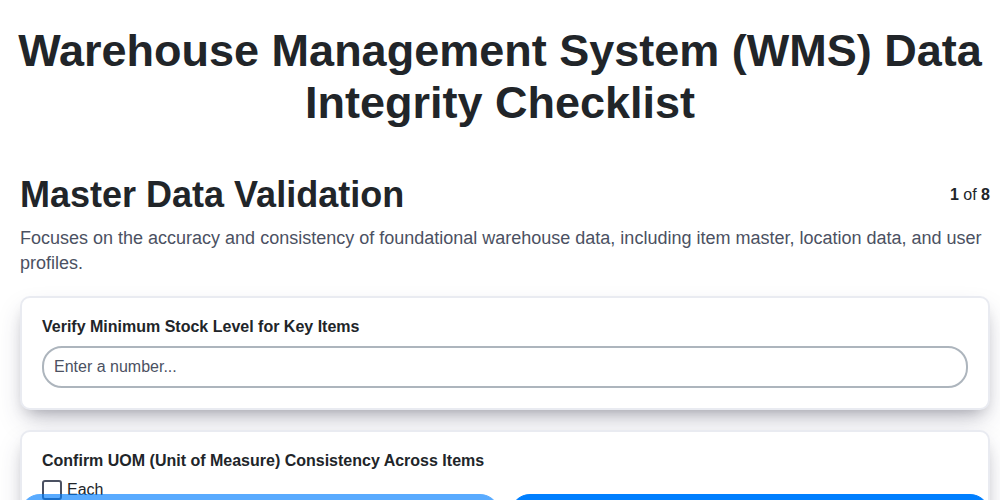
Warehouse Data Integrity: Your WMS Checklist Template
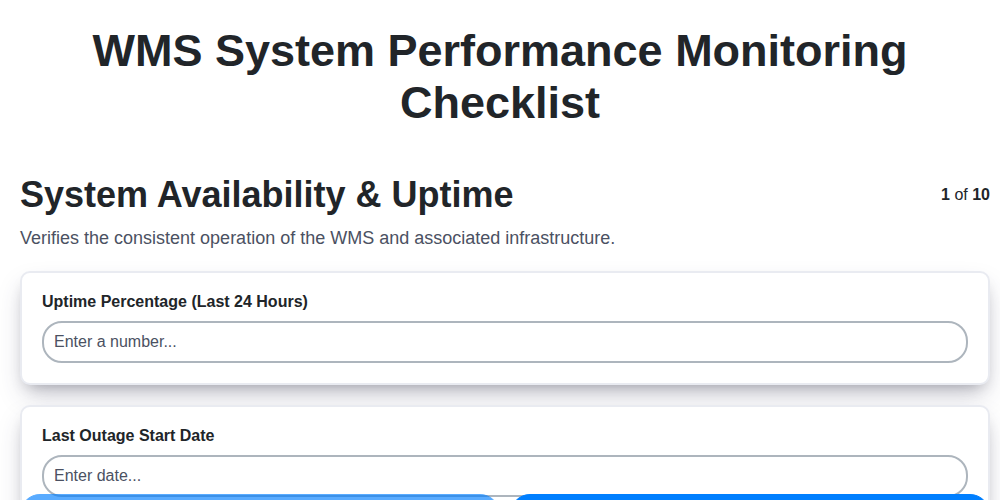
WMS System Performance Monitoring Checklist: A Comprehensive Guide
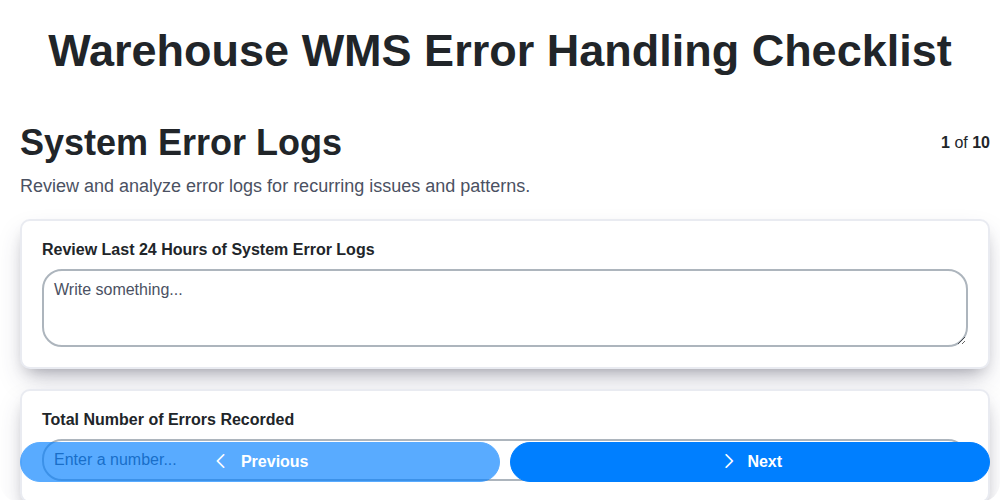
Warehouse WMS Error Handling Checklist: A Proactive Guide to Minimizing Disruptions
We can do it Together
Need help with
Warehouse Management System (WMS)?
Have a question? We're here to help. Please submit your inquiry, and we'll respond promptly.