Streamline Your Cases: The Ultimate Workers' Compensation Case Management Checklist Template
Published: 12/20/2025 10:00 PM Updated: 12/21/2025 7:03 AM
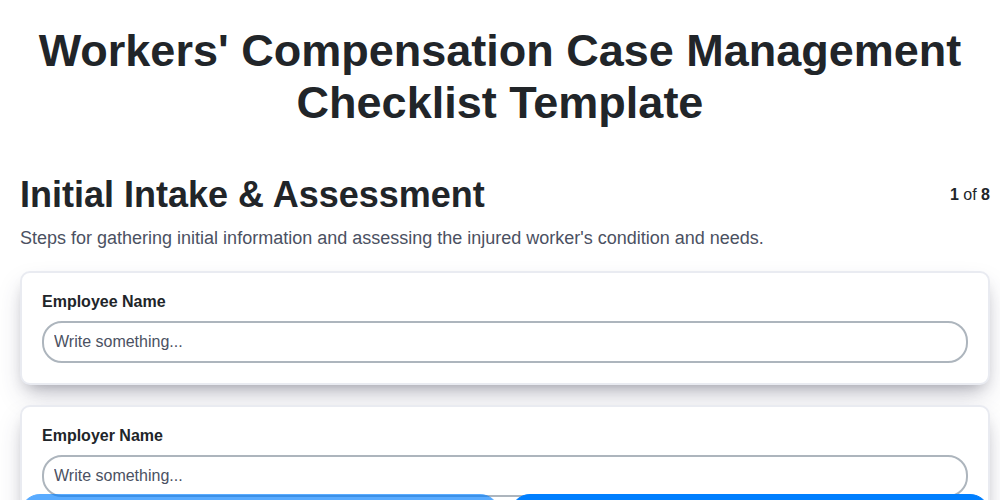
Table of Contents
- Introduction: Why a Workers' Compensation Checklist is Essential
- 1. Initial Intake & Assessment: Gathering Crucial Information
- 2. Medical Management: Monitoring and Coordinating Care
- 3. Benefits Administration: Ensuring Timely and Accurate Payments
- 4. Communication & Coordination: Keeping Everyone Informed
- 5. Return to Work Planning: A Roadmap for Recovery
- 6. Legal & Regulatory Compliance: Staying on the Right Side of the Law
- 7. Case Closure & Finalization: Completing the Process
- 8. Record Keeping & Documentation: Maintaining a Clear Audit Trail
- 9. Utilizing Technology for Efficient Case Management
- 10. Best Practices for Proactive Case Management
- 11. Common Pitfalls to Avoid in Workers' Compensation Cases
- 12. Training Your Team: Ensuring Consistent Application of the Checklist
- 13. The Future of Workers' Compensation: Trends and Adaptations
- Resources & Links
TLDR: Overwhelmed by workers' comp cases? This checklist template is your new best friend! It breaks down every stage - from initial assessment to case closure - ensuring you cover all bases, stay compliant, and keep everything organized. Download it and simplify your workflow today!
Introduction: Why a Workers' Compensation Checklist is Essential
Navigating a workers' compensation case can feel like traversing a complex maze. From the initial injury report to the eventual closure, there are countless steps, deadlines, and legal considerations that demand meticulous attention. A single misstep can lead to delays, increased costs, frustration for all parties involved (employee, employer, insurance carrier), and potential legal challenges. That's where a comprehensive checklist becomes absolutely essential. This isn't just about ticking boxes; it's about ensuring consistent, compliant, and efficient case management, ultimately leading to better outcomes and minimizing risk for everyone. A well-designed checklist provides structure, promotes accountability, and helps you stay organized throughout the entire process - freeing up valuable time and resources.
1. Initial Intake & Assessment: Gathering Crucial Information
The foundation of a successful workers' compensation case management process is a thorough initial intake and assessment. This critical first step sets the tone for the entire process and directly impacts the employee's experience and the overall outcome of the claim. Here's what needs to be covered:
- Employee Interview: Conduct a detailed interview with the injured worker to understand the nature of the accident, how it occurred, and the extent of their injuries. Listen actively and document their account meticulously.
- Employer Information: Collect comprehensive details from the employer, including incident reports, witness statements (if any), job descriptions, and safety protocols in place at the time of the incident.
- Claim Information: Secure all relevant claim information, including claim number, date of injury, and initial reporting details.
- Medical Records Request: Immediately initiate the process of obtaining the employee's medical records, including initial treatment documentation and physician assessments.
- Legal Representation: Confirm whether the employee has retained legal representation and gather contact information if so.
- Claimant Demographics & Contact Information: Verify and update all claimant demographics and contact details to ensure accurate communication throughout the process.
- Preliminary Assessment: Based on the collected information, perform a preliminary assessment of the claim's complexity and potential challenges.
A well-executed initial intake and assessment saves time and resources later on and demonstrates a commitment to the employee's wellbeing.
2. Medical Management: Monitoring and Coordinating Care
Effective medical management is the cornerstone of a successful workers' compensation case. It's more than just approving bills; it's about ensuring the injured worker receives appropriate, timely, and coordinated care that supports their recovery and return to work. This involves proactive monitoring and diligent coordination between various stakeholders.
Here's what's included in this critical phase:
- Initial Medical Evaluation Review: Thoroughly review the initial medical reports to understand the nature and extent of the injury, diagnosis, and recommended treatment plan. Look for any red flags or inconsistencies that require further investigation.
- Treatment Plan Adherence: Regularly monitor adherence to the prescribed treatment plan. Are the recommended therapies being followed? Are there any modifications needed based on the worker's progress?
- Independent Medical Examinations (IMEs): Strategically utilize IMEs when necessary to obtain objective medical opinions, address diagnostic uncertainties, or evaluate the need for continued treatment. Ensure proper documentation and justification for IME requests.
- Medical Provider Communication: Maintain consistent and open communication with treating physicians, specialists, and physical therapists. Discuss progress, concerns, and any potential roadblocks to recovery.
- Utilization Review: Implement utilization review processes to ensure medical services are medically necessary, appropriate, and cost-effective, adhering to established guidelines and protocols.
- Disability Assessments: Conduct or review disability assessments to objectively determine the worker's functional limitations and their impact on return-to-work capabilities.
- Medical Bill Review & Validation: Scrutinize medical bills for accuracy, coding compliance, and reasonableness, ensuring proper authorization and adherence to fee schedules.
- Proactive Intervention: Identify potential issues early, such as lack of progress, unnecessary delays, or conflicts in treatment approaches, and proactively intervene to address them.
3. Benefits Administration: Ensuring Timely and Accurate Payments
Benefits administration is a critical component of effective workers' compensation case management. It's more than just cutting checks; it's about ensuring injured workers receive the appropriate financial support they're entitled to, preventing frustration and potential legal complications. This section outlines key tasks to keep benefits flowing smoothly.
Key Tasks & Considerations:
- Verification of Eligibility: Double-check initial reports and documentation to confirm the employee's eligibility for benefits. This includes verifying employment status, incident details, and any pre-existing conditions that might affect coverage.
- Wage Verification & Calculation: Accurate wage verification is paramount for calculating temporary disability (TTD) or permanent disability (PD) benefits. Regularly update wage information based on payroll records and address any discrepancies promptly.
- Benefit Payment Scheduling: Establish and adhere to a consistent payment schedule, keeping in mind state-specific timelines and requirements. Automated systems can be invaluable for accuracy and efficiency.
- Tracking & Reporting: Meticulously track all benefit payments, dates, amounts, and recipients. Regular reporting helps identify potential issues and ensures compliance.
- Handling Overpayments & Underpayments: Establish a clear process for identifying and correcting overpayments or underpayments. Transparency and prompt resolution are crucial.
- Coordination with Insurance Carriers: Maintain open communication with insurance carriers, sharing relevant information and addressing any questions or concerns related to benefits.
- Auditing Payment Records: Conduct periodic audits of payment records to identify errors, inconsistencies, or potential fraud.
- Stay Updated on Benefit Laws: Workers' compensation benefit laws are subject to change. Stay informed about legislative updates and adjust processes accordingly.
4. Communication & Coordination: Keeping Everyone Informed
Effective communication and coordination are the backbone of a successful workers' compensation case management process. Siloed information and a lack of clear communication can lead to delays, frustration, and ultimately, increased costs. This section highlights the importance of keeping all stakeholders - the injured worker, their physician, your team, the employer, and the insurance carrier - informed and engaged throughout the case.
Key Actions:
- Establish Clear Communication Channels: Define preferred methods of communication for each party upfront (e.g., email, phone calls, secure portals).
- Regular Updates: Provide consistent updates to the injured worker regarding claim status, medical appointments, and return-to-work progress.
- Physician Liaison: Maintain a strong relationship with the treating physician, facilitating clear communication regarding treatment plans, limitations, and return-to-work readiness.
- Employer Collaboration: Work closely with the employer to understand job duties, accommodations, and return-to-work feasibility.
- Insurance Carrier Alignment: Regularly communicate with the insurance carrier regarding case developments, medical expenses, and benefit payments.
- Documentation of Communication: Meticulously document all communication, including dates, times, methods, and content, within the case file.
- Proactive Issue Resolution: Address any communication breakdowns or misunderstandings promptly to prevent escalation.
5. Return to Work Planning: A Roadmap for Recovery
Returning to work is a crucial goal for injured workers, fostering both physical and emotional well-being while reducing claim costs. A well-structured Return to Work (RTW) plan is the key to achieving this, but it requires careful planning and consistent execution. Here's a breakdown of key steps within your Workers' Compensation Case Management Checklist:
1. Early Collaboration is Paramount: Initiate RTW discussions as soon as medically appropriate, ideally during the initial intake and assessment. Engage the injured worker, their physician, the employer, and the case manager in an open dialogue. Understanding the employee's job duties, limitations, and goals is essential.
2. Functional Capacity Evaluation (FCE): An FCE objectively assesses the worker's physical abilities and restrictions, providing a baseline for identifying suitable modified duties. This helps bridge the gap between medical opinions and job demands.
3. Modified Duty Planning: Explore possibilities for modified or transitional work assignments. This might involve reduced hours, different tasks, or ergonomic adjustments. Clearly define the essential functions of the modified role and any limitations.
4. Physician's Release and Restrictions: Obtain clear and specific return-to-work releases from the treating physician, outlining any restrictions (e.g., lifting limitations, frequency of breaks, time constraints). Regularly review and update these restrictions as the worker's condition evolves.
5. Job Accommodation and Ergonomics: Consider workplace modifications to accommodate restrictions and prevent re-injury. This could involve adjusting workstation height, providing assistive devices, or altering work processes.
6. Phased Return-to-Work: Implement a gradual return-to-work schedule, increasing work hours and responsibilities incrementally. Closely monitor the worker's progress and address any issues promptly.
7. Regular Communication & Monitoring: Maintain open communication with all parties involved. Regularly assess the worker's comfort level, address concerns, and adjust the plan as needed. A proactive approach prevents setbacks and promotes a successful return.
6. Legal & Regulatory Compliance: Staying on the Right Side of the Law
Navigating workers' compensation case management requires a deep understanding of ever-evolving legal and regulatory landscapes. Failure to comply can result in costly penalties, delays, and even legal action. This section outlines key compliance considerations.
State-Specific Regulations: Workers' compensation laws vary significantly from state to state. Thoroughly understand the specific rules governing your jurisdiction regarding deadlines for reporting claims, medical treatment authorization, benefit payment timelines, and dispute resolution processes. Stay updated on legislative changes and court decisions that impact these regulations.
Reporting Requirements: Timely and accurate reporting is crucial. This includes reporting incidents to the state agency, employers, and insurance carriers within mandated timeframes. Maintain meticulous records of all reports and acknowledgements.
Privacy & HIPAA Compliance: Protecting the injured worker's medical information is paramount. Ensure all communication and documentation adhere to HIPAA regulations and state privacy laws. Obtain necessary authorizations for sharing medical records.
Fraud Prevention: Implement measures to detect and prevent fraudulent claims. This might include thorough investigation processes, verification of employment records, and collaboration with fraud prevention units.
Audit Trails & Documentation: Maintain detailed audit trails documenting all decisions and actions taken throughout the case management process. This serves as evidence of compliance and can be invaluable during audits or legal challenges.
Staying Informed: Subscribe to industry publications, attend webinars, and consult with legal counsel specializing in workers' compensation to remain current on regulatory changes and best practices.
7. Case Closure & Finalization: Completing the Process
Reaching case closure signifies the successful navigation of a worker's compensation journey. However, it's a critical phase that demands meticulous attention to detail to prevent future complications and ensure all legal obligations are met. This isn't simply a matter of paperwork; it's about verifying full recovery, confirming benefits have been appropriately disbursed, and establishing a clear and legally sound record of closure.
Here's what needs to happen:
- Confirm Full Medical Release: Obtain a final, signed medical release from the treating physician confirming the employee has reached maximum medical improvement (MMI) and is capable of returning to suitable work. Ensure this release clearly outlines any permanent restrictions or limitations.
- Settlement/Lump Sum Agreements (if applicable): If a settlement or lump sum agreement was reached, meticulously review and finalize all paperwork. This includes ensuring all parties understand the terms and conditions, and ensuring the agreement is properly executed. Obtain necessary releases related to future claims.
- Benefits Verification: Double-check that all benefits-medical, indemnity, vocational-have been paid appropriately and in full, as determined by the case's trajectory and legal guidelines.
- Return-to-Work Documentation: Confirm the employee's successful return to work (if applicable) and obtain any required documentation from the employer related to job modifications or accommodations.
- Final Reporting: Submit any required final reports to the workers' compensation agency, adhering to their specific deadlines and formatting requirements.
- Obtain Signatures & Release: Secure all necessary signatures from the employee, employer, and any involved medical providers, confirming their agreement with the case closure.
- Case Closure Notification: Officially notify all relevant parties-employee, employer, insurance carrier, medical providers-that the case is formally closed.
8. Record Keeping & Documentation: Maintaining a Clear Audit Trail
Thorough and meticulous record keeping is the backbone of any successful workers' compensation case management process. It's not just about compliance; it's about building a defensible case, facilitating smooth transitions, and demonstrating a commitment to both the injured worker and your organization.
Here's why robust documentation is critical:
- Audit Readiness: Workers' compensation cases are frequently subject to audits by insurance carriers, regulatory bodies, and even legal teams. Comprehensive records provide a clear audit trail, demonstrating that processes were followed correctly and decisions were made thoughtfully.
- Legal Defense: Detailed notes, correspondence, medical records, and benefit payment information are essential in the event of legal challenges or disputes.
- Consistency & Continuity: Clear documentation ensures that anyone reviewing the case - be it a new case manager, a claims adjuster, or an attorney - can quickly understand the history, progress, and rationale behind decisions.
- Improved Decision-Making: Accurate records facilitate data analysis, allowing you to identify trends, evaluate program effectiveness, and make informed decisions about future case management strategies.
What should be documented?
- Initial Intake: All details from the initial report of injury, employee interviews, and employer statements.
- Medical Treatment: Records of medical appointments, diagnoses, treatment plans, and physician correspondence.
- Benefit Payments: Dates, amounts, and descriptions of all benefit payments made.
- Communication: Logs of all conversations, emails, and letters exchanged with the injured worker, medical providers, employers, and insurance carriers.
- Return-to-Work Efforts: Records of job offers, modified duty plans, and communication regarding return-to-work progress.
- Decision Rationale: Notes explaining the reasoning behind decisions related to benefit approvals, medical authorizations, and return-to-work accommodations.
Tips for Effective Record Keeping:
- Use a Centralized System: Implement a dedicated case management software or a well-organized electronic filing system.
- Be Consistent: Adhere to a standardized format and naming convention for all documents.
- Be Objective: Record facts and observations without personal opinions or biases.
- Document Timely: Record information as it becomes available to ensure accuracy and completeness.
- Securely Store Records: Implement measures to protect the confidentiality and integrity of sensitive case information.
9. Utilizing Technology for Efficient Case Management
Managing workers' compensation cases can be incredibly complex and demanding. Thankfully, technology offers a wealth of tools to streamline processes, reduce errors, and improve overall efficiency. Gone are the days of overflowing file cabinets and endless spreadsheets!
Here's how technology is revolutionizing workers' compensation case management:
- Case Management Software: Dedicated software solutions centralize all case information, automate tasks like claim processing and reporting, and provide real-time data visibility for all stakeholders. These systems often integrate with medical billing platforms and state reporting portals.
- Automated Reporting: Generating required reports for state agencies and insurance carriers can be time-consuming. Automated reporting features within case management software significantly reduce manual effort and ensure accuracy.
- Secure Communication Portals: Online portals allow for secure communication between injured workers, medical providers, case managers, and legal teams, reducing phone tag and ensuring everyone has access to the latest information.
- Telemedicine Integration: Facilitating remote medical evaluations and check-ins through telemedicine platforms can reduce travel time for injured workers and improve access to care, particularly in rural areas.
- Data Analytics & Reporting: Leveraging data analytics tools to identify trends, predict potential issues, and optimize case outcomes is becoming increasingly important. This can include tracking medical costs, return-to-work rates, and litigation risk.
- Document Management Systems: Cloud-based document management systems make it easy to store, organize, and share documents securely, eliminating paper clutter and improving accessibility.
- Mobile Accessibility: Mobile apps allow case managers to access information and manage tasks on the go, ensuring timely responses and proactive intervention.
Embracing these technological advancements can significantly improve the efficiency and effectiveness of workers' compensation case management, ultimately leading to better outcomes for all involved.
10. Best Practices for Proactive Case Management
Reactive case management - responding to issues as they arise - is a recipe for delays, increased costs, and frustrated stakeholders. Proactive case management, on the other hand, anticipates potential roadblocks and implements strategies to keep claims moving forward efficiently and effectively. Here's how to shift your approach:
- Regularly Review Medical Records: Don't just wait for updates. Schedule consistent reviews of medical reports to identify potential complications, assess progress towards maximum medical improvement (MMI), and explore alternative treatment options.
- Early Intervention with Vocational Rehabilitation: Engage vocational rehabilitation specialists early in the process, even before MMI is reached. Exploring potential job modifications and training options proactively can significantly impact return-to-work success.
- Consistent Communication with Injured Workers: Frequent, empathetic communication builds trust and keeps the injured worker informed and engaged in their recovery. Don't assume silence means everything is okay.
- Collaboration with Medical Providers: Foster a strong working relationship with treating physicians to understand treatment plans, address concerns, and ensure alignment on goals.
- Identify & Mitigate Potential Legal Risks: Stay abreast of changing regulations and legal precedents. Anticipate potential litigation and address concerns proactively to minimize legal exposure.
- Utilize Data & Analytics: Track key metrics like claim duration, medical costs, and return-to-work rates to identify trends and areas for improvement.
- Implement a Quality Assurance Program: Regularly audit case files to ensure compliance with policies and procedures, and to identify opportunities for enhanced service.
- Invest in Training & Development: Equip your case management team with the knowledge and skills they need to handle complex claims and provide exceptional service.
- Embrace Technology: Leverage technology solutions like automated workflows, secure portals, and data analytics dashboards to streamline processes and improve efficiency.
- Focus on Early Return-to-Work: Even light-duty assignments can significantly boost morale and accelerate recovery. Partner with employers to identify suitable options.
11. Common Pitfalls to Avoid in Workers' Compensation Cases
Navigating workers' compensation cases can be fraught with challenges. Here are some common pitfalls to watch out for:
- Delayed Reporting: Encouraging prompt reporting of injuries is crucial. Delays can lead to disputes about causation and potentially invalidate claims.
- Insufficient Initial Assessment: A rushed or incomplete initial assessment can miss critical details, hindering accurate diagnosis and treatment planning.
- Lack of Medical Direction: Failing to establish clear medical direction can lead to inconsistent treatment plans and escalating costs.
- Communication Breakdown: Poor communication between the injured worker, medical providers, case manager, and employer creates frustration and can impede recovery.
- Ignoring Return-to-Work Potential: Dismissing or inadequately planning for return-to-work options can prolong disability and increase costs.
- Non-Compliance with Regulations: A failure to adhere to state-specific regulations can result in penalties and legal challenges.
- Poor Documentation: Incomplete or inaccurate record-keeping is a surefire way to invite scrutiny and potential legal action.
- Failure to Address Psychological Needs: Overlooking the psychological impact of an injury can hinder recovery and prolong disability.
- Assuming a One-Size-Fits-All Approach: Each case is unique and requires individualized attention and tailored solutions.
- Not Keeping Up with Legal Changes: Workers' compensation laws are frequently updated; staying current is essential.
- Underestimating the Impact of Pre-existing Conditions: Failing to properly assess how pre-existing conditions influence the current injury can lead to inaccurate assessments and incorrect benefit determinations.
12. Training Your Team: Ensuring Consistent Application of the Checklist
A fantastic checklist is only as effective as the team using it. Investing in thorough training is paramount to ensuring your workers' compensation case management process is consistently applied and compliant. Simply distributing the checklist isn't enough; your team needs to understand why each step is important and how to execute it correctly.
Here's what effective training should cover:
- Checklist Overview & Purpose: Clearly explain the reason for the checklist - to ensure compliance, improve outcomes, and protect the company.
- Individual Step Explanation: Don't just show the items; explain the rationale behind each step. Why is a specific form required? What information is crucial to gather?
- Role-Specific Responsibilities: Different team members (claim adjusters, case managers, HR personnel) will have varying levels of involvement with different checklist items. Outline these specific roles and responsibilities.
- Legal & Regulatory Updates: Workers' compensation laws change. Training should include ongoing updates to ensure the checklist reflects current regulations.
- Best Practices & Problem Solving: Provide real-world scenarios and discuss how to handle common challenges encountered while working through the checklist. Encourage open discussion and allow for questions.
- Documentation & Auditing: Emphasize the importance of accurate and detailed documentation for each completed checklist item. Explain how the checklist will be audited to ensure consistency.
- Refresher Courses: Schedule regular refresher courses to reinforce the process and address any evolving needs.
By prioritizing training, you empower your team to confidently and consistently utilize the checklist, maximizing its benefits and minimizing risk.
13. The Future of Workers' Compensation: Trends and Adaptations
The world of workers' compensation is poised for significant change. Several converging trends are pushing the industry towards greater efficiency, data-driven decision-making, and a more proactive approach to employee wellbeing. We're seeing a shift away from purely reactive claims management toward preventative care and early intervention.
One key development is the increasing adoption of AI and Machine Learning. These technologies are being leveraged to automate tasks like initial claim screening, fraud detection, and even predicting potential return-to-work timelines based on medical data and job role. This allows case managers to focus on more complex cases and individual employee needs.
Predictive Analytics are becoming crucial. Analyzing historical data to identify patterns and predict future claims allows for targeted safety initiatives and resource allocation. Imagine being able to anticipate where injuries are most likely to occur and proactively implement preventative measures!
Telehealth and Remote Monitoring have exploded, offering convenient access to medical care and enabling ongoing monitoring of employee recovery. This not only improves patient outcomes but also reduces administrative burden and travel costs.
Digital Case Management Platforms are evolving beyond simple document storage. They'll integrate with telehealth providers, benefit systems, and even wearable technology to provide a holistic view of each employee's journey. This unified approach will promote better collaboration and streamlined workflows.
Emphasis on Employee Wellbeing: The focus is shifting from solely addressing injuries to promoting overall employee well-being. This includes mental health support, ergonomic assessments, and programs that address the root causes of workplace stress.
Finally, Blockchain technology has the potential to improve data security and transparency in claims processing, reducing fraud and administrative overhead.
These advancements aren't just about efficiency; they represent a fundamental shift towards a more human-centered and proactive approach to workers' compensation. The future is about building a safer, healthier, and more supportive workplace for everyone.
Resources & Links
- Workers' Compensation Cases Law and Practice: Comprehensive resource for legal professionals and claims administrators. Provides in-depth information on workers' compensation laws, regulations, and best practices.
- National Council on Compensation Insurance (NCCI): Provides data, analytics, and services to the workers' compensation industry. Offers valuable insights and resources on trends and best practices.
- Risk Management Institute (RMI): Provides educational resources, training, and publications on risk management and insurance, including workers' compensation.
- Occupational Safety and Health Administration (OSHA): Provides information and resources on workplace safety and health, crucial for preventing injuries and reducing workers' compensation claims.
- California Department of Industrial Relations - Division of Workers' Compensation: State-specific information and resources for California workers' compensation laws and regulations. Useful for understanding state variations (replace with your relevant state agency).
- American Institute of Workers' Compensation Law (AIWC): Professional organization for attorneys and other professionals involved in workers' compensation. Offers educational programs and resources.
- CEDR - Centre for Effective Dispute Resolution: Provides resources and training for dispute resolution, which can be useful for managing complex workers' compensation cases.
- LexisNexis: Legal research platform offering access to statutes, regulations, case law, and other legal resources related to workers' compensation. (Subscription required)
- Westlaw: Another comprehensive legal research platform. (Subscription required)
- WorkCompWire: News and information source covering workers' compensation issues and trends.
- Adjusters International: Provides claim handling services, and their website often has informational articles related to workers' compensation claims management.
- Zebra Technologies: If discussing tech, Zebra is a leader in mobile computing and scanning solutions. Discuss how technologies like this can improve data capture and accessibility in case management.
- Salesforce: Often used for case management - could be mentioned in the 'Utilizing Technology' section. Demonstrates CRM capabilities adaptable for WC.
Frequently Asked Questions
What is a Workers' Compensation Case Management Checklist Template?
It's a structured document, typically in a spreadsheet or document format, that outlines all the essential steps and tasks required to effectively manage a workers' compensation claim from beginning to resolution. It helps ensure consistency, accuracy, and compliance throughout the process.
Why do I need a Workers' Compensation Case Management Checklist Template?
Using a template ensures you don't miss critical steps, improves organization, promotes consistent handling of cases, helps with compliance, and ultimately can help reduce errors and potentially lower costs associated with claims.
What types of tasks are typically included in a Workers' Compensation Case Management Checklist Template?
Common tasks include claim intake, initial investigation, medical record review, communication with claimant and employer, benefit calculations, settlement negotiations, and resolution documentation. The specific tasks will vary depending on the complexity of the case and state regulations.
Is this checklist template suitable for all types of workers' compensation cases?
While the template provides a comprehensive framework, you may need to customize it based on the specific type of injury, complexity of the case, and applicable state laws. For example, fatality claims or those involving legal action will require additional considerations.
What file formats are available for the checklist template?
The article likely provides the template in common formats like Excel (.xlsx), Google Sheets, or a printable PDF. Check the article for specific download options.
How do I customize the checklist template to fit my specific needs?
You can customize the template by adding or removing tasks, modifying deadlines, assigning responsibilities to team members, and incorporating any specific workflows or procedures your organization follows. Most spreadsheet programs like Excel or Google Sheets allow for easy modification.
What is the purpose of assigning responsibilities in the checklist?
Assigning responsibilities ensures accountability, prevents tasks from falling through the cracks, and promotes efficiency within your team. Clearly defining who is responsible for each step contributes to smooth case management.
How can this checklist template help with compliance?
The checklist ensures you follow all required steps according to state regulations and reporting requirements, minimizing the risk of penalties or legal issues related to non-compliance. Regularly review and update the template to reflect changes in regulations.
What are some key metrics I can track using this checklist template?
You can track metrics like claim resolution time, medical costs, settlement amounts, and compliance indicators. This data can help identify areas for improvement in your case management processes.
Where can I find additional resources or support related to Workers' Compensation Case Management?
The article may provide links to relevant state workers' compensation agencies, industry associations, or legal resources. Consider consulting with legal counsel or a workers' compensation specialist for tailored guidance.
Found this Article helpful?
Comments
There are no comments yet. Be the first to add one!
Case Management Solution Demo
Streamline your casework & improve outcomes! ChecklistGuro centralizes case details, tasks, & communication. Enhance efficiency, ensure compliance, & deliver exceptional service. Manage it all with our Work OS.
Related Articles
Streamline Your Deals: The Ultimate Real Estate Case Management Checklist Template
Streamline Your Debt Collection: A Case Management Checklist Template
Cybersecurity Incident Response: Your Checklist Template for Success
Streamline Your Case Management: The Ultimate Checklist Template
Mastering IP: Your Intellectual Property Case Management Checklist Template
HR Case Management Checklist Template: Your Guide to Fair & Compliant Investigations
Streamlining Veteran Care: Your Comprehensive Case Management Checklist Template
Mastering Investigations: Your Case Management Checklist Template Guide
We can do it Together
Need help with
Case Management?
Have a question? We're here to help. Please submit your inquiry, and we'll respond promptly.