The Ultimate Accounting Team Onboarding Checklist: A Step-by-Step Guide for Seamless Integration
Published: 07/12/2026 Updated: 10/05/2026
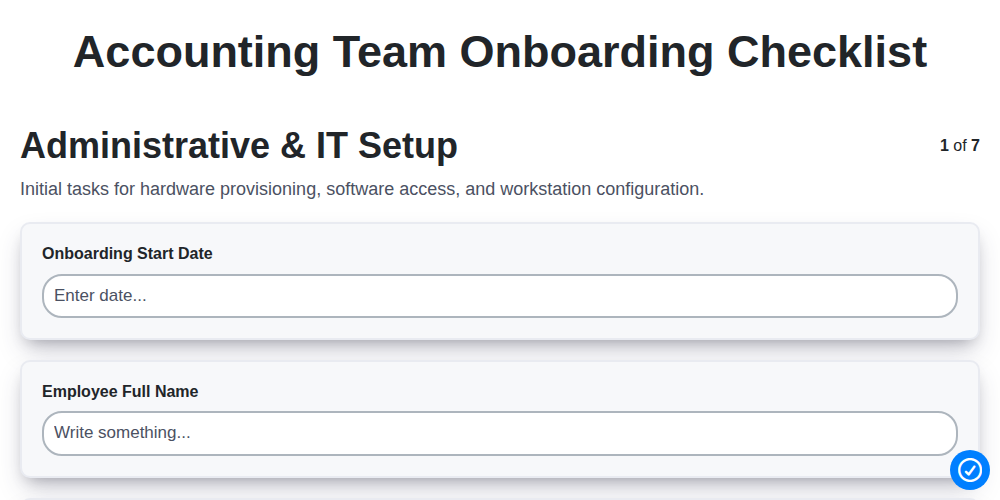
Table of Contents
- Introduction: Why a Structured Onboarding Process Matters for Finance Teams
- Phase 1: Administrative & IT Setup - Laying the Digital Foundation
- Phase 2: Granting Access to Accounting Software & ERP Systems
- Phase 3: Compliance & Regulatory Training - Ensuring Accuracy and Integrity
- Phase 4: Financial Process Familiarization - Learning the Company's Ledger
- Phase 5: Establishing Documentation & Audit Trail Standards
- Phase 6: Integrating into Internal Workflows & Communication Channels
- Phase 7: Setting the Roadmap with 30-60-90 Day Milestones
- Conclusion: Measuring the Success of Your Onboarding Strategy
- Resources & Links
TLDR: Ensure your new hires hit the ground running with this comprehensive guide to accounting onboarding. This post breaks down a strategic checklist-covering everything from IT setup and software access to compliance training and 90-day milestones-and provides actionable instructions on how to implement these steps to reduce errors, ensure regulatory compliance, and accelerate time-to-productivity for your finance team.
Introduction: Why a Structured Onboarding Process Matters for Finance Teams
In the world of finance, there is no room for ambiguity. Unlike other departments where a minor oversight might result in a missed deadline or a typo, a single error in the accounting department can lead to significant consequences: skewed financial statements, failed audits,-tax compliance risks, and compromised decision-making for the entire leadership team.
When a new member joins your accounting team, they aren't just learning new names and faces; they are inheriting responsibility for the company's financial integrity. A disorganized onboarding process does more than just frustrate a new hire-it introduces unnecessary risk. Without a structured roadmap, a new accountant may struggle to understand specific internal controls, misinterpret customized workflows, or fail to adhere to the strict documentation standards required for a clean audit trail.
A structured onboarding checklist serves as more than just an orientation tool; it is a risk-mitigation strategy. By providing a systematic approach to integrating new talent, you ensure that every team member is equipped with the necessary software access, understands the nuances of your regulatory landscape, and is fully aligned with your internal financial controls from day one. Ultimately, a well-executed onboarding process accelerates time-to-productivity, fosters confidence, and protects the accuracy of your company's financial data.
Phase 1: Administrative & IT Setup - Laying the Digital Foundation
Before a new accountant can dive into ledgers and balance sheets, they need a seamless entry into the company's digital ecosystem. The goal of this initial phase is to eliminate day one friction. Nothing hampers productivity-or undermines a new hire's confidence-more than arriving to find they cannot log in to essential systems or lack the necessary hardware.
To ensure a smooth transition, your onboarding checklist should prioritize the following:
- Hardware Provisioning: Ensure the employee has a functional workstation, including a high-performance laptop, dual monitors (essential for reviewing large spreadsheets), and a secure keyboard/mouse setup.
- System Credentials & Single Sign-On (SSO): Coordinate with your IT department to set up company email, Slack/Teams access, and centralized identity management accounts.
- Security & VPN Access: Since accounting roles handle sensitive financial data, ensure all necessary VPN permissions, multi-factor authentication (MFA) protocols, and password management tools (like LastPass or 1Password) are fully operational.
- Access to Shared Drives & Foldes: Grant permissions to the specific directories where historical financial data, tax documents, and departmental archives are stored.
- Basic HR Integration: Complete the formal documentation process, including payroll enrollment, benefits overview, and an introduction to the company's organizational chart.
By treating the administrative setup as a high-priority prerequisite, you allow your new hire to focus their mental energy on learning complex financial processes rather than troubleshooting login errors.
Phase 2: Granting Access to Accounting Software & ERP Systems
Once the fundamental IT setup is complete, the next critical step is ensuring your new hire has seamless, secure, and appropriately scoped access to your financial ecosystem. In an accounting role, productivity is directly tied to how quickly a team member can navigate your software stack. However, this phase is not just about granting permissions; it is about maintaining the integrity of your internal controls.
To ensure a smooth transition, follow these essential steps:
- Role-Based Access Control (RBAC): Never provide administrator access by default. Review the new hire's specific responsibilities and assign permissions based on the principle of least privilege. For example, an Accounts Payable Clerk needs access to vendor modules and invoice processing, but should not have the ability to modify bank master data or access payroll details.
- ERP & Core Accounting Software: Ensure the user has active credentials for your primary ERP (e.g., NetSuite, SAP, or Microsoft Dynamics) and your core ledger software (e.g., QuickBooks, Xero). Verify that they can log in and navigate to the specific modules required for their job function.
- Peripheral Financial Tools: Access must extend beyond the ERP. This includes specialized software for expense management (e.g., Concur), payroll platforms, tax compliance tools, and integrated banking portals.
- Sub-ledger & Spreadsheet Integration: If your workflow relies heavily on Excel or Google Sheets for reconciliations, ensure they have access to the specific shared drives and source of truth templates used by the department.
- Audit Trail Verification: Use this setup phase to reinforce the importance of the digital paper trail. Remind the new hire that every action taken within these systems is logged, and that maintaining clean, traceable entries is a non-negotiable part of their role.
By meticulously managing this stage, you prevent the access bottleneck that often frustrates new hires and simultaneously safeguard your company against unauthorized data manipulation.
Phase 3: Compliance & Regulatory Training - Ensuring Accuracy and Integrity
For an accounting professional, technical skill is only half of the equation; the other half is an unwavering commitment to legal and ethical standards. This phase of onboarding is critical because even a minor oversight in compliance can lead to significant financial penalties, legal repercussions, and a loss of institutional trust.
During this stage, the new hire must be deeply integrated into the company's specific regulatory landscape. The training should focus on three core pillars:
- Regulatory Frameworks: Depending on your industry and jurisdiction, this involves intensive training on specific standards such as GAAP (Generally Accepted Accounting Principles), IFRS (International Financial Reporting Standards), or industry-specific mandates like SOX (Sarbanes-Oxley Act) compliance.
- Tax Obligations & Deadlines: The new team member needs a clear roadmap of the organization's tax calendar. This includes understanding local, state, and federal tax filing requirements, as well as the internal deadlines for VAT, sales tax, or payroll tax submissions to ensure the company never misses a critical window.
- Internal Ethics & Anti-Fraud Protocols: Beyond external laws, your team must be trained on your company's specific code of conduct. This includes understanding the whistleblower process, recognizing signs of internal fraud, and understanding the strict protocols regarding the handling of sensitive financial data and conflict-of-interest disclosures.
By the end of this phase, the goal is for the new hire to not only understand the how of their daily tasks but the why behind the rigorous controls that protect the company's financial integrity.
Phase 4: Financial Process Familiarization - Learning the Company's Ledger
Once the technical access is granted and the administrative hurdles are cleared, the new hire must transition from setting up their workstation to understanding the heartbeat of your organization: the actual movement of money. This phase is about more than just knowing where the buttons are; it is about understanding the why behind every entry and the logic behind your specific financial architecture.
To ensure a smooth integration, this stage of the checklist should focus on three core pillars:
- Understanding the Chart of Accounts (COA): Your new team member needs to master the structure of your COA. They must understand how accounts are categorized, how sub-accounts function, and the specific logic used to map expenses to specific departments or projects.
- The Order of Operations: Every accounting department has a unique cadence. This involves walking the new hire through the month-end close process, the accounts payable cycle, and the revenue recognition workflow. They need to understand which tasks are dependent on others to prevent bottlenecks in the financial cycle.
- Reviewing Historical Context: Don't just show them current spreadsheets; provide access to previous month-end reconciliations and budget-versus-actual reports. This provides the necessary context to help them spot anomalies and understand the trends that drive your financial decisions.
The goal of this phase is to move the employee from passive observation to active participation, ensuring they can navigate the company's financial nuances without constant supervision.
Phase 5: Establishing Documentation & Audit Trail Standards
For an accounting professional, accuracy is only half the battle; the other half is verifiability. New hires must understand that in the world of finance, if a transaction isn't documented according to company standards, it effectively didn't happen. This phase of onboarding focuses on ensuring that every entry, adjustment, and reconciliation leaves a clear, transparent, and permanent paper trail.
To ensure your new team members can maintain the integrity of your financial records, your onboarding process should cover these four critical pillars:
- Standardized Naming Conventions: Provide clear guidelines on how to name files, folders, and digital assets. Whether it's monthly bank reconciliations or tax workpapers, consistency across the team is vital for retrieval and clarity during audits.
- The Audit-Ready Mindset: Train new hires on the why behind documentation. They should understand how to attach supporting evidence (invoices, receipts, and approvals) directly to transactions within your ERP or accounting software to ensure seamless internal and external audits.
- Approval Hierarchies & Authorization: Clearly define who has the authority to approve specific types of expenditures and at what thresholds. New team members must know the exact workflow for routing documents for signature to prevent unauthorized commitments.
- Retention & Archiving Policies: Ensure the team is well-versed in your company's data retention policy. They need to know how long certain records must be kept, where they are stored (cloud vs. local), and the protocol for disposing of expired sensitive information.
By prioritizing these standards from day one, you reduce the risk of human error and significantly decrease the stress and workload of your annual audit season.
Phase 6: Integrating into Internal Workflows & Communication Channels
Even with the right tools and software, an accounting professional cannot succeed in a vacuum. This phase focuses on moving beyond technical access and integrating the new hire into the daily rhythm of the company. Accounting is a highly collaborative function that relies on timely information from various departments, so establishing clear communication lines is critical.
During this stage, focus on the following key areas:
- Communication Protocols: Define which channels are used for what purpose. For example, use Slack or Microsoft Teams for quick queries, email for formal approvals, and project management tools (like Asana or Jira) for tracking month-end closing tasks.
- Cross-Departmental Introductions: Introduce the new hire to key stakeholders outside of finance, such as Sales (for revenue recognition), Procurement (for AP processes), and Operations (for inventory/costing). Understanding who to contact for specific discrepancies prevents bottlenecks.
- Meeting Cadence: Ensure the new hire is added to all relevant recurring meetings, including weekly departmental syncs, monthly closing reviews, and quarterly budget discussions.
- Approval Hierarchies: Clearly outline the who, when, and how of the approval workflow. The new hire must understand exactly which managers need to sign off on journal entries, expense reports, or wire transfers to ensure internal controls are never bypassed.
- Feedback Loops: Establish a regular cadence for check-ins to ensure the new team member feels supported as they navigate the company's unique organizational culture and interpersonal dynamics.
Phase 7: Setting the Roadmap with 30-60-90 Day Milestones
The final and most critical stage of a successful onboarding process is moving from passive learning to active contribution. Rather than overwhelming a new hire with a massive list of expectations on day one, use a structured 30-60-90 day roadmap to provide clarity, reduce anxiety, and track progress objectively.
This phased approach ensures the new team member transitions smoothly from an observer to a fully integrated, high-performing contributor:
The First 30 Days: Learning & Observation The focus here is purely on integration. The goal is for the new hire to understand the why behind your financial processes. Success in this phase is measured by their ability to navigate the ERP system, understand the company's chart of accounts, meet the key stakeholders, and complete all mandatory compliance training. They should be absorbing the culture and the company's financial rhythm without the pressure of heavy deliverables.
The 60-Day Mark: Application & Contribution By the second month, the emphasis shifts to execution. The new hire should begin taking ownership of specific, recurring tasks-such as managing accounts payable, assisting with bank reconciliations, or preparing preliminary month-end schedules. At this stage, you are looking for accuracy in their work and an increasing level of independence. They should be able to identify minor discrepancies and propose solutions within the existing workflows.
The 90-Day Mark: Ownership & Optimization By the end of the first quarter, the new hire should be fully operational. They are no longer just following instructions; they are managing their assigned responsibilities end-to-end. A successful 90-day milestone is reached when the employee can contribute to month-end closing activities with minimal supervision and, ideally, begins to suggest improvements to existing processes. This is also the ideal time for a formal performance check-in to discuss long-term professional development and address any remaining knowledge gaps.
By implementing these milestones, you transform onboarding from a simple orientation into a strategic integration plan that ensures long-term retention and operational excellence.
Conclusion: Measuring the Success of Your Onboarding Strategy
Implementing a structured onboarding checklist is more than just a way to manage a to-do list; it is a strategic investment in your department's long-term accuracy and efficiency. The true measure of your success lies in the stability of your financial operations following a new hire's integration. You will know your strategy is working when you see a decrease in avoidable entry errors, a reduction in the time it takes for new hires to handle month-end closures independently, and a seamless transition of responsibilities without disrupting the audit trail.
Ultimately, a successful onboarding process transforms a new employee from a trainee into a confident contributor who understands not just how to perform tasks, but why those tasks are critical to the company's regulatory compliance and financial integrity. By consistently applying this checklist, you minimize the learning curve risk and build a foundation of standardized excellence that protects your entire organization.
Resources & Links
- AICPA (American Institute of Certified Public Accountants): A vital resource for staying updated on professional standards, regulatory changes, and best practices in accounting and auditing.
- NetSuite ERP Guide: A deep dive into managing complex financial processes and integrating ERP systems into organizational workflows.
- QuickBooks Training & Resources: Essential tutorials for mastering cloud-based accounting software and managing day-to-day bookkeeping tasks.
- SHRM (Society for Human Resource Management): Best practices for employee onboarding, managing IT setup, and designing effective 30-60-90 day performance plans.
- Caseware Audit & Compliance: Resources focused on maintaining audit trails, documentation standards, and regulatory compliance in financial reporting.
- Slack for Finance Teams: Strategies for using digital communication tools to streamline internal workflows and departmental collaboration.
- Asana Project Management: Templates and methodologies for tracking onboarding milestones and managing complex financial project workflows.
Frequently Asked Questions
Why is a structured onboarding process important for accounting teams?
A structured onboarding process ensures that new hires understand complex financial workflows, regulatory compliance requirements, and internal controls, which minimizes errors and accelerates their ability to contribute to the firm's accuracy and productivity.
What are the essential software tools to include in an accounting onboarding checklist?
The checklist should include access to and training for ERP systems, accounting software (like QuickBooks or Xero), payroll platforms, tax preparation tools, expense management software, and secure document management systems.
How can managers ensure compliance during the onboarding of a new accountant?
Managers should incorporate training on internal audit procedures, data privacy laws (such as GDPR or CCPA), and firm-specific security protocols to ensure the new hire understands how to handle sensitive financial data securely.
What should be included in the 'First Week' milestone of the checklist?
The first week should focus on introductions to the team, setup of hardware and software access, an overview of the firm's chart of accounts, an introduction to current clients, and a review of internal communication channels.
How long does a typical accounting onboarding process take?
While it varies depending on the seniority of the role, a comprehensive onboarding process usually spans from the first day through the first 90 days, with specific milestones for training, integration, and independent task management.
Comments
There are no comments yet. Be the first to add one!
Accounting Management Solution Demo
Move beyond rigid, one-size-fits-all software. Leverage a fully programmable accounting environment designed to adapt to your unique workflows, complex hierarchies, and evolving business logic.
Related Articles
The Ultimate Financial Data Integrity Audit Checklist: A Step-by-Step Template for Precision and Compliance
The Ultimate Financial Statement Review Checklist: A Step-by-Step Guide to Ensuring Accuracy and Compliance
Mastering Financial Control: The Ultimate Departmental Budget Monitoring Checklist
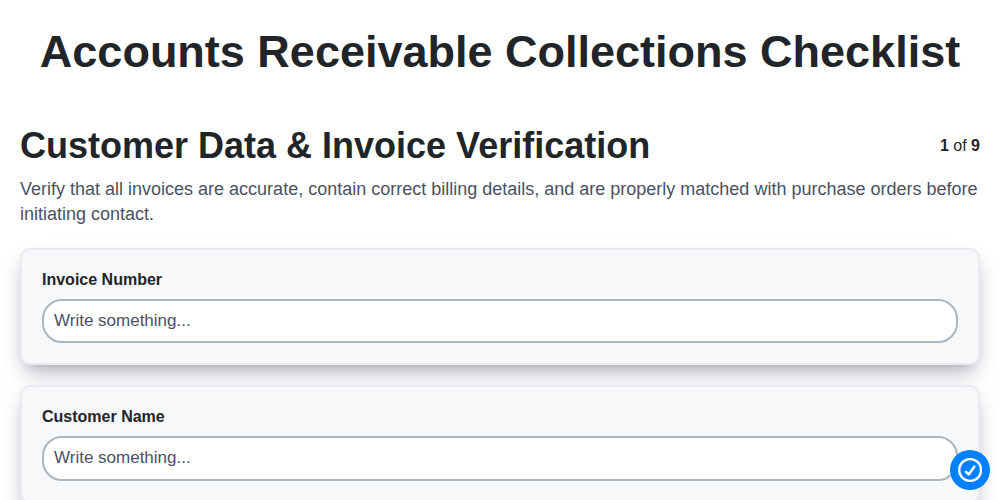
The Ultimate Accounts Receivable Collections Checklist: A Step-by-Step Guide to Streamlining Your Cash Flow
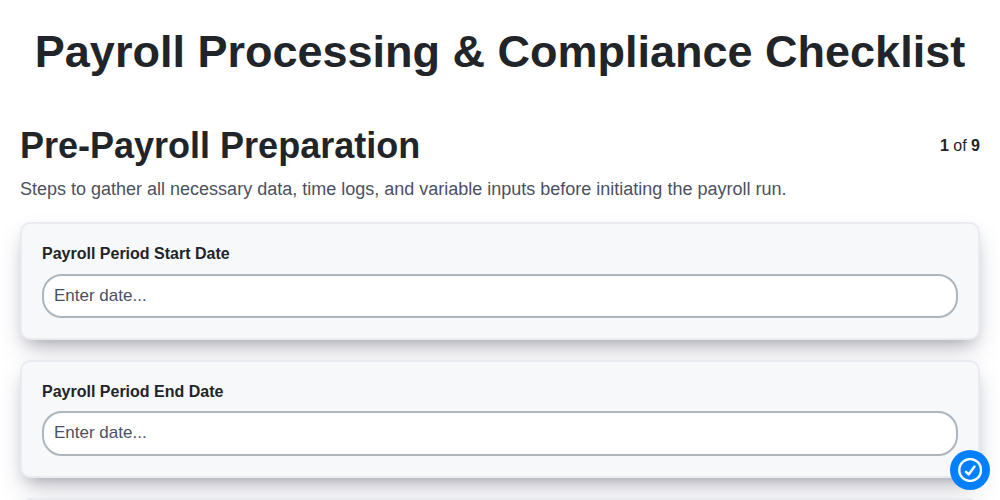
The Ultimate Payroll Processing & Compliance Checklist: A Step-by-Step Guide to Error-Free Payroll
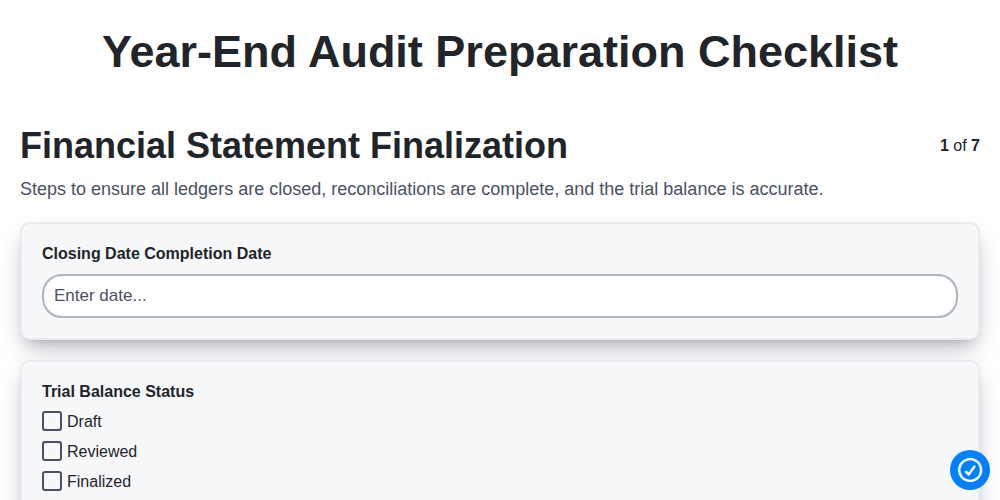
The Ultimate Year-End Audit Preparation Checklist: A Step-by-Step Guide to a Stress-Free Audit
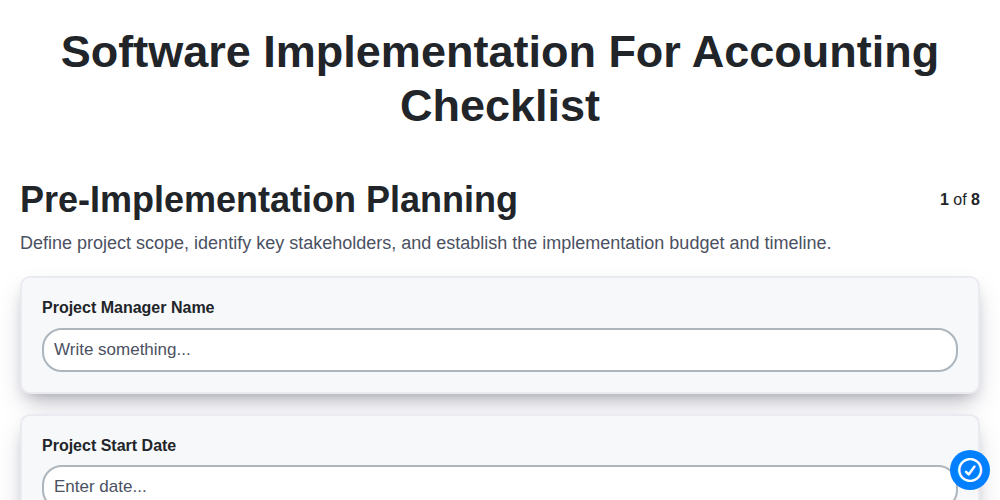
The Ultimate Software Implementation Checklist for Accounting Teams: A Step-by-Step Guide to a Seamless Transition
The Ultimate Inventory Valuation & Audit Checklist: A Step-by-Step Guide to Accuracy and Compliance
We can do it Together
Need help with
Accounting Management?
Have a question? We're here to help. Please submit your inquiry, and we'll respond promptly.