The Ultimate Financial Data Integrity Audit Checklist: A Step-by-Step Template for Precision and Compliance
Published: 07/12/2026 Updated: 10/05/2026
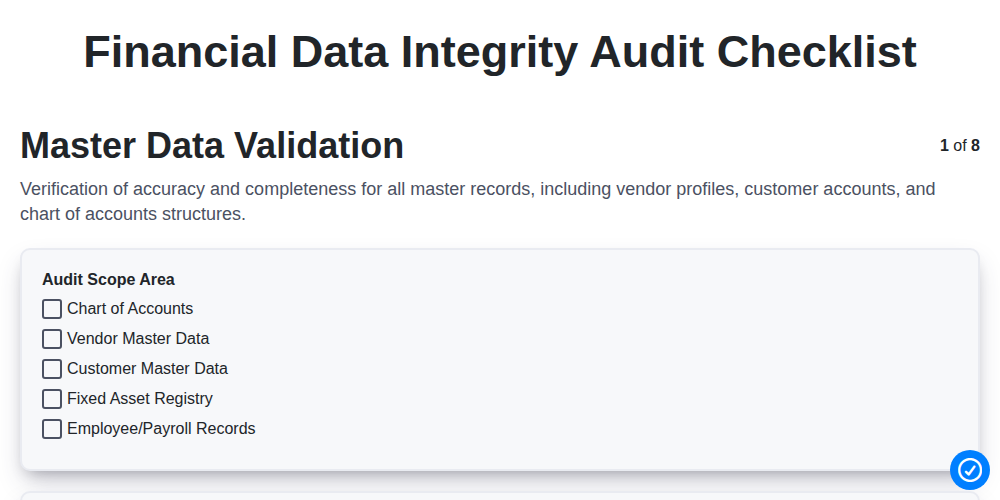
Table of Contents
- Introduction: Why Financial Data Integrity is Non-Negotiable
- 1. Master Data Validation: Ensuring the Foundation is Sound
- 2. General Ledger Reconciliation: Verifying the Single Source of Truth
- 3. Transaction Accuracy & Completeness: Eliminating Errors and Omissions
- 4. Revenue and Accounts Receivable Audit: Securing the Top Line
- 5. Expenditure and Accounts Payable Audit: Controlling Outflows
- 6. Access Control & Security Review: Protecting Sensitive Information
- 7. Compliance & Regulatory Alignment: Meeting Legal and Industry Standards
- 8. Reporting & Documentation Audit: Ensuring Traceability and Transparency
- Conclusion: Implementing a Culture of Continuous Auditing
- Resources & Links
TLDR: Ensure your organization's financial accuracy and regulatory compliance with this comprehensive audit checklist template. This guide provides a structured, step-by-step framework-covering everything from master data validation and ledger reconciliation to access control and regulatory alignment-designed to help auditors and finance professionals identify discrepancies, mitigate risks, and maintain high-standard financial reporting.
Introduction: Why Financial Data Integrity is Non-Negotiable
In the modern business landscape, data is the lifeblood of strategic decision-making. For finance professionals, however, data is more than just information-it is the foundation of trust. Financial data integrity refers to the accuracy, completeness, and consistency of your financial records throughout their entire lifecycle. When this integrity is compromised by manual errors, system glitches, or unauthorized alterations, the consequences can be catastrophic.
The stakes of maintaining high-quality financial data extend far beyond simple bookkeeping. Poor data integrity leads to distorted financial statements, which can trigger a domino effect of organizational failure: inaccurate budgeting, flawed forecasting, skewed performance metrics, and a loss of investor confidence. Furthermore, the legal and regulatory repercussions-ranging from heavy fines to failed audits and even criminal liability-can threaten the very survival of an enterprise.
In an era of increasingly complex global regulations and sophisticated cyber threats, eyeballing the numbers is no longer a sufficient safeguard. Ensuring financial data integrity requires a proactive, systematic approach to monitoring and verifying every layer of your financial ecosystem. This checklist is designed to serve as your roadmap for conducting a comprehensive audit, helping you identify vulnerabilities, close gaps, and fortify the reliability of your financial truth.
1. Master Data Validation: Ensuring the Foundation is Sound
The integrity of your entire financial ecosystem depends on the quality of your underlying data. Think of master data as the bedrock of your financial reporting; if the foundation is cracked, every subsequent calculation, report, and insight will be inherently flawed. Master Data Validation involves a rigorous examination of the core, non-transactional entities used across your organization, such as vendor profiles, customer details, chart of accounts, and employee records.
During this stage of the audit, you must verify that all master records are accurate, unique, and standardized. This includes checking for duplicate entries that could lead to double payments, ensuring tax identification numbers and addresses are current, and confirming that cost centers are correctly mapped. Inconsistency here-such as a vendor listed under two different names or an incorrectly categorized department-can trigger a domino effect of errors in your general ledger and financial statements. By validating your master data, you eliminate the garbage in, garbage out risk, ensuring that all downstream financial processes are built on a single, reliable version of the truth.
2. General Ledger Reconciliation: Verifying the Single Source of Truth
The General Ledger (GL) serves as the central repository for every financial transaction within your organization. Because it acts as the single source of truth, any discrepancy here ripples through your entire financial ecosystem, leading to flawed balance sheets and inaccurate profit-and-loss statements. A robust reconciliation process is not just about balancing numbers; it is about verifying the integrity of the data flowing into your core accounting system.
To ensure your GL remains reliable, your audit should focus on the following key verification steps:
- Trial Balance Verification: Ensure that total debits equal total credits across all accounts. Even a minor imbalance can indicate unrecorded transactions or improper manual entries.
- Sub-ledger to GL Integration: Confirm that the balances in your subsidiary ledgers-such as Accounts Payable, Accounts Receivable, and Fixed Assets-perfectly match the corresponding totals in the General Ledger. Discrepancies here often point to synchronization errors or manual overrides.
- Bank Reconciliation Review: Cross-reference your GL cash accounts with external bank statements. Every outstanding check, deposit in transit, and bank fee must be accounted for to prevent ghost balances.
- Journal Entry Investigation: Audit manual journal entries for legitimacy. Scrutinize high-value or unusual entries, ensuring they are supported by proper documentation and that the descriptions accurately reflect the nature of the transaction.
- Intercompany Account Settlement: For organizations with multiple entities, verify that intercompany balances net to zero. Unreconciled intercompany transactions are a primary driver of inflated assets and liabilities.
By systematically reconciling these elements, you mitigate the risk of systemic errors and ensure that the foundation of your financial reporting is fundamentally sound.
3. Transaction Accuracy & Completeness: Eliminating Errors and Omissions
The integrity of your financial statements relies entirely on the granular accuracy of every single entry flowing through your system. Even a single misplaced decimal point or a missing journal entry can cascade into significant discrepancies during month-end closing or year-end audits. To ensure your transaction data is bulletproof, your audit must focus on two critical dimensions: accuracy and completeness.
Accuracy is about ensuring that the data recorded reflects the economic reality of the event. This involves verifying that amounts are recorded in the correct currency, that debits and credits are balanced, and that dates, descriptions, and tax calculations are precise. A common pitfall is transposition errors-where numbers are accidentally swapped (e.g., recording $450 as $540)-which can be difficult to spot without a systematic validation process.
Completeness, on the other hand, is about ensuring nothing has fallen through the cracks. An audit must verify that every transaction that occurred in the period has been captured in the ledger. This requires checking for unrecorded liabilities or missing revenue by reconciling sub-ledgers to the general ledger and performing sequential testing on invoice numbers to identify gaps in the series.
To execute this step effectively, implement the following controls:
- Automated Matching: Use automated tools to reconcile source documents (like purchase orders or shipping notices) against invoices and ledger entries.
- Error Detection Thresholds: Establish materiality thresholds to quickly identify and investigate outliers or unusual fluctuations.
- Sequential Integrity Checks: Regularly scan for gaps in transaction numbering to ensure no data loss has occurred during manual entry or system transfers.
- Cut-off Testing: Verify that transactions are recorded in the correct accounting period by reviewing entries made immediately before and after the period close.
4. Revenue and Accounts Receivable Audit: Securing the Top Line
The revenue cycle is the lifeblood of any organization, making it a primary target for errors and even fraudulent activity. An audit of your revenue and Accounts Receivable (AR) is not just about verifying that the numbers are correct, but ensuring that every dollar earned is accurately captured, invoiced, and collected.
To maintain high data integrity in this area, your audit should focus on the following key checkpoints:
- Revenue Recognition Verification: Ensure that revenue is being recognized in accordance with established accounting standards (such as ASC 606 or IFRS 15). Verify that revenue is recorded in the period in which the performance obligation was actually met, not simply when the cash was received.
- Invoice-to-Order Matching: Perform a three-way match check by comparing sales orders, shipping documents (or service delivery logs), and final invoices. Discrepancies here often point to leakage or unbilled services.
- Accounts Receivable Aging Analysis: Review the AR aging report for anomalies. Look for unusually old outstanding balances that may indicate uncollectible debts or errors in the application of customer payments.
- Credit Memo and Discount Review: Scrutinize all credit memos, write-offs, and manual discounts. These areas are high-risk zones for unauthorized adjustments that can artificially deflate revenue or hide misappropriated funds.
- Unapplied Cash Audit: Inspect unapplied or suspense credits. A high volume of unapplied payments can mask errors in the sub-ledger and lead to inaccurate customer statements and overstated receivables.
- Customer Master Data Integrity: Confirm that the pricing and terms applied to invoices match the approved master service agreements (MSAs) to prevent unauthorized discounting or incorrect billing.
5. Expenditure and Accounts Payable Audit: Controlling Outflows
An unchecked outflow of capital is one of the fastest ways to erode company profitability and create significant fraud vulnerabilities. The goal of an Accounts Payable (AP) audit is to ensure that every dollar leaving your organization is legitimate, documented, and accurately recorded. A breakdown in this area doesn't just impact cash flow; it can lead to duplicate payments, overpayments, and even embezzlement.
When conducting this phase of your audit, focus on these critical checkpoints:
- The Three-Way Match Verification: Perform sample testing to ensure that purchase orders, receiving reports (or packing slips), and vendor invoices all align perfectly in terms of quantity, price, and terms.
- Vendor Master File Scrubbing: Regularly audit your vendor list to identify inactive vendors, duplicate entries, or suspicious addresses that match employee records-a common red flag for internal fraud.
- Duplicate Payment Detection: Use data analytics to scan for identical invoice numbers, amounts, or dates paid to the same vendor within a short timeframe.
- Authorization Trail Audit: Verify that every payment or expense reimbursement was approved by the appropriate personnel according to your company's Delegation of Authority (DoA) policy.
- Expense Report Integrity: Review employee reimbursements for compliance with company policy, checking for missing receipts, inflated mileage claims, or non-reimbursable items.
- Unrecorded Liabilities Check: Inspect payments made shortly after the period end to ensure that expenses belonging to the audited period were not pushed into the next period to artificially inflate current margins.
6. Access Control & Security Review: Protecting Sensitive Information
Data integrity isn't just about the numbers themselves; it's about the security of the environment in which those numbers live. Even the most accurate financial records are vulnerable if unauthorized users can alter them or if sensitive data is exposed to a breach. A robust access control review ensures that your financial data remains read-only for those who only need to view it and write-enabled only for those with proven necessity.
During this phase of the audit, you should focus on the principle of least privilege. Evaluate user permissions to ensure that no single individual has excessive control-for example, the person who authorizes a payment should not also be the person who can create a new vendor in the system. This separation of duties is a critical defense against internal fraud.
Key items to verify during your security review include:
- User Access Reviews: Periodically audit all users with access to the financial system and remove permissions for terminated employees or those who have changed roles.
- Password and Authentication Policies: Ensure that strong, multi-factor authentication (MFA) is mandatory for all users accessing sensitive financial modules.
- Audit Logs and Trail Integrity: Verify that the system is capturing who, what, and when for every manual adjustment or deleted transaction, and ensure these logs cannot be tampered with by administrators.
- Segregation of Duties (SoD): Identify and mitigate toxic combinations of permissions that could allow a user to bypass internal controls.
- Data Encryption and Storage: Confirm that sensitive financial data is encrypted both at rest and in transit to prevent interception during transmission.
7. Compliance & Regulatory Alignment: Meeting Legal and Industry Standards
Ensuring your financial data is accurate is only half the battle; the other half is ensuring that your data management practices adhere to the legal and industry-specific frameworks governing your business. A financial data integrity audit must evaluate whether your processes align with mandates such as SOX (Sarbanes-Oxley Act), GDPR, IFRS, or GAAP, depending on your jurisdiction and industry.
During this stage of the audit, focus on verifying that your data retention policies, disclosure requirements, and internal controls are up to date with current regulations. Failing to align with these standards doesn't just lead to inaccurate reporting-it exposes your organization to heavy fines, legal liabilities, and severe reputational damage. Use this step to bridge the gap between your internal data workflows and the external regulatory landscape to ensure seamless, compliant operations.
8. Reporting & Documentation Audit: Ensuring Traceability and Transparency
The final pillar of a robust financial data integrity audit is the verification of your reporting and documentation processes. Even if your underlying data is accurate, the integrity of your financial standing is compromised if you cannot prove how that data was derived or if your audit trail is broken. This step focuses on the paper trail that connects your raw transactions to your final financial statements.
To ensure complete traceability and transparency, your audit should focus on the following key areas:
- Audit Trail Verification: Ensure that every significant entry in your financial records can be traced back to its source document (e.g., invoices, receipts, or bank statements). A seamless audit trail is the best defense against fraud and errors.
- Consistency Check: Verify that the data presented in management reports, tax filings, and quarterly statements aligns perfectly with the General Ledger. Discrepancies between different reporting layers are red flags for manual intervention or systemic errors.
- Documentation Standardization: Review whether financial records are being stored in a standardized, retrievable format. Documentation should be organized, complete, and easily accessible for both internal reviews and external regulatory audits.
- Version Control and Integrity: Confirm that there are controls in place to prevent unauthorized alterations to historical reports. Once a period is closed, the documentation associated with it should be locked to prevent retroactive tampering.
- Completeness of Supporting Evidence: Ensure that all necessary approvals, signatures, and authorizations are physically or digitally attached to relevant transactions. Missing authorization signatures are a primary indicator of a breakdown in internal controls.
By auditing your reporting and documentation, you are not just checking numbers; you are verifying the integrity of the entire storytelling process of your business's financial health.
Conclusion: Implementing a Culture of Continuous Auditing
An audit should never be viewed as a one-time annual event or a frantic scramble to prepare for year-end closing. To truly safeguard your organization's financial health, the checklist provided above must be integrated into your standard operating procedures as a cycle of continuous monitoring.
Moving from a reactive detective approach to a proactive preventative culture means identifying discrepancies in real-time rather than months after they occur. By embedding these validation steps into your monthly or quarterly workflows, you reduce the burden on your finance team during high-pressure periods, minimize the risk of costly human error, and build an unbreakable foundation of trust with stakeholders and regulators. Ultimately, a commitment to continuous auditing transforms financial integrity from a periodic chore into a strategic competitive advantage.
Resources & Links
- AICPA (American Institute of Certified Public Accountants): The primary professional organization for CPAs, offering industry-standard guidelines on auditing, financial reporting, and internal control frameworks.
- COSO (Committee of Sponsoring Organizations of the Treadway Commission): Essential resource for understanding the COSO Internal Control Framework, which is critical for the Access Control and Compliance sections of the audit.
- IFRS Foundation: The global standard-setter for international accounting standards, vital for ensuring your Revenue and Expenditure audits align with global reporting requirements.
- Sarbanes-Oxley (SOX) Compliance Resources: In-depth documentation regarding regulatory requirements for financial accuracy and data security in public companies.
- ISACA: A key resource for the 'Access Control & Security Review' section, focusing on IT governance, risk management, and information security auditing.
- AuditBoard: Insights into modern audit automation and how to use technology to streamline General Ledger reconciliation and transaction monitoring.
Frequently Asked Questions
What is the primary goal of a financial data integrity audit?
The primary goal is to ensure that all financial information is accurate, complete, reliable, and consistent, thereby maintaining compliance with regulatory standards and preventing errors or fraud.
Who should be involved in the financial data integrity audit process?
An audit should involve key stakeholders including internal auditors, finance managers, IT specialists (to verify data pipelines), and compliance officers.
What are the key components of a financial data integrity checklist?
A comprehensive checklist should include steps for data source verification, validation of data entry processes, reconciliation of internal records with external statements, checking for duplicates, and verifying audit trails.
How often should a financial data integrity audit be performed?
The frequency depends on the organization's risk profile, but it is recommended to perform periodic reviews (monthly or quarterly) and conduct deep-dive audits annually or whenever significant changes are made to financial systems.
What is the difference between data accuracy and data integrity in finance?
Data accuracy refers to whether the numbers are correct, while data integrity refers to the overall consistency, reliability, and protection of the data throughout its entire lifecycle, including its protection from unauthorized alteration.
How can technology help in maintaining financial data integrity?
Technology aids integrity through automated reconciliation tools,-encryption, robust access controls, automated error detection algorithms, and the maintenance of unalterable digital audit logs.
Comments
There are no comments yet. Be the first to add one!
Accounting Management Solution Demo
Move beyond rigid, one-size-fits-all software. Leverage a fully programmable accounting environment designed to adapt to your unique workflows, complex hierarchies, and evolving business logic.
Related Articles
Mastering Global Consolidation: The Ultimate Intercompany Reconciliation Checklist Template
The Ultimate Financial Statement Review Checklist: A Step-by-Step Guide to Ensuring Accuracy and Compliance
Mastering Financial Control: The Ultimate Departmental Budget Monitoring Checklist
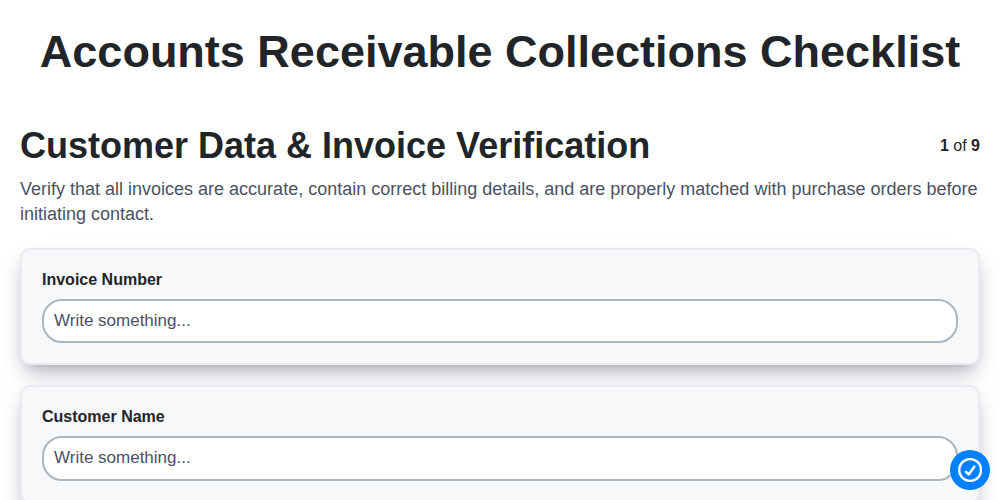
The Ultimate Accounts Receivable Collections Checklist: A Step-by-Step Guide to Streamlining Your Cash Flow
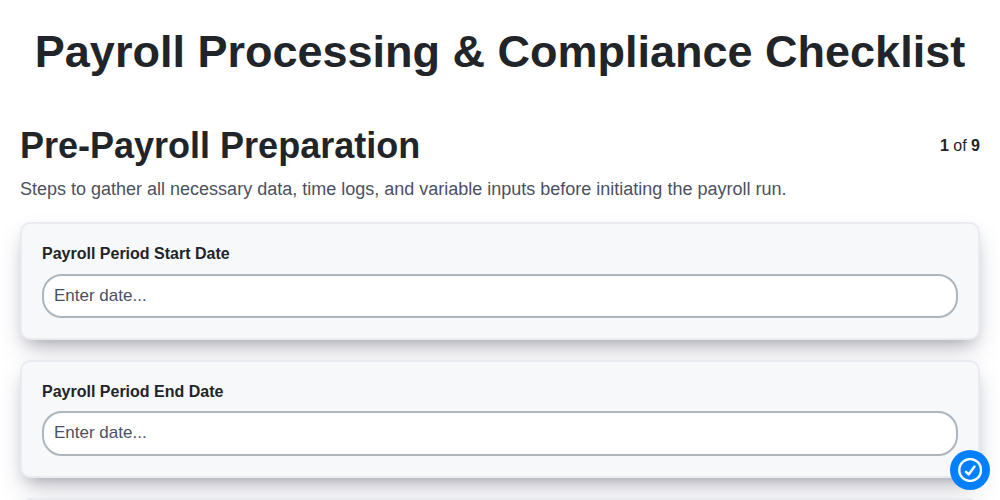
The Ultimate Payroll Processing & Compliance Checklist: A Step-by-Step Guide to Error-Free Payroll
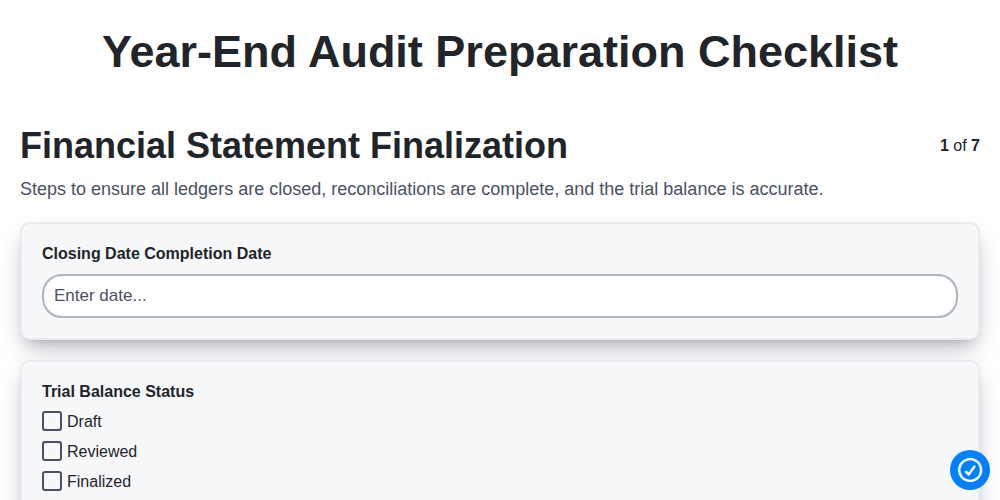
The Ultimate Year-End Audit Preparation Checklist: A Step-by-Step Guide to a Stress-Free Audit
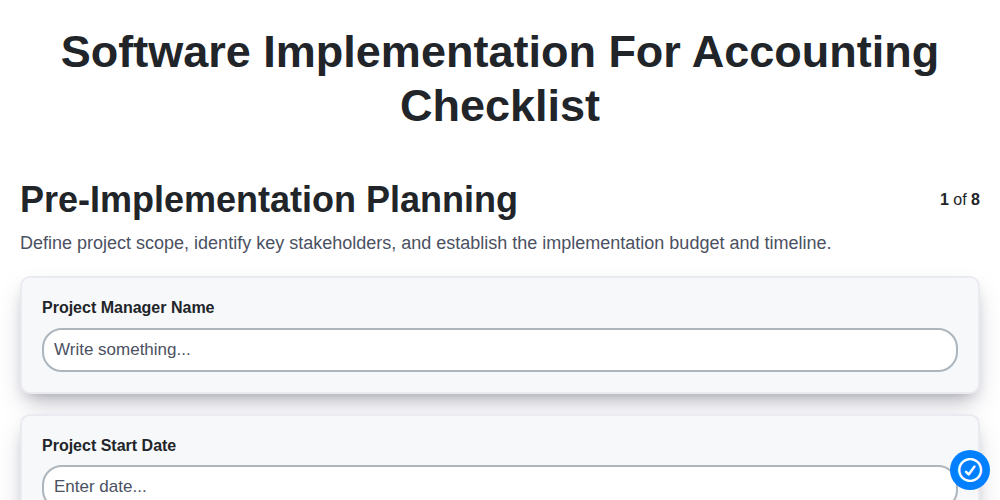
The Ultimate Software Implementation Checklist for Accounting Teams: A Step-by-Step Guide to a Seamless Transition
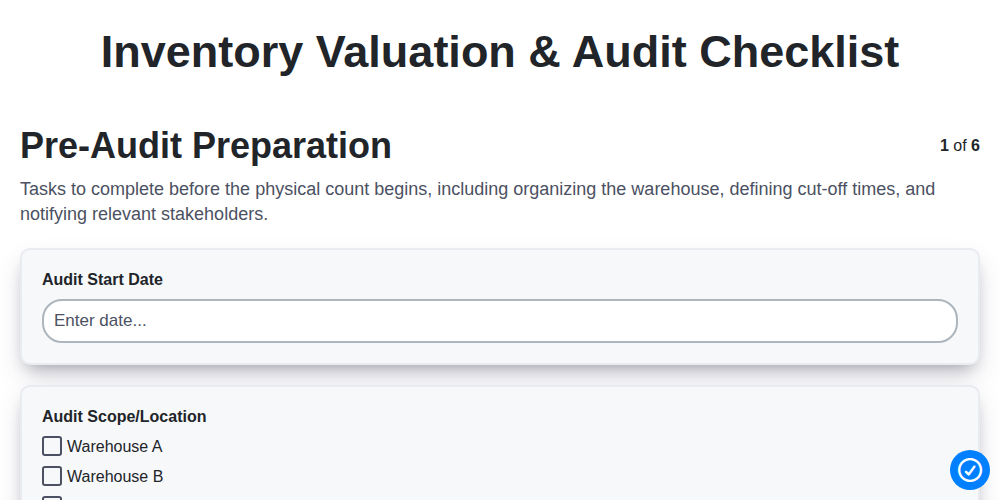
The Ultimate Inventory Valuation & Audit Checklist: A Step-by-Step Guide to Accuracy and Compliance
We can do it Together
Need help with
Accounting Management?
Have a question? We're here to help. Please submit your inquiry, and we'll respond promptly.