Mastering Financial Control: The Ultimate Departmental Budget Monitoring Checklist
Published: 07/12/2026 Updated: 10/05/2026
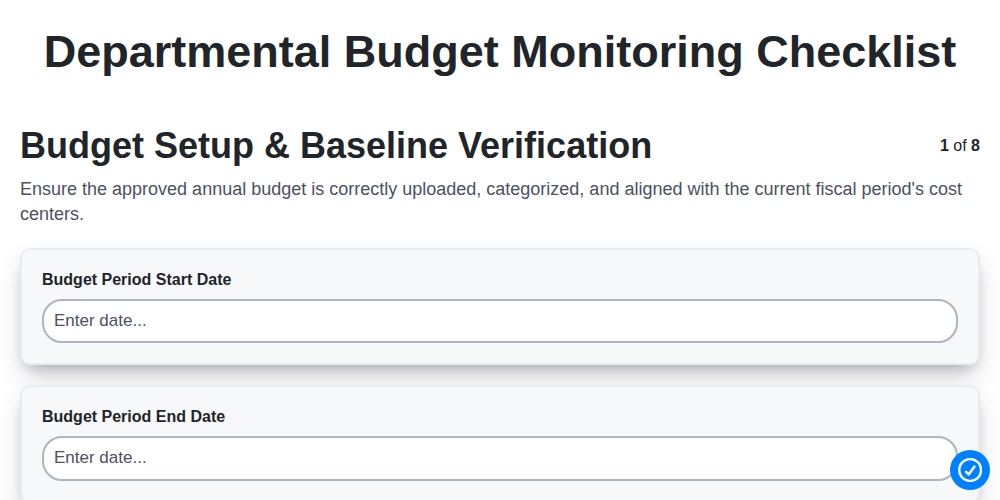
Table of Contents
- Introduction: Why Proactive Budget Monitoring Matters
- Step 1: Budget Setup & Baseline Verification
- Step 2: Establishing Precise Expense Tracking & Categorization
- Step 3: Conducting Monthly Variance Analysis
- Step 4: Investigating the Root Cause: Variance Explanation & Documentation
- Step 5: Managing Commitments & Accrual Review
- Step 6: Strategic Forecasting & Re-forecasting Review
- Step 7: Navigating Budget Reallocation & Transfer Approvals
- Step 8: Streamlining Reporting & Stakeholder Communication
- Conclusion: Turning Monitoring into Strategic Advantage
- Resources & Links
TLDR: Take control of your department's finances with this comprehensive budget monitoring checklist. Learn how to implement a structured process-from baseline verification and monthly variance analysis to forecasting and stakeholder reporting-to eliminate overspending, ensure accurate expense tracking, and maintain total financial accountability throughout the fiscal year.
Introduction: Why Proactive Budget Monitoring Matters
Budgeting is not a set it and forget it task. Many organizations fall into the trap of treating their annual budget as a static document, only to find themselves facing significant deficits or unexpected shortfalls by the third quarter. Without a structured approach to oversight, a budget quickly becomes a rearview mirror-telling you where you have already failed rather than acting as a roadmap for future success.
Proactive budget monitoring is the difference between reactive crisis management and strategic financial leadership. By implementing a rigorous, systematic checklist, department heads can move beyond simply tracking spending to actively managing resources. Continuous monitoring allows you to identify patterns of overspending early, detect leakage in operational costs, and-most importantly, provide the visibility needed to make data-driven decisions. When you monitor your budget proactively, you transform financial management from a clerical burden into a strategic advantage that ensures every dollar is aligned with your department's core objectives.
Step 1: Budget Setup & Baseline Verification
Before you can track deviations, you must first ensure that your foundation is rock-solid. The initial phase of budget monitoring isn't about looking at what has been spent, but rather verifying that the source of truth-your approved budget-is accurate and properly configured within your financial systems.
This step involves a meticulous audit of your departmental budget baseline. You must confirm that the allocated figures align perfectly with the approved annual or quarterly targets set by the finance department. Check for any manual entry errors, ensure that cost centers are correctly assigned, and verify that all line items are mapped to the correct GL (General Ledger) codes.
A common pitfall in budget management is attempting to track performance against an outdated or unadjusted version of a budget. By performing a rigorous baseline verification, you ensure that every variance you identify later in the month is measured against the correct, authorized amount, preventing ghost variances that stem from administrative errors rather than actual overspending.
Step 2: Establishing Precise Expense Tracking & Categorization
To maintain control over your budget, you cannot simply track total spend; you must understand the why and where behind every dollar. Effective Expense Tracking & Categorization involves moving beyond high-level totals to a granular, systematic approach.
The goal of this step is to ensure that every transaction is mapped to a specific line item within your approved budget. Without clear categorization, your variance analysis becomes an exercise in guesswork. To implement this effectively, follow these three principles:
- Standardize Your Chart of Accounts: Ensure your department uses consistent categories that align with the organization's broader financial structure. This prevents hidden spending where costs are buried in vague categories like Miscellaneous.
- Implement Real-Time Recording: Delay is the enemy of budget management. The closer your tracking is to the moment of transaction, the less likely you are to encounter budget shock at the end of the month. Use automated tools or shared ledgers to capture expenses as they occur.
- Differentiate Between Fixed and Variable Costs: Categorize expenses by their nature. Tracking fixed costs (like software subscriptions or rent) separately from variable costs (like travel or freelance services) allows you to see exactly which parts of your budget are controllable and which are set in stone.
By maintaining a disciplined categorization system, you turn raw data into actionable intelligence, making it significantly easier to identify trends and pinpoint exactly where budget leaks may be occurring.
Step 3: Conducting Monthly Variance Analysis
Monthly variance analysis is the heartbeat of effective budget management. It is the process of comparing your actual expenditures against your budgeted figures to identify discrepancies between what you planned to spend and what was actually spent.
The goal of this step is not merely to spot differences, but to understand the why behind them. A significant variance-whether it is a surplus or a deficit-serves as an early warning signal. For instance, a sudden spike in utility costs or an unexpected dip in project spending could indicate operational inefficiencies or delayed vendor payments. By performing this analysis on a consistent monthly cycle, you prevent small budgetary leaks from evolving into major end-of-year financial crises, allowing you to maintain tight control over your department's fiscal health.
Step 4: Investigating the Root Cause: Variance Explanation & Documentation
Identifying a budget discrepancy is only half the battle; the real value lies in understanding why it happened. Once your monthly variance analysis highlights a gap between actual spend and your budget, you must transition from detection to investigation. This step is about digging beneath the surface numbers to find the underlying drivers-whether it is a one-time emergency repair, a sudden spike in vendor pricing, or an unexpected increase in project scope.
To maintain a high standard of financial integrity, your documentation should be detailed and objective. Avoid vague statements like costs were higher than expected. Instead, aim for specificity: A 15% increase in utility costs due to an unseasonable heatwave or Delayed shipping timelines resulted in unplanned expedited freight fees.
Effective documentation serves three critical purposes:
- Audit Readiness: It provides a clear paper trail for internal auditors and external stakeholders.
- Decision Support: It gives leadership the context needed to make informed decisions about future spending.
- Pattern Recognition: It helps you distinguish between noise (temporary, one-off fluctuations) and trends (systemic issues that require a change in strategy).
By consistently documenting the why behind every significant variance, you transform your budget monitoring from a mere tracking exercise into a powerful strategic tool for departmental accountability.
Step 5: Managing Commitments & Accrual Review
Budget monitoring isn't just about looking at the money that has already left your bank account; it is about accounting for the money that is about to leave. To maintain an accurate financial picture, you must bridge the gap between cash flow and actual obligations.
The Commitment & Accrual Review involves two critical checks:
- Commitment Tracking: This involves monitoring purchase orders (POs) and signed contracts that have been approved but not yet invoiced. Even if the cash hasn't been paid, these commitments represent a spoken portion of your budget that is no longer available for other uses. Failing to track commitments leads to a false sense of extra budget, often resulting in overspending later in the fiscal year.
- Accrual Accounting: This ensures that expenses are recorded in the period they were incurred, regardless of when the invoice arrives. If a service was provided in March, the cost should be reflected in your March reports, even if the vendor doesn't send the bill until April.
By rigorously reviewing commitments and accruals, you prevent hidden expenses from surfacing as unexpected surprises and ensure your department's budget reflects your true financial position at any given moment.
Step 6: Strategic Forecasting & Re-forecasting Review
Budgeting is not a set it and forget it task. As the fiscal year progresses, internal and external economic conditions shift, making it essential to move beyond your initial projections. This step involves a periodic deep dive into your current spending trends to predict future outcomes accurately.
During the re-forecasting process, you should compare your actual year-to-date performance against your original budget to identify patterns. If you are consistently overspending in one area or seeing a surplus in another, a re-forecast allows you to adjust your expectations for the remaining months. This proactive approach prevents budget shock at the end of the year and provides a more realistic roadmap for your department's operational needs. By regularly updating your forecasts, you ensure that your financial planning remains a living, breathing tool rather than an outdated document.
Step 7: Navigating Budget Reallocation & Transfer Approvals
Even the most meticulously planned budgets encounter unforeseen shifts in priorities or unexpected operational needs. Budget reallocation and transfer approvals are the mechanisms that allow a department to remain agile rather than being paralyzed by a rigid, outdated plan. This step is not about simply moving numbers around; it is about maintaining financial discipline while ensuring resources are directed toward the highest-impact activities.
When a surplus in one line item needs to be moved to cover a deficit in another, it must follow a standardized governance process. This prevents budget leakage and ensures that every transfer is scrutinized for its impact on the overall departmental goals. A robust reallocation process typically involves:
- Impact Assessment: Before requesting a transfer, evaluate how moving funds will affect the original objectives of the source category.
- Formal Request Submission: Use a standardized template to document the amount, the source, the destination, and the strategic justification.
- Authorization Thresholds: Establish clear limits on who can approve transfers. While small, intra-category shifts might only require a manager's sign-off, significant shifts between different cost centers should escalate to the Finance Director or CFO.
- Audit Trail Maintenance: Every approved reallocation must be updated in the financial system immediately to ensure the source of truth remains accurate for future reporting.
By treating reallocations as a formal process rather than an informal adjustment, you maintain budgetary integrity and ensure that every dollar is always working toward your department's strategic mission.
Step 8: Streamlining Reporting & Stakeholder Communication
The final, and perhaps most critical, step in the budget monitoring lifecycle is ensuring that your findings don't live in a vacuum. Data-driven insights are only valuable if they reach the right people at the right time to drive informed decision-making. Effective communication transforms a simple spreadsheet into a strategic tool for organizational alignment.
To streamline this process, focus on three core pillars:
- Tailored Reporting: Not every stakeholder needs to see every line item. Executives require high-level summaries focusing on bottom-line impacts and significant variances, while department heads need granular detail to manage day-to-day operations. Structure your reports to provide at-a-glance summaries for leadership and deep-dive technicals for operational managers.
- Standardized Cadence: Establish a predictable rhythm for reporting. Whether it is a monthly budget performance deck or a quarterly fiscal review, consistency builds trust. When stakeholders know exactly when to expect updates, it allows them to plan their departmental activities around the financial reality.
- Proactive Transparency: Don't wait for a budget overrun to initiate a conversation. Use your reporting as a platform for proactive transparency. By communicating potential risks or upcoming funding gaps early, you move the conversation from explaining a mistake to collaborating on a solution.
By mastering the flow of information, you ensure that the entire organization remains synchronized with the company's financial goals, turning budget monitoring from a reactive chore into a proactive leadership strength.
Conclusion: Turning Monitoring into Strategic Advantage
Implementing a departmental budget monitoring checklist is about much more than just tracking numbers or preventing overspending; it is about transforming financial oversight into a strategic driver for your organization. When you move from reactive firefighting to proactive management, you shift the role of a department head from a mere spender to a strategic decision-maker.
By consistently applying these steps-from baseline verification to stakeholder communication-you create a culture of accountability and financial intelligence. This disciplined approach ensures that every dollar is aligned with your broader business objectives, allowing you to identify opportunities for reinvestment before they pass and mitigate risks before they become crises. Ultimately, a robust monitoring process provides the clarity needed to navigate uncertainty, ensuring that your department remains agile, resilient, and prepared to support the company's long-term growth.
Resources & Links
- Investopedia: Financial Management Fundamentals: A comprehensive guide to understanding core accounting principles, variance analysis, and budgeting terminology used in the checklist.
- Harvard Business Review: Strategic Budgeting Insights: Expert articles on how to move beyond simple tracking to using budget monitoring as a strategic tool for departmental leadership.
- Accounting Today: Best Practices for Expense Tracking: Industry news and professional resources for maintaining accuracy in expense categorization and accrual accounting.
- Gartner: Financial Planning & Analysis (FP&A) Trends: Research and insights into modern forecasting techniques and technology-driven approaches to budget re-forecasting.
- Forbes: Leadership and Stakeholder Communication: Strategies for effective communication and presenting financial reports to executive stakeholders and department heads.
Frequently Asked Questions
What is the primary purpose of a departmental budget monitoring checklist?
The primary purpose is to provide a structured framework for managers to track actual expenditures against planned budgets, identify variances early, and implement corrective actions to maintain financial discipline.
How often should budget monitoring be performed?
While frequency can vary by industry, it is recommended to perform detailed monitoring on a monthly basis, with more frequent reviews (weekly) during periods of high volatility or significant project implementation.
What are 'budget variances' and why are they important?
Budget variances are the differences between your actual spending and your budgeted amounts. Monitoring these is crucial because significant deviations (whether over or under) can indicate operational inefficiencies, unexpected costs, or errors in the original forecasting.
Who is responsible for executing this budget monitoring checklist?
The responsibility primarily lies with department heads and budget owners, often in close collaboration with the finance department or accounting team to ensure data accuracy.
What steps should be taken when a significant budget overrun is identified?
When an overrun is detected, managers should conduct a root-cause analysis to determine if the cause is one-time or recurring, evaluate potential cost-cutting measures in other areas, and communicate the variance to senior management alongside a mitigation plan.
Comments
There are no comments yet. Be the first to add one!
Accounting Management Solution Demo
Move beyond rigid, one-size-fits-all software. Leverage a fully programmable accounting environment designed to adapt to your unique workflows, complex hierarchies, and evolving business logic.
Related Articles
Mastering Global Consolidation: The Ultimate Intercompany Reconciliation Checklist Template
The Ultimate Payroll Processing & Compliance Checklist: A Step-by-Step Guide to Error-Free Payroll
The Ultimate Software Implementation Checklist for Accounting Teams: A Step-by-Step Guide to a Seamless Transition
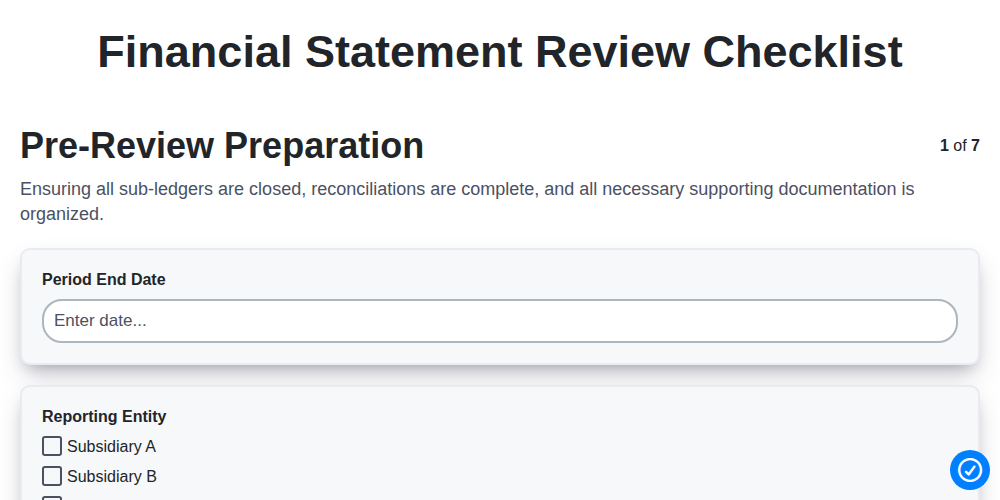
The Ultimate Financial Statement Review Checklist: A Step-by-Step Guide to Ensuring Accuracy and Compliance
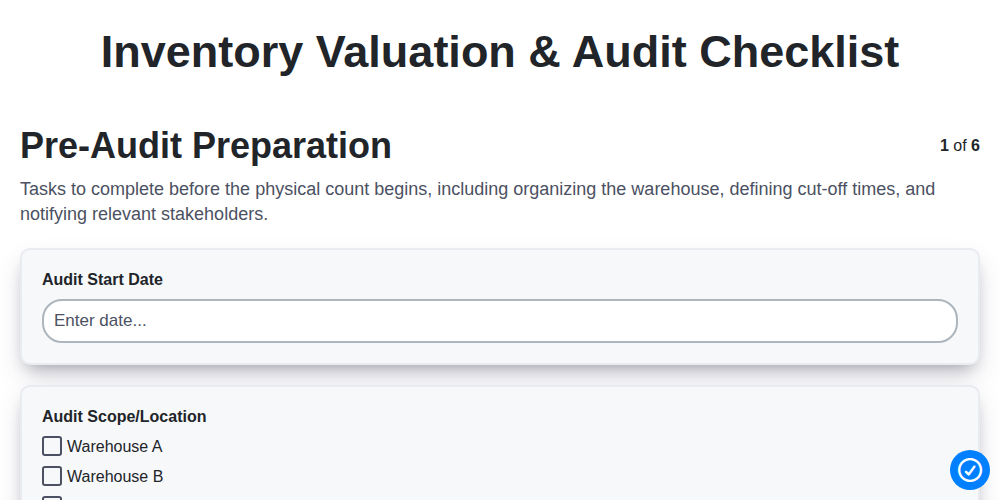
The Ultimate Inventory Valuation & Audit Checklist: A Step-by-Step Guide to Accuracy and Compliance
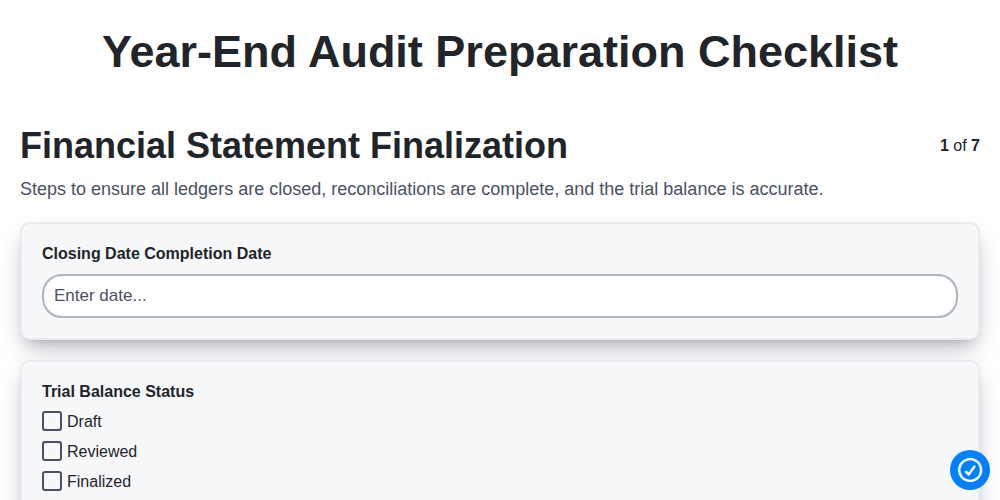
The Ultimate Year-End Audit Preparation Checklist: A Step-by-Step Guide to a Stress-Free Audit
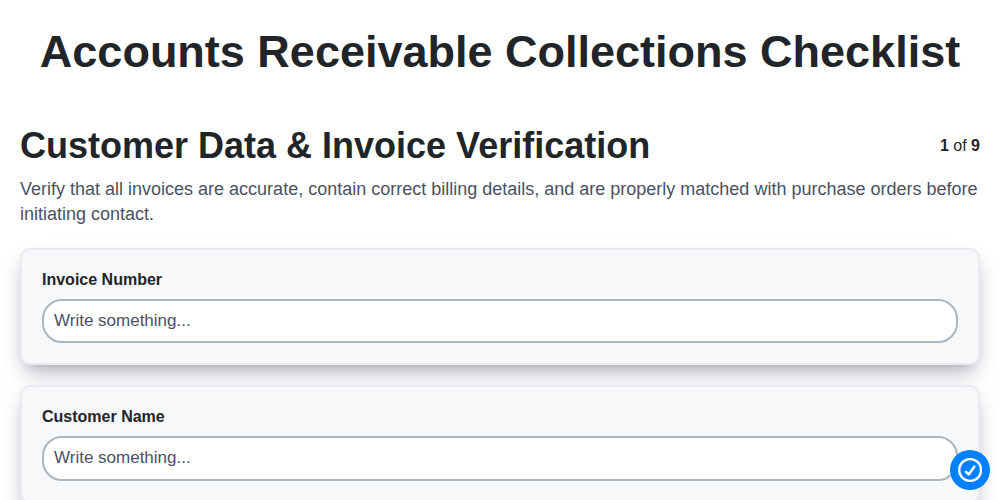
The Ultimate Accounts Receivable Collections Checklist: A Step-by-Step Guide to Streamlining Your Cash Flow
The Ultimate Financial Data Integrity Audit Checklist: A Step-by-Step Template for Precision and Compliance
We can do it Together
Need help with
Accounting Management?
Have a question? We're here to help. Please submit your inquiry, and we'll respond promptly.