The Ultimate Financial Statement Review Checklist: A Step-by-Step Guide to Ensuring Accuracy and Compliance
Published: 07/12/2026 Updated: 07/13/2026
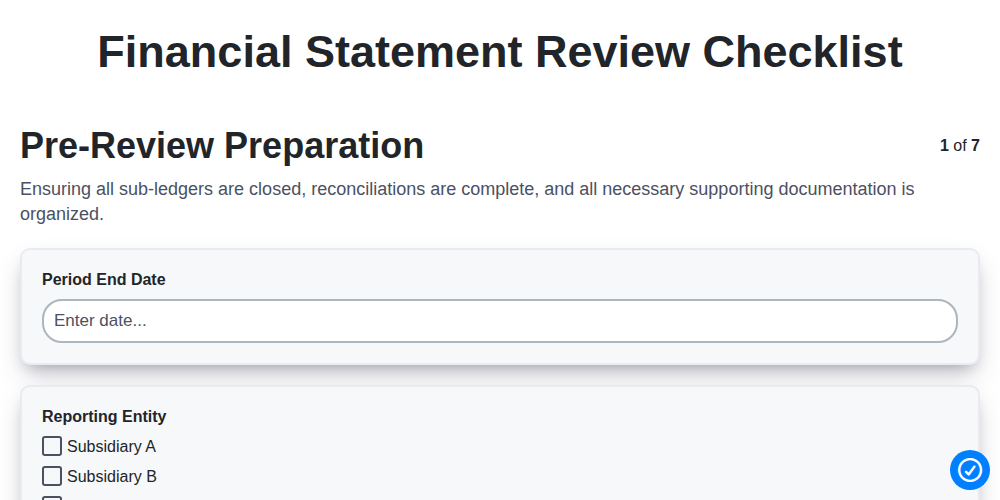
Table of Contents
- Introduction: Why a Systematic Review is Critical
- Phase 1: Pre-Review Preparation - Setting the Foundation
- Phase 2: Balance Sheet Verification - Ensuring Asset and Liability Accuracy
- Phase 3: Income Statement Analysis - Evaluating Performance and Profitability
- Phase 4: Cash Flow Statement Validation - Verifying Liquidity and Cash Movements
- Phase 5: Compliance & Regulatory Check - Meeting Standards and Legal Requirements
- Phase 6: Disclosures & Notes Review - Scrutinizing the Fine Print
- Phase 7: Final Review & Sign-off - Completing the Audit Trail
- Conclusion: Best Practices for Continuous Financial Oversight
- Resources & Links
TLDR: Ensure your financial integrity with our comprehensive guide and template. Learn how to navigate a systematic review process-from pre-review preparation and balance sheet verification to final sign-off-to eliminate errors, ensure regulatory compliance, and maintain absolute accuracy in your financial reporting.
Introduction: Why a Systematic Review is Critical
Financial statements are the heartbeat of any organization, serving as the ultimate scorecard for operational efficiency, liquidity, and long-term viability. However, a set of numbers on a page is only as valuable as the integrity of the data behind them. For accountants, auditors, and business owners, the margin for error is razor-thin; a single oversight in a ledger or an overlooked footnote can lead to distorted insights, compliance failures, and even catastrophic decision-making.
Relying on intuition or a cursory glance is no longer sufficient in today's complex regulatory environment. A systematic review process acts as a vital diagnostic tool, transforming a simple data check into a robust defense mechanism against errors, fraud, and misstatements. By implementing a structured checklist, you move beyond mere observation and into a state of active verification. This disciplined approach ensures that every line item is scrutinized, every discrepancy is investigated, and every disclosure is accounted for, providing the stakeholders with the confidence that the financial narrative presented is both accurate and transparent.
Phase 1: Pre-Review Preparation - Setting the Foundation
Before you dive into the numbers, success depends entirely on the quality of your starting point. Pre-review preparation is the most critical stage of the process; skipping this step often leads to wasted hours chasing missing information or discovering discrepancies too late in the cycle.
To ensure a smooth and efficient review, begin by gathering all necessary documentation, including the trial balance, general ledger, and previous year's audited statements for comparative analysis. It is also essential to confirm that the period end has been officially closed and that all reconciling items from the bank statements have been addressed.
During this phase, you should also define your scope and objectives. Are you performing a high-level analytical review, or a deep-dive forensic audit? Setting clear parameters and ensuring all stakeholders have access to the necessary digital or physical folders will prevent bottlenecks later in the process and allow you to focus your analytical energy where it matters most.
Phase 2: Balance Sheet Verification - Ensuring Asset and Liability Accuracy
The Balance Sheet is the snapshot of a company's financial health at a specific point in time. During this phase of the review, the primary goal is to ensure that every item recorded reflects its true economic reality and that the fundamental accounting equation-Assets = Liabilities + Equity-is perfectly balanced and substantiated.
To perform a thorough verification, focus on the following critical areas:
- Asset Valuation and Existence: Don't just check the numbers; verify that the assets listed actually exist. This involves reconciling bank statements to cash balances, physically verifying inventory counts where possible, and reviewing the aging of accounts receivable to ensure that assets aren't actually uncollectible bad debts.
- Liability Completeness: A common risk in financial reporting is the omission of liabilities. Scrutinize accounts payable to ensure all obligations incurred during the period are recorded. Look for unrecorded liabilities by reviewing subsequent disbursements and checking for any overdue utility bills or unpaid taxes.
- Depreciation and Amortization Accuracy: Review the schedules for fixed and intangible assets. Ensure that depreciation and amortization expenses are calculated correctly and that the net book value aligns with the company's established depreciation policies.
- Equity Reconciliation: Verify that all changes in retained earnings, stock issuances, or treasury stock transactions are properly documented and match the movement in the prior period's closing balance.
- Subsequent Events Check: Look for any significant changes in the balance sheet items that occurred between the period end and the date of the review, as these may require adjustments or specific disclosures.
By meticulously verifying these components, you mitigate the risk of overstated assets or understated liabilities, which are the two most common drivers of financial statement distortion.
Phase 3: Income Statement Analysis - Evaluating Performance and Profitability
Once you have verified the accuracy of your balance sheet, the focus shifts from static position to dynamic performance. The Income Statement analysis is where you transition from verifying numbers to interpreting the story of the business over a specific period. This phase is critical for understanding the drivers of profitability and identifying trends that could impact future stability.
During this stage of the checklist, your review should focus on three key areas:
- Revenue Integrity and Growth Trends: Don't just look at the top-line figure. Analyze revenue recognition policies to ensure income is recorded in the correct period. Compare current revenue against previous periods and budgets to identify significant fluctuations, and investigate whether growth is driven by volume, price increases, or one-time anomalies.
- Margin and Cost Structure Analysis: Examine the relationship between revenue and the Cost of Goods Sold (COGS). A sudden drop in gross margin despite rising revenue can signal inefficiencies in production or unexpected supplier price hikes. Similarly, scrutinize operating expenses (OPEX) to ensure they are commensurate with revenue growth and that no period-end adjustments have been used to artificially inflate operating income.
- Expense Variance and Pattern Recognition: Perform a vertical and horizontal analysis of operating expenses. Look for outlier expenses that deviate significantly from historical norms. This is also the time to check for the proper capitalization of costs-ensuring that items that should be on the balance sheet as assets haven't been incorrectly expensed to lower taxable income.
The goal of this phase is to ensure that the profit reported is not just a number, but a reliable reflection of the company's operational efficiency and market position.
Phase 4: Cash Flow Statement Validation - Verifying Liquidity and Cash Movements
While the Balance Sheet shows what you own and the Income Statement shows what you earned, the Cash Flow Statement is the truth teller of your business. It strips away accounting entries like depreciation and accounts receivable to reveal the actual movement of cash. This phase of the review is critical to ensure that reported profits are actually translating into usable liquidity.
During this stage of the checklist, your focus should be on reconciling the net income from the Income Statement to the net change in cash on the Balance Sheet. You must perform a deep dive into the three core pillars of cash flow:
- Operating Activities: Verify that the cash generated from core business operations is sufficient to sustain the company. Look for discrepancies between net income and operating cash flow, which could signal aggressive revenue recognition or uncollected receivables.
- Investing Activities: Examine outflows related to capital expenditures (CapEx). Ensure that significant purchases of fixed assets or investments are properly recorded and aligned with the company's long-term strategic plans.
- Financing Activities: Track the movement of cash related to debt, equity, and dividends. Validate that new loans, repayments, and shareholder distributions are accurately reflected and match the movements seen in the long-term liabilities and equity sections of the Balance Sheet.
The goal of this validation step is to identify paper profits that lack actual cash backing, ensuring the company has the necessary liquidity to meet its immediate and future obligations.
Phase 5: Compliance & Regulatory Check - Meeting Standards and Legal Requirements
Once you have verified the accuracy of the numbers within the financial statements, the focus must shift from mathematical accuracy to legal and structural integrity. The compliance and regulatory check ensures that your financial reporting adheres to the specific frameworks and laws governing your industry and jurisdiction.
A thorough compliance check involves several critical layers:
- Adherence to Accounting Standards: Ensure that all reporting is in strict accordance with the relevant framework, whether it be GAAP (Generally Accepted Accounting Principles) or IFRS (International Financial Reporting Standards). This includes verifying that revenue recognition, depreciation methods, and asset valuations are applied consistently with these standards.
- Tax Regulation Alignment: Cross-reference your financial figures with tax obligations. Ensure that deferred tax liabilities, tax provisions, and any industry-specific tax credits are accurately reflected and compliant with current local and national tax laws.
- Regulatory Filing Obligations: For public companies or those in regulated sectors (such as finance or healthcare), verify that the statements meet the specific disclosure requirements set by governing bodies (e.g., SEC, FCA, or industry-specific regulators).
- Internal Policy Consistency: Confirm that the financial statements align with your organization's internal accounting policies and that any deviations from prior periods are properly documented and justified.
Failure to pass this phase can lead to more than just incorrect books; it can result in significant legal penalties, audit failures, loss of investor confidence, and increased scrutiny from regulatory authorities. This stage is your final defense against non-compliance risks.
Phase 6: Disclosures & Notes Review - Scrutinizing the Fine Print
The financial statements themselves only tell part of the story; the true depth of a company's financial health is often found in the fine print. The Disclosures and Notes Review phase is where you move beyond the raw numbers to understand the context, assumptions, and potential risks that could impact future stability.
During this stage, your objective is to ensure that all necessary qualitative information is present and that it aligns perfectly with the figures presented in the primary statements. Focus your scrutiny on the following key areas:
- Accounting Policies: Verify that the methods used (such as revenue recognition, depreciation, and inventory valuation) are consistent with previous periods and comply with the relevant reporting framework (e.g., GAAP or IFRS). Any changes in policy must be clearly disclosed and justified.
- Contingent Liabilities & Commitments: Scrutinize disclosures regarding pending litigation, warranties, or guarantees. These off-balance-sheet items can pose significant unforeseen risks to liquidity and profitability.
- Subsequent Events: Check for any significant events occurring after the balance sheet date but before the report issuance-such as major acquisitions, loss of a key customer, or natural disasters-that could materially alter the interpretation of the financial results.
- Debt and Lease Obligations: Ensure that the breakdown of much-needed capital, maturity schedules, and interest rates are transparently documented.
- Related Party Transactions: Review disclosures for any transactions between the company and its executives, owners, or affiliated entities to ensure they were conducted at arm's length and are not distorting the company's true performance.
A thorough review of the notes ensures that there are no hidden complexities that could lead to a sudden revaluation of assets or an unexpected spike in liabilities. In short, if the numbers provide the what, the disclosures provide the how and the why.
Phase 7: Final Review & Sign-off - Completing the Audit Trail
The final stage of the financial statement review is the most critical for ensuring accountability and establishing a definitive audit trail. This phase is not merely about a final glance; it is the formal process of verifying that all discrepancies identified in previous steps have been resolved and that the integrity of the financial data is beyond reproach.
To complete this phase effectively, focus on these three essential components:
- Reconciliation of Discrepancies: Before signing off, revisit the issue logs created during the Balance Sheet and Income Statement analysis. Ensure that every error, omission, or unexplained variance identified earlier has a documented resolution or a clear, justified explanation.
- Quality Assurance Check: Perform a sanity check on the final output. Do the numbers flow logically across all three statements? Does the net income from the Income Statement align with the retained earnings changes on the Balance Sheet and the starting point of the Cash Flow Statement? This step ensures mathematical accuracy and internal consistency.
- Formal Authorization: The process concludes with the formal sign-off by the designated financial controller or auditor. This signature serves as a professional attestation that the review was conducted in accordance with established protocols.
By implementing a rigorous sign-off procedure, you transform the review from a mere checklist into a robust internal control, providing stakeholders with the confidence that the financial statements are a true and fair representation of the organization's economic reality.
Conclusion: Best Practices for Continuous Financial Oversight
A financial statement review should never be viewed as a one-time annual event or a mere formality to satisfy auditors. To truly leverage financial data for strategic decision-making, you must transition from a mindset of periodic checking to one of continuous oversight.
To ensure your financial health remains robust throughout the fiscal year, implement these best practices:
- Establish a Regular Cadence: Don't wait for year-end. Perform mini-reviews on a monthly or quarterly basis. This allows you to identify discrepancies, such as leakage or misallocations, while the data is still fresh and actionable.
- Automate Where Possible: Manual data entry is the enemy of accuracy. Utilize integrated accounting software and automated reconciliation tools to reduce human error and allow your team to focus on analysis rather than data collection.
- Maintain a Single Source of Truth: Ensure that your balance sheet, income statement, and cash flow statement are all pulling from the same centralized data repository. Discrepancies between different reports are often the first sign of underlying systemic errors.
- Foster a Culture of Skepticism: Encourage your finance team to look beyond the surface numbers. A healthy review process involves questioning variances, investigating why a trend is occurring, and verifying the underlying documentation behind every significant transaction.
- Document Everything: The checklist is only as good as the audit trail it leaves behind. Maintain clear records of every review, every adjustment made, and every discrepancy resolved. This not only simplifies future audits but also builds institutional knowledge.
By integrating these review steps into your standard operating procedures, you transform your financial statements from static historical documents into dynamic tools for organizational growth and stability.
Resources & Links
- IFRS Foundation: The official global standard-setting body for International Financial Reporting Standards (IFRS), essential for Phase 5 Compliance and Regulatory Checks.
- FASB (Financial Accounting Standards Board): The primary resource for US GAAP standards, crucial for ensuring the accuracy of Balance Sheet and Income Statement analysis in US-based entities.
- AICPA & CIMA: Professional resources and best practices for accountants regarding audit procedures, financial review frameworks, and professional sign-off standards.
- Investopedia: A comprehensive guide for understanding specific financial ratios and terminology used during the Income Statement and Cash Flow validation phases.
- U.S. Securities and Exchange Commission (SEC): Essential for reviewing regulatory requirements, disclosure mandates, and legal compliance for publicly traded companies.
- AccountingTools: Technical resources and deep-dive tutorials on specific accounting entries, reconciliation processes, and balance sheet verification techniques.
Frequently Asked Questions
What is the primary purpose of a financial statement review checklist?
The primary purpose is to provide a structured framework to ensure all financial data is accurate, complete, and compliant with relevant accounting standards like GAAP or IFRS, reducing the risk of errors or fraud.
How often should a financial statement review be conducted?
While monthly reviews are recommended for internal control and error detection, comprehensive reviews should be performed at the end of every fiscal quarter and annually during the year-end closing process.
What are the key components to verify during a balance sheet review?
You should focus on verifying the existence of assets, the completeness of liabilities, and the accuracy of equity accounts by reconciling bank statements, verifying accounts receivable/payable, and checking inventory counts.
What is the difference between reviewing an Income Statement versus a Balance Sheet?
An Income Statement review focuses on verifying revenue recognition and the period-specific allocation of expenses, whereas a Balance Sheet review focuses on the accuracy of account balances and the valuation of assets and liabilities at a specific point in time.
How can I ensure compliance during the review process?
Compliance can be ensured by cross-referencing financial entries against regulatory requirements, checking for proper disclosure of notes to the financial statements, and ensuring all tax obligations and contractual covenants are met.
What should I do if I find a significant discrepancy during the review?
If a discrepancy is found, you should trace the transaction back to its original source document (such as an invoice or receipt), identify the root cause of the error, and perform a formal adjustment entry to correct the books.
Comments
There are no comments yet. Be the first to add one!
Accounting Management Solution Demo
Move beyond rigid, one-size-fits-all software. Leverage a fully programmable accounting environment designed to adapt to your unique workflows, complex hierarchies, and evolving business logic.
Related Articles
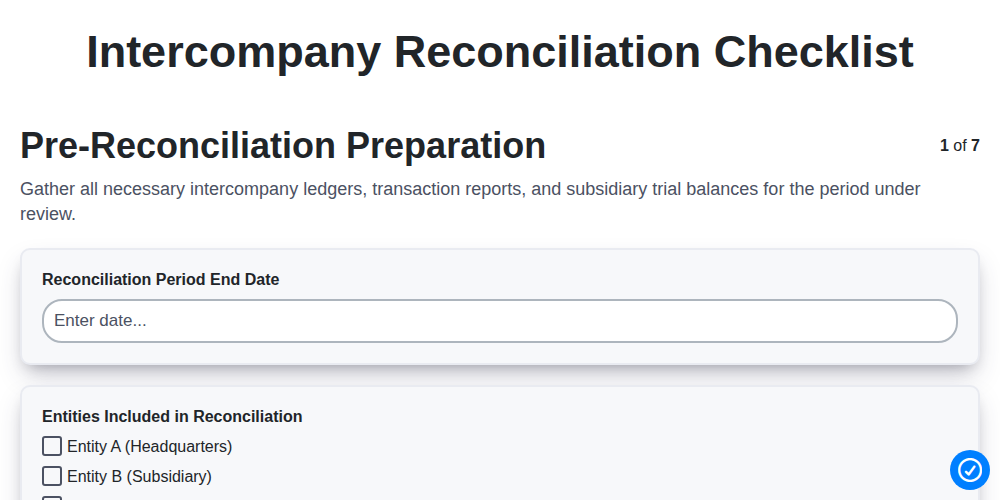
Mastering Global Consolidation: The Ultimate Intercompany Reconciliation Checklist Template
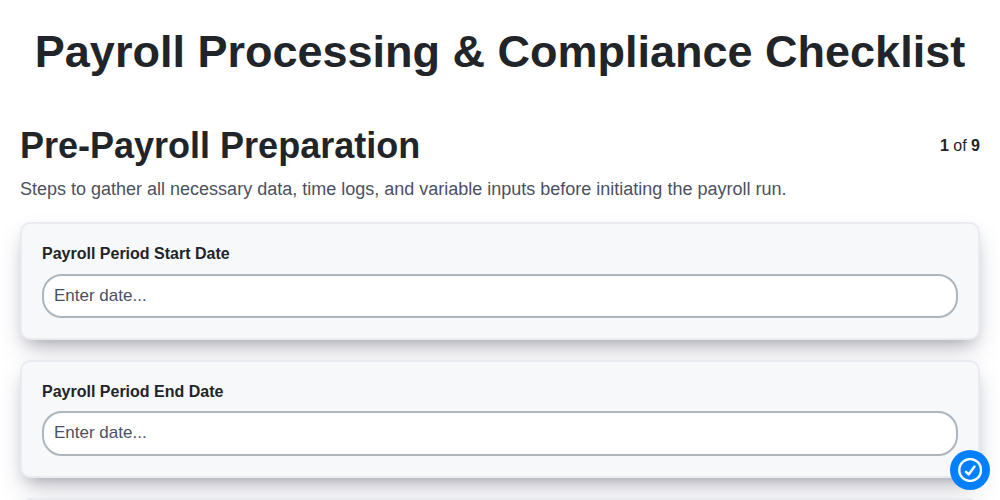
The Ultimate Payroll Processing & Compliance Checklist: A Step-by-Step Guide to Error-Free Payroll
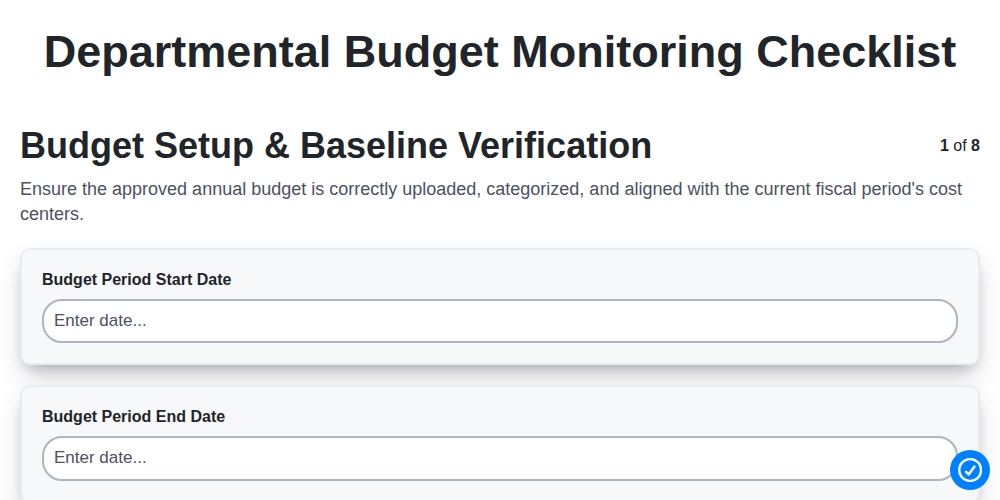
Mastering Financial Control: The Ultimate Departmental Budget Monitoring Checklist
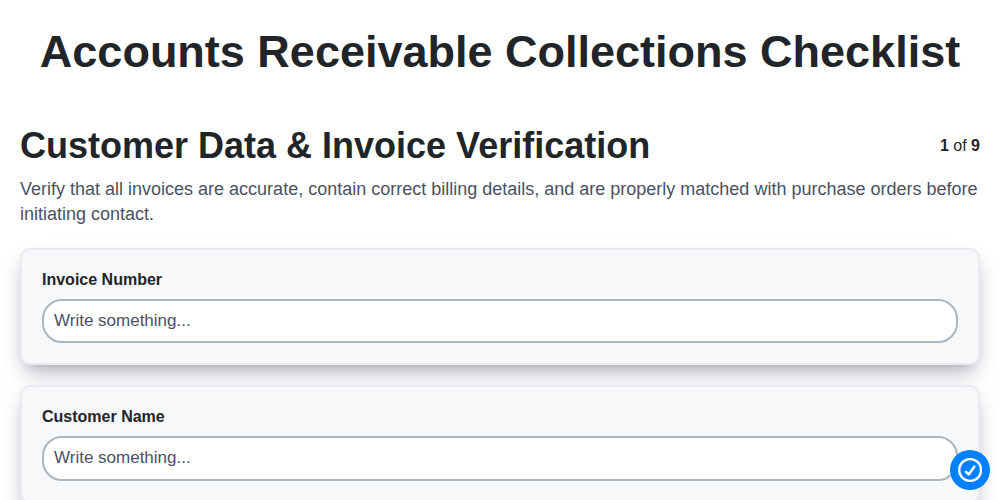
The Ultimate Accounts Receivable Collections Checklist: A Step-by-Step Guide to Streamlining Your Cash Flow
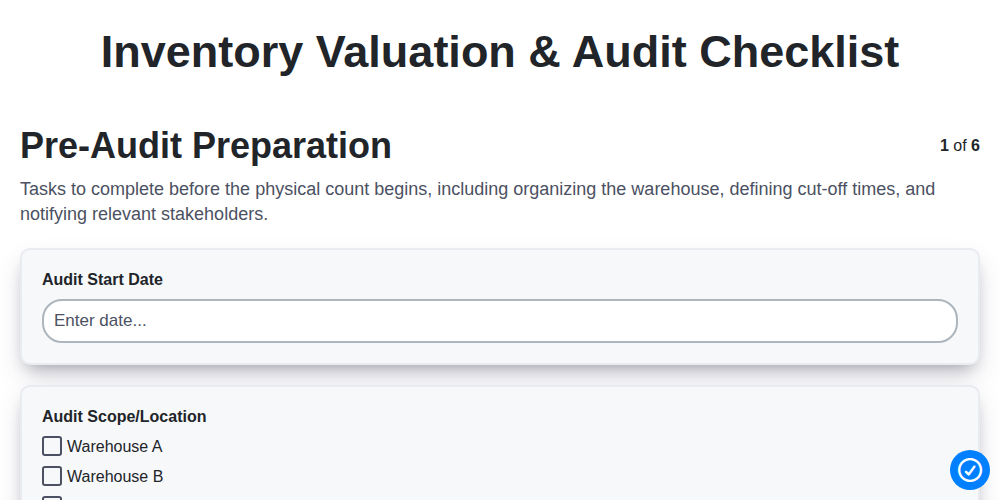
The Ultimate Inventory Valuation & Audit Checklist: A Step-by-Step Guide to Accuracy and Compliance
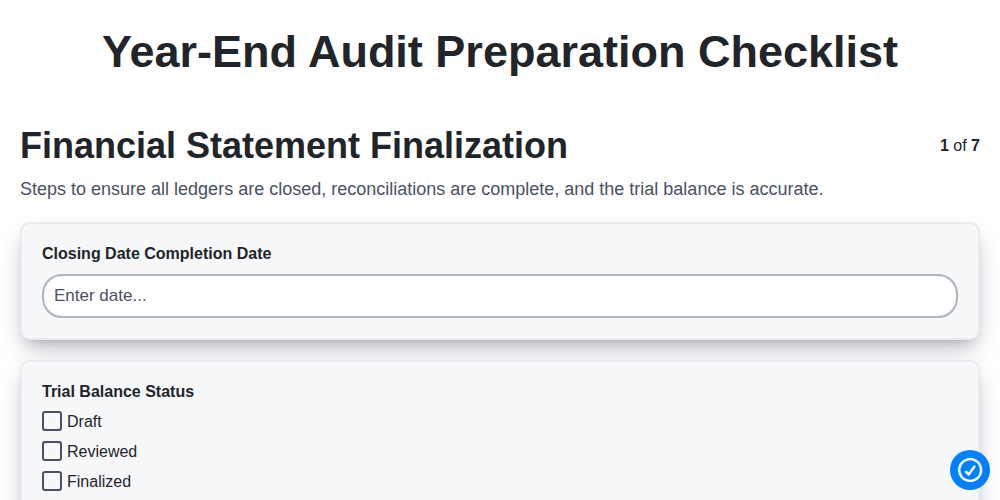
The Ultimate Year-End Audit Preparation Checklist: A Step-by-Step Guide to a Stress-Free Audit
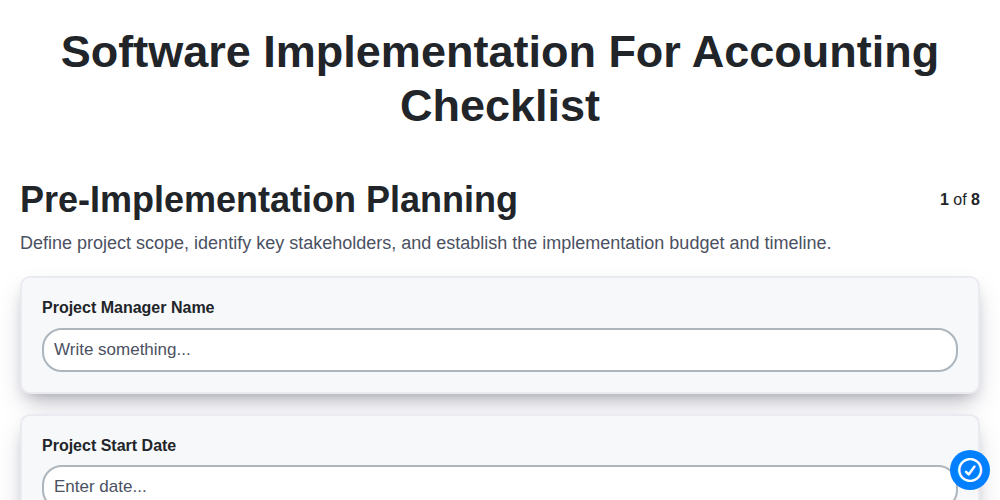
The Ultimate Software Implementation Checklist for Accounting Teams: A Step-by-Step Guide to a Seamless Transition
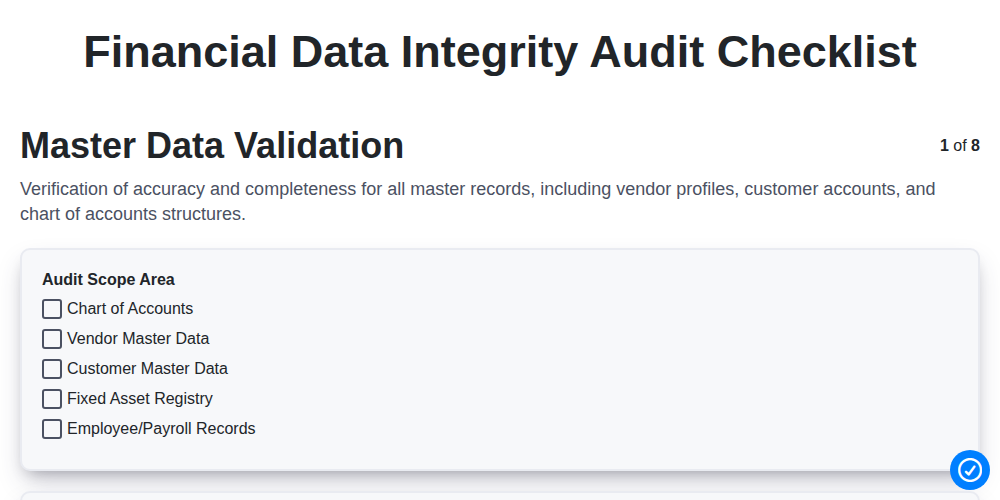
The Ultimate Financial Data Integrity Audit Checklist: A Step-by-Step Template for Precision and Compliance
We can do it Together
Need help with
Accounting Management?
Have a question? We're here to help. Please submit your inquiry, and we'll respond promptly.