The Ultimate Inventory Valuation & Audit Checklist: A Step-by-Step Guide to Accuracy and Compliance
Published: 07/12/2026 Updated: 10/05/2026
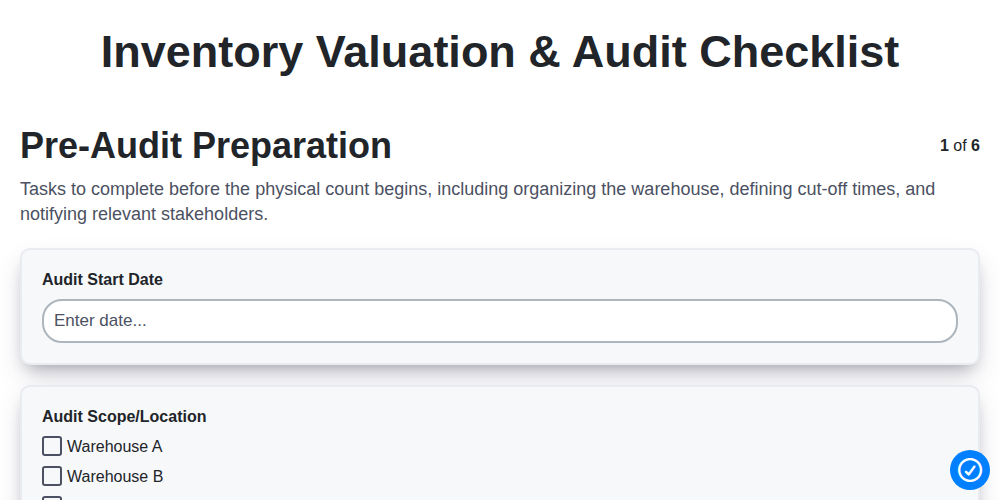
Table of Contents
- Introduction: Why Accurate Inventory Auditing Matters
- Phase 1: Pre-Audit Preparation - Setting the Foundation
- Phase 2: Physical Count Execution - Ensuring Precision on the Floor
- Phase 3: Inventory Valuation Verification - Validating the Numbers
- Phase 4: Discrepancy Analysis & Reconciliation - Bridging the Gap
- Phase 5: Obsolete & Damaged Stock Review - Assessing True Net Realizable Value
- Phase 6: Post-Audit Documentation & Reporting - Finalizing the Audit Trail
- Best Practices for Continuous Inventory Integrity
- Resources & Links
TLDR: Ensure financial accuracy and operational efficiency with our comprehensive guide to the Ultimate Inventory Valuation & Audit Checklist. This post breaks down a step-by-step framework-covering everything from pre-audit preparation and physical counts to discrepancy reconciliation and obsolete stock review-providing you with a repeatable template to eliminate errors, ensure regulatory compliance, and maintain precise inventory records.
Introduction: Why Accurate Inventory Auditing Matters
In the world of supply chain management, your inventory is often your largest current asset. However, an asset is only as valuable as the accuracy of its recorded data. An inventory audit is far more than just a routine administrative task; it is a critical financial safeguard that ensures the numbers on your balance sheet reflect the actual physical reality of your warehouse.
Inaccurate inventory records can trigger a devastating domino effect across your entire operation. When stock levels are overstated, you face phantom inventory issues that lead to missed sales opportunities and poor procurement decisions. Conversely, understated inventory can lead to unexpected stockouts, emergency shipping costs, and dissatisfied customers. Beyond the warehouse floor, inaccurate valuations directly impact your bottom line, distorting profitability reports and complicating tax compliance.
A structured audit process allows you to identify shrinkage, uncover operational inefficiencies, and validate the integrity of your valuation methods. By following a systematic approach-moving from meticulous pre-audit preparation to rigorous discrepancy reconciliation-you transform the audit from a stressful annual event into a strategic tool for operational excellence. This guide provides a comprehensive checklist to ensure your next audit is precise, transparent, and actionable.
Phase 1: Pre-Audit Preparation - Setting the Foundation
A successful inventory audit doesn't begin on the day of the count; it begins weeks before the first item is scanned. The goal of the pre-audit phase is to minimize disruptions, ensure data integrity, and create a controlled environment where an accurate count is actually possible. Jumping straight into a physical count without preparation is a recipe for chaos and massive discrepancies.
To lay a solid foundation, focus on these critical preparatory steps:
- Define the Audit Scope and Schedule: Clearly determine which locations, departments, or product categories are being audited. Establish a fixed timeline and communicate it to all stakeholders to ensure that warehouse operations are paused or adjusted during the count to prevent moving targets.
- Organize the Physical Space: Tidiness is the precursor to accuracy. Ensure that all items are properly labeled, bins are clearly marked, and all hidden stock-such as items in receiving areas or transit-is accounted for. Grouping similar items together prevents confusion during the execution phase.
- Freeze Inventory Movements: One of the most vital steps is implementing an inventory freeze. You must instruct your team to halt all incoming shipments and outgoing orders for the duration of the count. If items are being moved while the audit is in progress, your final numbers will never reconcile with your digital records.
- Prepare the Audit Team and Tools: Assign specific roles to team members (e.g., counters, verifiers, and recorders). Ensure all necessary equipment-barcode scanners, clipboards, pre-printed count sheets, and mobile devices-are fully functional and loaded with the most recent master data.
- Review Pre-Audit Documentation: Review your current stock ledger and identify any pending transactions, such as unposted receipts or unfulfilled sales orders, that need to be finalized before the freeze takes effect.
Phase 2: Physical Count Execution - Ensuring Precision on the Floor
Once your preparation is complete, it is time to transition from the office to the warehouse floor. The physical count execution is the most critical phase of the audit; it is where theoretical numbers meet physical reality. Accuracy during this stage is paramount, as any errors made here will cascade through your valuation and reconciliation processes.
To ensure precision and minimize human error, follow these essential execution steps:
- Establish Strict Control Measures: Implement a no-movement policy during the count. No stock should be received, moved, or shipped while the audit is in progress to prevent discrepancies between the floor and the records.
- Standardize Counting Methodologies: Whether you are using a blind count (where counters do not know the expected quantity) or a tag-based system, ensure every team member follows the same procedure. Consistency prevents confusion and overlapping counts.
- Use a Two-Person Verification System: Whenever possible, employ a counter and a recorder pairing. One person physically counts the items while the second person records the data. This double-layer of verification significantly reduces the risk of miscounting.
- Implement Systematic Floor Sweeps: Work through the warehouse in a logical, organized manner-such as by aisle, bin, or zone. Ensure every single pallet, box, and loose item is accounted for to prevent hidden inventory from being overlooked.
- Immediate Marking of Counted Items: Use colored stickers, markers, or physical tags to indicate that a specific bin or shelf has already been audited. This visual cue prevents both duplicate counting and accidental omissions.
Phase 3: Inventory Valuation Verification - Validating the Numbers
Once the physical count is complete, the focus shifts from how many items do we have? to what is the monetary value of what we have? This is the most critical step for financial accuracy, as errors in valuation directly impact your balance sheet, cost of goods sold (COGS), and overall profitability.
To ensure your valuation is audit-ready, you must move beyond simple counting and perform a rigorous verification of your accounting methods. This phase involves three key layers of scrutiny:
- Costing Method Consistency: Verify that the unit costs applied to your inventory match your established accounting method-whether it be FIFO (First-In, First-Out), LIFO (Last-In, First-Out), or Weighted Average Cost. Randomly sample items from your count and trace them back to recent purchase orders and invoices to ensure the cost assigned in your system is accurate.
- Unit Cost Accuracy: Re-verify that the prices used for valuation reflect the most recent landed costs. This includes not just the sticker price of the item, but the inclusion of necessary overheads such as freight, handling, and customs duties where applicable.
- Lower of Cost or Market (LCM) Check: Apply the principle of conservatism. Compare your recorded cost against the current net realizable value (NRV). If the market value of an item has dropped below its recorded cost, your inventory must be written down to reflect this loss.
By validating the financial integrity of your stock, you ensure that your inventory isn't just physically present, but is also represented accurately in your financial statements.
Phase 4: Discrepancy Analysis & Reconciliation - Bridging the Gap
Once the physical count is complete and compared against your digital records, the inevitable gaps-known as discrepancies-will emerge. This phase is perhaps the most critical part of the audit, as it is where you move beyond simply identifying errors to understanding their root causes.
The goal of discrepancy analysis is not just to fix the numbers, but to investigate the why behind the variance. Are you facing shrinkage due to theft, or is the issue actually a lack of training in the receiving department? Are discrepancies caused by clerical errors, such as failing to record a transfer, or systemic issues like incorrect unit-of-measure entries?
To navigate this phase effectively, follow these steps:
- Categorize the Variance: Distinguish between units missing (quantity) and value mismatch (price).
- Identify Patterns: Look for clusters. Do discrepancies only occur in a specific warehouse aisle, a specific vendor's stock, or during a particular shift?
- Perform Root Cause Analysis (RCA): Don't just adjust the stock levels; trace the transaction history. Check recent shipping logs, receiving reports, and return authorizations to see if a paper trail was missed.
- Execute Formal Adjustments: Once the investigation is complete and management has approved the findings, update your Inventory Management System (IMS) or ERP to reflect the actual physical reality.
By treating every discrepancy as a learning opportunity rather than just a mathematical error, you transform the audit from a mere counting exercise into a powerful tool for process improvement.
Phase 5: Obsolete & Damaged Stock Review - Assessing True Net Realizable Value
An inventory audit is not merely about counting quantities; it is about verifying the quality and usability of your assets. A common pitfall in inventory management is treating all on-hand stock as equally valuable, which can lead to a significant overstatement of assets on your balance sheet.
During this phase, you must identify items that are no longer saleable or functional. This involves a systematic review of two critical categories:
- Obsolete Stock: Identify items that have become outdated due to technological advancements, changes in consumer trends, or expiration dates. This includes dead stock that has had zero turnover for a significant period.
- Damaged Stock: Inspect the physical condition of the inventory to identify items that have been compromised by mishandling, environmental factors, or improper storage.
The goal of this step is to determine the Net Realizable Value (NRV)-the estimated selling price in the ordinary course of business, minus the estimated costs of completion and disposal. If an item's value has dropped below its recorded cost, it must be marked down. Properly identifying these items allows you to write down or write off losses, ensuring your financial statements reflect a realistic and conservative valuation of your working capital.
Phase 6: Post-Audit Documentation & Reporting - Finalizing the Audit Trail
The final stage of the inventory audit is just as critical as the physical count itself. Once the numbers have been reconciled and the discrepancies resolved, the focus shifts from fieldwork to documentation. The goal of this phase is to create a permanent, transparent, and verifiable audit trail that can withstand scrutiny from stakeholders, tax authorities, or external auditors.
Effective post-audit reporting serves two primary purposes: it formalizes the results of the current audit and provides a roadmap for improving future inventory management. To ensure a professional finish, your post-audit process should include the following components:
- Comprehensive Audit Summary Report: Compile a high-level document that outlines the scope of the audit, the date of the count, the personnel involved, and the final results. This report should clearly state whether the final inventory value matches the recorded book value.
- Detailed Discrepancy Log: Instead of just noting the final totals, provide a breakdown of every significant variance found during the audit. Documenting the why behind each discrepancy-whether due to theft, clerical errors, or unrecorded shrinkage-is essential for long-term loss prevention.
- Updated Inventory Records: This is the point where you officially update your Warehouse Management System (WMS) or ERP. Ensure that the physical counts are reflected in your digital ledger to ensure that procurement and sales teams are working with accurate, real-time data.
- Corrective Action Plan (CAP): An audit is a diagnostic tool. Use the findings to implement actionable changes. If the audit revealed high levels of damaged stock, the CAP might include new storage protocols; if discrepancies were found in labeling, it might include new receiving procedures.
- Archiving Audit Evidence: Store all physical count sheets, signed reconciliations, and photographic evidence of damaged goods in a centralized, secure location. Proper archiving ensures that if an error is questioned months later, you can reconstruct the audit process with ease.
By treating the post-audit phase as a strategic opportunity rather than just paperwork, you transform a simple counting exercise into a powerful driver for operational excellence.
Best Practices for Continuous Inventory Integrity
Maintaining an accurate inventory count shouldn't be a reactive event triggered only by year-end deadlines. To truly safeguard your bottom line, you must shift from a periodic correction mindset to a culture of continuous inventory integrity. True accuracy is built through consistent, small-scale disciplines that prevent errors from snowballing into massive discrepancies.
First, implement cycle counting as your primary defense. Instead of waiting for a full wall-to-wall audit, establish a rotating schedule to count high-value or high-velocity items more frequently. This allows you to identify and resolve errors in real-time, ensuring that your data stays clean throughout the fiscal year.
Second, focus on standardized receiving protocols. Most inventory discrepancies are born at the loading dock. Ensure that every incoming shipment is immediately verified against the purchase order and logged into your system before being moved to storage. A breakdown in the receiving process creates a domino effect of inaccuracies that no amount of auditing can easily fix.
Finally, leverage technology and training. Use barcode scanning or RFID technology to eliminate the human error inherent in manual data entry. However, technology is only as effective as the people operating it. Regularly train your warehouse staff on the importance of immediate transaction logging-ensuring that every movement, transfer, or pick is recorded the moment it happens. By treating inventory accuracy as a daily operational standard rather than an annual chore, you transform your audit from a stressful investigation into a simple verification of known truths.
Resources & Links
- AccountingTools: Comprehensive resources and educational articles regarding inventory valuation methods like FIFO, LIFO, and Weighted Average Cost.
- AuditNet: Professional auditing resources and frameworks for internal controls and physical verification procedures.
- Investopedia: In-depth explanations of financial reporting standards, net realizable value, and the impact of inventory accuracy on balance sheets.
- Gartner: Insights into supply chain management best practices and advanced inventory management technologies.
- iSixSigma: Methodologies for discrepancy analysis, root cause analysis, and process improvement during the reconciliation phase.
- IFRS Foundation: Official standards for international financial reporting, specifically regarding the valuation of inventory and impairment of assets.
Frequently Asked Questions
What is the difference between FIFO and LIFO inventory valuation methods?
FIFO (First-In, First-Out) assumes that the oldest inventory items are sold first, meaning the cost of goods sold reflects older prices. LIFO (Last-In, First-Out) assumes the newest items are sold first, which can be used to manage tax liabilities during periods of inflation.
Why is regular inventory auditing important for compliance?
Regular audits ensure that your physical stock matches your digital records, which is essential for accurate financial reporting, preventing fraud, maintaining tax compliance, and meeting-standard accounting principles (GAAP or IFRS).
What is the difference between a physical count and a cycle count?
A physical count is a complete stop of operations to count every single item in the warehouse, typically done annually. A cycle count is an ongoing process where small subsets of inventory are counted on a rotating schedule, allowing for continuous accuracy without halting operations.
How does 'Lower of Cost or Market' (LCM) affect inventory valuation?
LCM is a conservative accounting principle that requires inventory to be recorded at either its original cost or its current market replacement cost-whichever is lower. This prevents overstating the value of inventory on the balance sheet.
What are the most common causes of inventory discrepancies during an audit?
Common causes include data entry errors, theft (shrinkage), unrecorded damages, receiving errors, and improper unit-of-measure conversions during the intake process.
Comments
There are no comments yet. Be the first to add one!
Accounting Management Solution Demo
Move beyond rigid, one-size-fits-all software. Leverage a fully programmable accounting environment designed to adapt to your unique workflows, complex hierarchies, and evolving business logic.
Related Articles
Mastering Global Consolidation: The Ultimate Intercompany Reconciliation Checklist Template
The Ultimate Financial Statement Review Checklist: A Step-by-Step Guide to Ensuring Accuracy and Compliance
Mastering Financial Control: The Ultimate Departmental Budget Monitoring Checklist
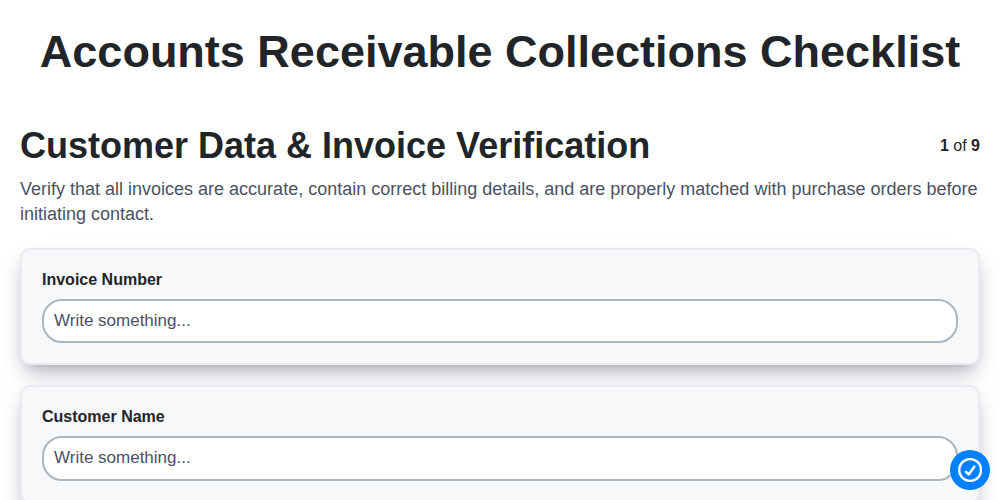
The Ultimate Accounts Receivable Collections Checklist: A Step-by-Step Guide to Streamlining Your Cash Flow
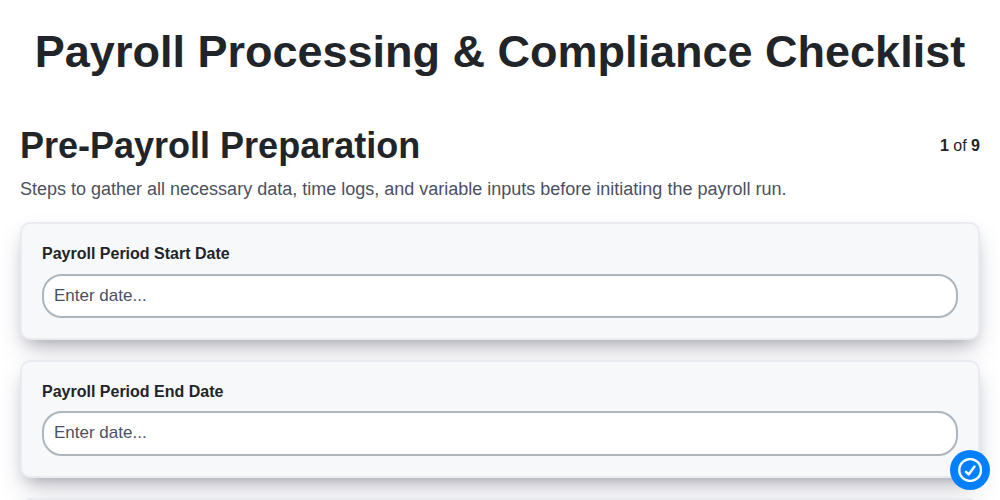
The Ultimate Payroll Processing & Compliance Checklist: A Step-by-Step Guide to Error-Free Payroll
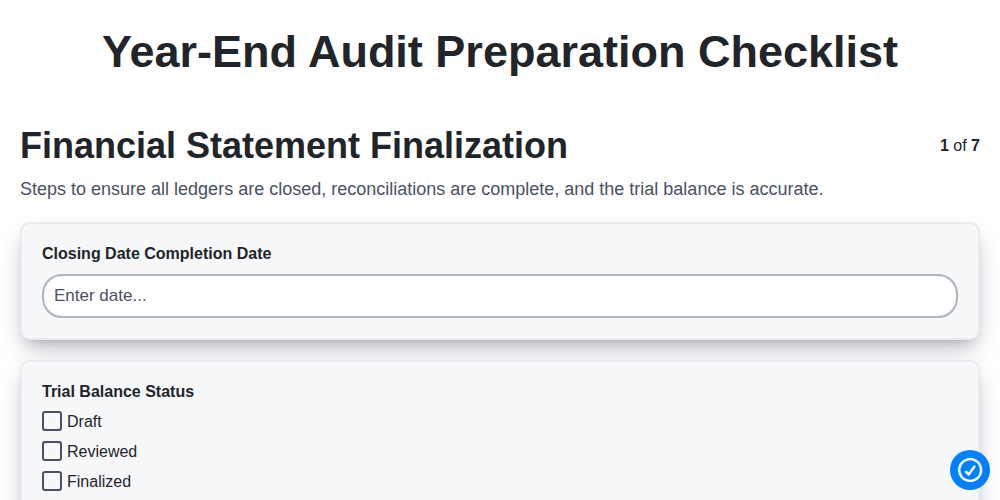
The Ultimate Year-End Audit Preparation Checklist: A Step-by-Step Guide to a Stress-Free Audit
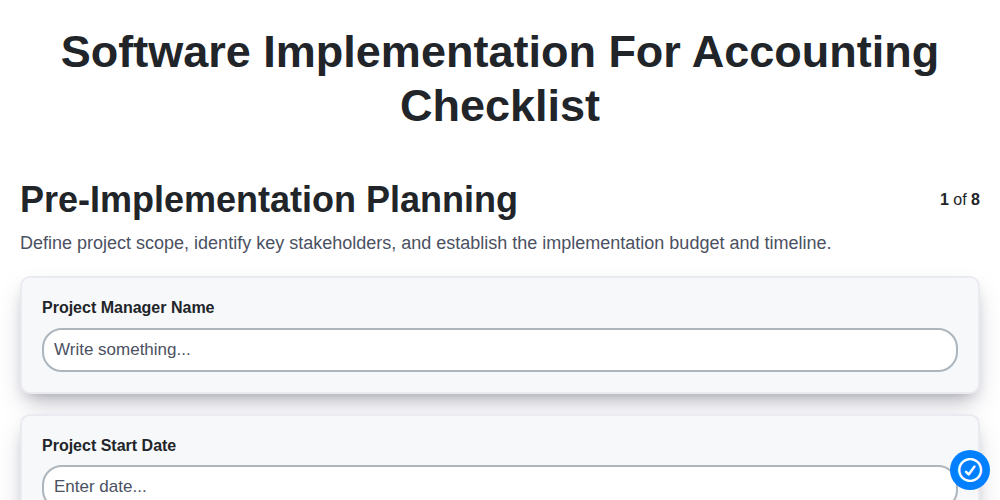
The Ultimate Software Implementation Checklist for Accounting Teams: A Step-by-Step Guide to a Seamless Transition
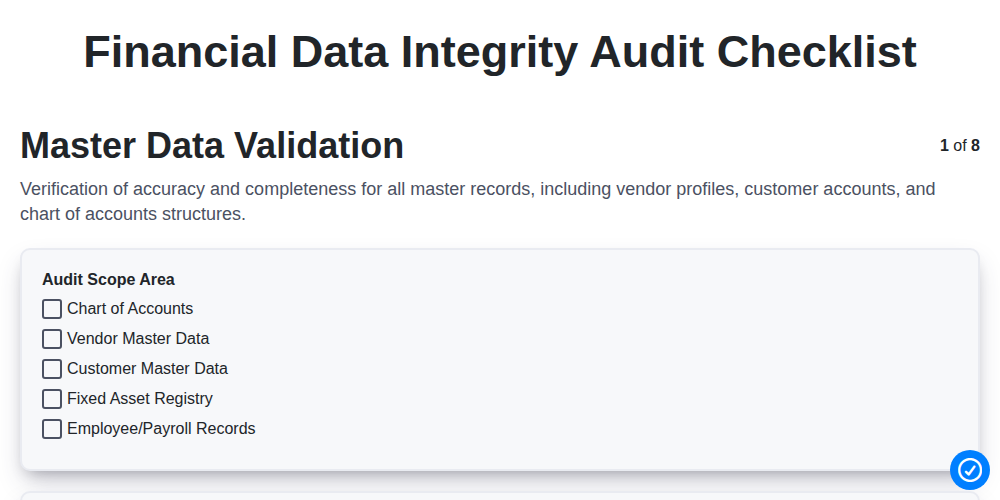
The Ultimate Financial Data Integrity Audit Checklist: A Step-by-Step Template for Precision and Compliance
We can do it Together
Need help with
Accounting Management?
Have a question? We're here to help. Please submit your inquiry, and we'll respond promptly.