Mastering the Month-End: The Ultimate Accounts Payable Processing Checklist Template
Published: 07/12/2026 Updated: 10/05/2026
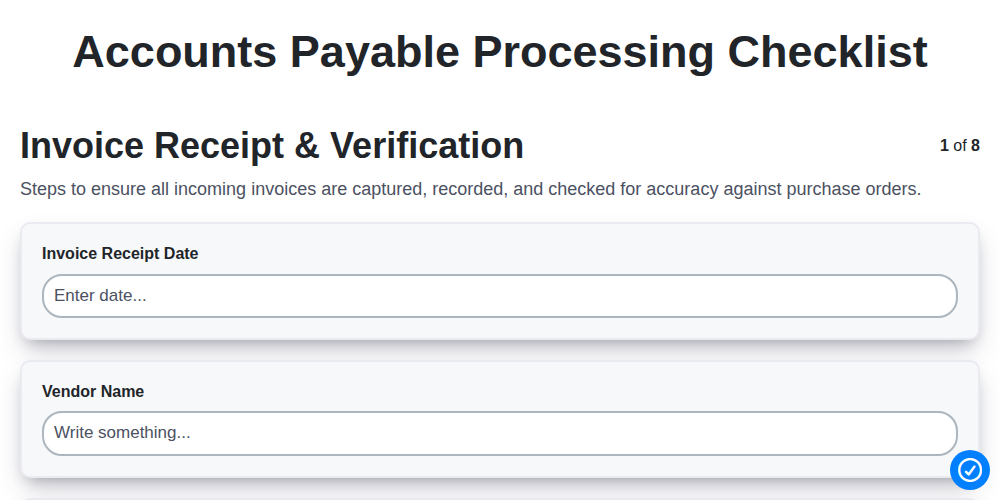
Table of Contents
- Introduction: Why a Standardized AP Process Matters
- Step 1: Invoice Receipt & Verification
- Step 2: The Power of Three-Way Matching
- Step 3: Implementing a Robust Approval Workflow
- Step 4: Precision in Data Entry & Coding
- Step 5: Strategic Payment Scheduling & Authorization
- Step 6: Secure Payment Execution
- Step 7: Proactive Vendor Record Maintenance
- Step 8: Post-Payment Reconciliation & Filing
- Common Pitfalls to Avoid in AP Processing
- Conclusion: Streamlining Your Financial Workflow
- Resources & Links
TLDR: Streamline your financial operations and eliminate costly errors with this comprehensive Accounts Payable Processing Checklist. This guide walks you through every essential step-from invoice verification and three-way matching to final reconciliation-providing a repeatable template designed to ensure accuracy, improve vendor relationships, and optimize your month-end closing process.
Introduction: Why a Standardized AP Process Matters
In the fast-paced world of financial management, Accounts Payable (AP) is much more than just a series of outgoing payments. It is a critical function that sits at the intersection of cash flow management, vendor relationships, and financial integrity. When AP processes are disorganized or inconsistent, the consequences can be devastating-ranging from costly duplicate payments and late fees to strained supplier trust and inaccurate financial reporting.
A standardized Accounts Payable process acts as the backbone of your company's internal controls. By implementing a structured checklist, you eliminate the guesswork that often leads to human error. A standardized workflow ensures that every invoice is scrutinized, every authorization is documented, and every penny leaving the business is accounted for. Beyond mere error prevention, a consistent process optimizes departmental efficiency, accelerates month-end closings, and provides leadership with the reliable data needed to make informed strategic decisions. In short, a disciplined AP checklist transforms a reactive, firefighting task into a proactive, strategic asset for your organization.
Step 1: Invoice Receipt & Verification
The accounts payable process begins the moment an invoice enters your organization. The first step in an efficient workflow is ensuring that every incoming document is captured and validated before it moves further down the pipeline.
This stage involves more than just receiving an email or a piece of mail; it requires a systematic approach to confirm the legitimacy of the document. To ensure accuracy, your team should verify that the invoice contains essential information, including a valid purchase order (PO) number, a clear invoice date, tax identification numbers, and accurate billing details.
Furthermore, this is the critical moment to check for any glaring errors, such as duplicate invoice numbers or incorrect billing addresses. By implementing a rigorous verification process at the point of entry, you can prevent garbage in, garbage out scenarios, significantly reducing the risk of overpayments or costly errors during the later stages of the payment cycle.
Step 2: The Power of Three-Way Matching
The Three-Way Matching process is the gold standard of internal controls in Accounts Payable. It is a rigorous verification method designed to ensure that your company only pays for exactly what was ordered and actually received. This step serves as a critical safety net to prevent overpayment, duplicate payments, and fraudulent invoices.
To perform an effective three-way match, your team must compare three distinct documents:
- The Purchase Order (PO): The official document sent to the vendor outlining what your company intended to buy, at what price, and in what quantity.
- The Receiving Report (or Packing Slip): The internal record (often generated during the warehouse intake process) that confirms the goods or services actually arrived at your facility.
- The Vendor Invoice: The bill sent by the supplier requesting payment.
The goal is to identify any discrepancies between these three sources. If the quantity on the invoice exceeds the quantity on the receiving report, or if the price on the invoice does not align with the agreed-upon price on the purchase order, the match fails.
By implementing this step, you eliminate the risk of phantom inventory costs and protect your bottom line from clerical errors. When these three documents align perfectly, you can move forward with confidence, knowing the transaction is legitimate and accurate.
Step 3: Implementing a Robust Approval Workflow
An approval workflow is the critical gatekeeper of your accounts payable process. Without a standardized system for verifying and authorizing invoices, your business is vulnerable to duplicate payments, unauthorized spending, and even internal fraud.
A robust workflow ensures that every invoice is reviewed by the appropriate stakeholder-usually the department head or budget owner-before any funds are committed. To implement an effective process, follow these essential steps:
- Define Authorization Limits: Not every invoice requires the CEO's signature. Establish clear monetary thresholds; for example, managers may approve expenses up to $1,000, while anything above that requires a Director's sign-off.
- Route Automatically: Avoid the email black hole by using automated routing. When an invoice is verified, it should automatically trigger a notification to the next person in the chain.
- Establish a Clear Audit Trail: Your workflow must document exactly who approved what, and when. This transparency is vital for internal audits and resolving any future vendor disputes.
- Set Deadlines for Reviewers: Bottlenecks often occur when invoices sit on a manager's desk for days. Implement SLA (Service Level Agreement) expectations for internal approvals to ensure timely payments and avoid late fees.
By formalizing this step, you transform your AP department from a reactive cost center into a proactive controller of company cash flow.
Step 4: Precision in Data Entry & Coding
Once an invoice has been verified and matched, the next critical step is recording the details into your accounting system. This stage is where manual errors can most easily compromise your financial integrity. Precision in Data Entry & Coding ensures that your financial statements reflect an accurate picture of your company's liabilities and cash flow.
To maintain a clean general ledger, your team must focus on two key components:
- Accurate Data Entry: Ensure that every piece of information-invoice number, date, amount, tax, and currency-is captured exactly as it appears on the source document. Even a single misplaced decimal point or a transposed digit can lead to significant discrepancies during month-end reconciliation.
- Proper GL Coding: Assigning the correct General Ledger (GL) codes is vital for accurate departmental budgeting and financial reporting. Each expense should be mapped to its appropriate account and cost center. Inconsistent coding makes it nearly impossible to track departmental spending or perform meaningful budget-to-actual analysis.
By implementing a standardized coding manual and utilizing OCR (Optical Character Recognition) technology where possible, you can minimize human error and ensure that your accounts payable data remains a reliable foundation for your company's financial decision-making.
Step 5: Strategic Payment Scheduling & Authorization
Once your invoices have been verified and coded, the next critical step is determining when and how the funds will leave your accounts. Payment scheduling and authorization is where the transition from data processing to cash flow management occurs.
Effective scheduling is not just about meeting deadlines; it is a strategic exercise in managing working capital. At this stage, the accounts payable team must balance two competing priorities: maintaining healthy vendor relationships and maximizing the company's liquidity.
Optimization Through Strategic Timing
A well-structured scheduling process involves analyzing your obligations to capture every possible financial advantage:
- Leveraging Early Payment Discounts: Many vendors offer terms such as 2/10, net 30, which allow for a 2% discount if the invoice is paid within ten days. Prioritizing these invoices can lead to significant annual savings.
- Managing Cash Outflows: Conversely, if cash flow is tight, you may choose to schedule payments closer to the final due date to keep funds in your operating accounts longer.
- Avoiding Late Fees: A centralized schedule ensures that no invoice is overlooked, preventing the erosion of margins through avoidable interest charges and penalties.
The Importance of Internal Controls (Authorization)
The Authorization component acts as your primary defense against fraud and error. No payment should be executed without a formal layer of oversight. An effective authorization workflow typically involves:
- Segregation of Duties: Ensuring that the person who enters the invoice is not the same person who authorizes the final payment.
- Threshold-Based Approvals: Implementing a system where small, routine payments require one level of approval, while larger, high-value transfers require secondary or even executive-level sign-off.
- Audit Trails: Maintaining a digital or physical paper trail of who approved which payment and when. This is vital for both internal accountability and external audits.
By treating payment scheduling as a strategic function rather than a clerical task, you transform the AP department from a cost center into a driver of corporate profitability.
Step 6: Secure Payment Execution
Once all approvals are secured and the payment schedule is finalized, it is time to move into the most critical phase: the actual disbursement of funds. This stage requires the highest level of precision and internal control to prevent fraud, duplicate payments, or costly errors.
During payment execution, your team must ensure that the payment method aligns with the established vendor terms. Whether you are processing ACH transfers, wire transfers, paper checks, or virtual cards, the process should be handled by personnel who are separate from those responsible for initial invoice approval to maintain a healthy segregation of duties.
To ensure a seamless execution, follow these best practices:
- Verify Payment Details: Double-check that the bank account information and payment amounts match the approved invoice exactly.
- Maintain Strict Controls: Use secure, encrypted channels for electronic transfers and implement dual authorization for high-value payments.
- Audit Trail Documentation: Ensure every transaction is logged within your accounting system immediately upon execution. This provides a clear, real-time trail for future audits.
- Mitigate Fraud Risk: Be vigilant against Business Email Compromise (BEC) scams by never updating vendor banking details based on an email request without independent verbal verification.
Effective payment execution isn't just about sending money; it is about ensuring that the funds leave your organization accurately, securely, and in a way that maintains your reputation for timely, reliable payments.
Step 7: Proactive Vendor Record Maintenance
Maintaining accurate vendor records is the backbone of a smooth Accounts Payable process. This step goes beyond simply saving contact information; it involves the continuous auditing and updating of your master vendor file to prevent fraud, avoid duplicate payments, and ensure compliance.
To keep your vendor database clean and secure, your team should implement a routine process for the following:
- Verify Tax Documentation: Always ensure you have a valid W-9 (or W-8BEN for international vendors) on file. Periodically request updated forms to ensure tax identification numbers and legal names are current.
- Validate Banking Information: Whenever a vendor requests a change to their payment details, treat it as a high-security event. Always perform an independent verification-such as a phone call to a known, trusted contact at the company-to prevent Business Email Compromise (BEC) scams.
- Audit for Duplicates: Regularly scan your system for duplicate entries. Multiple entries for the same vendor can lead to double payments, fragmented communication, and skewed spend analytics.
- Monitor Compliance and Insurance: For service-based vendors, track expiration dates for necessary certificates of insurance (COI) or professional licenses to ensure they remain compliant with your company's standards.
- Clean Up Inactive Vendors: Periodically archive or deactivate vendors you haven't used in a significant amount of time. This reduces clutter and minimizes the attack surface for potential fraudulent activity.
By treating vendor maintenance as a proactive task rather than a reactive one, you reduce the risk of errors, protect your cash flow, and build stronger, more reliable relationships with your supply chain partners.
Step 8: Post-Payment Reconciliation & Filing
Once the payment has been successfully executed, the process is not officially complete. The final, and perhaps most critical, stage of the Accounts Payable lifecycle is Post-Payment Reconciliation & Filing. This step ensures that your financial records accurately reflect your actual cash outflows and provides an audit trail for future reference.
Reconciliation involves comparing your bank statements or credit card statements against your internal payment records to ensure that the amounts debited match the amounts authorized in your system. This prevents discrepancies caused by bank errors, duplicate payments, or missed processing fees.
Simultaneously, you must finalize the documentation process. All related documents-including the original invoice, the three-way match evidence, and the proof of payment-should be digitally or physically filed together. Maintaining a clean, organized, and easily searchable filing system is vital for:
- Audit Readiness: Making it easy to provide evidence during internal or external audits.
- Dispute Resolution: Quickly retrieving proof of payment if a vendor claims an invoice is overdue.
- Historical Accuracy: Ensuring your general ledger remains the single source of truth for your company's financial health.
By treating this final step with the same rigor as the initial invoice receipt, you close the loop on the AP cycle and maintain the integrity of your entire accounting ecosystem.
Common Pitfalls to Avoid in AP Processing
Even with a robust checklist in place, errors can still creep into your accounts payable workflow. To maintain a seamless operation and protect your company's cash flow, watch out for these frequent mistakes:
- Manual Data Entry Errors: Relying too heavily on manual input increases the risk of typos, incorrect amounts, or transposed digits. Even a small error in a decimal point can lead to significant financial discrepancies.
- Skipping the Three-Way Match: Omitting the verification step between the purchase order, receiving report, and invoice is a recipe for disaster. This shortcut often leads to paying for goods that were never received or paying incorrect quantities.
- Fragmented Approval Workflows: When approval processes are buried in long email chains or physical paper trails, invoices often get lost. This lack of visibility causes missed deadlines and late payment penalties.
- Inconsistent Vendor Master Data: Failing to regularly audit your vendor records can lead to duplicate payments or, worse, payments being sent to outdated or fraudulent accounts.
- Neglecting Reconciliation: Treating payment execution as the final step is a common trap. Without post-payment reconciliation, discrepancies between your bank statements and your general ledger can go undetected for months, complicating month-end closures.
Conclusion: Streamlining Your Financial Workflow
Implementing a structured Accounts Payable checklist is more than just an administrative task; it is a fundamental strategy for safeguarding your company's cash flow and maintaining healthy vendor relationships. By transitioning from a reactive approach to a proactive, step-by-step process-from initial invoice verification to final reconciliation-you significantly reduce the risk of costly errors, duplicate payments, and fraudulent activity.
While manual oversight is essential, remember that the ultimate goal of this checklist is to create a repeatable, scalable framework. As your business grows, consider leveraging automation tools to handle the heavy lifting of three-way matching and data entry. By reducing manual bottlenecks and ensuring every transaction is documented, you empower your finance team to move away from tedious paperwork and toward high-level strategic decision-making. Start implementing these steps today to build a more accurate, transparent, and efficient financial ecosystem.
Resources & Links
- Accounting Today: Industry news and expert insights on accounting trends, tax regulations, and best practices for financial professionals.
- Investopedia: A comprehensive resource for understanding fundamental financial terms, accounting principles, and business management concepts.
- Oracle NetSuite: Deep dives into automated accounts payable workflows, ERP integration, and digital transformation in finance operations.
- CFM (Certified Financial Manager) Resources: Professional guidance on internal controls, auditing standards, and managing financial accuracy in corporate settings.
- Gartner Finance: Research and strategic insights on optimizing business processes and implementing technology to reduce manual errors in AP.
Frequently Asked Questions
What is a month-end accounts payable (AP) process?
The month-end AP process is a series of standardized steps taken at the end of each accounting period to ensure all vendor invoices are recorded, all liabilities are accurately captured, and all outgoing payments are reconciled before closing the books.
Why is it important to follow a consistent AP checklist?
Using a consistent checklist minimizes human error, prevents duplicate payments, ensures compliance with financial regulations, and helps maintain accurate cash flow forecasting and financial reporting.
What are the most critical steps in an AP month-end close?
Key steps include verifying all received invoices are entered, matching purchase orders with invoices (3-way matching), reconciling vendor statements, ensuring all expense reports are processed, and reconciling the AP aging report with the general ledger.
How can I prevent common errors during the month-end close?
Common errors can be prevented through automated invoice processing, regular reconciliation of vendor statements, strict adherence to a standardized checklist, and implementing a clear separation of duties within the accounting team.
How does the AP process impact the company's financial statements?
The AP process directly impacts the Balance Sheet (via Accounts Payable liabilities) and the Income Statement (via recognized expenses). Accurate processing ensures that expenses are recorded in the correct period, adhering to the accrual principle.
Can this checklist template be customized for different business sizes?
Yes, the template is designed to be scalable. Small businesses can focus on basic invoice entry and reconciliation, while larger enterprises can expand the checklist to include complex multi-entity reconciliations and advanced approval workflows.
Comments
There are no comments yet. Be the first to add one!
Accounting Management Solution Demo
Move beyond rigid, one-size-fits-all software. Leverage a fully programmable accounting environment designed to adapt to your unique workflows, complex hierarchies, and evolving business logic.
Related Articles
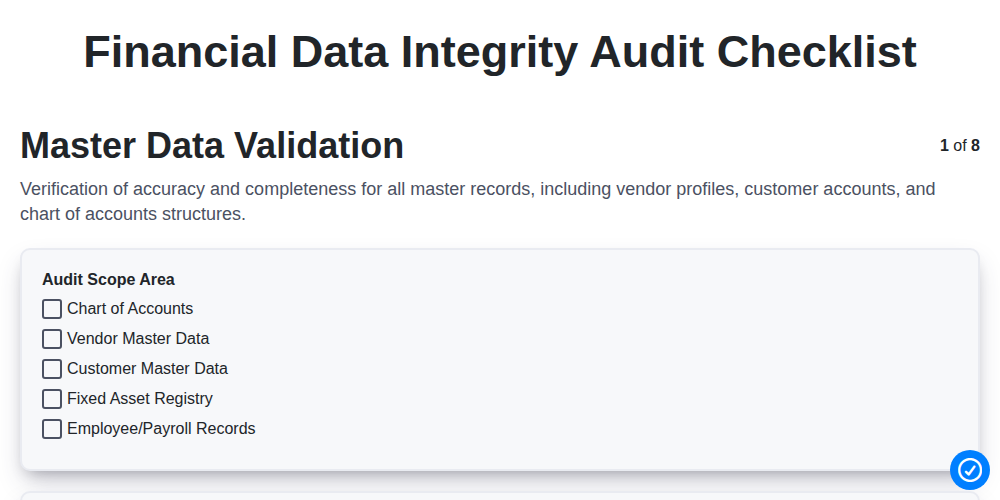
The Ultimate Financial Data Integrity Audit Checklist: A Step-by-Step Template for Precision and Compliance
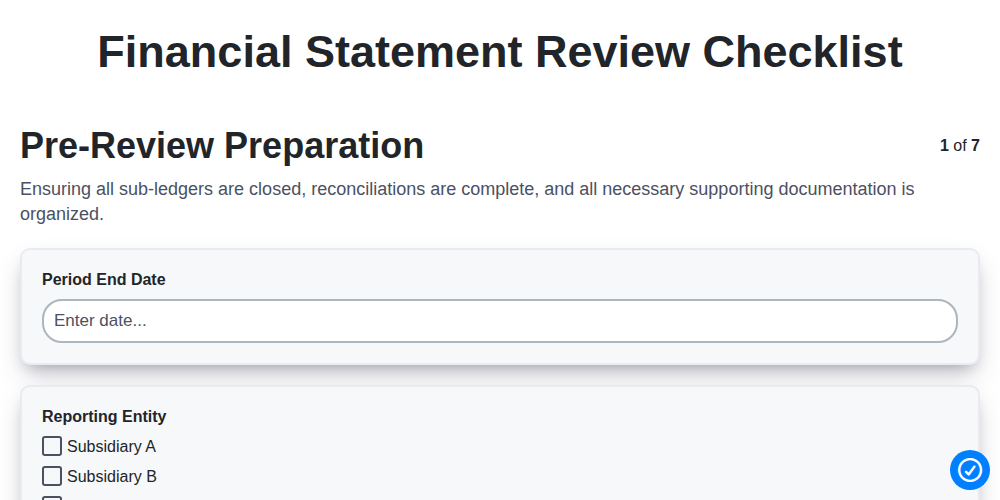
The Ultimate Financial Statement Review Checklist: A Step-by-Step Guide to Ensuring Accuracy and Compliance
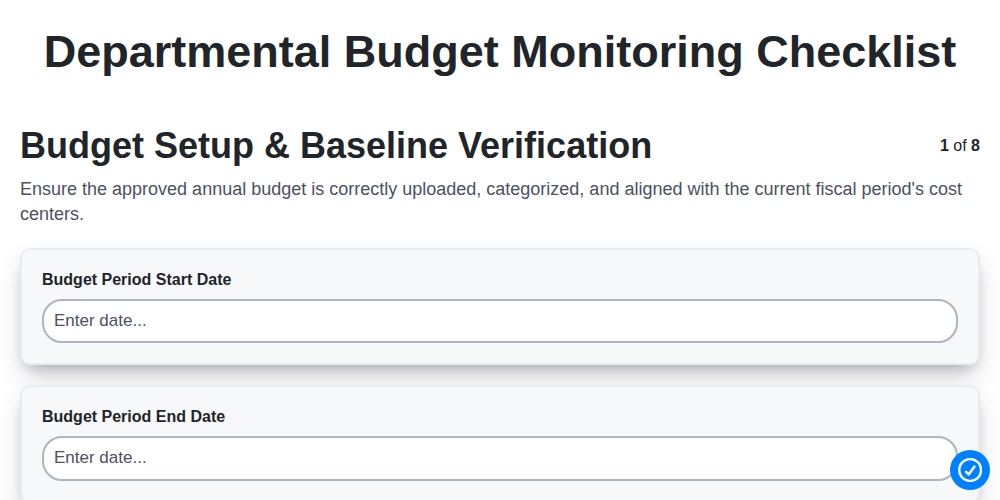
Mastering Financial Control: The Ultimate Departmental Budget Monitoring Checklist
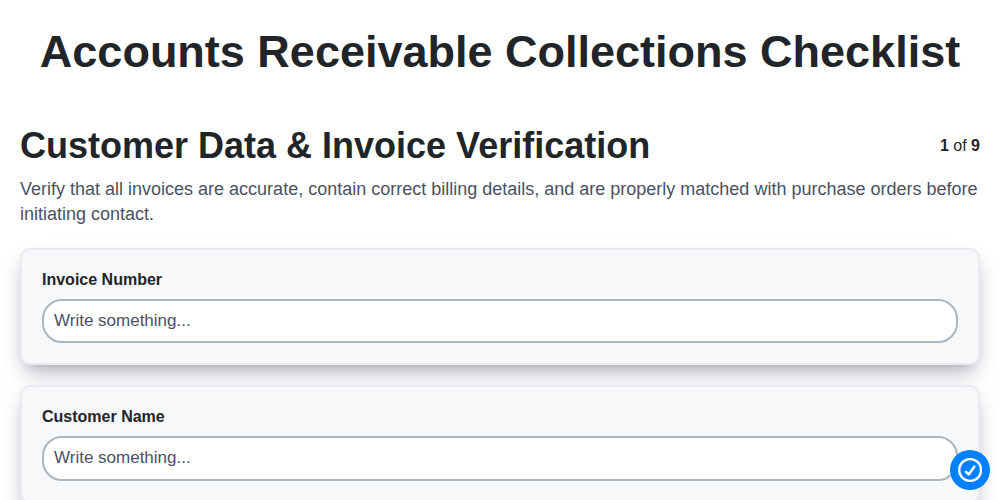
The Ultimate Accounts Receivable Collections Checklist: A Step-by-Step Guide to Streamlining Your Cash Flow
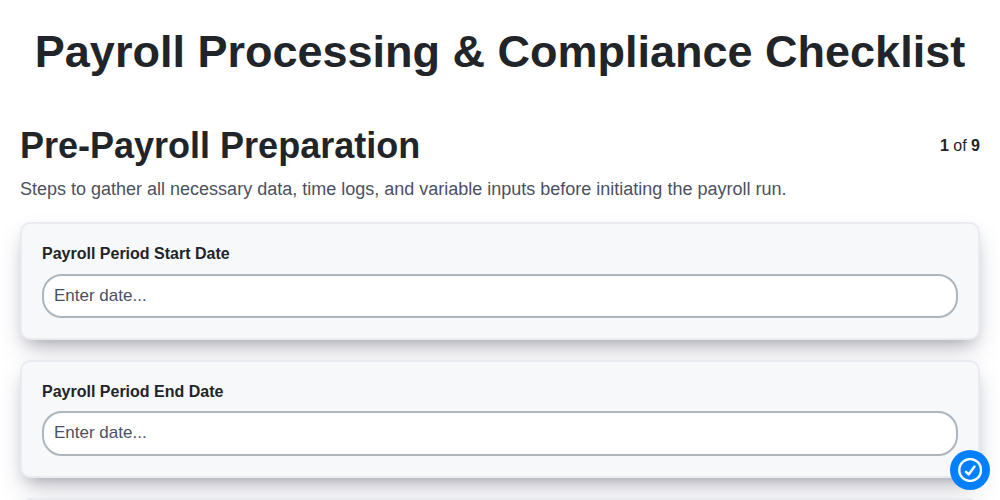
The Ultimate Payroll Processing & Compliance Checklist: A Step-by-Step Guide to Error-Free Payroll
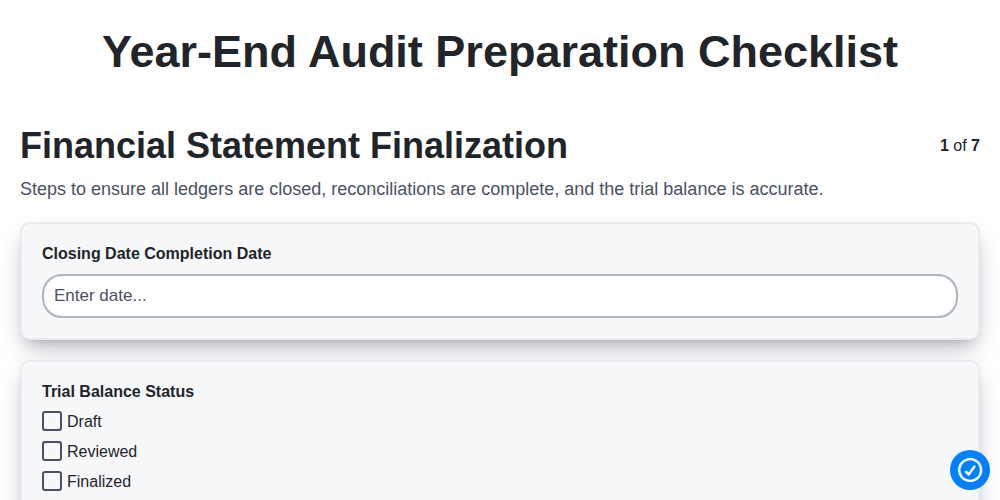
The Ultimate Year-End Audit Preparation Checklist: A Step-by-Step Guide to a Stress-Free Audit
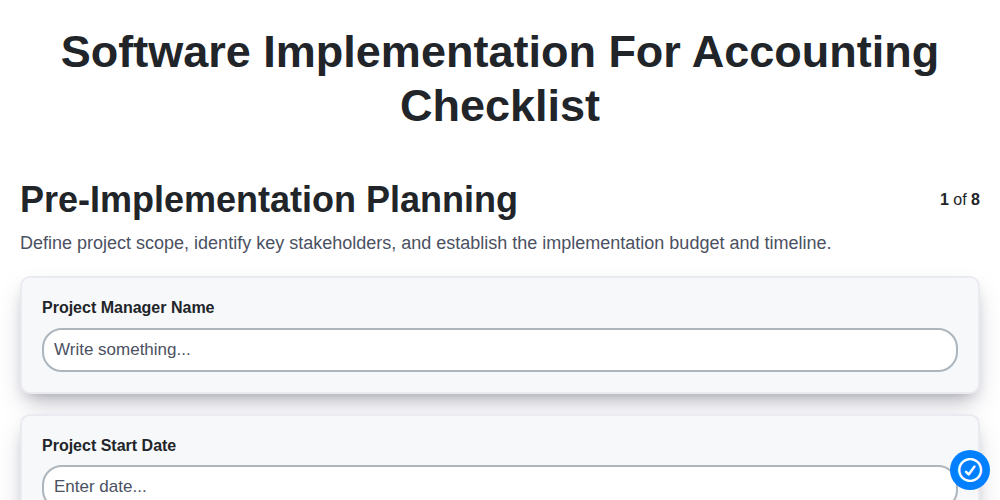
The Ultimate Software Implementation Checklist for Accounting Teams: A Step-by-Step Guide to a Seamless Transition
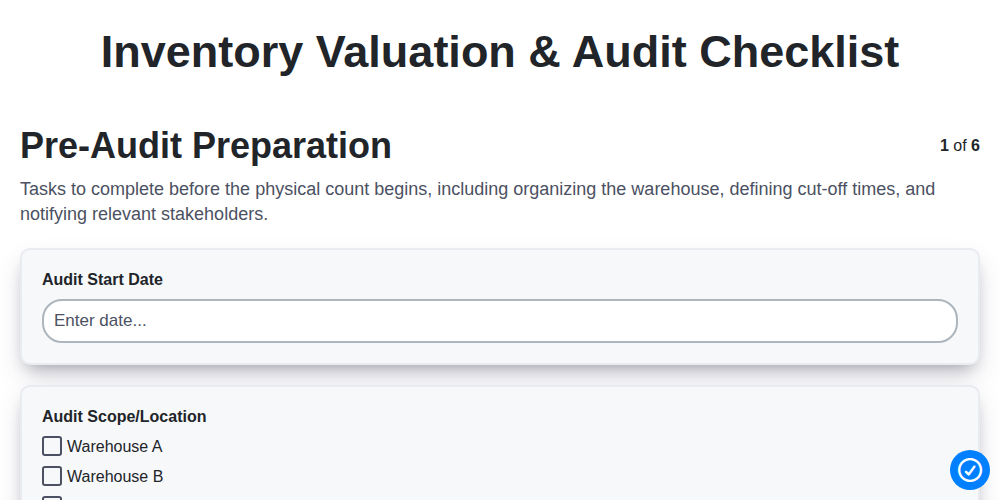
The Ultimate Inventory Valuation & Audit Checklist: A Step-by-Step Guide to Accuracy and Compliance
We can do it Together
Need help with
Accounting Management?
Have a question? We're here to help. Please submit your inquiry, and we'll respond promptly.