Streamline Your Bankruptcy Cases: The Ultimate Case Management Checklist Template
Published: 12/20/2025 10:00 PM Updated: 12/21/2025 7:03 AM
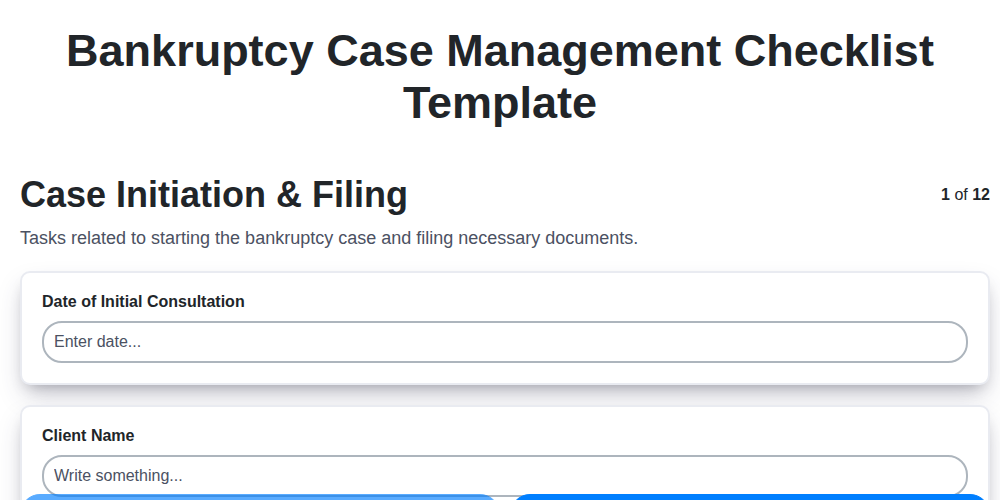
Table of Contents
- Introduction: Why Bankruptcy Case Management Needs a Checklist
- 1. Client Intake & Assessment: Laying the Foundation
- 2. Financial Document Collection: Gathering Crucial Evidence
- 3. Statement of Financial Affairs: Detailing Your Client's History
- 4. Means Test Evaluation: Determining Eligibility
- 5. Schedules and Statements: Accurate Representation of Assets & Liabilities
- 6. Case Initiation & Filing: Getting the Process Started
- 7. Meeting of Creditors Preparation: Anticipating Questions & Concerns
- 8. Meeting of Creditors Execution: Navigating the Meeting Effectively
- 9. Confirmation Hearing Preparation: Building a Strong Case
- 10. Discharge & Post-Discharge Matters: Finalizing the Process
- 11. Communication & Correspondence: Maintaining Clear Records
- 12. Legal Research & Updates: Staying Current with Bankruptcy Law
- Checklist Template Resources & Customization
- Resources & Links
TLDR: Overwhelmed by bankruptcy case management? This checklist template breaks down every step - from initial client intake and financial document gathering to the final discharge - ensuring nothing falls through the cracks. It's your shortcut to organization, accuracy, and a smoother bankruptcy process.
Introduction: Why Bankruptcy Case Management Needs a Checklist
Navigating a bankruptcy case is a complex undertaking, fraught with deadlines, intricate paperwork, and a significant emotional burden for your clients. For legal professionals, it demands meticulous organization and a deep understanding of the process. Without a system in place, it's easy to overlook crucial steps, miss deadlines, and ultimately compromise the integrity of the case - potentially jeopardizing your client's outcome and exposing you to liability.
That's where a bankruptcy case management checklist becomes invaluable. It's more than just a list of tasks; it's a roadmap that ensures every detail is accounted for, from the initial consultation to post-discharge matters. A checklist reduces the risk of errors, improves efficiency, and provides a clear framework for both you and your team to follow. It fosters consistency across cases, allowing you to deliver a higher standard of service while streamlining your workflow and minimizing stress. Think of it as the foundation upon which a successful bankruptcy case is built.
1. Client Intake & Assessment: Laying the Foundation
The success of a bankruptcy case hinges on a thorough and empathetic initial assessment. This isn't just about gathering information; it's about building trust and understanding the client's situation fully. A rushed or incomplete intake can lead to missed deadlines, inaccurate filings, and ultimately, a less favorable outcome for the client.
Here's what a comprehensive client intake and assessment should cover:
- Initial Consultation & Needs Identification: Start with a comfortable and informative initial consultation. Clearly explain the bankruptcy process, different chapter options (7, 13, etc.), and the associated costs and potential outcomes. Active listening is crucial - understand why the client is considering bankruptcy and their goals.
- Financial Background & History: Dig deep into their financial history. This includes past bankruptcies (personal or business), foreclosures, tax liens, lawsuits, and any other relevant financial events.
- Asset Overview: Gain a detailed understanding of all assets, even those the client might not initially consider relevant. This includes real estate, vehicles, bank accounts, investments, retirement accounts, personal property, and business interests.
- Debt Inventory: Obtain a complete listing of all debts, including amounts owed, creditor names, interest rates, and payment schedules. Categorize debts (secured vs. unsecured, priority vs. non-priority).
- Income Verification: Verify income sources and amounts. This requires gathering pay stubs, tax returns, and other documentation to accurately assess their financial situation.
- Legal History Review: Review any prior legal actions, judgments, or settlements that might impact the bankruptcy.
- Client Expectations & Goals: Clearly define the client's expectations regarding the bankruptcy process and their desired outcome.
- Feasibility Discussion: Briefly discuss the feasibility of bankruptcy given their current financial situation. This helps manage expectations and ensure they understand the potential challenges.
This initial assessment isn't just about paperwork; it's about establishing a strong attorney-client relationship built on trust and understanding.
2. Financial Document Collection: Gathering Crucial Evidence
Navigating bankruptcy involves a meticulous review of your financial history, and this begins with comprehensive document collection. This stage is arguably one of the most time-consuming and critical in the entire process, so organization is key. We need to build a clear picture of your assets, liabilities, income, and expenses.
Here's a breakdown of the types of documents typically required. Please note: this is a general guide, and your specific situation may require additional items.
- Bank Statements: At least 6-12 months' worth, for all accounts (checking, savings, money market, etc.).
- Pay Stubs/Income Records: Most recent 6-12 months of pay stubs, W-2s, 1099s (for contract work), and any other income documentation.
- Tax Returns: Federal and state tax returns for the past two years.
- Loan Documents: Original loan agreements for mortgages, auto loans, student loans, personal loans, and any other debts.
- Credit Card Statements: Statements for all credit cards, spanning at least 6-12 months.
- Investment Account Statements: Statements for brokerage accounts, retirement accounts (401k, IRA, etc.), and any other investments.
- Real Estate Documents: Deeds, mortgages, property tax bills, insurance policies for all real estate owned.
- Vehicle Titles & Registration: For all vehicles owned.
- Business Records (if applicable): Profit and loss statements, balance sheets, business bank statements, contracts.
- Life Insurance Policies: Documentation outlining coverage and values.
Organization is paramount! Consider creating digital folders and labeling them clearly. We're here to guide you through this process and help you determine exactly what documents are needed, but being proactive and gathering as much as possible upfront will significantly streamline your case. Don't hesitate to ask questions if you're unsure about anything - transparency and thoroughness are crucial for a successful bankruptcy filing.
3. Statement of Financial Affairs: Detailing Your Client's History
The Statement of Financial Affairs is a critical component of a bankruptcy case, often overlooked but just as important as the Schedules. It's not merely a list of assets and liabilities; it's a detailed history of your client's financial transactions over a specific timeframe (typically two years prior to filing). Think of it as a financial timeline - it reveals transfers of property, payments received, and other financial activities.
This document requires meticulous attention to detail. It asks for information about:
- Transfers of Assets: Any gifts, loans, or sales of property within the past two years need to be documented, including the amount, the recipient, and the relationship to the debtor. Failing to disclose these transfers can lead to accusations of fraudulent conveyance.
- Income Received: Details of income from all sources - employment, investments, retirement accounts - are required.
- Bankruptcies Filed: Prior bankruptcy filings, whether by the debtor or related parties, must be disclosed.
- Loans and Credit: Information about loans obtained and credit accounts held during the look-back period is essential.
- Co-debtors: Details about individuals who share debt obligations with the debtor.
Accuracy is paramount. Any discrepancies or omissions can trigger further investigation by the bankruptcy trustee or the U.S. Trustee's office, potentially delaying the process and increasing costs. A thorough client interview and meticulous review of financial records are crucial for completing this section accurately and comprehensively.
4. Means Test Evaluation: Determining Eligibility
One of the first critical steps in a bankruptcy case is the Means Test evaluation. This isn't a test you take in the traditional sense, but rather a calculation performed by the court to determine if you qualify for Chapter 7 bankruptcy based on your income. It's designed to prevent higher-income individuals from abusing Chapter 7's liquidation benefits.
The Means Test compares your average income over the six months preceding filing to the median income for a household of similar size in your state. If your income is below the state median, you typically qualify for Chapter 7. However, if your income exceeds the median, the test doesn't automatically disqualify you. A further analysis is then conducted, examining your disposable income - that's the money left over after deducting certain allowed expenses.
This disposable income calculation is complex, considering factors like housing costs, vehicle expenses, healthcare, and more. If your disposable income exceeds a certain threshold (which varies by state and household size), you may be deemed ineligible for Chapter 7 and may be required to file Chapter 13 instead.
Understanding the Means Test is crucial. We carefully analyze your income, expenses, and applicable deductions to accurately determine your eligibility. This involves:
- Income Calculation: Precisely calculating your average monthly income from all sources.
- Deduction Review: Identifying all allowable deductions to reduce your gross income.
- Disposable Income Calculation: Applying the applicable formulas to determine disposable income.
- Means Test Conclusion: Providing a clear determination of Means Test eligibility.
We will guide you through this process, explaining each step and ensuring you understand the implications for your case. It's vital to be completely transparent and provide accurate financial information to ensure the most accurate Means Test evaluation.
5. Schedules and Statements: Accurate Representation of Assets & Liabilities
This section of a bankruptcy case is arguably the most crucial, demanding meticulous accuracy and thoroughness. Schedules I & II detail your assets, including real property, vehicles, bank accounts, investments, and personal property. Schedules III and IV outline your liabilities - debts owed to creditors, encompassing everything from credit card balances to mortgages and loans.
Accuracy here isn't just about avoiding technical errors; it's about the foundation of your bankruptcy case. Underreporting assets can be considered fraud and carries severe consequences, including dismissal of your case or even criminal charges. Conversely, inaccurate liability reporting can impact your eligibility for Chapter 13 repayment plans or significantly complicate your overall financial picture.
Key considerations for this checklist item include:
- Complete Disclosure: Leave nothing out. Even seemingly insignificant assets or debts should be listed.
- Valuation Accuracy: Use reasonable and supportable valuations for your assets. Don't guess; research current market values or consult with professionals if needed.
- Supporting Documentation: Be prepared to provide documentation to support the information you provide on your schedules - bank statements, loan documents, property tax records, etc.
- Joint Ownership: Clearly identify all owners of assets, especially when dealing with jointly held property.
- Contingent Liabilities: Don't forget about potential liabilities, like pending lawsuits or guarantees you've provided for others.
Failure to diligently complete Schedules and Statements puts the entire case at risk. This is where meticulous attention to detail and honest representation are paramount.
6. Case Initiation & Filing: Getting the Process Started
This is arguably the most crucial first step. A rushed or inaccurate filing can lead to delays, dismissals, and significant complications down the line. Here's what needs to happen:
- Determine Eligibility: Verify your client meets the legal requirements for bankruptcy (debt limits, residency, etc.). This often involves a preliminary review of their financial information.
- Choose the Right Bankruptcy Chapter: Is it Chapter 7, Chapter 7B (for farmers), Chapter 13, or potentially another option? The choice depends heavily on their income, assets, and debts. Clear communication and thorough explanation of the differences are vital.
- Complete and File the Petition & Schedules: The petition is the formal document initiating the bankruptcy case. It's comprehensive and requires meticulous attention to detail. Ensure all required forms are completed accurately, including the schedules of assets, liabilities, income, and expenses.
- Pay Filing Fees: Ensure timely payment of all court fees. Explore options for waivers or installment plans if necessary.
- Automatic Stay Activation: Understand the implications of the automatic stay - what it protects and how it affects creditors. Properly advising your client about this is essential.
- Notice to Creditors: Confirm that proper notice is being sent to all known creditors, as required by law.
7. Meeting of Creditors Preparation: Anticipating Questions & Concerns
The Meeting of Creditors is a pivotal moment in your bankruptcy case, and thorough preparation is key to navigating it successfully. While you won't be directly questioned by creditors (unless there's a specific issue requiring clarification), the Trustee will lead the examination, and understanding potential questions is vital.
Common Trustee Inquiries:
- Review of Schedules: The Trustee will scrutinize your Schedules (A, B, C, D, E, F, G, H, I, and J) to ensure accuracy and consistency. Be prepared to explain any discrepancies or significant assets.
- Statement of Financial Affairs: Expect detailed questions about transfers of assets in the year prior to filing, any unusual transactions, and relationships with other parties.
- Means Test: The Trustee will likely reaffirm the accuracy of the information used to calculate your Means Test. Be ready to explain any significant income or expenses.
- Business Operations (if applicable): If you operate a business, the Trustee will focus on its history, finances, and any potential liabilities.
- Employment History: Be ready to discuss your employment history, income, and any changes in employment leading up to the bankruptcy filing.
Potential Creditor Concerns (though less direct questioning):
While direct questioning is uncommon, the Trustee may raise points based on creditor concerns. These might include:
- Secured Claims: Creditors with secured claims (like car loans or mortgages) may be interested in the status of their collateral.
- Priority Claims: Creditors with priority claims (like unpaid taxes or child support) will be particularly interested in the process.
- Unusual Transactions: Any significant transfers or sales of assets close to the filing date may raise questions.
Your Role:
- Review your documents meticulously: Know your case inside and out.
- Listen carefully: Pay attention to the Trustee's questions and respond truthfully and concisely.
- Don't speculate: If you don't know the answer, say so.
- Maintain composure: The Meeting of Creditors can be stressful, but staying calm and respectful will benefit your case.
8. Meeting of Creditors Execution: Navigating the Meeting Effectively
The Meeting of Creditors, often referred to as the 341 meeting, is a crucial step in the bankruptcy process. While it might seem daunting, proper preparation and understanding of the process can significantly ease the experience for both the client and the legal team.
Your Role & Responsibilities: Your client must attend. Their presence is mandatory and failure to do so can have serious consequences, potentially including dismissal of the case. Your responsibility as the attorney is to thoroughly prepare them for the meeting.
What to Expect: The trustee and often creditors will be present. The trustee will ask questions to verify the accuracy of the information provided in the bankruptcy petition and schedules. These questions are generally routine and focused on confirming debts, assets, and income. Creditors may also be present to ask questions, but their ability to do so is limited - the trustee controls the meeting.
Preparation is Key:
- Client Briefing: Review the schedules and statement of financial affairs with your client beforehand. Make sure they understand the questions they might be asked and how to respond truthfully and concisely. Emphasize the importance of honesty and accuracy.
- Document Review: Ensure your client brings all original documents referenced in the schedules, such as bank statements, pay stubs, and tax returns. While not always required, having them readily available demonstrates preparedness.
- Anticipate Questions: Discuss potential creditor questions and how to answer them. Many creditor questions are related to specific assets or debts.
- Professional Demeanor: Advise your client to be respectful, courteous, and to answer questions directly. Avoid arguments or unnecessary elaboration.
During the Meeting:
- Active Presence: You, as the attorney, should be present to advise your client and object to inappropriate or overly burdensome questions.
- Objection Strategy: Be prepared to object to questions that are beyond the scope of the trustee's inquiry or that are argumentative or harassing.
- Documentation: Take meticulous notes throughout the meeting, documenting all questions asked and responses given.
Post-Meeting:
- Review Notes: Thoroughly review the meeting notes with your client and document any significant observations or developments.
- Follow-Up: Address any issues or concerns raised during the meeting promptly and update the case file accordingly.
9. Confirmation Hearing Preparation: Building a Strong Case
The Confirmation Hearing is a pivotal moment in your bankruptcy case - it's when the court decides whether to confirm your plan. Adequate preparation is absolutely crucial for a successful outcome. This isn't simply about showing up; it's about demonstrating the court that your proposed plan is feasible, equitable, and complies with all applicable laws.
Here's what needs to be done:
- Review and Refine the Plan: Thoroughly re-examine your proposed repayment plan (if applicable). Ensure it accurately reflects your current financial situation, projected income, and ability to make payments. Be prepared to justify any adjustments made since the initial filing.
- Address Objections: The Trustee, creditors, and even the court itself may have filed objections to your plan. These objections must be addressed directly. This means understanding the basis of each objection, gathering evidence to refute it (if necessary), and formulating a clear and concise response. Don't ignore them - ignoring objections can lead to plan rejection.
- Feasibility Analysis: The court will scrutinize the feasibility of your plan. Be ready to present evidence supporting your projections for future income, expenses, and debt repayment. This could include pay stubs, tax returns, budgets, and expert testimony (if applicable).
- Best Interests of Creditors: Demonstrate that your plan is fair and equitable to creditors. Even if you can't pay everyone in full, show that you're making a good-faith effort and offering them at least what they would receive in a Chapter 7 liquidation.
- Anticipate Questions: Brainstorm potential questions the judge might ask. Practice your answers with your attorney. Common inquiries often revolve around your income, expenses, and the assumptions underlying your plan.
- Prepare Exhibits: Organize all relevant documents and exhibits logically and have them readily available. This will streamline the hearing and showcase your preparedness.
- Legal Research: Stay abreast of any recent court rulings or changes in bankruptcy law that might affect your case. Your attorney will handle the bulk of this, but a basic understanding is always beneficial.
Proper confirmation hearing preparation isn't just about legal compliance; it's about instilling confidence in the court that you are committed to fulfilling your obligations and achieving a fresh financial start.
10. Discharge & Post-Discharge Matters: Finalizing the Process
The discharge is the ultimate goal for most bankruptcy filers, but the journey doesn't end there. Post-discharge matters are critical to ensure the process is truly complete and to avoid potential complications down the road. This checklist item focuses on these often-overlooked steps.
Key Tasks:
- Review Discharge Order: Carefully examine the discharge order received from the court. This document officially releases debts. Note any exceptions listed - debts that were not discharged.
- Notify Creditors: Officially inform all creditors (both discharged and non-discharged) that the bankruptcy discharge has been granted. This provides a formal record and helps prevent further collection efforts on discharged debts. We're typically handling this for you, but confirming receipt of their acknowledgment is beneficial.
- Address Non-Discharged Debts: Develop a plan for managing debts that were not discharged, such as certain taxes, student loans (in most cases), and domestic support obligations. This may involve setting up payment plans or exploring other resolution options.
- Rebuild Credit: Begin the process of rebuilding credit. This includes understanding credit reports, disputing errors, and responsibly managing any new credit accounts. We can provide resources and guidance on this process.
- File Reaffirmation Agreements (if applicable): If you reaffirmed any debts (agreed to remain liable for them), ensure all payment terms are being met.
- Monitor for Potential Adversary Proceedings: Remain vigilant for any potential adversary proceedings initiated by creditors seeking to avoid or challenge the discharge. While rare, it's important to be prepared.
- Maintain Records: Continue to maintain all bankruptcy-related documents for the legally required retention period. This is crucial in case of future inquiries or legal challenges.
- Follow-Up on Pending Issues: Address any outstanding issues or unresolved questions related to the bankruptcy case.
- Client Education & Guidance: Provide continued support and education to the client regarding post-discharge financial management and legal rights.
This final checklist item is about ensuring your fresh start is truly secure and that you understand your responsibilities moving forward.
11. Communication & Correspondence: Maintaining Clear Records
Bankruptcy cases thrive (or fail) on clear, consistent communication. This isn't just about keeping your client informed; it's about meticulous record-keeping to protect yourself and ensure a smooth process. A robust communication log is essential.
Here's what this section of the checklist encompasses:
- Client Communication Log: Document every conversation, email, and letter with your client. Include dates, methods of communication, a brief summary of the discussion, and any action items arising from it. This provides a readily available timeline and demonstrates you're proactively addressing their concerns.
- Creditor Correspondence: Keep copies of all letters, emails, and notices sent to and received from creditors. Track responses and resolutions (or lack thereof).
- Court Communication: Record all filings, hearings, and any communication with the bankruptcy court or trustee. This includes confirmation orders, notices of appearance, and responses to inquiries.
- Tracking System: Utilize a dedicated system - a spreadsheet, CRM, or legal practice management software - to organize all communication. This ensures nothing gets lost and provides easy access when needed.
- Email Management: Implement a clear naming convention for emails related to each case and archive them systematically.
- Confirmations & Acknowledgment: Ensure you have confirmations of receipt for crucial correspondence, particularly those involving deadlines or significant actions.
Proper communication documentation isn't just good practice; it's a crucial layer of protection against potential disputes and demonstrates diligence throughout the bankruptcy proceedings.
12. Legal Research & Updates: Staying Current with Bankruptcy Law
Bankruptcy law is a constantly evolving landscape. New legislation, court rulings, and interpretations of existing statutes emerge regularly. Staying abreast of these changes is critical for ensuring your bankruptcy case management is accurate, compliant, and ultimately successful.
This isn't just about knowing the basics; it's about understanding how recent decisions impact your client's specific situation. For example, changes to exemptions, treatment of student loan debt, or updates to the Means Test can significantly alter a case's trajectory.
Here's what proactive legal research & updates should involve:
- Subscription Services: Consider subscribing to reputable bankruptcy law journals, newsletters, and legal updates services. These often provide summaries of recent cases and legislative changes.
- Court Websites & Bulletins: Regularly check federal and state court websites for new rulings and local rules. Many courts also publish bankruptcy-specific bulletins.
- Professional Organizations: Membership in organizations like the American Bankruptcy Institute (ABI) provides access to valuable resources, webinars, and conferences.
- Legislative Tracking: Monitor legislative activity at both the federal and state levels that could affect bankruptcy procedures or debtor/creditor rights.
- Case Law Updates: Stay informed of key appellate court decisions and how they impact lower court interpretations.
- Internal Knowledge Sharing: If you're part of a legal team, establish a system for sharing relevant updates and discussing their implications.
Failing to stay informed can lead to errors in case preparation, incorrect advice to clients, and potential ethical concerns. Consistent legal research & updates are an ongoing investment in the quality and accuracy of your bankruptcy case management.
Checklist Template Resources & Customization
We understand that every bankruptcy case is unique. While this checklist provides a robust framework, it's crucial to adapt it to your specific client's situation and your firm's practices. Here are some resources and tips to help you customize and optimize the template:
- Downloadable Template: We've provided a link to a downloadable checklist template. This allows for easy modification and printing.
- Software Integration: Explore integrating this checklist into your case management software. Many platforms allow you to upload templates and assign tasks, ensuring consistent execution and tracking.
- Client-Specific Sections: Consider adding client-specific sections to track unique assets, debts, or potential issues that require extra attention. This allows for personalized workflows.
- Task Prioritization: Re-order tasks based on the urgency and complexity of the case. Some steps might need to be prioritized over others.
- Team Collaboration: Utilize the checklist to assign responsibilities to different team members, ensuring accountability and efficient workflow.
- Regular Review & Updates: Bankruptcy laws and procedures can change. Regularly review and update the checklist to maintain accuracy and compliance.
- Firm-Specific Protocols: Incorporate your firm's standard operating procedures (SOPs) into the checklist to ensure consistency and quality across all bankruptcy cases.
Remember to always consult with experienced legal professionals for guidance and ensure compliance with all applicable laws and regulations.
Resources & Links
- United States Trustee Program (USTP): Official website of the USTP, offering information, forms, and resources related to bankruptcy administration, including required disclosures and filings. Crucial for understanding compliance requirements.
- U.S. Courts - Bankruptcy: The official website for the U.S. Courts' bankruptcy section. Provides rules, forms, opinions, and general information about the bankruptcy process.
- American Bankruptcy Institute (ABI): A non-profit educational organization for bankruptcy professionals. Provides publications, CLE courses, and resources to stay updated on bankruptcy law and trends.
- Nolo - Bankruptcy: Offers a consumer-friendly overview of bankruptcy laws and processes, with articles and guides. Useful for understanding client concerns and explaining the process.
- PracticeLawyer Bankruptcy Section: A legal forms and resources website with various bankruptcy forms, articles, and checklists for attorneys. May contain helpful templates and insights.
- LexisNexis: Comprehensive legal research platform providing access to case law, statutes, regulations, and legal forms. Essential for thorough legal research and analysis.
- Westlaw: Similar to LexisNexis, Westlaw is another powerful legal research platform for accessing legal information and staying current on case law.
- MyForms - Bankruptcy Forms: Provides downloadable bankruptcy forms and templates; check for accuracy and compatibility with local court requirements.
- LegalZoom - Bankruptcy: Provides general legal information and services related to bankruptcy, including form preparation; use with caution and ensure accuracy.
- FINRA (Financial Industry Regulatory Authority): If your client's financial history involves investment accounts, understanding FINRA rules and regulations may be necessary, especially regarding disclosure requirements.
Frequently Asked Questions
What is this checklist template for?
This checklist template is designed to help attorneys and legal professionals streamline their bankruptcy case management process, ensuring no crucial steps are missed and increasing efficiency.
Who is this checklist template for?
This template is primarily geared towards attorneys, paralegals, and legal staff handling bankruptcy cases, whether it's Chapter 5, 7, 11, 13, or other related filings.
What types of bankruptcy cases does this checklist cover?
The template is designed to be adaptable for various bankruptcy case types, including Chapter 5, 7, 11, and 13. While adaptable, specific sections may need customization based on the particular case type.
Is this a fillable document?
Yes, the checklist template is designed to be fillable. You can easily add your case-specific details and mark tasks as complete directly within the document.
How can I customize the checklist to fit my specific needs?
The checklist is structured with customizable sections. You can add, remove, or modify tasks to align with your firm's workflows, local rules, and the unique requirements of each case. Use the 'Add Note' sections for firm-specific reminders.
What are some key areas covered by the checklist?
The checklist covers key areas such as initial consultations, document preparation and filing, creditor communication, meeting of creditors, plan confirmation (if applicable), discharge, and post-discharge matters.
Will this checklist guarantee a successful bankruptcy outcome?
The checklist is a tool to help ensure all necessary steps are taken, but it does not guarantee a particular outcome. Bankruptcy outcomes depend on numerous factors specific to each case.
Found this Article helpful?
Comments
There are no comments yet. Be the first to add one!
Case Management Solution Demo
Streamline your casework & improve outcomes! ChecklistGuro centralizes case details, tasks, & communication. Enhance efficiency, ensure compliance, & deliver exceptional service. Manage it all with our Work OS.
Related Articles
Streamline Your Deals: The Ultimate Real Estate Case Management Checklist Template
Streamline Your Debt Collection: A Case Management Checklist Template
Cybersecurity Incident Response: Your Checklist Template for Success
Streamline Your Case Management: The Ultimate Checklist Template
Mastering IP: Your Intellectual Property Case Management Checklist Template
HR Case Management Checklist Template: Your Guide to Fair & Compliant Investigations
Streamlining Veteran Care: Your Comprehensive Case Management Checklist Template
Mastering Investigations: Your Case Management Checklist Template Guide
We can do it Together
Need help with
Case Management?
Have a question? We're here to help. Please submit your inquiry, and we'll respond promptly.