Master Your Finances: The Ultimate Budget Preparation & Planning Checklist Template
Published: 07/12/2026 Updated: 10/05/2026
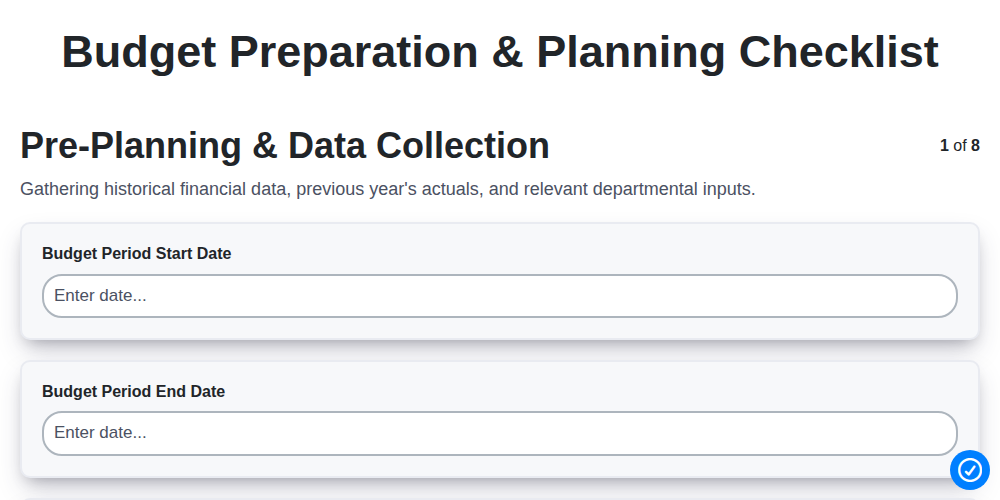
Table of Contents
- Introduction: Why a Structured Budgeting Process Matters
- Phase 1: Pre-Planning & Data Collection
- Phase 2: Goal Setting & Strategic Alignment
- Phase 3: Revenue Forecasting & Income Projections
- Phase 4: Expense & Cost Estimation
- Phase 5: Capital Expenditure (CapEx) Planning
- Phase 6: Budget Draft Review & Reconciliation
- Phase 7: Stakeholder Approval & Finalization
- Phase 8: Budget Monitoring & Variance Analysis Setup
- Conclusion: Turning Your Checklist into Long-Term Financial Success
- Resources & Links
TLDR: Take the guesswork out of financial forecasting with this comprehensive guide and checklist template. Learn how to navigate every critical stage of the budgeting process-from initial data collection and goal alignment to revenue forecasting and variance analysis-ensuring your organization achieves strategic alignment and long-term financial stability.
Introduction: Why a Structured Budgeting Process Matters
Budgeting is often viewed as a mere-exercise in number crunching, but in reality, it is the financial roadmap for your organization's entire future. Without a structured approach, a budget is nothing more than a collection of guesses that can lead to unexpected cash flow shortages, missed opportunities, and strategic drift.
A structured budgeting process serves as more than just a way to track spending; it acts as a vital tool for decision-making and resource allocation. When you follow a systematic framework, you move away from reactive firefighting and toward proactive strategic management. A well-defined process ensures that every dollar spent is intentionally aligned with your long-term objectives, providing clarity to stakeholders and stability to your operations.
By utilizing a comprehensive checklist, you mitigate the risks of human error, prevent the common pitfall of underestimating costs, and create a single source of truth that all departments can rally behind. Whether you are a small business owner or a financial manager at a large enterprise, mastering the rhythm of preparation, forecasting, and monitoring is the difference between navigating uncertainty and driving sustainable growth.
Phase 1: Pre-Planning & Data Collection
Before you can crunch numbers or allocate funds, you must first lay a solid foundation. The Pre-Planning & Data Collection phase is the most critical stage of the budgeting process because the quality of your budget is entirely dependent on the quality of your inputs.
During this phase, the goal is to gather all the necessary historical data and context required to make informed decisions. You aren't just looking at spreadsheets; you are looking at the story of your organization's past performance. This involves collecting several key components:
- Historical Financial Statements: Reviewing previous months, quarters, and years of profit and loss (P&L) statements, balance sheets, and cash flow reports to identify patterns and seasonal trends.
- Operational Metrics: Gathering non-financial data, such as sales volume, production capacity, headcount, and customer acquisition costs, which drive financial outcomes.
- Internal Resource Audit: Assessing current departmental capabilities, existing vendor contracts, and ongoing projects that may impact future spending.
- Market & External Intelligence: Scanning the external environment for inflation rates, industry benchmarks, and any macroeconomic shifts that could influence costs.
Skipping this step or rushing through it leads to guessing, which is the primary cause of budget deficits. By ensuring your data is complete, accurate, and centralized, you provide your team with the empirical evidence needed to build a realistic and resilient financial roadmap.
Phase 2: Goal Setting & Strategic Alignment
Once you have gathered your historical data, the next critical step is to ensure your budget isn't just a collection of numbers, but a financial roadmap that reflects your organization's vision. Budgeting in a vacuum is a recipe for inefficiency; every dollar allocated must serve a specific purpose that moves the needle on your long-term objectives.
During this phase, you must bridge the gap between high-level strategy and tactical spending. This involves two primary actions:
- Defining Key Objectives: Clearly articulate what the organization aims to achieve in the upcoming period. Whether it is aggressive market expansion, improving operational efficiency, or increasing profit margins, these goals dictate your spending priorities.
- Aligning Resources with Priorities: Evaluate your strategic goals against your available resources. If a top priority is enhancing customer experience, your budget should reflect increased allocations for customer support technology or training. Conversely, if a strategic goal is cost leadership, your budget must prioritize waste reduction and lean operations.
By aligning your budget with your strategic roadmap, you transform the budgeting process from a mere administrative task into a powerful tool for execution. Without this alignment, you risk funding activities that do not contribute to your company's ultimate success.
Phase 3: Revenue Forecasting & Income Projections
Once you have aligned your budget with your strategic goals, the next critical step is determining the fuel for your operations: Revenue Forecasting. This phase is less about guesswork and more about creating a data-driven roadmap of the income you expect to generate during the upcoming budget cycle.
To build an accurate forecast, you must move beyond simple intuition and utilize a combination of historical trends and forward-looking market intelligence. Start by analyzing your year-over-year (YoY) sales data to identify seasonal patterns, growth rates, and any cyclical fluctuations that impact your cash flow. However, historical data alone isn't enough; you must also account for external variables such as shifting market demands, new competitor entries, and macroeconomic trends.
Effective revenue forecasting involves breaking down income into specific streams. For product-based businesses, this means analyzing unit sales and pricing strategies; for service-based organizations, it involves assessing billable hours and contract renewals. By layering these granular projections onto your high-level goals, you can identify potential revenue gaps early. This allows you to proactively adjust your spending plans or pivot your sales strategy before a shortfall occurs, ensuring that your budget remains grounded in financial reality.
Phase 4: Expense & Cost Estimation
Once your revenue targets are set, the next critical step is determining exactly what it will cost to achieve them. Expense and cost estimation is the granular phase of budgeting where you transition from high-level goals to line-item realities. This stage requires a meticulous breakdown of all operational outlays to ensure your budget is grounded in fiscal reality rather than optimism.
To build an accurate estimate, you must categorize your costs into two primary areas:
- Variable Costs: These are expenses that fluctuate in direct proportion to your business activity or sales volume, such as raw materials, shipping fees, and sales commissions. Accurate estimation here requires analyzing historical trends and predicting how changes in production volume will impact your margins.
- Fixed Costs (Operating Expenses/OpEx): These are the keep the lights on expenses that remain relatively constant regardless of output. This includes rent, insurance, salaries, and software subscriptions.
A successful estimation process involves more than just looking at last year's spreadsheet. You must account for inflationary pressures, potential vendor price increases, and newly anticipated operational needs. A common pitfall is failing to account for hidden costs, such as maintenance, utility spikes, or administrative overhead. By meticulously documenting the drivers behind every cost estimate, you create a defensive layer of logic that protects your budget during the upcoming review and approval phases.
Phase 5: Capital Expenditure (CapEx) Planning
While operating expenses (OpEx) cover the day-to-day costs of running your business, Capital Expenditure (CapEx) planning focuses on the long-term investments that drive future growth. This phase involves allocating funds for significant assets that provide value over multiple accounting periods, such as property, technology upgrades, new machinery, or infrastructure expansions.
When planning your CapEx, it is essential to distinguish between maintenance CapEx-the necessary spending required to keep existing assets functional-and growth CapEx-the strategic investments intended to increase capacity or efficiency. Because these expenditures often involve large, upfront cash outlays and impact your balance sheet, they require rigorous scrutiny.
To master this stage of the checklist, you should:
- Evaluate ROI: Perform a cost-benefit analysis for every proposed major purchase to ensure the long-term returns justify the immediate drain on cash flow.
- Assess Timing: Determine when these investments will take place to ensure they don't create liquidity issues during certain quarters.
- Consider Depreciation: Account for how these new assets will affect your future depreciation schedules and, ultimately, your bottom line.
Effective CapEx planning ensures that you aren't just funding the present, but actively building the foundation for your company's future scalability.
Phase 6: Budget Draft Review & Reconciliation
Once the initial numbers have been gathered and the draft is assembled, the focus shifts from estimation to scrutiny. The Budget Draft Review & Reconciliation phase is the stress test of your financial plan. This is the stage where you move beyond simple addition and subtraction to ensure that every line item is accurate, justifiable, and mathematically sound.
During this phase, you must perform a deep dive into the discrepancies between your projected revenues and your proposed expenditures. Reconciliation involves checking the draft against your previous year's actual spending and comparing it against the strategic goals established in the earlier stages. Are there unexpected gaps? Did an expense increase unintentionally due to a calculation error?
This is also the time to look for budget creep-the tendency for small, unvetted costs to accumulate into a significant deficit. By meticulously reconciling your data, you ensure that the budget is not just a collection of estimates, but a cohesive, balanced, and reliable financial roadmap.
Phase 7: Stakeholder Approval & Finalization
After the heavy lifting of drafting, reviewing, and reconciling your numbers is complete, you reach the most critical milestone: securing formal authorization. This phase transitions the budget from a working document into an official financial roadmap for the organization.
The approval process is rarely a single event; it is a collaborative dialogue. You will likely need to present your finalized budget to department heads, executive leadership, or the Board of Directors. This stage requires clear, high-level summaries that demonstrate how the proposed allocations directly support the company's strategic objectives. Be prepared to defend significant line items and justify any deviations from previous years' spending.
During this stage, be prepared for the negotiation. Stakeholders may request adjustments to reallocate funds to different priorities. The goal is to reach a consensus where all key decision-makers are aligned and committed to the resource allocation.
Once all feedback is integrated and the final signatures are secured, the budget is officially locked. This finalization is vital because it establishes the definitive baseline against which all future financial performance will be measured. Once this stage is complete, the budget moves out of the planning realm and into the execution phase.
Phase 8: Budget Monitoring & Variance Analysis Setup
A budget is not a set it and forget it document; it is a living roadmap that requires continuous oversight to remain effective. The final, critical step in your preparation is establishing the infrastructure for Budget Monitoring and Variance Analysis. Without a system to track actual performance against your projections, your budget becomes a historical relic rather than a strategic tool.
To ensure your budget drives accountability, you must implement a structured process for comparing actual expenditures and revenues against your planned figures. This involves three key components:
- Defining Variance Thresholds: Determine what level of deviation constitutes a red flag. For example, a 2% fluctuation in office supplies might be negligible, but a 10% spike in utility costs requires immediate investigation.
- Establishing Reporting Cadence: Decide how often you will review the budget. Monthly reviews are standard for most industries, allowing you to catch trends before they become crises, while quarterly reviews may suffice for more stable, long-term projects.
- Implementing Variance Analysis Procedures: Create a protocol for investigating why a variance occurred. Is it a timing issue (a delayed invoice), a volume issue (higher sales than expected), or a price issue (increased raw material costs)?
By setting up these monitoring mechanisms during the planning phase, you transition from reactive firefighting to proactive management, allowing your organization to pivot resources dynamically as market conditions change.
Conclusion: Turning Your Checklist into Long-Term Financial Success
A budget is far more than just a static document to be filed away at the start of the fiscal year; it is a living roadmap for your organization's future. By systematically moving through each stage-from initial data collection and strategic alignment to rigorous variance analysis-you transform budgeting from a reactive chore into a proactive strategic tool.
The true value of this checklist lies in the discipline of the follow-through. It is easy to complete the planning phase, but the real financial mastery happens during the monitoring and reconciliation stages. When you consistently compare your actual results against your projections, you gain the insights necessary to pivot quickly, mitigate risks, and capitalize on unexpected opportunities.
As you implement these steps, remember that a well-structured budget provides the clarity needed to make confident, data-driven decisions. Use this checklist not just to track your spending, but to drive your organization toward its most ambitious goals with precision and stability.
Resources & Links
- Investopedia: Comprehensive guides on financial terminology, budgeting principles, and advanced forecasting techniques.
- Forbes Advisor: Expert insights into strategic financial planning and managing business expenditures.
- Accounting Today: Professional resources for detailed cost estimation, reconciliation processes, and CapEx management.
- Harvard Business Review: In-depth articles on strategic alignment, stakeholder management, and organizational goal setting.
- Oracle NetSuite: Tools and best practices for automated budget monitoring, variance analysis, and real-time data collection.
- Corporate Finance Institute (CFI): Detailed tutorials on revenue forecasting models and financial modeling for budget preparation.
Frequently Asked Questions
What is a budget preparation and planning checklist?
It is a structured step-by-step guide designed to help you organize your income, track your expenses, and set realistic financial goals to ensure long-term stability.
Who can benefit from using this budget template?
This template is suitable for anyone looking to take control of their finances, including students, freelancers, families, and professionals aiming to reduce debt or increase savings.
What are the essential components of a good budget plan?
A comprehensive budget plan should include total monthly income, fixed expenses (like rent/mortgage), variable expenses (like groceries/utilities), savings goals, and an emergency fund allocation.
How often should I update my budget checklist?
While you should track daily transactions, it is recommended to perform a full review and update of your budget plan at least once a month to account for changes in income or spending patterns.
Can this checklist help me with debt management?
Yes, by identifying unnecessary expenses and tracking your cash flow, you can redirect extra funds toward debt repayment strategies like the debt snowball or debt avalanche methods.
Comments
There are no comments yet. Be the first to add one!
Accounting Management Solution Demo
Move beyond rigid, one-size-fits-all software. Leverage a fully programmable accounting environment designed to adapt to your unique workflows, complex hierarchies, and evolving business logic.
Related Articles
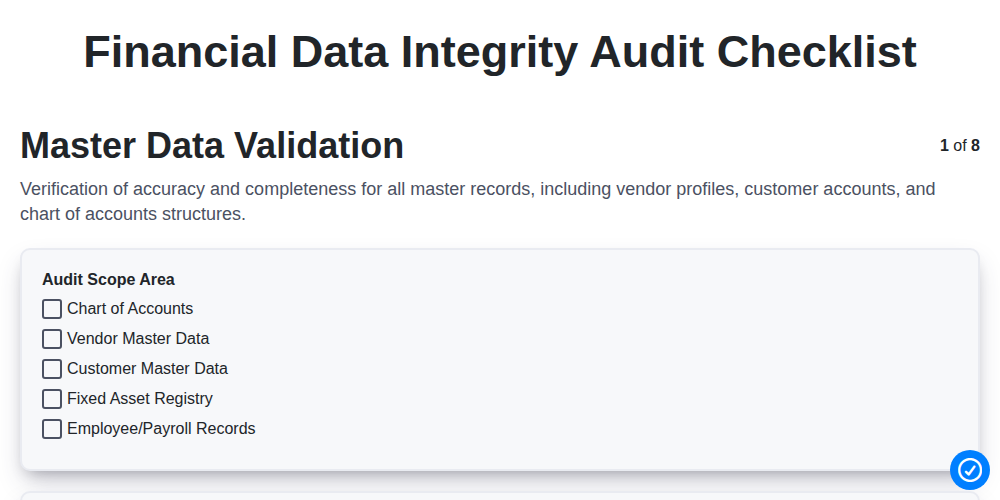
The Ultimate Financial Data Integrity Audit Checklist: A Step-by-Step Template for Precision and Compliance
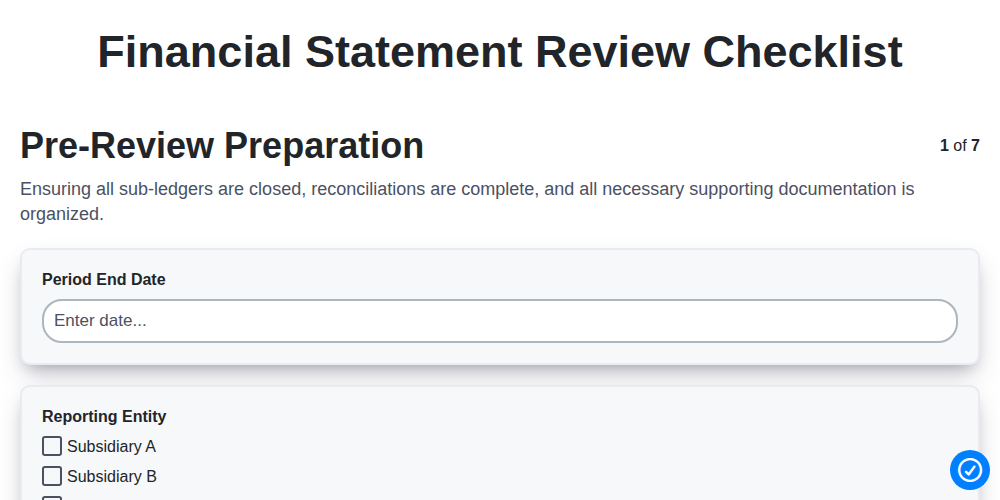
The Ultimate Financial Statement Review Checklist: A Step-by-Step Guide to Ensuring Accuracy and Compliance
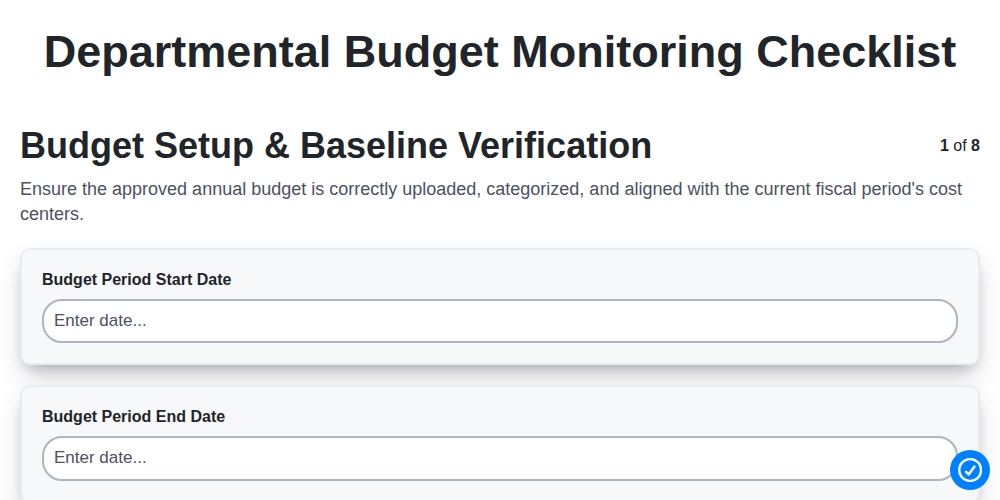
Mastering Financial Control: The Ultimate Departmental Budget Monitoring Checklist
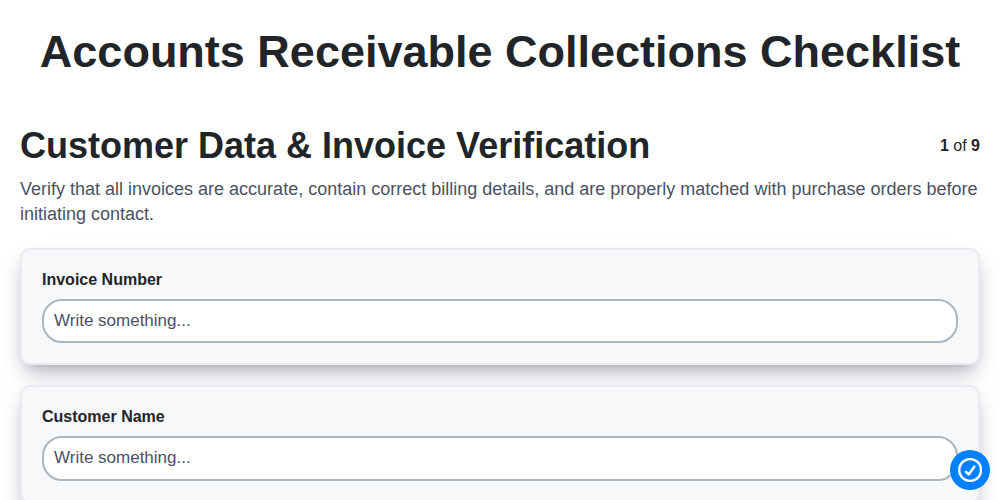
The Ultimate Accounts Receivable Collections Checklist: A Step-by-Step Guide to Streamlining Your Cash Flow
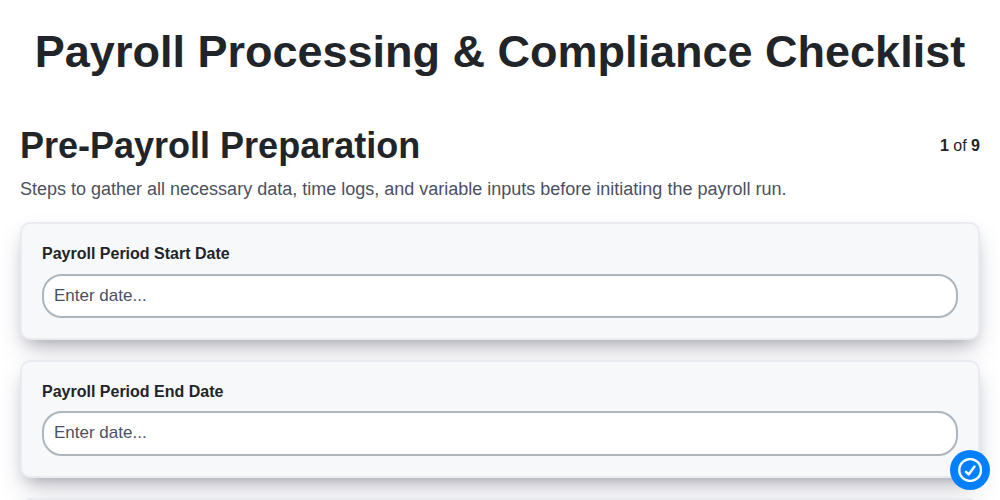
The Ultimate Payroll Processing & Compliance Checklist: A Step-by-Step Guide to Error-Free Payroll
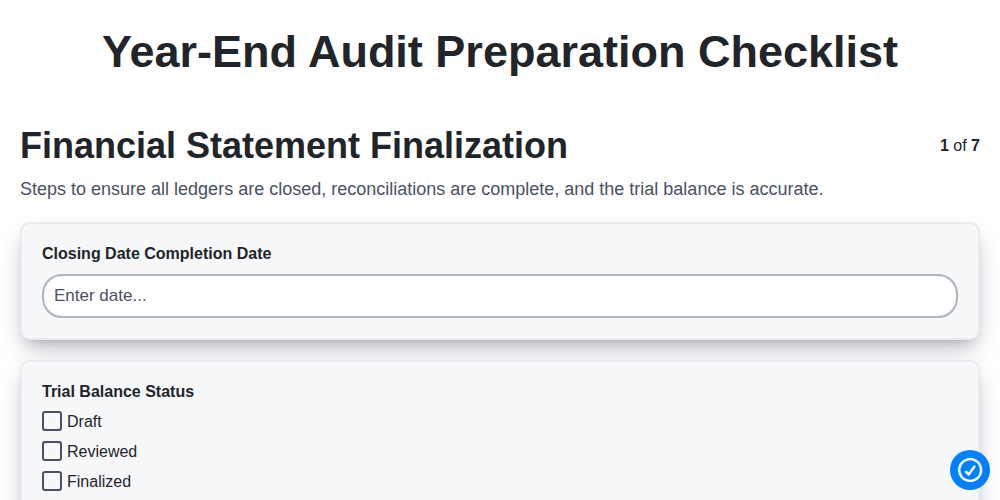
The Ultimate Year-End Audit Preparation Checklist: A Step-by-Step Guide to a Stress-Free Audit
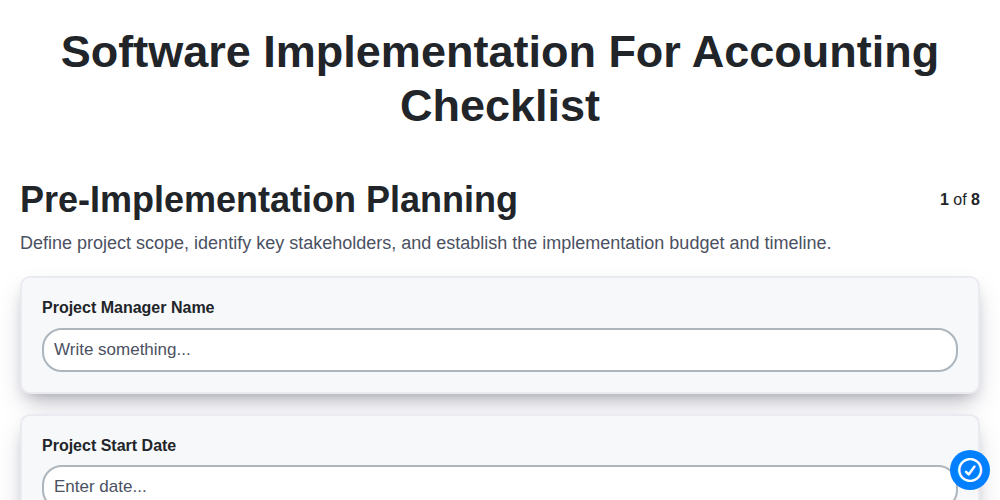
The Ultimate Software Implementation Checklist for Accounting Teams: A Step-by-Step Guide to a Seamless Transition
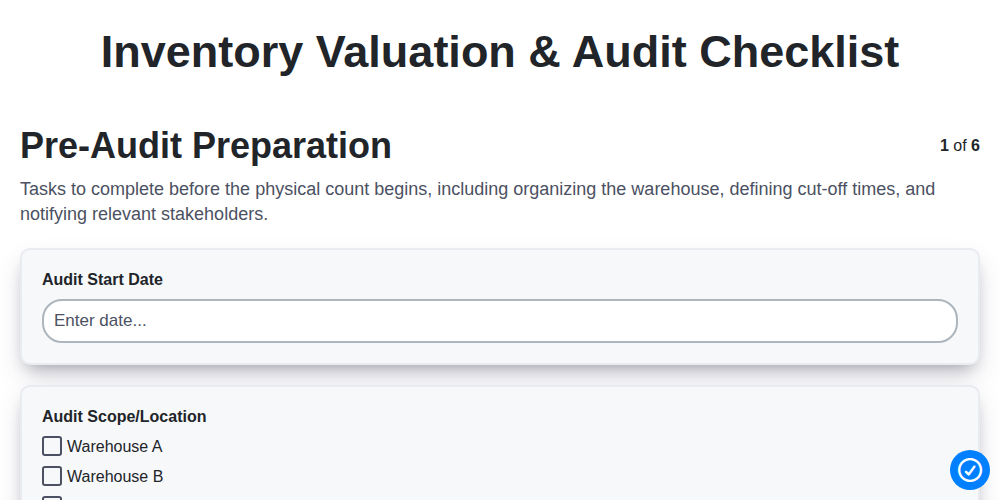
The Ultimate Inventory Valuation & Audit Checklist: A Step-by-Step Guide to Accuracy and Compliance
We can do it Together
Need help with
Accounting Management?
Have a question? We're here to help. Please submit your inquiry, and we'll respond promptly.