Master Your Finances: The Ultimate Cash Flow Forecasting Checklist Template
Published: 07/12/2026 Updated: 09/25/2026
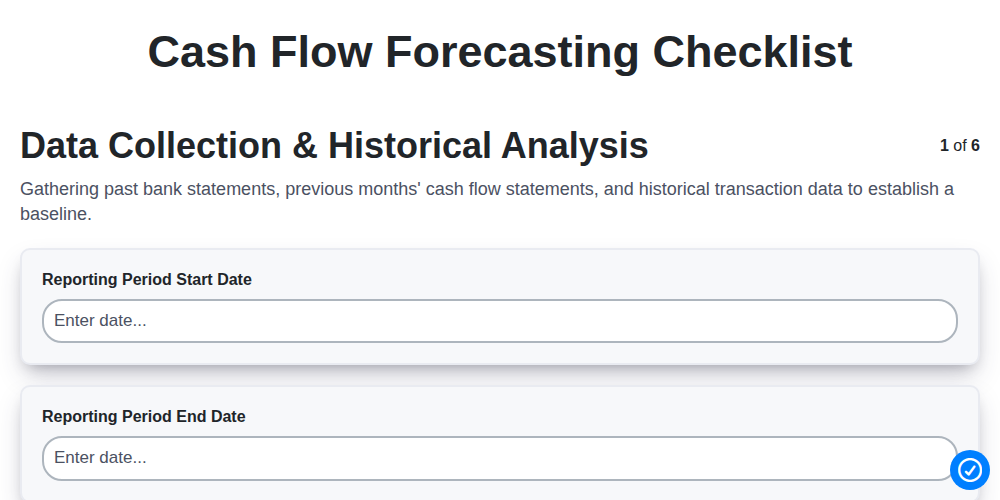
Table of Contents
- Introduction: Why Cash Flow Forecasting is Your Business Lifeline
- Step 1: Data Collection & Historical Analysis
- Step 2: Inflow Identification & Estimation
- Step 3: Outflow & Obligation Assessment
- Step 4: Revenue & Expense Variance Analysis
- Step 5: Scenario & Stress Testing
- Step 6: Review & Finalization
- Pro-Tips for Maintaining Accuracy in Your Forecast
- Conclusion: Turning Your Forecast into Actionable Strategy
- Resources & Links
TLDR: Stop guessing your bank balance and start planning for growth. This guide provides a comprehensive, step-by-step checklist template designed to help you accurately predict future cash positions, manage upcoming obligations, and prepare for financial uncertainty through structured data analysis and scenario testing.
Introduction: Why Cash Flow Forecasting is Your Business Lifeline
In the world of business, profit is often viewed as the ultimate metric of success. However, a company can be profitable on paper and still go bankrupt if it runs out of liquid cash. This is the fundamental difference between profit and cash flow: while profit measures what you have earned, cash flow measures what you actually have available to pay your bills, invest in growth, and navigate unexpected hurdles.
Cash flow forecasting acts as your business's financial GPS. It provides a forward-looking view of your financial health, allowing you to anticipate periods of shortage before they become crises and identify opportunities to deploy excess capital when it is available. Without an accurate forecast, you are essentially driving through a fog without headlights, hoping that your bank balance remains sufficient to cover your next payroll or supplier invoice.
By implementing a structured forecasting process, you transition from a reactive state of firefighting financial emergencies to a proactive state of strategic management. This checklist is designed to help you move beyond guesswork, providing a disciplined framework to ensure you always know exactly where your liquidity stands.
Step 1: Data Collection & Historical Analysis
The foundation of any reliable cash flow forecast is the quality of the data you feed into it. You cannot predict the future accurately if you haven't mastered the patterns of the past. This stage involves gathering all relevant financial records, including bank statements, accounts receivable ledgers, accounts payable aging reports, and previous profit and loss statements.
Once the data is gathered, the focus shifts to historical analysis. This isn't just about looking at numbers; it's about identifying trends, seasonality, and cycles. By examining your historical cash movements, you can spot recurring patterns-such as a dip in liquidity every Q1 or a surge in revenue during summer months. Analyzing your historical accuracy also allows you to see how often your previous estimates deviated from reality, helping you adjust your forecasting model to be more realistic and less optimistic. Without this retrospective deep dive, your forecast is merely a guess rather than a strategic tool.
Step 2: Inflow Identification & Estimation
Once you have gathered your historical data, the next critical phase is mapping out your incoming funds. This step is about more than just looking at last month's sales; it requires a strategic look at the timing and reliability of every dollar expected to enter your business.
To effectively estimate inflows, you must categorize your revenue streams into predictable and variable components. Start by auditing your accounts receivable-reviewing unpaid invoices and calculating the collection lag (the actual time it takes for customers to pay after an invoice is issued). Relying on invoice dates rather than payment dates is a common pitfall that can lead to significant cash gaps.
Beyond receivables, consider all other sources of liquidity, such as:
- Sales Forecasts: Estimating cash from direct sales, factoring in seasonality and market trends.
- Asset Liquidations: Planned sales of equipment or inventory.
- Financing & Investments: Expected draws from lines of credit, new loan disbursements, or capital injections from investors.
- Tax Refunds/Subsidies: Any expected government reimbursements or tax credits.
The goal here is to move from gross revenue to expected cash timing. By applying a conservative lens to your estimations-accounting for potential late payments or seasonal dips-you create a realistic foundation for your forecast rather than an overly optimistic one.
Step 3: Outflow & Obligation Assessment
Once you have a clear picture of your incoming revenue, the next critical step is to pivot your focus toward where the money is going. The Outflow & Obligation Assessment is the stage where you map out every single commitment that will deplete your cash reserves. A common mistake in forecasting is focusing solely on variable costs while overlooking fixed, non-negotiable obligations.
To perform a thorough assessment, categorize your outflows into three distinct layers:
- Fixed Operating Expenses: These are your predictable, recurring costs, such as rent, utilities, insurance, and software subscriptions. Since these amounts rarely fluctuate month-to-month, they form the stable baseline of your forecast.
- Variable & Operational Costs: These are costs that scale with your business activity, such as raw materials, shipping fees, commissions, and hourly labor. These require closer scrutiny as they are directly tied to your sales volume.
- Debt & Financial Obligations: This is the most critical area for maintaining solvency. You must account for upcoming loan repayments, interest expenses, tax liabilities, and any lease commitments.
A successful assessment doesn't just list these numbers; it accounts for timing. It is not enough to know that a $5,000 tax payment is due in Q3; you must pinpoint the specific month it will exit your bank account. By meticulously documenting when these obligations fall due, you can identify potential cash crunches well before they become crises, allowing you to arrange for extra financing or adjust spending proactively.
Step 4: Revenue & Expense Variance Analysis
Once you have estimated your projected inflows and outflows, the next critical step is to look backward to understand how well your previous forecasts aligned with reality. Revenue and expense variance analysis is the process of comparing your actual financial outcomes against your previously forecasted figures to identify discrepancies.
To perform this analysis effectively, you should focus on two key areas:
- Revenue Variance: Are you consistently missing your sales targets, or are you over-performing? Understanding whether a gap is due to a drop in volume, lower pricing, or seasonal shifts helps you adjust your future projections with greater accuracy.
- Expense Variance: Are your operational costs creeping up? Look for budget creep in areas like utilities, payroll, or raw materials. Identifying unexpected spikes in expenses allows you to determine if a cost is a one-time anomaly or a permanent structural change in your cash burn.
By calculating the difference between Actual vs. Forecast, you can identify patterns of error in your estimation process. This step is not about assigning blame; it is about refining your forecasting logic to ensure that your future cash flow projections are grounded in proven accuracy rather than optimistic guesswork.
Step 5: Scenario & Stress Testing
A single, static forecast is rarely enough to prepare a business for the unpredictable nature of the market. This is why Scenario & Stress Testing is perhaps the most critical stage of the checklist. Instead of relying on a single best-case projection, you must prepare for multiple realities by creating different versions of your forecast.
To perform effective stress testing, focus on three specific types of scenarios:
- The Optimistic Scenario (Best Case): What happens if a new product launch exceeds expectations or a major client signs a larger contract? This helps you plan for growth and identify when you might need extra working capital to fund increased inventory or hiring.
- The Realistic Scenario (Base Case): This is your most likely outcome, based on your historical data and current market trends. This serves as your primary roadmap for day-to-day decision-making.
- The Pessimistic Scenario (Worst Case): This is your survival model. What happens if a key supplier raises prices by 20%? What if a major customer delays payment by 60 days? Or if sales drop by 15% due to an economic downturn?
By intentionally breaking your model through stress testing, you can identify your liquidity floor-the point at which your cash reserves run dangerously low. The goal is to identify these vulnerabilities before they become crises, allowing you to develop contingency plans, such as securing a line of credit or reducing discretionary spending, well before the cash crunch arrives.
Step 6: Review & Finalization
The final step in your cash flow forecasting process is the most critical for ensuring accuracy and accountability. Once you have gathered your data, estimated your inflows, and stress-tested your scenarios, you cannot simply file the document away. A forecast is a living document that requires a formal validation process.
During this stage, perform a high-level sanity check: Does the projected cash position align with your strategic goals? Does the end-of-period balance look realistic given your historical trends? More importantly, involve your key stakeholders-such as department heads or senior management-to ensure the projections reflect the operational reality of the entire business.
Once the forecast is reviewed and approved, establish a Review Cadence. Decide whether you will update this forecast weekly, monthly, or quarterly. The goal of the review and finalization stage is to transition from estimation to monitoring. By formalizing this step, you turn your forecast from a static spreadsheet into a reliable roadmap that informs every major financial decision your company makes.
Pro-Tips for Maintaining Accuracy in Your Forecast
Creating a cash flow forecast is not a set it and forget it task. To ensure your projections remain a reliable roadmap rather than just guesswork, you need to move beyond simple data entry and embrace a mindset of continuous refinement. Here are a few professional strategies to keep your accuracy high:
- Embrace the Rolling Forecast Method: Don't treat your forecast as a static annual document. Instead, adopt a rolling forecast approach where you add a new month to your projection as each current month ends. This allows you to incorporate real-time data and adjust for recent trends immediately.
- Build in a Margin of Error: Always assume that inflows will arrive slightly later than expected and outflows will occur slightly sooner. By applying a conservative buffer to your estimates-essentially a pessimistic layer-you create a safety net that protects you from unexpected liquidity crunches.
- Validate Against Reality Regularly: The most critical step in maintaining accuracy is the monthly reconciliation. At the end of every period, compare your forecasted numbers against your actual bank balances and P&L statements. If you see a consistent gap, investigate the root cause-is it an estimation error, or has a fundamental business variable changed?
- Identify and Track Lagging Indicators: Don't just look at your bank balance; look at the drivers behind it. Tracking metrics like Days Sales Outstanding (DSO) or changes in supplier payment terms can provide an early warning system, allowing you to adjust your forecast before a cash shortage actually hits your account.
- Keep a Assumptions Log: Every time you make a significant estimate (e.g., We expect a 10% increase in sales due to a new marketing campaign), document the reasoning behind it. This makes it much easier to audit your logic during your monthly review and identify which assumptions are holding up and which are failing.
Conclusion: Turning Your Forecast into Actionable Strategy
A cash flow forecast is more than just a mathematical exercise or a way to predict the future-it is a powerful strategic tool that allows you to move from a reactive mindset to a proactive one. By systematically following this checklist, you shift your focus from simply surviving month-to-month to actively managing your company's growth and stability.
The true value of this process lies in the insights gained during the testing and variance analysis phases. When you identify potential shortfalls before they occur, you gain the luxury of time to arrange credit lines, adjust spending, or pivot your sales strategy. Conversely, when the forecast reveals unexpected surpluses, you can confidently plan for strategic investments, debt repayment, or expansion.
Don't let your forecast sit in a spreadsheet gathering digital dust. Use it as a living document to drive your decision-making. Treat every variance as a learning opportunity and every scenario test as a rehearsal for real-world challenges. By mastering the rhythm of your cash flow, you aren't just tracking your money-you are architecting the financial resilience of your business.
Resources & Links
- Investopedia: Cash Flow Management Guide: A comprehensive guide to understanding the fundamentals of cash flow, key terminology, and financial management principles.
- Forbes Advisor: Small Business Finance Resources: Expert insights and articles on managing business liquidity, budgeting, and strategic financial planning for entrepreneurs.
- Accounting Today: Industry news and technical resources regarding accounting best practices, including advanced forecasting techniques and variance analysis.
- SCORE - Free Business Mentoring: A wealth of templates, tools, and educational resources designed to help small business owners master financial forecasting and stability.
- Oracle NetSuite: Cash Flow Forecasting Tools: Technical resources and software insights on automating data collection and performing real-time scenario modeling.
- Shopify Business Blog: Practical advice for retail and e-commerce entrepreneurs on managing inflows, outflows, and seasonal revenue fluctuations.
Frequently Asked Questions
What is cash flow forecasting?
Cash flow forecasting is the process of estimating the amount of money expected to flow in and out of your business over a specific period, helping you predict future liquidity and make informed financial decisions.
How often should I perform a cash flow forecast?
While it depends on your business needs, it is recommended to perform cash flow forecasting on a monthly basis, though many businesses find it beneficial to review their projections weekly to capture real-time changes.
What is the difference between cash flow and profit?
Profit is what remains after all expenses are subtracted from total revenue, whereas cash flow tracks the actual movement of physical cash into and out of your bank accounts, accounting for timing differences like accounts receivable and payable.
What are the key components of the Cash Flow Forecasting Checklist Template?
The template includes essential steps such as identifying all sources of revenue, listing all fixed and variable expenses, tracking accounts receivable and payable, and accounting for unexpected or seasonal fluctuations.
Can this template help me avoid business failure?
Yes, by using this checklist to identify potential periods of negative cash flow in advance, you can take proactive measures-such as securing a line of credit or reducing expenses-to maintain liquidity and prevent insolvency.
Comments
There are no comments yet. Be the first to add one!
Accounting Management Solution Demo
Move beyond rigid, one-size-fits-all software. Leverage a fully programmable accounting environment designed to adapt to your unique workflows, complex hierarchies, and evolving business logic.
Related Articles
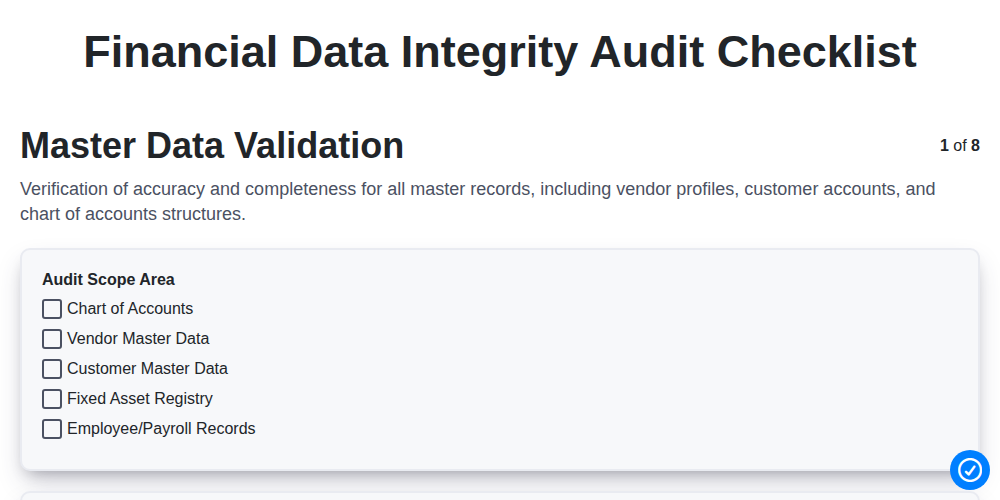
The Ultimate Financial Data Integrity Audit Checklist: A Step-by-Step Template for Precision and Compliance
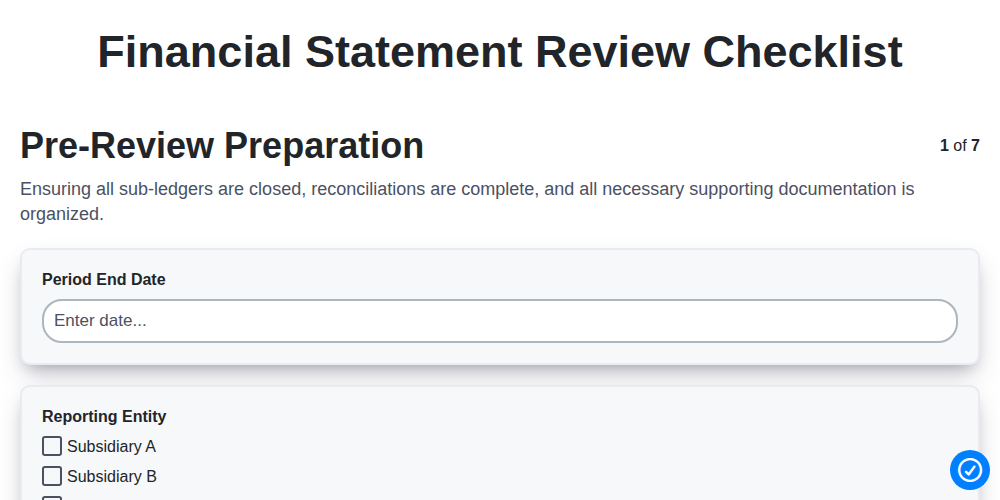
The Ultimate Financial Statement Review Checklist: A Step-by-Step Guide to Ensuring Accuracy and Compliance
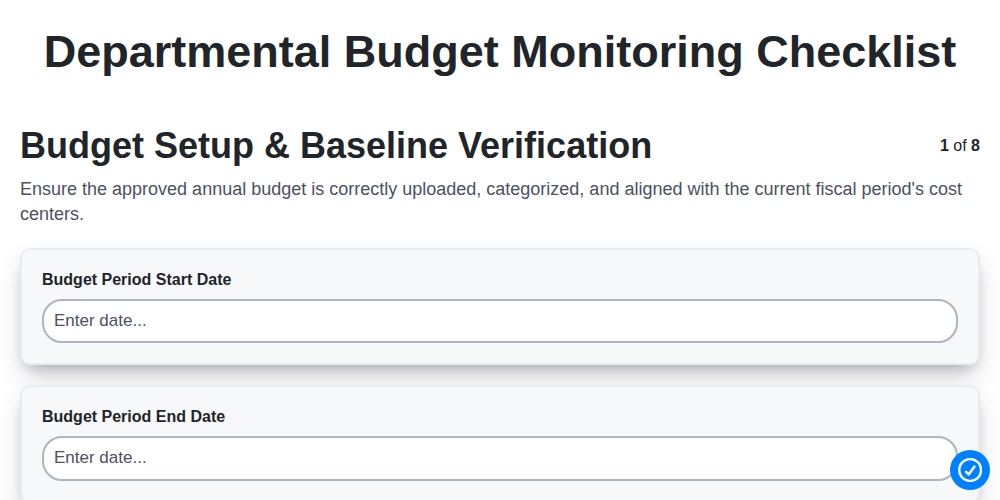
Mastering Financial Control: The Ultimate Departmental Budget Monitoring Checklist
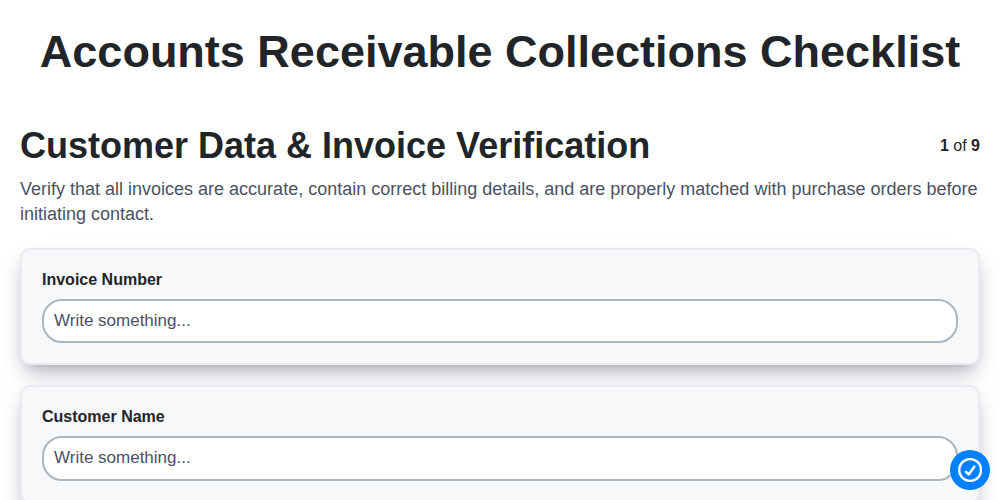
The Ultimate Accounts Receivable Collections Checklist: A Step-by-Step Guide to Streamlining Your Cash Flow
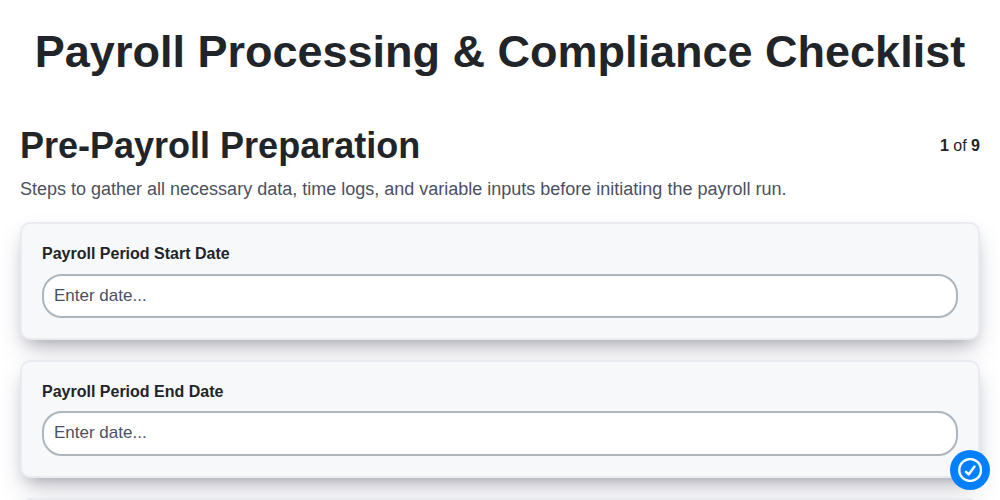
The Ultimate Payroll Processing & Compliance Checklist: A Step-by-Step Guide to Error-Free Payroll
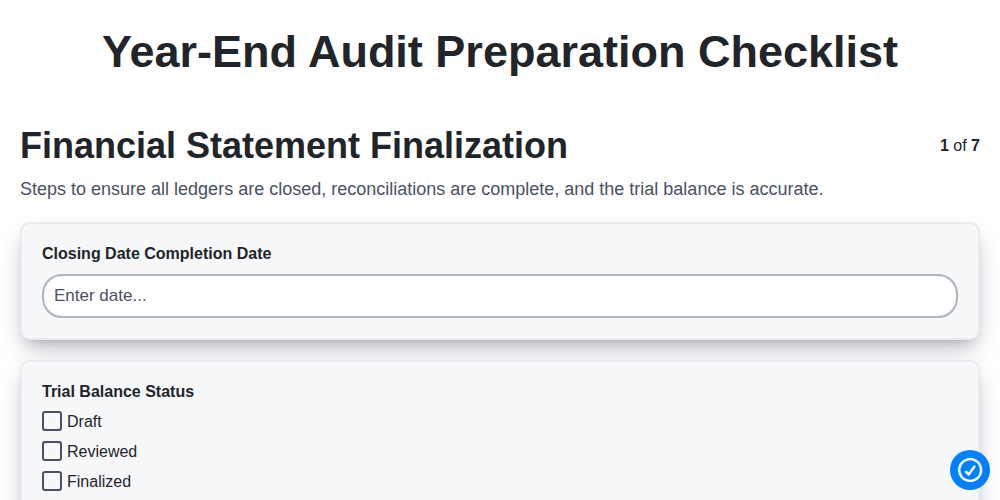
The Ultimate Year-End Audit Preparation Checklist: A Step-by-Step Guide to a Stress-Free Audit
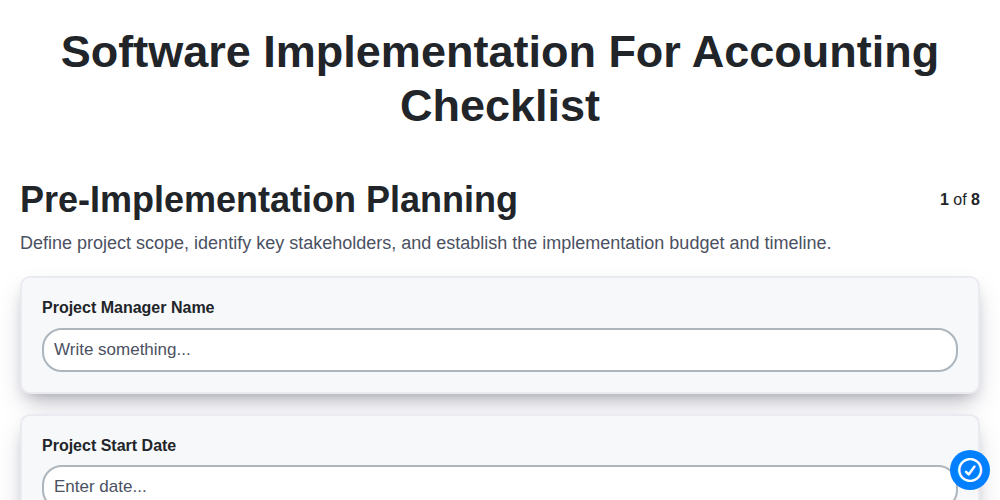
The Ultimate Software Implementation Checklist for Accounting Teams: A Step-by-Step Guide to a Seamless Transition
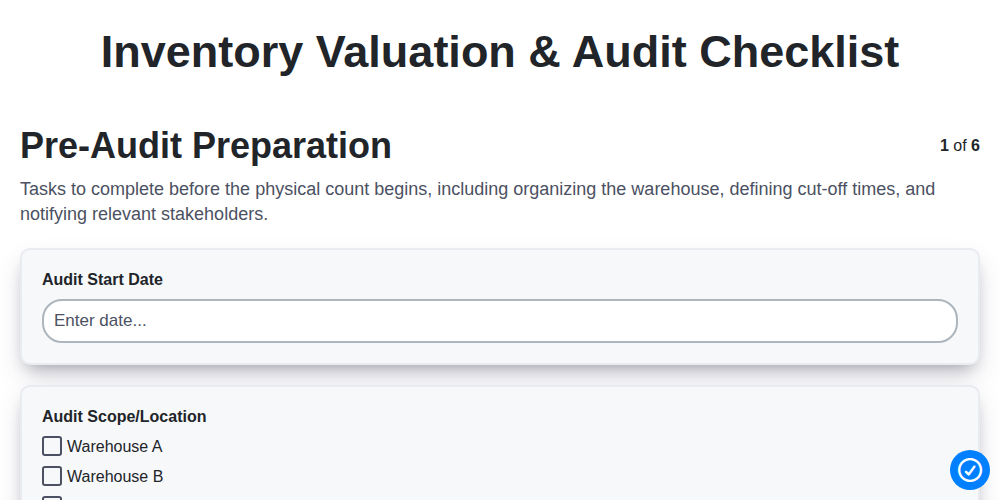
The Ultimate Inventory Valuation & Audit Checklist: A Step-by-Step Guide to Accuracy and Compliance
We can do it Together
Need help with
Accounting Management?
Have a question? We're here to help. Please submit your inquiry, and we'll respond promptly.