Ensuring Integrity: Your Cold Chain Compliance Checklist for Supply Chain Success
Published: 12/08/2025 Updated: 07/02/2026
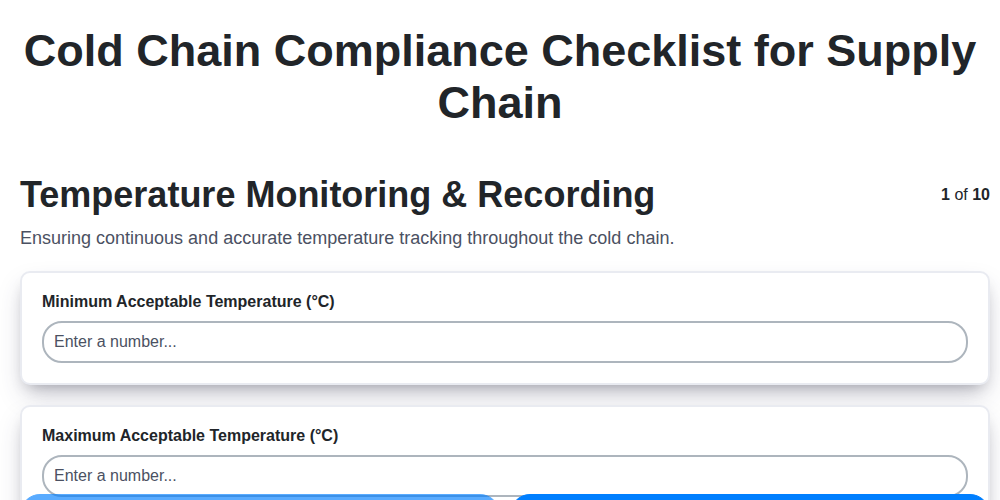
Table of Contents
- Introduction: Why Cold Chain Compliance Matters
- 1. Temperature Monitoring & Recording: The Foundation of Compliance
- 2. Packaging & Insulation: Maintaining Temperature During Transit
- 3. Refrigeration Unit Maintenance: Proactive Prevention
- 4. Transportation Validation: Ensuring Performance in Motion
- 5. Facility Temperature Control: Stability at Origin and Destination
- 6. Documentation and Record Keeping: Your Proof of Compliance
- 7. Training and Personnel: Empowering Your Team
- 8. Product Handling and Storage: Best Practices at Every Step
- 9. Emergency Procedures: Responding to Unexpected Events
- 10. Regulatory Compliance: Navigating the Legal Landscape
- 11. Risk Assessment & Mitigation
- 12. Continuous Improvement: Audits & Reviews
- 13. Technology Solutions for Cold Chain Management
- Conclusion: Protecting Your Product, Protecting Your Reputation
- Resources & Links
TLDR: Losing product due to temperature fluctuations? This checklist simplifies cold chain compliance! It covers everything from temperature monitoring and packaging to training and emergency procedures, helping you minimize risk, maintain product integrity, and avoid costly penalties - all in one easy-to-follow guide.
Introduction: Why Cold Chain Compliance Matters
The cold chain - the unbroken series of refrigerated steps used to transport temperature-sensitive products - is absolutely critical for maintaining product quality, safety, and efficacy. From pharmaceuticals and vaccines to food products and certain chemicals, a breach in the cold chain can have devastating consequences. Imagine a vaccine losing its potency due to improper storage, or fresh produce spoiling before it reaches consumers. The financial implications are significant - product spoilage, recalls, and potential legal repercussions can severely impact a business. Beyond the financial, compromised cold chain integrity can pose serious health risks to individuals and erode consumer trust. This checklist is designed to guide you through essential steps to ensure your cold chain remains robust and compliant, safeguarding your products and protecting your business.
1. Temperature Monitoring & Recording: The Foundation of Compliance
Maintaining consistent temperatures throughout the cold chain isn't just about keeping things cool; it's about ensuring product integrity and safety. Robust temperature monitoring and recording are the bedrock of cold chain compliance. Without accurate and verifiable data, demonstrating adherence to regulations and protecting your products becomes significantly more challenging.
Here's what's crucial in this area:
- Sensor Placement: Strategically place temperature sensors in critical zones within packaging, transportation vehicles, and storage facilities. Consider factors like proximity to potential heat sources and airflow.
- Sensor Calibration: Regular calibration of temperature sensors is vital for accuracy. A documented calibration schedule is a must.
- Real-Time Monitoring (Recommended): Implementing real-time temperature monitoring systems provides immediate alerts for deviations, allowing for corrective action before damage occurs. These systems often integrate with cloud-based platforms for easy access and analysis.
- Data Logging Frequency: Establish a defined and appropriate logging frequency. Consider product sensitivity - more sensitive products require more frequent logging.
- Alarm Thresholds: Set appropriate high and low alarm thresholds based on product specifications and regulatory requirements.
- Data Storage & Security: Implement secure data storage protocols. Data should be readily accessible for audits and investigations, but also protected from unauthorized access or alteration.
- Documentation: Detailed records of temperature readings, alarm events, and corrective actions must be meticulously maintained.
2. Packaging & Insulation: Maintaining Temperature During Transit
Effective packaging and insulation are the first line of defense in cold chain integrity. Simply having a refrigerated truck isn't enough; the product within that truck needs to be protected from external temperature fluctuations. Here's what to consider:
- Appropriate Insulation Materials: Choose insulation materials (e.g., EPS, polyurethane, vacuum insulated panels - VIPs) based on the product's temperature requirements, transit duration, and ambient conditions. Consider R-values and their suitability.
- Packaging Design: Design packaging to minimize air gaps and maximize contact between the product and the insulation. Optimize container size to reduce void space.
- Phase Change Materials (PCMs): Implement PCMs to buffer temperature excursions. Select PCMs with melting points appropriate for the required temperature range. Consider quantity and placement strategically.
- Container Integrity: Regularly inspect packaging materials for damage (cracks, tears, compression) before each shipment. Replace damaged materials immediately.
- Pre-Conditioning: Ensure packaging and insulation are pre-conditioned to the target temperature before loading the product. This helps minimize temperature shock.
- Product Density: Account for product density when calculating insulation needs. Denser products may require more robust packaging.
- Climate Considerations: Adapt packaging solutions to prevailing weather conditions - intense heat requires significantly more insulation than mild climates.
3. Refrigeration Unit Maintenance: Proactive Prevention
The heart of your cold chain often lies within your refrigeration units. Neglecting their upkeep is a recipe for disaster, leading to temperature excursions, product spoilage, and costly recalls. This section focuses on proactive maintenance, not just reactive repairs.
Key Actions:
- Regular Inspections: Establish a schedule for routine visual inspections. Look for signs of wear and tear, leaks, ice buildup, and unusual noises.
- Filter Replacement: Dirty filters reduce airflow and efficiency. Replace air filters according to manufacturer recommendations, typically every 3-6 months, or more frequently in dusty environments.
- Condenser Coil Cleaning: These coils release heat. Dirty coils hinder this process, forcing the unit to work harder and decreasing its lifespan. Clean them at least twice a year, or more often based on environmental factors.
- Refrigerant Level Checks: Low refrigerant levels signal a leak, impacting cooling capacity. Have a qualified technician perform regular refrigerant checks and leak detection. Do not attempt to handle refrigerants yourself - it requires specialized training and equipment.
- Belt and Component Checks: Inspect belts for wear and tension. Examine other mechanical components for signs of damage or failure.
- Performance Monitoring: Track unit performance metrics like energy consumption and cooling capacity over time. Significant deviations can indicate underlying issues.
- Preventative Maintenance Contracts: Consider partnering with a qualified refrigeration service provider for preventative maintenance contracts. These contracts ensure regular inspections, cleaning, and repairs by trained professionals.
Documentation: Thoroughly document all maintenance activities, including dates, tasks performed, parts replaced, and technician's notes.
4. Transportation Validation: Ensuring Performance in Motion
Maintaining cold chain integrity isn't just about what happens in the warehouse or manufacturing facility; the journey itself is often the weakest link. Transportation validation is the process of systematically evaluating and documenting the performance of your refrigerated transport vehicles under simulated or real-world conditions. It goes beyond simply having a refrigerated truck - it proves that the equipment consistently delivers the required temperature range during transit.
This typically involves a phased approach. First, static testing verifies the equipment's ability to maintain temperature under stationary conditions, mimicking hours-long delays or downtime. Next, dynamic testing simulates actual transport routes, accounting for variables like ambient temperature, humidity, road conditions, door openings, and loading/unloading cycles. Data loggers strategically placed within the cargo area continuously record temperatures, providing a detailed temperature profile.
Validation isn't a one-time event. Changes in routes, carrier selection, or vehicle maintenance necessitate revalidation. Regular monitoring and record-keeping of transport temperatures during routine shipments provide ongoing assurance. Failing to validate can lead to product spoilage, safety risks, and costly recalls - validation safeguards your product and protects your brand reputation. Remember to document your validation protocols, results, and any corrective actions taken.
5. Facility Temperature Control: Stability at Origin and Destination
Maintaining consistent temperature control isn't just about the trucks; it's equally critical at both the origin and destination facilities where your cold chain products are handled. Fluctuations here can compromise product integrity before and after transport.
What Needs to be Done?
- Temperature Mapping: Conduct thorough temperature mapping of all storage areas (warehouses, distribution centers, receiving docks) to identify potential hot spots or areas with inconsistent temperatures.
- HVAC System Maintenance: Regularly inspect and maintain HVAC systems, ensuring they are functioning optimally and can handle peak loads. Implement preventative maintenance schedules.
- Door and Dock Seals: Verify proper sealing of doors and loading docks to prevent temperature excursions when goods are moved in and out. Regularly inspect for damage and replace seals as needed.
- Internal Temperature Monitoring: Implement continuous temperature monitoring systems within all storage areas, with calibrated sensors and data loggers.
- Buffer Zones: Establish adequate buffer zones around temperature-sensitive products to minimize exposure to ambient temperature variations.
- Pre-Cooling/Post-Cooling: Implement pre-cooling procedures for products before loading and post-cooling protocols upon arrival to ensure they reach and maintain the required temperature range.
- Alarm Systems: Integrate alarm systems that alert personnel to temperature deviations outside acceptable limits.
- Validation: Validate the effectiveness of facility temperature control measures through periodic testing and verification.
Proper facility temperature control acts as a crucial foundation for a robust cold chain and contributes significantly to overall product quality and safety.
6. Documentation and Record Keeping: Your Proof of Compliance
In the world of cold chain logistics, meticulous documentation isn't just good practice-it's essential. It's your proof that you're adhering to regulations, protecting product integrity, and minimizing risk. Without robust records, you're vulnerable to audits, product recalls, and potential legal repercussions.
What should your documentation include? Think comprehensive. This means:
- Temperature Logs: Detailed records of temperature readings throughout the entire cold chain, including time, location, and temperature values. Digital systems with automated data capture are highly recommended.
- Calibration Records: Proof that monitoring equipment (thermometers, data loggers, etc.) is regularly calibrated and maintained.
- Packaging Validation Reports: Documentation demonstrating that your packaging and insulation meet the required performance standards.
- Transportation Validation Studies: Records confirming that transportation conditions maintain the required temperature range.
- Maintenance Logs: Detailed accounts of all maintenance performed on refrigeration units and other equipment.
- Training Records: Evidence that personnel involved in the cold chain process have received adequate training.
- Deviation Reports: When temperature excursions or other issues arise, thorough reports documenting the incident, corrective actions taken, and preventative measures implemented.
- Audit Trails: For digital systems, ensure audit trails are enabled to track data modifications and user access.
Best Practices:
- Retention Policy: Establish a clear retention policy for all records, complying with regulatory requirements.
- Accessibility: Ensure records are readily accessible to authorized personnel and auditors.
- Digital Solutions: Consider using digital platforms for data capture, storage, and reporting - they offer improved accuracy, efficiency, and accessibility.
Think of your documentation as your shield against potential problems. It's an investment that pays dividends in the form of compliance, product safety, and peace of mind.
7. Training and Personnel: Empowering Your Team
The most robust cold chain processes crumble without a well-trained and engaged team. It's not enough to simply have procedures in place; your personnel must understand why they matter and how to execute them flawlessly.
Here's what your training program should cover:
- Understanding the Cold Chain: Ensure everyone involved, from warehouse staff to delivery drivers, understands the critical importance of maintaining temperature throughout the entire process. Explain the potential consequences of deviations - product spoilage, safety risks, financial losses, and regulatory penalties.
- Specific Task Training: Tailor training to specific roles. Warehouse personnel need in-depth knowledge of facility temperature control and product handling. Drivers require training on transportation validation procedures and vehicle maintenance basics.
- Equipment Operation: Proper use and calibration of temperature monitoring devices, packaging techniques, and refrigeration units are essential. Hands-on training and refreshers are key.
- Incident Response: Train personnel on how to recognize, report, and respond to temperature excursions or equipment failures. This includes clear communication protocols and escalation procedures.
- Documentation Practices: Employees must be proficient in accurately documenting temperature readings, maintenance records, and any deviations from standard operating procedures.
- Regular Refresher Courses: Cold chain best practices evolve, and employee knowledge can fade. Implement regular refresher courses to reinforce critical concepts and introduce new procedures.
- Competency Assessment: Regularly assess employee competency through practical demonstrations and knowledge checks to ensure understanding and adherence to protocols.
Investing in your team's knowledge and skills isn't just about compliance; it's about safeguarding your products, protecting your reputation, and driving overall cold chain success.
8. Product Handling and Storage: Best Practices at Every Step
Maintaining cold chain integrity isn't just about the big systems; it's about meticulous attention to detail at every stage of product handling and storage. Here's a breakdown of best practices to ensure your temperature-sensitive products remain safe and effective:
- Receiving Inspection: Upon arrival, immediately verify the temperature of incoming shipments using calibrated thermometers. Document any deviations from the required temperature range. Reject shipments that fall outside acceptable limits.
- First-In, First-Out (FIFO) Rotation: Implement a strict FIFO system to prevent products from expiring while in storage. Clearly label all products with receiving dates.
- Staging Area Protocol: Designate a controlled staging area for receiving and dispatching. Minimize exposure to ambient temperatures in this area.
- Proper Stacking & Ventilation: Avoid overcrowding products, as this restricts airflow and can lead to temperature stratification. Ensure adequate ventilation within storage units.
- Minimizing Exposure: Limit the amount of time products spend outside of refrigerated environments. Expedite movement between processes.
- Handling with Care: Train personnel on safe handling techniques to prevent physical damage that could compromise product integrity and potentially introduce contaminants.
- Regular Inventory Checks: Conduct frequent inventory checks to monitor product conditions and identify potential issues proactively.
- Specific Product Requirements: Always adhere to the manufacturer's recommended storage conditions and handling guidelines. Some products have very specific requirements.
9. Emergency Procedures: Responding to Unexpected Events
The cold chain isn't always predictable. Power outages, equipment malfunctions, transportation delays - unexpected events will happen. Having a robust emergency response plan is critical to mitigating potential product loss and maintaining compliance.
Key Elements of an Emergency Response Plan:
- Power Outage Protocol: Immediately define steps to take if refrigeration units lose power. This includes backup power solutions (generators, UPS), notification procedures, and temporary storage options. Time is of the essence - know how long your products can safely deviate from the target temperature.
- Equipment Failure Contingency: What happens if a refrigeration unit breaks down mid-transport or in a storage facility? Establish a process for rapid replacement or relocation of products to a functioning unit. Include contact information for repair services and alternative cold storage facilities.
- Transportation Delays: Develop a plan for handling significant delays. This might involve re-icing, adjusting transportation routes, or contacting the client to inform them of the situation and explore solutions. Document the delay and any corrective actions taken.
- Temperature Excursion Response: Outline specific steps to follow if temperature deviations occur. This includes immediate assessment of the impact on product quality, containment procedures, and potentially, product quarantine and disposition protocols (e.g., retesting, rejection).
- Communication Protocol: Establish clear lines of communication. Who needs to be notified in an emergency? Ensure readily available contact lists for key personnel, transportation providers, and regulatory bodies.
- Regular Drills: Conduct periodic emergency drills to test the effectiveness of the plan and ensure personnel are familiar with procedures. This reinforces training and identifies areas for improvement.
Documentation is paramount. Every incident, the actions taken, and the resulting outcomes must be thoroughly documented to demonstrate due diligence and compliance.
10. Regulatory Compliance: Navigating the Legal Landscape
Cold chain compliance isn't just about maintaining product integrity; it's about adhering to a complex web of regulations. Failure to do so can result in hefty fines, product recalls, and reputational damage. This section outlines key regulatory areas you must address.
Key Regulations to Consider:
- GDP (Good Distribution Practice): Widely adopted, GDP sets standards for the distribution of pharmaceutical products and increasingly other temperature-sensitive goods. Understanding and implementing GDP guidelines is paramount.
- HACCP (Hazard Analysis and Critical Control Points): Crucial for food products, HACCP principles dictate identifying and controlling hazards, including temperature deviations, throughout the supply chain.
- FDA (Food and Drug Administration) Regulations (US): The FDA has specific requirements for the storage and transport of food and drugs. Staying abreast of these updates is essential for businesses operating within the US.
- WHO (World Health Organization) Guidelines: Particularly relevant for international shipments, the WHO provides valuable guidance on cold chain management for pharmaceuticals and vaccines.
- Country-Specific Regulations: Be acutely aware of the regulations in every country your product traverses. These can vary significantly and often require specialized expertise.
- Audits and Inspections: Prepare for regular audits from regulatory bodies and customers. Maintain meticulous records to demonstrate compliance.
Staying Current: Regulatory landscapes are dynamic. Subscribe to industry publications, participate in relevant webinars, and consider consulting with regulatory experts to ensure your compliance program remains robust and up-to-date. It's not enough to comply today; you must plan for future changes.
11. Risk Assessment & Mitigation
Risk assessment is a vital, ongoing process within cold chain compliance. It's not enough to simply have procedures in place; you need to proactively identify potential points of failure and implement mitigation strategies. This involves a comprehensive review of your entire cold chain, from origin to end-user, to pinpoint vulnerabilities.
Here's what a robust risk assessment should cover:
- Scenario Planning: Consider what-if scenarios. What happens if a refrigeration unit fails during transport? What if a temperature excursion occurs due to a delayed delivery? What if a power outage affects a storage facility?
- Failure Mode and Effects Analysis (FMEA): A structured approach to identifying potential failures, analyzing their effects, and prioritizing actions to prevent or minimize them.
- Root Cause Analysis: When incidents do occur (and they likely will), conduct thorough root cause analysis to understand why they happened and prevent recurrence. Don't just address the symptom; fix the underlying cause.
- Contingency Plans: Develop detailed contingency plans for addressing identified risks. This includes backup power solutions, alternative transportation routes, and pre-approved substitutes for critical components.
- Regular Review & Updates: Risk assessments aren't one-and-done. They must be regularly reviewed and updated based on performance data, changing regulations, and evolving product requirements.
By proactively addressing potential risks, you minimize the likelihood of temperature excursions, protect product integrity, and maintain consumer safety.
12. Continuous Improvement: Audits & Reviews
Regular audits and reviews aren't just about identifying what didn't go right; they're fundamental to proactively strengthening your cold chain compliance. Implement a schedule for both internal and potentially external audits, focusing on all aspects of your checklist - from temperature monitoring to training. Analyze audit findings meticulously, identifying root causes instead of just addressing symptoms. Use these insights to update your Standard Operating Procedures (SOPs), improve processes, and invest in new technologies or training as needed. Don't be afraid to challenge existing practices - continuous improvement thrives on questioning and refinement. Track corrective actions and verification of those actions to ensure lasting impact and demonstrate a commitment to ongoing excellence in cold chain management. Periodic reviews of your entire cold chain strategy, factoring in regulatory updates and technological advancements, are equally vital to maintaining a future-proof and robust system.
13. Technology Solutions for Cold Chain Management
The traditional methods of cold chain management, while foundational, are increasingly limited in their ability to provide the real-time visibility and proactive alerts needed for optimal performance. Thankfully, technology offers a suite of powerful solutions to elevate your compliance.
Here's a glimpse of how technology is transforming cold chain management:
- IoT Sensors & Real-Time Monitoring: Deploying IoT sensors throughout the chain-within packaging, trucks, and storage facilities-provides continuous temperature, humidity, and location data. These sensors can trigger alerts when deviations occur, allowing for immediate corrective action.
- Cloud-Based Data Platforms: Centralized platforms collect and analyze data from multiple sources, providing a comprehensive view of the entire cold chain. These platforms often integrate with other business systems for streamlined workflows.
- GPS Tracking & Route Optimization: Knowing the location of shipments and optimizing routes can minimize temperature excursions caused by delays or inefficient logistics.
- Blockchain for Traceability: Blockchain technology enhances transparency and accountability by creating an immutable record of product handling and temperature data throughout the chain.
- AI & Predictive Analytics: AI algorithms can analyze historical data to identify potential risks, predict equipment failures, and optimize temperature control strategies.
- Automated Reporting & Compliance Dashboards: Technology automates reporting processes and generates dashboards that provide clear visualizations of key performance indicators (KPIs) for compliance tracking.
By embracing these technological advancements, companies can significantly improve cold chain integrity, reduce waste, and enhance overall operational efficiency.
Conclusion: Protecting Your Product, Protecting Your Reputation
Maintaining cold chain compliance isn't just about adhering to regulations; it's about safeguarding the integrity of your product and preserving your company's reputation. This checklist provides a comprehensive framework, but remember, continuous improvement is key. Regularly review and update your processes based on audits, emerging technologies, and evolving industry best practices. A robust cold chain program minimizes waste, reduces risk, and builds trust with your customers. By prioritizing these steps, you're not only protecting the quality of your product, but also demonstrating a commitment to excellence that resonates throughout your entire supply chain.
Resources & Links
- U.S. Food and Drug Administration (FDA): The FDA provides extensive information, guidance, and regulations pertaining to cold chain management, especially concerning food, drugs, and medical devices. A crucial source for understanding U.S. regulatory requirements.
- World Health Organization (WHO): The WHO offers global guidance and resources on cold chain management, particularly for vaccine storage and distribution. Valuable for understanding international standards and best practices.
- Centers for Disease Control and Prevention (CDC): The CDC provides information and resources related to vaccine cold chain management, including best practices and training materials. Essential for pharmaceutical and healthcare supply chains.
- Institute for Supply Management (ISM): ISM provides resources, training, and certifications related to supply chain management, including insights into cold chain practices and risk mitigation. Good for broader supply chain knowledge.
- American Society of Heating, Refrigerating and Air-Conditioning Engineers (ASHRAE): ASHRAE develops standards and guidelines related to refrigeration and HVAC systems, crucial for maintaining consistent temperatures in cold chain facilities. Provides technical expertise.
- International Society for Pharmaceutical Engineering (ISPE): ISPE is a professional organization focused on pharmaceutical engineering and manufacturing. They offer guidance and best practices related to facilities and equipment validation, relevant to temperature-controlled environments.
- Biotechnology Innovation Organization (BIO): BIO advocates for biotechnology companies and often provides resources and insights into cold chain requirements specific to biopharmaceutical products. Good for understanding industry-specific challenges.
- International Organization for Standardization (ISO): ISO develops and publishes international standards, including those related to quality management systems (e.g., ISO 9001) and environmental management systems, which can be applied to cold chain operations.
- GS1: GS1 provides standards for product identification and traceability, essential for cold chain visibility and accountability. Improves tracking and authentication throughout the supply chain.
- Cold Chain Federation: The Cold Chain Federation provides resources, networking opportunities, and advocacy for companies involved in the cold chain industry. A valuable source for industry news and connections.
- Temperature Control: Provides information on cold chain solutions, including temperature monitoring, packaging, and validation services. Good for exploring technological options.
- Emerson: Emerson is a provider of temperature and process control technologies used in cold chain management, offering hardware and software solutions.
- Thermo Fisher Scientific: Thermo Fisher Scientific provides a wide range of products and services for cold chain management, including temperature monitoring devices, packaging solutions, and validation services. Offers comprehensive solutions.
- Sensitech: Sensitech offers temperature monitoring and data logging solutions for cold chain management, including wireless sensors and cloud-based software.
Frequently Asked Questions
What is the cold chain and why is it important?
The cold chain refers to a temperature-controlled supply chain that ensures products, like pharmaceuticals, food, and chemicals, remain within a specific temperature range from production to the end consumer. Maintaining this temperature range is crucial for product safety, efficacy, and quality, preventing spoilage, degradation, and potential health risks.
Why is cold chain compliance crucial for supply chain success?
Compliance ensures product integrity, reduces waste and recalls, protects brand reputation, maintains regulatory adherence, and ultimately contributes to a more reliable and profitable supply chain. Failure to comply can lead to significant financial and legal consequences.
Who is responsible for cold chain compliance?
Responsibility is shared across the entire supply chain. This includes manufacturers, distributors, logistics providers, carriers, and retailers. Each party must have documented procedures and systems in place to maintain the required temperature range and demonstrate adherence to regulations.
What are some key areas covered in a cold chain compliance checklist?
A comprehensive checklist should cover aspects like temperature monitoring, packaging solutions, transportation validation, documentation and record-keeping, training and awareness, contingency planning, and auditing/verification processes. It should also include validation of equipment and processes.
What types of temperature monitoring solutions are available for the cold chain?
Options range from simple temperature data loggers to sophisticated IoT-enabled sensors and real-time monitoring systems. Solutions can be active (requiring power) or passive (using battery-powered sensors). The best choice depends on the product, budget, and level of visibility required.
What constitutes 'adequate' packaging for cold chain transport?
Adequate packaging depends on the product's temperature sensitivity, distance of travel, and environmental conditions. It should provide insulation, protect against physical damage, and maintain a stable temperature within the required range. Examples include insulated containers, gel packs, dry ice, and phase change materials (PCMs).
How often should cold chain equipment be validated and calibrated?
Validation and calibration frequency depends on the equipment type, manufacturer's recommendations, and regulatory requirements. Typically, calibration should be performed annually, but more frequent checks may be needed for critical equipment. Validation demonstrates initial fitness for purpose and should be repeated after significant changes.
What should be included in cold chain documentation?
Documentation should include temperature records, packaging details, handling procedures, deviation reports, corrective actions, training records, and audit results. It provides a verifiable trail of temperature control and compliance.
What is a temperature deviation and how should it be handled?
A temperature deviation occurs when the product experiences temperatures outside the approved range. It should be immediately documented, investigated to determine the root cause, and addressed with corrective and preventative actions to avoid recurrence. The severity dictates the response and may involve product quarantine or rejection.
Where can I find more information and regulations related to cold chain compliance?
Relevant organizations and regulations include the FDA (Food and Drug Administration), WHO (World Health Organization), GDP (Good Distribution Practice) guidelines, ISO standards (e.g., ISO 28730), and industry-specific guidelines. Consulting with regulatory experts is recommended for specific requirements.
Comments
There are no comments yet. Be the first to add one!
SCM - Supply Chain Management Solution Demo
Struggling with supply chain disruptions & lack of visibility? ChecklistGuro delivers a centralized SCM solution, connecting your suppliers, manufacturers, & distributors for improved collaboration and control. Simplify operations & boost efficiency.
Related Articles
The Ultimate Supply Chain Inventory Accuracy Audit Checklist: A Step-by-Step Guide
Supply Chain Capacity Planning Checklist: Ensure Readiness for Peak Demand
The Ultimate Supply Chain Network Optimization Checklist: A Step-by-Step Guide
Supply Chain Risk Assessment Checklist: Your Guide to Resilience
Navigating Sustainability: Your Supply Chain Compliance Checklist

Top 10 SAP Logistics Business Network (LBN) Alternatives for 2025

Fortify Your Supply Chain: The Ultimate Resilience Assessment Checklist
Navigating Global Trade: Your Essential Import/Export Compliance Checklist
Need help with
Supply Chain Management (SCM)?
Have a question? We're here to help. Please submit your inquiry, and we'll respond promptly.