Decoding Origins: Your Construction Materials BOM Origin Checklist Guide
Published: 12/10/2025 10:00 PM Updated: 12/14/2025 7:53 AM
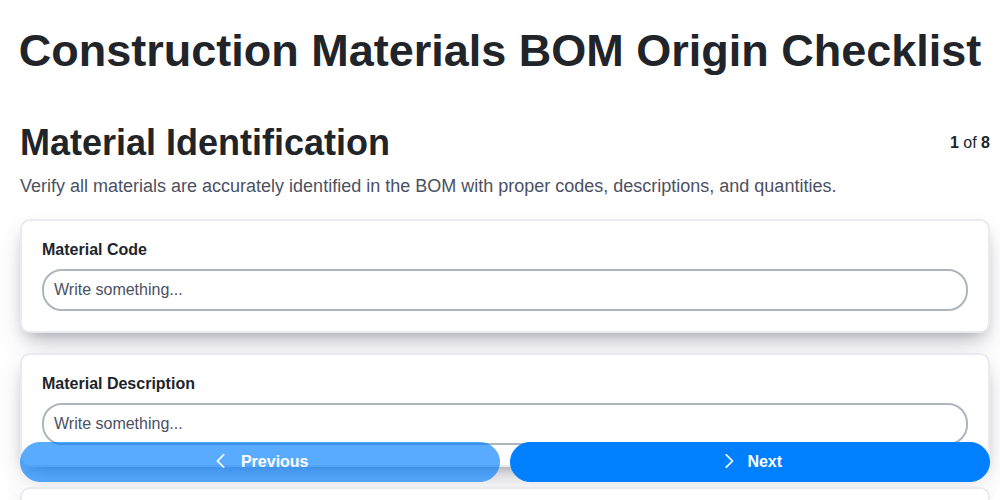
Table of Contents
- Introduction: Why Material Origin Matters in Construction
- Understanding the Bill of Materials (BOM) and Its Importance
- The Construction Materials BOM Origin Checklist: A Comprehensive Guide
- 1. Material Identification: Defining What You're Tracking
- 2. Supplier Information: Knowing Your Source
- 3. Country of Origin Verification: Unraveling the Origin Story
- 4. Certification & Documentation: Proof of Origin
- 5. Compliance with Regulations: Navigating Legal Requirements
- 6. Risk Assessment: Identifying Potential Supply Chain Vulnerabilities
- 7. Record Keeping: Maintaining a Traceable History
- 8. Review & Approval: Ensuring Accuracy and Consistency
- 9. Common Challenges and How to Overcome Them
- 10. Leveraging Technology for BOM Origin Tracking
- Conclusion: Building Trust and Transparency in Construction Materials
- Resources & Links
TLDR: Building materials often have complex origins. This checklist helps you track exactly where your construction materials come from - from identification to regulatory compliance - ensuring transparency, managing risk, and avoiding legal headaches. It's a critical tool for modern construction projects!
Introduction: Why Material Origin Matters in Construction
The modern construction industry faces increasing scrutiny regarding the origin and sustainability of its materials. Gone are the days when sourcing was solely about price and availability. Today, clients, regulatory bodies, and the public are demanding transparency and accountability. Knowing where your construction materials come from - their Bill of Materials (BOM) origin - is no longer a 'nice-to-have'; it's becoming a business imperative.
Beyond ethical considerations, material origin significantly impacts project risk. Supply chain disruptions, geopolitical instability, and evolving trade regulations can all be mitigated with a clear understanding of your materials' journey. Furthermore, adhering to building codes, environmental standards, and ensuring compliance with international trade agreements hinges on verifiable origin information. This post will delve into a crucial checklist - the Construction Materials BOM Origin Checklist - and why each step is vital for responsible and resilient construction practices. Ignoring material origin can expose projects to legal challenges, reputational damage, and ultimately, costly delays.
Understanding the Bill of Materials (BOM) and Its Importance
The Bill of Materials (BOM) is the backbone of any construction project. Essentially, it's a comprehensive list of all the raw materials, components, assemblies, and subassemblies required to construct a building or infrastructure. Think of it as a recipe - without a precise list of ingredients (materials) and their quantities, the final product (the building) simply can't be built accurately or efficiently.
A well-defined BOM goes beyond just listing materials; it details everything from quantities and specifications to costs and potential substitutes. It serves as a vital communication tool between project managers, architects, engineers, procurement teams, and contractors. Accurate BOMs minimize errors, reduce waste, control costs, and streamline the entire construction process. In today's increasingly complex and globalized construction landscape, a thorough BOM, especially one that tracks material origin, is more critical than ever. Failing to manage this effectively can lead to significant delays, budget overruns, and even legal repercussions.
The Construction Materials BOM Origin Checklist: A Comprehensive Guide
The Construction Materials Bill of Materials (BOM) Origin Checklist isn't just a formality; it's a critical safeguard for project integrity, regulatory compliance, and ethical sourcing. Let's break down each step in detail, explaining its purpose and highlighting potential pitfalls.
1. Material Identification: This foundational step ensures absolute clarity. Precisely define each material included in the BOM. Don't just say steel; specify the grade, alloy, and any relevant processing details. Vague descriptions lead to ambiguity and potential sourcing errors later.
2. Supplier Information: Gather complete details about every supplier, including their name, address, contact information, and any relevant certifications (ISO, ethical sourcing audits, etc.). Traceability demands knowing precisely where materials originate.
3. Country of Origin Verification: This is arguably the most important step. Don't rely solely on supplier declarations. Employ multiple verification methods - review invoices, customs documentation, and potentially conduct independent audits. Be aware that "assembly" in one country doesn't automatically determine origin; substantial transformation is often required.
4. Certification & Documentation: Demand and meticulously review all relevant certifications, such as CE marking, FSC certification for timber, or conflict mineral reports. These documents provide evidence of compliance and traceability. Securely store these records; they're crucial for audits.
5. Compliance with Regulations: Construction projects are often subject to strict regulations regarding materials - think REACH in Europe, or conflict mineral reporting requirements in the US. This step ensures the materials meet all applicable local, national, and international laws. Stay updated on evolving regulations!
6. Risk Assessment: Identify potential risks associated with sourcing materials from specific countries or suppliers. Consider geopolitical instability, environmental concerns, human rights issues, and potential supply chain disruptions. Develop mitigation strategies.
7. Record Keeping: Maintain meticulous records of everything. This includes supplier information, origin declarations, certifications, risk assessments, and communication logs. A robust record-keeping system is vital for audits and dispute resolution.
8. Review & Approval: A qualified individual (e.g., procurement manager, sustainability officer, or engineer) must thoroughly review the completed checklist and provide formal approval. This signifies that due diligence has been performed.
9. Ongoing Monitoring: The checklist shouldn't be a one-time event. Implement a process for periodic review and updates to reflect changes in regulations, supplier performance, and global events.
1. Material Identification: Defining What You're Tracking
The foundation of a robust Construction Materials BOM Origin Checklist is accurate and detailed material identification. It's more than just knowing you're using steel. We need specificity. This initial step ensures every item within your Bill of Materials (BOM) is clearly defined, allowing for consistent tracking throughout the entire process.
Consider these points when identifying materials:
- Specificity is Key: Go beyond generic descriptions. Instead of lumber, specify Douglas Fir Lumber, Grade #2, 2x4 x 8'. For aggregates, differentiate by type (e.g., Crushed Limestone, Size No. 57). The more detail, the better.
- Unique Identifiers: Utilize internal product codes, manufacturer part numbers, or other unique identifiers where possible. This minimizes ambiguity and simplifies data entry.
- Units of Measure: Clearly define the units being used (e.g., cubic meters, kilograms, linear feet). This ensures accurate quantities are tracked and verified.
- Material Composition: For composite materials or mixes, document the key components and their respective percentages. This is crucial for compliance and transparency.
- Link to BIM/CAD Models: Ideally, each material identified in your checklist should be linked to the corresponding elements within your Building Information Modeling (BIM) or CAD drawings. This creates a visual connection and minimizes errors.
A well-defined material identification process prevents confusion and lays the groundwork for accurate origin tracking in subsequent steps.
2. Supplier Information: Knowing Your Source
A robust Construction Materials Bill of Materials (BOM) Origin Checklist begins with a thorough understanding of your suppliers. It's not enough to simply know who you're buying from; you need to delve deeper to ensure their reliability and transparency.
This section focuses on verifying supplier information and establishing a clear chain of custody for your materials. Key elements to address include:
- Supplier Due Diligence: Conduct initial background checks on potential suppliers. This might involve verifying their business registration, financial stability, and reputation within the industry.
- Supplier Questionnaires: Distribute detailed questionnaires requesting specific information about their operations, sourcing practices, and adherence to ethical and environmental standards.
- On-Site Audits (Recommended): Whenever possible, conduct on-site audits of your suppliers' facilities. This provides invaluable insight into their processes and allows for direct observation of material handling and storage.
- Contact Person Identification: Designate a primary contact person within the supplier's organization for all origin-related inquiries. This ensures a single point of communication and accountability.
- Sub-Supplier Disclosure: Crucially, suppliers must disclose their suppliers (sub-suppliers) to allow for traceability further down the supply chain. Don't let the verification stop at the immediate vendor.
- Supplier Agreements: Formalize your expectations regarding origin verification and data provision within supplier agreements. Clearly outline responsibilities and consequences for non-compliance.
Without a solid foundation in supplier information, verifying origin becomes significantly more challenging and less reliable.
3. Country of Origin Verification: Unraveling the Origin Story
Knowing where your construction materials come from isn't just about satisfying curiosity; it's a critical component of responsible sourcing and regulatory compliance. This step goes beyond simply knowing the supplier - it demands a deep dive into the materials' origins.
Here's what's involved in a robust Country of Origin Verification:
- Traceability Back to Raw Materials: We need to trace the materials as far back as possible. Ideally, this means identifying where the raw materials were extracted or initially processed. This might involve questioning suppliers about their own suppliers and demanding supporting documentation.
- Manufacturing Location Analysis: Determine where the material was substantially transformed. Just because a component assembles in one country doesn't mean it originated there. Significant processing or manufacturing activities often dictate the origin.
- Rules of Origin Application: Different materials have different rules of origin defined by trade agreements. Understanding these rules (e.g., percentage of value added, specific manufacturing processes) is crucial for accurate classification. Our team will thoroughly research and apply these rules.
- Supplier Declarations & Supporting Evidence: We require detailed supplier declarations stating the origin of the materials. These declarations need to be supported by credible evidence, such as invoices, bills of lading, and certificates of origin.
- Independent Verification (where necessary): In high-risk situations or for critical materials, independent third-party verification might be needed to ensure accuracy and build trust.
Ultimately, accurate Country of Origin verification minimizes trade compliance risks, supports ethical sourcing, and enhances the integrity of your construction projects.
4. Certification & Documentation: Proof of Origin
Verifying the country of origin isn't just about asking a supplier; it requires solid, documented proof. This section focuses on obtaining and validating those crucial documents.
What to Expect:
- Certificates of Origin (COO): These are the cornerstone of origin verification. They're officially issued documents declaring the country where a product was grown, manufactured, or produced. Ensure the COO is issued by an authorized issuing body (like a Chamber of Commerce or government agency) and aligns with the material description and quantity in your Bill of Materials (BOM).
- Supplier Declarations of Origin: While less formal than a COO, these declarations from your suppliers provide valuable supporting evidence. Cross-reference this information with other documentation.
- Manufacturing Records: Request detailed records of the production process, including location of manufacturing, assembly, and significant processing steps. This is particularly important for materials with complex supply chains.
- Bill of Materials (BOM) Documentation from Suppliers: Suppliers should provide their own BOMs, which detail the origin of all components used in the material they've supplied. Compare these with your own BOM for consistency.
- Transshipment Records: Scrutinize these records to ensure materials haven't been deliberately routed through another country to falsely claim a different origin.
Critical Checks:
- Validity: Always verify the expiration date of COOs.
- Accuracy: Compare the information on the documentation (description, quantity, country of origin) against your own records and the supplier's stated information. Discrepancies require immediate investigation.
- Authenticity: Be vigilant about counterfeit documents. Verify issuing bodies and contact them if you have concerns.
- Storage: Maintain all documentation securely and accessible for audits.
5. Compliance with Regulations: Navigating Legal Requirements
The construction industry operates within a complex web of local, national, and international regulations concerning material sourcing and usage. Failing to comply can result in hefty fines, project delays, and reputational damage. This section of the checklist focuses on ensuring your chosen materials meet all applicable legal requirements.
This isn't just about ticking boxes; it's about understanding why regulations exist. They're often designed to protect the environment, ensure worker safety, and prevent the use of conflict minerals or illegally harvested resources.
Here's what this compliance step involves:
- Identify Relevant Regulations: Research all applicable laws, standards, and directives. This includes, but isn't limited to, environmental regulations (like REACH in Europe or TSCA in the US), import/export restrictions, and labor laws related to material production. Regulations will vary significantly depending on the origin of the materials and the intended destination of the construction project.
- Stay Updated: Regulations frequently change. Subscribe to relevant industry publications and government alerts to remain informed of updates and amendments.
- Verify Material Content: Ensure materials don't contain prohibited substances or meet specific limits for regulated chemicals. This often requires working closely with your suppliers and requesting detailed material composition reports.
- Traceability Documentation: Maintain thorough documentation demonstrating compliance, including supplier certifications, test results, and material safety data sheets (MSDS).
- Conflict Minerals Due Diligence: Many countries now require due diligence processes to ensure materials, particularly those like tin, tantalum, tungsten, and gold, are ethically sourced and don't contribute to conflict.
- Liaison with Legal Counsel: Consider engaging legal counsel specializing in construction and materials law to ensure full compliance and navigate complex regulatory landscapes.
6. Risk Assessment: Identifying Potential Supply Chain Vulnerabilities
Understanding the origin of your construction materials isn't just about compliance; it's about proactively mitigating risks. A thorough risk assessment dives deeper than just verifying the country of origin; it examines the potential vulnerabilities within your entire supply chain.
Consider these key areas:
- Geopolitical Instability: Does the country of origin have a history of political unrest, trade wars, or sanctions that could disrupt supply?
- Natural Disaster Exposure: Are the sourcing locations prone to earthquakes, floods, or other natural disasters that could impact production and transportation?
- Labor Practices: Investigate potential risks related to forced labor, child labor, or unsafe working conditions within the supplier's operations. This often involves assessing their sub-tier suppliers as well.
- Environmental Sustainability: Evaluate the environmental impact of material extraction and processing in the country of origin. Consider potential for deforestation, pollution, or resource depletion.
- Transportation Risks: Assess the stability of transportation routes, potential for delays, and the security of the materials during transit.
- Supplier Financial Health: A financially unstable supplier poses a disruption risk. Review their financial standing and business continuity plans.
This isn't a one-time exercise. Regularly update your risk assessment based on changing global events and your ongoing due diligence findings. Assign risk scores to each potential vulnerability and prioritize mitigation strategies accordingly. Document these assessments and the rationale behind your risk scoring system.
7. Record Keeping: Maintaining a Traceable History
A robust construction materials BOM Origin Checklist is only as valuable as the records you keep. Diligent record-keeping isn't just about compliance; it's about building trust, managing risk, and ensuring accountability throughout your project's lifecycle.
Here's why meticulous record-keeping is crucial and what you should be capturing:
- Comprehensive Documentation: Keep detailed records of every step completed in the checklist - from initial material identification to final approval. This includes the date, who performed the task, and any observations or discrepancies noted.
- Supplier Communication: Log all communication with suppliers, including requests for origin information, copies of certifications, and any clarifications. Emails, letters, and meeting minutes should all be retained.
- Material Batch Tracking: Assign unique identifiers (batch numbers, lot codes) to each shipment of materials. This allows you to trace materials back to their source if issues arise.
- Digital vs. Physical Records: While physical records can be valuable, prioritize digital storage for ease of access, searchability, and backup. Secure cloud-based platforms are often a good choice.
- Retention Policies: Establish clear record retention policies in accordance with legal and contractual requirements. Know how long to keep different types of documentation.
- Accessibility & Audit Trail: Ensure relevant personnel can easily access the records when needed. Maintain an audit trail showing who accessed and modified records, and when.
- Regular Backups: Implement regular backups of digital records to prevent data loss due to system failures or other unforeseen events.
Consistent and thorough record-keeping provides a complete audit trail, simplifies compliance audits, and empowers you to quickly respond to any concerns regarding material origin or compliance.
8. Review & Approval: Ensuring Accuracy and Consistency
The final step in the Construction Materials BOM Origin Checklist isn't just about signing off - it's a critical quality control gate. This review and approval process ensures the accuracy and consistency of the entire checklist, mitigating potential risks and reinforcing accountability.
This stage requires a designated individual or team (e.g., procurement manager, quality assurance specialist, compliance officer) to meticulously examine all the information compiled in the previous steps. They should verify that:
- Data is Complete: All sections of the checklist have been filled out and relevant documentation is attached.
- Information is Consistent: Data across different sections aligns (e.g., supplier name matches the supplier information sheet, country of origin aligns with documentation).
- Verification is Valid: Certifications and compliance documentation are current, genuine, and applicable to the specific materials.
- Risk Assessment is Justified: The risk assessment conclusions are supported by the evidence gathered and mitigation strategies are clearly outlined.
The reviewer should document any discrepancies or concerns, requiring further investigation and correction before approval. A clear approval signature and date should be recorded, alongside any notes justifying the decision. This creates a traceable audit trail, demonstrating due diligence and supporting compliance efforts. Without this final, thorough review and documented approval, the value of the entire checklist is significantly diminished.
9. Common Challenges and How to Overcome Them
Implementing a robust Construction Materials BOM Origin Checklist isn't always smooth sailing. Here are some common hurdles and strategies to conquer them:
1. Lack of Supplier Transparency: Often, suppliers don't readily provide detailed origin information, especially for complex supply chains. Solution: Build stronger supplier relationships through open communication, clear expectations (including contractual obligations for origin disclosure), and potentially engaging with higher-tier suppliers to trace materials further upstream.
2. Data Silos & Inconsistent Information: Information can be scattered across different departments (procurement, logistics, quality control) and formats, leading to confusion and errors. Solution: Invest in a centralized BOM management system that integrates with procurement and supplier portals. Standardize data formats and implement clear data entry protocols.
3. Difficulty Verifying Country of Origin: Determining the true origin can be complex, particularly when materials undergo processing or transformation in multiple countries. Solution: Utilize Harmonized System (HS) codes and understand rule of origin guidelines specific to your materials and importing countries. Consider engaging a customs broker for expert guidance.
4. Regulatory Changes & Complexity: International trade regulations and import requirements are constantly evolving. Solution: Subscribe to industry alerts and updates from regulatory bodies. Designate a team or individual to stay abreast of changes and update your checklist and processes accordingly.
5. Resource Constraints: Conducting thorough origin verification takes time and resources. Solution: Prioritize materials with higher risk profiles or those subject to stricter import regulations. Automate as much of the process as possible using digital tools.
6. Language Barriers: Communication with suppliers in different countries can be challenging. Solution: Employ translators or bilingual staff. Ensure documentation is clear and concise.
7. Cost Concerns: Increased traceability can seem costly upfront. Solution: Frame the cost as an investment in risk mitigation, compliance, and potentially improved brand reputation. Explore opportunities for cost-sharing with suppliers.
8. Supplier Resistance: Some suppliers may be reluctant to share sensitive origin data. Solution: Clearly communicate the importance of traceability and explain the benefits (e.g., ensuring access to projects, reducing risks). Offer support and training to help suppliers meet your requirements.
9. Maintaining Accuracy over Time: Origin information can change as suppliers shift sources. Solution: Implement a process for periodic review and updates of supplier information and origin certifications. Regularly audit supplier compliance.
10. Leveraging Technology for BOM Origin Tracking
Manual BOM origin tracking is a recipe for errors, delays, and potential regulatory headaches. Thankfully, technology offers powerful solutions to streamline and automate this critical process. Several platforms now specialize in Bill of Materials (BOM) management and offer robust origin tracking capabilities. These tools often integrate with supplier databases, customs data, and regulatory updates, providing real-time visibility into the origin of every component.
Consider exploring solutions offering features like:
- Automated Data Capture: Eliminates manual data entry and reduces errors.
- Blockchain Integration: Provides an immutable and transparent record of material origin.
- Supplier Portals: Facilitates seamless data sharing and verification from suppliers.
- AI-Powered Risk Assessment: Identifies potential origin-related risks and vulnerabilities.
- Reporting & Analytics: Provides insights into sourcing patterns and compliance status.
Investing in the right technology isn't just about efficiency; it's about building a more resilient and compliant supply chain. While implementation requires an initial investment, the long-term benefits - reduced risk, improved transparency, and enhanced operational efficiency - far outweigh the costs. Look for solutions that can scale with your business and integrate with your existing systems.
Conclusion: Building Trust and Transparency in Construction Materials
Ultimately, a robust Construction Materials Bill of Materials (BOM) Origin Checklist isn't just about ticking boxes; it's about building trust and transparency within the construction supply chain. By meticulously tracking material origins and ensuring compliance, we contribute to projects that are not only structurally sound but also ethically and sustainably sourced. This proactive approach mitigates risks, strengthens reputation, and fosters a more responsible industry. Embracing this checklist isn't just best practice; it's an investment in a future where construction materials are traceable, accountable, and demonstrably aligned with our values.
Resources & Links
- National Institute of Standards and Technology (NIST): NIST provides standards and guidelines related to supply chain security and traceability, crucial for understanding material origin and compliance. Their publications and frameworks provide valuable context.
- International Organization for Standardization (ISO): ISO develops and publishes international standards. Specifically, look for ISO standards related to supply chain management (e.g., ISO 28000) and quality management (ISO 9001), which can inform your BOM origin tracking processes.
- World Trade Organization (WTO): The WTO provides rules and agreements relating to international trade, including regulations about country of origin marking. Essential for understanding international trade laws and rules of origin.
- U.S. Department of Commerce - International Trade: Provides information and resources on international trade, country of origin rules, and export regulations. Valuable for construction companies importing materials.
- SGS: SGS is a leading inspection, verification, testing and certification company. They can help verify country of origin claims and provide documentation for compliance.
- Bureau Veritas: Similar to SGS, Bureau Veritas offers supply chain auditing and certification services, including origin verification.
- American Institute of Certified Public Accountants (AICPA): While focused on accounting, the AICPA offers resources on supply chain risk management and internal controls, which are relevant to BOM origin tracking.
- AICPA Supply Chain Risk Management Resources: AICPA offers more specific resources dedicated to supply chain risk management and governance, particularly helpful for identifying and mitigating potential origin-related vulnerabilities.
- Risk Management Institute (RMI): RMI offers courses and resources on risk management, encompassing supply chain risks including those related to material origin and compliance.
- SAI Global: SAI Global provides compliance and risk management solutions, including tools for tracking and managing supply chain data, which can be adapted for origin verification.
- Supply Chain Brain: A website with articles, webinars, and resources related to supply chain management. Search for content specifically about material origin and traceability.
- SimProSys: SimProSys offers BOM management software with features that can be customized for origin tracking and compliance. Useful for companies looking for tech solutions.
- PTC: PTC provides a variety of supply chain and product lifecycle management (PLM) software solutions. Their platforms can support BOM origin tracking and management.
- Oracle: Oracle offers comprehensive ERP and supply chain management solutions. Their platform could be leveraged for complex BOM origin tracking requirements.
Frequently Asked Questions
What does BOM stand for in the context of construction materials?
BOM stands for Bill of Materials. It's a comprehensive list of raw materials, components, and parts needed to manufacture a finished product - in this case, construction materials like concrete, steel, or lumber.
Why is understanding the origin of my construction materials important?
Knowing the origin (source and history) of your construction materials is crucial for supply chain transparency, sustainability, ethical sourcing, quality assurance, and compliance with regulations. It helps verify claims of recycled content, responsible forestry, and ethical labor practices.
What types of information should be included in a construction materials origin checklist?
A thorough checklist should cover: supplier details, geographical origin of raw materials, processing locations, certifications (e.g., FSC, LEED), transportation methods, and any potential risks or concerns related to sourcing.
How does this guide help me create a construction materials origin checklist?
This guide provides a structured approach and a detailed checklist template to help you systematically assess the origins of your materials. It outlines key questions to ask suppliers and provides a framework for documenting your findings.
What is 'chain of custody' and why is it relevant?
Chain of custody refers to the documented tracking of materials from their origin to the final construction site. It ensures the integrity of claims like recycled content or sustainably sourced wood, demonstrating a traceable path.
What are some potential challenges in tracing the origin of construction materials?
Challenges include complex supply chains, lack of supplier transparency, incomplete documentation, inconsistent labeling, and difficulties in verifying claims, especially for globally sourced materials.
How can I best communicate my expectations to my material suppliers regarding origin information?
Clearly communicate your requirements in writing, include specific questions about their sourcing practices, and request detailed documentation. Establish a strong supplier code of conduct that emphasizes transparency and ethical sourcing.
What role does technology play in tracking construction material origins?
Blockchain technology, digital platforms, and data analytics tools are increasingly used to improve transparency and traceability in supply chains, allowing for secure and verifiable tracking of materials.
What are some common certifications that indicate responsible sourcing in construction materials?
Look for certifications like FSC (Forest Stewardship Council) for wood, Cradle to Cradle for product lifecycle assessment, LEED (Leadership in Energy and Environmental Design) for building projects, and certifications related to recycled content verification.
Where can I find more information and resources about responsible construction material sourcing?
Resources include industry associations like the US Green Building Council (USGBC), the Forest Stewardship Council (FSC), and sustainability consulting firms. Government agencies and regulatory bodies often have relevant guidelines and regulations.
Found this Article helpful?
Comments
There are no comments yet. Be the first to add one!
BOM - Bill of Materials Management Solution Demo
Struggling with inaccurate BOMs & costly errors? ChecklistGuro provides a centralized BOM Management solution, connecting your design, engineering, & manufacturing teams for improved collaboration and control. Simplify operations & boost efficiency.
Related Articles
Mastering Textiles: Your Fiber Content Checklist for BOM Accuracy
Mastering Leather Manufacturing: Your Tannery BOM & Compliance Checklist
Mastering Your BOM: A Comprehensive Checklist Template for Success
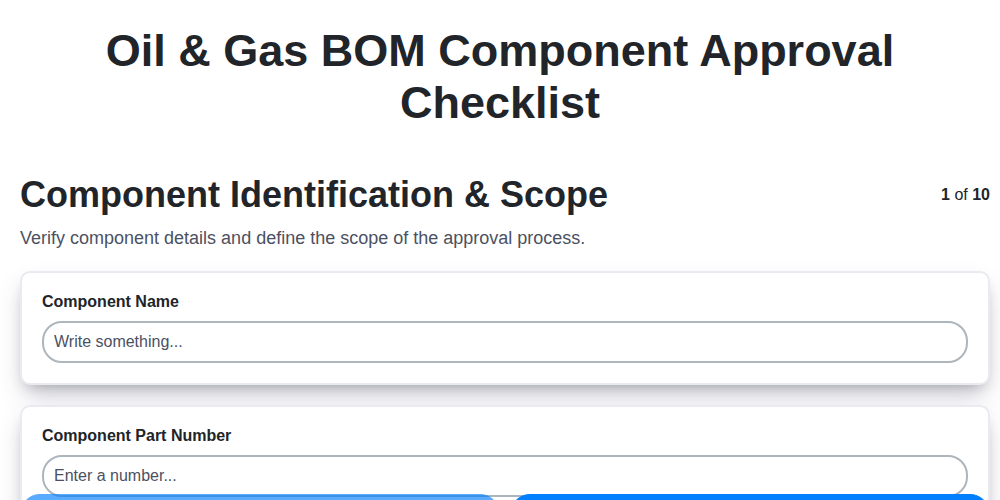
Ensuring Success: Your Oil & Gas BOM Component Approval Checklist Guide
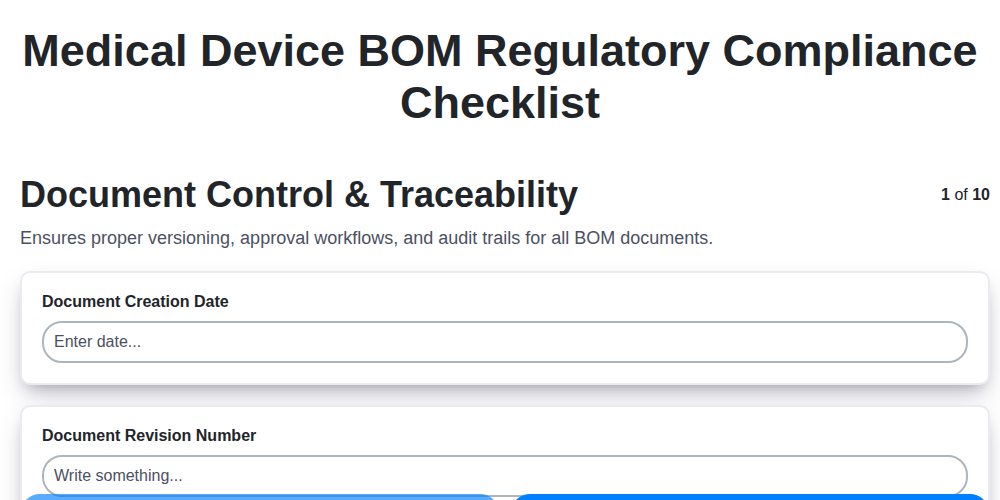
Navigating Medical Device BOM Regulatory Compliance: Your Essential Checklist
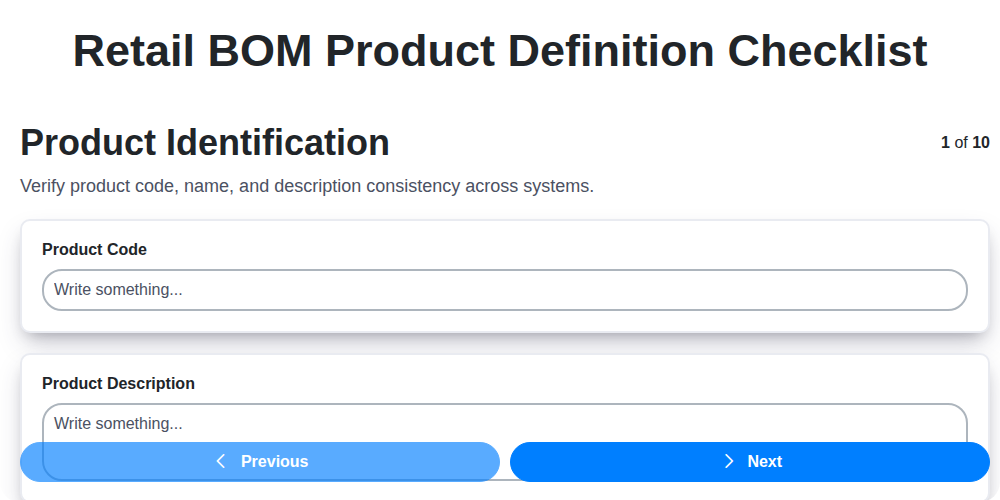
The Ultimate Retail BOM Product Definition Checklist: A Step-by-Step Guide
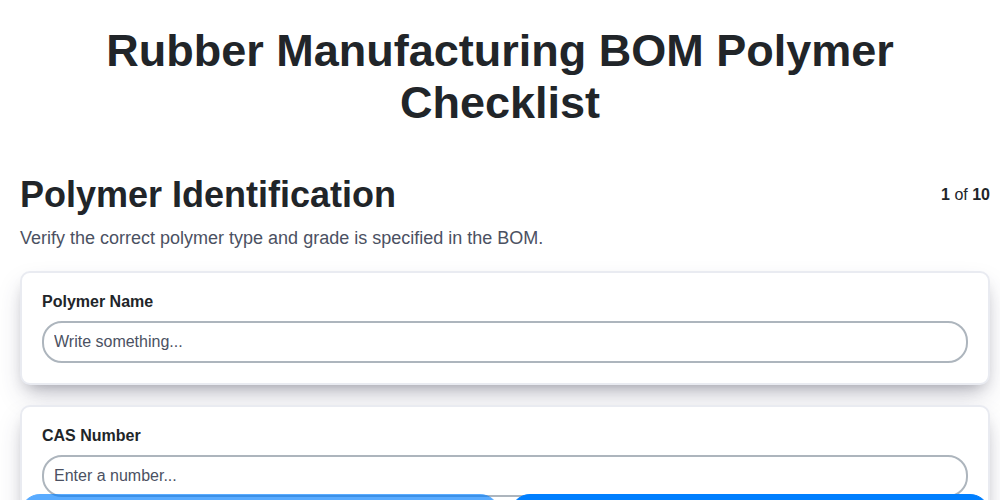
Ensuring Quality: Your Rubber Manufacturing Polymer BOM Checklist Guide
The Ultimate Logistics BOM Packaging Checklist: Ensuring Safe & Efficient Shipments
We can do it Together
Need help with
Bill of Materials (BOM) Management?
Have a question? We're here to help. Please submit your inquiry, and we'll respond promptly.