Ensuring Success: Your Oil & Gas BOM Component Approval Checklist Guide
Published: 12/10/2025 10:00 PM Updated: 12/14/2025 7:52 AM
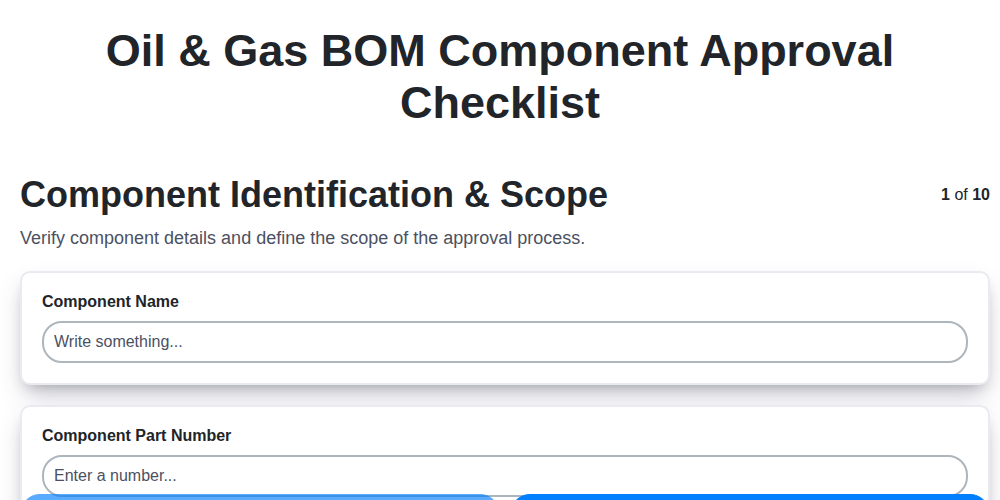
Table of Contents
- Introduction: Why Component Approval Matters in Oil & Gas
- 1. Component Identification & Scope Definition
- 2. Deep Dive: Technical Specifications Review
- 3. Supplier Qualification & Assessment - Beyond the Brochure
- 4. Cost & Availability Analysis: Balancing Price and Performance
- 5. Navigating Regulatory & Compliance Verification
- 6. Safety First: Material Safety Data Sheet (MSDS) Review
- 7. Risk Assessment & Mitigation: Identifying and Addressing Potential Issues
- 8. Engineering Validation & Testing: Ensuring Functionality and Reliability
- 9. Streamlining Change Management & Approval Processes
- 10. Meticulous Documentation & Record Keeping - Your Audit Trail
- 11. Common Pitfalls to Avoid in BOM Component Approval
- 12. Leveraging Technology for Efficient Approval
- Conclusion: Building a Robust and Reliable BOM
- Resources & Links
TLDR: Getting oil & gas components approved can be a minefield. This checklist guides you through it - from identifying the part and checking specs to verifying suppliers, ensuring compliance, and managing changes. It minimizes risk, prevents costly errors, and keeps your projects on track. Download the template and streamline your component approval process!
Introduction: Why Component Approval Matters in Oil & Gas
The oil and gas industry operates with razor-thin margins for error. Equipment failure, even with a seemingly minor component, can lead to costly downtime, environmental damage, safety incidents, and regulatory penalties. That's why a robust and meticulous Bill of Materials (BOM) component approval process is absolutely critical. It's not simply about ticking boxes; it's about ensuring the integrity of your operations, protecting personnel, and safeguarding the environment. This process goes far beyond basic procurement and involves a detailed evaluation of each component's suitability for its intended purpose, considering technical performance, reliability, safety, and compliance. Ignoring these crucial steps can have devastating consequences, highlighting the undeniable importance of a structured and comprehensive approval checklist.
1. Component Identification & Scope Definition
Before any procurement or engineering work commences, a clear understanding of the component in question is paramount. This initial step, Component Identification & Scope Definition, lays the groundwork for the entire approval process. It's more than just knowing the part number; it's about defining precisely what the component is, what it does, and where it will be used within the oil and gas operation.
This involves:
- Detailed Description: Accurately describing the component, including its function, intended application, and any specific requirements.
- Unique Identification: Assigning a unique identifier - a part number, code, or designation - to ensure consistent referencing throughout the project.
- Scope of Use: Defining the precise location and operational context of the component within the facility (e.g., wellhead equipment, pipeline segment, processing unit).
- Quantity & Timing: Specifying the quantity needed and the required delivery timeframe to align with project schedules.
- Criticality Assessment (Preliminary): A preliminary assessment of the component's criticality to overall system performance and safety. Is it a safety-critical component? Does failure have significant consequences? This initial assessment helps prioritize subsequent review steps.
A poorly defined scope here can lead to mismatched components, delays, and potentially, safety risks. Therefore, thoroughness and clarity are essential at this foundational stage.
2. Deep Dive: Technical Specifications Review
This critical step ensures the component you're procuring meets the exact performance requirements of your oil & gas operation. It's far more than just checking dimensions and material; it's about validating functionality, durability, and suitability for the harsh operating environment.
Here's what a thorough Technical Specifications Review encompasses:
- Alignment with Design Requirements: Does the component's specification directly correlate with the design documentation? Any discrepancies here can lead to costly rework or equipment failure.
- Performance Characteristics: Scrutinize parameters like pressure ratings, temperature ranges, flow rates, chemical compatibility, and electrical characteristics. These must be clearly defined and verifiable.
- Material Properties: Confirm the specified material (e.g., grade of steel, polymer type) is appropriate for the intended application and operating conditions, including potential corrosion or erosion risks. Consider certifications (e.g., API, ASTM) that validate material quality.
- Dimensional Accuracy: Review drawings and tolerances carefully. Slight deviations can lead to installation problems or impaired performance.
- Testing Requirements: Are specific testing procedures (hydrostatic, pneumatic, vibration, fatigue) specified? Ensure these align with industry standards and operational needs. If not specified, consider adding them.
- Drawings & Diagrams: Ensure all relevant drawings (e.g., CAD models, P&IDs) are referenced and consistently interpreted.
- Interface Compatibility: Verify the component's interfaces (flanges, connections, mounting points) are compatible with existing equipment and systems.
A meticulous review here prevents costly surprises later - ensuring the component does what it's meant to do, when it's needed, and for the duration of its lifecycle.
3. Supplier Qualification & Assessment - Beyond the Brochure
Simply accepting a supplier's glossy brochure and testimonials isn't enough in the demanding Oil & Gas sector. A robust supplier qualification and assessment process is critical for ensuring component quality, reliability, and safety. This goes far beyond surface-level checks.
We need to delve deeper. This begins with understanding the supplier's entire operation - their quality management system (QMS), manufacturing processes, and financial stability. Are they ISO 9001 certified? What's their track record for on-time delivery and adherence to specifications? Request audit reports - and don't hesitate to conduct your own audits, particularly for critical components.
Consider the supplier's experience with similar projects and their understanding of Oil & Gas specific challenges. Do they have experience working with harsh environments, stringent regulations, and complex project timelines?
Furthermore, evaluate their sub-tier suppliers. A strong supplier can be undermined by a weak link in their supply chain. Traceability is key; you need to understand where materials originate and how they are processed.
Finally, continuous monitoring is vital. Supplier performance shouldn't be a set it and forget it activity. Regularly review their performance, solicit feedback from users, and proactively address any concerns. This ongoing assessment ensures long-term reliability and reduces the risk of costly disruptions.
4. Cost & Availability Analysis: Balancing Price and Performance
Securing a critical component for an oil & gas operation isn't just about finding something that works; it's about getting it at a price that fits your budget and ensuring it's readily available when you need it. This analysis goes far beyond simply comparing quotes.
We delve into a comprehensive evaluation, considering Total Cost of Ownership (TCO). This includes not only the initial purchase price but also factors like shipping costs, potential downtime associated with delays, warehousing expenses, and even the cost of potential future replacements if the component proves unreliable.
Availability is equally crucial. Lead times in the oil & gas sector can be punishing, and a long delay can halt production and incur substantial losses. We assess supplier inventory levels, manufacturing capacity, and potential geopolitical factors that could impact delivery. It's vital to understand if a lower price point translates to significantly longer lead times or a higher risk of shortages.
Furthermore, we analyze multiple suppliers to create a robust supply chain. Diversification minimizes dependence on a single source and provides a buffer against unforeseen disruptions. This evaluation includes a detailed comparison of quotes, factoring in payment terms, potential volume discounts, and the supplier's overall financial stability. Ultimately, the goal is to identify the optimal balance between price performance and guaranteed supply - a crucial element in minimizing operational risk and maximizing project efficiency.
5. Navigating Regulatory & Compliance Verification
The Oil & Gas industry operates under a rigorous and ever-evolving landscape of regulations. Ensuring your BOM components meet these requirements isn't just about avoiding fines; it's about ensuring safety, environmental protection, and operational integrity. This step of the approval checklist focuses on verifying that each component aligns with all applicable standards.
This verification process goes beyond a cursory glance. It demands a deep dive into regulations from bodies like API, ISO, IEC, and local governing agencies relevant to the component's application and the region of operation. Consider factors like pressure ratings, temperature tolerances, material compatibility, and emission standards. Don't forget to account for changes in regulations - a component approved today may not be compliant tomorrow.
Specifically, this phase includes:
- Identifying Applicable Regulations: Pinpoint the precise regulations impacting the component based on its function, materials, and operating environment.
- Documentation Review: Verify that the supplier provides certifications and test reports demonstrating compliance. Scrutinize these documents for validity and accuracy.
- Internal Audits: Conduct internal audits to confirm that the supplier's processes and documentation align with your company's compliance procedures.
- Staying Updated: Implement a system for tracking regulatory changes and proactively assessing their impact on BOM components.
Failure to adequately verify regulatory compliance can lead to project delays, operational shutdowns, and significant legal repercussions. Thoroughness in this area is paramount.
6. Safety First: Material Safety Data Sheet (MSDS) Review
No component approval process is complete without a thorough review of the Material Safety Data Sheet (MSDS), now often referred to as a Safety Data Sheet (SDS). This document is crucial for understanding the potential hazards associated with a component, protecting personnel, and ensuring safe handling and storage practices.
The MSDS/SDS provides critical information including:
- Hazard Identification: Details on potential health, environmental, and physical hazards.
- First Aid Measures: Instructions for immediate response in case of exposure.
- Handling and Storage Precautions: Guidance on safe handling procedures and storage requirements.
- Exposure Controls and Personal Protection: Recommended personal protective equipment (PPE) and engineering controls to minimize risk.
- Fire Fighting Measures: Instructions for responding to fires involving the component.
- Accidental Release Measures: Procedures for containing and cleaning up spills or releases.
During component approval, the MSDS/SDS should be reviewed by a qualified safety professional to:
- Confirm that all potential hazards are clearly understood.
- Identify necessary safety precautions for all personnel involved in handling and installation.
- Ensure appropriate PPE is specified and available.
- Verify alignment with existing site safety protocols and emergency response plans.
Failing to adequately review and address MSDS/SDS information can result in accidents, injuries, and environmental damage - making it an absolutely critical step in the BOM component approval process.
7. Risk Assessment & Mitigation: Identifying and Addressing Potential Issues
Bringing a new component into an Oil & Gas operation isn't just about checking boxes; it's about proactively minimizing potential risks. This step moves beyond simple verification and delves into identifying vulnerabilities and developing strategies to address them.
A thorough risk assessment for each component should consider a wide range of factors. Think beyond immediate operational failure. Consider:
- Performance Risks: Does the component's performance degrade under harsh conditions (extreme temperatures, pressures, corrosive environments)?
- Supply Chain Risks: What are the potential disruptions to supply? Are there geopolitical factors that could impact availability?
- Installation Risks: Are there risks associated with the component's installation, including compatibility issues with existing infrastructure?
- Maintenance Risks: How will maintenance impact uptime and safety? Are specialized tools or expertise required?
- Environmental Risks: Does the component's lifecycle pose any environmental concerns (e.g., hazardous waste generation)?
- Safety Risks: Could component failure lead to accidents or injuries?
For each identified risk, a mitigation plan should be developed. This might include:
- Redundancy: Utilizing backup components to ensure continued operation.
- Contingency Plans: Developing strategies to manage failures or supply chain disruptions.
- Enhanced Monitoring: Implementing systems to monitor component performance and identify potential issues early.
- Training: Providing adequate training for personnel involved in installation, operation, and maintenance.
- Alternative Suppliers: Qualifying secondary suppliers to reduce dependency on a single source.
Documenting the risk assessment and mitigation plan is critical. This record serves as a reference point for ongoing evaluation and future approvals. Regularly review and update the risk assessment, particularly when significant changes occur (e.g., revised operating procedures, new regulations).
8. Engineering Validation & Testing: Ensuring Functionality and Reliability
Before any component is integrated into an oil and gas operation, rigorous engineering validation and testing are absolutely crucial. This isn't just about confirming it meets the technical specifications; it's about verifying its performance and reliability in the specific, often harsh, operational environment.
This phase involves a series of tests designed to simulate real-world conditions. These may include:
- Performance Testing: Evaluating the component's ability to perform its intended function under various pressures, temperatures, and flow rates.
- Stress Testing: Subjecting the component to extreme conditions to identify potential failure points and ensure durability.
- Compatibility Testing: Verifying compatibility with existing systems and other components in the operation. This is vital to prevent unexpected interactions or failures.
- Environmental Testing: Assessing the component's resistance to environmental factors like corrosion, UV exposure, and vibration.
- Non-Destructive Testing (NDT): Utilizing methods like ultrasonic testing, radiographic testing, or dye penetrant inspection to identify internal flaws without damaging the component.
The results of these tests must be meticulously documented and analyzed. Any deviations from expected performance necessitate further investigation, design modifications, or rejection of the component. This validation process provides critical assurance that the approved component will function safely and effectively throughout its lifecycle.
9. Streamlining Change Management & Approval Processes
In the dynamic world of oil and gas, component changes are inevitable. Whether it's a minor modification to a seal or a complete substitution of a valve, any alteration to a Bill of Materials (BOM) component requires rigorous change management. A haphazard approach can lead to costly delays, performance issues, and potentially safety hazards.
This checklist step focuses on establishing a clear and documented process for managing these changes. This isn't simply about getting a signature - it's about a structured evaluation. Key elements include:
- Formal Request & Justification: Every change request should be formally submitted, clearly outlining the reason for the change, the proposed alternative, and the anticipated impact.
- Cross-Functional Review Board: Implement a review board composed of representatives from engineering, procurement, operations, and potentially maintenance. This ensures a holistic assessment of the change.
- Impact Assessment: Specifically evaluate the impact on the overall system performance, safety, maintenance schedule, and associated costs.
- Documentation of Alternatives: Explore and document multiple potential alternatives, including a detailed comparison matrix highlighting pros and cons of each.
- Traceability: Maintain a clear audit trail of the entire change management process, including approvals, rejections, and any accompanying documentation.
- Communication Protocol: Establish a clear communication protocol to inform all relevant stakeholders of the approved change.
By formalizing this process, you minimize the risk of unauthorized changes, improve collaboration, and ensure that any modifications are thoroughly vetted and integrated seamlessly into your operations. This step ensures that changes aren't just approved, but are effectively managed.
10. Meticulous Documentation & Record Keeping - Your Audit Trail
The final, and arguably one of the most crucial, steps in the Oil & Gas BOM component approval process is diligent documentation and record keeping. This isn't merely about ticking a box; it's about building an auditable trail that demonstrates due diligence, compliance, and accountability.
Every decision made, every review conducted, every test result achieved - all of this needs to be meticulously documented. This includes:
- Component Identification & Scope Documentation: Detailed descriptions, part numbers, and specifications.
- Review Records: Documented results of technical specification reviews, clearly indicating who reviewed, dates, and any concerns raised.
- Supplier Assessments: Qualification reports, audit findings, and performance evaluations.
- Cost Analysis Spreadsheets: Justification for component selection and total cost of ownership calculations.
- Compliance Records: Copies of certifications, regulatory approvals, and adherence to industry standards.
- MSDS Review Logs: Confirmation of review and any identified hazards or safety protocols.
- Risk Assessment Reports: Details of identified risks, mitigation strategies implemented, and assigned responsibilities.
- Test Results and Validation Reports: Comprehensive records of testing procedures, results, and validation outcomes.
- Change Management Records: Documentation of any modifications to the component, approval workflows, and reasons for change.
These records must be stored securely, be easily accessible, and maintained for a defined retention period as per company policy and regulatory requirements. A robust documentation system not only simplifies audits but also serves as a valuable resource for future projects, troubleshooting, and continuous improvement of the component approval process.
11. Common Pitfalls to Avoid in BOM Component Approval
Successfully navigating the BOM component approval process isn't just about ticking boxes on a checklist; it's about proactive risk management. Here's where things often go wrong, and how to sidestep those potential issues:
- Insufficient Component Identification & Scope: Failing to precisely define the component and its intended usage leads to mismatched parts and costly rework. Don't just list a name; include part numbers, revisions, and specific application details.
- Ignoring Technical Specification Nuances: Rushing the technical review. Small deviations in specifications (material grade, operating temperature, pressure ratings) can have major consequences in oil and gas environments.
- Skipping Supplier Qualification Checks: Relying solely on price or reputation. Thorough supplier assessments (financial stability, quality management systems, ethical sourcing) are critical for consistent supply and component integrity.
- Underestimating Cost Fluctuations: Focusing only on the initial price. Consider long-term cost implications, potential price volatility, and shipping/logistics expenses.
- Neglecting Regulatory Updates: Assuming compliance is static. Regulations change constantly; a component approved last year might not be compliant today. Regularly review relevant standards and directives.
- Overlooking MSDS Hazards: Treating the MSDS as mere paperwork. Understand the potential hazards and ensure proper handling procedures are in place for all components.
- Ignoring Environmental Impacts: Not considering the components' effect on the environment. Oil and gas companies are under increasing scrutiny, and using environmentally damaging components can lead to reputational and legal issues.
- Lack of Engineering Input: Approving components without engaging engineering expertise. Field engineers possess invaluable operational knowledge that can identify potential problems not apparent in a design review.
- Poor Change Management Processes: Implementing changes without formal approval or documentation. This can lead to inconsistencies, traceability issues, and potential safety risks.
- Inadequate Record Keeping: Failing to maintain complete and accurate records of the approval process. This compromises traceability, auditability, and the ability to learn from past experiences.
- Siloed Decision Making: Approvals happening in isolation between departments. Require cross-functional review and sign-off to ensure all relevant aspects are considered.
12. Leveraging Technology for Efficient Approval
The traditional BOM component approval process, as outlined in our checklist, can be incredibly time-consuming and prone to errors when managed through spreadsheets and manual workflows. Fortunately, technology offers powerful solutions to streamline and automate much of the process.
Consider implementing a dedicated Engineering Data Management (EDM) system or a specialized BOM management platform. These systems can automate many of the steps, such as:
- Centralized Data Repository: A single source of truth for component information, accessible to all stakeholders.
- Automated Workflow Routing: Automatically route components for review and approval based on pre-defined rules (e.g., cost thresholds, criticality level).
- Digital Checklists: Replace paper checklists with interactive, digital versions that track progress and ensure all steps are completed.
- Version Control: Maintain a clear audit trail of component changes and approvals.
- Integration: Connect with existing ERP, procurement, and supply chain systems for real-time data updates.
- Automated Notifications: Alert stakeholders of pending reviews, approvals, and critical updates.
Furthermore, AI-powered tools are emerging to assist with tasks like supplier assessment based on historical performance data and preliminary risk assessment. While not a replacement for human oversight, these technologies can significantly reduce workload and improve overall efficiency, ultimately leading to faster approval cycles and reduced risk in your oil & gas operations. Investing in technology isn't just about keeping up; it's about building resilience and driving operational excellence.
Conclusion: Building a Robust and Reliable BOM
Ultimately, a thorough and consistently applied Oil & Gas BOM component approval checklist isn't just about ticking boxes; it's about safeguarding your operations. The process outlined here - from meticulous component identification to rigorous testing and ongoing documentation - represents a significant investment upfront, but it delivers immeasurable returns in terms of safety, efficiency, and cost savings. A robust BOM minimizes the risk of equipment failure, optimizes maintenance schedules, ensures regulatory adherence, and ultimately contributes to a more reliable and predictable operational environment. Don't treat this checklist as an afterthought - embed it as a core element of your procurement and engineering workflows. Continuous improvement and regular review of the checklist itself, adapting to evolving industry standards and lessons learned, will ensure its ongoing effectiveness and contribute to a culture of excellence within your organization.
Resources & Links
- American Petroleum Institute (API): API develops industry standards for the oil and gas sector, impacting component specifications and testing requirements. Crucial for understanding compliance needs and best practices.
- International Organization for Standardization (ISO): Provides frameworks for quality management (ISO 9001) and environmental management (ISO 14001), which can be vital for supplier assessment and overall component approval processes. Useful for establishing a structured approach.
- Health and Safety Executive (HSE): Provides information and regulations concerning safety standards, especially relevant when reviewing Material Safety Data Sheets (MSDS) and assessing risks associated with components. UK-based, but contains valuable general safety information.
- United States Environmental Protection Agency (EPA): Provides information related to environmental regulations and compliance. Important when considering the lifecycle impact and disposal of components - crucial for sustainability initiatives and regulatory adherence.
- National Institute of Standards and Technology (NIST): Provides information and resources on measurement science, standards development, and testing. Supports the technical specifications review and validation processes, ensuring accuracy and reliability of component performance.
- International Electrotechnical Commission (IEC): Develops international standards for electrical, electronic and related technologies, particularly relevant if your BOM includes electrical or electronic components. Focuses on safety and performance.
- American Society for Quality (ASQ): Provides resources and training on quality management principles and tools. Useful for structuring your approval process, supplier assessment, and ensuring consistency.
- Society of Automotive Engineers (SAE): While focused on automotive, SAE develops standards applicable to various industries including oil and gas, especially regarding fluid power, lubrication, and materials engineering. Helpful for specific component technology considerations.
- Exova (Now part of Element Materials Technology): Provides materials testing, inspection, and certification services. Essential for independent verification of component performance and compliance with specifications - especially for critical components.
- Bureau Veritas: Offers inspection, testing, and certification services globally. Helps ensure components meet relevant standards and regulations, providing independent assurance of quality and safety.
- DNV: Provides risk management and certification services, applicable to component selection and safety-critical applications. Useful for a comprehensive risk assessment and mitigation strategy.
- Reliability Solutions: Provides reliability engineering and failure analysis services. Crucial for understanding component behavior, predicting lifespan, and addressing potential failure modes - vital for engineering validation and testing.
Frequently Asked Questions
What is a BOM in the context of Oil & Gas?
A Bill of Materials (BOM) is a comprehensive list of raw materials, components, sub-assemblies, intermediate assemblies, and the quantities of each needed to manufacture an end product. In Oil & Gas, this applies to equipment, pipelines, and infrastructure projects, detailing every part required for construction and maintenance.
Why is component approval crucial in Oil & Gas projects?
Component approval ensures safety, compliance, and cost-effectiveness. Incorrect or substandard components can lead to equipment failure, environmental damage, regulatory penalties, and project delays. It validates that each part meets specified performance and quality standards.
Who should use this checklist?
This checklist is designed for engineers, procurement specialists, project managers, quality control personnel, and anyone involved in the selection and approval of components for Oil & Gas projects.
What are the common stages of a BOM component approval process?
The process typically involves vendor selection, material specifications review, quality documentation verification (certifications, test reports), sample testing (if required), design validation, and final approval before procurement.
What types of certifications are typically required for Oil & Gas components?
Common certifications include API (American Petroleum Institute), ISO (International Organization for Standardization), ATEX (for potentially explosive atmospheres), PED (Pressure Equipment Directive), and material test certificates (MTCs). Specific requirements vary based on the component and application.
How does this checklist help streamline the approval process?
This checklist provides a structured framework, ensuring that all critical aspects of component approval are considered and documented, reducing errors, accelerating decision-making, and improving traceability.
What happens if a component fails the approval process?
If a component fails, it should be rejected. The vendor should be notified, and the failure documented with clear reasons. Alternative components or vendors should be evaluated and the approval process repeated.
Can this checklist be customized for specific project requirements?
Yes, this checklist is a guide and should be tailored to the specific needs of each project. Add or modify items based on project specifications, regulatory requirements, and company policies.
What is the difference between 'Design Approval' and 'Material Test Certificate (MTC)'?
Design Approval confirms that the component's design meets the required specifications and performance standards. An MTC verifies the chemical composition and mechanical properties of the raw material used to manufacture the component, ensuring it conforms to specified standards.
How does traceability fit into the component approval process?
Traceability involves documenting the entire lifecycle of a component, from raw material sourcing to installation. This includes vendor information, material certifications, test results, and handling records, allowing for quick identification and resolution of any issues.
Found this Article helpful?
Comments
There are no comments yet. Be the first to add one!
BOM - Bill of Materials Management Solution Demo
Struggling with inaccurate BOMs & costly errors? ChecklistGuro provides a centralized BOM Management solution, connecting your design, engineering, & manufacturing teams for improved collaboration and control. Simplify operations & boost efficiency.
Related Articles
Mastering Textiles: Your Fiber Content Checklist for BOM Accuracy
Navigating Medical Device BOM Regulatory Compliance: Your Essential Checklist
Mastering Your BOM: A Comprehensive Checklist Template for Success
Mastering Leather Manufacturing: Your Tannery BOM & Compliance Checklist
Decoding Origins: Your Construction Materials BOM Origin Checklist Guide
The Ultimate Retail BOM Product Definition Checklist: A Step-by-Step Guide
Ensuring Quality: Your Rubber Manufacturing Polymer BOM Checklist Guide
The Ultimate Logistics BOM Packaging Checklist: Ensuring Safe & Efficient Shipments
We can do it Together
Need help with
Bill of Materials (BOM) Management?
Have a question? We're here to help. Please submit your inquiry, and we'll respond promptly.