Navigating Medical Device BOM Regulatory Compliance: Your Essential Checklist
Published: 10.12.2025 22:00 Updated: 14.12.2025 07:53
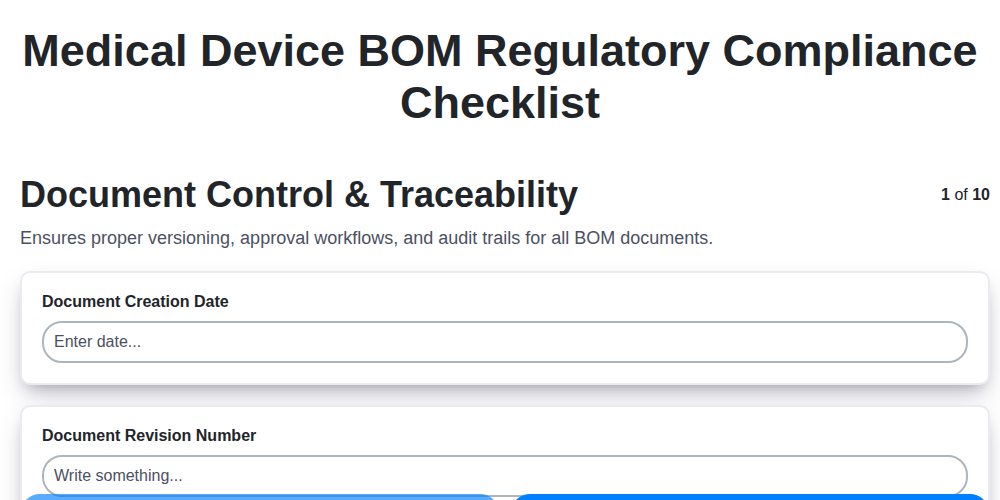
Table of Contents
- Introduction: Why BOM Regulatory Compliance Matters
- 1. Document Control & Traceability: The Foundation of Compliance
- 2. Material Identification & Specifications: Ensuring Material Integrity
- 3. Supplier Management & Qualification: Building a Reliable Supply Chain
- 4. Change Control & Impact Assessment: Managing Modifications Effectively
- 5. Risk Assessment & Mitigation: Identifying and Addressing Potential Hazards
- 6. Design History File (DHF) Alignment: Linking BOM to Device Design
- 7. Process Validation & Verification: Confirming Manufacturing Accuracy
- 8. Labeling & Packaging Compliance: Meeting Regulatory Requirements
- 9. Records Management & Retention: Maintaining Essential Documentation
- 10. Internal Audit & Continuous Improvement: Proactive Compliance
- 11. Common BOM Regulatory Compliance Pitfalls
- 12. Leveraging Technology for BOM Compliance
- Conclusion: Maintaining a Compliant BOM for Medical Devices
- Resources & Links
TLDR: Building a medical device? This checklist is your regulatory lifeline! It covers everything from material specs and supplier vetting to change control and ongoing audits, ensuring your Bill of Materials (BOM) is rock-solid and compliant with crucial regulations. Download it and streamline your path to market!
Introduction: Why BOM Regulatory Compliance Matters
The Bill of Materials (BOM) is the backbone of any medical device - a comprehensive list of all components, raw materials, and assemblies that make up your product. But it's far more than just a parts list; it's a critical regulatory artifact. In the heavily regulated medical device industry, BOM accuracy and regulatory compliance aren't optional-they're essential for patient safety, market access, and avoiding costly recalls and enforcement actions.
Non-compliance can lead to significant consequences, including delays in FDA (or equivalent international agency) approvals, product recalls, warning letters, and even legal liabilities. A robust and compliant BOM demonstrates a company's commitment to quality and provides regulators with confidence in the device's design and manufacturing process. This blog post will outline a regulatory compliance checklist specifically tailored for medical device BOMs, guiding you through the key areas to ensure your BOM supports a compliant and safe product. Ignoring these aspects is a risk no medical device company can afford to take.
1. Document Control & Traceability: The Foundation of Compliance
A robust Bill of Materials (BOM) for a medical device isn't just a list of components; it's a living document inextricably linked to your compliance journey. Without rigorous document control and traceability, you're inviting regulatory scrutiny and potential recalls. This foundational step ensures every item in your BOM is documented, approved, and traceable throughout the device lifecycle.
Here's what's critical:
- Version Control: Implement a system for managing different versions of your BOM. Clear numbering, date stamps, and revision histories are essential. This allows you to track changes and revert to previous versions if necessary.
- Approval Workflow: Define a formal approval process. Who reviews and approves changes to the BOM? Document these approvals meticulously.
- Unique Identifiers: Assign unique identifiers to each BOM item (parts, assemblies, etc.). This aids in tracking and linking items to associated documentation (specifications, drawings, supplier data).
- Traceability Matrix: Create a traceability matrix connecting BOM items to their corresponding design inputs, risk assessments, verification activities, and supplier records. This demonstrates the "why" behind each component.
- Electronic Document Management System (EDMS): Consider utilizing an EDMS to streamline document control, access control, and audit trails.
Maintaining impeccable document control and traceability isn't just a nice to have - it's the bedrock upon which your medical device regulatory compliance is built.
2. Material Identification & Specifications: Ensuring Material Integrity
The foundation of a safe and effective medical device rests squarely on the quality and integrity of its constituent materials. A robust material identification and specification process isn't just a regulatory requirement; it's vital for device performance, patient safety, and overall product reliability.
This section of your BOM regulatory compliance checklist should focus on detailed documentation and meticulous control. Here's what to address:
- Unique Material Identification: Each material used in your device must have a unique identifier. This goes beyond just the common name (e.g., "stainless steel"). Include manufacturer part numbers, catalog numbers, grades, and any specific designations. This unambiguous identification is critical for traceability and future investigations.
- Detailed Specifications: Don't simply list the material. Include comprehensive specifications. This encompasses physical properties (density, tensile strength, hardness), chemical composition (percentage of elements), biocompatibility data (if applicable), and any relevant industry standards (e.g., ASTM, ISO). These specifications must be clear, measurable, and consistently applied.
- Approved Vendor Lists: Link material specifications to approved vendor lists. This ensures you're sourcing materials from qualified suppliers who meet your predefined quality standards.
- Material Certificates of Analysis (CoA): Require and maintain CoAs for every material shipment. These documents, provided by the supplier, confirm that the material meets the specified requirements. Verify CoA data against your specifications.
- Traceability Records: Establish a system to track materials from receipt to finished product. This includes batch numbers, lot numbers, and date codes.
- Material Change Management: Have a clear process to evaluate and approve any changes to material specifications, even minor ones. This change must be assessed for impact and documented.
- Biocompatibility Considerations: For materials that contact the patient, rigorous biocompatibility testing and documentation are paramount. Ensure these tests are properly referenced and results are readily available.
By diligently adhering to these practices, you're not only satisfying regulatory requirements but also building a strong foundation for a high-quality, safe, and effective medical device.
3. Supplier Management & Qualification: Building a Reliable Supply Chain
For medical device manufacturers, a robust supply chain isn't just desirable; it's essential for regulatory compliance and patient safety. Your device's quality is only as good as the materials and components you source. A thorough supplier management and qualification program is therefore a critical cornerstone of your BOM regulatory compliance efforts.
This process goes far beyond simply finding a vendor with the right price. It involves a systematic assessment and ongoing monitoring to ensure your suppliers consistently meet your quality expectations and adhere to applicable regulations (e.g., ISO 13485, FDA 21 CFR Part 210 & 211, MDR).
Here's what a comprehensive supplier management & qualification program should include:
- Supplier Selection & Evaluation: Develop clear selection criteria based on factors like technical capabilities, quality management systems (QMS) certifications (e.g., ISO 13485), financial stability, and geographic location (considering potential supply chain disruptions).
- Supplier Audits: Conduct initial and ongoing audits to verify the supplier's QMS and manufacturing processes. These can be performed by your own quality personnel or through qualified third-party auditors.
- Supplier Agreements: Establish legally binding agreements outlining expectations, responsibilities, and quality requirements. This should include clauses regarding material traceability, change control, and confidentiality.
- Material Traceability Requirements: Clearly define and enforce requirements for suppliers to provide complete material traceability records, allowing you to track components throughout the manufacturing process.
- Performance Monitoring: Implement a system for monitoring supplier performance, including metrics like on-time delivery, defect rates, and responsiveness to issues. Regular performance reviews should be conducted.
- Corrective Action & Preventative Action (CAPA) System Integration: Establish a clear process for suppliers to report deviations and implement corrective actions. Ensure their CAPA system aligns with yours.
- Regular Re-evaluation: Periodically re-evaluate supplier performance and re-qualify suppliers to ensure they continue to meet your requirements.
A proactive and well-documented supplier management & qualification program not only minimizes risks but also fosters strong, collaborative relationships with your suppliers, ultimately contributing to a more resilient and compliant BOM.
4. Change Control & Impact Assessment: Managing Modifications Effectively
In the medical device industry, changes - whether to materials, processes, or designs - are inevitable. However, introducing a modification without a robust change control process is a recipe for regulatory disaster. A well-defined change control system isn's just about paperwork; it's about maintaining device safety and effectiveness throughout its lifecycle.
Here's why it's critical and what it should involve:
- Comprehensive Documentation: Every proposed change, no matter how small it seems, must be formally documented. This includes the originator of the change, the proposed modification, the justification for the change, and an initial impact assessment.
- Impact Assessment - The Ripple Effect: This is the heart of change control. It's not enough to simply change something; you need to understand how that change will affect everything else. Consider the impact on:
- Design: Does the change affect the device's functionality, performance, or usability?
- Manufacturing: Will it require adjustments to the manufacturing process, equipment, or personnel training?
- Materials: Are alternative materials acceptable? Do they meet specifications and regulatory requirements?
- Risk: Does it introduce new hazards or alter existing ones?
- Verification & Validation: Will the change necessitate re-testing or validation activities?
- Labeling and Instructions for Use (IFU): Will the change necessitate a revision to these critical documents?
- Approval Workflow: Establish a clear approval process with defined roles and responsibilities. This usually involves cross-functional teams (e.g., engineering, quality, manufacturing, regulatory).
- Traceability: Link the change request to its impact assessment, approval, implementation, and verification/validation activities. This establishes a clear audit trail.
- Post-Implementation Review: After the change is implemented, conduct a review to ensure it was executed correctly, the expected results were achieved, and any unforeseen consequences were addressed. This learning is invaluable for future change control activities.
Failing to properly manage change can lead to device recalls, regulatory warnings, and ultimately, harm to patients. A proactive and well-controlled change management system is a cornerstone of medical device regulatory compliance.
5. Risk Assessment & Mitigation: Identifying and Addressing Potential Hazards
Medical device BOM (Bill of Materials) regulatory compliance isn't just about ticking boxes; it's about ensuring patient safety and product efficacy. A robust risk assessment and mitigation strategy is paramount to achieving this. This isn't a one-time event but an ongoing process integrated throughout the entire product lifecycle, especially interwoven with your BOM.
Understanding the Scope: Risk assessment for your BOM needs to consider potential hazards related to material selection, supplier quality, manufacturing processes, and even the lifecycle of the components themselves. A failed capacitor, a substandard adhesive, or a material that degrades over time - all represent risks that could compromise device performance and potentially harm patients.
The Process: A typical risk assessment process includes:
- Hazard Identification: Brainstorming and identifying potential hazards associated with each BOM component and its related processes. This should involve cross-functional teams, including engineering, quality, manufacturing, and regulatory affairs. Consider what could go wrong? for every material.
- Risk Analysis: Evaluating the likelihood of each hazard occurring and the severity of the potential consequences. Tools like Failure Mode and Effects Analysis (FMEA) are invaluable here. Assign risk priority numbers (RPNs) to quantify the risk level.
- Risk Evaluation: Comparing the calculated risk levels against pre-defined acceptance criteria. Risks exceeding these criteria require mitigation.
- Risk Mitigation: Implementing controls and safeguards to reduce the likelihood and/or severity of the identified risks. This might involve:
- Material Substitution: Replacing high-risk materials with safer alternatives.
- Process Modifications: Adjusting manufacturing steps to minimize potential errors.
- Supplier Audits: Strengthening supplier quality control measures.
- Design Changes: Incorporating safety features into the device design.
- Risk Review: Regularly reviewing the risk assessment to ensure its continued accuracy and effectiveness, especially when BOM changes occur.
BOM's Role in Mitigation: The BOM itself becomes a key tool for risk mitigation. Clear material specifications, approved supplier lists, and documented change control procedures - all directly tied to the BOM - are essential for minimizing risk. Each BOM entry should ideally link back to risk assessment documentation, providing a clear audit trail.
Remember that documented mitigation strategies must be part of your Design History File (DHF) and demonstrated through verification and validation activities.
6. Design History File (DHF) Alignment: Linking BOM to Device Design
The Design History File (DHF) is the cornerstone of demonstrating regulatory compliance for medical devices. It's the documented compilation of design activities, decisions, and justifications that led to the final device. Your Bill of Materials (BOM) isn't just a list of parts; it's a vital component within the DHF, and maintaining strict alignment is crucial.
Here's why and how to ensure this alignment:
- Traceability is Key: Every component listed in your BOM should have a clear and demonstrable link to the design requirements it addresses. This link can be established through design input requirements, design output specifications, verification and validation protocols, and even design reviews.
- Material Specifications & Justification: The DHF should document why specific materials were selected for each component in the BOM. This isn't just about listing the material type (e.g., Stainless Steel 316L); it's about explaining how its properties - biocompatibility, strength, corrosion resistance - meet the device's intended use and performance requirements.
- Design Input/Output Mapping: Create a robust mapping system. Show how each design input (e.g., "material shall be biocompatible") directly translates into a design output, which then informs the component selection and specifications within the BOM.
- Revision Control Integration: BOM revisions must be tightly controlled and tracked within the DHF. Any change to a component's material or specification should be documented with justification and impact assessment - see section 5 for more on Change Control.
- Supplier Data Integration: Supplier data, including material certificates of analysis (CoA) and supplier qualifications (covered in section 3), need to be accessible and linked to the corresponding BOM entries within the DHF.
- Regular Review & Updates: The DHF isn't a static document. It needs regular review and updates to reflect any changes made to the BOM or the design process.
Failure to properly align the BOM with the DHF can lead to compliance issues during audits and hinder the ability to defend design decisions.
7. Process Validation & Verification: Confirming Manufacturing Accuracy
For medical devices, simply designing a robust process isn't enough. You need concrete evidence that it consistently produces devices that meet your predetermined specifications and quality standards. This is where process validation and verification come into play - and they are distinct but crucial steps.
Process Validation: This is the documented evidence that a process, when used consistently, will reliably produce a product that meets pre-defined specifications. It goes beyond simply testing; it's about demonstrating the capability of the process. This often involves multiple runs, statistically significant data collection, and thorough analysis. Think of it as proving your manufacturing process can perform as expected under normal operating conditions. Types of validation can include:
- Installation Qualification (IQ): Verifying that equipment is installed correctly and functions according to manufacturer specifications.
- Operational Qualification (OQ): Confirming that the equipment operates as intended throughout its specified operating ranges.
- Performance Qualification (PQ): Demonstrating the entire process consistently produces the desired output, meeting quality requirements.
Process Verification: This confirms that the validation activities were adequate and the process is actually performing as intended in the real-world manufacturing environment. Verification often involves ongoing monitoring, trending, and periodic reviews. It's about ensuring that your validated process is consistently performing.
Specific Considerations for Medical Device BOMs: When validating and verifying processes related to your BOM, be sure to include validation of:
- Component handling procedures: Documented and validated handling procedures for each component listed in your BOM to prevent damage or contamination.
- Assembly steps: Validation of each assembly step and tooling used, ensuring consistent results.
- Critical process parameters (CPPs): Identification and control of CPPs that directly impact product quality, such as temperature, pressure, or mixing times.
- Equipment calibration and maintenance: Validation that equipment used in the manufacturing process is properly calibrated and maintained.
Maintaining meticulous records of all validation and verification activities is vital for regulatory compliance and traceability.
8. Labeling & Packaging Compliance: Meeting Regulatory Requirements
Labeling and packaging for medical devices are far more than just aesthetics; they are critical components of regulatory compliance and patient safety. Incorrect or misleading information can lead to misuse, adverse events, and significant regulatory action. This section outlines the key considerations for ensuring your labeling and packaging meet the stringent requirements of bodies like the FDA (in the US), MDR (in Europe), and others globally.
Key Considerations:
- Accuracy & Completeness: Labeling must accurately reflect the device's intended use, indications, contraindications, warnings, precautions, and manufacturer information. Omissions or inaccuracies are unacceptable.
- Language Requirements: Ensure your labels comply with the language requirements of the markets where your device will be sold. This often includes translation and verification processes.
- UDI Compliance: The Unique Device Identification (UDI) system is a cornerstone of modern medical device regulation. Labels must include the UDI, UDI carrier, and associated data, accurately linked to your device listing. Ensure the data is verifiable and conforms to the established standards.
- Material Compatibility: Packaging materials must be compatible with the device and maintain its sterility (if applicable). Material degradation or leaching can compromise device safety and efficacy. Consider factors like moisture, light, and temperature.
- Traceability: Packaging should facilitate traceability of the device back to its manufacturing history. Lot numbers, serial numbers, and other identifiers are essential.
- Tamper-Evident Packaging: For certain devices, tamper-evident packaging is required to ensure sterility and prevent unauthorized access.
- Regulatory Symbols & Markings: Accurately display required symbols and markings (e.g., CE mark, sterile indicators) in their correct format and location.
- Package Integrity: Packaging must maintain device integrity throughout its lifecycle, including during shipping, storage, and handling.
- Artwork Approval Process: Implement a robust artwork approval process involving qualified personnel to review and validate labeling content before release.
Failure to comply with these labeling and packaging requirements can result in recalls, warning letters, and significant delays in market access. Regularly review and update your labeling processes to reflect evolving regulatory guidance.
9. Records Management & Retention: Maintaining Essential Documentation
In the medical device industry, meticulous records management and retention aren't just best practices - they's legal and regulatory requirements. Your Bill of Materials (BOM) documentation is a critical part of this, and improper handling can lead to compliance failures, recalls, and significant financial penalties.
This isn't just about piling paperwork; it's about establishing a robust system for creating, organizing, storing, retrieving, and ultimately, retaining records that demonstrate compliance with regulations like FDA 21 CFR Part 11 and ISO 13485. Here's what you need to consider concerning your BOM:
- Define Retention Periods: Regulations dictate how long records must be kept. Determine the applicable retention periods for your BOM revisions, supplier certifications, material specifications, and all related documentation. These periods can vary based on the device classification and applicable regulations.
- Secure Storage: Whether physical or electronic, your records must be securely stored to prevent loss, damage, or unauthorized access. Implement access controls, backups, and disaster recovery plans.
- Version Control & Traceability: Ensure clear version control for all BOM documents. You need to readily identify the version used for specific design phases, manufacturing runs, and changes. A traceable audit trail is essential.
- Electronic Records Management Systems (ERMS): Consider implementing an ERMS to streamline record management, enforce access controls, and simplify audits. These systems often provide audit trails and automated retention schedules.
- Regular Review & Updates: Periodically review your records management procedures to ensure they remain effective and compliant with evolving regulations and internal processes.
- Training: Ensure all personnel involved in creating, maintaining, and accessing BOM-related records are adequately trained on the company's records management procedures.
Failure to properly manage and retain your BOM records isn't just an administrative oversight; it's a direct threat to your medical device's regulatory compliance and overall business integrity.
10. Internal Audit & Continuous Improvement: Proactive Compliance
Regulatory compliance for medical devices isn't a "set it and forget it" endeavor. It's a dynamic process that demands ongoing vigilance and a commitment to continuous improvement. An effective internal audit program is the cornerstone of this ongoing effort, acting as a proactive check against potential compliance gaps and fostering a culture of quality within your organization.
Why Internal Audits are Critical:
Internal audits are independent evaluations of your quality system against established procedures, regulatory requirements (like FDA's 21 CFR Part 211 or ISO 13485), and your own internal standards. They're not about finding fault; they're about identifying opportunities for improvement before a regulatory agency or external auditor does.
Key Elements of an Effective Internal Audit Program:
- Auditor Independence & Training: Ensure your auditors are sufficiently knowledgeable, objective, and independent of the areas they are auditing. Ongoing training is essential.
- Risk-Based Approach: Prioritize audits based on risk. Focus on areas with a higher potential for compliance issues or significant impact on patient safety. Your BOM processes, particularly concerning material traceability and supplier management, are prime candidates for frequent review.
- Defined Audit Scope & Criteria: Clearly define the scope of each audit and the criteria against which it will be evaluated.
- Documented Findings & Corrective Actions: All audit findings should be thoroughly documented, along with proposed corrective actions and timelines for implementation.
- Management Review: Audit findings and corrective action plans should be reviewed by management to ensure accountability and drive meaningful change.
- Continuous Improvement Loop: Treat audit findings as valuable data points. Analyze trends, identify root causes, and implement improvements to prevent recurrence. Consider how adjustments to your BOM review processes can address recurring issues.
Beyond the Audit: Fostering a Culture of Compliance
Internal audits are powerful tools, but they are most effective when integrated into a broader culture of compliance. Encourage open communication, provide ongoing training, and empower employees to identify and report potential issues. By proactively seeking out and addressing compliance challenges, you can build a robust quality system and minimize your risk of regulatory scrutiny.
11. Common BOM Regulatory Compliance Pitfalls
Navigating the regulatory landscape for medical devices is challenging enough, but overlooking crucial aspects of your Bill of Materials (BOM) can turn that challenge into a full-blown compliance crisis. Here are some of the most frequent pitfalls we see:
1. Material Specification Ambiguity: Vague or incomplete material specifications are a major headache. Stainless steel isn't enough - you need to specify grade, manufacturer, and acceptable tolerances. This ambiguity leads to inconsistent material sourcing and traceability issues.
2. Supplier Blind Spots: Relying solely on supplier declarations without independent verification is risky. Lack of supplier audits and qualification processes leaves you vulnerable to substandard materials and potential compliance breaches.
3. Change Control Chaos: Informal or poorly documented changes to the BOM, even seemingly minor ones, can have ripple effects. Failing to assess the impact of these changes on device safety and performance is a direct violation of regulatory requirements.
4. Traceability Breakdown: Incomplete or inaccurate records linking materials to specific lots and batches cripples your ability to investigate issues and perform effective recalls. This isn't just about tracking; it's about proving traceability.
5. Ignoring Design History File (DHF) Dependencies: The BOM is inextricably linked to the DHF. Failing to ensure the BOM accurately reflects the design intent documented in the DHF creates inconsistencies and undermines the entire design history.
6. Lack of Risk Assessment Focus: Assuming materials are inherently safe without conducting proper risk assessments (e.g., biocompatibility, extractables, leachables) leaves you exposed to unforeseen hazards.
7. Document Control Deficiencies: Scattered, unapproved, or outdated BOM versions lead to confusion, errors, and non-compliance. A robust document control system is paramount.
8. Validation/Verification Oversights: Failing to validate processes that use BOM materials or verify that materials meet specifications opens the door to deviations and potential device failures.
9. Labeling & Packaging Mismatches: The BOM must align with the final product labeling and packaging. Discrepancies here can mislead users and violate labeling regulations.
10. Records Retention Gaps: Inadequate retention of BOM-related records (specifications, supplier documentation, change orders) leaves you unable to demonstrate compliance during audits.
11. Reactive, Not Proactive Improvement: Focusing solely on fixing issues after they arise, rather than implementing continuous improvement processes and internal audits, leaves you perpetually behind the curve.
12. Leveraging Technology for BOM Compliance
Maintaining meticulous records and ensuring regulatory adherence for your medical device Bill of Materials (BOM) can feel overwhelming. Thankfully, technology offers a powerful suite of tools to streamline the process and reduce the risk of errors. Consider exploring solutions like:
- Electronic Document Management Systems (EDMS): Ditch the paper trails! EDMS platforms centralize your BOM data, provide version control, and simplify document access for authorized personnel.
- Product Lifecycle Management (PLM) Software: PLM systems offer a holistic view of your device lifecycle, integrating BOM data with design, engineering, manufacturing, and quality control processes. This promotes data consistency and facilitates traceability.
- BOM Management Software: Specialized BOM management tools can automate BOM creation, revision control, and approval workflows, reducing manual effort and minimizing errors.
- Automated Traceability Systems: Implement systems that track materials from supplier to finished product, enabling rapid recall capabilities and demonstrating compliance with regulations like Unique Device Identification (UDI).
- Cloud-Based Collaboration Platforms: Enable seamless collaboration among cross-functional teams involved in BOM management, fostering better communication and reducing approval bottlenecks.
Investing in the right technological solutions can significantly improve the efficiency and accuracy of your BOM compliance efforts, freeing up valuable resources and minimizing the potential for costly regulatory issues. Remember to validate any new technology to ensure it meets your compliance requirements and integrates seamlessly with existing systems.
Conclusion: Maintaining a Compliant BOM for Medical Devices
Navigating the regulatory landscape for medical devices is complex, and a compliant Bill of Materials (BOM) is absolutely critical. This checklist provides a framework for proactively managing your BOM, ensuring it reflects the stringent requirements of agencies like the FDA, ISO, and others.
Remember, compliance isn't a one-time achievement; it's an ongoing process. Regularly reviewing and updating your BOM, incorporating feedback from audits, and fostering a culture of continuous improvement within your organization are vital. A well-managed BOM isn't just about ticking boxes; it's about building a foundation for safer, more reliable medical devices and fostering trust with regulators and, most importantly, patients. Investing in a robust BOM management system and the training to support it will pay dividends in reduced risk, faster approvals, and enhanced product quality. Don't treat this checklist as a burden, but as a roadmap to confidently navigate the intricacies of medical device regulatory compliance.
Resources & Links
- U.S. Food and Drug Administration (FDA): The primary regulatory body for medical devices in the U.S. Provides regulations, guidance documents, and information on compliance requirements. Critical for understanding 21 CFR Part 210, 211, 820, and related regulations.
- European Medical Device Regulation (MDR): Provides information about the EU MDR, including regulations, guidance, and updates. Essential for companies selling medical devices in Europe.
- International Organization for Standardization (ISO): Provides information and standards related to quality management systems (ISO 13485) and other relevant standards used in medical device manufacturing.
- American Society for Quality (ASQ): Offers resources, training, and certifications related to quality assurance and quality management, valuable for understanding BOM requirements within a quality system.
- Medical Device Information Center (MDIC): Provides regulatory intelligence and analysis for medical device professionals. Useful for staying updated on regulatory changes impacting BOM compliance.
- Lexology - Medical Device Regulatory News: Provides legal news and analysis on medical device regulatory compliance across various jurisdictions, including BOM-related topics.
- NSF International: Offers certification and testing services related to medical device manufacturing, including component material validation and testing relevant to BOM accuracy.
- Biologics Industry Association (BIA): While focused on biologics, the BIA has some useful information on traceability and validation principles applicable to medical device BOMs involving biological materials or components.
- Global Medical Device Compliance: A resource offering news, regulatory updates, and webinars covering medical device compliance, often touching upon BOM-related subjects.
- Quality Digest: A resource for quality professionals, including articles and news related to medical device manufacturing and compliance, often covering aspects relevant to BOM management.
- MasterControl: Provides document control and quality management software solutions that assist with managing BOMs and regulatory compliance. Demonstrates technologies relevant to section 12.
- Propel PLM: Product Lifecycle Management (PLM) software provider, often used in medical device manufacturing to manage BOMs, regulatory data, and change control processes. Relevant to sections 12 & 4.
- Dassault Systèmes: Provides PLM solutions for medical device companies. Their software helps manage BOMs and design history files, addressing topics from sections 6 and 12.
Frequently Asked Questions
What does BOM stand for in the context of medical devices?
BOM stands for Bill of Materials. It's a comprehensive list of all the raw materials, components, and assemblies required to manufacture a medical device, along with their quantities and associated costs. It's a critical document for regulatory compliance.
Why is BOM regulatory compliance so important for medical devices?
Medical device regulations (like FDA's 21 CFR Part 211, EU MDR) require manufacturers to demonstrate control over their manufacturing processes and materials. A compliant BOM demonstrates traceability, quality, and adherence to specifications, contributing to device safety and efficacy. Non-compliance can lead to recalls, warning letters, and market access restrictions.
What are some of the key regulatory requirements that impact medical device BOMs?
Key requirements include: material traceability (knowing the source and history of each component), supplier management (ensuring suppliers meet quality standards), change control (managing changes to materials and components), and documentation (maintaining records of all BOM information and changes). Specific regulations like RoHS, REACH, and conflict minerals also have implications.
What elements should be included in a robust medical device BOM?
A comprehensive BOM should include: part number, description, manufacturer, supplier, quantity, unit of measure, material certificate of analysis (CoA), material safety data sheets (MSDS), RoHS/REACH compliance status, risk classification, and lifecycle status. It should also clearly link to relevant design specifications and procurement records.
How does supplier management tie into BOM regulatory compliance?
Suppliers are a crucial part of the supply chain. You must have a robust supplier qualification process, including audits and performance monitoring, to ensure they meet your quality standards and adhere to regulatory requirements. The BOM should clearly identify the supplier for each component and track their performance.
What is a Material Certificate of Analysis (CoA), and why is it important for BOM compliance?
A CoA is a document from the material supplier that certifies the material meets specific quality standards and specifications. It provides evidence of material traceability and allows manufacturers to verify the material's suitability for use in their devices, crucial for demonstrating regulatory compliance.
How should I manage changes to my medical device BOM?
Changes to the BOM must be carefully managed through a formal change control process. This includes documenting the reason for the change, assessing the impact on device safety and efficacy, obtaining approvals, and updating the BOM accordingly. All changes should be traceable and documented.
What are some common pitfalls to avoid when creating and maintaining a medical device BOM?
Common pitfalls include inadequate material traceability, insufficient supplier management, lack of a formal change control process, and failure to update the BOM when design changes occur. Maintaining a 'living' BOM, regularly reviewed and updated, is essential.
Found this Article helpful?
Comments
There are no comments yet. Be the first to add one!
BOM - Bill of Materials Management Solution Demo
Struggling with inaccurate BOMs & costly errors? ChecklistGuro provides a centralized BOM Management solution, connecting your design, engineering, & manufacturing teams for improved collaboration and control. Simplify operations & boost efficiency.
Related Articles
Mastering Textiles: Your Fiber Content Checklist for BOM Accuracy
Mastering Leather Manufacturing: Your Tannery BOM & Compliance Checklist
Mastering Your BOM: A Comprehensive Checklist Template for Success
Ensuring Success: Your Oil & Gas BOM Component Approval Checklist Guide
Decoding Origins: Your Construction Materials BOM Origin Checklist Guide
The Ultimate Retail BOM Product Definition Checklist: A Step-by-Step Guide
Ensuring Quality: Your Rubber Manufacturing Polymer BOM Checklist Guide
The Ultimate Logistics BOM Packaging Checklist: Ensuring Safe & Efficient Shipments
We can do it Together
Need help with
Bill of Materials (BOM) Management?
Have a question? We're here to help. Please submit your inquiry, and we'll respond promptly.