Mastering Textiles: Your Fiber Content Checklist for BOM Accuracy
Published: 12/10/2025 10:00 PM Updated: 12/14/2025 7:53 AM
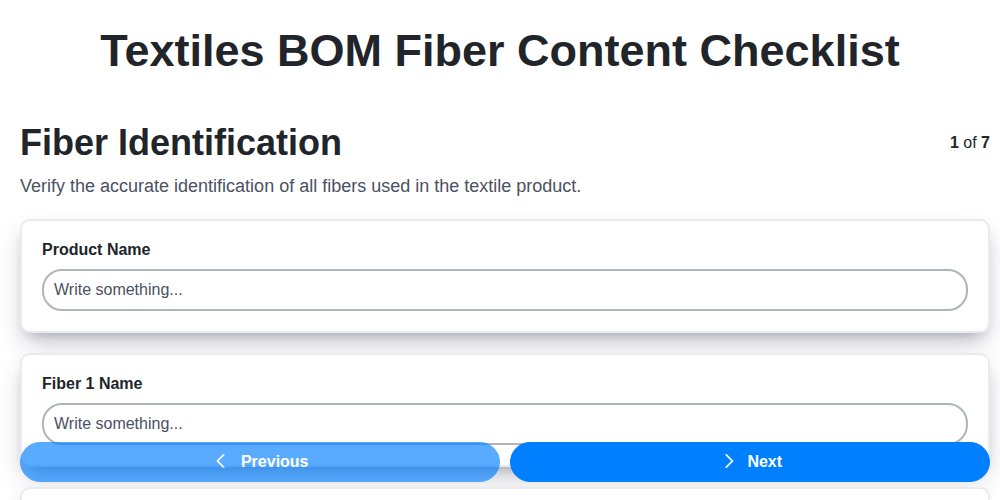
Table of Contents
- Why Fiber Content Matters in Textiles
- Understanding the BOM: Your Foundation
- Fiber Identification: The Detective Work
- Calculating Fiber Percentages: Precision is Key
- Label Compliance: Meeting Legal Requirements
- BOM Accuracy: Ensuring Consistency
- Testing Method Verification: Validating Your Approach
- Supplier Validation: Trusting Your Sources
- Record Keeping: Building a Traceable History
- Common Pitfalls and How to Avoid Them
- The Role of Technology in Fiber Content Management
- Training Your Team: Expertise is Essential
- Continuous Improvement: A Living Checklist
- Resources & Links
TLDR: Ensuring accurate fiber content in your textiles is crucial! This checklist helps you verify fiber identification, percentages, label compliance, and supplier accuracy - vital for BOM (Bill of Materials) precision, avoiding costly errors, and maintaining quality. It's your shortcut to textile mastery!
Why Fiber Content Matters in Textiles
Understanding the fiber content of textiles isn't just about knowing what your fabric is; it's about ensuring quality, compliance, and consumer trust. Incorrect fiber content declarations can lead to serious repercussions, from legal penalties to damaged brand reputation. Consumers rely on accurate labeling to make informed decisions about comfort, care, durability, and even potential allergens. A garment labeled 100% Cotton should genuinely be 100% cotton; mislabeling can lead to disappointed customers and costly returns. Furthermore, fiber content directly impacts the performance characteristics of a textile - its breathability, warmth, drape, and resistance to wear and tear. Accurate fiber content data is foundational to successful textile development and production.
Understanding the BOM: Your Foundation
The Bill of Materials (BOM) for textiles is far more than just a list of ingredients; it's the bedrock of quality control, accurate labeling, and ultimately, consumer trust. Think of it as the recipe for your textile product. It details everything that goes into creating a fabric or finished good, from the raw fibers to the dyes and finishes applied. A well-constructed and meticulously maintained BOM is crucial for ensuring consistency, minimizing errors, and avoiding costly recalls.
A core component of a robust textile BOM is the Fiber Content Checklist, which we'll delve deeper into later. However, understanding the broader significance of the BOM is essential. It's the single source of truth for your product's composition, allowing for traceability, efficient production, and accurate regulatory compliance. Ignoring or neglecting it can lead to mislabeling, quality issues, and potential legal repercussions. A detailed and accurate BOM allows everyone involved - from designers and sourcing teams to production managers and quality control specialists - to be on the same page, fostering collaboration and streamlining operations. It's the foundation upon which your textile product's integrity is built.
Fiber Identification: The Detective Work
Identifying the fibers in your textiles is the foundation of any accurate Bill of Materials (BOM). It's more than just a glance - it's detective work! While a fabric might look like cotton, it could be a blend, or even a completely different fiber masquerading as something familiar.
So, how do you crack the case? Here's a breakdown of common methods:
- Visual Inspection: While helpful for initial assessments, relying solely on appearance is risky. Different fibers have varying luster, texture, and drape. Experience helps, but isn't foolproof.
- Burn Test: A classic (though messy!) method. Carefully burning a small sample reveals how the fiber behaves - does it melt, curl, smell like cellulose (plant-based) or protein (animal-based)? There are numerous online guides and resources detailing burn test characteristics for common fibers. Important Note: Always perform burn tests with proper ventilation and safety precautions.
- Microscopy: Examining the fiber under a microscope offers a detailed view of its structure. Different fibers have distinct microscopic features, allowing for more precise identification.
- Chemical Testing: Specialized tests can be performed to chemically identify fiber types. These tests are generally more accurate and are often necessary for complex blends.
- Near-Infrared (NIR) Spectroscopy: A non-destructive technique that uses infrared light to identify the chemical composition of the fiber. This is becoming increasingly common for rapid and accurate identification.
Remember, accurate fiber identification is crucial for accurate percentage calculations and ensuring label compliance. Don't be afraid to consult with a textile testing lab if you're unsure about identification.
Calculating Fiber Percentages: Precision is Key
Accurate fiber percentage calculation is the backbone of textile BOM (Bill of Materials) integrity. Simply stating cotton blend isn't enough; consumers and regulatory bodies require precise figures. Here's a breakdown of the key methods and considerations:
- Laboratory Analysis: This is the gold standard. Common techniques include weave dissolves, burn tests (with caution and expert interpretation!), and more advanced spectroscopic methods like Near-Infrared (NIR) spectroscopy. Each method has its strengths and limitations, and it's crucial to select a reputable, certified lab.
- Weave Dissolve Method: This involves chemically separating the fibers in a fabric sample. Each fiber is then weighed, and the percentage is calculated based on the total fabric weight.
- Burn Tests (Caution Advised): While a quick and inexpensive initial assessment, burn tests should only be performed by trained personnel. They are highly subjective and prone to error, especially with complex blends. They're best used as a preliminary screening tool, not a definitive measurement.
- NIR Spectroscopy: A non-destructive method that uses infrared light to identify and quantify fiber composition. Offers speed and minimal sample preparation but requires calibration and can be expensive.
- Accounting for Error: Every method introduces a degree of error. Acknowledge this in your BOM documentation and establish acceptable tolerance levels.
Remember to document the chosen method used for calculation and the associated error margin for transparency and traceability.
Label Compliance: Meeting Legal Requirements
Accurate textile labeling isn't just about providing customers with information; it's a legal obligation in most countries. Failing to comply can result in penalties, recalls, and damage to your brand reputation. This section dives into key label compliance considerations based on your Textiles Bill of Materials (BOM) fiber content checklist.
Understanding the Regulations: Familiarize yourself with the specific labeling regulations applicable to your target markets. In the US, the Federal Trade Commission (FTC) mandates specific requirements. Similar bodies exist in Europe (EU Textile Labelling Regulation), Canada, and other regions. These regulations dictate what information must be included on labels, including:
- Fiber Content: This directly correlates with your Fiber Identification and Fiber Percentage Calculation steps. The label must accurately reflect the composition of the fabric.
- Country of Origin: This is often required and must be truthful.
- Care Instructions: While often not directly tied to the BOM itself, ensuring consistency between your BOM's material properties and appropriate care instructions is vital.
- Other Claims: Any claims made about the fabric (e.g., organic, eco-friendly, performance) must be substantiated and compliant with relevant regulations.
Fiber Percentage Thresholds: Regulations often employ percentage thresholds. For instance, a fabric containing 50-99% wool might be labeled as Wool, while a fabric with a lower percentage might require a more detailed composition statement. Your BOM's accuracy in fiber percentage is crucial here.
Label Construction & Placement: Regulations often dictate label size, legibility, and placement on the garment. The information needs to be clear and durable, remaining legible throughout the garment's lifecycle.
Record Keeping is Key: Maintain detailed records demonstrating compliance. This includes your Fiber Identification and Percentage Calculation documentation, testing reports (verifying your Testing Method Verification), and supplier validation records. These records serve as evidence should any questions arise.
BOM Accuracy: Ensuring Consistency
A Bill of Materials (BOM) is only as good as its accuracy. In textiles, inaccuracies in the BOM - particularly regarding fiber content - can lead to production errors, compliance issues, and ultimately, dissatisfied customers. A flawed BOM can trigger costly rework, delays in delivery, and even recalls.
Therefore, meticulous attention to BOM accuracy is paramount. This goes beyond simply listing the fibers; it requires verifying the exact fiber composition and ensuring it aligns perfectly with the actual materials used in production. This means cross-referencing the BOM with the supplier's specifications, confirming fiber percentages through lab testing, and regularly auditing the production process to identify and correct any discrepancies.
Consider this: a slight miscalculation in the percentage of recycled polyester versus virgin cotton can dramatically impact the fabric's performance characteristics, handfeel, and even its environmental claims. A proactive approach to BOM accuracy, including frequent checks and validation steps, is essential for maintaining consistent quality and minimizing risk. Regular reconciliation of the BOM against received material certificates and production records will help identify and rectify errors before they become significant problems.
Testing Method Verification: Validating Your Approach
Ensuring the accuracy of your Textiles Bill of Materials (BOM) isn's just about identifying fibers and calculating percentages - it's also about verifying the methods used to arrive at those figures. Are you confident in the reliability of your testing procedures? This is crucial for maintaining label compliance, avoiding costly recalls, and building trust with your customers.
Testing method verification involves more than just knowing what tests are performed; it's about understanding how they're performed, by whom, and with what level of accuracy. Here's what you should be focusing on:
- Documentation Review: Scrutinize the testing lab's standard operating procedures (SOPs) and ensure they align with industry standards (e.g., ASTM, ISO).
- Equipment Calibration: Confirm that all testing equipment is regularly calibrated and maintained according to the manufacturer's recommendations. Records of calibration should be readily available and reviewed periodically.
- Technician Qualification: Verify that the technicians performing the tests are properly trained and qualified to operate the equipment and interpret the results. Consider requiring certifications or documented training programs.
- Blind Testing: Implement blind testing where possible. This involves sending samples to a different lab without disclosing the anticipated fiber content. The results are then compared to your in-house findings to assess consistency and accuracy.
- Repeatability & Reproducibility: Understand the principles of repeatability (consistency of results when the same technician tests the same sample multiple times) and reproducibility (consistency of results when different technicians test the same sample). Your testing methods should demonstrate acceptable levels of both.
- Method Validation: For new or significantly changed testing methods, a formal validation process should be conducted to ensure they are fit for purpose and provide reliable results.
Don't be afraid to ask questions and challenge assumptions. A proactive approach to testing method verification is a cornerstone of a robust and trustworthy Textiles BOM.
Supplier Validation: Trusting Your Sources
A Textiles Bill of Materials (TBOM) is only as reliable as the information it receives. That's why supplier validation is a critical step in ensuring your fiber content checklist is accurate and compliant. Don't just take your supplier's word for it - proactively verify their processes and capabilities.
Here's what supplier validation entails:
- Initial Assessment: Begin with a thorough assessment of the supplier's reputation, experience, and quality control systems. Request their certifications (e.g., OEKO-TEX, GOTS) and audit reports.
- Process Observation: If possible, visit the supplier's facility to observe their fiber identification and percentage calculation processes firsthand. This gives you insight into their daily operations and potential areas for improvement.
- Sample Verification: Regularly request samples from the supplier and independently verify the fiber content using accredited testing labs. Compare these results with the supplier's declared content. Significant discrepancies warrant investigation and corrective action.
- Communication and Training: Maintain open communication channels with your suppliers. Educate them on your TBOM requirements and the importance of accurate fiber declarations. Consider providing training on fiber identification techniques if necessary.
- Regular Audits: Implement a schedule for periodic audits of your key suppliers. These audits can be conducted internally or through a third-party auditing firm.
- Performance Monitoring: Track supplier performance over time, noting any trends in accuracy or inconsistencies.
By investing in robust supplier validation, you build trust, minimize risk, and ensure the integrity of your TBOM, ultimately protecting your brand and your customers.
Record Keeping: Building a Traceable History
A robust textile Bill of Materials (BOM) isn't just about the initial assessment - it's about creating a verifiable history. Diligent record keeping is the bedrock of a reliable BOM and ensures you can trace the fiber content of your textiles back to their origin. This isn't just about compliance; it's about accountability, continuous improvement, and being prepared for audits or customer inquiries.
What should you be tracking? Everything! This includes:
- Original Fiber Identification Reports: Keep the initial lab reports from fiber identification testing. These are your primary source of truth.
- Percentage Calculation Worksheets: Document your calculations for fiber percentages. Show the formulas used and the raw data input.
- Label Approval Documentation: Maintain records of label approvals, including dates, signatures, and any revisions made.
- BOM Revision History: Track all changes made to the BOM, clearly noting the date, reason for the change, and who authorized it.
- Supplier Validation Records: Keep copies of supplier validation assessments, including contact information, audit findings, and corrective actions taken.
- Testing Method Validation Reports: If you're using in-house testing, document the validation process and results.
- Communication Logs: Record any significant communication regarding fiber content, testing results, or supplier issues.
Organize these records systematically - digitally is ideal, with a clear folder structure and searchable metadata. Consider a centralized database or a cloud-based solution for easy access and collaboration. Regularly review these records to identify trends, potential risks, and areas for improvement in your textile sourcing and BOM management processes. A complete and accessible record-keeping system isn's just about compliance; it's about demonstrating commitment to quality and transparency.
Common Pitfalls and How to Avoid Them
Creating a Textiles Bill of Materials (BOM) with accurate fiber content information is crucial for product integrity, regulatory compliance, and consumer trust. However, several pitfalls can derail even the most diligent efforts. Here's a breakdown of common issues and practical solutions.
1. Misidentification of Fibers: It's surprisingly easy to mistake similar-looking fibers. For example, rayon and modal can appear quite alike. Solution: Invest in proper fiber identification training for your team. Utilize polarized light microscopy (PLM) and other advanced testing methods for ambiguous cases. Document the identification method used for each fiber.
2. Inaccurate Percentage Calculations: Relying on visual estimations for fiber percentages is a recipe for disaster. Even a small percentage error can trigger label compliance issues. Solution: Employ scientifically validated methods for percentage calculation - weight-based analysis is standard, but consider volume or density methods where appropriate. Use calibrated and maintained laboratory equipment.
3. Neglecting Labeling Regulations: Fiber content labeling rules vary significantly between countries (e.g., FTC in the US, Care Labeling Regulation in the EU). Failing to stay updated on these regulations can lead to fines and product recalls. Solution: Regularly review the relevant labeling laws for your target markets. Keep a compliance matrix that outlines requirements for each fiber and product type. Consult with a labeling expert if needed.
4. BOM Discrepancies: Disconnect between the planned BOM and the actual materials received or used in production leads to inconsistencies and potential quality problems. Solution: Implement a robust change management process for BOM updates. Regularly compare planned BOM data with actual usage records and investigate any discrepancies immediately.
5. Testing Method Errors: Choosing the wrong testing method or misinterpreting test results can lead to incorrect fiber content declarations. Solution: Clearly define and document the testing methods to be used for each fiber. Ensure technicians are properly trained and certified for those methods. Periodically validate testing procedures against known standards.
6. Supplier Validation Lapses: Relying on supplier-provided fiber content data without independent verification is a significant risk. Suppliers can make mistakes or have incentives to inflate percentages. Solution: Establish a supplier validation program that includes periodic audits and independent fiber content verification. Hold suppliers accountable for accuracy.
7. Poor Record Keeping: Incomplete or disorganized records make it difficult to track fiber content data, trace issues back to their source, and demonstrate compliance. Solution: Implement a centralized, digital record-keeping system. Include details like fiber identification method, testing results, supplier information, and revision history. Maintain records for the required retention period.
By proactively addressing these potential pitfalls, you can build a robust Textiles BOM fiber content checklist process that ensures accuracy, compliance, and ultimately, builds consumer confidence in your products.
The Role of Technology in Fiber Content Management
Managing fiber content can be a surprisingly complex process, often relying on manual methods prone to error and inefficiency. Thankfully, technology is revolutionizing this area. Modern software solutions, often integrated with barcode scanning and data analytics, offer significant advantages over traditional spreadsheets and paper-based systems.
These tools automate much of the tedious work involved in fiber content management. Imagine instantly updating BOMs with scanned lab reports, or automatically calculating fiber percentages based on verified data. Cloud-based platforms allow for real-time data sharing across teams and suppliers, ensuring everyone is working with the most current information. Furthermore, advanced analytics can identify trends, pinpoint inconsistencies, and flag potential compliance issues before they become problems, significantly reducing risk and streamlining the entire process. The shift towards digital solutions isn't just about convenience; it's about accuracy, traceability, and ultimately, a more resilient and compliant textile supply chain.
Training Your Team: Expertise is Essential
A Textiles Bill of Materials (TBOM) Fiber Content Checklist isn't just a document; it's a process. And that process hinges on having a team that understands why each step is critical. Simply going through the motions won't cut it. Inaccurate fiber content declarations can lead to recalls, legal issues, and, most importantly, damage your brand's reputation.
Investing in comprehensive training is paramount. Your team needs to understand the nuances of fiber identification - not just recognizing common fibers like cotton and polyester, but also being able to distinguish between similar-looking materials like rayon and modal. They need to grasp the mathematical principles behind fiber percentage calculations, ensuring accurate declarations.
Training should cover label compliance regulations specific to your target markets (e.g., FTC guidelines in the US, Care Labeling Rules in Europe), and emphasize the importance of verifying testing methods. Don't underestimate the value of supplier validation - training should empower your team to confidently communicate requirements and assess supplier documentation. Finally, reinforce the importance of meticulous record-keeping and traceability, highlighting how it safeguards your business and supports audits. Regular refresher courses and updates on evolving industry standards will keep your team sharp and your TBOM fiber content accurate.
Continuous Improvement: A Living Checklist
A Textiles Bill of Materials (BOM) isn't a static document; it's a living, breathing guide to your product's composition. This Fiber Content Checklist, particularly, needs regular review and updates to ensure ongoing compliance and quality. Think of it as a proactive measure, not just a one-time task.
Here's why continuous improvement is critical:
- Evolving Regulations: Textile labeling laws and standards frequently change. What was compliant last year might not be today. Regular checks ensure you're always on the right side of the law.
- Supplier Changes: New suppliers, or even changes within existing suppliers' processes, can affect fiber content and quality. Periodic validation remains essential.
- Material Innovation: The textile industry is constantly innovating. New fiber blends and treatments emerge regularly, demanding updates to your BOM and related testing.
- Process Optimization: Analyzing your checklist completion data - identifying bottlenecks or areas of confusion - can highlight opportunities to streamline your processes and improve overall efficiency.
- Risk Mitigation: Proactive review helps identify and mitigate potential compliance risks before they become costly problems (think recalls or penalties).
To truly make your Fiber Content Checklist a living document, schedule regular reviews (e.g., quarterly or annually, more frequently if you have frequent supplier changes or suspect inconsistencies). Encourage feedback from all stakeholders involved in the process - sourcing, quality control, production, and even customer service. Treat any deviations from the checklist as opportunities to learn and improve your overall textile management strategy.
Resources & Links
- Textile Exchange: A global non-profit organization working to drive sustainable practices in the textile industry. They offer resources and standards related to fiber content, traceability, and sustainability. Crucial for understanding industry best practices.
- Cotton Incorporated: Provides research, promotion, and consumer education related to cotton. Offers extensive data on cotton fiber properties and industry standards. Relevant for understanding cotton content and its impact.
- Acrylic Wool Association: A resource for information regarding acrylic fiber properties and industry standards, useful when analyzing and verifying acrylic fiber content.
- The Polyester Fibres Website: Provides information on polyester fibers and their production, offering technical details applicable to BOM accuracy and fiber identification.
- The Woolmark Company: Offers quality standards and authentication for wool, providing valuable reference materials for verifying wool content and origin. Includes testing methodologies.
- American Textile Requirements Institute (ARTI): Offers training and certification for textile professionals. Their courses often cover fiber content labeling and compliance. Very important for legal aspects.
- American National Standards Institute (ANSI): ANSI doesn't create standards directly for fiber content but accredits bodies that do, ensuring standardization and reliability. Useful for understanding the frameworks behind testing standards.
- International Organization for Standardization (ISO): Provides international standards that can be relevant to textile testing, quality control, and supply chain management. Offers a global perspective on best practices.
- SGS: A global leader in inspection, testing, verification and certification services. Can perform fiber content analysis and verification services if your in-house capabilities are limited. Provides third-party validation.
- Intertek: Similar to SGS, Intertek offers testing, inspection, and certification services, including fiber content analysis. Provides independent verification of BOM accuracy.
- Bureau Veritas: Provides testing, inspection, and certification services with expertise in textile quality and compliance. Offers a range of analytical solutions.
- National Institute of Standards and Technology (NIST): Develops standards and provides testing capabilities, contributing to the foundation of accurate fiber analysis techniques. May offer references to methods.
- FTA - Training and Certification: This specific page from the American Textile Requirements Institute (ARTI) details the training courses available, many of which are directly applicable to fiber content accuracy and legal compliance.
- Thermo Fisher Scientific: Provides analytical instruments and reagents used in textile testing, including fiber identification and quantification. Important for understanding equipment and techniques.
Frequently Asked Questions
What does BOM accuracy mean in the context of textiles?
BOM (Bill of Materials) accuracy in textiles refers to ensuring the correct fiber content, weight, and other material specifications are accurately documented for each textile item being manufactured or used in a project. Accurate BOMs minimize errors, reduce waste, and ensure consistent product quality.
Why is fiber content so important for BOM accuracy?
Fiber content directly impacts a textile's performance, hand feel, drape, durability, and care requirements. Incorrect fiber content data can lead to incorrect dyeing, printing, or construction methods, resulting in failed or substandard products.
What are some common textile fiber categories I need to be aware of?
Common fiber categories include: Natural Fibers (Cotton, Linen, Wool, Silk), Synthetic Fibers (Polyester, Nylon, Acrylic, Rayon), and Blends (combinations of natural and synthetic fibers). Understanding the characteristics of each is crucial.
What are some potential consequences of inaccurate fiber content in my BOM?
Consequences include: Incorrect dyeing or printing, inconsistent product performance, customer complaints, increased returns, higher production costs due to reworks or waste, and potential legal issues if mislabeled.
How can I accurately identify textile fiber content?
Several methods exist: 1) Fiber Content Labels: Start with the manufacturer's label, but be aware labels can sometimes be inaccurate. 2) Burn Tests: A simple test to observe how a fabric burns and smells, but requires practice. 3) Microscope Examination: A more precise method using a polarized light microscope. 4) Chemical Testing: Professional lab tests provide definitive fiber content percentages.
What are 'blend' fabrics and why are they tricky for BOMs?
Blend fabrics combine two or more fiber types (e.g., 60% Cotton/40% Polyester). Accurately determining the percentage of each fiber in a blend is more difficult and often requires laboratory testing. General descriptions (e.g., 'cotton blend') aren't sufficient.
Are there any resources I can use to learn more about different textile fibers?
Yes! Industry associations like the American Textile Research Institute (ATRI) and the Cotton Council International offer valuable resources. Many online resources and textile dictionaries are available. Consulting with a textile technologist or lab is also helpful.
What documentation should I include in my textile BOM beyond just fiber content?
Your BOM should also include: Fabric weight (gsm or oz/sq yd), width, construction (weave, knit), finish, color, and any special treatments. Detailed descriptions are better than vague terms.
How often should I review and update my textile BOMs?
BOMs should be reviewed regularly - at least annually - or whenever there are changes to suppliers, fabric specifications, or production processes. Traceability is key!
I'm a small-scale crafter. Does BOM accuracy still matter to me?
Absolutely! While your scale is smaller, inaccurate fiber content can still lead to project failures, unexpected results, and wasted materials. Being mindful of fiber content helps you choose appropriate dyes, finishes, and construction techniques.
Found this Article helpful?
Comments
There are no comments yet. Be the first to add one!
BOM - Bill of Materials Management Solution Demo
Struggling with inaccurate BOMs & costly errors? ChecklistGuro provides a centralized BOM Management solution, connecting your design, engineering, & manufacturing teams for improved collaboration and control. Simplify operations & boost efficiency.
Related Articles
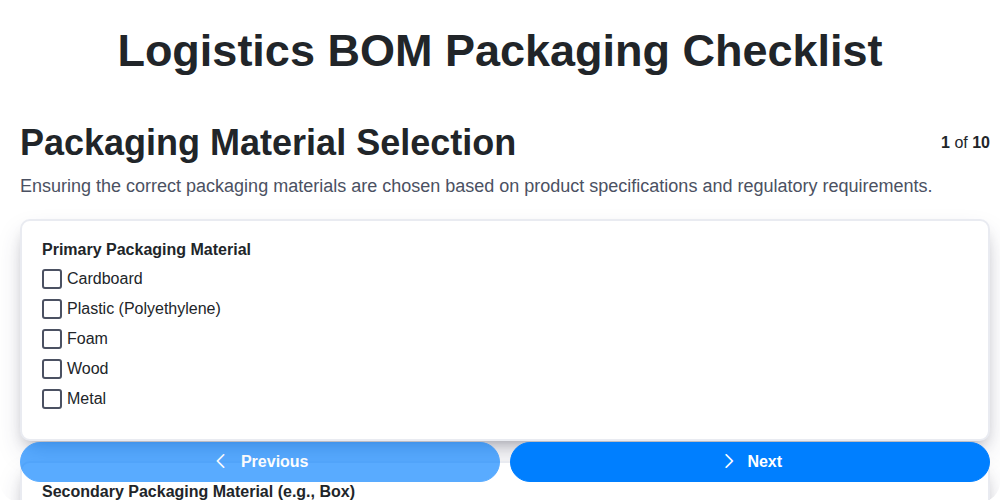
The Ultimate Logistics BOM Packaging Checklist: Ensuring Safe & Efficient Shipments
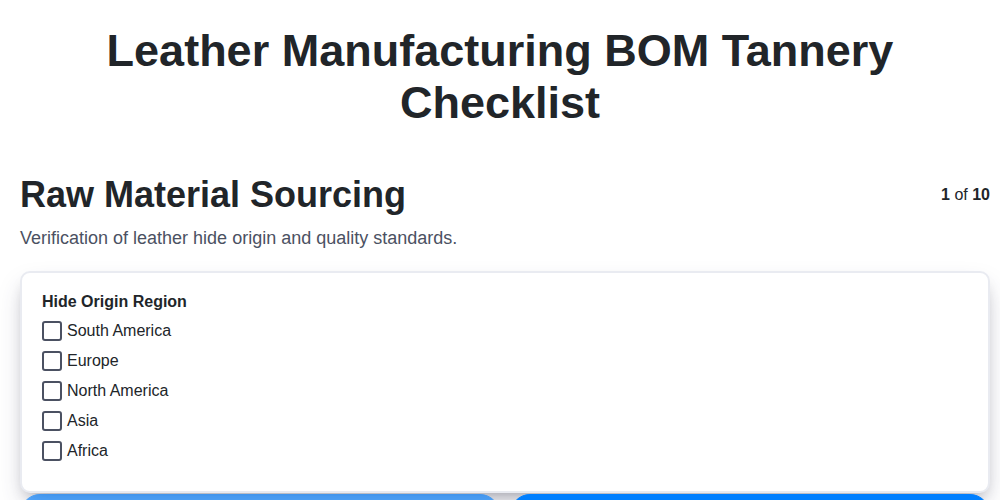
Mastering Leather Manufacturing: Your Tannery BOM & Compliance Checklist
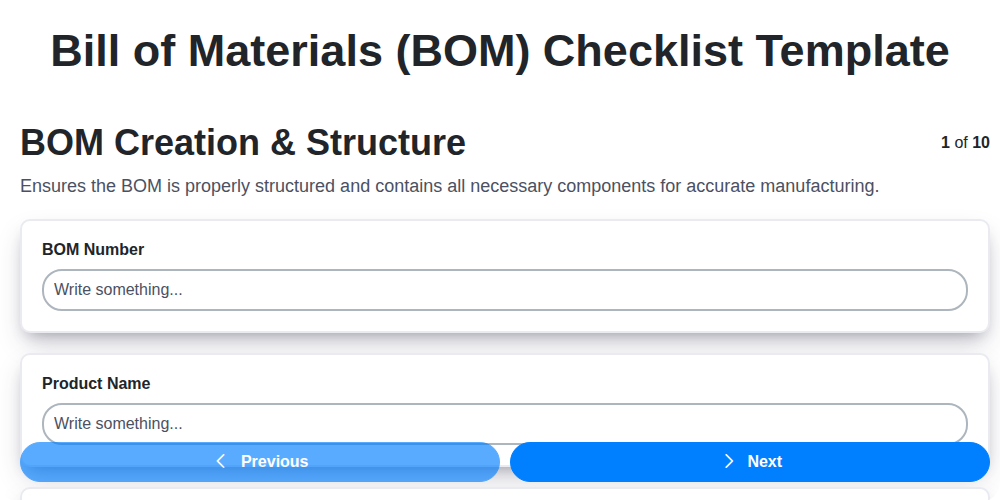
Mastering Your BOM: A Comprehensive Checklist Template for Success
Ensuring Success: Your Oil & Gas BOM Component Approval Checklist Guide
Navigating Medical Device BOM Regulatory Compliance: Your Essential Checklist
The Ultimate Retail BOM Product Definition Checklist: A Step-by-Step Guide
Ensuring Quality: Your Rubber Manufacturing Polymer BOM Checklist Guide
Decoding Origins: Your Construction Materials BOM Origin Checklist Guide
We can do it Together
Need help with
Bill of Materials (BOM) Management?
Have a question? We're here to help. Please submit your inquiry, and we'll respond promptly.