The Ultimate Retail BOM Product Definition Checklist: A Step-by-Step Guide
Published: 12/10/2025 10:00 PM Updated: 12/14/2025 7:51 AM
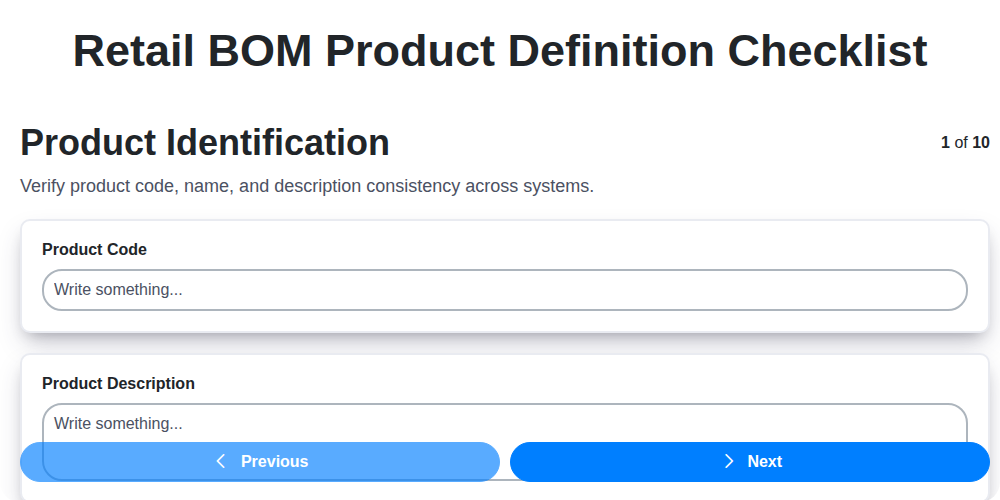
Table of Contents
- Introduction: Why a Robust Retail BOM is Crucial
- 1. Product Identification: Defining Your Core Offering
- 2. Component Listing: Mapping Out Every Piece
- 3. Component Attributes: Detailed Specifications
- 4. Supplier Information: Building a Reliable Network
- 5. Costing & Pricing: Balancing Profitability and Value
- 6. Regulatory Compliance: Navigating Legal Requirements
- 7. Material Substitutions: Planning for Flexibility
- 8. Engineering Approvals: Ensuring Design Integrity
- 9. Version Control: Tracking Changes and Updates
- 10. Lifecycle Status: Managing Product Evolution
- 11. Linking the BOM to Inventory and Procurement
- 12. Utilizing BOM Software for Efficiency
- Conclusion: A Living Document for Retail Success
- Resources & Links
TLDR: Building a new product? Don't risk costly errors and delays! This checklist provides a foolproof, step-by-step guide (covering everything from component details to regulatory compliance) to define your retail product accurately, ensuring smooth production, cost control, and a successful launch. Download the template and simplify your product development process!
Introduction: Why a Robust Retail BOM is Crucial
In the fast-paced world of retail, launching a new product or updating an existing one can be a complex juggling act. From sourcing materials to ensuring compliance and managing costs, countless details need to be meticulously handled. That's where a robust Bill of Materials (BOM) for retail products comes into play.
A well-defined Retail BOM isn't just a list of parts; it's a foundational document that serves as the single source of truth for everything related to a product. It streamlines communication between design, sourcing, manufacturing, and sales teams, reducing errors and delays. A clear BOM minimizes the risk of costly mistakes, ensures accurate costing and pricing, and ultimately contributes to a faster time to market and improved profitability. Without a solid Retail BOM, you risk confusion, inconsistencies, and a whole host of challenges that can impact your bottom line and customer satisfaction. This checklist will guide you through the essential elements to building one.
1. Product Identification: Defining Your Core Offering
Before you even think about components or costs, you need absolute clarity on what you're building. Product Identification isn't just assigning a SKU; it's establishing a foundational understanding of your offering. This step goes beyond a simple name and involves a deep dive into the product's purpose, intended use, and target market.
Consider these key elements:
- Product Name & Description: A clear, concise name and detailed description that accurately reflects what the product is and what it does. Avoid jargon unless it's essential for your target audience.
- Product Category & Sub-Category: Correctly classifying your product ensures it's discoverable within your retail channels and internal systems.
- Target Customer: Defining who will buy this product helps inform all subsequent decisions, from component selection to pricing.
- Key Features & Benefits: List the most important characteristics and how they solve customer needs or desires.
- Product Dimensions & Weight: Critical for shipping, packaging, and potentially shelf space allocation.
- Packaging Requirements: Document any specific packaging needs, including branding, materials, and sustainability considerations.
- Visual Assets: Clearly identify reference images and/or CAD models that represent the product's appearance.
This foundational clarity will prevent costly errors and miscommunications down the line, ensuring everyone involved understands exactly what product you're building.
2. Component Listing: Mapping Out Every Piece
Creating a complete and accurate component listing is the backbone of your Retail BOM. It's more than just a list; it's a detailed inventory of everything that goes into your product. Start with the highest-level assemblies and break them down into increasingly granular components. Don't forget seemingly insignificant parts - screws, labels, packaging - they all have cost and sourcing implications.
Here's what to include and consider:
- Part Numbers: Assign unique part numbers to each component. A standardized numbering system is vital for tracking and inventory management.
- Descriptions: Provide clear and unambiguous descriptions for each part. Avoid jargon and ensure anyone reviewing the BOM understands exactly what the component is.
- Quantity Per Assembly (QPA): Precisely state how many of each component are needed for each assembly. Double-check this - errors here can drastically impact costs and production.
- Unit of Measure (UOM): Clearly define the unit of measure (e.g., each, meters, kilograms).
- Assembly Reference: Indicate which assembly the component belongs to.
- Sub-Assemblies: If a component is itself a sub-assembly, break it down further.
- Visuals: Including images or drawings of components can significantly reduce ambiguity and ensure accuracy, especially when dealing with complex products.
Regularly review and update your component listing as product designs evolve.
3. Component Attributes: Detailed Specifications
Defining component attributes goes beyond just listing what components are needed; it's about specifying exactly what they are and how they should perform. This section is critical for ensuring consistent quality, enabling accurate costing, and streamlining the manufacturing process.
Think of this as the blueprint for each component. What level of detail is required depends on the complexity of the product, but generally, you're aiming to capture:
- Material Specifications: Define the exact material type (e.g., 6061 aluminum, ABS plastic, grade 2 stainless steel). Include material grade, purity, and any specific certifications required (e.g., RoHS compliance, FDA approval).
- Dimensions & Tolerances: Precise measurements (length, width, height, diameter, etc.) and acceptable deviation ranges. This minimizes manufacturing defects and ensures parts fit correctly. Use industry-standard measurement units.
- Performance Characteristics: Define key performance metrics relevant to the component's function. This could include tensile strength, electrical conductivity, color accuracy (for plastics), or reflectivity (for mirrors). Specify acceptable ranges.
- Finish & Coatings: Detail any surface treatments, finishes (e.g., brushed, polished, painted), or protective coatings applied to the component. Include color codes (e.g., Pantone), gloss levels, and coating thickness.
- Markings & Labeling: Outline any required markings, labels, or serial numbers needed on the component. This is vital for traceability and quality control.
- Packaging Requirements: Specify how the component should be packaged to prevent damage during shipping and storage.
The more detailed and precise this information is, the less room there is for misinterpretation and errors later in the production cycle.
4. Supplier Information: Building a Reliable Network
A robust Bill of Materials (BOM) isn't just about what components you use, but who supplies them. This section of your Retail BOM Product Definition Checklist focuses on meticulously documenting your supplier network to ensure supply chain resilience and avoid costly disruptions.
Here's what you need to capture:
- Supplier Name & Contact Information: Clearly identify the legal name of the supplier, along with key contacts (sales, purchasing, engineering). Multiple contacts for each supplier are highly recommended - don't rely on a single point of failure.
- Part Numbers (Supplier Part Numbers): Record the supplier's specific part number for each component. This eliminates ambiguity and facilitates accurate ordering and tracking.
- Lead Times: Document both standard and potential expedited lead times for each component. Understanding lead time variability is critical for forecasting and inventory management.
- Supplier Location(s): Knowing where your suppliers are located helps with logistics planning, risk assessment (natural disasters, geopolitical instability), and potential tariff considerations.
- Contract Details: Reference any relevant contracts, including pricing agreements, quality guarantees, and delivery terms.
- Supplier Performance Metrics (Optional but Recommended): Consider tracking supplier performance metrics like on-time delivery, defect rates, and responsiveness. This data can be used for supplier evaluation and improvement programs.
- Secondary/Alternate Suppliers: Crucially, document alternate suppliers for key components. Having a backup plan minimizes risks associated with single-source dependencies. Ensure these alternate suppliers are qualified and approved.
Thorough supplier information within your BOM is more than just data; it's the foundation for a resilient and responsive supply chain.
5. Costing & Pricing: Balancing Profitability and Value
This isn't just about slapping a price tag on your product; it's about building a sustainable and profitable business model. A robust BOM is the bedrock of accurate costing, and this section of your checklist demands meticulous attention.
Begin by dissecting the cost of every component listed. Don't just rely on initial quotes - factor in potential volume discounts, shipping costs (both inbound and outbound), handling fees, and potential tariffs. Consider landed cost - the total cost of a product arriving at your warehouse, ready for sale.
Then, broaden your perspective. Include overhead costs associated with manufacturing, warehousing, and administrative functions. Labor costs, equipment depreciation, utilities - they all contribute to the overall cost of goods sold (COGS).
Pricing isn't solely about recouping costs. Market research is crucial. Analyze competitor pricing, understand your target customer's willingness to pay, and assess the perceived value of your product. A premium product justifies a higher price, but a detailed BOM ensures that premium is earned, not just assumed.
Finally, don't forget margin! Factor in a healthy profit margin that allows for reinvestment, growth, and future innovation. A well-defined BOM allows for accurate pricing and avoids costly surprises later on. Regularly review your costing and pricing against actual sales data to ensure continued profitability and adjust as needed.
6. Regulatory Compliance: Navigating Legal Requirements
Bringing a product to market isn't just about innovation and design; it's about adhering to a complex web of regulations. This is particularly crucial in retail, where consumer safety and legal liability are paramount. Your BOM must meticulously document how your product meets these standards.
What regulations apply depends heavily on the product type and target market. Consider these key areas:
- Safety Standards: Products often require certification from bodies like UL, CE, or CCC. Your BOM should reference the applicable standards and include any relevant test reports or certifications as supporting documentation.
- Environmental Regulations: RoHS (Restriction of Hazardous Substances) and REACH (Registration, Evaluation, Authorization and Restriction of Chemicals) are common examples. Clearly identify materials that fall under these regulations and their compliance status within the BOM. This includes knowing the percentage of restricted substances present.
- Labeling Requirements: Accurate labeling is essential, encompassing everything from country of origin to hazard warnings. The BOM should detail the information required on the product label and verify its inclusion in the component list.
- Import/Export Regulations: For products crossing international borders, the BOM needs to reflect compliance with import/export laws and trade agreements.
- Product-Specific Regulations: Certain product categories (e.g., toys, electronics, food containers) have very specific regulations. Ensure these are explicitly addressed in your BOM.
Failing to document regulatory compliance within your BOM is a significant risk. It can lead to product recalls, fines, and damage to your brand reputation. Work closely with your legal and compliance teams to ensure your BOM accurately reflects all applicable requirements.
7. Material Substitutions: Planning for Flexibility
In retail, supply chain disruptions are a harsh reality. Component shortages, fluctuating material costs, and geopolitical events can quickly derail production plans. A robust Bill of Materials (BOM) should anticipate these challenges and facilitate swift, informed material substitutions.
This section of your BOM definition checklist should clearly outline procedures and considerations for identifying and approving alternative materials. Don't just list potential substitutes; document why they're viable. Consider:
- Performance Equivalence: Does the substitute meet or exceed the original material's technical specifications (strength, color, durability, etc.)? Document testing and validation data.
- Impact on Product Aesthetics: How will the substitute affect the product's look and feel? Include visual comparisons and potentially customer feedback.
- Manufacturing Compatibility: Can existing manufacturing processes accommodate the substitute material without requiring significant retooling or adjustments?
- Cost Implications: While a substitute might initially seem cheaper, factor in potential impacts on processing time, yield, or downstream costs.
- Supplier Approval: Ensure the substitute material is approved by the supplier and meets their quality standards.
- Documentation: Maintain a clear record of all approved substitutes, the rationale for their approval, and any associated limitations.
Proactively addressing material substitutions within your BOM definition minimizes disruption and allows for agile responses to unforeseen circumstances, keeping your retail products moving.
8. Engineering Approvals: Ensuring Design Integrity
A robust Bill of Materials (BOM) isn't just a list; it's a blueprint for your retail product. Ensuring its accuracy and technical soundness requires formal engineering approvals. This step validates that the BOM aligns with the intended design, performance, and manufacturability goals.
What does this entail? It's more than just a signature. It involves:
- Design Review: Engineers meticulously review the BOM against the product specifications, CAD models, and any supporting documentation. They verify that all components are necessary, appropriately sized, and compatible.
- Performance Validation: Confirming that the selected components and their integration will meet the product's intended performance characteristics. This may include simulations, testing, or analysis.
- Manufacturability Assessment: Evaluating the BOM to ensure the product can be efficiently and reliably manufactured. This involves considering assembly processes, tooling requirements, and potential challenges.
- Formal Documentation: Documenting the review process, including any modifications or clarifications made to the BOM. This creates an audit trail and ensures accountability.
Without proper engineering approvals, you risk costly errors, performance issues, and even product recalls later on. This step acts as a crucial safeguard, protecting your brand and your bottom line.
9. Version Control: Tracking Changes and Updates
In the fast-paced world of retail, products evolve. Designs shift, components change, and regulations are constantly updated. Without a robust version control system for your Bill of Materials (BOM), you risk using outdated information, leading to errors, delays, and potentially costly rework.
Version control isn't just about dates; it's a systematic approach to managing changes to your BOM. Each revision should be clearly labeled with a version number, a descriptive change log outlining what changed and why, and ideally, the user who made the alteration.
Why is this critical?
- Traceability: Easily identify the exact BOM used for a specific production run or sales order.
- Error Prevention: Prevent the use of obsolete or incorrect BOMs.
- Audit Trail: Provide a clear history for audits and quality control purposes.
- Collaboration: Enable efficient collaboration between engineering, procurement, and manufacturing teams by ensuring everyone is working with the latest version.
Best Practices:
- Naming Convention: Establish a clear and consistent naming convention for BOM versions (e.g., V1.0, RevA, 2023-10-27).
- Change Log: Mandate a detailed change log for every revision - be specific! Avoid vague entries like "minor changes."
- User Identification: Track who made each change and their approval status.
- Access Control: Limit who can modify BOMs to authorized personnel.
- Centralized System: Utilize a centralized BOM management system to ensure all revisions are stored and accessible in one place.
10. Lifecycle Status: Managing Product Evolution
As your product matures, its lifecycle will inevitably progress. This section of your Retail BOM focuses on defining and tracking that journey - from initial launch to potential obsolescence. Clearly outlining the Lifecycle Status within your BOM isn't just about documenting history; it's about proactively managing future decisions.
Consider these stages and how they're reflected in your BOM:
- New/Development: The product is in the design and prototyping phase. This stage might include placeholders for expected specifications and costs.
- Launch/Introduction: The product is released to the market. Your BOM should be meticulously detailed and accurate at this point.
- Growth: Sales are increasing, and you may need to refine the BOM to optimize production efficiency or address early-stage feedback.
- Maturity: Sales are stable. This is a good time to review for cost reduction opportunities or minor improvements.
- Decline: Sales are decreasing. The BOM should be flagged for potential obsolescence, and considerations for end-of-life (EOL) management should begin.
- EOL (End-of-Life): The product is no longer being manufactured. The BOM should be archived and clearly marked as EOL, with details about any remaining stock or ongoing support obligations.
Regularly updating the Lifecycle Status within your Retail BOM ensures that everyone involved - from engineering and procurement to sales and marketing - is on the same page regarding the product's current state and any implications for future planning. It supports informed decisions regarding inventory management, product updates, and the eventual transition to new offerings.
11. Linking the BOM to Inventory and Procurement
Once your Retail BOM (Bill of Materials) is meticulously defined and validated, its true power unlocks when it's seamlessly integrated with your inventory and procurement systems. This linkage isn't just about data transfer; it's about creating a dynamic ecosystem that fuels efficiency and minimizes risk.
Here's why this connection is crucial and how to approach it:
- Automated Replenishment: The BOM acts as the source of truth for component requirements. Linked to inventory management, it triggers automatic reorder points based on actual usage data and lead times. This reduces stockouts and prevents overstocking.
- Accurate Procurement Planning: Procurement teams gain a clear understanding of the components needed for each product, facilitating better forecasting and negotiation with suppliers. Knowing exactly what's needed, and in what quantities, prevents costly errors and ensures timely delivery.
- Reduced Lead Times: Automated purchase orders based on BOM data streamline the procurement process, decreasing lead times and accelerating time-to-market.
- Improved Traceability: The BOM provides a direct link between finished goods and their constituent components, vital for traceability in case of recalls or quality issues. You can quickly identify which products were affected and pinpoint the source of the problem.
- Real-Time Visibility: Integration provides real-time visibility into component availability, costs, and delivery schedules, empowering informed decision-making across the supply chain.
Implementation Considerations:
- Data Synchronization: Establish robust data synchronization methods to ensure consistency between the BOM and your inventory/procurement systems. Consider API integrations or automated data feeds.
- Master Data Management: Maintain clean and accurate master data (e.g., component part numbers, supplier information) to avoid errors during the integration process.
- Workflow Automation: Automate tasks like purchase order creation, goods receipt, and invoice reconciliation to further enhance efficiency.
12. Utilizing BOM Software for Efficiency
Managing a Retail BOM (Bill of Materials) can quickly become overwhelming, especially as your product line expands. Spreadsheets, while a good starting point, have inherent limitations - version control issues, difficult collaboration, and a higher risk of errors are common. That's where dedicated BOM software steps in.
Modern BOM software offers a centralized, cloud-based platform for all your product definition data. Key benefits include:
- Real-time Collaboration: Multiple team members (engineering, procurement, manufacturing) can access and update the BOM simultaneously, minimizing communication silos.
- Automated Version Control: Track every change made to the BOM, easily revert to previous versions, and understand who made what changes and when.
- Improved Accuracy: Built-in validation rules and automated calculations reduce errors.
- Streamlined Procurement: Direct integration with supplier databases simplifies component sourcing and ordering.
- Enhanced Reporting & Analytics: Gain valuable insights into your BOM data to optimize costs and improve product development cycles.
- Integration with ERP/PLM Systems: Seamless data flow between your BOM and other critical business systems.
Investing in BOM software isn't just about automation; it's about creating a foundation for efficient product development, streamlined operations, and ultimately, increased profitability.
Conclusion: A Living Document for Retail Success
Ultimately, your Retail BOM Product Definition Checklist isn't a static document to be created and then forgotten. It's a living, breathing guide that should evolve alongside your products and business. Regularly review and update it to reflect changes in materials, suppliers, regulations, or your overall product strategy. By treating it as a dynamic resource, you're not just defining your products; you're building a foundation for efficiency, accuracy, and ultimately, retail success. Embrace the checklist as a key to streamlined operations, reduced errors, and a stronger competitive edge.
Resources & Links
- APQC (American Productivity & Quality Center): APQC offers process frameworks and benchmarks, including those related to supply chain management and product lifecycle management. Their research and best practices can be valuable in understanding BOM implementation and optimization. Look for articles or whitepapers on product lifecycle management and supply chain best practices, specifically related to BOMs. While direct BOM checklists aren't always published, the broader context of process improvement is key.
- PTC (Product Lifecycle Management Software): PTC is a leading PLM software provider. Their website contains numerous resources including blogs, whitepapers and case studies related to BOM management, product definition, and engineering change management. It offers valuable insights into modern BOM software and industry best practices.
- Oracle: Oracle offers comprehensive ERP and PLM solutions. Their website provides information about their product lifecycle management and engineering BOM capabilities. Look for articles and webinars about BOM management within ERP and PLM environments.
- Delmia (Dassault Systèmes): Delmia, now part of Dassault Systèmes, specializes in manufacturing operations management and PLM. Their website contains content on BOM creation, engineering change, and production planning which can inform the creation of a robust retail BOM.
- Inventoria: Inventoria provides a cloud-based PLM solution and their website contains a number of articles and blog posts explaining the role of BOMs and tips for creating a comprehensive BOM, especially relevant for mid-sized retailers.
- Sagitta: Sagitta offers PLM software with a focus on product data management. Their website has resources and blog posts discussing BOM structure and information needs for product definition - useful for building a structured retail BOM. Examine articles and case studies.
- Sopheon: Sopheon provides PLM and product portfolio management software. Their website offers insights into managing product complexity and information, which is essential for a detailed retail BOM. Look for resources on product portfolio optimization and PLM best practices.
- ISO (International Organization for Standardization): ISO provides international standards for quality management and other areas. Relevant standards like ISO 9001 (Quality Management) and potentially industry-specific standards may impact your BOM requirements, especially for regulatory compliance. Research standards applicable to your retail product category.
- NIST (National Institute of Standards and Technology): NIST develops standards and guidelines related to manufacturing, cybersecurity, and supply chain resilience. Their resources can inform best practices for data integrity and traceability within your BOM - critical for regulatory and quality control.
- GS1: GS1 is a non-profit organization that develops and maintains global standards for supply chain efficiency, including barcodes and GTINs. Leveraging GS1 standards is crucial for product identification and traceability in a retail BOM, especially for inventory and procurement.
- SAE International: SAE International develops standards for the aerospace, automotive and commercial vehicle industries. If your retail products involve any of these, then SAE standards will need to be considered when implementing the BOM.
Frequently Asked Questions
What is a Bill of Materials (BOM) in retail?
A Bill of Materials (BOM) in retail is a comprehensive list of all the components, raw materials, and instructions required to manufacture, assemble, or produce a retail product. It details everything from individual parts to packaging and labeling, ensuring a standardized and repeatable process for product creation and fulfillment.
Why is a well-defined Retail BOM so important?
A well-defined Retail BOM is crucial for several reasons: it improves accuracy in inventory management, reduces errors in production, streamlines procurement, enhances cost control, and facilitates better product lifecycle management. It also improves communication and collaboration across departments.
Who should use this BOM checklist?
This checklist is designed for anyone involved in product definition and development in retail, including product managers, sourcing specialists, engineers, operations teams, and supply chain professionals.
What are the key sections covered in this BOM checklist?
The checklist covers sections like Component Identification & Description, Material Specifications, Manufacturing Instructions, Packaging Details, Labeling Requirements, Version Control, and Approval Process. It's a holistic approach to product definition.
What is the difference between a 'Make-to-Stock' and 'Make-to-Order' BOM?
A 'Make-to-Stock' BOM is used for products manufactured and stored in anticipation of customer demand, while a 'Make-to-Order' BOM is used for products built only after an order is placed. The BOM structure and level of detail may vary depending on the production model.
What does 'Revision Control' mean in the context of a Retail BOM?
Revision Control tracks changes made to the BOM over time. It allows you to understand the history of a product's components and specifications, ensuring everyone is using the correct and up-to-date version. This is critical for traceability and quality control.
How do I handle variations within a single product (e.g., different sizes or colors)?
For variations, you can create separate BOMs for each variation, or use a modular BOM approach. Modular BOMs use a base BOM with optional modules for different features or configurations. Careful planning and clear identifiers are key.
What are some best practices for maintaining an accurate and updated BOM?
Regularly review and update your BOM to reflect changes in materials, suppliers, or manufacturing processes. Implement a robust approval process for changes and ensure all stakeholders are notified. Consider using a BOM management software to streamline the process.
What is meant by 'Lead Time' in the BOM checklist, and why is it important?
Lead Time refers to the time required to procure a component or material. Including Lead Time information in the BOM helps with production planning, inventory management, and avoiding stockouts.
Can this checklist be adapted for different retail product categories (e.g., apparel vs. electronics)?
Yes, the checklist is designed to be adaptable. While the core components remain the same, you can modify the level of detail and specific requirements based on the complexity and characteristics of your particular product category.
Found this Article helpful?
Comments
There are no comments yet. Be the first to add one!
BOM - Bill of Materials Management Solution Demo
Struggling with inaccurate BOMs & costly errors? ChecklistGuro provides a centralized BOM Management solution, connecting your design, engineering, & manufacturing teams for improved collaboration and control. Simplify operations & boost efficiency.
Related Articles
Mastering Textiles: Your Fiber Content Checklist for BOM Accuracy
Navigating Medical Device BOM Regulatory Compliance: Your Essential Checklist
Ensuring Quality: Your Rubber Manufacturing Polymer BOM Checklist Guide
Mastering Leather Manufacturing: Your Tannery BOM & Compliance Checklist
Decoding Origins: Your Construction Materials BOM Origin Checklist Guide
Mastering Your BOM: A Comprehensive Checklist Template for Success
Ensuring Success: Your Oil & Gas BOM Component Approval Checklist Guide
The Ultimate Logistics BOM Packaging Checklist: Ensuring Safe & Efficient Shipments
We can do it Together
Need help with
Bill of Materials (BOM) Management?
Have a question? We're here to help. Please submit your inquiry, and we'll respond promptly.