The Ultimate Logistics BOM Packaging Checklist: Ensuring Safe & Efficient Shipments
Published: 10/12/2025 22:00 Updated: 14/12/2025 7:53
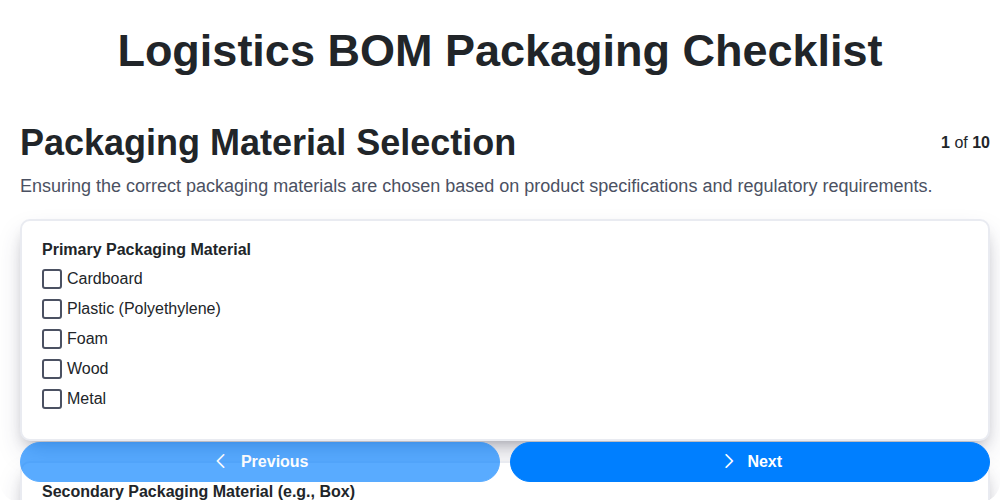
Table of Contents
- Introduction: Why a Packaging Checklist Matters
- 1. Packaging Material Selection: Choosing the Right Foundation
- 2. Size and Dimensions Verification: Ensuring a Perfect Fit
- 3. Weight and Load Capacity: Preventing Damage in Transit
- 4. Labeling and Marking Compliance: Clear Communication is Key
- 5. Protective Layer Assessment: Cushioning for Vulnerability
- 6. Sustainability Considerations: Eco-Friendly Packaging
- 7. Cost Optimization: Balancing Protection and Budget
- 8. Palletization and Unit Load Requirements: Maximizing Space & Stability
- 9. Regulatory Compliance (e.g., Hazmat): Navigating Legal Requirements
- 10. Documentation & Traceability: Maintaining a Clear Audit Trail
- 11. Common Checklist Errors & How to Avoid Them
- 12. Integrating the Checklist into Your Logistics BOM
- Conclusion: Your Roadmap to Packaging Excellence
- Resources & Links
TLDR: Shipping stuff safely and efficiently? This checklist covers everything from picking the right packaging to complying with regulations. It's your go-to guide to prevent damage, optimize costs, and ensure full traceability for your logistics BOM packaging - saving you headaches and money!
Introduction: Why a Packaging Checklist Matters
In the fast-paced world of logistics and manufacturing, overlooking seemingly minor details can lead to significant downstream problems. Packaging, often taken for granted, plays a critical role in protecting your product, ensuring safe transport, and meeting regulatory demands. A poorly executed packaging process can result in damaged goods, increased shipping costs, delays, and even legal repercussions. That's where a comprehensive packaging checklist becomes invaluable. This isn't just about slapping a box around a product; it's a systematic approach to ensure your packaging is fit for purpose - safeguarding your goods from factory floor to final delivery, while streamlining operations and minimizing risks. A well-defined checklist provides a framework for consistency, reduces errors, and provides a vital record of due diligence, ultimately contributing to a more efficient and profitable supply chain.
1. Packaging Material Selection: Choosing the Right Foundation
Choosing the right packaging material is the bedrock of a successful logistics BOM. It's more than just aesthetics; it directly impacts product protection, shipping costs, and even brand perception. Consider a range of factors when making your selection.
Material Properties: Different products demand different material characteristics. Fragile items require cushioning (foam, bubble wrap), while heavier goods need robust strength (corrugated cardboard, steel drums). Assess the product's susceptibility to moisture, temperature fluctuations, static electricity, or abrasion and choose materials accordingly.
Material Types to Consider:
- Corrugated Cardboard: Versatile, cost-effective, and recyclable - ideal for many goods. Different flute types (A, B, C, E, F) offer varying levels of strength.
- Foam (EPS, EPP, PU): Excellent cushioning and impact absorption, suitable for delicate electronics or glassware.
- Plastic (HDPE, LDPE, PET): Durable, water-resistant, and often reusable, great for liquids and chemicals.
- Wood: Offers high strength and rigidity, suitable for heavy or bulky items.
- Metal (Steel, Aluminum): Superior protection for high-value or hazardous goods.
- Paper-based Solutions (Kraft paper, molded pulp): Increasingly popular sustainable alternatives.
Beyond the Material: Think about material availability, lead times, and potential supplier relationships. A seemingly cheaper material with long lead times can significantly impact production schedules. Finally, consider the product's overall value. A higher-value item justifies a more premium packaging solution.
2. Size and Dimensions Verification: Ensuring a Perfect Fit
Getting the size and dimensions right is far more than just aesthetics; it's a critical step in efficient logistics and minimizing costly errors. Incorrect dimensions can lead to wasted space in shipping containers, increased freight costs, and even damage to the product during transit.
This verification process goes beyond simply measuring the product itself. It includes:
- Packaging Dimensions: Confirm the external dimensions of the chosen packaging align with the product's size and any necessary internal supports.
- Container Compatibility: Ensure the packaged product fits comfortably within standard shipping containers (e.g., 20ft, 40ft, High Cube). Consider clearances for handling equipment like forklifts.
- Pallet Fit: Verify the package dimensions allow for secure and stable placement on a pallet, leaving sufficient space for wrapping and securing the load.
- Stacking Stability: If stacking is required, assess the dimensions of both the product and its packaging to ensure stability and prevent collapse during transit.
- Internal Space Utilization: Determine how efficiently the internal space of the packaging is being used to protect the product without excessive void space (which necessitates more filler).
Accurate dimensional data is essential for generating accurate shipping quotes and optimizing space utilization. Double-check all measurements against the Bill of Materials (BOM) and any relevant design specifications. A small discrepancy can snowball into significant problems down the line.
3. Weight and Load Capacity: Preventing Damage in Transit
One of the most critical - and often overlooked - aspects of logistics BOM packaging is ensuring your packaging can handle the weight and load it's subjected to during transit. This isn't just about the product's weight; it's about accounting for the cumulative effect of stacking, handling, and potential drops.
Understanding the Forces at Play:
- Static Load: This is the weight of the products themselves and any other items stacked on top. Calculate this accurately, accounting for variations in product weight.
- Dynamic Load: This represents the forces experienced during handling - forklift movements, conveyor belt travel, manual lifting, and impacts. Dynamic loads can be significantly higher than static loads.
- Stacking Strength: If your packages will be stacked, you must verify the bottom packages' ability to withstand the weight above without crushing or deforming. Factor in the type of packaging material (cardboard, plastic, wood) and its construction.
- Compression Testing: Consider conducting compression testing on representative samples of your packaged goods. This provides concrete data about how much weight your packaging can bear before failure.
Practical Steps:
- Calculate Total Weight: Determine the combined weight of the product and the packaging material.
- Consult Packaging Suppliers: Work closely with your packaging supplier to specify materials and construction methods that meet your load requirements. They can advise on appropriate thicknesses, corrugation, and reinforcement techniques.
- Consider Unit Load Devices: The type of pallet or container used directly affects load capacity. Ensure compatibility and appropriate load ratings.
- Account for Cushioning: While cushioning protects against impact, too much can compromise stacking strength. Optimize the balance between impact protection and structural integrity.
Ignoring weight and load capacity leads to damaged goods, increased insurance claims, and ultimately, dissatisfied customers. A little upfront planning can save a lot of headaches down the road.
4. Labeling and Marking Compliance: Clear Communication is Key
Accurate and compliant labeling and marking are far more than just aesthetic touches - they's vital for safe handling, efficient logistics, and legal adherence. Incorrect or missing labels can lead to misdirection, damage, delays, and potentially serious legal repercussions.
Here's a breakdown of what you need to consider:
- Regulatory Requirements: Different regions and product types have specific labeling laws. Understand and adhere to these. Examples include the Globally Harmonized System (GHS) for chemicals, country-of-origin labeling, and specific markings for food products.
- Product Identification: Labels must clearly identify the contents of the package. This includes product names, model numbers, and part numbers, ensuring receivers know exactly what they are receiving.
- Hazardous Materials (Hazmat) Compliance: If your goods are classified as hazardous, strict labeling requirements apply. This includes proper UN numbers, hazard class, and shipping names, as well as any required warning symbols. Don't underestimate the importance of this - mishandling can have serious consequences.
- Handling Instructions: Clear handling instructions (e.g., "Fragile," "Keep Dry," This Side Up) significantly reduce the risk of damage during transit. Use universally understood symbols when possible.
- Barcodes and QR Codes: Integrate barcodes or QR codes for easy scanning and tracking throughout the supply chain. Ensure their accuracy and proper placement.
- Durability: Labels need to withstand the rigors of transit - temperature changes, moisture, abrasion, and handling. Use appropriate label materials and adhesives.
- Visibility: Labels should be easily visible and legible, even under challenging conditions. Consider placement to avoid being obscured by other markings or packaging.
Always consult with legal and regulatory experts to ensure full compliance with applicable laws and standards.
5. Protective Layer Assessment: Cushioning for Vulnerability
Your product's journey from factory to customer is rarely smooth. It's a series of bumps, vibrations, and potential impacts. A robust protective layer is your first line of defense against damage. This assessment goes beyond just adding bubble wrap - it's about strategic cushioning.
Consider these points:
- Vulnerability Mapping: Identify the product's most vulnerable points - areas prone to breakage, scratching, or deformation. This might involve drop testing or simulations.
- Cushioning Material Suitability: Evaluate different cushioning materials like foam, bubble wrap, corrugated cardboard inserts, or inflatable air pillows. Consider their density, shock absorption capabilities, and compatibility with the product's material (e.g., some foams can react with certain plastics).
- Layer Thickness & Placement: Determine the appropriate thickness of cushioning layers and their precise placement based on the vulnerability map. More delicate components require thicker, more targeted protection.
- Compression Resistance: Ensure the protective layer maintains its effectiveness even under compression. This is particularly important for stacked shipments.
- Product Interaction: Verify the cushioning material doesn't negatively interact with the product itself, like leaving residue or causing scratching. Testing is crucial.
Proper protective layer assessment significantly reduces damage claims, lowers return rates, and builds customer trust - all vital for profitability and reputation.
6. Sustainability Considerations: Eco-Friendly Packaging
Consumers and businesses alike are increasingly prioritizing environmentally responsible practices. Packaging plays a significant role in a company's sustainability footprint, and incorporating eco-friendly considerations into your Logistics Bill of Materials (BOM) and packaging checklist is no longer a nice-to-have - it's often a business imperative.
This isn't just about going green for marketing purposes; it's about minimizing waste, reducing carbon emissions, and conserving resources. Here's how to incorporate sustainability into your packaging:
- Material Selection: Prioritize recycled content packaging (e.g., recycled cardboard, post-consumer recycled plastics) and bio-based materials (e.g., mushroom packaging, seaweed alternatives). Evaluate the source and lifecycle impact of materials.
- Reduced Material Usage: Optimize packaging design to minimize the amount of material used while still maintaining protection. Consider lightweighting options.
- Reusable & Returnable Packaging: Where feasible, explore reusable packaging solutions for B2B shipments and consider returnable programs.
- Compostability: Investigate compostable packaging options for suitable products, ensuring proper disposal infrastructure exists for consumers or businesses to utilize them.
- Minimizing Waste: Design packaging to be easily disassembled and recycled at the end of its life. Avoid mixed materials that complicate the recycling process.
- Transportation Efficiency: While primarily related to logistics, packaging design can influence transportation efficiency - smaller, lighter packaging can reduce fuel consumption.
Remember to thoroughly research and verify claims of eco-friendliness - look for credible certifications and life-cycle assessments.
7. Cost Optimization: Balancing Protection and Budget
Packaging costs can quickly snowball, impacting your bottom line. While robust protection is paramount, it shouldn't come at the expense of profitability. This step demands a careful evaluation of materials and processes to find the sweet spot between safeguarding your goods and minimizing expenses.
Start by challenging assumptions. Are you using the most expensive packaging option? Could a different material - perhaps corrugated cardboard instead of a custom foam insert - provide adequate protection at a lower price? Explore alternative suppliers and negotiate pricing. Consider bulk purchasing for frequently used items.
Don't forget to factor in hidden costs. Excess weight increases shipping expenses. Overly complex packaging designs can increase labor costs for assembly and disassembly. Analyze your entire packaging process - from material sourcing to disposal - to identify areas for efficiency gains.
Value engineering can be incredibly useful here. This involves a systematic review of the packaging's function and cost, exploring alternative designs and materials without compromising performance. A small reduction in material usage, or a shift to a more readily available option, can lead to substantial savings over time. Finally, remember to periodically revisit your packaging costs and supplier relationships to ensure you're always getting the best value.
8. Palletization and Unit Load Requirements: Maximizing Space & Stability
Effective palletization and unit load planning are crucial for efficient logistics, reducing damage, and optimizing space utilization within your warehouse and during transportation. It's more than just stacking boxes on a pallet - it's a strategic process.
Considerations for Optimal Palletization:
- Pallet Type & Size: Select the appropriate pallet type (Euro, GMA, Skid, etc.) based on your receiving partners' requirements and the size/weight of your products. Standard sizes streamline handling.
- Stacking Patterns: Determine the most stable stacking pattern. Consider product fragility, weight distribution, and potential shifting during transit. A-frame, cross-stack, and single-layer configurations each have different advantages.
- Load Distribution: Ensure weight is evenly distributed across the pallet. Concentrated weight points can compromise stability and increase the risk of damage.
- Layering & Interleaving: Strategic layering and interleaving (placing a sheet of cardboard or protective material between layers) can provide additional cushioning and prevent shifting.
- Unit Load Compatibility: Confirm your unit load dimensions (pallet plus goods) comply with transportation carrier requirements (truck, rail, container). Overhanging loads can incur extra charges or be rejected.
- Securing Loads: Utilize strapping, shrink wrap, or other securing methods to prevent loads from shifting and collapsing. Choose appropriate materials based on load weight and environmental conditions.
- Accessibility for Handling Equipment: Ensure adequate space around the palletized load for forklift or other material handling equipment to safely and efficiently access it.
Proper palletization drastically reduces damage, maximizes space utilization, and creates a smoother, more predictable logistics flow.
9. Regulatory Compliance (e.g., Hazmat): Navigating Legal Requirements
Logistics BOM packaging isn't just about protecting your product; it's about adhering to a complex web of regulations that vary significantly depending on your product, destination, and mode of transport. Ignoring these can lead to hefty fines, shipment delays, or even legal repercussions.
Hazmat Considerations: If your product falls under the Hazardous Materials (Hazmat) classification, the rules become considerably stricter. This requires meticulous adherence to DOT (Department of Transportation) regulations in the US, IATA guidelines for air transport, and IMDG Code for maritime shipping. This includes proper classification, packaging group assignment, specific container requirements, marking, and documentation. Training for personnel involved in handling Hazmat materials is mandatory.
Beyond Hazmat: Even non-hazardous goods are subject to regulations. Country-specific import/export regulations often dictate packaging requirements. For example, wood packaging materials (like pallets and crates) often need to be treated and marked to prevent the spread of invasive species, complying with ISPM 15 standards. Food and pharmaceutical products have stringent packaging requirements to maintain sterility and prevent contamination.
Staying Compliant:
- Research Thoroughly: Before shipping, research the specific regulations for your product and destination.
- Consult Experts: Engage with regulatory consultants or freight forwarders experienced in international shipping.
- Maintain Records: Keep detailed records of all packaging materials, markings, and compliance documentation.
- Stay Updated: Regulations change frequently, so establish a system for monitoring updates and adjusting your processes accordingly.
Failure to comply is not an option - proactive regulatory compliance is a cornerstone of efficient and legally sound logistics.
10. Documentation & Traceability: Maintaining a Clear Audit Trail
In logistics, a breakdown can cascade quickly, and pinpointing the source of a problem is critical for corrective action and preventing recurrence. Robust documentation and traceability are your safety net - and increasingly, a mandatory requirement. This section of the checklist focuses on ensuring you've covered all bases.
What needs documenting? Everything, essentially. This includes:
- Material Certifications: Records proving the quality and compliance of your packaging materials.
- Supplier Documentation: Contracts, specifications, and performance reports for your packaging suppliers.
- Inspection Records: Dates, findings, and corrective actions taken during inspections of packaging materials and processes.
- Batch Numbers & Lot Codes: For both packaging and the products being packaged - this is vital for recalls and identifying affected batches.
- Handling Instructions: Clearly defined procedures for safe and proper handling of packaged goods throughout the supply chain.
- Deviation Records: Any instances where the standard packaging process was altered, with justification and approval documented.
- Temperature & Humidity Data: Especially crucial for temperature-sensitive goods, maintaining a log provides proof of conditions maintained.
Why is Traceability Essential? Traceability isn't just about documentation; it's about the ability to follow a product's journey. This means you should be able to trace it from raw material sourcing, through manufacturing, packaging, and delivery. Blockchain technology and QR codes are increasingly being used to enhance traceability.
Compliance Considerations: Regulatory bodies (like the FDA for pharmaceuticals or various international shipping authorities) are placing increased emphasis on traceability. Failing to maintain adequate records can result in penalties and damage to your reputation.
Pro-Tip: Implement a digital record-keeping system. This not only streamlines the process but also makes audits significantly easier to manage and provides a centralized, accessible source of truth.
11. Common Checklist Errors & How to Avoid Them
Even with a meticulously crafted Logistics BOM Packaging Checklist, errors can creep in. Here are some common pitfalls and how to sidestep them:
1. Rushing the Process: Checklists are only effective when completed thoroughly. Rushing to meet deadlines often leads to skipped steps and overlooked details. Solution: Allocate sufficient time for each item, and build buffer time into the schedule.
2. Assuming Expertise: Don't assume everyone understands the nuances of each step. Even experienced team members can benefit from a thorough review. Solution: Provide clear and concise descriptions for each checklist item, and consider training for those less familiar.
3. Ignoring Documentation: A checklist is useless without proper documentation. Failing to record decisions, deviations, or notes related to each item is a major oversight. Solution: Implement a system for recording checklist data - digital forms with signature capture are ideal, but even a well-organized paper trail works.
4. Not Reviewing Changes: Packaging requirements and regulations evolve. Failing to update your checklist to reflect these changes can render it obsolete. Solution: Establish a periodic review schedule (e.g., quarterly or annually) and actively monitor industry updates.
5. Neglecting Sustainability Considerations: Quickly glossing over the sustainability section might seem harmless, but could lead to wasted materials and higher costs down the line. Solution: Engage with suppliers to find eco-friendly alternatives and integrate sustainability metrics into your decision-making.
6. Overlooking Labeling Details: A seemingly minor error in labeling (e.g., incorrect barcode or missing shipping marks) can cause significant delays and fines. Solution: Double-check all labeling information against order details and regulatory requirements.
7. Incorrect Weight and Load Capacity Calculations: A miscalculated weight or load capacity can lead to damaged goods or unsafe handling practices. Solution: Use accurate scales and verified data to calculate weight and load capacity. Have calculations reviewed by a qualified engineer if necessary.
8. Lack of Communication: Packaging decisions often impact multiple departments. Failure to communicate changes or issues can lead to conflicts and errors. Solution: Implement a communication plan to ensure all stakeholders are informed.
9. Relying Solely on the Checklist: The checklist is a guide, not a replacement for critical thinking and problem-solving. Solution: Encourage team members to use their judgment and escalate any concerns to a supervisor.
10. Failure to Audit Checklist Usage: Are people actually using the checklist correctly? Without periodic audits, errors can easily slip through. Solution: Conduct random audits of completed checklists to identify areas for improvement.
11. Not Incorporating Feedback: After audits and in daily use, feedback from those directly involved in packaging operations can be invaluable. Solution: Establish a system for collecting and acting on feedback to continuously refine your checklist and processes.
12. Integrating the Checklist into Your Logistics BOM
A Logistics Bill of Materials (BOM) isn't just about the components of your product; it's about everything needed to get it to your customer safely and efficiently. That's where this packaging checklist becomes invaluable. Simply having it as a separate document isn't enough - you need to actively integrate it into your existing Logistics BOM workflow. Here's how:
1. Link the Checklist as an Attachment/Reference: The easiest method is to directly link the checklist document (PDF, spreadsheet, etc.) within your Logistics BOM software. This ensures everyone involved has access to the latest version and knows it's a mandatory part of the packaging process.
2. Break Down Checklist Items into BOM Attributes: Consider embedding key checklist items as attributes within individual BOM lines. For example, under a specific packaging material line (cardboard box), you could have attributes for Max Weight Capacity (lbs), Sustainability Rating (Scale), and Labeling Instructions. This brings the checklist directly into the BOM data itself.
3. Use as a Trigger for Approvals: Implement the checklist as a prerequisite for release or approval of BOM changes. A packaging engineer must complete and sign off on the checklist before a new packaging design or material is approved and implemented.
4. Integrate with Task Management: Connect checklist items to specific tasks within your task management system. Assign responsibility for each item (e.g., "Verify Size and Dimensions" assigned to the packaging designer) and track progress.
5. Automate Checks (Where Possible): If you're using robust BOM software, explore options for automating certain checklist items. For example, weight and dimension calculations could be automated based on product and material data.
6. Training and Communication: Don't forget the human element! Regularly train your team on the checklist and its importance. Ensure clear communication channels are in place to address any questions or concerns.
By actively integrating this checklist, you transform it from a passive document to a proactive tool that consistently improves your packaging processes, reduces risk, and contributes to a more efficient and sustainable supply chain.
Conclusion: Your Roadmap to Packaging Excellence
Navigating the complexities of logistics, Bill of Materials (BOM), and packaging can feel overwhelming. However, by systematically implementing a comprehensive checklist-covering everything from material selection and size verification to regulatory compliance and sustainability-you can significantly improve efficiency, reduce costs, and minimize risk.
This checklist isn't just a list of tasks; it's a roadmap to packaging excellence. By consistently reviewing and updating it to reflect evolving industry standards and your specific product needs, you'll foster a proactive and resilient packaging process. Remember, a well-executed checklist translates to protected goods, streamlined logistics, reduced waste, and ultimately, increased customer satisfaction. Embrace this framework, refine it to your unique requirements, and watch your packaging operations thrive.
Resources & Links
- Packaging Industry: A comprehensive resource for packaging professionals, covering news, trends, technology, and best practices. Useful for understanding packaging material advancements, design trends, and industry regulations mentioned in the 'Packaging Material Selection' and 'Sustainability Considerations' sections.
- Fiber Box Association (FBA): Provides information on corrugated box design, performance, and sustainability. Relevant to sections on 'Packaging Material Selection', 'Palletization and Unit Load Requirements' and 'Sustainability Considerations' if corrugated is the primary packaging.
- National Institute of Standards and Technology (NIST): Offers standards and guidelines related to packaging performance and testing. Helpful for verifying 'Weight and Load Capacity' and potentially 'Protective Layer Assessment' through established testing methods.
- UPS: UPS's website has a section dedicated to packaging guidelines and restrictions. Crucial for understanding dimensional weight calculations (relevant to 'Size and Dimensions Verification' & 'Cost Optimization') and compliance with carrier requirements.
- FedEx: Similar to UPS, FedEx provides detailed packaging guidelines and dimensional weight rules that significantly impact shipping costs. Useful for understanding dimensional weight calculations and carrier compliance (linked to 'Size and Dimensions Verification' and 'Cost Optimization').
- DHL: Another major carrier, DHL, also has packaging guidelines. Provides a broader perspective on international shipping requirements and best practices. Relevant to the broader context of 'Size and Dimensions Verification' and 'Cost Optimization'.
- International Organization for Standardization (ISO): Provides standards related to packaging, including environmental aspects. Helpful for reinforcing points on 'Sustainability Considerations' and understanding internationally recognized packaging protocols.
- Performance-Based Packaging (PBP): Resources and information on performance-based packaging - validating packaging performance through testing. Useful for 'Protective Layer Assessment' and potentially 'Weight and Load Capacity'.
- Labeling Solutions: Provides a range of labeling information and compliance guidance. Specifically relates to 'Labeling and Marking Compliance' to maintain quality & regulatory adherence.
- U.S. Department of Transportation (DOT) - Hazmat: Official source for regulations regarding hazardous materials transportation. Vital for understanding and adhering to 'Regulatory Compliance (e.g., Hazmat)' requirements.
- Supply Chain Digital: Covers a wide range of supply chain topics, including logistics, packaging, and technology. Helpful for keeping abreast of trends and best practices related to BOM integration and traceability (linked to 'Documentation & Traceability' and 'Integrating the Checklist into Your Logistics BOM').
- GS1: Provides standards for barcoding, RFID, and other identification technologies, enabling product traceability and data capture. Related to 'Documentation & Traceability' and 'Integrating the Checklist into Your Logistics BOM'.
Frequently Asked Questions
What is a BOM in the context of logistics and packaging?
BOM stands for Bill of Materials. In logistics, it's a comprehensive list of all the materials, components, parts, and instructions required to assemble, pack, and ship a product. This checklist expands on that to cover packaging specifics.
Why is a packaging checklist important for logistics?
A checklist ensures consistency, reduces errors, minimizes damage during transit, speeds up fulfillment, lowers costs (due to fewer returns and reworks), and improves overall shipment safety and efficiency.
Who should use this packaging checklist?
Anyone involved in the logistics process, including packaging engineers, warehouse staff, fulfillment specialists, shipping managers, and anyone responsible for ensuring products are properly packaged and shipped.
What are the key areas covered in this packaging checklist?
The checklist covers material selection, packaging dimensions, cushioning and protection, labeling, regulatory compliance, documentation, and special handling requirements.
What type of materials should I consider when choosing packaging materials?
Consider factors like product fragility, weight, environmental conditions (temperature, humidity), sustainability requirements, and cost. Options include cardboard, foam, bubble wrap, plastic, and specialized protective materials.
How do I determine the correct packaging dimensions?
Measure the product accurately, consider internal cushioning needed, ensure adequate space to prevent movement during transit, and comply with carrier size restrictions.
What types of cushioning are available, and how do I choose the right one?
Options include bubble wrap, foam, packing peanuts, air pillows, corrugated inserts, and molded pulp. Choose based on product fragility and value. Higher value and fragile items require more robust cushioning.
What are the essential labeling requirements for logistics shipments?
Clearly display the shipping address (recipient and sender), tracking number, handling instructions (e.g., 'Fragile', 'This Side Up'), and any specific carrier requirements.
How do I ensure regulatory compliance when packaging for shipment?
Research and adhere to relevant regulations regarding hazardous materials, weight limits, size restrictions, and packaging materials (e.g., ISPM 15 for wood packaging).
What documentation is necessary for logistics shipments?
Typically includes a packing slip, bill of lading (BOL), commercial invoice (for international shipments), and any required certificates or permits.
What is ISPM 15 and why is it important?
ISPM 15 is an international standard for wood packaging designed to prevent the spread of pests. If you're shipping with wood packaging, ensure it's properly marked with the IPPC stamp.
How can I improve the sustainability of my packaging?
Use recycled and recyclable materials, minimize packaging volume, explore biodegradable options, and implement a packaging waste reduction program.
What should I do if I'm shipping fragile items?
Use more robust cushioning, consider specialized protective packaging (e.g., custom foam inserts), clearly label the package as 'Fragile,' and potentially use a handling service.
Found this Article helpful?
Comments
There are no comments yet. Be the first to add one!
BOM - Bill of Materials Management Solution Demo
Struggling with inaccurate BOMs & costly errors? ChecklistGuro provides a centralized BOM Management solution, connecting your design, engineering, & manufacturing teams for improved collaboration and control. Simplify operations & boost efficiency.
Related Articles
Mastering Textiles: Your Fiber Content Checklist for BOM Accuracy
Mastering Leather Manufacturing: Your Tannery BOM & Compliance Checklist
Mastering Your BOM: A Comprehensive Checklist Template for Success
Ensuring Success: Your Oil & Gas BOM Component Approval Checklist Guide
Navigating Medical Device BOM Regulatory Compliance: Your Essential Checklist
The Ultimate Retail BOM Product Definition Checklist: A Step-by-Step Guide
Ensuring Quality: Your Rubber Manufacturing Polymer BOM Checklist Guide
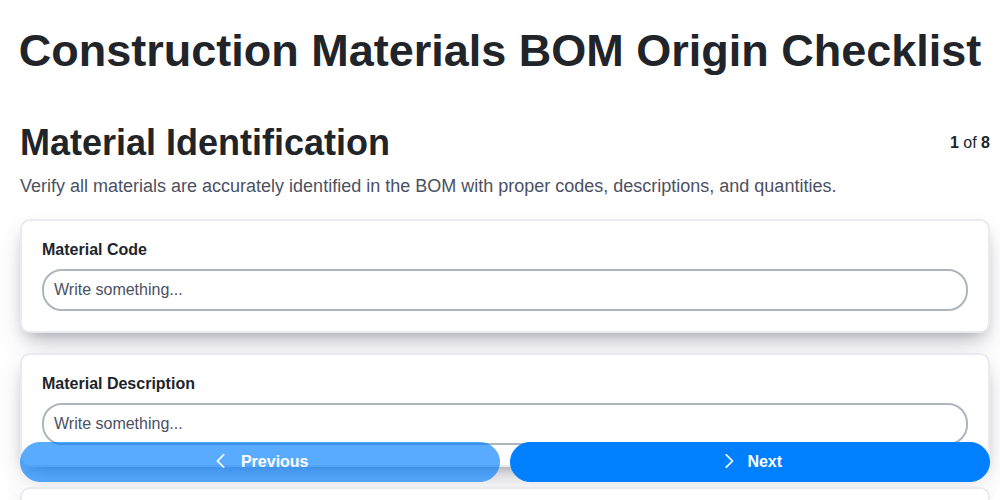
Decoding Origins: Your Construction Materials BOM Origin Checklist Guide
We can do it Together
Need help with
Bill of Materials (BOM) Management?
Have a question? We're here to help. Please submit your inquiry, and we'll respond promptly.