Mastering Leather Manufacturing: Your Tannery BOM & Compliance Checklist
Published: 12/10/2025 10:00 PM Updated: 12/14/2025 7:52 AM
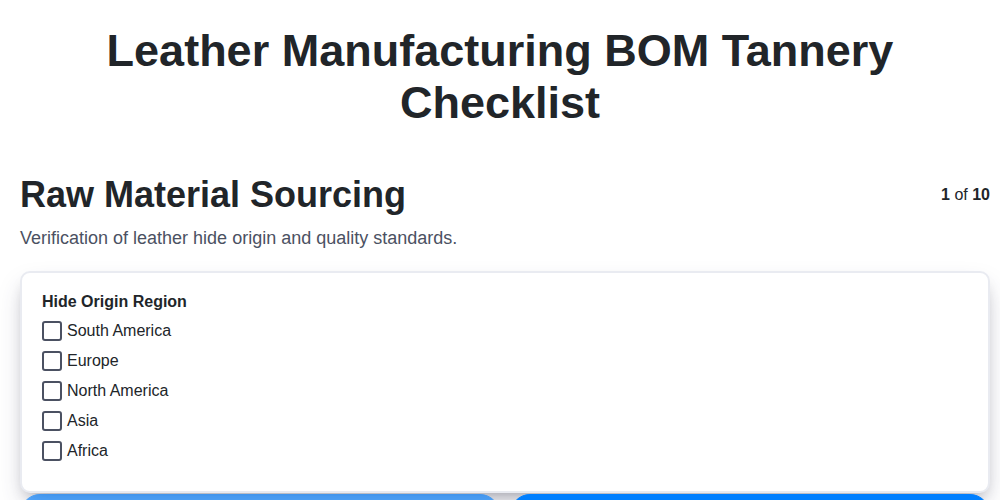
Table of Contents
- Introduction: The Critical Role of a Leather Manufacturing BOM
- Understanding the Bill of Materials (BOM) in Leather Production
- Raw Material Sourcing: Ensuring Quality and Ethical Origins
- Tanning Process Compliance: Meeting Industry Standards
- Chemical Usage & Safety: Minimizing Risk, Maximizing Efficiency
- Water Management: Conservation and Responsible Usage
- Waste Management: Reducing Environmental Impact
- Worker Safety & Training: Protecting Your Most Valuable Asset
- Quality Control & Testing: Maintaining Premium Leather
- Traceability & Documentation: From Hide to Finished Product
- Regulatory Compliance: Navigating Legal Requirements
- Sustainable Practices: The Future of Leather Manufacturing
- Integrating Your BOM with the Checklist: A Practical Approach
- Conclusion: Continuous Improvement for Leather Excellence
- Resources & Links
TLDR: Running a tannery? This checklist is your all-in-one guide! It covers everything from sourcing raw materials to ensuring sustainable practices and regulatory compliance, making sure your Bill of Materials (BOM) is accurate and your operations are running smoothly and responsibly. Think of it as a preventative measure for consistent quality, safety, and legal adherence - saving you time, money, and potential headaches.
Introduction: The Critical Role of a Leather Manufacturing BOM
A robust Bill of Materials (BOM) isn't just a list; it's the backbone of efficient and responsible leather manufacturing. In the demanding world of tanneries, a well-structured BOM acts as the central repository for every element contributing to the final leather product, from the initial raw hides to the specialized chemicals and energy consumed. It's more than just tracking materials; it's a critical tool for cost control, process optimization, and ensuring consistent quality. This detailed breakdown facilitates accurate costing, minimizes waste through precise material usage, and allows for immediate identification of potential bottlenecks or deviations from established standards. Furthermore, a comprehensive BOM is increasingly vital for demonstrating ethical sourcing and adherence to stringent environmental regulations - increasingly important for brand reputation and consumer trust in today's market. Effectively, a leather manufacturing BOM is a prerequisite for a sustainable and profitable tannery operation.
Understanding the Bill of Materials (BOM) in Leather Production
The Bill of Materials (BOM) is the unsung hero of efficient leather manufacturing. Often overlooked, it's a comprehensive list of every raw material, chemical, and component needed to produce a specific type of leather. Think of it as a recipe - but for hides! It's far more than just a shopping list; it's a critical document that governs cost control, inventory management, and consistent product quality.
In leather production, the BOM isn't just about hides. It encompasses everything from the initial raw materials - hides (and their grading based on origin and quality), hair removal chemicals, tanning agents (chromium salts, vegetable tannins, etc.), dyes, fats, oils, and finishing compounds - to the consumables like filtration media, lab reagents, and even personal protective equipment (PPE) for workers.
A well-defined BOM specifies not only the what (the materials) but also the how much (quantity needed), the quality specification (e.g., purity, concentration, specific gravity), and the supplier (to ensure consistent sourcing). It acts as the foundation for accurate costing, allowing tanneries to predict material expenses and identify potential cost savings. Furthermore, a robust BOM supports consistent quality by ensuring that each batch of leather is produced with the exact same inputs, minimizing variation and enhancing predictability. Ultimately, a well-maintained BOM is vital for profitability and competitiveness in the leather industry.
Raw Material Sourcing: Ensuring Quality and Ethical Origins
The foundation of exceptional leather lies in the quality of its raw materials - primarily hides and skins. Our checklist places significant emphasis on responsible sourcing, going beyond simply verifying availability. We meticulously assess suppliers based on several key criteria. This includes verifying the origin of the hides, ensuring they are a byproduct of the food industry and not specifically raised for leather production.
We scrutinize supplier practices regarding animal welfare, adhering to recognized standards and certifications. Detailed records are required, tracing hides back to the livestock farm whenever possible. The condition of the hides upon arrival is crucial; our inspection process checks for defects, thickness consistency, and overall suitability for the intended leather grade. Regular audits of suppliers are conducted to maintain these standards, ensuring transparency and accountability throughout the supply chain. Furthermore, we prioritize suppliers who can demonstrate commitment to sustainable farming practices, like responsible grazing and minimizing environmental impact. This holistic approach guarantees we start with the best possible raw materials, setting the stage for a superior finished product.
Tanning Process Compliance: Meeting Industry Standards
The tanning process itself is the heart of leather manufacturing, and strict adherence to established protocols is paramount. This goes beyond simply applying chemicals; it's about precisely controlling conditions and ensuring consistent, high-quality results. Our checklist focuses on several critical areas within this stage.
We verify that tanning processes align with recognized industry standards like those set by the Leather Working Group (LWG) and relevant national regulations. This includes meticulous tracking of tanning cycles, temperature monitoring, pH adjustments, and assessment of hide penetration. Variations from established parameters trigger immediate investigation and corrective action.
Specifically, we examine the effectiveness of the tanning agents used (chrome, vegetable tannins, etc.) and assess the resulting leather's physical properties, including fullness, grain tightness, and dyeability. Our inspections cover the critical steps of bating, deliming, pickling, tanning, and retanning, with detailed documentation at each stage. We also scrutinize process optimization efforts aimed at reducing processing time and chemical consumption while maintaining or improving leather quality. This rigorous process ensures we are consistently delivering leather that meets the demanding performance requirements of our customers and reflects our commitment to excellence.
Chemical Usage & Safety: Minimizing Risk, Maximizing Efficiency
The leather manufacturing process relies heavily on a range of chemicals, from tanning agents to dyes and finishing compounds. Ensuring their safe and responsible handling is paramount for worker health, environmental protection, and product quality. A robust chemical usage & safety program goes beyond simply complying with regulations; it's about creating a culture of proactive risk mitigation.
Key Considerations for Your Checklist:
- SDS Management: Maintain readily accessible and up-to-date Safety Data Sheets (SDS) for every chemical used on-site. Ensure workers are trained on how to interpret and utilize this information.
- Proper Storage: Chemicals should be stored in designated areas, separated by compatibility, with appropriate ventilation and spill containment measures. Regularly inspect storage conditions.
- Personal Protective Equipment (PPE): Mandate and enforce the use of appropriate PPE (gloves, respirators, eye protection, protective clothing) based on the specific chemicals being handled. Conduct regular PPE inspections and replacements.
- Dispensing & Handling Procedures: Implement and train on safe dispensing and handling procedures to minimize exposure risks. Consider automated systems where feasible.
- Emergency Response: Establish clear emergency response protocols for spills, leaks, and accidental exposures. Ensure readily available first-aid supplies and trained personnel.
- Substitution & Reduction: Actively explore opportunities to substitute hazardous chemicals with safer alternatives or reduce chemical usage through optimized processes. Research innovative, less-toxic options.
- Ventilation & Engineering Controls: Prioritize adequate ventilation and engineering controls (e.g., fume hoods, local exhaust ventilation) to minimize airborne chemical concentrations.
- Regular Audits: Conduct regular internal audits to assess chemical handling practices and identify areas for improvement.
By focusing on these areas, tanneries can significantly reduce risks associated with chemical usage, protect their workforce, and contribute to a more sustainable leather manufacturing process.
Water Management: Conservation and Responsible Usage
The leather manufacturing process is inherently water-intensive, making responsible water management not just an ethical imperative but also a crucial factor in operational efficiency and environmental sustainability. Our checklist emphasizes proactive measures to minimize water consumption and ensure its responsible use throughout the tannery.
This begins with a rigorous assessment of water sources and potential for reuse. We prioritize water-efficient technologies like reverse osmosis systems and membrane filtration to reclaim and repurpose water for various stages, reducing reliance on fresh water intake. Regular monitoring of water usage per stage of production-beamhouse, tanning, retanning, dyeing, and finishing-allows us to identify areas for optimization and leakage prevention.
Beyond simple reduction, our checklist details best practices for wastewater treatment. This includes biological treatment, chemical precipitation, and potentially advanced oxidation processes to ensure effluent meets or exceeds regulatory standards before discharge. We actively explore innovative approaches, such as utilizing treated wastewater for irrigation or other non-potable applications.
Furthermore, the checklist mandates consistent monitoring of water quality both in input and output, alongside detailed record-keeping. This transparency allows for ongoing improvement and ensures accountability in our water stewardship efforts, demonstrating our commitment to protecting this vital resource.
Waste Management: Reducing Environmental Impact
Leather manufacturing generates significant waste streams, from solid scraps to wastewater laden with chemicals. Effective waste management isn't just about regulatory adherence; it's about minimizing environmental impact and maximizing resource efficiency. Our tannery checklist prioritizes this crucial area through several key actions.
First, we focus on scrap leather reduction. This starts with optimized cutting patterns during pattern making and involves employee training to minimize material waste. Second, we explore opportunities for scrap leather reuse and recycling. This could involve selling scraps to companies that produce leather goods like pet accessories or shoe uppers, or utilizing them for biogas production.
Wastewater treatment is paramount. Our checklist mandates rigorous monitoring and treatment processes, including preliminary screening, primary clarification, biological treatment (e.g., activated sludge), and potentially tertiary treatment like membrane filtration or reverse osmosis. This ensures that discharged water meets or exceeds environmental standards.
Solid waste, including sludge from wastewater treatment, is handled responsibly, often through partnerships with specialized waste management companies for proper disposal or potential energy recovery. We also encourage the adoption of innovative technologies, such as anaerobic digestion, to reduce the volume of organic waste and generate valuable byproducts. Consistent audits and reviews of waste management practices are built into the checklist to identify areas for continuous improvement and further reduction of our environmental footprint.
Worker Safety & Training: Protecting Your Most Valuable Asset
The leather manufacturing process, particularly within a tannery, presents inherent risks. From handling hazardous chemicals to operating heavy machinery, the safety of your workforce should be paramount. A robust worker safety and training program isn't just about compliance; it's about protecting your most valuable asset - your people - and ensuring long-term operational success.
Beyond Basic Training: A Layered Approach
Initial onboarding training is essential, but a truly effective program goes further. This includes:
- Hazard-Specific Training: Equip workers with specific knowledge on the risks associated with each process they handle, covering everything from sodium sulfide to chromium salts. Regularly refresh this training.
- PPE (Personal Protective Equipment) Proficiency: Ensure employees understand why PPE is required and how to use it correctly. This includes proper fit testing for respirators and consistent enforcement of PPE protocols.
- Emergency Response Preparedness: Regular drills for chemical spills, fires, and other potential emergencies build confidence and ensure a swift, coordinated response.
- Lockout/Tagout Procedures: Rigorous adherence to lockout/tagout protocols is critical for maintenance and repair activities involving potentially dangerous equipment.
- Ergonomics Training: Reduce the risk of musculoskeletal disorders by providing training on proper lifting techniques and workstation setup.
- Communication and Reporting: Foster a culture where workers feel comfortable reporting near misses and safety concerns without fear of reprisal. Implement a clear reporting system and investigate all incidents thoroughly.
- Ongoing Refresher Courses: Regularly scheduled refresher courses solidify safety knowledge and address any changes in procedures or equipment.
Investing in Your Workforce is Investing in Your Business
A strong worker safety and training program directly contributes to a more productive, engaged, and loyal workforce. Reducing accidents and injuries lowers costs associated with worker's compensation and lost productivity. Furthermore, demonstrating a commitment to worker safety enhances your brand reputation and attracts skilled employees. Regular audits and a continuous improvement mindset are vital to maintaining a world-class safety program.
Quality Control & Testing: Maintaining Premium Leather
Quality control and rigorous testing are non-negotiable in premium leather manufacturing. It's not enough to simply follow the tanning process; consistent, documented checks at every stage ensure the final product meets exceptional standards. Our checklist incorporates a layered approach, beginning with raw material assessment and extending through final product inspection.
Initial raw material sourcing involves stringent evaluation of hides - assessing their type, thickness, strength, and freedom from defects. During the tanning process, we conduct regular checks on pH levels, temperature, and penetration of tanning agents. This ensures uniform tanning and prevents imperfections.
Beyond the core tanning process, specialized testing is vital. This includes:
- Physical Testing: Assessing tensile strength, tear resistance, grain tightness, and elongation. These tests determine the leather's durability and performance characteristics.
- Chemical Testing: Analyzing for residual chemicals, colorfastness (resistance to fading), and potential harmful substances. This safeguards consumer safety and brand reputation.
- Color Matching & Shade Consistency: Utilizing spectrophotometers to ensure uniformity of color across batches, vital for brand consistency and customer expectations.
- Grain Inspection: Careful visual and tactile inspection for any irregularities, scars, or defects in the grain.
- Finish Inspection: Evaluating the appearance and performance of any applied finishes, including adhesion, smoothness, and uniformity.
All testing results are meticulously recorded and compared against pre-defined thresholds. Any deviations trigger immediate corrective actions and further investigation to prevent recurrence. This commitment to continuous improvement and unwavering quality control is what allows us to deliver leather that consistently exceeds expectations.
Traceability & Documentation: From Hide to Finished Product
In today's increasingly transparent market, comprehensive traceability and meticulous documentation aren't just best practices; they're essential for leather manufacturers. Consumers and brands alike demand to know the origin of their materials and assurance that ethical and sustainable practices were followed throughout the production process. A robust system allows tanneries to build trust and demonstrate accountability.
This section of the BOM checklist focuses on establishing a clear and auditable chain of custody, beginning with raw material sourcing and continuing through to the final finished product. Key elements include:
- Hide Origin Tracking: Detailed records of the source of each hide, including farm or slaughterhouse information, region, and ideally, the breed of animal. This often involves unique identifiers assigned to each hide upon arrival.
- Batch Numbering: Implementing a rigorous batch numbering system is critical. Each processing stage (tanning, dyeing, finishing) should be clearly associated with a specific batch number, allowing for quick and accurate product recall or investigation if necessary.
- Process Parameter Logging: Detailed records of all critical process parameters at each stage - pH, temperature, chemical concentrations, duration - must be maintained. This allows for process repeatability and troubleshooting.
- Chemical Lot Tracking: Recording the lot numbers of every chemical used in the tanning process is crucial for identifying potential contamination issues and ensuring consistency.
- Personnel Documentation: Tracking which employees handled which batches at each stage provides an additional layer of accountability and allows for targeted training and performance evaluation.
- Digital Record Keeping: Transitioning from paper-based systems to digital platforms not only improves efficiency but also ensures data integrity and accessibility. Blockchain technology is increasingly being explored for enhanced transparency and immutability.
- Regular Audits: Implementing internal and external audits to verify documentation accuracy and adherence to established procedures is vital for maintaining system credibility.
A well-defined traceability and documentation system isn't just about compliance; it's a cornerstone of a resilient and responsible leather manufacturing operation.
Regulatory Compliance: Navigating Legal Requirements
The leather manufacturing process is heavily regulated at both national and international levels. Compliance isn't just about avoiding fines; it's about ensuring ethical and responsible production. This section outlines key regulatory areas tanneries must adhere to.
REACH (Registration, Evaluation, Authorisation and Restriction of Chemicals): A critical EU regulation, REACH dictates how chemicals are handled and used, impacting the sourcing of raw materials and the use of tanning agents. Tanneries must ensure all chemicals used are registered and comply with restrictions.
ZDHC (Zero Discharge of Hazardous Chemicals) Programme: While not a law, adherence to ZDHC guidelines is increasingly expected by brands and retailers. It focuses on eliminating hazardous chemicals from the leather supply chain and requires detailed mapping and management of chemical usage.
Environmental Regulations (Local and National): These govern wastewater discharge, air emissions, and solid waste disposal. Permits are often required, and regular monitoring is essential. Specific limits on pollutants like chromium, ammonia, and sulfides are commonly enforced.
Labor Laws: Compliance with local labor laws is paramount, covering aspects like working hours, wages, health and safety, and freedom of association.
Animal Welfare Standards: Increasingly, consumers and retailers are demanding assurance of humane animal sourcing practices. While legal requirements vary, traceability and adherence to recognized welfare standards are becoming essential.
Country-Specific Regulations: Requirements differ significantly across jurisdictions. Tanneries exporting to specific countries must be fully aware of and compliant with those nations' import regulations regarding leather and chemical usage.
Staying Informed: Regulatory landscapes evolve constantly. Maintaining a dedicated compliance team and subscribing to industry updates are vital for continued adherence and proactive adaptation to new requirements.
Sustainable Practices: The Future of Leather Manufacturing
The leather industry faces increasing scrutiny regarding its environmental impact. Consumers are demanding transparency and ethically sourced products, and rightly so. Moving beyond simple compliance, tanneries are now actively embracing sustainable practices - not just as a reactive measure, but as a strategic advantage.
This isn't just about "going green;" it's about building a resilient and responsible business. Our BOM and tannery checklist reflects this evolving landscape. We're seeing a shift towards closed-loop systems, utilizing renewable energy sources, and minimizing the industry's footprint.
Here's a snapshot of what sustainable practices are now encompassing:
- Bio-based Chemicals: Replacing traditional, often harsh, chemicals with alternatives derived from natural sources like plants and microorganisms. This reduces reliance on petroleum-based products and minimizes environmental impact.
- Chrome Recovery and Reduction: Chrome is a key tanning agent, but its management is crucial. Tanneries are implementing technologies to recover and reuse chrome, significantly decreasing waste. Research into chrome-free tanning alternatives is also gaining traction.
- Energy Efficiency: From optimizing boiler efficiency to incorporating solar power, energy consumption is under intense focus. Implementing energy audits and investing in efficient equipment is paramount.
- Carbon Footprint Reduction: Measuring and actively reducing the carbon footprint of the entire production process, including transportation and sourcing, is becoming standard practice.
- Circular Economy Principles: Embracing the concept of waste as a resource, exploring opportunities to repurpose waste materials, and designing for durability and recyclability.
- Biodiversity Conservation: Responsible sourcing of raw hides, ensuring traceability and contributing to the wellbeing of livestock farming communities.
The future of leather manufacturing isn't just about creating beautiful, durable materials; it's about doing so in a way that respects the environment and supports the communities involved. Integrating these sustainable practices into the BOM and tannery checklist is not just a trend; it's a necessity for long-term viability and a commitment to a more responsible industry.
Integrating Your BOM with the Checklist: A Practical Approach
Your Bill of Materials (BOM) is the backbone of your leather manufacturing process - it lists every raw material, chemical, and component needed. But a robust BOM alone isn't enough. To truly ensure consistent quality, compliance, and sustainability, it needs to be tightly integrated with a comprehensive tannery checklist.
Here's how to practically achieve this integration:
- Link Raw Materials to Checklist Items: Each raw material listed in your BOM (hides, tanning agents, dyes, finishing chemicals) should be directly linked to the relevant sections of your checklist. For example, the Raw Material Sourcing checklist item should explicitly reference the specific hides listed in the BOM, detailing origin, grading, and certification requirements. Similarly, chemicals listed should link to Chemical Usage & Safety and Water Management checkpoints.
- Chemical Tracking: Your BOM should detail the exact quantities of chemicals needed for each batch. This allows your checklist's "Chemical Usage & Safety" section to verify that usage aligns with the BOM's specifications, reducing waste and potential safety hazards. Record batch numbers and supplier information within the BOM for full traceability.
- Automated Reminders & Alerts: Integrate your BOM with your checklist management system to trigger automated reminders for tasks based on material arrival or batch start times. This ensures no step is missed and that documentation is updated promptly. Alerts can be triggered when chemical usage deviates from the BOM's pre-defined quantities.
- Version Control: As your BOM evolves (due to changing regulations, new suppliers, or process improvements), ensure your checklist is updated concurrently. Implement version control for both documents to maintain a clear audit trail and prevent confusion.
- Digital Integration: Moving to a digital BOM and checklist system is highly recommended. This facilitates real-time data sharing, automated reporting, and easier integration with other systems (e.g., inventory management).
By connecting your BOM to your checklist, you're transforming a reactive process into a proactive one, driving consistency, mitigating risks, and ultimately improving the quality and sustainability of your leather.
Conclusion: Continuous Improvement for Leather Excellence
Ultimately, the Leather Manufacturing Bill of Materials (BOM) Tannery Checklist isn't a one-and-done solution. It's a living document, a framework for continuous improvement. Regularly reviewing and updating this checklist, incorporating lessons learned from audits, addressing evolving regulatory landscapes, and embracing innovative sustainable practices are crucial for maintaining operational excellence. By consistently striving to enhance each area - from raw material sourcing to waste management - tanneries can not only guarantee the quality and consistency of their leather but also solidify their commitment to responsible and ethical manufacturing, building trust with consumers and contributing to a more sustainable leather industry. Remember, the journey to leather excellence is ongoing, and this checklist is your guide.
Resources & Links
- Tannery Training International: Offers comprehensive training courses and consultancy services for all aspects of leather manufacturing, covering tanning processes, chemical usage, and quality control. A valuable resource for keeping abreast of industry best practices and regulatory changes.
- United Nations Sustainable Development Goals (SDGs): The SDGs provide a framework for sustainable development globally. Relevant goals (like Clean Water & Sanitation, Responsible Consumption & Production, and Decent Work & Economic Growth) highlight crucial aspects of leather manufacturing sustainability.
- Leather Industry Association (LIA): A key resource for industry news, standards, and best practices. Often publishes reports on sustainability and ethical sourcing within the leather sector. Look for their publications and guidelines.
- United Nations Industrial Development Organization (UNIDO): UNIDO supports industrial development, with projects focusing on environmentally sound technologies and resource efficiency. They have initiatives impacting the leather industry, particularly in developing countries.
- International Organization for Standardization (ISO): ISO standards (e.g., ISO 14001 for environmental management, ISO 45001 for occupational health and safety) are crucial for compliance and continuous improvement within a tannery. Research relevant standards.
- bluesign Technologies: bluesign offers a system and certification for sustainable textile and leather production. Focuses on eliminating harmful chemicals and optimizing resource usage. A useful resource for chemical selection and processes.
- World Leather Council: Represents the global leather manufacturing industry. They provide industry data, reports, and advocate for responsible leather production. Good for market trends and industry perspectives.
- European Tanner's Organisation: Provides technical information, represents the leather industry in Europe, and promotes sustainable practices specific to the European market. Useful for understanding regional regulations and industry trends.
- SGS: A leading inspection, verification, testing, and certification company. Offer services for leather quality control, chemical testing, and environmental audits. A good option for third-party validation.
- Bundesverband der Lederindustrie (German Leather Research Institute): The German Leather Research Institute offers extensive research and testing services for leather, covering chemical composition, physical properties, and environmental impact. Offers valuable data and analysis.
- American Institute of Chemical Engineers (AIChE): While broad, AIChE provides resources on chemical engineering principles, safety, and process optimization - all relevant to efficient and safe chemical usage in a tannery. Useful for troubleshooting and improving chemical processes.
- United States Environmental Protection Agency (EPA): Provides information and regulations concerning environmental protection, water management, and waste disposal - essential for responsible tannery operations. Relevant regulations must be followed.
Frequently Asked Questions
What is a BOM in the context of leather manufacturing?
BOM stands for Bill of Materials. It's a comprehensive list of all raw materials, components, and sub-assemblies needed to produce a specific leather product (e.g., a shoe upper, a car seat cover, a handbag). It details quantities, specifications, and suppliers for each item, crucial for accurate costing, production planning, and traceability.
Why is a well-defined BOM so important for tanneries?
A robust BOM allows for accurate cost calculation, minimizes material waste, improves production efficiency, enables better inventory management, and facilitates traceability for quality control and potential recalls. It's fundamental for consistent product quality and profitability.
What are the key components typically included in a leather manufacturing BOM?
A typical BOM will include: hides/skins (type, grade, origin), tanning agents (chromium, vegetable tannins, etc.), dyes and pigments, finishing chemicals (oils, waxes, resins), auxiliary materials (glue, thread, linings), and packaging materials. Each item should have detailed specifications.
What kind of information should be included for each item in the BOM?
For each item, include: part number/code, description (detailed specifications), quantity required, unit of measure, supplier information (contact, lead time), cost per unit, and any relevant quality control parameters (e.g., hide thickness, color fastness).
What is a compliance checklist for a tannery and why is it necessary?
A compliance checklist ensures adherence to relevant environmental regulations (e.g., wastewater discharge limits, chemical usage restrictions), labor laws, and industry standards (e.g., LWG). It's critical for avoiding fines, maintaining licenses, and meeting customer expectations regarding sustainability and ethical sourcing.
What are some key areas covered by a tannery compliance checklist?
Common areas include: wastewater treatment and discharge monitoring, air emissions control, solid waste management, chemical handling and storage, worker safety (PPE, training), restricted substance lists (RSLs), and social responsibility (fair labor practices).
What is the Leather Working Group (LWG) and how does it relate to compliance?
The Leather Working Group (LWG) is a multi-stakeholder initiative that develops and maintains a protocol for assessing the environmental and social performance of tanneries. Achieving LWG certification demonstrates a commitment to responsible manufacturing practices and is often a requirement for supply chain partnerships.
What software or tools can help manage a tannery's BOM and compliance checklist?
Many ERP (Enterprise Resource Planning) systems, materials management software, and specialized compliance management platforms can help automate BOM creation, track material usage, manage compliance documentation, and generate reports. Excel or similar spreadsheet software can also be used for smaller operations.
Found this Article helpful?
Comments
There are no comments yet. Be the first to add one!
BOM - Bill of Materials Management Solution Demo
Struggling with inaccurate BOMs & costly errors? ChecklistGuro provides a centralized BOM Management solution, connecting your design, engineering, & manufacturing teams for improved collaboration and control. Simplify operations & boost efficiency.
Related Articles
Mastering Textiles: Your Fiber Content Checklist for BOM Accuracy
Navigating Medical Device BOM Regulatory Compliance: Your Essential Checklist
Mastering Your BOM: A Comprehensive Checklist Template for Success
Ensuring Success: Your Oil & Gas BOM Component Approval Checklist Guide
Decoding Origins: Your Construction Materials BOM Origin Checklist Guide
The Ultimate Retail BOM Product Definition Checklist: A Step-by-Step Guide
Ensuring Quality: Your Rubber Manufacturing Polymer BOM Checklist Guide
The Ultimate Logistics BOM Packaging Checklist: Ensuring Safe & Efficient Shipments
We can do it Together
Need help with
Bill of Materials (BOM) Management?
Have a question? We're here to help. Please submit your inquiry, and we'll respond promptly.